• KGS/USD = 0.01144 0%
  • KZT/USD = 0.00192 -0%
  • TJS/USD = 0.10876 0.55%
  • UZS/USD = 0.00008 0%
  • TMT/USD = 0.28490 0%
  • KGS/USD = 0.01144 0%
  • KZT/USD = 0.00192 -0%
  • TJS/USD = 0.10876 0.55%
  • UZS/USD = 0.00008 0%
  • TMT/USD = 0.28490 0%
  • KGS/USD = 0.01144 0%
  • KZT/USD = 0.00192 -0%
  • TJS/USD = 0.10876 0.55%
  • UZS/USD = 0.00008 0%
  • TMT/USD = 0.28490 0%
  • KGS/USD = 0.01144 0%
  • KZT/USD = 0.00192 -0%
  • TJS/USD = 0.10876 0.55%
  • UZS/USD = 0.00008 0%
  • TMT/USD = 0.28490 0%
  • KGS/USD = 0.01144 0%
  • KZT/USD = 0.00192 -0%
  • TJS/USD = 0.10876 0.55%
  • UZS/USD = 0.00008 0%
  • TMT/USD = 0.28490 0%
  • KGS/USD = 0.01144 0%
  • KZT/USD = 0.00192 -0%
  • TJS/USD = 0.10876 0.55%
  • UZS/USD = 0.00008 0%
  • TMT/USD = 0.28490 0%
  • KGS/USD = 0.01144 0%
  • KZT/USD = 0.00192 -0%
  • TJS/USD = 0.10876 0.55%
  • UZS/USD = 0.00008 0%
  • TMT/USD = 0.28490 0%
  • KGS/USD = 0.01144 0%
  • KZT/USD = 0.00192 -0%
  • TJS/USD = 0.10876 0.55%
  • UZS/USD = 0.00008 0%
  • TMT/USD = 0.28490 0%
11 December 2025

Kazakhstan and Turkey to Increase Agricultural Trade

During Kazakh Minister of Agriculture Aidarbek Saparov’s visit to Turkey on August 12, agreements were signed for Turkish investments of $2 billion in Kazakhstan’s agro-industrial sector and trade in agricultural products

Six projects have already been implemented in Kazakhstan with participation of Turkish investors.  The imminent launch of a further ten projects totaling $553 million, include the construction of greenhouse complexes, plants for deep processing of wheat and beans, and vegetable storage facilities.

Armada Gıda, one of  Turkey’s leading companies in producing and exporting agricultural products, is to increase the import of lentils from Kazakhstan, while Tiryaki Holding, is to import of 250 thousand tons of Kazakh wheat.

According to Minister Saparov, in 2023, the volume of Kazakh-Turkish trade in agricultural products increased by 13%.

Kazakhstan has long exported crop products to Turkey and following the abolishment of restrictions in June, Kazakh agricultural producers can now begin exporting livestock products.

Minister Saparov stated that Kazakhstan expects a good crop harvest this year and is ready to increase the export of high-quality agricultural products to Turkey.

Balancing Regional Integration Amid Global Rivalries

Central Asia has become a focal point for world and regional powers such as China, Russia, the European Union, the United States, and Turkey. Amid geopolitical uncertainty and a shifting global order, regional cooperation seems to be a top priority for Kazakhstan, Kyrgyzstan, Uzbekistan, Turkmenistan, and Tajikistan in their foreign policy.

The problem, however, is that the absence of a unified regional identity among Central Asian nations poses a major obstacle to their ambitions to strengthen regional integrations. They have different views on their regional identity due to their unique cultures, histories, politics, and economies.

But in spite of that, on June 9, in the Kazakh capital of Astana, leaders of the five Central Asian countries gathered to discuss closer economic cooperation, stability and security in the region. They sought to expand ties in trade, industry, transport and logistics, energy, agriculture, as well as in the water management.

As a result of the summit, regional leaders signed several key agreements, including the Roadmap for development of regional cooperation for 2025-2027, as well as the Conceptual framework of development of regional cooperation Central Asia 2040. These documents indicate that the regional integration will be a long-term process that will last for decades. In the meantime, Central Asian states will almost certainly continue strengthening bilateral ties.

The Consultative Meetings of the leaders of Central Asian countries gave Kazakhstan and Uzbekistan another opportunity to deepen cooperation in various fields. The two nations, who signed an agreement on allied relations in 2022, announced their plans to adopt a strategic partnership program until 2034, and also to jointly launch several big economic and energy project.

Prior to the meeting in Astana, presidents of Kazakhstan, Kyrgyzstan, Uzbekistan, Turkmenistan, and Tajikistan held talks with Azerbaijani leader Ilham Aliyev. They were also scheduled to meet with Japanese Prime Minister Kishida Fumio, but he canceled his visit to Astana after the Japan Meteorological Agency issued a warning of a potential earthquake in the Nankai Trough.

Unlike him, Josep Borrell, Vice-President of the European Commission and High Representative of the European Union for Foreign Affairs and Security Policy, visited Central Asia in early August. He traveled to Kazakhstan and neighboring Kyrgyzstan– a country that signed the Enhanced Partnership and Cooperation Agreement with the European Union on June 25.

Although both nations are members of the Russian-led Eurasian Economic Union (EAEU), and the Collective Security Treaty Organization (CSTO) Moscow’s preoccupation with the war in Ukraine has allowed other actors, including the European Union, to strengthen its presence in the strategically important region. While the EU’s goals in Central Asia are mainly related to energy, Japan’s plans to expand cooperation with the five regional countries serve as Tokyo’s strategic tool to counterbalance China’s growing influence in the region.

Azerbaijan, on the other hand, seeks to create a strategic energy bridge linking Central Asia and Europe via the South Caucasus. That is why Baku’s collaboration with Central Asian countries in the energy sector has become more crucial than ever. It is no surprise that Azerbaijan, Kazakhstan and Uzbekistan recently signed a project to unify energy systems, aiming to eventually begin exporting green energy to Europe. The EU, seeking to end its dependence on Russian energy, supports such plans, as well as some regional nations’ ambitions to further distance themselves from the Kremlin and develop closer ties with the West.

Meanwhile, Kazakhstan, Kyrgyzstan, Uzbekistan, Turkmenistan, and Tajikistan will almost certainly jointly work to address challenges such as water, energy, and food security.They will also attempt to expand cooperation in trade, industry, transport and logistics, and agriculture. In the past decade,mutual trade between the Central Asian states reached nearly $11 billion, and the region’s economies are expected to see a 5.4% growth this year. Also, the combined GDP of all countries in the region is approximately $450 billion,

Thus, Central Asia undoubtedly has the potential to emerge as a pivotal transport, logistics, and transit hub. Its strategic location is central to major global transport networks, including China’s Belt and Road Initiative and the North-South Corridor. However, for Central Asia’s long-term development, the crucial thing is to preserve peace and stability in the region. Who will ensure its security  – will likely hinge on the outcome of the war in Ukraine.

One thing is certain: in the current complex geopolitical and economic realities, maintaining the high pace of development in regional cooperation will be a key focus for Central Asian countries.

A Guy From the Bronx and His Contribution to Uzbekistan’s Boxing Gold

Uzbekistan’s five gold medals in boxing at the Paris games owe something to Sidney Jackson, an accomplished boxer from a poor Jewish family in the Bronx, New York City, who is credited with introducing the sport to Central Asia in the early 1920s.

That’s the view of Uzbekistan’s ambassador to the United States, Furqat Sidiqov, and other people in Uzbekistan who know about the country’s evolution as an Olympic boxing power.

“This remarkable success is tied to Sidney Jackson, founder of Uzbekistan’s boxing school,” Sidiqov said on the X platform. He said Jackson’s legacy is still shaping champions today and urged people to watch a documentary about the American that was released in 2022 with the backing of the Uzbek government.

Jackson, a beloved figure in Uzbekistan who died in Tashkent in 1966, started boxing when he was a boy, won featherweight titles in the United States and joined a boxing tour in Europe just before World War I. He dropped out of the tour because of an injury, traveled to Russia and then diverted to Tashkent when fighting erupted in Europe. Short of money, he stayed there, found a job, joined an international brigade that fought in the civil conflict sweeping Central Asia and the Caucasus after the Russian Revolution, and opened a threadbare boxing club in Tashkent after the war ended.

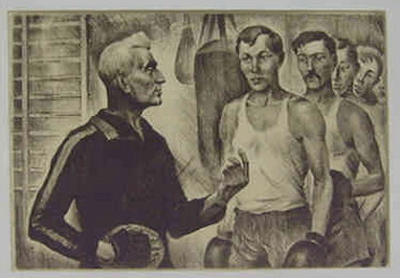
Sketch of Sidney Jackson by Rifkat Azihanov


Over the years, he trained Russian and Central Asian boxers who had international success as representatives of the Soviet Union. Jackson laid foundations for athletes including Russian middleweight boxer Valeri Popenchenko, who won gold at the Olympics in Tokyo in 1964, and Rufat Riskiyev, an Uzbek middleweight boxer who won silver at the 1976 Olympics in Montreal.

Uzbekistan’s boxing federation was founded in 1928, and Jackson served as its chairman for more than 20 years. The history of boxing in Uzbekistan is “inextricably linked” with Jackson, according to Uzbek boxing officials.

“To call Sidney Jackson the grandfather of boxing in Uzbekistan is accurate, but still undersells his impact on the sport,” the asianboxing.info website said in 2020. “And whilst it may have been more than 50 years since he died, his impact is still felt there, and always will be for any Uzbek stepping between the ropes.”

ADB Grants $71 million for Business Reforms and HPP Reconstruction in Tajikistan

As reported by the Avesta Information Agency, Minister of Finance of Tajikistan, Faiziddin Kahkhorzade, and Shani Campbell, the permanent representative of the Asian Development Bank (ADB) in the country, have signed contracts for two grants totaling $71 million.

The first grant of $50 million is aimed at improving  Tajikistan’s business environment, including digitization, reforms to boost exports, improved infrastructure management, and increased financial transparency. Small and medium-sized enterprises will also be supported in adapting to climate change.

The second grant of $21 million will replace the fourth unit at the Head HPP located near the city of Levakant (formerly Sarband) in Tajikistan’s Khatlon region, which failed in 2019. As a result of the upgrade, the installed capacity of hydropower is expected to increase from 240 megawatts in 2012 to 274 megawatts by 2026.

Since Tajikistan became a member of the ADB in 1998, the bank has provided more than $2.6 billion in assistance to the country, including more than $2 billion in grants. These funds were directed to the development of transport and energy infrastructure, healthcare, education, agriculture, and other important sectors of the economy.

Turkmenistan Requests Deportation of Fifty Activists and Journalists

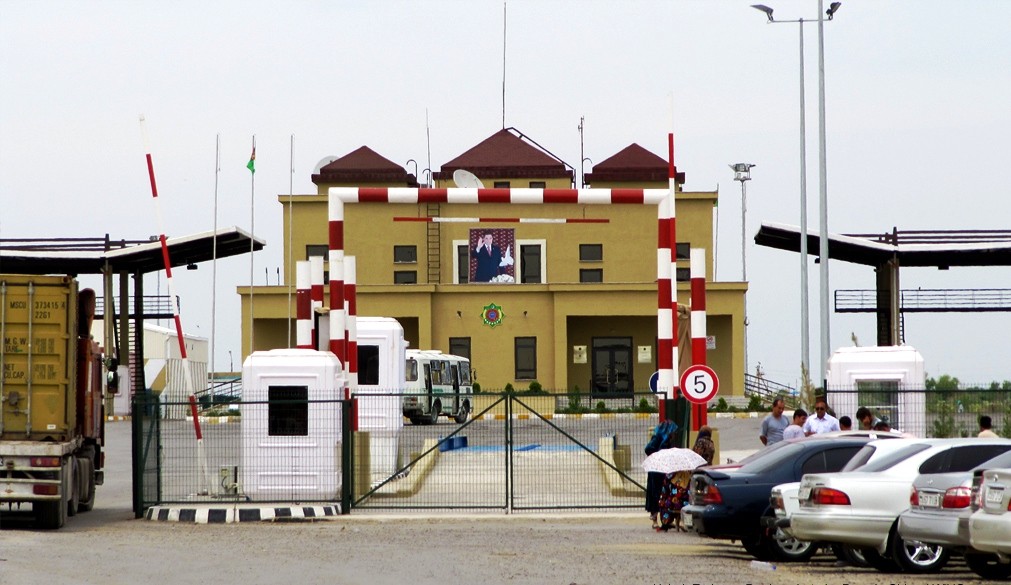
The Chronicles of Turkmenistan reports that Turkmenistan has sent a list to several countries comprising 50 people, asking that they not be permitted to enter their territory, or to have them deported to Turkmenistan. The appeal was sent to Belarus, Russia, Azerbaijan, Kazakhstan, Uzbekistan, Tajikistan, Kyrgyzstan, Turkey, Iran, Moldova, Georgia, and Armenia. According to the authorities, the index lists civil activists, journalists, independent media, and opposition representatives as threatening state security. Turkmenistan has prioritized the return of nine people from this list.

It remains to be seen whether the aforementioned foreign countries will execute the Turkmen authorities wishes. However, Turkmen.news journalist Ruslan Myatiev, who went to Turkey on summer vacation with his family on July 25, was not allowed to enter the country. After several hours of interrogation by the Turkish National Security Service, Myatiyev was deported to Turkmenistan.

The Times of Central Asia previously reported that the daughter of a Turkmen activist was not allowed to fly to Turkey. This follows on from an increasing number of cases where Turkmen citizens have been removed from flights abroad without explanation; the same thing is reportedly happening when attempting to cross the border by land.

Uzbekistan and UAE to Build Modern Wastewater Facility

The United Arab Emirates company “Sustainable Water Solutions” (SWS) is to cooperate with Uzbekistan on the construction of a modern wastewater facility in Tashkent.

The project includes building a facility with a daily capacity of 1.0 million cubic meters of water and a 42-kilometer wastewater collector in the territory of the Surum mahalla, an administrative centre in Tashkent’s  Lower Chirchik district.

Regarding the scheme, Ahmed Al-Shamsi, head of the SWS company announced: “Our next initiative will prevent water wastage in Uzbekistan. The capacity of the joint facility will be 1,000,000 cubic meters per day at the first stage and 1.5 million cubic meters later. The estimated project cost is one billion dollars.”

According to reports, the quality of wastewater service provided to 1.5 million people will increase, and more than 500,000 residents and over a hundred enterprises and organizations will be provided with centralized wastewater service. The construction of a 42-kilometer collector allows efficient collection and transportation of wastewater for further treatment.

SCADA, a data management and collection system, and GIS,a geographic information system, will be introduced, ensuring effective monitoring and management of cleaning and transportation processes. As a result of this large-scale project, 10 million kilowatts of electricity will be saved, and the sanitary-epidemiological and ecological situation in the Sergeli, Bektemir, and Yangi Hayot districts of Tashkent city will be improved.