• KGS/USD = 0.01144 0%
  • KZT/USD = 0.00211 0%
  • TJS/USD = 0.10460 0.19%
  • UZS/USD = 0.00008 0%
  • TMT/USD = 0.28490 0%
  • KGS/USD = 0.01144 0%
  • KZT/USD = 0.00211 0%
  • TJS/USD = 0.10460 0.19%
  • UZS/USD = 0.00008 0%
  • TMT/USD = 0.28490 0%
  • KGS/USD = 0.01144 0%
  • KZT/USD = 0.00211 0%
  • TJS/USD = 0.10460 0.19%
  • UZS/USD = 0.00008 0%
  • TMT/USD = 0.28490 0%
  • KGS/USD = 0.01144 0%
  • KZT/USD = 0.00211 0%
  • TJS/USD = 0.10460 0.19%
  • UZS/USD = 0.00008 0%
  • TMT/USD = 0.28490 0%
  • KGS/USD = 0.01144 0%
  • KZT/USD = 0.00211 0%
  • TJS/USD = 0.10460 0.19%
  • UZS/USD = 0.00008 0%
  • TMT/USD = 0.28490 0%
  • KGS/USD = 0.01144 0%
  • KZT/USD = 0.00211 0%
  • TJS/USD = 0.10460 0.19%
  • UZS/USD = 0.00008 0%
  • TMT/USD = 0.28490 0%
  • KGS/USD = 0.01144 0%
  • KZT/USD = 0.00211 0%
  • TJS/USD = 0.10460 0.19%
  • UZS/USD = 0.00008 0%
  • TMT/USD = 0.28490 0%
  • KGS/USD = 0.01144 0%
  • KZT/USD = 0.00211 0%
  • TJS/USD = 0.10460 0.19%
  • UZS/USD = 0.00008 0%
  • TMT/USD = 0.28490 0%

Halloween in Kazakhstan: A Creative Celebration of Global Culture

Halloween is an ancient pagan festival firmly rooted in the West, but despite being alien to the country’s indigenous culture, it is becoming ever more popular in Kazakhstan, especially among young people.

Although embraced by young Kazakhs, Halloween is not celebrated in the classical sense. On the streets you are unlikely to meet crowds of children dressed as witches, ghouls and vampires, collecting candy from houses. Instead, it has become a symbol of fun, freedom of self-expression, and an opportunity to create and experience something new and unusual.

In Almaty, Astana, and in other major cities in the country, many clubs, cafes and bars host Halloween-themed parties attended by people in fancy dress. Every year the costumes become more and more creative, for, after all, Halloween is not just an opportunity to dress up, but also a great chance for participants to demonstrate their design and artistic skills.

Many of the staged events include contests for the most creative and frightening costumes, as well as themed music, dancing and cocktails, and as student Serzhan from Almaty told TCA, provide “an opportunity to have fun with friends and to reincarnate our favorite characters from movies and TV series.”

Photo: TCA, Tamila Olzhbaekova


In addition to parties, Halloween movie nights are likewise, growing in popularity. Students and groups of friends gather to watch classic horror movies or novelties of the genre, often at home, but sometimes in student dormitories or cafes. For many, like Camilla, a university student in Astana, it has become an annual tradition: “We get together with friends every year on Halloween, watch horror movies until the early hours and argue whose costume is the creepiest.”

Some movie theaters have now begun to support the trend by offering special repertoires for Halloween week, including screenings of films such as “Scream” and “Spellbound”. As is to be expected, social media also plays a key role in popularizing Halloween in Kazakhstan. On platforms such as Instagram and TikTok, local youth use Halloween as an occasion to post creative content: makeup, makeup videos, photo and video shoots with themed costumes. In this context, Halloween has become a kind of cultural phenomenon for self-expression. Companies also use social media to create a festive mood and offer seasonal discounts.

Despite its growing popularity, the overall response to Halloween in Kazakhstan remains divided. For some people, it is associated with Western influences that contradict local cultural and religious traditions. For many young people, however, it is simply a fun holiday that has no deep meaning, but rather an excuse to immerse oneself in an atmosphere of mysticism and creativity.

“For me, Halloween is not a religious holiday, just an opportunity to have fun with friends,” shared Altair, a student from Almaty. She, like many others, sees nothing contradictory to her culture in the celebration of Halloween, and simply enjoys participating in themed events.

New Era of Mining Starts in Kyrgyzstan

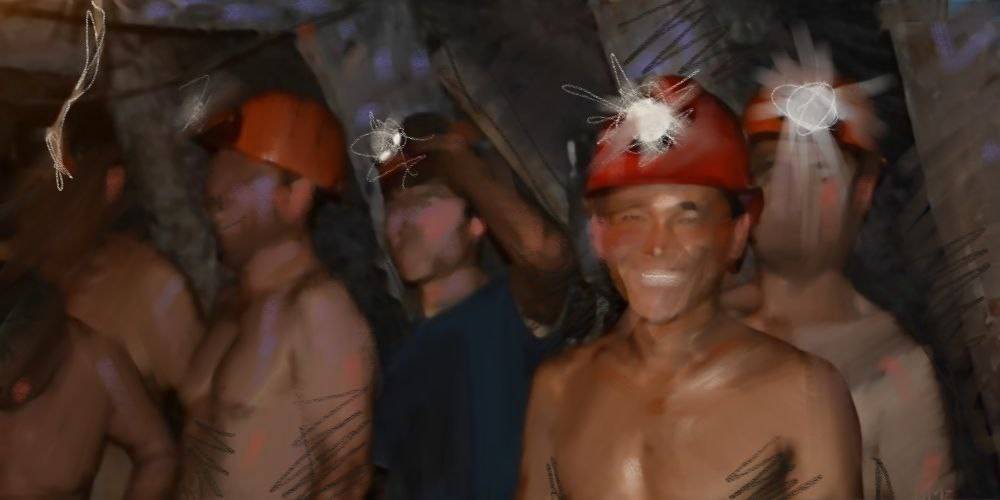
Kyrgyzstan will soon be issuing licenses for mining critical raw materials (CRM), which would have been almost unthinkable five years ago.

However, a lot has changed in Kyrgyzstan, where a new president came to power in late 2020 and has since radically changed the form of leadership and is seeking new sources of revenue.

A lot has changed in the world also, as governments are realizing the importance of CRMs for their economies and are scrambling to find supplies.


Past Experiences

Kyrgyzstan does not have significant reserves of natural gas or oil as most of the other Central Asian countries do.

It was clear from the first days of independence that Kyrgyzstan’s main source of export revenue would come from mining, and Kyrgyzstan has significant deposits of CRMs.

The Kumtor gold mine, 4,000-meters high in the mountains on the south part of the massive Lake Issyk-Kul, quickly became the economic savior for a country where most exports were agricultural products. Initial estimates put gold reserves at Kumtor at some 514 tons, but subsequent exploration revealed more gold at the site.

Kumtor was a joint venture with Canadian company Cameco, but over time Cameco acquired nearly 75% of the project.

There was environmental damage at the site that almost completely destroyed two nearby glaciers – Davidov and Lysiy.

The most infamous incident involving Kumtor occurred in May 1998, when a Kumtor truck overturned into the Barskoon River, dumping nearly two tons of sodium cyanide into the water. Thousands of people were evacuated from area, several died, and business at Issyk-Kul, Kyrgyzstan’s premier tourst attraction, plummetted.

The example of environmental problems at Kumtor turned public opinion in Kyrgyzstan against mining projects.

Some 20 year later, the issue again came to the fore over the Kyzyl-Ompol uranium site in the Tong district of Issyl-Kul Province.

In April 2019,  nearly 30,000 people signed a petition to halt work at Kyzyl-Ompol.

Anti-mining sentiment grew and by October 31, 2019, Kyrgyzstan’s parliament approved a moratorium on exploration and extraction of uranium and thorium that was signed into law in December that year.


Something Everyone Wants

The European Commission wrote that CRMs are crucial for “producing a broad range of goods and applications used in everyday life and modern technologies,” and noted, “Reliable and unhindered access to certain raw materials is a growing concern within the EU and across the globe.”

Additionally, the attempts by many nations to wean themselves off fossil fuels have led to a surge in countries seeking to construct nuclear power plants (NPP) to meet their energy needs.

There are currently some 440 operating NPPs in the world, 60 new reactors are under construction, and another 110 are planned to be built.

Current President Sadyr Japarov rose to power after Kyrgyzstan’s revolution in 2020. Japarov, who is from the Issyk-Kul area, was an opponent of foreign ownership of the Kumtor gold mine, and in 2021 his government forced out Canadian company Centerra (which took over from Cameco in 2004).

Kumtor was placed under government control, but after some 30 years of extracting gold, the site is staring to become depleted.

That fact, and the recent surge in interest in CRMs, led Japarov’s government to the most obvious source for fresh revenues – the resumption of exploration and exploitation of mining sites with CRMs.

In early February 2024, President Japarov signed a decree on a national project for extraction of polymetals and rare earth elements. Later that month, Japarov traveled to the Kyzyl-Ompol area where local opposition had closed the uranium mining operation in 2019.

Japarov told locals that Kyzyl-Ompol was a second Kumtor and that a state company would be created to work the site so that all the profits would remain in Kyrgyzstan, and people of the area would see reap huge benefits from the project.

Japarov said the focus of mining would be on thorium.

Thorium is already used in nuclear reactors in combination with uranium and plutonium, but new molten salt reactors using thorium are being designed that promise to have significant advantages over their uranium counterparts.

Molten salt reactors operate at higher temperatures, generating more electricity. Their low operating pressure reduces the loss of coolant in an accident, making them much safer than contemporary reactors. They also produce less high-level waste.

Japarov’s visit to the Kyzyl-Ompol area was perfunctory. It was clear his government had decided on moving ahead with plans to resume mining at numerous sites. His visit was likely also a reminder that his government would not tolerate protests as previous governments had.

Japarov explained the benefits of opening the Kyzyl-Ompol site, but he was not offering a choice.

Parliament adopted a measure lifting the moratorium on uranium mining on June 11.

Months before that, officials were already talking about which sites to open.

On February 8, parliamentary deputy Balbak Tulobayev proposed starting mining uranium and other rare earth elements. In early March, the Ministry of National Resources proposed changing the borders of the Chong-Kemin National Park, near the border with Kazakhstan, so that the Ak-Tyuz and Oktokoi fields were removed from the park and made available for mining.

On May 10, President Japarov signed amendments to the laws on subsoil use and biosphere territories. The amendments allowed the Cabinet of Ministers to authorize the exploration and development of mining sites.

In July, the security service said a state-owned enterprise would be created to control mining companies’ activities.


The Future

Kyrgyzstan is a poor country that could benefit greatly from exporting CRMs, and the government has posted a long list of promising sites. However, Kyrgyzstan does not have the finances or the equipment to develop these sites on its own and will need foreign investment and help.

That could be difficult after Kyrgyz authorities forced out Canada’s Centerra from the lucrative Kumtor gold mine just three years ago.

Barely a week after the moratorium on mining was officially lifted, Kyrgyzstan’s government was calling on domestic and foreign investors to help develop Kyrgyzstan’s mining industry.

On September 25, Chairman of Kyrgyzstan’s Cabinet of Ministers Akylbek Japarov (no relation to the president), officially launched the start of work at Kyzyl-Ompol. However, there have been incidents in recent months that remind of the dangers from the mining industry.

In early October, there was news a Chinese company mining coal in Kyrgyzstan’s southeastern destroyed parts of a glacier to construct a road to the mining site.

At the start of June, a truck carrying radioactive waste from a Soviet-era dumping site overturned in the Min-Kush River in eastern Naryn Province, evoking memories of the Kumtor truck with sodium cyanide that fell into the Barskoon River 26 years earlier.

The matter of clean-up of mining sites was raised in parliament.

Deputy Dastan Bekeshev pointed out that more than 30 years after the collapse of the Soviet Union, Kyrgyzstan was still depending on Russia and the European Bank for Reconstruction and Development to clean up Soviet-era waste sites on Kyrgyz territory. Bekeshev asked where Kyrgyzstan would find the money for remediation of the sites that the government is planning on opening.

The Kyrgyz authorities are already in talks with Chinese company Zhicun Lithium Industry Group about lithium mining opportunities.

The Kyrgyz government is eagerly awaiting more foreign companies and undoubtedly the coming months will see new partnerships for mining projects, but hanging over this potential El Dorado is Kyrgyzstan’s personal experience of mines that left the environment and people’s health damaged.

Diplomatic Renaissance: How Tokayev’s Visit to Mongolia Went

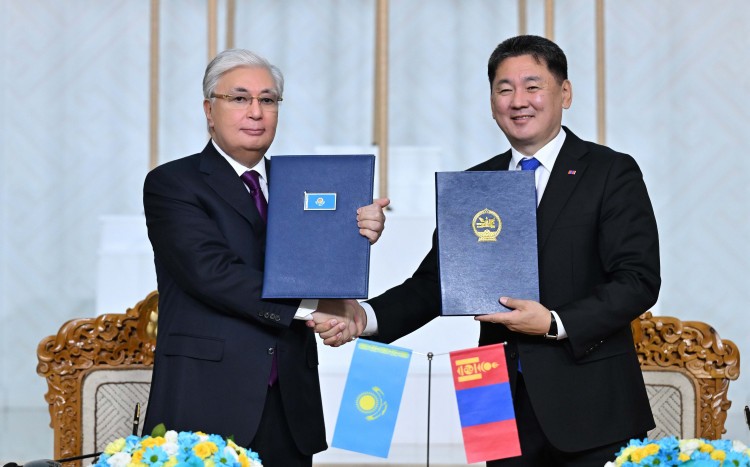
The recent state visit by Kassym-Jomart Tokayev to Mongolia, the first by a Kazakh president in 16 years, demonstrated an excellent approach to expanding Astana’s strategic ties. After all, despite 32 years of diplomatic relations and a relatively extensive Kazakh diaspora in Mongolia, under the first president of Kazakhstan, Nursultan Nazarbayev, Astana’s ties with Ulaanbaatar were essentially put on hold.

This pause in relations likely arose due to Mongolia’s political reputation in the region. Protests often erupt in the country, sometimes becoming particularly violent. In 2008, when the Kazakh authorities justified their failures in the economy with the outbreak of the global economic crisis, a state of emergency was imposed in Mongolia for four days in July. The reason was violent opposition protests against the results of the parliamentary elections. Protesters smashed the headquarters of the ruling party and set fire to several buildings in the center of Ulaanbaatar, killing five people and injuring 300.

For Mongolia, with its population of 3.4 million, this was a significant shock, as it was for its neighbors in the Eurasian region, where three leaders fell between 2003 and 2005 — Eduard Shevardnadze in Georgia, Leonid Kuchma in Ukraine, and Askar Akayev in Kyrgyzstan.

All this was declared in the region as an “export of revolutions,” building around this notion, a conspiracy theory about the machinations of the U.S. State Department and George Soros.

Tokayev’s state visit to Mongolia 16 years after Nursultan Nazarbayev refers to the Kazakh leader’s key idea about the renaissance of Central Asia. Mongolia is no stranger to the region in one way or another. The main thing for Kazakhstan is the strong Kazakh diaspora, which exceeds 117,000 people. This is the largest national minority in Mongolia and the second largest ethnic group after the titular one.

A Kazakh newspaper is published in Mongolia, some Kazakh TV channels are shown on television, and there is an hour of radio news in Kazakh. In short, the basis for strengthening relations is powerful.

Tokayev and the president of Mongolia, Ukhnaagiin Khurelsukh, who received him, spoke in both narrow and extended formats about reaching the level of strategic partnership.

Tokayev and Khurelsukh, even before the one-on-one meeting, had revitalized diplomatic and trade ties between Kazakhstan and Mongolia. Data from the Statistics Committee of the Ministry of National Economy of Kazakhstan provides evidence. Since 2017, there has been a steady decline in trade turnover between the countries. In 2017, its level was $74.8 million; in 2018 – $67.4 million; in 2019 – $59.9 million. In 2020, it fell to $29.3 million. COVID restrictions can explain such a sharp drop.

In 2021, the turnover reached almost $61 million, but at the end of 2023, the trade volume jumped to $150 million.

Therefore, when Tokayev said at a joint press briefing that he and the Mongolian president had agreed to turn over $500 million in the “foreseeable future,” this did not seem overly optimistic.

The Kazakh delegation did not come empty-handed; during Tokayev’s visit, the parties signed an investment agreement under which Kazakhstan would produce a remote sensing of the Earth — mapping using a satellite — for Mongolia. The cooperation will include building and delivering a spacecraft as part of a joint satellite constellation. This will be the first Kazakhstani space program.

Also, during the visit, Kazakhstan’s Ministry of Energy and Mongolia’s Atomic Energy Commission concluded a memorandum on cooperation in the field of nuclear energy. Not long ago, Kazakhstan citizens agreed to develop their nuclear industry in a referendum. Mongolia will adopt this experience.

In his commentary, Rustem Mustafin, deputy director of the Center for Political Studies at Kazakhstan’s Institute for Philosophy, Political Science and Religious Studies, listed other significant achievements from Tokayev’s visit to Mongolia. Mustafin commented that an agreement on joint exploration and development of “deposits of iron, phosphates, bauxite, rare minerals and critical minerals” looks very promising.

“The demand for critical raw materials worldwide is growing rapidly, especially those used in producing electronic high-tech products. Kazakhstan has large deposits of rare earth metals and has more than 5,000 undiscovered deposits with a total value of over $46 trillion. In Mongolia, the exploration and development of critical minerals is gaining momentum. Our countries have a lot to work on together to diversify relations. It is necessary to create favorable conditions for foreign investors, who will be motivated to invest not only in mining but also in the localization of high-tech industries, development of local scientific and technological base, creation of research centers, improving the level of education, and competence of local staff and stimulating innovation within the countries,” Mustafin said.

IDB to Fund $156.3 Million for Cancer Hospitals in Turkmenistan

Turkmenportal reported that a Turkmenistan delegation visited Washington DC from October 22 to 26 to participate in the annual meetings of the International Monetary Fund (IMF) and the World Bank, along with related events.

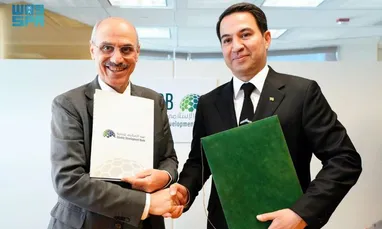
During the visit, representatives of Turkmenistan’s financial and banking sector engaged in bilateral discussions with foreign partners. According to the Saudi Press Agency, the Islamic Development Bank (IDB) has approved $156.3 million in funding to build three specialized cancer treatment hospitals in Turkmenistan. These modern facilities will be located in Balkanabad, Turkmenabad, and Mari, with a combined capacity to serve over 11,750 patients. The agreement was signed in a meeting between IDB President Muhammad Al Jasser and Rahimberdi Jepbarov, Chairman of the State Bank for Foreign Economic Affairs of Turkmenistan.

Meanwhile, on October 24, Swiss pharmaceutical company Roche, in partnership with Nobel Almaty Pharmaceutical Factory, launched the production of innovative drugs in Almaty, Kazakhstan. This initiative is part of an agreement between Roche, Kazakhstan’s SK-Pharmacy, Nobel, and the Kazakh Research Institute of Oncology and Radiology, supported by Kazakh Invest. Under this collaboration, Roche will locally produce three biotechnological drugs to treat HER2-positive breast cancer, a highly aggressive form affecting up to 20% of breast cancer patients in Kazakhstan.

Turkmenistan Scientists Develop New Camel Thorn Microencapsulation Technology

Specialists of the biotechnology department of the International Scientific and Technological Park of the Academy of Sciences of Turkmenistan have developed a technology for microencapsulation of camel thorn extract of medicinal plant. The development was officially recognized, and the State Intellectual Property Service of the Ministry of Finance and Economy of Turkmenistan issued the relevant certificate.

The development of such technologies has become relevant due to the high demand for drugs from local raw materials, which require methods that preserve physicochemical and technological properties. Extraction from camel thorns is carried out by crushing the plant and isolating the active substances with the help of a special mixture. Microencapsulation allows the active substances to be enclosed in microcapsules, which preserves their properties and regulates their release, enhancing the effectiveness of drugs.

The extract created can be used for pharmaceutical and food purposes. Microencapsulated extracts have several advantages, such as high pharmacological activity, positive tolerability, and minimal side effects. According to Altyn Rakhmanova, head of the biotechnology department, the peculiarity of the new technology is that it improves the therapeutic and preventive qualities of products at a low cost. All preparations are made of natural components. They meet the requirements of modern phytotherapy and do not contain artificial additives.

Camel thorn (Alhagi persarum) is a medicinal plant with many healing properties. It contains flavonoids, saponins, sugars, tannins, vitamins C, K, and B vitamins, carotene, ursolic acid, traces of alkaloids, essential oils, dyes, and resins. Camel thorn is used as a natural remedy for various ailments, effectively relieving colds, flu, sore throat, bronchitis, and coughs.

As previously reported by The Times of Central Asia, biotechnologists at the Academy of Sciences of Turkmenistan are advancing local biotechnological production. They are developing fodder supplements from the pods of the native gladichia tree and have also developed a new lactose-based gel designed to rejuvenate and address age-related skin changes.

Among other reported recent innovations, Turkmen scientists have created a therapeutic ointment from the maclura tree, introduced to Central Asia, which reduces inflammation and accelerates wound healing. Additionally, they have formulated a cosmetic cream made from oil derived from silkworm cocoons. Earlier, they also launched a line of crackers infused with camel thorn extract.


Rahmon Calls To End Persecution For Social Media ‘Likes’

Tajik President Emomali Rahmon has called on law enforcement agencies to stop prosecuting citizens for their activity on social media, particularly for likes and comments. Rahmon said this at the opening of a new training institute for Interior Ministry personnel, timed to coincide with the 30th anniversary of the Constitution and the Day of the Tajik Police.

In Tajikistan, even adding simple “likes” on posts by opposition figures, or reposting their videos, can lead to arrest. Since 2016, the country’s Criminal Code has included a provision on “public justification of extremism,” which allows law enforcement agencies to equate likes with support for extremist ideas. For example, in August 2023, 70-year-old Kamoliddin Sharofov was sentenced to five years for liking posts on a banned website.

Rahmon expressed concern over the growth of unfounded criminal cases against social media users, and noted that law enforcement agencies’ actions undermine public confidence. He called for restraint, emphasizing that any police action should show respect for citizens’ rights and the principles of democracy.

The Tajik government has previously been criticized by the opposition and international organizations, including the U.S. State Department, for arresting citizens for their online activities.