• KGS/USD = 0.01144 0%
  • KZT/USD = 0.00210 0%
  • TJS/USD = 0.10523 0%
  • UZS/USD = 0.00008 0%
  • TMT/USD = 0.28571 0%
  • KGS/USD = 0.01144 0%
  • KZT/USD = 0.00210 0%
  • TJS/USD = 0.10523 0%
  • UZS/USD = 0.00008 0%
  • TMT/USD = 0.28571 0%
  • KGS/USD = 0.01144 0%
  • KZT/USD = 0.00210 0%
  • TJS/USD = 0.10523 0%
  • UZS/USD = 0.00008 0%
  • TMT/USD = 0.28571 0%
  • KGS/USD = 0.01144 0%
  • KZT/USD = 0.00210 0%
  • TJS/USD = 0.10523 0%
  • UZS/USD = 0.00008 0%
  • TMT/USD = 0.28571 0%
  • KGS/USD = 0.01144 0%
  • KZT/USD = 0.00210 0%
  • TJS/USD = 0.10523 0%
  • UZS/USD = 0.00008 0%
  • TMT/USD = 0.28571 0%
  • KGS/USD = 0.01144 0%
  • KZT/USD = 0.00210 0%
  • TJS/USD = 0.10523 0%
  • UZS/USD = 0.00008 0%
  • TMT/USD = 0.28571 0%
  • KGS/USD = 0.01144 0%
  • KZT/USD = 0.00210 0%
  • TJS/USD = 0.10523 0%
  • UZS/USD = 0.00008 0%
  • TMT/USD = 0.28571 0%
  • KGS/USD = 0.01144 0%
  • KZT/USD = 0.00210 0%
  • TJS/USD = 0.10523 0%
  • UZS/USD = 0.00008 0%
  • TMT/USD = 0.28571 0%

Opinion: Mirziyoyev in Washington – New Deals Expected Amidst Peace Diplomacy

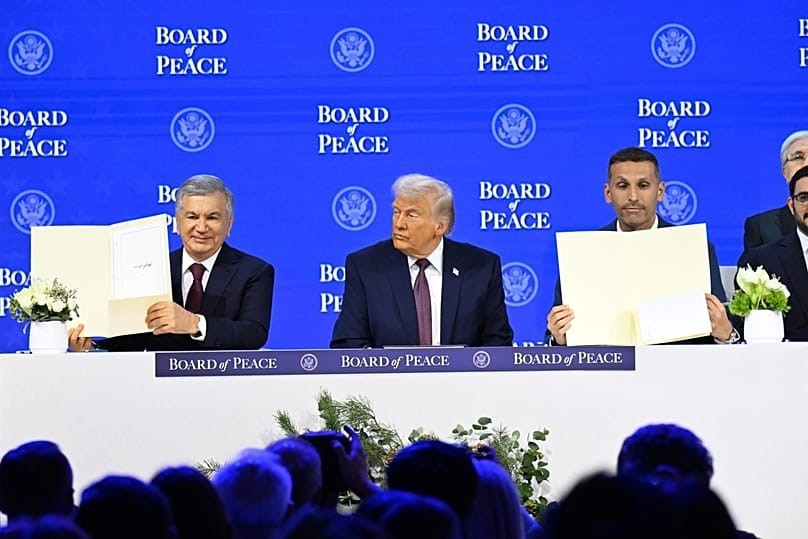
The President of Uzbekistan, Shavkat Mirziyoyev, has arrived on a working visit to Washington to participate in the inaugural meeting of President Trump’s Board of Peace on February 19, 2026, alongside the Presidents of Kazakhstan, Azerbaijan, and other heads of state. Against a backdrop of deep geopolitical tensions and raging conflicts across the world, Mirziyoyev’s second visit to the White House in less than four months suggests that U.S.-Uzbekistan relations are at their strongest in decades.

Mirziyoyev will be joined by Uzbekistan’s Foreign Minister, Minister of Investments, Industry and Trade, and other high-ranking officials. Uzbek Ambassador to the U.S. Sidikov and his team have been working around-the-clock for over two weeks, gearing up for the Trump–Mirziyoyev meeting.

President Mirziyoyev’s objective will be to elevate U.S.-Uzbek relations from a constructive relationship to a fully functional, deal-oriented partnership with a focus on capital flows and bilateral trade.  In addition to his desire for regional stability in West Asia, his signing up for the Board of Peace should be understood as indicating his desire to advance trade and investment and flows into Uzbekistan.

The Uzbeks are keen to nail down new money and capital guarantees to fund infrastructure along the U.S.-brokered “Trump Route for International Peace and Prosperity,” aka, the Zangezur Corridor between Armenia and Azerbaijan (TRIPP) – a roughly 27-mile-long piece of land that links Europe to Central Asia and beyond through the Caucasus.

TRIPP matters to Trump because it advances two goals at once: stabilizing the South Caucasus while more fully integrating U.S. trade with Uzbekistan and the Trans-Caspian International Transport Route (TITR)—a multimodal, 4,000 km transport network connecting China and East Asia with Europe via Kazakhstan, the Caspian Sea, Azerbaijan, Georgia, and Turkey.

Apart from the issues on the Board of Peace agenda, Mirziyoyev will push for ironclad U.S. commitments and cold, hard cash for transport corridors and their downstream beneficiaries.

Two big reasons driving Mirziyoyev ‘s thinking: first, Uzbekistan is one of only two double-landlocked countries in the world, the other being Liechtenstein—and second, Trump’s desire to nail down a peace agreement between Armenia and Azerbaijan, thereby resolving a long-standing territorial dispute that has taken thousands of lives. Mirziyoyev knows that Trump sees TRIPP as a path to lasting peace and regional prosperity across the broader region, which fits into the Board of Peace narrative.

Trump has referenced TRIPP repeatedly over the past year, and Mirziyoyev is well aware of this.  At UNGA last September 23, 2025, Trump said: “President Mirziyoyev is a terrific leader, and with this TRIPP corridor, Uzbekistan is going to see massive trade flowing through – it’s going to connect them directly to new markets without all the old hassles.”

And as Trump said on November 7, 2025, at the C5+1 Summit in Washington: “I’ve got great respect for President Mirziyoyev – he’s doing amazing things in Uzbekistan. The Trump Route, i.e., the TRIPP, is perfect for them; it’s going to cut transit times and costs, making Uzbekistan a powerhouse in regional trade.” Mirziyoyev is paying close attention to these remarks.

Mirziyoyev will build on Trump’s interest and love of deal-making, which shone through in these remarks by the U.S. President: “I am thrilled to announce an incredible Trade and Economic Deal between the United States and Uzbekistan. Over the next three years, Uzbekistan will be purchasing and investing almost $35 billion, and, in the next 10 years, over $100 billion in key American sectors, including critical minerals, aviation, automotive parts, infrastructure, agriculture, energy and chemicals, information technology, and others. I want to thank Uzbekistan’s Highly Respected President, Shavkat Mirziyoyev. We look forward to a long and productive relationship between our Countries.”

Vice President J.D. Vance

No doubt Mirziyoyev and his Ambassador to Washington have also been tracking Vice President Vance’s statements during his visits to Yerevan and Baku. Take, for example: “I think there is actually a lot of capital interested in this particular project. There are a lot of people across the world who think they can make a good return on investment by investing in Armenia and this TRIPP project.” Mirziyoyev will make every effort to win Vance over to his priorities.

Interagency Meetings

While in Washington, Mirziyoyev’s team should be meeting with the U.S. International Development Finance Corporation, the U.S. Department of Commerce, the U.S. Department of Transportation, and the Export-Import Bank of the United States, alongside investment banks, multilateral institutions, and the United States Congress.

As this process unfolds, Uzbekistan’s vision will remain to build a strong bridge between Central Asia and the South Caucasus, creating a space of unified cooperation that strengthens strategic ties and stability across the region.  At any rate, that’s the long-term game plan.

Concerning the Board of Peace, the results will most likely pass out of the news cycle in Uzbekistan within a day or two.  How news of the Uzbek head of state’s visit to Washington resonates in West Asia is a separate and still unfolding question.

It is clear, however, that if Mirziyoyev returns to Tashkent with fresh U.S. agreements and President Trump’s continued backing, which is expected, this will catalyze more win-win investments, neutralize the risks associated with Uzbekistan’s double landlocked status, and give significant impetus to more robust economic growth across the region.


The views expressed in this article are those of the author and do not necessarily reflect the official policy or position of the publication, its affiliates, or any other organizations mentioned.


Kyrgyzstan to Introduce One-Year Temporary Licenses for New Drivers

Kyrgyzstan plans to introduce a one-year temporary driver’s license for driving school graduates in an effort to ensure that new motorists develop sustainable skills for safe and responsible behavior on the road, according to a draft resolution of the Cabinet of Ministers of Kyrgyzstan currently undergoing public discussion.

The training period at driving schools in Kyrgyzstan has recently been extended from 2.5 months to 10 months. Under the proposed resolution, students demonstrating excellent academic performance would be eligible to take exams after four months of training and receive a temporary driver’s license valid for one year and restricted to use within the country.

According to the draft’s explanatory note, a temporary license would allow new drivers to assess their practical skills under real road conditions. If, during the one-year period, they do not commit serious traffic violations or cause traffic accidents, they would be issued a permanent driver’s license.

If a driver holding a temporary license commits serious traffic violations or is found responsible for an accident within one year, the temporary license would be annulled, and the driver would be required to return to driving school to complete the remaining six months of the standard training program.

The initiative is intended to improve discipline among new drivers and help reduce road accidents.

The proposed measure is part of a broader set of reforms aimed at strengthening driver education and lowering accident rates. In a related move, Kyrgyz authorities have suspended all private driving schools until August 30, 2026. During this period, driver training will be limited to state-run institutions. The length of training has also been extended from 2.5 months to 10 months. Officials say the reforms are designed to eliminate corruption and ensure that drivers are properly prepared before receiving licenses.

Additionally, Kyrgyzstan has introduced stricter traffic enforcement measures aimed at curbing repeat violations and improving road safety. Under the new rules, drivers who commit three serious traffic violations within a 12-month period are required to retake the traffic rules examination.

The reform follows concerning national road safety data. In 2025 alone, Kyrgyzstan recorded 8,456 traffic accidents, resulting in 900 deaths and 12,169 injuries. Over the past decade, more than 75,000 accidents have claimed over 9,000 lives.

Kazakhstan Increases Export Revenues from Processed Agricultural Products by One-Third

Kazakhstan significantly increased exports of high value-added agro-industrial products in 2025. Revenue from exports of processed agricultural goods rose by nearly one-third compared to the previous year, according to Minister of Agriculture Aidarbek Saparov.

By the end of 2025, food production reached $8.1 billion, an 8.1% increase year-on-year. Exports of processed agricultural products totaled $3.2 billion for the first 11 months of 2025, marking a 33.8% increase compared to the same period in 2024. By contrast, total exports of high value-added products in 2024 stood at $2.7 billion, with annual growth not exceeding 15%.

The share of processed goods in total agro-industrial exports reached 52% in 2025. According to the Ministry of Agriculture, this reflects a systematic policy aimed at diversifying agricultural exports and shifting toward products with greater added value.

The expansion of processing capacity has also increased the sector’s investment appeal. Investments in fixed capital in agriculture doubled, reaching $791.5 million. The structure of exports is also evolving. Previously, Kazakhstan exported raw lentils and imported processed groats at higher prices. Today, domestic processing and packaging facilities enable the country to fully supply the domestic market and export finished products. Kazakhstan ranks sixth globally in lentil exports and retains further growth potential.

The oilseed segment has become one of the key drivers of profitability in crop production. In 2025, the oilseed harvest reached 4.9 million tons, up 48% year-on-year. Sunflower oil exports increased to 600,000 tons, placing Kazakhstan eighth globally in export volumes.

To support this trend, four major projects were launched in 2024-2025 to expand and modernize oil processing plants. The projects have a combined capacity of approximately 1 million tons and a total investment value of $117 million. A lecithin production line, supplying the food and cosmetics industries, has been launched in the East Kazakhstan region. A similar facility is planned in the North Kazakhstan region.

Deep grain processing is also developing. Three enterprises with a combined capacity exceeding 500,000 tons are already operating, producing gluten, bioethanol and starch products. Six additional investment projects worth $3.8 billion are scheduled for implementation over the next three years. These projects involve the production of amino acids, including glutamate, threonine, leucine and lysine, and will be located in the Turkestan, Zhambyl, Akmola and Kostanay regions, as well as in Astana.

As previously reported by The Times of Central Asia, Kazakhstan has set a strategic objective for the agricultural sector to become one of the world’s three largest exporters of sunflower oil and to increase total exports of oil and fat products to $1 billion by 2028.

New Earthquake Jolts Almaty, Highlighting Central Asia’s Seismic Threat

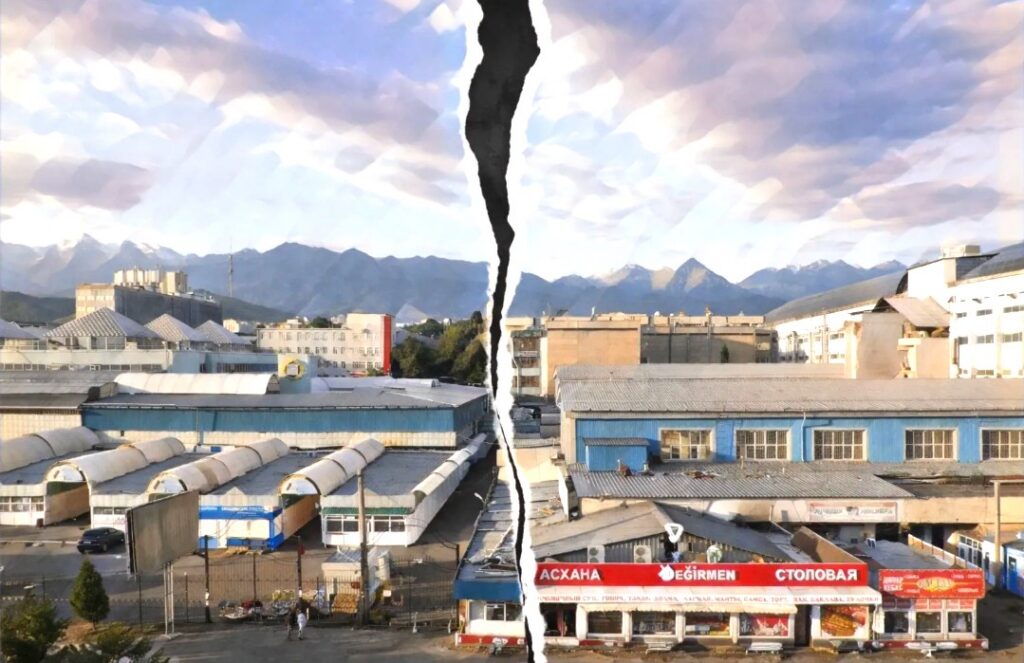
Many residents of Almaty, Kazakhstan’s largest city, have known since childhood what to do in the event of an earthquake. Children are taught to stand near load-bearing walls or structural beams in their homes, as these areas are considered more resistant during tremors. Many households keep an emergency kit with water, food and blankets in an accessible place. Such precautions are not excessive: Almaty experiences regular seismic activity.

The latest significant tremor occurred on February 17, with an epicenter located 74 kilometers northeast of the city. The earthquake registered a magnitude of 5.0. City residents left their homes and offices and gathered outside, a familiar reaction in a city long accustomed to seismic risk.

National alert system

In May 2024, Almaty introduced the Mass Alert system to notify residents of emergencies, including earthquakes, floods, and man-made disasters. The system uses Cell Broadcast technology to send text notifications to all mobile subscribers within a specific geographic area, regardless of their mobile operator. Because messages are transmitted through cell towers rather than individual calls or messages, the system is designed to avoid overloading mobile networks during emergencies. It is integrated with 28 seismic stations.

Many experts say the system’s launch followed the January 2024 earthquake, which was felt across southern Kazakhstan. Almaty experienced several tremors measuring up to magnitude 5.0, triggering widespread panic. Traffic jams stretching for kilometers formed on roads leading out of the city. Forty-four people sought medical attention, most of them injured while attempting to exit buildings quickly.

Scientists warn that a powerful and destructive earthquake in the region is inevitable, although the timing cannot be predicted. Almaty is located in a zone rated at up to 10 points on the MSK-64 seismic intensity scale. Each year, up to 200 minor tremors are recorded within an 80-kilometer radius of the city. Earthquakes with magnitudes between 2.0 and 4.0 are considered typical. Approximately 30 tectonic faults run through the city and its surroundings, more than 60% of them in mountainous areas.

Experts estimate that, given current dense and high-rise construction, as many as 30% of buildings could be destroyed in the event of an earthquake measuring 9-10 points in intensity. During the Soviet period, buildings taller than nine stories were generally prohibited in the city. The notable exception was the 25-story Kazakhstan Hotel, which was constructed with seismic reinforcement measures.

Today, high-rise construction has expanded significantly, including in some of the city’s more seismically vulnerable foothill areas. The emergency warning system does not predict earthquakes in advance; it issues alerts only once tremors have already been detected. The system has been activated during several real seismic events.

Seismological predictions

In Kazakhstan, official forecasts are issued by the Institute of Seismology. At the same time, attempts at earthquake prediction have occasionally emerged outside the scientific mainstream. One of the most prominent figures associated with such efforts is biophysicist Viktor Inyushin. In the 1990s, he appeared in the media describing experiments aimed at predicting earthquakes by observing crushed peas, acorns, barley seeds, bacterial colonies, and fungal spores. In 2018, Inyushin forecast a strong earthquake in Almaty in 2019. The prediction was publicly rejected by professional seismologists and did not materialize.

History of destruction

Central Asia experienced several devastating earthquakes in the 20th century, some of which nearly destroyed entire cities.

In Kazakhstan, the most powerful earthquake in more than a century is widely considered to be the 1911 Kemin earthquake, named after the river near its epicenter. It struck on January 4, 1911, at 4:25 a.m. The intensity at the epicenter reached 10-11 points, and its magnitude is estimated at 8.2. Hundreds of buildings were destroyed in Verny, as Almaty was then known, and many people were killed. Sub-zero temperatures worsened conditions for survivors. The main shock lasted about five minutes, an unusually long duration, and strong aftershocks continued for years.

A devastating earthquake struck Ashgabat, the capital of Turkmenistan, on the night of October 5-6, 1948. The magnitude was 7.3, with the epicenter located at a depth of 18 kilometers, almost directly beneath the city. Approximately 8,800 people were evacuated to other parts of the Soviet Union. Due to strict Soviet-era secrecy, the exact death toll remains uncertain. Some sources estimate between 25,000 and 27,000 fatalities.

Another major earthquake occurred in Tashkent, the capital of Uzbekistan, on April 26, 1966, at 5:23 a.m. Although the magnitude at the epicenter was 5.2, the intensity exceeded 8 points locally. Official figures reported eight deaths, but more than 300,000 people were left homeless. Families were relocated to other Soviet republics, and large-scale reconstruction efforts were undertaken.

According to scientists, seismic activity in Central Asia is linked to the ongoing formation of the relatively young Tien Shan mountain range. As tectonic processes continue, the region is expected to remain vulnerable to earthquakes for the foreseeable future.

Opinion: Turning Rivalry into Opportunity: Kazakhstan’s Strategic Autonomy

Over the past decade, global geopolitics has witnessed a clear return to Great Power competition, reviving elements of Cold War-style rivalry and a pronounced East-West divide.

Yet, contrary to the belief that international relations are defined exclusively by great powers, the countries of Central Asia, historically perceived as chess pieces between Moscow, Washington, and Beijing, have been exercising their own autonomy and asserting independent foreign policy paths. Kazakhstan, the region’s largest and most resilient economy, has arguably emerged as a leading example of this movement.

Through a careful balancing strategy, Kazakhstan has worked to avoid firmly aligning itself with any one geopolitical camp. Rather than choosing sides, it has chosen options. However, when pressure from one power arises, Astana’s response has rarely been resistance for its own sake, but rather negotiation and taking advantage of the opportunities that power can offer it. Essentially, if alignment is expected, it comes at a price. In this sense, great-power competition is treated less as an existential threat and more as a marketplace – one in which influence is traded. However, the question is, is there space for both Beijing and Washington?

In this context, there is much to examine regarding last week’s B5+1 forum in Bishkek. Bringing together government officials and private sector representatives from Kazakhstan, Kyrgyzstan, Tajikistan, Turkmenistan, Uzbekistan, and the United States, the forum aimed to deepen economic ties and explore investment opportunities. Among the attendees was Sergio Gor, the U.S. Special Envoy for South and Central Asia. Perhaps the B5+1 forum is not just a routine investment event; it’s a signal from the U.S. to China.

A cornerstone of the cooperation between the U.S. and Kazakhstan was illustrated by the creation of a partnership in rare metals. The Ulba Metallurgical Plant (UMP) is located in north-eastern Kazakhstan. UMP is one of the very few facilities worldwide capable of carrying out the full processing cycle for rare metals. What elevates this cooperation beyond conventional trade is UMP’s production of materials such as beryllium and tantalum. These materials are critical inputs for the defense industry supplied to major aerospace and defense contractors, including Boeing and Lockheed Martin, both of which conduct business with the U.S. Department of Defense. Thus, Kazakhstan’s contribution to the U.S. defense supply chains signals a broader shift in regional geopolitics. By enabling access to strategically important resources that underpin advanced military technologies, Astana is strengthening its economic alignment with Washington, while subtly influencing the broader balance of defense capabilities between Western and Eastern powers.

Furthermore, another one of the headline-making deals at the B5+1 forum was the announcement of a joint venture between U.S.-based Cove Capital LLC and Kazakhstan’s National Mining Company to develop the world’s largest known undeveloped tungsten resource. This deal is significant against the backdrop of the ongoing tug-of-war between Beijing and Washington over strategic natural resources, and analysts note that the U.S. and China are already competing for Kazakhstan’s tungsten – another material crucial in the defence and microelectronics industries. China presently controls nearly 80% of the worldwide tungsten market, and a Chinese company has reportedly made an aggressive bid for the development rights to these deposits. Ultimately, U.S.-based Cove Kaz Capital’s successful bid hinged on two factors. Firstly, funding support from the U.S. Development Finance Corporation (DFC), which enabled them to equal the Chinese offer; and secondly, arguably more importantly, the American firm’s pledge to enhance tungsten processing capacity within Kazakhstan.

This deal underscores a dynamic often overlooked: while global powers may appear to dictate the trajectory of Central Asian development and geopolitics, the reality is that the competition between them creates leverage for countries like Kazakhstan. By strategically engaging with multiple powers, Kazakhstan can advance its own economic and strategic agenda, effectively turning great-power rivalry into a tool rather than a constraint. In this case, the country is not merely a passive actor in the greater East-West chess game; rather, it is spoilt for choice and thus has much more autonomy in deciding its economic future.

While the agenda covered a range of issues, transport infrastructure emerged as the most consequential and arguably the most sensitive topic. Connectivity lies at the core of Central Asia’s economic future, but it is also an area where geopolitical competition is visible. For example, the attendance of representatives from the American Rail Group and discussions regarding rail infrastructure projects in Kyrgyzstan signals American interest in regional transport development alongside existing and planned Chinese-led railway initiatives.

This raises a key question: is there room for a U.S.-backed alternative corridor alongside China’s Belt and Road? Perhaps there is – and perhaps this is precisely the point. As Beijing and Washington compete for influence through infrastructure and investment rivalry, Central Asian states find themselves in an advantageous position. By welcoming parallel initiatives, they are able to advance economically by diversifying partnerships and enhancing their strategic autonomy without having to overtly align with either side.

But what can be said about China’s reaction to more U.S. involvement in the region? It’s important to define and differentiate their approaches. For China, Central Asia is primarily a conduit for transport routes, access to critical materials, and strategic depth. On the other hand, the U.S. takes a different approach, viewing the region largely through a geopolitical lens and increasing influence.

However, the U.S. overtaking China will be difficult in the near future as China solidified its position in 2025 as Central Asia’s top trade partner, with overall turnover topping $106.3 billion, a 12 percent increase over the previous year’s total. Moreover, China doesn’t seem concerned, for now, as it is comfortable in its position in Central Asia; however, might there be a threat down the road? Only time and the aggression of U.S. involvement in Central Asia will tell. Beijing and Washington will continue advancing their geoeconomic and geopolitical strategies.


The views expressed in this article are those of the author and do not necessarily reflect the official policy or position of the publication, its affiliates, or any other organizations mentioned.
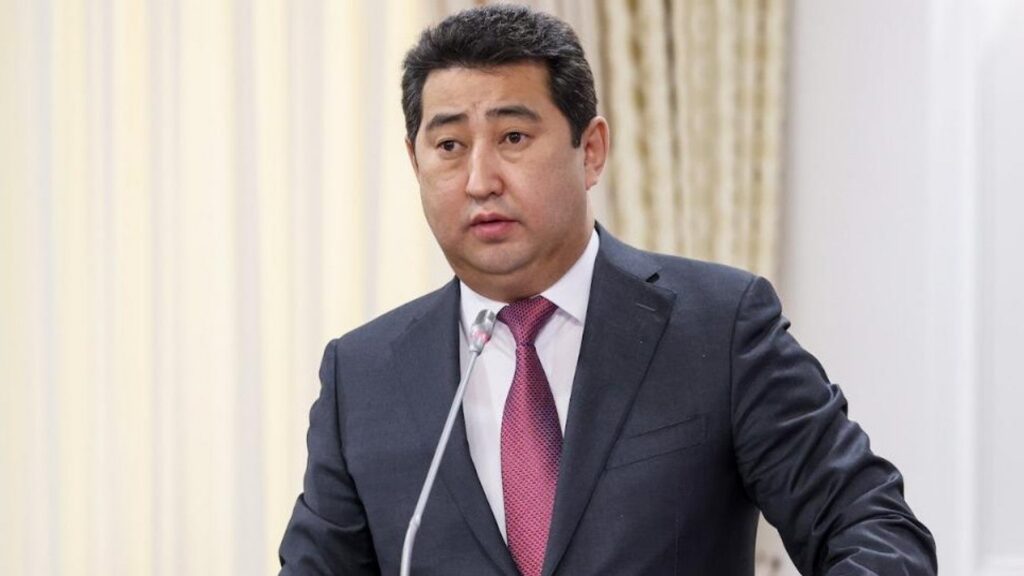
Kyrgyzstan Between the Russian World and Global Chaos: An Interview With Deputy Prime Minister Edil Baisalov

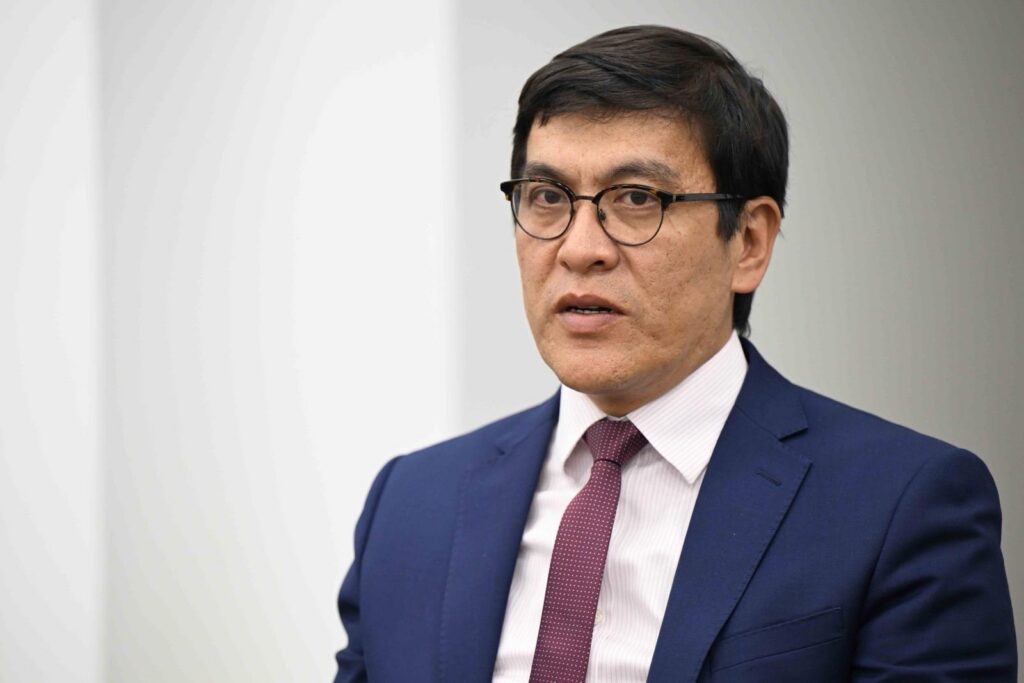
Edil Baisalov is a politician who began his career as a civil-rights activist, became a prominent member of Kyrgyzstan’s non-governmental organization (NGO) sector, and is now serving as the country’s Deputy Prime Minister. In an exclusive interview with The Times of Central Asia, he explained not only how his views have changed over the years, but also how Kyrgyzstan is seeking to find its place in what he described as a rapidly changing global landscape.

In Baisalov’s assessment, the global system is facing a crisis of democracy. “The world order, as we know it, is collapsing – or at least is under attack from both within and without,” Baisalov told TCA. “The era of global hypocrisy is over, and the people of Kyrgyzstan have woken up.

“What various international institutions have taught us over the years – their lectures on how to develop an economy, how to pursue nation-building, and so forth – has been proven wrong. Throughout the 1990s, Kyrgyzstan was one of the most diligent students of the liberal policies promoted by the “Chicago Boys.” We followed their instructions to the letter. Kyrgyzstan was the first post-Soviet country to join the World Trade Organization in 1998, and we were the first to receive normalized trade relations with the U.S. with the permanent repeal of the Jackson-Vanik amendment. All of our previous governments followed IMF conditionality dictates to the letter, especially in deregulation, mass privatization, and all the austerity programs and budget sequestrations. We were promised prosperity; that the free markets and the invisible hand would take care of everything. But it did not work.

“I remember it well: at the time, U.S. President Bill Clinton laughed at China, saying that Beijing needed to adopt certain policies, to liberalize, or that science could not prosper in a closed society. He claimed the Chinese model was doomed to fail, arguing that scientific and technological breakthroughs could only occur in a Western-style society with minimal state intervention. Yet today, we witness the triumphant rise of the People’s Republic of China. This is not only an emergence but also a return to the rightful place of a great civilization that has, for millennia, contributed enormously to humankind.”

TCA: Does this mean you now see China, rather than the West, as a model for Kyrgyzstan to follow?

Baisalov: It’s not about the Chinese model or any particular foreign template. What we understood is that as a nation, we are in competition with other nations. Just like corporations compete with each other, nations must look out for themselves. If our state does not actively develop industries and sciences, there is no formula for success. All those ideologies promoting the “invisible hand” – the idea that everything will naturally flourish on its own – are simply false.

TCA: When did Kyrgyzstan stop taking orders from outside forces and begin making independent national decisions?

Baisalov: We used to be naive about wanting to be liked by others. But not anymore. In the last five years of our development, most of what we did went against the prescriptions of outside forces. We realized that it wasn’t just about following advice – it was about maturing as a nation and taking responsibility for ourselves. Now, we are pursuing a pragmatic course of development and making decisions based on our own best interests.

TCA: It seems this change came about when you became Deputy Prime Minister.

Baisalov: I didn’t want to join President Sadyr Japarov’s team initially. They tried to recruit me, but I resisted. However, I am proud that I eventually accepted his proposal. I’m very proud of our achievements. This country is three times richer than it was five years ago. I could leave tomorrow and spend the rest of my life proudly, knowing what I have significantly contributed to the development of Kyrgyzstan. But for the time being, I’m serving my nation. I believe there is no higher calling than that.

TCA: How do you see President Japarov’s future in light of his recent decision to dismiss Kamchybek Tashiyev as head of the State Committee for National Security and Deputy Prime Minister?

Baisalov: I strongly believe that President Sadyr Japarov will be reelected, and I’m looking forward to the presidential election next January. There may be some interesting developments and strong contention, but I don’t believe General Tashiyev will run for president, even though many people are urging him to do so. General Tashiyev is a great patriot, and he will not risk the stability of this country. I believe he will endorse President Japarov, as he has publicly pledged on numerous occasions.

TCA: You argue for a stronger presidential system now, while in the past you supported a rather liberal model. How did your attitude change?

Baisalov: I used to be a very individualistic libertarian, but I changed. The whole world has changed, not just me.

TCA: Are you more conservative now?

Baisalov: I’m probably more conservative than I used to be, but I’m still much more liberal than most people in my country. If I were from Moldova, Georgia, or Serbia, I wouldn’t be in politics. I would have gone into business or emigrated. Because sooner or later, all these countries will join the European Union. There’s no choice; it’s just a matter of time – of course, if the EU doesn’t collapse before then. But right now, the EU is like a huge magnet, a very attractive model that draws you in. Here in Kyrgyzstan, we don’t have a choice between the EU and the Eurasian Economic Union. We are here, and we are doing what we must do. That’s why I’m in this fight – because I want to steer this country toward the best possible outcome.

TCA: Why did you recently say that Kyrgyzstan was forced into the Eurasian Union?

Baisalov: I criticized the then national leadership for selling Kyrgyzstan’s accession to the Eurasian Economic Union as if we would automatically reap all the benefits. At the time, we really didn’t gain much. Other EAEU member states have significant exports, but for us, besides a few mineral resources, mainly gold, the main “export” is our labor to Russia and Kazakhstan. One supposed benefit is the free movement of labor. Theoretically, under Union law, Kyrgyz citizens have the fundamental right to work in Russia on equal terms with Russian citizens. But in reality, it’s not working. Most recent legislation in Russia actually places our labor migrants in the same category as migrants from neighboring Uzbekistan and Tajikistan, who are not even members of the EAEU.

TCA: Does that mean you plan to leave the EAEU?

Baisalov: We don’t have such plans. What we actually want is to attract foreign investors – for example, to build a manufacturing base here in Kyrgyzstan, as that would give them access to the Eurasian market. We want to take full advantage of our membership in the EAEU.

TCA: While you aim to improve the status of Kyrgyzstan’s labor migrants in Russia, at the same time, you have a growing number of foreign workers in Kyrgyzstan.

Baisalov: We had a big argument inside the Cabinet and the Presidential Administration. Of course, we want to provide jobs in our growing economy for our own people. In the social sector of the Cabinet, some of us, including myself, wanted to protect the market and put up barriers to foreign workers. But we were overruled by the pro-business part of the Cabinet. They argued that our construction boom needs foreign laborers, and our expanding manufacturing base – especially in the garment industries – faces challenges because the salary expectations of our own nationals are already too high, making us less competitive. So yes, we already have at least 25,000, if not more, foreign workers. This is a very unique experience for us.

TCA: Your critics would say that if you cannot provide jobs to your own people, why bring in foreign workers?

Baisalov: The world is not black and white. There are no easy solutions. My instinct was to protect our own labor market and only allow highly qualified foreign workers. But the pro-business part of the Cabinet won the argument. Even for the construction of the Presidential Administration, we initially relied on our own workforce, but in the end, we had to bring in foreign workers. We have moved from one way of thinking to another. That is why we now follow a very pragmatic path of development that prioritizes our national well-being and prosperity. In a way, this coincides with what has happened in the United States.

TCA: In what way?

Baisalov: I remember very well in the 1990s, NAFTA – the North American Free Trade Agreement – was presented as a globalist project that would improve the lives of every American family while helping develop Canada and Mexico. But the reality is different. I’ve seen small towns in America devastated, and I completely understand why the vast majority of American voters, who have been negatively affected by this globalist system, are choosing to vote for Trump and support the America First approach.

TCA: Speaking of “America First” and protecting national interests, you recently said that Kyrgyzstan is part of the Russian world. How does that view fit into your vision of national priorities?

Baisalov: My statement was misinterpreted, and some people, both in Kyrgyzstan and abroad, even accused me of being “sold out” to the Russians. There were many negative comments. But what I said is simply a fact. The average Kyrgyz villager, when using social media, watching Hollywood movies, or researching something online, overwhelmingly consumes this content in Russian. It’s a fact. I even consider it a failure of our national elites and cultural institutions that our children grew up watching Hollywood movies and cartoons in Russian.

TCA: Do you plan to change that?

Baisalov: There are countries that have built their national identity on not being Russia, or being “anti-Russia.” Former Ukrainian President Leonid Kuchma even wrote a book, Ukraine is not Russia. There are also quite a few activists in Kyrgyzstan who are promoting an anti-colonial narrative. I am not among them. I do believe that we need to build a strong Kyrgyz identity, but it should not be based on anti-Russian sentiment. I believe we must preserve the Russian language. We are bilingual, and we are proud of it. For example, our children, by default, are much smarter than many monolingual people. Studies even say it can give you around 20 extra IQ points.

TCA: Do you personally feel yourself as part of the Russian world?

Baisalov: I don’t live in the Russian world. I read The New York Times, Svenska Dagbladet, The Economist, or Hürriyet. I’m glad that I can also watch Hollywood movies in English. I’m cosmopolitan, and I strongly believe that our people should also learn to speak English – but not at the cost of abandoning the Russian language.