• KGS/USD = 0.01144 0%
  • KZT/USD = 0.00213 0%
  • TJS/USD = 0.10456 0.19%
  • UZS/USD = 0.00008 0%
  • TMT/USD = 0.28490 0%
  • KGS/USD = 0.01144 0%
  • KZT/USD = 0.00213 0%
  • TJS/USD = 0.10456 0.19%
  • UZS/USD = 0.00008 0%
  • TMT/USD = 0.28490 0%
  • KGS/USD = 0.01144 0%
  • KZT/USD = 0.00213 0%
  • TJS/USD = 0.10456 0.19%
  • UZS/USD = 0.00008 0%
  • TMT/USD = 0.28490 0%
  • KGS/USD = 0.01144 0%
  • KZT/USD = 0.00213 0%
  • TJS/USD = 0.10456 0.19%
  • UZS/USD = 0.00008 0%
  • TMT/USD = 0.28490 0%
  • KGS/USD = 0.01144 0%
  • KZT/USD = 0.00213 0%
  • TJS/USD = 0.10456 0.19%
  • UZS/USD = 0.00008 0%
  • TMT/USD = 0.28490 0%
  • KGS/USD = 0.01144 0%
  • KZT/USD = 0.00213 0%
  • TJS/USD = 0.10456 0.19%
  • UZS/USD = 0.00008 0%
  • TMT/USD = 0.28490 0%
  • KGS/USD = 0.01144 0%
  • KZT/USD = 0.00213 0%
  • TJS/USD = 0.10456 0.19%
  • UZS/USD = 0.00008 0%
  • TMT/USD = 0.28490 0%
  • KGS/USD = 0.01144 0%
  • KZT/USD = 0.00213 0%
  • TJS/USD = 0.10456 0.19%
  • UZS/USD = 0.00008 0%
  • TMT/USD = 0.28490 0%

Kazakh Zhuz and Rus: From History to the Modern Day

The zhuz are tribal unions that have played an important role in the history and culture of the Kazakh people. There are three main zhuzes in Kazakhstan: the Senior Zhuz, the Middle Zhuz, and the Younger Zhuz. Each includes several tribes which have their own unique traditions and customs.

In general, zhuz began to form in the XVI-XVII centuries, when Kazakhs united to protect their lands from external threats. The Senior Zhuz occupied the southern and southeastern regions, the Middle Zhuz occupied the central and northern regions, and the Younger Zhuz occupied the western and northwestern territories of Kazakhstan. Each zhuz had its own system of governance and societal norms.

In addition, each zhuz had its own ru, which in Kazakh means patriarchal clan, descended from one ancestor of the seventh tribe or more.

Some of the most common ru include:

Dulat: One of the largest clans of the Senior Zhuz, known for its historical significance and large numbers.

Naiman: An important clan of the Middle Zhuz, which has played a significant role in the history of the Kazakh people.

Argyn: Another major clan of the Middle Zhuz, known for its warriors and cultural traditions.

Adai: A clan of the Younger Zhuz which is famous for its traditions and history.

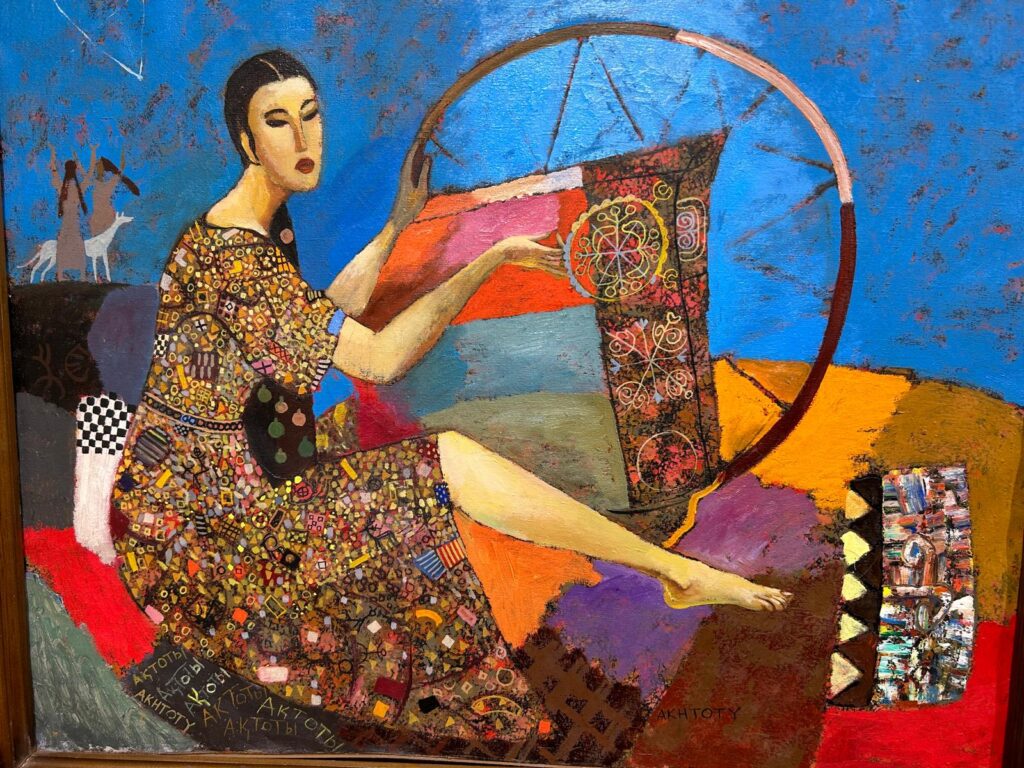
Today, zhuz continue to play an important role in the life of Kazakhstan. People remain proud to belong to a particular zhuz and ru, passing on its culture to their children. For example, Kamila, a 20-year-old student from Almaty says she is honored to belong to the Argyny ru, and she and her family try to preserve its traditions.

“Our tamga, which in Kazakh means ancestral family sign, is a sign of infinity, and everyone in our family has a sign of the clan hanging. We are very proud of it, and I feel a connection to this symbol.”

Yerzhan, a 27-year-old, programmer and student of photography from Taraz, is proud of his Naiman background.

“They often say about us that we’re brave, courageous and strong-willed, because our ancestors fought with the armies of Genghis Khan,” he told TCA.

Asel from Shymkent, a 21-year-old student at the Taraz State University, an aspiring musician who plays the dombra, feels a connection with her ancestors from the Younger Zhuz, namely the Adai ru, and tries to follow their example. “My grandfather told me that many batyrs, Sufis, biys and akyns came from Adai. Beket-ata is especially famous. Perhaps that’s why I began to study music. There is a story that it was Adai ru who developed a special technique of playing the dombra which is known as the Mangistau school.”

Kazakh zhuz and rus remain an important part of the history and culture of Kazakhstan, and continues to live in the hearts and minds of people, preserving their traditions for future generations.

Tajikistan’s Rahmon: No Military Solution to Palestinian Conflict

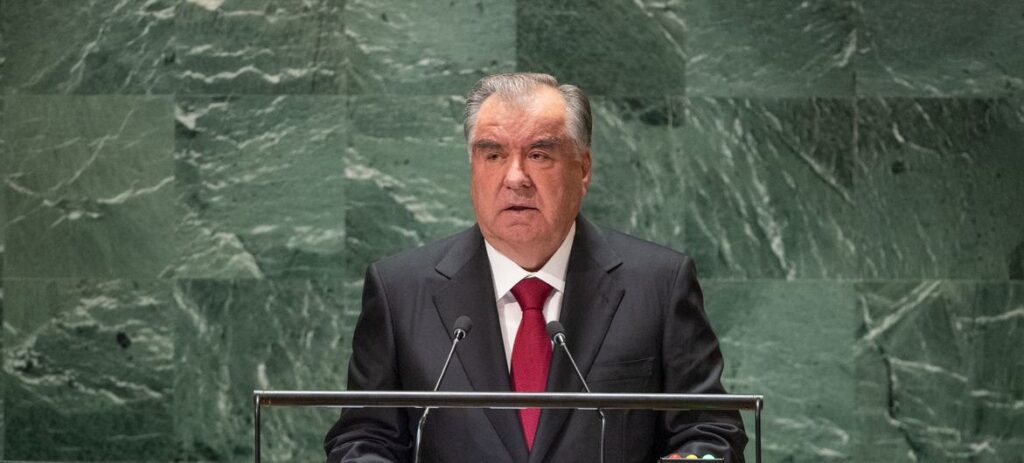
The President of Tajikistan, Emomali Rahmon, has said that the current situation in the Middle East proves that there is no military solution to the Palestinian conflict.

Speaking at the 79th session of the UN General Assembly in New York, Rahmon said that the Palestinian crisis is a deep concern among Tajikistan’s people.

“Tajikistan believes that the final and real solution of this issue is possible only by fulfilling the decisions of the United Nations on the creation of an independent Palestinian state based on the borders of 1967,” the Tajik leader said.

He hopes the parties will stop fighting, work on peace talks, and take adequate measures to restore stability in Palestine.

He added that Dushanbe supports global stability and socio-economic development in Afghanistan. “For this purpose, Tajikistan is always ready to contribute to restoring and developing various aspects of a peaceful life in Afghanistan,” Rahmon said.

Rahmon called on the international community to help the “long-suffering people of Afghanistan, including those affected by natural disasters,” to prevent a humanitarian crisis.

The Times of Central Asia has reported that Kyrgyz President Sadyr Japarov addressed the 79th session of the UN General Assembly and called on the world community to reduce weapons and international tension.

World Justice Project: Kazakhstan Leads, Uzbekistan Improves, Kyrgyzstan Drops

The World Justice Project has announced the 2023 ranking of countries based on the rule of law. The ranking is based on eight indicators across 142 countries, which include constraints on government powers, the absence of corruption, open government, fundamental rights, order and security, regulatory enforcement, civil justice, and criminal justice. Denmark, Norway, and Finland occupy the highest places on the list.

Kazakhstan has the highest score among the countries of Central Asia, placing in 65th. The country’s ranking in terms of corruption, order and security, and civil justice all improved. Uzbekistan placed in 78th, with its indicators for order and security particularly high; the state is listed 17th in this category, with indicators for the absence of corruption also positive. Both Kazakhstan and Uzbekistan have improved their ranking by 2 points compared to last year.

Kyrgyzstan, meanwhile, dropped one place to 103rd, whilst Tajikistan and Turkmenistan are not included in the rankings.

China-Kyrgyzstan-Uzbekistan Railway Company Opened in Bishkek

On September 28, LLC China-Kyrgyzstan-Uzbekistan Railway Company opened in Bishkek for the purpose of constructing and operating a line connecting the three countries. The opening ceremony was attended by the Chairman of the Cabinet of Ministers of the Kyrgyz Republic, Akylbek Japarov, the Chinese Ambassador to Kyrgyzstan, Du Dewen, high-ranking officials from the Department of Foreign Capital and Overseas Investment of China’s National Development and Reform Commission, and Uzbekistan’s Minister of Transport, Ilkhom Makhkamov.

Emphasizing the railway’s importance for the region, Japarov stated: “We call this project ‘the construction of the century.’ It will take economic cooperation between China and Central Asian countries to a qualitatively new level.”

Currently, neither Kyrgyzstan nor Uzbekistan has a rail link with China, with Central Asia only having a connection to China through Kazakhstan. Kyrgyzstan and Uzbekistan also have no railway connecting the two countries.

China, Kyrgyzstan, and Uzbekistan signed an intergovernmental agreement on the railway construction project on June 6 in Beijing. As previously reported by The Times of Central Asia, the 523 km railway will run through Kashgar (China), Torugart, Makmal, Jalal-Abad (Kyrgyzstan), and Andijan (Uzbekistan). A transit and logistics infrastructure will be developed along the route. Once completed, the line will see 15 million tons of cargo annually. In June, Akylbek Japarov confirmed a statement made by Kyrgyz President Sadyr Japarov in April 2024, stating that the railway construction would cost $8 billion as opposed to the preliminarily estimate of $4.7billion. 

Uzbekistan Plans to Increase Share of Green Energy to 40% by 2030

Uzbekistan intends to increase the share of renewable energy sources in the country’s energy consumption structure to 40% by 2030. Energy Minister Zhurabek Mirzamakhmudov announced this at the “Russian Energy Week” forum.

According to Mirzamakhmudov, renewable energy, including solar and wind power plants, will become the basis for meeting the growing electricity demand as part of the country’s growth strategy.

Mirzamakhmudov noted that Uzbekistan’s economy is growing by 6% annually, and the population will continue to grow. This causes the demand for electricity to grow by 7-8% per year, and by 2030, this figure may stabilize at 7.5%. Uzbekistan plans to introduce up to 20 gigawatts of solar and wind power plant capacity to meet this demand. It is expected that the share of renewable energy sources in the country’s total energy balance will reach 40%.

The share of renewable energy is about 10%, but by the end of this year, it should increase to 15%. In the coming years, 2.5 to 3.5 gigawatts of new capacity will be commissioned annually. In addition, considerable attention will be paid to developing thermal and hydroelectric power plants, which are planned to reach 18.5 gigawatts of capacity by 2030.

The minister also emphasized the importance of energy storage systems. Uzbekistan plans to install 300 megawatts of storage capacity this year and increase it to 4.2 gigawatts by 2030, mainly using lithium-ion batteries. Along with this, projects to create hydro-battery stations will be implemented. Mirzamakhmudov added that all these projects are financed by foreign direct investment, demonstrating the high interest of international investors in the country’s energy sector.

The Russian Energy Week 2024 forum is being held in Moscow from September 26 to 28. The event’s main theme is “Energy Cooperation in a Multipolar World.” More than 70 speakers from various countries have participated, including from Russia, BRICS countries, and Africa. The forum discussed topics such as sustainable energy development, the role of hydrocarbons in the future, and issues of technological independence. One of the key events was the meeting of BRICS energy ministers.

Earlier, The Times of Central Asia wrote about the annual meeting of the Board of Directors of the Asian Infrastructure Investment Bank (AIIB) held in Samarkand on September 25-26, where Uzbek President Shavkat Mirziyoyev proposed a program of green energy development for Central Asia.

UNESCO Concerned About Plans to Develop Western Tien Shan

UNESCO has expressed concern over the plans of Kyrgyzstan, Kazakhstan, and Uzbekistan to develop natural areas of the Western Tien Shan, a World Natural Heritage site. This concern was realized after a visit by UNESCO and the International Union for Conservation of Nature (IUCN), which was a joint mission to these countries to assess the state of the site and the impact of economic activity on it. The public foundation (PF) “Rivers Without Borders” stated this in its report.

According to UNESCO, the “Western Tien Shan” is a transboundary site in the Central Asian Tien Shan mountain system, one of the seven largest mountain ranges in the world. The altitude of different sections of the Western Tien Shan varies from 700 to 4503 meters. The site consists of diverse landscapes characterized by a vibrant biodiversity. The Western Tien Shan region is important globally as it is the birthplace of several fruit tree species and is characterized by diverse forest types and unique plant life.

In Kyrgyzstan, evidence of the illegal mining of gold within the territory of the World Heritage Site was revealed. In addition, a powerful hydroelectric power plant is planned to be built on the Chatkal River, which may flood protected areas and disrupt the landscape. The construction of the Talas-Chatkal-Tashkent highway along the reservoir will only aggravate the ecological situation.

In Kazakhstan, the authorities plan to build a cascade of hydropower plants on the Ugam River, which could destroy the current river ecosystem. Part of the river’s flow will be directed through a 210-kilometer pipe for use in other regions of Turkestan region. Experts expressed severe concerns about destroying the natural ecosystem and possible consequences for local flora and fauna.

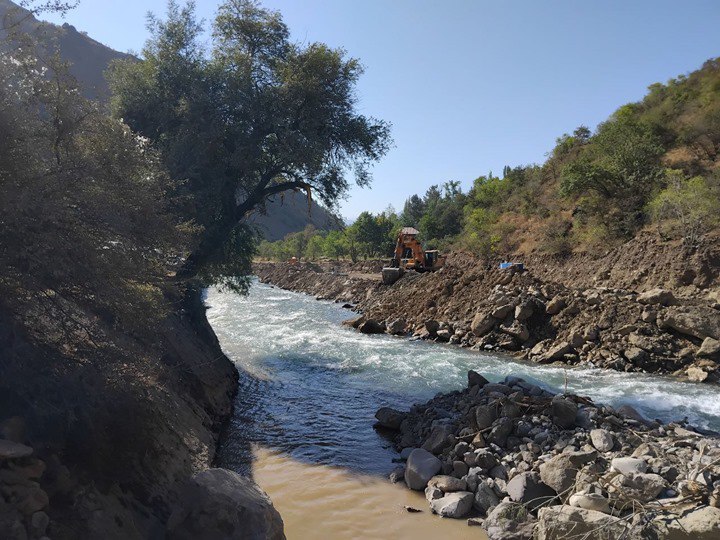
The situation is no less alarming in Uzbekistan: the Chatkal and Ugam rivers have already been dammed, significantly altering their natural landscape. During the visit, the experts said that bulldozers and excavators are already changing the course of the Ugam River, channeling it into artificial channels to construct several small hydropower plants.

Rivers Without Borders also oppose these projects, pointing out that they violate international standards and UNESCO requirements. The organization’s chief specialist, Evgeny Simonov, stressed that implementing the projects without appropriate environmental assessments and consultations with UNESCO violates the Convention for the Protection of the World Cultural and Natural Heritage.

The report on the mission’s results is expected to be presented at the next session of the UNESCO World Heritage Committee in 2025 in Sofia, Bulgaria.