• KGS/USD = 0.01144 0%
  • KZT/USD = 0.00215 0%
  • TJS/USD = 0.10641 0%
  • UZS/USD = 0.00008 0%
  • TMT/USD = 0.28530 0%
  • KGS/USD = 0.01144 0%
  • KZT/USD = 0.00215 0%
  • TJS/USD = 0.10641 0%
  • UZS/USD = 0.00008 0%
  • TMT/USD = 0.28530 0%
  • KGS/USD = 0.01144 0%
  • KZT/USD = 0.00215 0%
  • TJS/USD = 0.10641 0%
  • UZS/USD = 0.00008 0%
  • TMT/USD = 0.28530 0%
  • KGS/USD = 0.01144 0%
  • KZT/USD = 0.00215 0%
  • TJS/USD = 0.10641 0%
  • UZS/USD = 0.00008 0%
  • TMT/USD = 0.28530 0%
  • KGS/USD = 0.01144 0%
  • KZT/USD = 0.00215 0%
  • TJS/USD = 0.10641 0%
  • UZS/USD = 0.00008 0%
  • TMT/USD = 0.28530 0%
  • KGS/USD = 0.01144 0%
  • KZT/USD = 0.00215 0%
  • TJS/USD = 0.10641 0%
  • UZS/USD = 0.00008 0%
  • TMT/USD = 0.28530 0%
  • KGS/USD = 0.01144 0%
  • KZT/USD = 0.00215 0%
  • TJS/USD = 0.10641 0%
  • UZS/USD = 0.00008 0%
  • TMT/USD = 0.28530 0%
  • KGS/USD = 0.01144 0%
  • KZT/USD = 0.00215 0%
  • TJS/USD = 0.10641 0%
  • UZS/USD = 0.00008 0%
  • TMT/USD = 0.28530 0%

Tajikistan to Make Tourism Pitch at Rock Spire Site

Tajikistan, where tourism has long been hindered by security concerns and a lack of infrastructure, plans to host an international tourism conference this summer in one of the country’s most picturesque areas.

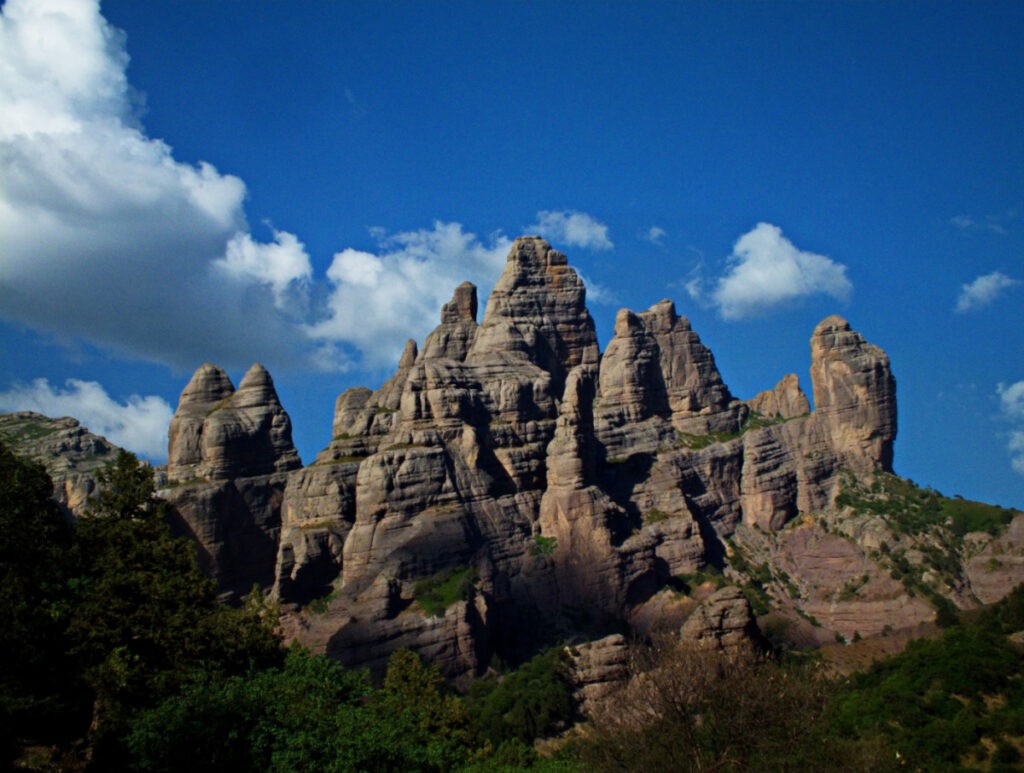
People from more than 20 countries are expected to attend the event in the mountainous region of Childukhtaron on June 4-5, according to tourism officials in Khatlon, the southern province that encompasses the natural spires of rock. The name, Childukhtaron, derives from ancient lore about girls who turned into towering rock formations to thwart an invading force.

Childukhtaron is dozens of kilometers away from Tajikistan’s border with Afghanistan, the scene of occasional incursions into Khatlon from the Afghan side by suspected drug smugglers as well as incidents of deadly attacks on Chinese workers. Tajikistan has stepped up security close to the border and says the area is under control, while tourism officials are confident that Childukhtaron is far enough away from the frontier to be secure.

Still, some travelers might be deterred by long-running safety concerns about Tajikistan. A number of countries warn against travel to the immediate Tajik-Afghan border region and advise caution in other parts of the country because of concerns about terrorism.

Canada, for example, says: “Avoid all travel to within 10 km of the border with Afghanistan due to the dangerous security situation and the threat of terrorism.”

Earlier this year, China advised its nationals to leave the border area.

The Tajik initiative in Childukhtaron is one of the latest efforts to attract visitors to parts of Central Asia that have much to offer tourists, but can be relatively difficult to visit because of long distances, basic infrastructure, and, in Tajikistan’s case, security concerns.

Earlier this month, Turkmenistan hosted an international tourism conference, though it remains to be seen whether one of the world’s most closed countries will significantly ease regulations that deter some travelers. In contrast, Uzbekistan and Kazakhstan have taken big strides in developing tourism infrastructure.

In the case of Khatlon in Tajikistan, authorities say foreign tourism in the province is on the rise. Khatlon officials say 344,000 tourists entered the region in the first quarter of 2026, according to the state Khovar news agency. The agency’s report didn’t provide a breakdown of domestic and foreign tourists or a figure for the same period last year.

Khovar indicated that tourism in Khatlon is a work in progress, referring to the “development potential” of cities and districts there.

Childukhtaron is in the Muminabad district, about 250 kilometers south of Dushanbe, Tajikistan’s capital. That’s a drive of some hours, and some tour operators advise at least an overnight stay in the district. More adventurous travelers can consider renting a jeep or all-terrain vehicle to access remote areas.

Childukhtaron “consists of pyramid-shaped rocks up to 60 meters high, which have been eroded by long-term winds,” Khovar reported. “There have been many legends and traditions about the Childukhtaron Mountains among the population and indigenous peoples since ancient times.”

Kyrgyzstan Expands Small Hydropower to Tackle Rising Energy Deficit

Kyrgyzstan is accelerating its development of small hydropower plants as it seeks to close a widening electricity gap driven by surging demand and limited domestic generation capacity.

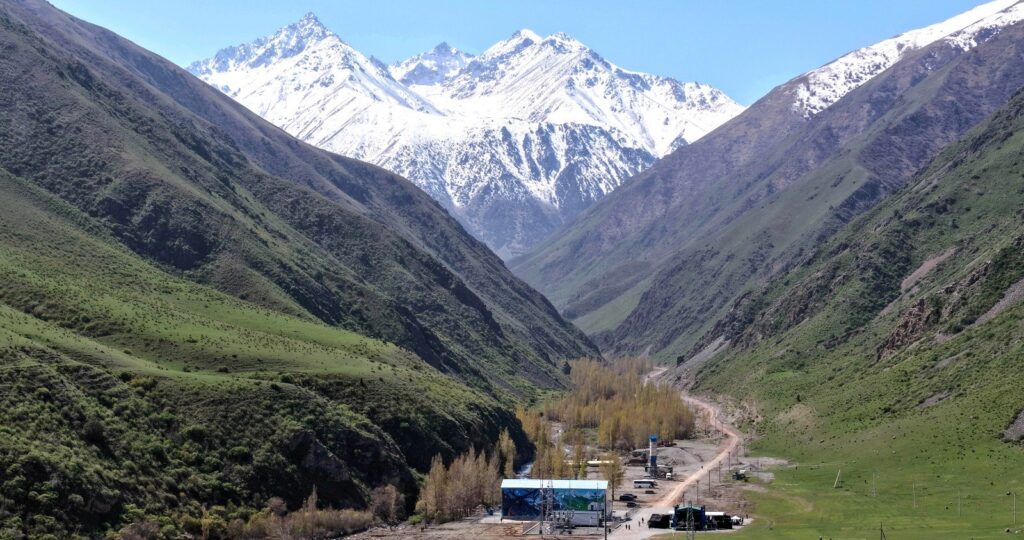
On April 20, two new small hydroelectric power plants (HPPs) were commissioned in the country’s northern Chui region. The Sokuluk-3 HPP has a capacity of 9.5 MW, while the Tuyuk HPP has a capacity of 5.9 MW. Combined, they are expected to generate between 60 million and 70 million kWh of electricity annually.

Speaking at the launch ceremony, President Sadyr Japarov underscored the strategic importance of small-scale hydropower.

“Such projects increase the resilience of the energy system and facilitate the gradual reduction of the energy deficit. Today, 48 small hydroelectric power plants with a total capacity of 180 MW are operating in Kyrgyzstan. They play a significant role in strengthening energy independence and reducing dependence on imports,” he said.

The government is scaling up efforts in the sector, with 50 small HPPs currently under construction across the country. Of these, 13 are scheduled to be commissioned in 2026.

Electricity demand in Kyrgyzstan continues to rise rapidly. In 2025, total consumption reached 19.3 billion kWh, up by 900 million kWh compared to the previous year. Domestic generation accounted for 15.4 billion kWh, while the remaining 3.9 billion kWh was covered through imports from Turkmenistan, Uzbekistan, Kazakhstan, and Russia.

According to Minister of Water Resources, Agriculture, and Processing Industry, Bakyt Torobayev, electricity consumption has grown by more than 25% over the past five years, rising from 15.4 billion kWh in 2020.

“If current electricity consumption rates continue, it could reach 25 billion kWh by 2030,” Torobayev said.

The surge in demand has been driven by rapid housing construction and the launch of new industrial facilities. With Kyrgyzstan’s population now exceeding 7.4 million, the number of electricity consumers is expanding steadily. Over the past three years alone, 4,192 industrial facilities and 96,975 households have been connected to the national grid, according to the Energy Ministry.

Despite the expansion of generation capacity, supply continues to lag behind demand, prompting authorities to prioritize small hydropower as a flexible and scalable solution to improve energy security and reduce reliance on imports.

Turkmenistan Advances Galkynysh Gas Field Development to Increase Exports to China

Chinese Vice Premier Ding Xuexiang and Gurbanguly Berdymuhamedov, Tukmenistan’s former President and the current Chairman of its highest representative body, the Halk Maslahaty, have launched the fourth phase of industrial development of the Galkynysh gas field in Mary region.

Located about 400 km southeast of Ashgabat, the Galkynysh field has been producing natural gas since 2013 and is considered one of the world’s largest in terms of reserves. The British consulting firm GaffneyCline estimates the reserves of Galkynysh, together with the neighboring fields Garakol and Yashlar, at 27.4 trillion cubic meters of natural gas.

On April 16, the State Concern Turkmengas and China’s CNPC Amudarya Petroleum Company Ltd. signed a contract for the turnkey construction of the fourth phase of the field’s development. The project includes the drilling of production wells and the construction of a gas processing facility with a capacity of 10 billion cubic meters of commercial gas per year.

According to industry publication Nebit-Gaz, the Galkynysh field is being developed in phases. The first phase, which included the construction of three gas processing plants with a total capacity of 30 billion cubic meters per year, is currently operational. The second, third, and fourth phases are planned for the near future. Upon full development, the field’s gross annual production could reach nearly 200 billion cubic meters of natural gas.

The Galkynysh field serves as the main resource base for Turkmen gas exports to China.

China remains the largest buyer of Turkmen natural gas. Three lines (A, B, and C) of the Turkmenistan-China gas pipeline system currently deliver approximately 40 billion cubic meters of gas annually. With the planned commissioning of a fourth line (Line D), export volumes are expected to increase to around 65 billion cubic meters per year.

The resource base of Galkynysh is a key factor in the planned construction of Line D, which is expected to significantly increase gas supplies to China.

According to Guvanch Agajanov, Vice-Chairman of Turkmenistan’s Cabinet of Ministers, total Turkmen gas exports to China have exceeded 462 billion cubic meters over the past 20 years.

The Galkynysh field has also been designated as the resource base for the Turkmenistan-Afghanistan-Pakistan-India (TAPI) gas pipeline, which is under construction and is expected to have a capacity of 33 billion cubic meters per year.

Kazakhstan’s Auto Industry Accelerates: Vehicle Output Up Nearly 37%

Vehicle production in Kazakhstan increased by 36.8% year-on-year in January-March 2026, according to data from the Kazakhstan Automobile Union (KAU).

KAU reported that 45,260 units were produced in the first three months of the year, including passenger cars, trucks, trailers, and semi-trailers. In March alone, output reached 17,462 units, up 42.8% compared to the same month last year and 19.9% higher than in February.

In value terms, total automotive output amounted to approximately $1.2 billion, representing a 27.5% increase year-on-year. The sector’s share of the overall machinery industry rose to 43.1%, up from 39.7% a year earlier.

“Based on the results of the first three months, Kazakhstan’s auto industry is demonstrating steady growth,” said KAU President Anar Makasheva. “The continued strong performance in March confirms positive trends in the sector. Significant growth has also been recorded in the auto components segment: over three months, production of automotive parts and accessories reached 259.8 billion tenge, increasing fourfold compared to the same period last year. Manufacturers will continue to accelerate growth in this segment.”

Passenger cars continue to account for the largest share of output. During the reporting period, 42,115 units were produced, up 37.9% year-on-year. Truck production reached 1,380 units (+16.7%), buses totaled 750 units (+73.2%), and trailers and semi-trailers reached 904 units (+21%). Output of special-purpose vehicles declined to 111 units.

The Kostanay-based Allur plant remained the industry leader, producing 14,234 vehicles. Astana Motors Manufacturing Kazakhstan in Almaty produced 12,778 units, while Hyundai Trans Kazakhstan manufactured 10,755 vehicles. The Kia Qazaqstan plant produced 4,640 units.

Other manufacturers include QazTehna (806 units), SemAZ (627 trucks), Hyundai Trans Almaty (196 units), Daewoo Bus Kazakhstan (148 units), and KAMAZ-Engineering (135 units).

Among the most popular brands produced in Kazakhstan were Hyundai (10,725 vehicles), Chevrolet (8,341), Kia (5,084), Changan (4,102), Haval (4,099), Chery (3,744), Jetour (2,250), Geely Galaxy (1,388), JAC (979), and Tank (833).

The increase in output continues last year’s trend, when Kazakhstan set a record by producing more than 171,000 vehicles in 2025.

Over 12,600 Central Asians Identified in Russian Army

A Ukrainian state initiative has identified nearly 13,000 citizens from Central Asia who have signed contracts with Russia’s Defense Ministry and have served or are serving in the Russian army, according to data released by the “I Want to Live” project as part of the Ukraine-Central Asia Inquiry.

As of 2026, the project reports it holds personal data on 12,666 individuals from the region. Uzbekistan accounts for the largest share, with 4,853 identified citizens. Tajikistan ranks second with 3,407 individuals, followed by Kazakhstan with 2,389 and Kyrgyzstan with at least 1,439. Turkmenistan has the lowest figure, with 578 identified nationals.

The figures represent a sharp increase compared to 2025, when the same project reported around 5,740 individuals from Central Asia. At that time, it also began publishing named lists of recruits from each country who had joined Russia’s war in Ukraine.

The issue remains sensitive across the region. Uzbekistan and Kazakhstan prohibit their citizens from taking part in foreign conflicts, and several cases have been brought against individuals who returned after fighting abroad.

Last year, speaking at the St. Petersburg International Legal Forum, Alexander Bastrykin, Chairman of the Investigative Committee of Russia, said authorities had identified 80,000 individuals who had avoided military registration.

“We’ve registered them for military service, and about 20,000 of these ‘new’ Russian citizens, who for some reason no longer want to live in Uzbekistan, Tajikistan, or Kyrgyzstan, are now on the front lines,” he said at the time.

His remarks highlighted ongoing efforts to replenish military ranks, including through contract-based recruitment and incentives. Observers say such measures, alongside migration trends, may help explain the rising number of Central Asian nationals identified in the conflict.

Tajikistan to Gain Access to Emergency Financing Under New World Bank Project

The World Bank Group has approved a Contingent Emergency Response Project (CERP) for Tajikistan, providing the country with a financial instrument designed to enable the rapid reallocation of resources in the event of crises and emergencies.

According to Tajikistan’s Ministry of Finance, the mechanism allows up to 10% of undisbursed funds from the World Bank’s current investment portfolio to be redirected annually to emergency needs. This gives the government additional flexibility in managing already allocated resources.

The mechanism can be activated following an official declaration of a state of emergency. However, preparations for its use are carried out in advance. Experts note that CERP eliminates the need to seek new funding sources by enabling the rapid redeployment of existing funds.

These resources can be used to procure food, water, and medical supplies, provide emergency services with necessary protective equipment, and support the agricultural sector. Assistance to households affected by crises is also provided.

The mechanism forms part of the broader Rapid Response Option (RRO) framework, which allows governments to swiftly reallocate funds from ongoing projects to respond to emergencies. Tajikistan has already formally adopted this instrument.

The Ministry of Finance also noted that CERP will operate in conjunction with the existing Tajikistan Preparedness and Resilience to Disasters Project. According to officials, the combined use of these instruments is expected to strengthen the country’s capacity to respond to potential risks.