• KGS/USD = 0.01143 0%
  • KZT/USD = 0.00216 0%
  • TJS/USD = 0.10684 -0.28%
  • UZS/USD = 0.00008 0%
  • TMT/USD = 0.28571 0%
  • KGS/USD = 0.01143 0%
  • KZT/USD = 0.00216 0%
  • TJS/USD = 0.10684 -0.28%
  • UZS/USD = 0.00008 0%
  • TMT/USD = 0.28571 0%
  • KGS/USD = 0.01143 0%
  • KZT/USD = 0.00216 0%
  • TJS/USD = 0.10684 -0.28%
  • UZS/USD = 0.00008 0%
  • TMT/USD = 0.28571 0%
  • KGS/USD = 0.01143 0%
  • KZT/USD = 0.00216 0%
  • TJS/USD = 0.10684 -0.28%
  • UZS/USD = 0.00008 0%
  • TMT/USD = 0.28571 0%
  • KGS/USD = 0.01143 0%
  • KZT/USD = 0.00216 0%
  • TJS/USD = 0.10684 -0.28%
  • UZS/USD = 0.00008 0%
  • TMT/USD = 0.28571 0%
  • KGS/USD = 0.01143 0%
  • KZT/USD = 0.00216 0%
  • TJS/USD = 0.10684 -0.28%
  • UZS/USD = 0.00008 0%
  • TMT/USD = 0.28571 0%
  • KGS/USD = 0.01143 0%
  • KZT/USD = 0.00216 0%
  • TJS/USD = 0.10684 -0.28%
  • UZS/USD = 0.00008 0%
  • TMT/USD = 0.28571 0%
  • KGS/USD = 0.01143 0%
  • KZT/USD = 0.00216 0%
  • TJS/USD = 0.10684 -0.28%
  • UZS/USD = 0.00008 0%
  • TMT/USD = 0.28571 0%

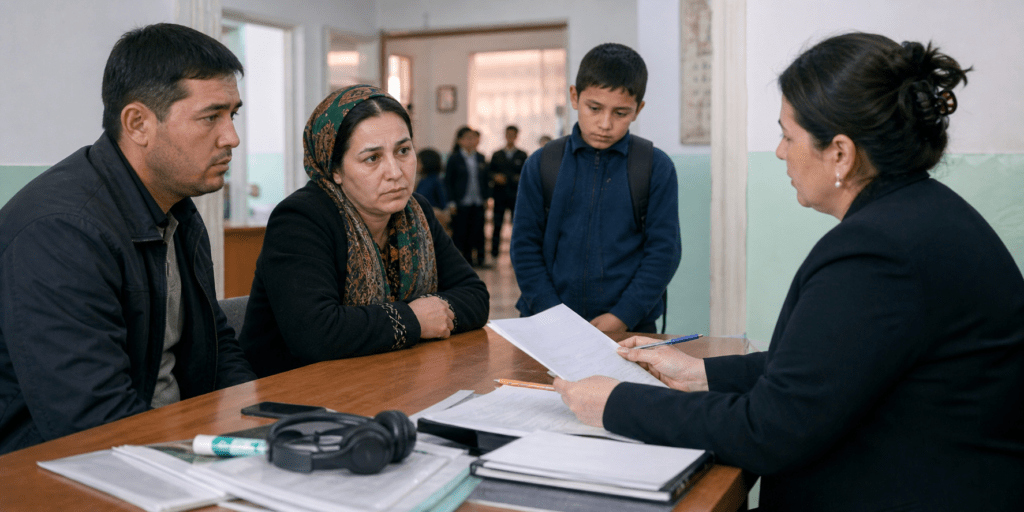
Turkmenistan Introduces New Fines for Parents Over Children’s Misconduct

Turkmenistan has introduced new rules that tighten parental responsibility for children’s misconduct, while reports suggest that additional unofficial requirements are already emerging at the local level.

The amendments to the administrative code, signed by President Serdar Berdimuhamedov, came into force on May 1. The updated legislation increases penalties for what is defined as “improper upbringing” and expands the range of situations in which parents of children under 16 can be held liable. In several cases, warnings have been eliminated entirely.

Under the new rules, offenses such as drug use without a prescription or minor hooliganism now result in immediate fines of around $29. Penalties for traffic violations have risen from $11.6 to $14.5. The manufacture or possession of pyrotechnics can lead to fines ranging from $58 to $145, while smoking carries penalties of $29 to $58. Other sanctions have also been increased, including those related to alcohol and tobacco sales and various administrative violations.

However, the implementation of the law appears to vary across regions. According to local sources, some authorities are interpreting the rules more broadly and introducing additional measures. In schools in the Lebap region, for example, there are reports of proposed fines for families if students arrive late to class ($29), possess smartphones or headphones ($290), or skip lessons.

These measures have not been officially confirmed, and teachers in other regions say they have not received similar instructions. Some observers suggest the reports may be exaggerated or intended as a deterrent to improve discipline.

Nevertheless, educators warn of potential corruption risks. Recorded violations could become grounds for informal payments, with smaller sums demanded instead of official fines, bypassing the state budget.

Iranian Company to Build Oil Plant and Poultry Farm in Kazakhstan

Iranian companies are increasingly looking to Kazakhstan for investment and production as tensions between the United States and Iran continue.

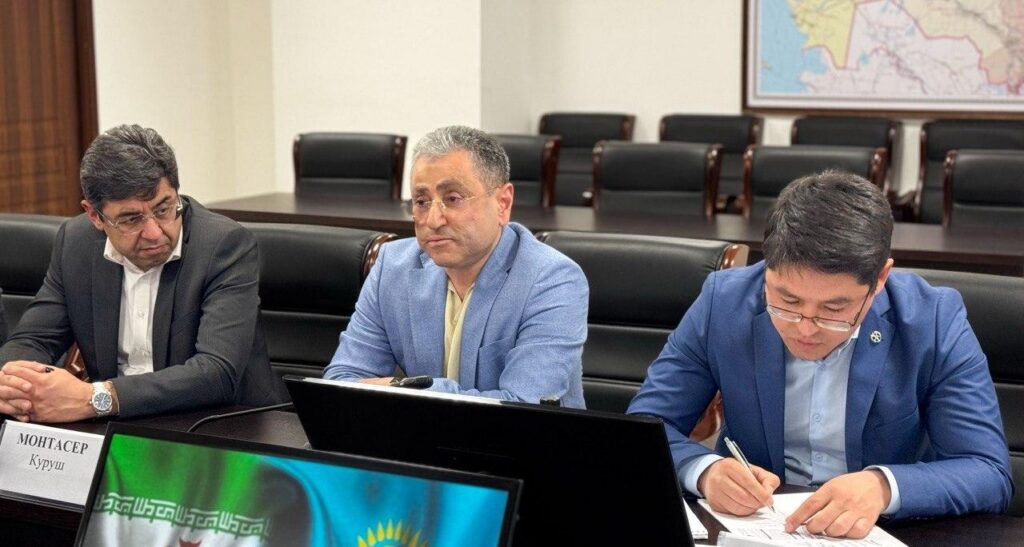
Iran’s Golrang Industrial Group plans to implement two major projects in Kazakhstan: the construction of a sunflower oil production plant and a poultry farm for meat production.

Agreements on the projects were reached on May 4 between Kazakhstan’s Deputy Minister of Agriculture Yermek Kenzhekhanuly and Golrang’s leadership, with total investment estimated at approximately $120 million.

At the meeting, Golrang Industrial Group expressed strategic interest in developing its business in Kazakhstan and localizing production.

According to the Ministry of Agriculture, the first project involves the construction of an oil extraction plant with a processing capacity of up to 3,000 tons of sunflower seeds per day, with direct investment of approximately $70 million. The project is expected to increase the processing depth of Kazakh agricultural raw materials and boost the added value of finished products.

Investment in the second project, a poultry meat farm, is estimated at approximately $50 million.

The projects come against a backdrop of steadily growing cooperation between Kazakhstan and Iran. In 2025, bilateral agricultural trade increased by 55.8%, exceeding $341 million. Exports of Kazakh products, primarily wheat and barley, have also grown significantly.

Kazakhstan Accelerates AI Push to Build Digital Economy

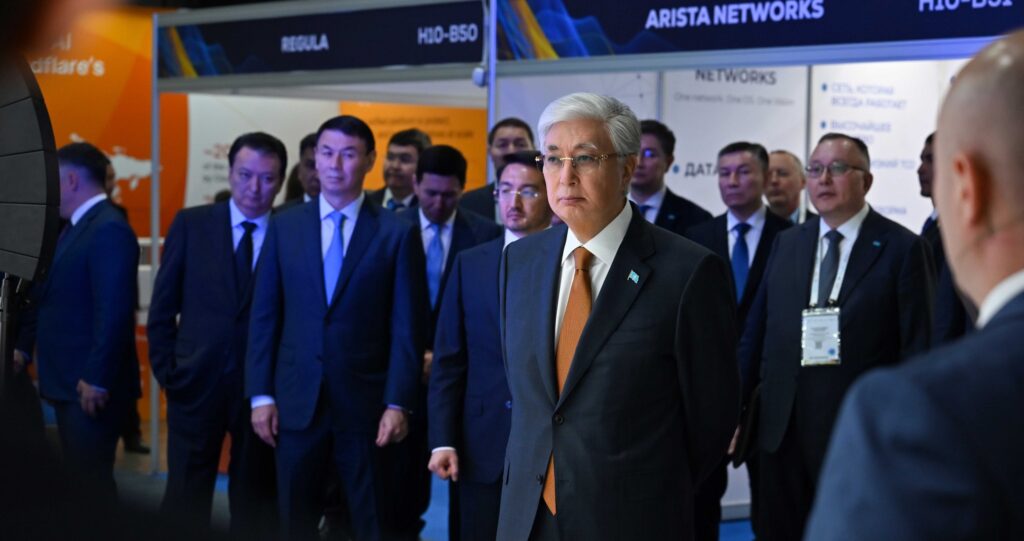
Kazakhstan must accelerate its transition to a digital economy and scale up artificial intelligence if it wants to avoid economic stagnation, President Kassym-Jomart Tokayev has said. Speaking on May 4 at a meeting of the AI Development Council, Tokayev warned that Kazakhstan’s traditional growth drivers, including natural resources and low-cost labor, are nearing exhaustion, while new engines of growth have yet to take shape.

According to the president, Kazakhstan is already facing the “middle-income trap.” He said avoiding stagnation requires a shift to a digital economy and the development of platform-based solutions.

“Without a unified system of government data, artificial intelligence will remain ineffective,” Tokayev said.

He called for public services to become an “invisible but highly efficient operating system” capable of reducing processing times from days to seconds, which he said would accelerate capital turnover across the economy.

Kazakhstan has begun testing this approach in customs, tax administration, logistics, and public finance. The KEDEN customs platform has cut declaration processing times to under one minute, while Smart Cargo is being developed as a single digital window for logistics services.

The integrated tax administration system has reduced document processing times from one hour to one minute. The Smart Data Finance platform brings together data from 78 sources, including financial transactions and transport activity.

Authorities say real-time budget monitoring has helped prevent risky payments worth hundreds of billions of tenge. A public procurement forecasting system, built on a national product catalog with more than 23 million items, is also being developed to reduce budget waste.

Tokayev said the digital economy already accounts for more than 15% of global GDP, reflecting a shift in global competition from goods markets to data and standards. He also emphasized the need to develop digital financial instruments, including cryptocurrencies and asset tokenization.

“This will increase the country’s attractiveness for global capital and create the conditions for Kazakhstan to become a leading investment and financial hub,” he said.

According to Tokayev, Kazakhstan has already established a legal framework for regulating digital assets. The government and the National Bank have been tasked with coordinating a strategy for developing the crypto market.

At the same time, Tokayev stressed the need for more precise measurement of digitalization’s contribution to economic growth.

“When GDP growth is reported, it is essential to clearly understand what share comes from the real sector and what from innovation,” he said, warning that the absence of a clear methodology could create an illusion of progress while masking underlying challenges.

Tokayev also visited the GITEX AI Central Asia & Caucasus exhibition, where projects in AI, logistics, and fintech were showcased.

Among them was an AI assistant deployed in Kazakhtelecom’s contact center, where it processes customer requests and helps detect fraudulent calls.

Projects aimed at developing a digital asset ecosystem and crypto market infrastructure were also presented, including tokenized financial instruments on the Kazakhstan Stock Exchange.

Experts say Kazakhstan is already taking steps to compete in the global technology landscape. According to Rustem Mustafin, head of the Center for Digital Social Sciences, the country has potential advantages, including energy capacity and room for data center development.

Mustafin pointed to the development of a “data center valley” project in Ekibastuz with a potential capacity of up to 1 gigawatt and investment of up to $30 billion. Such a project, he said, could allow Kazakhstan to export computing power rather than raw materials.

Kazakhstan has also adopted legislative measures, including a law on artificial intelligence and a digital code. It also has two systems in the global TOP500 supercomputer ranking: Alem.Cloud and AI-Farabium.

Kazakhstan’s location between Russia and China may give it a role as a lower-risk venue for some international technology and research cooperation, particularly where partners want access to the region without working directly through Moscow or Beijing.

At the same time, Mustafin warned of risks.

“Countries without their own models and control over data become subject to external algorithmic decisions,” he said, warning that such states risk becoming “information colonies.”

The Times of Central Asia has previously reported that Kazakhstan has emerged as a regional leader in AI readiness and plans to establish an international computing hub.

Campaign Targets New York Concert by Uzbekistan’s Yulduz Usmonova

A campaign has been launched in the United States against a planned concert by singer Yulduz Usmonova from Uzbekistan, according to a report by Brighton Beach News.

The controversy is unfolding in Brooklyn, where Usmonova is scheduled to perform on May 9 at the Oceana Theater in the Brighton Beach area. Local politicians have voiced strong criticism and announced plans to hold a press conference calling for the event to be canceled.

Among those involved are New York State Assembly members Michael Novakhov and Alec Brook-Krasny, as well as Nassau County Executive Bruce Blakeman. According to statements cited in the report, the officials accuse the singer of having made remarks in the past that they consider offensive toward the Jewish community.

The issue has drawn particular attention due to the location and timing of the concert. Brighton Beach is known as a major center for Russian-speaking and Jewish communities in New York, and May 9 is widely observed as a day marking the victory over Nazi Germany in World War II.

Organizers of the campaign say they have called on the singer to publicly reject and apologize for the alleged statements but claim that she has declined to do so. They have also reportedly submitted a request to U.S. Secretary of State Marco Rubio asking for the revocation of her visa.

This is not the first time a concert by Usmonova in New York has come under pressure. In 2024, another planned performance in the city was canceled after protests over remarks attributed to the singer that critics described as antisemitic.

European Summit in Yerevan Sends a Signal to Central Asia

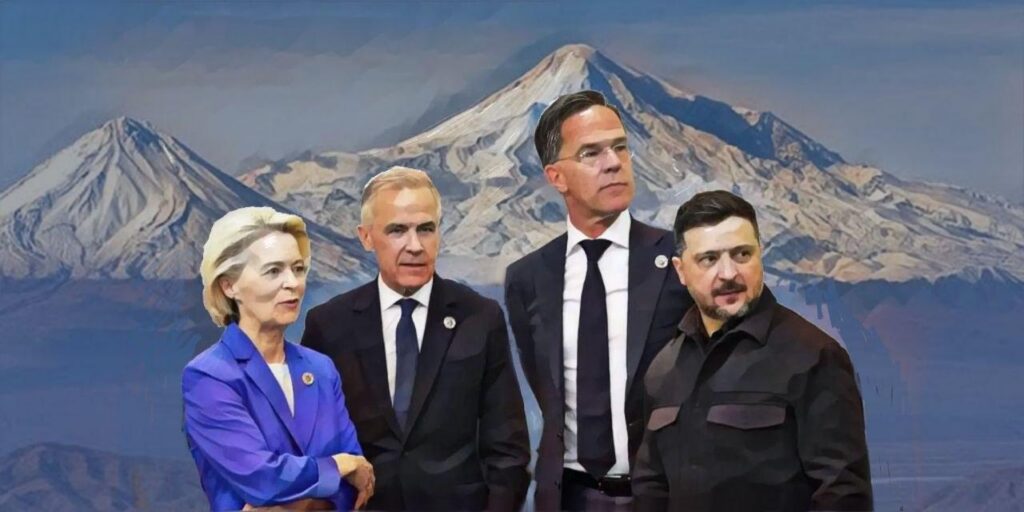
The 8th European Political Community summit in Yerevan highlighted deepening geopolitical fault lines while signaling that some post-Soviet countries, notably Azerbaijan and Armenia, are gradually shifting their geopolitical orientation away from Moscow. It is a realignment that Central Asian states are watching with increasing interest.

On May 4, attention across post-Soviet space, from Russia and Belarus to Central Asia and the South Caucasus, turned toward Yerevan. Armenia, still a member of the Commonwealth of Independent States and the Eurasian Economic Union and formally tied to the Collective Security Treaty Organization despite freezing its participation, hosted Europe’s political leadership.

Among those attending were French President Emmanuel Macron, NATO Secretary General Mark Rutte, European Commission President Ursula von der Leyen, European Council President António Costa, and prime ministers including Donald Tusk, Keir Starmer, and Petteri Orpo. Azerbaijani President Ilham Aliyev participated via video link.

No Central Asian leaders attended the summit. Even so, the gathering carried a message for the region. Armenia hosted Europe’s political leadership while remaining tied to Moscow-led structures, including the CIS and the Eurasian Economic Union. For Central Asian governments pursuing their own multi-vector policies, the summit showed how a post-Soviet state can widen its diplomatic options without a clean break from Russia.

The parallel is not exact, but it is visible. Kazakhstan and Kyrgyzstan remain in the Eurasian Economic Union, while Kazakhstan, Kyrgyzstan, and Tajikistan remain in the CSTO. All five Central Asian states maintain working ties with Moscow, while expanding contacts with the EU, Turkey, China, and the Gulf, part of a wider effort to diversify foreign policy options through closer engagement with Europe and other outside powers.

Turkey was represented by Vice President Cevdet Yılmaz, the highest-level Turkish official to visit Armenia since then-President Abdullah Gül in 2008.

Turkey and Azerbaijan largely positioned themselves as counterweights to the dominant European framing, marking one of the summit’s key geopolitical divides. Aliyev adopted a confrontational tone, announcing a suspension of relations with the Parliamentary Assembly of the Council of Europe and the European Parliament.

“Instead of addressing fundamental problems of some member states, such as xenophobia, Islamophobia, antisemitism, migration, competitiveness, and homelessness, the European Parliament targets Azerbaijan, spreading slander and lies,” Aliyev said. “And the reason is that Azerbaijan restored its territorial integrity and sovereignty, put an end to separatism, and brought war criminals to justice.”

In response, António Costa sought to soften tensions, emphasizing the summit’s historical significance as the first of its kind held in the South Caucasus and highlighting Aliyev’s participation as a symbol of peace efforts in the region.

Cevdet Yilmaz focused on bilateral diplomacy, meeting Romanian President Nicușor Dan to discuss trade, regional issues, and global challenges.

He also held talks with Armenian Prime Minister Nikol Pashinyan, the summit’s host. The two sides signed a memorandum of understanding on the joint restoration of the historic Ani Bridge, located on the border between the two countries and dating back to the 11th century.

Yilmaz suggested that Armenia would benefit from closer alignment with Turkey and Azerbaijan, citing regional stability and economic integration.

“This is one of the most strategically important regions in the world. Historically, it has always been a transit region. We believe that with the establishment of peace and normalization of the situation in the South Caucasus, all residents of the region will benefit first and foremost. Azerbaijan, Armenia, and Turkey—all these countries will benefit,” he said.

European leaders used the summit to highlight other geopolitical tensions. Russian President Vladimir Putin and Belarusian President Alexander Lukashenko were again framed as adversaries.

Ukrainian President Volodymyr Zelenskyy, invited to the summit, warned that the coming months would be decisive.

“This summer will be the moment when Putin decides what to do next. We must push him toward diplomacy and not agree to sanctions relief,” Zelenskyy said.

Belarusian opposition leader Sviatlana Tsikhanouskaya was also invited, underscoring Europe’s stance toward Minsk.

Another focus of discussion was U.S. President Donald Trump, particularly his recent statements on tariffs on EU cars and plans to significantly reduce U.S. troop numbers in Germany.

“This has been discussed for a long time, but the timing of this announcement was certainly unexpected,” EU foreign policy chief Kaja Kallas said, adding that it underscored the need to strengthen Europe’s role within NATO.

Macron described the summit as part of a broader “European awakening” driven by developments in Ukraine and Moldova, and included Armenia in this process.

“Let’s be honest: eight years ago, no one would have come here. Eight years ago, this country was considered a de facto Russian satellite at the negotiating table,” he said.

Despite criticism, Macron’s remarks pointed to a longer-term shift in Armenia’s geopolitical trajectory, one that has been developing over the past decade.

Notably, the presence of Russian military bases in Armenia did not prevent the summit from taking place, nor did it hinder Zelenskyy’s participation.

The Yerevan summit thus underscored a broader geopolitical realignment. For Central Asia, the signal was not that Armenia offers a model to copy, but that Europe is becoming more willing to engage with post-Soviet states seeking wider diplomatic space beyond Moscow.

Turkmenistan Highlights International Outreach at Cabinet Meeting

A recent Cabinet meeting in Turkmenistan highlighted contacts with many countries and international organizations, reinforcing a perception that the tightly managed nation is taking more steps, however limited, to engage the world.

Appearing via video link, President Serdar Berdimuhamedov presided over the May 1 meeting of ministers who covered economic growth, oil and natural gas production, scientific research, and other national priorities in a review of the year so far. But international outreach was a big part of the high-level discussion in an energy-rich Central Asian country often defined as opaque and restrictive.

An account of the meeting by the Turkmenistan State News Agency (TDH) ticked off statistics: 220 delegations visited Turkmenistan this year, 400 delegations from Turkmenistan visited other countries, 711 negotiations and other meetings occurred in the country with foreign states and international agencies, and 57 more international documents were added to Turkmenistan’s legal code.

“The development of diplomatic relations through foreign embassies is one of the important directions of the foreign policy work of neutral Turkmenistan,” said the report, referring to the country’s policy of non-alignment and not getting involved in the internal affairs of other countries.

“Work on promoting relations with the countries of the Middle East is also ongoing,” it said.

Iraq opened its embassy in Ashgabat in March, 17 years after Turkmenistan and Iraq established diplomatic relations in 2009. On May 4, Rashid Meredov, Turkmenistan’s foreign minister, spoke by telephone with Iranian Foreign Minister Abbas Araghchi about regional security, Caspian issues, and other matters, according to the Turkmen Foreign Ministry. The ministry’s statement did not mention the Iran conflict or uncertainty surrounding the ceasefire with the United States.

Turkmenistan’s international campaign is consistent with a pattern seen across Central Asia, where governments have sought to diversify their trade and diplomatic ties while maintaining close relations with the region’s major powers, Russia and China. Turkmenistan, however, still exports most of its natural gas to China, its largest trading partner.

At the same time, Turkmenistan is intensifying efforts to integrate into the global trading system, with officials reaffirming plans to move towards membership in the World Trade Organization (WTO). It is the last post-Soviet republic to start WTO accession talks.

Turkmenistan’s leaders are also working on their international profiles.

Berdimuhamedov attended an ecological summit of regional leaders in Kazakhstan last month. His father and predecessor, Gurbanguly Berdimuhamedov, traveled to the U.S. in February, China in March, and Austria in April. This month, he is due to travel to the Russian city of Kazan. Although government transparency is limited in Turkmenistan, father and son appear to run the country through a power-sharing arrangement.

Outsiders are getting more glimpses of Turkmenistan. The capital, Ashgabat, hosted an international tourism conference in April. This month, the Reuters news agency reported on a trip there after being given what it said was “rare access” to travel in the country.

It remains unclear, however, whether any efforts to engage with the outside world will materially change daily life in Turkmenistan, where people have limited access to information and face other tight restrictions.