• KGS/USD = 0.01144 0%
  • KZT/USD = 0.00193 -0%
  • TJS/USD = 0.10811 -0.28%
  • UZS/USD = 0.00008 0%
  • TMT/USD = 0.28490 0%
  • KGS/USD = 0.01144 0%
  • KZT/USD = 0.00193 -0%
  • TJS/USD = 0.10811 -0.28%
  • UZS/USD = 0.00008 0%
  • TMT/USD = 0.28490 0%
  • KGS/USD = 0.01144 0%
  • KZT/USD = 0.00193 -0%
  • TJS/USD = 0.10811 -0.28%
  • UZS/USD = 0.00008 0%
  • TMT/USD = 0.28490 0%
  • KGS/USD = 0.01144 0%
  • KZT/USD = 0.00193 -0%
  • TJS/USD = 0.10811 -0.28%
  • UZS/USD = 0.00008 0%
  • TMT/USD = 0.28490 0%
  • KGS/USD = 0.01144 0%
  • KZT/USD = 0.00193 -0%
  • TJS/USD = 0.10811 -0.28%
  • UZS/USD = 0.00008 0%
  • TMT/USD = 0.28490 0%
  • KGS/USD = 0.01144 0%
  • KZT/USD = 0.00193 -0%
  • TJS/USD = 0.10811 -0.28%
  • UZS/USD = 0.00008 0%
  • TMT/USD = 0.28490 0%
  • KGS/USD = 0.01144 0%
  • KZT/USD = 0.00193 -0%
  • TJS/USD = 0.10811 -0.28%
  • UZS/USD = 0.00008 0%
  • TMT/USD = 0.28490 0%
  • KGS/USD = 0.01144 0%
  • KZT/USD = 0.00193 -0%
  • TJS/USD = 0.10811 -0.28%
  • UZS/USD = 0.00008 0%
  • TMT/USD = 0.28490 0%
10 December 2025

Kazakh Lawmakers Propose Ban on the Word “Halyk” in Bank Names

A group of deputies in the Mazhilis, Kazakhstan’s lower house of parliament, has proposed amendments to the Law “On Banks and Banking Activities,” seeking to prohibit the use of specific words in the names of financial institutions, most notably “halyk” (“people’s”).

Deputy Murat Abenov announced the initiative via his official Facebook page, stating that more than 50 lawmakers are backing the proposal to revise Article 7 of the banking law. The draft amendment would expand existing restrictions on bank names, currently banning terms such as “national,” “central,” “state,” and “republican”, to also exclude “people’s” and “halyk,” in any language or form.

If adopted, the legislation would directly affect Halyk Bank JSC, one of Kazakhstan’s most prominent and systemically important financial institutions. Halyk Bank, whose name translates to “People’s Bank,” is part of the broader Halyk Group, which is active in banking, insurance, brokerage, and leasing services. The bank’s largest shareholder is ALMEX Holding Group JSC, controlled by Timur and Dinara Kulibayev, the son-in-law and daughter of former President Nursultan Nazarbayev.

Abenov argued that the term “people’s” carries specific legal and symbolic significance. Under Article 3 of Kazakhstan’s Constitution, the people are the bearers of sovereignty and the sole source of state power. He contended that allowing a private commercial institution to use this term may mislead the public into believing it serves or is governed by the population at large.

The proposal has drawn strong criticism from the Kazakhstan Investors Association, which views the amendment as selectively targeting Halyk Bank. “The discussion and especially the adoption of this amendment pose significant risks to legal certainty, the investment climate, and the national economy,” the Association said in a public statement.

The Association further emphasized that brand names are legally protected intellectual property. Under Kazakhstan’s Constitution, private property, including trademarks, can only be expropriated through a court ruling. “A legislative prohibition on an established, lawfully registered brand violates core principles of Kazakhstan’s legal system,” the statement read.

Investor representatives also warned that the move could damage Kazakhstan’s reputation among foreign investors. “The Halyk Bank brand has existed for decades and holds historical significance. Forcing a name change may be viewed as retroactive regulation, undermining investor confidence, especially considering the bank’s shares are listed on the London Stock Exchange,” the Association noted.

The group called for a “constructive dialogue grounded in legal principles, economic rationale, and common sense,” warning that arbitrary restrictions could harm financial stability and deter investment.

As previously reported by The Times of Central Asia, Halyk Bank has expanded regionally, acquiring a 49% stake in Uzbek digital payments firm Click, marking a major fintech investment in Central Asia.

Uncategorized

Congressional Panel Urges Trump to Host C5+1 Summit This Year

A U.S. congressional foreign affairs panel is asking U.S. President Donald Trump to host a meeting in Washington, D.C. with leaders from Central Asia by the end of 2025.  

The proposal was made in an October 20 letter to Trump by Bill Huizenga, a Michigan Republican who chairs the House’s South and Central Asia Subcommittee, and Sydney Kamlager-Dove of California, the senior Democrat on the subcommittee. 

The two representatives said that such a summit would mark the 10th anniversary of the C5+1 diplomatic forum and highlight the importance of Central Asia following Trump’s meetings with Uzbek President Shavkat Mirziyoyev and Kazakh President Kassym-Jomart Tokayev on the sidelines of the U.N. General Assembly last month. Multi-billion-dollar business deals were announced in connection with those meetings. 

Established in 2015, the C5+1 formula refers to the United States and the five Central Asian countries of Kazakhstan, Kyrgyzstan, Tajikistan, Turkmenistan, and Uzbekistan.

“A Leaders’ Summit with meaningful outcomes will strengthen regional cooperation and maximize the diplomatic potential of the 10th anniversary, setting the tone for strengthened U.S. engagement in the region for the rest of your presidency,” the representatives said in the letter to Trump. They said a meeting would advance U.S. priorities in Central Asia, “including security cooperation, economic ties, soft power, and good governance,” they said. 

The letter noted U.S. interests such as the development of critical minerals, including tungsten, antimony, lithium, and rare earth elements; the full repeal of the Jackson-Vanik amendment, a Cold War-era law that imposes some restrictions on trade with several countries in Central Asia; and counterterrorism efforts against the regional branch of the Islamic State group. 

“We also hope to see new agreements with the Central Asian countries to bolster people-to-people ties and expand U.S. soft power, such as additional American Peace Corps volunteers and the expansion of educational and cultural exchange programs, while addressing the accreditation issue surrounding U.S.-sponsored journalists and other U.S.-funded news broadcasters. 

The Trump administration, however, has taken steps to cut most U.S. foreign aid programs, dismantling the U.S. Agency for International Development. USAID had been active in Central Asia. The administration has also cut aid for U.S.-funded domestic and international broadcasters.

Analyst Temur Umarov wrote in the Carnegie Politika publication that Central Asia has found it relatively easy to work with the Trump administration. 

“Business interests can be used to attract Washington’s attention, and there is no longer any need for demonstrative distancing from Russia or commitment to democratic reforms,” Umarov said. 

He said that Uzbekistan and Kazakhstan have hoped to hold C5+1 anniversary events in their capitals, with top leaders in attendance. If that happens, Trump would be the first sitting U.S. president to visit any of the five Central Asian countries. 

Azerbaijan and Kazakhstan Deepen Strategic Partnership Through Middle Corridor

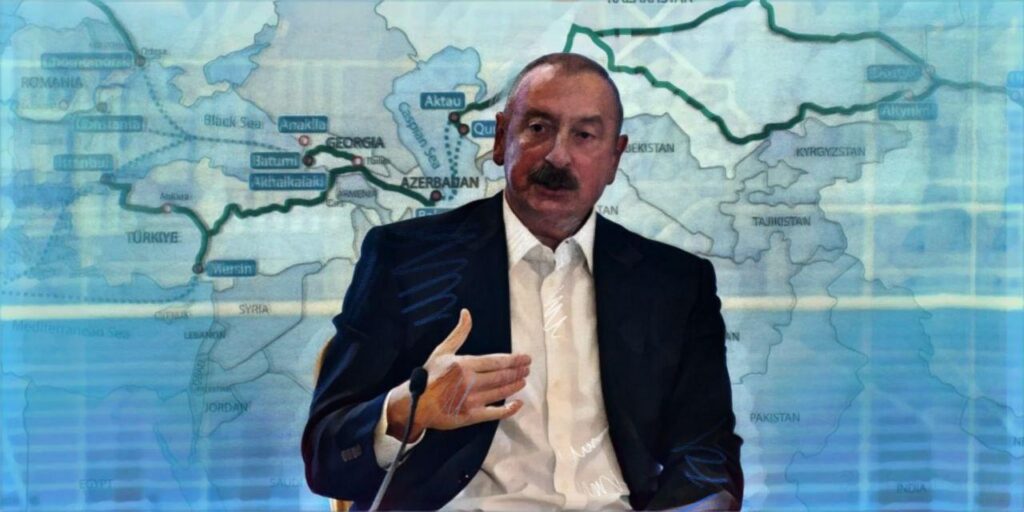
Azerbaijani President Ilham Aliyev’s recent state visit to Astana has marked a significant turning point in relations between Azerbaijan and Kazakhstan. President Kassym-Jomart Tokayev and President Aliyev underscored the rapid expansion of cooperation across transport, investment, and technology sectors. Political and cultural ties are also deepening, bolstering what both sides have described as a “brotherly” relationship.

Economic Ties Strengthened by Infrastructure and Energy Projects

Tokayev highlighted the strategic importance of the Trans-Caspian International Transport Route (Middle Corridor), noting a 62% increase in freight traffic in 2024 to 4.5 million tons, with a further 2% rise recorded so far in 2025. Kazakhstan is currently building a container hub in Aktau, while a new cargo terminal in the port of Alat, developed with foreign partners, including China, offers further growth potential. The two leaders also discussed establishing a Trans-Caspian ferry system to expand exports, with a long-term goal of boosting cargo traffic to 10 million tons.

Tokayev further emphasized Kazakhstan’s use of the Baku-Tbilisi-Ceyhan pipeline for oil exports. In 2024, nearly 1.5 million tons of Kazakh oil transited through Azerbaijan, with plans to increase volumes significantly. He also cited efforts to deliver Kazakh uranium to foreign markets via Azerbaijan.

Joint IT projects are also advancing, including plans to lay a fiber-optic communication line under the Caspian Sea.

Tokayev commended the joint declaration on peace signed by Armenia and Azerbaijan in Washington under U.S. mediation, calling it a “historic” milestone in regional reconciliation efforts. Earlier on Monday, Aliyev had announced a significant policy shift, stating that Baku is lifting all restrictions on the transit of goods to Armenia.

Middle Corridor as a Strategic Geopolitical Tool

The Middle Corridor, connecting China and Europe through Kazakhstan, the Caspian Sea, and Azerbaijan, was a major focus of Aliyev’s state visit. Amina Kosbaeva of the Institute for Eurasian Integration noted that the corridor – which carried about 2.7 million tons in 2023 and 4.5 million tons in 2024, as traffic shifted away from traditional routes via Russia – is evolving into a strategic asset that enhances regional autonomy and global connectivity.

Kosbaeva highlighted that both countries have built a sustainable cooperation model grounded in cultural commonalities and mutual trust. She identified agriculture, petrochemicals, and machine-building as key sectors where new supply chains could emerge, boosting trade and resilience to global market fluctuations.

Kosbaeva added that future cooperation is likely to grow within the framework of the Organization of Turkic States (OTS), which held its 12th Summit in Gabala, Azerbaijan, on October 6–7, 2025. further institutionalizing bilateral ties as a driving force within the Turkic world.

“The history of the Turkic peoples goes back to common roots,” Tokayev said at the summit, expressing support for the idea of a broader “Turkic-speaking States +” platform to expand cooperation.

Business Relations Rooted in Political Alignment

Kazakh political analyst Gaziz Abishev noted that Astana and Baku often align on geopolitical issues. “The relationship between the two countries proves that rigid multilateral blocs are not necessary for close alliances. Unconditional mutual sympathy at all levels, leaders, elites, and citizens, is enough,” he said.

Abishev emphasized the Middle Corridor’s growing role in global logistics. Goods from Kazakhstan are shipped via the Aktau and Kuryk ports across the Caspian to Azerbaijan, then routed through Georgia and Turkey to Europe.

There are currently around 1,500 Azerbaijani-capital companies registered in Kazakhstan, while roughly 150 Kazakhstani-capital companies operate in Azerbaijan. Agricultural trade is also strong: from January to August 2025, Kazakhstan exported 558,600 tons of grain to Azerbaijan, mostly wheat valued at $105.8 million, which accounted for over 80% of Azerbaijan’s wheat imports.

Crisis Management After Plane Crash Near Aktau

The visit also underscored effective crisis coordination between the two countries. A joint investigation is underway into the December 2024 crash of an AZAL Azerbaijani airline flight near Aktau. The aircraft was en route from Baku to Grozny with 67 people aboard. Twenty-nine survived, but all Kazakhstani passengers were among the deceased.

Azerbaijan’s President thanked Kazakhstan for its assistance, and citizens of both countries expressed solidarity on social media. Aliyev publicly held Russia responsible for the tragedy. According to Russian President Vladimir Putin, the AZAL plane was likely struck by debris from air defense missiles targeting Ukrainian drones that had crossed into Russian airspace. Once staunch allies, the crisis severely tested relations between Azerbaijan and Russia, with some fences being mended at the recent CIS summit in Dushanbe.

Azerbaijan’s Growing Role in the Region

Analyst Alexander Karavaev of the Caspian Institute for Strategic Studies noted that Azerbaijan is establishing itself as a key transport and energy hub. Through initiatives such as TRACECA and the Belt and Road Initiative, now integrated into the Middle Corridor, Baku is expanding its geopolitical relevance, particularly in renewable energy exports to Europe.

President Aliyev’s visit to Astana marked a new phase in Azerbaijan–Kazakhstan ties, expanding cooperation in transport, energy, and digital infrastructure. The two nations are now key partners in the Middle Corridor and the wider Turkic world – so much so that analysts are describing the emerging format as “C6,” with Azerbaijan increasingly seen as a natural member of Central Asia’s core. This vision of a “C6” framework reflects a growing effort to build a more connected and self-reliant Caspian–Central Asian region.

Kazakhstan Hosts FIDE Chess Tournament for Players with Disabilities

Chess is a “great equalizer,” says Henry Lopez, a player from the Philippines. “It’s for everybody.”

Lopez, who uses a wheelchair because of polio, is among dozens of competitors from around the world who are participating this week at the 2nd Chess Olympiad for People with Disabilities in Astana. The event is organized by FIDE, the international governing body of chess, and hosted by the Kazakhstan Chess Federation, which is making a big push to introduce the game in schools across the country, as well as cultivate high performers at the elite level.

The weeklong competition, whose closing ceremony is on Saturday, features 34 teams from 29 countries. There are teams from Europe, Asia, the Americas and Africa. The players have visual, hearing, and physical impairments. The event is taking place at the Paralympic Training Centre, whose facilities are designed to help people with disabilities.

In an interview posted on YouTube by FIDE, Lopez said he was taking part in the second edition of the event. The first, won by Poland, was held in Belgrade, Serbia in 2023. The Philippines came third in Belgrade and will try for the top spot again in Astana.

“Chess for me now is my source of living in the Philippines,” Lopez said. “I’m a national player and we have stipend every month from the government.”

FIDE President Arkady Dvorkovich said the contest has drawn more teams and more countries this time around, and was consistent with the organization’s goal of providing access to top level events to as many people as possible, according to a FIDE interview.

“We do believe that chess is inclusive and we have to make sure that it’s inclusive indeed,” Dvorkovich said.

Shantel Panashe Gweshe, a player from Zimbabwe, told FIDE that the Astana event had inspired her.

“When I go back to Zimbabwe, first thing, I’m going to make sure that I’m going to empower other people with disabilities to ensure inclusivity and participation,” she said.


Trade in Central Asia: China Deepens Influence, Europe Expands Presence, Region Seeks New Markets

Central Asia remains a theater of active economic competition, with countries in the region striving to diversify external partnerships and reduce dependence on traditional power centers, Russia and China. While both continue to dominate foreign trade, Kazakhstan, Uzbekistan, Kyrgyzstan, and Tajikistan are increasingly exploring new directions.

The region’s evolving trade dynamics reflect each country’s economic characteristics. Kazakhstan is driven by energy and metals exports, Uzbekistan by manufacturing and resource processing, while Kyrgyzstan and Tajikistan rely heavily on remittances and raw material exports.

Amid global shifts and intensified competition for markets, Central Asian states are gradually shaping more multipolar trade strategies, opening up new routes and partnerships. Turkmenistan is excluded from this analysis due to the opacity of its national statistics.

Kazakhstan

As Central Asia’s largest economy, Kazakhstan relies heavily on natural resource extraction. Its main exports include oil, gas, metals, coal, grain, and agricultural products. Imports consist primarily of machinery, chemicals, vehicles, and consumer goods.

Key export partners include Italy (21.6%), China (18.6%), Russia (10.2%), the Netherlands (7.4%), Turkey (4.7%), and Uzbekistan (4.3%). On the import side, China (29%) and Russia (28.8%) dominate, followed by Germany (4.8%), South Korea (3.7%), the United States (3.6%), and Turkey (2.5%).

Kazakhstan has maintained a positive trade balance, buoyed by consistent demand for raw materials. In January-July 2025, the country’s foreign trade turnover totaled $78.18 billion, down 2.6% from the same period in 2024. Exports declined by 6.4% to $43.58 billion, while imports rose by 2.6% to $34.6 billion.

Uzbekistan

Uzbekistan’s economy is focused on agriculture, textiles, natural resources, and manufacturing. Major exports include textiles, gold, gas, automobiles, cotton, and fruit. Imports are led by machinery, equipment, chemicals, and petroleum products.

In the first half of 2025, foreign trade turnover reached $44.4 billion, up 19.9% year-on-year. Exports rose 34.9% to $20.1 billion, while imports increased 9.9% to $24.29 billion, leaving a trade deficit of $4.18 billion.

Uzbekistan trades with 197 countries. Its largest trade partners are China (18.2%), Russia (16.1%), Kazakhstan (5.9%), Turkey (3.6%), and South Korea (2.2%). Export destinations include Russia (12.3%), China (5.5%), Kazakhstan (4.0%), Afghanistan (3.7%), Turkey (3.0%), France (2.6%), the UAE (1.8%), Kyrgyzstan (1.6%), Tajikistan (1.4%), and Pakistan (1.2%).

Imports mainly come from China (28.7%), Russia (19.3%), Kazakhstan (7.6%), Turkey (4.1%), South Korea (3.9%), Germany (2.8%), and India (2.6%).

Kyrgyzstan

Kyrgyzstan, with limited natural resources, is heavily dependent on foreign trade. Its economy is rooted in agriculture, mining, and textiles. Key exports include gold and agricultural products, while imports are dominated by machinery, vehicles, petroleum products, and chemicals.

From January to June 2025, foreign trade turnover fell 12.4% year-on-year to $6.99 billion. Exports made up only 15% of total trade, underscoring a continued trade deficit. Main partners remain Kazakhstan, Russia, and China.

Tajikistan

Tajikistan’s economy is centered on agriculture, hydropower, textiles, and mining. In January-August 2025, foreign trade turnover rose 16.8% year-on-year to $6.73 billion. Exports totaled $1.63 billion, while imports reached $5.1 billion, more than triple the export volume.

Main exports are aluminum, textiles, agricultural goods, and minerals; imports include petroleum products, machinery, chemicals, and food.

Trade with China hit $1.66 billion, up 40% year-on-year. Tajik exports to China stood at $270 million, while imports from China reached $1.39 billion. China now accounts for 25% of Tajikistan’s total trade, overtaking Russia for the first time. Trade with Russia totaled $1.44 billion (21.4%), while trade with Kazakhstan fell 13.1% to $758 million.

Still in the Grip of Giants?

Despite growing interest in European markets, China and Russia remain dominant trade partners. Trade with the US remains limited, constrained by geography and Washington’s protectionist trade stance.

Sanctions, ongoing conflicts in Ukraine and the Middle East, and shifting logistics continue to shape regional trade patterns. In this context, diversification is crucial for Central Asia’s economic resilience. Yet efforts to escape Beijing’s and Moscow’s economic gravitational pulls remain tentative.

Kazakh economist Serik Belgibaev notes that while Central Asia has long pursued a multi-vector foreign policy, balancing external ties has proven elusive. “Previously, overreliance on Russia created excessive dependency from labor markets to energy exports. Now, a new imbalance is emerging in China’s favor. China’s trade with Central Asia has reached $95 billion and continues to grow. The region is increasingly tied to Chinese markets and capital. Debt is just one indicator: in Kyrgyzstan, debt to China accounts for about 40% of total external debt; in Tajikistan, more than 25%; and in Kazakhstan, around 3.5% of GDP, which remains relatively manageable,” he says.

Belgibaev warns that China could demand repayment on its terms. He cites the example of Sri Lanka’s Hambantota Port, which was leased to China for 99 years in exchange for debt relief. “In 2021, President Sadyr Japarov acknowledged that if Kyrgyzstan failed to repay loans from the Export-Import Bank of China, key infrastructure, including the Bishkek thermal power plant, power lines, and roads, could be at risk,” Belgibaev adds.

He argues that China is expanding its influence “gently but purposefully,” using investment and aid to build long-term dependence.

Still, Uzbek political analyst Zakir Usmanov highlights Central Asia’s growing strategic value, thanks to its critical mineral reserves and emerging transport corridors. “Global competition for regional influence between the US, China, and Russia is intensifying. This presents a rare opportunity to benefit from the interest of multiple major powers. While challenges remain, the trajectory is clear: Central Asia is moving toward greater economic self-sufficiency,” he says.

Uncategorized

Saudi Company to Launch 200 MW Power Plant in Samarkand

Saudi private company Pemco is set to begin construction of a new 200-megawatt gas-piston power plant in Samarkand by the end of this year, Uzbekistan’s Minister of Energy Jurabek Mirzamahmudov announced in an interview with the “Uzbekistan 24” TV channel.

“The new power station will significantly strengthen the energy supply in the Samarkand region and support Uzbekistan’s efforts to ensure a stable electricity supply amid growing demand,” Mirzamahmudov said, following President Shavkat Mirziyoyev’s recent meeting with leading Saudi business representatives.

The minister also outlined a range of ongoing energy projects in partnership with Saudi firms. “Together with ACWA Power, we have launched the first major thermal power plant,” he said. “Additionally, a solar power facility is operating in the Qibray district of Tashkent region, two large wind farms have started operations in Bukhara, and the first 100-megawatt wind power plant has been commissioned in Karakalpakstan.”

Several new renewable energy initiatives are also in progress. “We have already begun practical steps on new wind and solar stations, and we plan to launch the first large-scale battery storage system in Parkent,” Mirzamahmudov added.

He further noted that Uzbekistan is preparing to support operations at the new Tashkent airport with the production of renewable aviation fuel. This will be facilitated through a partnership between Saudi Arabia’s Vision Invest and U.S.-based Air Products, who have signed an agreement to develop a sustainable aviation fuel (SAF) plant.

These developments come as Uzbekistan works to diversify its energy mix in anticipation of future demand. As previously reported by The Times of Central Asia, the country aims to bring a high-capacity nuclear power plant fully online by 2035. The first small modular reactor is expected to begin operations in 2029 in the Jizzakh region, followed by additional units in the early 2030s, according to Uzatom Director Azim Akhmedkhadjaev.