• KGS/USD = 0.01144 0%
  • KZT/USD = 0.00214 0%
  • TJS/USD = 0.10508 0.48%
  • UZS/USD = 0.00008 0%
  • TMT/USD = 0.28571 0%
  • KGS/USD = 0.01144 0%
  • KZT/USD = 0.00214 0%
  • TJS/USD = 0.10508 0.48%
  • UZS/USD = 0.00008 0%
  • TMT/USD = 0.28571 0%
  • KGS/USD = 0.01144 0%
  • KZT/USD = 0.00214 0%
  • TJS/USD = 0.10508 0.48%
  • UZS/USD = 0.00008 0%
  • TMT/USD = 0.28571 0%
  • KGS/USD = 0.01144 0%
  • KZT/USD = 0.00214 0%
  • TJS/USD = 0.10508 0.48%
  • UZS/USD = 0.00008 0%
  • TMT/USD = 0.28571 0%
  • KGS/USD = 0.01144 0%
  • KZT/USD = 0.00214 0%
  • TJS/USD = 0.10508 0.48%
  • UZS/USD = 0.00008 0%
  • TMT/USD = 0.28571 0%
  • KGS/USD = 0.01144 0%
  • KZT/USD = 0.00214 0%
  • TJS/USD = 0.10508 0.48%
  • UZS/USD = 0.00008 0%
  • TMT/USD = 0.28571 0%
  • KGS/USD = 0.01144 0%
  • KZT/USD = 0.00214 0%
  • TJS/USD = 0.10508 0.48%
  • UZS/USD = 0.00008 0%
  • TMT/USD = 0.28571 0%
  • KGS/USD = 0.01144 0%
  • KZT/USD = 0.00214 0%
  • TJS/USD = 0.10508 0.48%
  • UZS/USD = 0.00008 0%
  • TMT/USD = 0.28571 0%

Tajikistan Bans Corporal Punishment for Children

Tajikistan has become the 67th country to ban corporal punishment of children. This law, enacted in June, protects the country’s 4 million children from any violent discipline at home or school.

“These new policy changes represent a remarkable advancement in child protection in Tajikistan and demonstrate the Government’s strong commitment to respecting children’s dignity and physical integrity. The legislative changes are a major step forward. Still, much work remains to ensure that these measures lead to positive change in every child’s life,” said Arthur van Diesen, UNICEF Representative for Tajikistan.

Corporal punishment affects approximately 330 million children worldwide, and has severe consequences for their health, development, and emotional wellbeing. This can impair the development of the brain and nervous system, leading to long-term behavioral and mental health problems. The economic cost of child abuse is $7 trillion a year, or about 8% of global GDP.

Tajikistan will take part in the upcoming Global Ministerial Conference on Ending Violence against Children, which will be held on November 7-8, in Bogota, Colombia.

New Checkpoint Opens on Kyrgyzstan’s Border With China

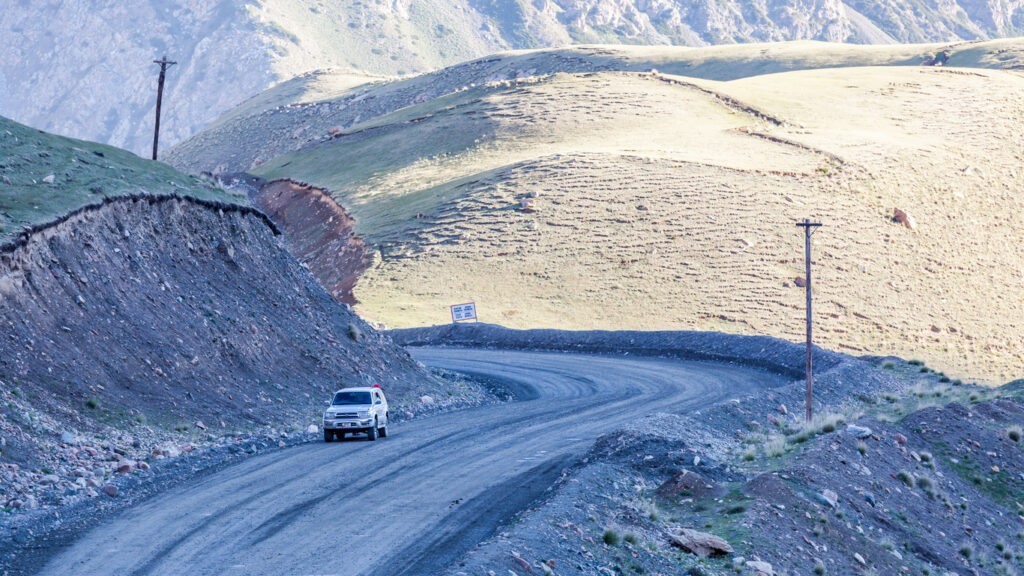
A new checkpoint has opened along the Kyrgyz-Chinese border, in the settlement of Bedel in the Issyk-Kul region. Kyrgyz president Sadyr Japarov called the event historic and significant for the country.

In his address, Japarov emphasized that opening the Bedel checkpoint is a significant achievement that opens new opportunities for strengthening ties with China, one of the world’s leading economies. This step, he said, will significantly increase Kyrgyzstan’s transport and logistics potential, and strengthen the strategic partnership with China, symbolizing a new stage in bilateral relations.

The issue of opening the Bedel checkpoint has been discussed since 1996, but agreements were reached only last year, during Japarov’s state visit to China.

The new checkpoint is the third checkpoint on the border between Kyrgyzstan and China. It is located in the remote southeastern region of Kyrgyzstan, about equidistant from the Kyrgyz town of Karakol and the district of Aksu in China’s Xinjiang Uygur Autonomous Region. Historically, travelers and traders used this pass on the Silk Road. The opening of the Bedel border station is expected to significantly improve trade ties between the two countries, and relieve pressure on existing border crossings.

Russia Donates School Buses for Remote Regions of Kyrgyzstan

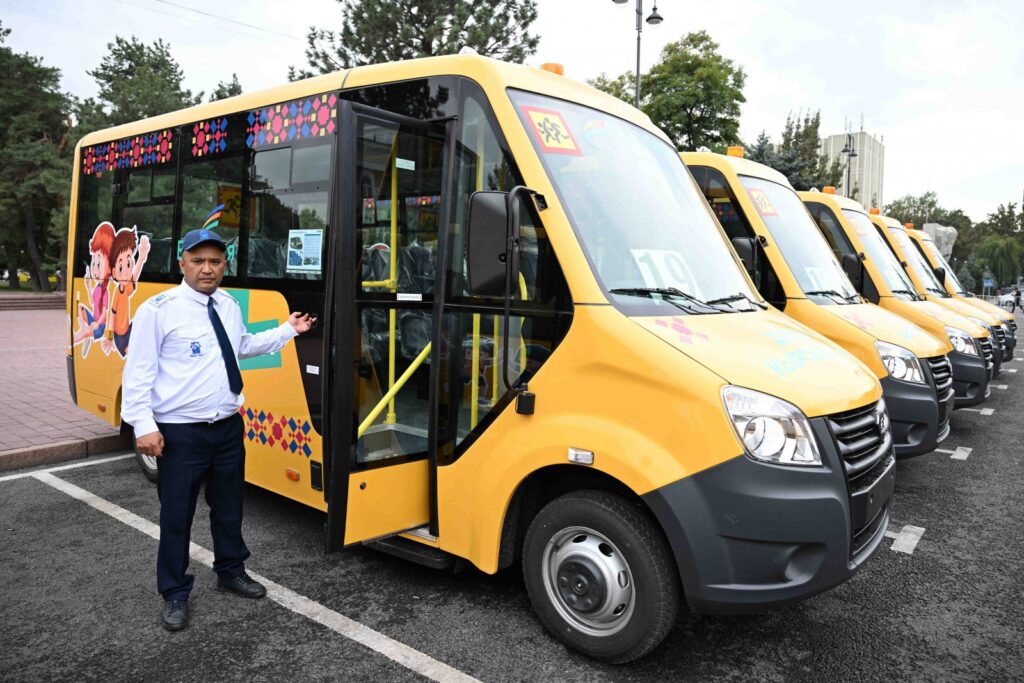
A Russian non-profit organization, Eurasia, has given 50 school buses to secondary schools in remote areas of Kyrgyzstan.

The handover ceremony was held on September 2 in Bishkek. It was attended by the Chairman of the Cabinet of Ministers of the Kyrgyz Republic, Akylbek Japarov, Deputy Speaker of the State Duma of the Russian Federation, Boris Chernyshov, and State Duma deputy and chairperson of Eurasia, Alena Arshinova.

At the ceremony, Japarov lauded the long-lasting, strong partnership relations between Kyrgyzstan and Russia and highly appreciated “the contribution that our Russian colleagues make to the development of Kyrgyzstan’s educational sphere.”

The head of the Kyrgyz Cabinet of Ministers emphasized that in 2023, Kyrgyzstan built 105 secondary schools, compared to 15 schools constructed in 2010. He added that during this period, the number of schoolchildren in the country increased by almost half a million.

At a meeting with Chernyshov and Arshinova on the same day, Japarov noted that Kyrgyzstan has begun implementing large-scale educational projects with Russia in recent years, such as the construction of nine secondary schools in all regions of Kyrgyzstan through Russian funding, construction of new campus of the Kyrgyz-Russian Slavic University in Bishkek and a branch of Moscow State University in the city of Karakol, as well as a program in which teachers from Russia teach in rural schools across Kyrgyzstan.

Kyrgyzstan Proposes Amendment to Laws Regulating Religious Sphere

The authorities in Kyrgyzstan have moved to introduce stricter control of the religious sphere in the predominantly Muslim nation.

The State Commission on Religious Affairs has submitted draft amendments to the laws regulating religion for public discussion. The Commission proposes banning the creation of political parties on a religious basis, and the participation of political organizations in spiritual activities. It also proposes banning the financing of political parties by religious activity and organizations.

The proposed amendments prohibit deputies of the Jogorku Kenesh (national parliament) and local Keneshes (councils) from combining their parliamentary work with religious activities. They also ban religious figures from being elected as deputies of local Keneshes, and propose that the dissemination of religious information be prohibited in electoral campaigning.

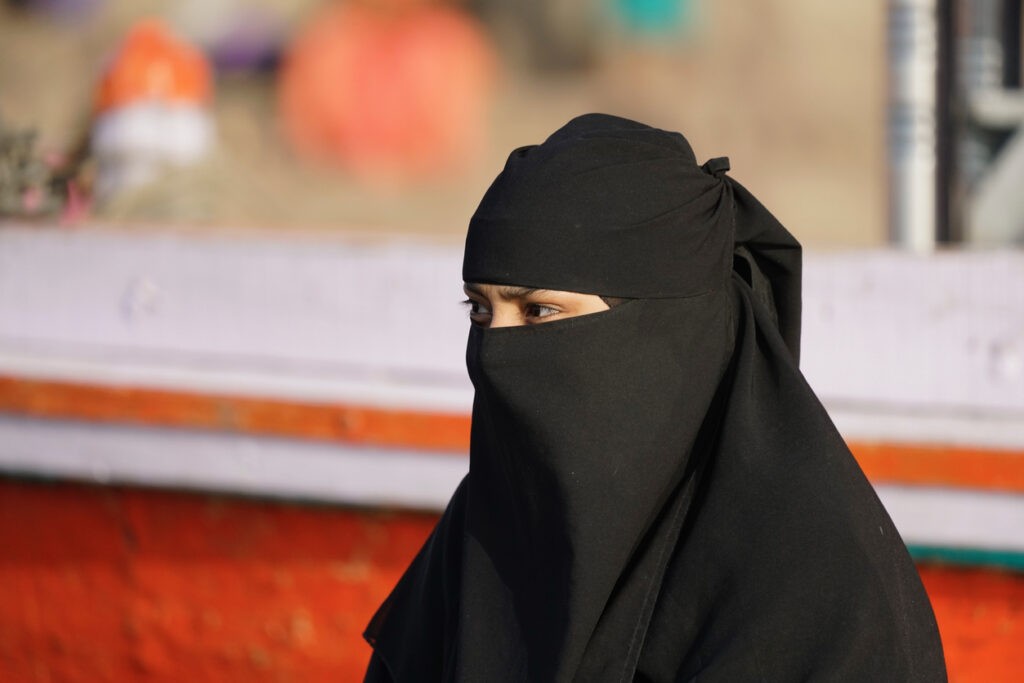
The amendments broach introducing a fine for wearing clothing that does not allow a person’s identification in government offices and public places, such as a niqab. The exceptions are clothing required for work, and clothing that covers the face for medical reasons.

Authorities in neighboring Kazakhstan are also trying to restrict the wearing of religious clothing – hijabs (headscarves) and niqabs – in public places. Kazakhstan’s parliament will consider a bill on the issue during the fall session.

In the fall of 2023, President Shavkat Mirziyoyev of Uzbekistan signed a law prohibiting the wearing of the niqab in public places.

In Tajikistan, authorities have encouraged wearing national dress and prohibited women from wearing black clothing and hijabs, considering them “alien” to Tajik culture and traditions. Earlier this year, the Tajik parliament passed a law regulating traditions and rites, banning the wearing of clothing considered to be “foreign to Tajik culture.”

Special Report: Prospects Look Good for Kazakh Wheat Exports

According to the International Grains Council, Kazakhstan’s wheat harvest for the 2024/2025 season is expected to reach 16 million tons. As the harvesting campaign begins, the country’s lack of elevator capacity and the problem of mainline railroads are concerns. Idle trains are still a problem, which leads to the introduction of regular restrictions and bans on the acceptance and shipment of wheat due to congestion on the railroad.

Market participants note that the railroad cannot cope with the volume of shipments during the autumn rush, with its infrastructural ceiling on shipments at only 1 million tons of grain per month. This leads to a collapse at border railroad crossings and, consequently, a price drop in the domestic market.

One obvious solution is to expand Kazakhstan’s elevator capacity and grain storage facilities; this is one of the reasons for the increased load on the railroad infrastructure. Thus, according to the Ministry of Agriculture, 191 licensed grain-receiving enterprises have a total storage capacity of more than 13.2 million tons. In addition, agricultural producers have storage capacities for 15.8 million tons of grain, which, as the ministry assures, is enough to store grain considering the projected harvest. Also, according to the ministry, the construction of new grain storage facilities and the expansion of existing ones are envisaged. In 2024-2026, it plans to operate five granaries with a capacity of 30,200 tons.

The national railway company Kazakhstan Temir Zholy (KTZ) has already established a grain headquarters, involving representatives from local executive bodies, the National Chamber of Entrepreneurs “Atameken,” and shippers. This headquarters ensures adequate transportation for the upcoming season’s harvest. As Salamat Abzhaliyev, Deputy General Director for Marketing and Planning of KTZ-Gruzovye Transportations LLP, noted during the briefing held at the end of August, for seven months of the current year, the total volume of grain loading on the network of railroads of the country amounted to 4.7 million tons. Only in Kazakhstan did wheat transportation increase by 3%, amounting to 1.1 million tons.

An important factor affecting the efficiency of transporting grain and milling products is the availability of specialized wagons. In addition to boxcars, grain carriers are designed to transport these specific cargoes. Today, the total fleet of boxcars and grain cars on the railroad is about 16,000 and 12,000, respectively. According to KTZ, this fleet is sufficient to fulfill all agreed transportation plans.

According to forecasts of the International Grain Council, the export of Kazakhstani wheat in the 2024/2025 season is projected at 10 million tons. During the first six months of the year, 2.4 million tons of wheat have already been shipped. The main buyers of domestic grain are traditionally Uzbekistan, China, Tajikistan, Italy, and Afghanistan. Grain exports to China have grown 5.7 times in the last three years, which makes China a key export destination.

China is ready to accept large volumes of grain from Kazakhstan. Today, the country buys about 10 million tons of wheat worldwide, including from Kazakhstan. However, further development of trade is constrained by limited transportation logistics. Since the beginning of the year, KTZ has repeatedly imposed restrictions and bans on the shipment and acceptance of grain and milling products to be transported in the direction of China. Nevertheless, KZT plans to export over 2 million tons of grain to China this year.

For its part, China has already implemented a number of infrastructure projects in the border cities of Alashankou and Khorgos to increase the volume of grain cargo transportation and improve its efficiency. These projects have built modern grain terminals with a capacity of 6,000 tons per day and the possibility of automated unloading of the entire train.

It is worth recalling that at the end of March of this year, KTZ, together with employees of the Chinese railroad at the Dostyk-Alashankou border crossing, already set a daily record of 21 trains for the transfer of trains to China, which indicates the potential for further increases in freight traffic to increase exports to China.

Afghanistan remains a promising market for Kazakhstani wheat and flour. The change in the political situation in Kabul led to the suspension of trade operations with all partner countries, including Kazakhstan. For some time, interbank transactions and delivery of railroad cars were impossible, as the owners feared for their safety and return. However, the problems have been resolved. Today, transactions are made through third-country banks, and railcar delivery has been restored. Among other things, Afghanistan remains a priority flour market for Kazakhstan, accounting for 70% of its total exports. In eight months of the 2023/24 marketing year, Kazakhstan exported 172,840 tons of wheat to Afghanistan. The annual demand for the Afghan market is from 2 to 3 million tons. Despite an increase in wheat crops, the country’s leadership has agreed with Kazakhstan to import grain at an affordable price. During the recent visit of an Afghan delegation to Kazakhstan, the issues of establishing a stable trade between the countries, purchase of wheat, and increase of exports through the railroad network were discussed. As a result of the meeting, the Kazakhstani side reduced the duties by 50% on Afghan exports.

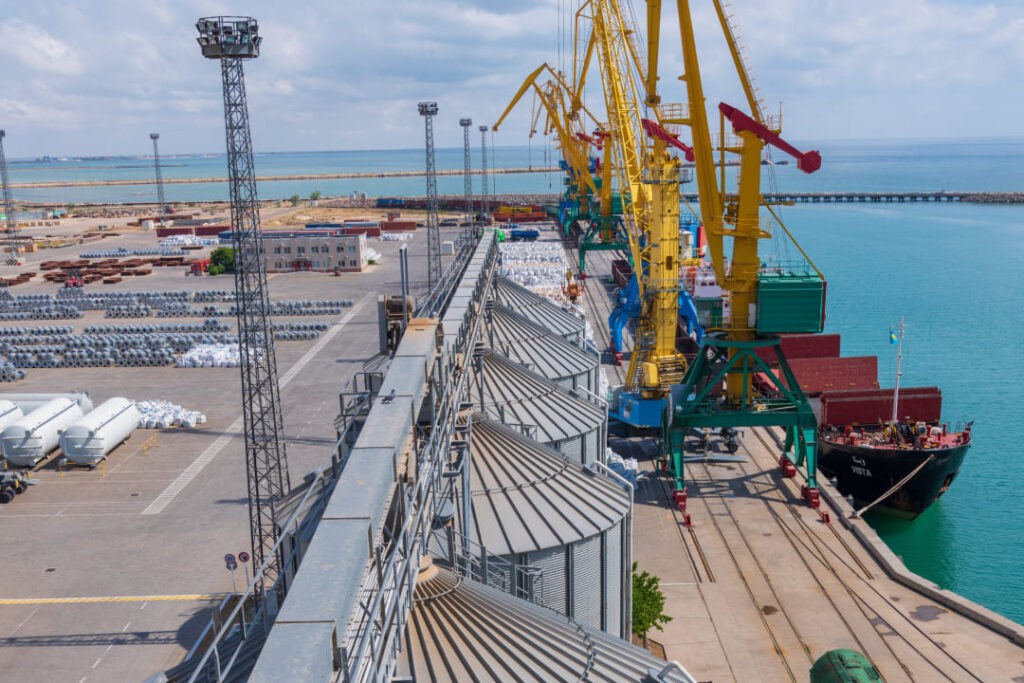
An alternative route through the Aktau seaport is also being worked out to transport grain cargoes to Afghanistan. This will allow loading the capacities of western terminals — Aktau Northern and Akbidai, with a total capacity of 82,000 tons — as well as Beineu grain terminal, which can simultaneously store 100,000 tons of grain, receive up to 500 railcars daily, and send up to 2 million tons per year in packaged form and grain trucks.

Agrarians in neighboring Uzbekistan are breaking records in their wheat harvests. For the first time in the country’s history it has exceeded 9 million tons this year. This is even though the republic has been a top importer of Kazakhstani wheat for several years. The volume of shipments for the first six months of the current year has already exceeded the volume for the whole of last year. In the September-February 2023/24 marketing year, Kazakhstan exported 1.6 million tons of wheat to Uzbekistan. Tashkent accounts for more than 40% of Kazakhstan’s grain exports.

Uzbekistan in 2024 reduced the transit tariff for railroad transportation of grain from Kazakhstan. It is also worth noting Kazakhstan’s large-scale efforts to ease the load on the Saryagash station border crossing with its southern neighbor, which currently handles about 80% of Kazakhstan’s grain exports. It is about constructing a new railway line, Darbaza-Maktaaral, which will significantly help the transportation of grain, not only cargo, to Central Asia. In addition, last year, KTZ increased the number of railroad tracks from four to eight at the Kuprik border station, allowing for the exchange of trains at the Saryagash-Kuprik border crossing. Six more tracks are under construction this year.

Europe has become a significant market for Kazakhstan’s agricultural products. Given the current geopolitical situation in the region and sanctions restrictions against Russia, one of the largest grain suppliers, the European Union opens vast opportunities for developing Kazakhstan’s export potential.

According to a report from the European Commission, the republic is already in first place among durum wheat exporters to the West, ahead of Turkey and Canada. Kazakhstan supplied the European Union with 19,000 tons of durum wheat in the season 2024-2025.

Kazakhstan optimizes the railway and elevator infrastructure in the current export market situation to reduce the seasonal three-month peak. In the conditions of an active increase in wheat-grown volumes and the development of its grain processing by importing countries, Kazakhstan plans to diversify its export structure by developing deep grain processing with the sale of value-added products. Thus, only neighboring China is planning a significant increase in grain production in the coming years. According to the action plan released by the State Council of the People’s Republic of China, by 2030, China intends to increase its capacity by more than 50 million tons. By then, the area under crops in the PRC will amount to about 117 million hectares.

Under these conditions, according to the Ministry of Agriculture, Kazakhstan, in the coming years, plans to implement 13 projects for grain processing, including the construction of three enterprises for deep processing of wheat and corn in the Astana, Kostanay, and Turkestan regions. It is also planned to reduce areas in grain-growing regions of the country to diversify and move away from monoculture. By 2028, their volume will be reduced by 855,000 hectares. At the same time, due to the reduction of spring wheat crops, the area of highly profitable and socially essential crops will be increased.

Putintseva Breaches Tennis Etiquette in U.S. Open Loss

Kazakh tennis player Yulia Putintseva once said: “I’m like a gangster on court, but like an angel off court.”

The comment, reported by the Women’s Tennis Association in 2022, was emblematic of Putintseva’s fiery on-court demeanor, which has propelled her to some big wins over the years.

But take out frustrations on a member of the ball crew, as Putintseva appeared to do at this year’s U.S. Open? That’s taboo in tennis circles, and players cross the line at their peril when social media is the judge.

Moscow-born Putintseva, 29, has been the target of withering online criticism since her dismissive treatment of a ballgirl during a 6-3, 6-4 loss to Jasmine Paolini of Italy in Louis Armstrong Stadium in New York on Saturday.

Video of the incident shows the world No. 32 standing virtually immobile as the ball crewmember, her hands aloft as her training dictates, bounces one ball and then another toward the player. Putintseva lets the balls bounce off her, suggesting indifference or even disdain. Putintseva nonchalantly catches a third ball before walking off to resume play. Some in the crowd start to boo and whistle while watching the uncomfortable encounter.

“Who does Putintseva think she is … Terrible behaviour towards the ball girl !!!” Boris Becker, who won six Grand Slam singles titles, said on X.

“Shame on her!!! Humiliation of a ball kid is the last thing you do on a tennis court,” said retired Spanish player Feliciano López (who once accidentally clocked a ball boy in a sensitive area with one of his big serves).

Putintseva issued an apology on social media to the ball crewmember, saying “it was not about her” and that she was upset with herself for failing to win the previous game during the match, according to Sports Illustrated and other media. Some online pundits panned the apology, saying it should be made in person.

It was a fraught exit from the last Slam of the year for Putintseva, a Florida resident who switched from representing Russia to Kazakhstan in 2012 and has received support from the Kazakhstan Tennis Federation. She was on the Kazakh Olympic team, which later said she pulled out of the Paris games because of injury.

Putintseva has won three WTA singles titles, including on grass in Birmingham this year, and notched wins over some of the best in the game – Naomi Osaka in the Wimbledon first round in 2019, top seed Coco Gauff in Cincinnati this year, and No. 1 Iga Swiatek at Wimbledon, also in 2024.

There are rigorous guidelines for ball crews at the majors. At the U.S. Open, anyone 14 years or older can apply for the job and the average age of a ball crew member is about 21.

Ball teams sometimes contend with intense heat on court and balls flying at high speed in their direction. Tournament winners often thank the ball crews in trophy speeches. Some champions were once ball kids.

“At heart, I’m always going to be a ball boy,” Roger Federer told TennisTV in 2019.