• KGS/USD = 0.01144 0%
  • KZT/USD = 0.00194 0%
  • TJS/USD = 0.10841 0%
  • UZS/USD = 0.00008 0%
  • TMT/USD = 0.28571 0%
  • KGS/USD = 0.01144 0%
  • KZT/USD = 0.00194 0%
  • TJS/USD = 0.10841 0%
  • UZS/USD = 0.00008 0%
  • TMT/USD = 0.28571 0%
  • KGS/USD = 0.01144 0%
  • KZT/USD = 0.00194 0%
  • TJS/USD = 0.10841 0%
  • UZS/USD = 0.00008 0%
  • TMT/USD = 0.28571 0%
  • KGS/USD = 0.01144 0%
  • KZT/USD = 0.00194 0%
  • TJS/USD = 0.10841 0%
  • UZS/USD = 0.00008 0%
  • TMT/USD = 0.28571 0%
  • KGS/USD = 0.01144 0%
  • KZT/USD = 0.00194 0%
  • TJS/USD = 0.10841 0%
  • UZS/USD = 0.00008 0%
  • TMT/USD = 0.28571 0%
  • KGS/USD = 0.01144 0%
  • KZT/USD = 0.00194 0%
  • TJS/USD = 0.10841 0%
  • UZS/USD = 0.00008 0%
  • TMT/USD = 0.28571 0%
  • KGS/USD = 0.01144 0%
  • KZT/USD = 0.00194 0%
  • TJS/USD = 0.10841 0%
  • UZS/USD = 0.00008 0%
  • TMT/USD = 0.28571 0%
  • KGS/USD = 0.01144 0%
  • KZT/USD = 0.00194 0%
  • TJS/USD = 0.10841 0%
  • UZS/USD = 0.00008 0%
  • TMT/USD = 0.28571 0%
18 December 2025

Five Countries Complete Large-Scale ‘Birlik-2025’ Military Exercises in Uzbekistan

The multinational military exercises Birlik-2025 (“Unity-2025”) have concluded at the Kattakurgan training ground in Uzbekistan’s Samarkand region. The joint maneuvers, which began on October 14, brought together armed forces from Uzbekistan, Kazakhstan, Kyrgyzstan, Tajikistan, and Azerbaijan. According to the Uzbek Ministry of Defense, the drills were among the largest in the history of regional military cooperation.

The exercises focused on counterterrorism and defense operations, aiming to enhance interoperability, tactical coordination, and combat readiness among the participating countries. Scenarios included simulated urban warfare, reconnaissance, and joint air-ground operations.

Commanders utilized computer modeling and simulation technologies to analyze battlefield decisions and identify optimal tactical responses. These digital tools played a key role in shaping the exercise outcomes and refining strategic planning.

@Ministry of Defense of Uzbekistan

Observers included the defense ministers of all participating states, along with military representatives from Turkmenistan, who attended in a monitoring capacity.

The drills were conducted across more than 20 training grounds in multiple regions of Uzbekistan. In the initial phase, reconnaissance units deployed unmanned aerial vehicles to assess the territory of a hypothetical enemy. This was followed by a special operation to neutralize simulated illegal armed groups in an urban environment.

Precision artillery and air strikes were executed by ground forces, while the air forces of Uzbekistan and Kazakhstan provided air cover and destroyed critical enemy positions. Combat helicopters and fighter jets demonstrated joint tactical coordination with land-based units.

Troops also practiced offensive operations along the defensive line using a range of weapons and military equipment. The multi-stage training format included tasks of varying complexity, replicating conditions of high-intensity conflict.

@Ministry of Defense of Uzbekistan

According to the Uzbek Ministry of Defense, Birlik-2025 served as a valuable platform for exchanging experience in combating international terrorism, extremism, and armed insurgency. “Joint operations have made it possible to consolidate advanced methods of combat and improve interoperability between units from different countries,” the ministry stated.

Following the conclusion of the active phase, participants visited mobile maintenance workshops, command posts, and exhibits showcasing modernized weaponry and defense technologies.

Kyrgyzstan Confronts Transport-Driven Air Pollution

On October 21, Bishkek hosted the National Multi-Stakeholder Dialogue “Tackling Transport Air Pollution in Kyrgyzstan: Towards Clean Air in Cities All Year Round.” The event gathered representatives from government bodies, international organizations, environmental NGOs, academia, and civil society.

Participants discussed coordinated actions and practical solutions to reduce air pollution and improve environmental conditions in Kyrgyz cities. Key proposals included transitioning to cleaner fuels, expanding public transport, improving energy efficiency, and implementing stricter emission standards. A systemic approach was emphasized, involving the promotion of electric vehicles, public environmental education, and robust air quality monitoring.

Experts warned that transport-related pollution is a leading contributor to chronic diseases and premature death, particularly among vulnerable populations.

Kyrgyz Minister of Natural Resources, Ecology and Technical Supervision, Meder Mashiev, highlighted that while previous efforts had focused on pollution during the heating season, new World Bank analysis shows that vehicle emissions significantly impact air quality year-round in Bishkek.

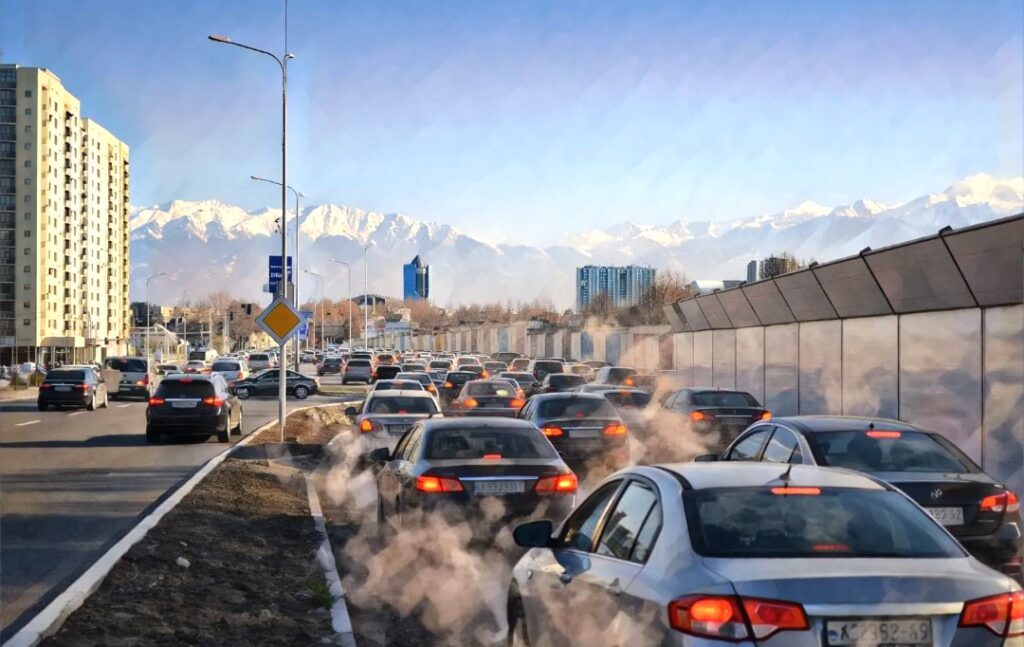
According to the Ministry, vehicle emissions account for roughly 30% of air pollution in the capital. In 2024, 1,674,085 vehicles were registered in Kyrgyzstan, with 83% or 1,392,737, over 15 years old. In Bishkek, 426,946 vehicles were registered, including 333,801 older than 15 years, most of which do not meet modern environmental standards.

The city administration reported that more than 750,000 vehicles operate on Bishkek’s roads daily, more than double the road network’s intended capacity of 350,000. This, combined with poor fuel quality and widespread reliance on private cars, has led to a systemic environmental challenge.

Mashiev outlined several initiatives to address the issue.

First, the city is transitioning to environmentally friendly public transport. Over 1,300 eco-friendly buses and 120 electric buses have been delivered to Bishkek. Each new bus replaces approximately four diesel buses, cutting diesel fuel consumption by around 100 tons per day. By the end of 2024, 3,535 electric vehicles were registered in the capital, and 44 charging stations had been installed.

Second, modern air quality monitoring systems are being deployed to enable more accurate and responsive pollution tracking.

Third, updates to the regulatory framework are being implemented to improve emission controls and compliance mechanisms.

“We have already taken concrete steps to improve air quality in Bishkek, the use of low-quality coal has been banned, large-scale greening projects are underway, and an active transition to alternative energy sources is in progress,” said Mashiev.

He concluded that similar measures would be introduced in other major cities across Kyrgyzstan, including Osh and Jalal-Abad.

Magzhan Ilyasov Appointed Kazakhstan’s Ambassador to the United States

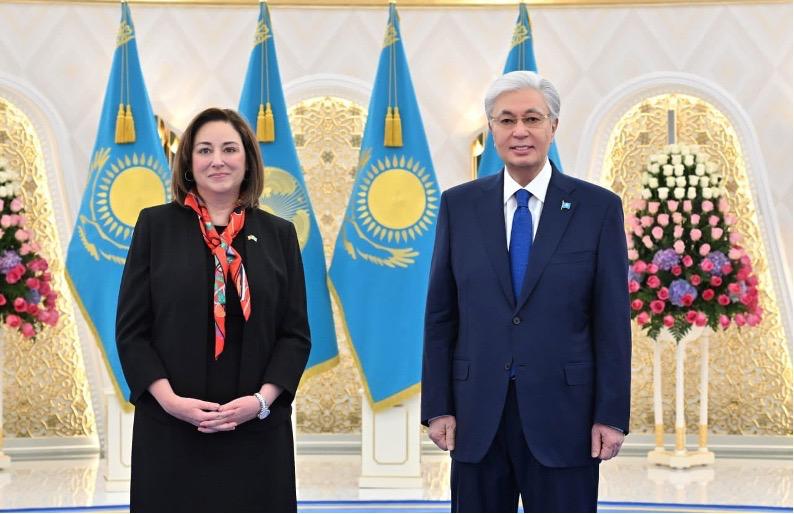
President Kassym-Jomart Tokayev has appointed Magzhan Ilyasov as Kazakhstan’s new Ambassador Extraordinary and Plenipotentiary to the United States. The appointment is part of a broader reshuffling of the country’s foreign policy leadership.

The presidential decree announcing the appointment was published on the official Akorda website. Ilyasov succeeds Yerzhan Ashikbayev, who served in Washington from 2021 until his dismissal on September 26, 2025, shortly after Tokayev’s working visit to New York.

Born in Almaty in 1974, Ilyasov graduated with honors from the Faculty of International Relations at the Kazakh State University of World Languages. He later earned a master’s degree from Harvard University’s Kennedy School of Government.

Ilyasov began his diplomatic career in 1996 at the Ministry of Foreign Affairs, starting as a referent before serving as attaché and secretary in the Department of the United Nations and International Economic Organizations. By the late 1990s, he transitioned to the Presidential Administration, focusing on protocol and organizing international meetings.

From 2005 to 2016, he held senior roles in the foreign policy division of the Presidential Administration, eventually becoming an advisor to the president.

His diplomatic postings include:

  • 2016-2020: Ambassador to the Netherlands and Permanent Representative to the Organisation for the Prohibition of Chemical Weapons;
  • 2020-2022: Permanent Representative of Kazakhstan to the United Nations; and
  • 2022-2025: Ambassador to the United Kingdom, with concurrent accreditation to Iceland and Ireland beginning in 2023

Ilyasov’s appointment comes amid a broader realignment of Kazakhstan’s foreign policy team. On the same day Ashikbayev was dismissed, several key changes were announced:

  • Murat Nurtleu stepped down as Foreign Minister to become the president’s assistant for international investment and trade cooperation;
  • Yermek Kosherbayev was appointed as the new Foreign Minister; and
  • Yerzhan Kazykhan, formerly the president’s assistant for international affairs, was named Kazakhstan’s permanent representative to the United Nations and other international organizations in Geneva.

Ilyasov’s extensive diplomatic experience and recent high-profile postings are seen as aligning with Kazakhstan’s strategic priorities in the United States, particularly amid growing engagement in investment, trade, and security dialogue.

Kazakh Lawmakers Propose Ban on the Word “Halyk” in Bank Names

A group of deputies in the Mazhilis, Kazakhstan’s lower house of parliament, has proposed amendments to the Law “On Banks and Banking Activities,” seeking to prohibit the use of specific words in the names of financial institutions, most notably “halyk” (“people’s”).

Deputy Murat Abenov announced the initiative via his official Facebook page, stating that more than 50 lawmakers are backing the proposal to revise Article 7 of the banking law. The draft amendment would expand existing restrictions on bank names, currently banning terms such as “national,” “central,” “state,” and “republican”, to also exclude “people’s” and “halyk,” in any language or form.

If adopted, the legislation would directly affect Halyk Bank JSC, one of Kazakhstan’s most prominent and systemically important financial institutions. Halyk Bank, whose name translates to “People’s Bank,” is part of the broader Halyk Group, which is active in banking, insurance, brokerage, and leasing services. The bank’s largest shareholder is ALMEX Holding Group JSC, controlled by Timur and Dinara Kulibayev, the son-in-law and daughter of former President Nursultan Nazarbayev.

Abenov argued that the term “people’s” carries specific legal and symbolic significance. Under Article 3 of Kazakhstan’s Constitution, the people are the bearers of sovereignty and the sole source of state power. He contended that allowing a private commercial institution to use this term may mislead the public into believing it serves or is governed by the population at large.

The proposal has drawn strong criticism from the Kazakhstan Investors Association, which views the amendment as selectively targeting Halyk Bank. “The discussion and especially the adoption of this amendment pose significant risks to legal certainty, the investment climate, and the national economy,” the Association said in a public statement.

The Association further emphasized that brand names are legally protected intellectual property. Under Kazakhstan’s Constitution, private property, including trademarks, can only be expropriated through a court ruling. “A legislative prohibition on an established, lawfully registered brand violates core principles of Kazakhstan’s legal system,” the statement read.

Investor representatives also warned that the move could damage Kazakhstan’s reputation among foreign investors. “The Halyk Bank brand has existed for decades and holds historical significance. Forcing a name change may be viewed as retroactive regulation, undermining investor confidence, especially considering the bank’s shares are listed on the London Stock Exchange,” the Association noted.

The group called for a “constructive dialogue grounded in legal principles, economic rationale, and common sense,” warning that arbitrary restrictions could harm financial stability and deter investment.

As previously reported by The Times of Central Asia, Halyk Bank has expanded regionally, acquiring a 49% stake in Uzbek digital payments firm Click, marking a major fintech investment in Central Asia.

Congressional Panel Urges Trump to Host C5+1 Summit This Year

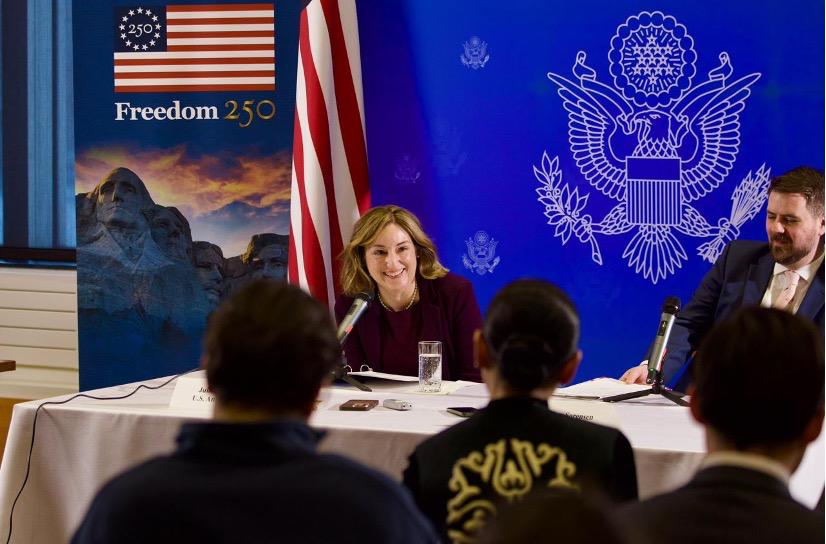
A U.S. congressional foreign affairs panel is asking U.S. President Donald Trump to host a meeting in Washington, D.C. with leaders from Central Asia by the end of 2025.  

The proposal was made in an October 20 letter to Trump by Bill Huizenga, a Michigan Republican who chairs the House’s South and Central Asia Subcommittee, and Sydney Kamlager-Dove of California, the senior Democrat on the subcommittee. 

The two representatives said that such a summit would mark the 10th anniversary of the C5+1 diplomatic forum and highlight the importance of Central Asia following Trump’s meetings with Uzbek President Shavkat Mirziyoyev and Kazakh President Kassym-Jomart Tokayev on the sidelines of the U.N. General Assembly last month. Multi-billion-dollar business deals were announced in connection with those meetings. 

Established in 2015, the C5+1 formula refers to the United States and the five Central Asian countries of Kazakhstan, Kyrgyzstan, Tajikistan, Turkmenistan, and Uzbekistan.

“A Leaders’ Summit with meaningful outcomes will strengthen regional cooperation and maximize the diplomatic potential of the 10th anniversary, setting the tone for strengthened U.S. engagement in the region for the rest of your presidency,” the representatives said in the letter to Trump. They said a meeting would advance U.S. priorities in Central Asia, “including security cooperation, economic ties, soft power, and good governance,” they said. 

The letter noted U.S. interests such as the development of critical minerals, including tungsten, antimony, lithium, and rare earth elements; the full repeal of the Jackson-Vanik amendment, a Cold War-era law that imposes some restrictions on trade with several countries in Central Asia; and counterterrorism efforts against the regional branch of the Islamic State group. 

“We also hope to see new agreements with the Central Asian countries to bolster people-to-people ties and expand U.S. soft power, such as additional American Peace Corps volunteers and the expansion of educational and cultural exchange programs, while addressing the accreditation issue surrounding U.S.-sponsored journalists and other U.S.-funded news broadcasters. 

The Trump administration, however, has taken steps to cut most U.S. foreign aid programs, dismantling the U.S. Agency for International Development. USAID had been active in Central Asia. The administration has also cut aid for U.S.-funded domestic and international broadcasters.

Analyst Temur Umarov wrote in the Carnegie Politika publication that Central Asia has found it relatively easy to work with the Trump administration. 

“Business interests can be used to attract Washington’s attention, and there is no longer any need for demonstrative distancing from Russia or commitment to democratic reforms,” Umarov said. 

He said that Uzbekistan and Kazakhstan have hoped to hold C5+1 anniversary events in their capitals, with top leaders in attendance. If that happens, Trump would be the first sitting U.S. president to visit any of the five Central Asian countries. 

Azerbaijan and Kazakhstan Deepen Strategic Partnership Through Middle Corridor

Azerbaijani President Ilham Aliyev’s recent state visit to Astana has marked a significant turning point in relations between Azerbaijan and Kazakhstan. President Kassym-Jomart Tokayev and President Aliyev underscored the rapid expansion of cooperation across transport, investment, and technology sectors. Political and cultural ties are also deepening, bolstering what both sides have described as a “brotherly” relationship.

Economic Ties Strengthened by Infrastructure and Energy Projects

Tokayev highlighted the strategic importance of the Trans-Caspian International Transport Route (Middle Corridor), noting a 62% increase in freight traffic in 2024 to 4.5 million tons, with a further 2% rise recorded so far in 2025. Kazakhstan is currently building a container hub in Aktau, while a new cargo terminal in the port of Alat, developed with foreign partners, including China, offers further growth potential. The two leaders also discussed establishing a Trans-Caspian ferry system to expand exports, with a long-term goal of boosting cargo traffic to 10 million tons.

Tokayev further emphasized Kazakhstan’s use of the Baku-Tbilisi-Ceyhan pipeline for oil exports. In 2024, nearly 1.5 million tons of Kazakh oil transited through Azerbaijan, with plans to increase volumes significantly. He also cited efforts to deliver Kazakh uranium to foreign markets via Azerbaijan.

Joint IT projects are also advancing, including plans to lay a fiber-optic communication line under the Caspian Sea.

Tokayev commended the joint declaration on peace signed by Armenia and Azerbaijan in Washington under U.S. mediation, calling it a “historic” milestone in regional reconciliation efforts. Earlier on Monday, Aliyev had announced a significant policy shift, stating that Baku is lifting all restrictions on the transit of goods to Armenia.

Middle Corridor as a Strategic Geopolitical Tool

The Middle Corridor, connecting China and Europe through Kazakhstan, the Caspian Sea, and Azerbaijan, was a major focus of Aliyev’s state visit. Amina Kosbaeva of the Institute for Eurasian Integration noted that the corridor – which carried about 2.7 million tons in 2023 and 4.5 million tons in 2024, as traffic shifted away from traditional routes via Russia – is evolving into a strategic asset that enhances regional autonomy and global connectivity.

Kosbaeva highlighted that both countries have built a sustainable cooperation model grounded in cultural commonalities and mutual trust. She identified agriculture, petrochemicals, and machine-building as key sectors where new supply chains could emerge, boosting trade and resilience to global market fluctuations.

Kosbaeva added that future cooperation is likely to grow within the framework of the Organization of Turkic States (OTS), which held its 12th Summit in Gabala, Azerbaijan, on October 6–7, 2025. further institutionalizing bilateral ties as a driving force within the Turkic world.

“The history of the Turkic peoples goes back to common roots,” Tokayev said at the summit, expressing support for the idea of a broader “Turkic-speaking States +” platform to expand cooperation.

Business Relations Rooted in Political Alignment

Kazakh political analyst Gaziz Abishev noted that Astana and Baku often align on geopolitical issues. “The relationship between the two countries proves that rigid multilateral blocs are not necessary for close alliances. Unconditional mutual sympathy at all levels, leaders, elites, and citizens, is enough,” he said.

Abishev emphasized the Middle Corridor’s growing role in global logistics. Goods from Kazakhstan are shipped via the Aktau and Kuryk ports across the Caspian to Azerbaijan, then routed through Georgia and Turkey to Europe.

There are currently around 1,500 Azerbaijani-capital companies registered in Kazakhstan, while roughly 150 Kazakhstani-capital companies operate in Azerbaijan. Agricultural trade is also strong: from January to August 2025, Kazakhstan exported 558,600 tons of grain to Azerbaijan, mostly wheat valued at $105.8 million, which accounted for over 80% of Azerbaijan’s wheat imports.

Crisis Management After Plane Crash Near Aktau

The visit also underscored effective crisis coordination between the two countries. A joint investigation is underway into the December 2024 crash of an AZAL Azerbaijani airline flight near Aktau. The aircraft was en route from Baku to Grozny with 67 people aboard. Twenty-nine survived, but all Kazakhstani passengers were among the deceased.

Azerbaijan’s President thanked Kazakhstan for its assistance, and citizens of both countries expressed solidarity on social media. Aliyev publicly held Russia responsible for the tragedy. According to Russian President Vladimir Putin, the AZAL plane was likely struck by debris from air defense missiles targeting Ukrainian drones that had crossed into Russian airspace. Once staunch allies, the crisis severely tested relations between Azerbaijan and Russia, with some fences being mended at the recent CIS summit in Dushanbe.

Azerbaijan’s Growing Role in the Region

Analyst Alexander Karavaev of the Caspian Institute for Strategic Studies noted that Azerbaijan is establishing itself as a key transport and energy hub. Through initiatives such as TRACECA and the Belt and Road Initiative, now integrated into the Middle Corridor, Baku is expanding its geopolitical relevance, particularly in renewable energy exports to Europe.

President Aliyev’s visit to Astana marked a new phase in Azerbaijan–Kazakhstan ties, expanding cooperation in transport, energy, and digital infrastructure. The two nations are now key partners in the Middle Corridor and the wider Turkic world – so much so that analysts are describing the emerging format as “C6,” with Azerbaijan increasingly seen as a natural member of Central Asia’s core. This vision of a “C6” framework reflects a growing effort to build a more connected and self-reliant Caspian–Central Asian region.