• KGS/USD = 0.01144 0%
  • KZT/USD = 0.00213 0%
  • TJS/USD = 0.10456 0.19%
  • UZS/USD = 0.00008 0%
  • TMT/USD = 0.28490 0%
  • KGS/USD = 0.01144 0%
  • KZT/USD = 0.00213 0%
  • TJS/USD = 0.10456 0.19%
  • UZS/USD = 0.00008 0%
  • TMT/USD = 0.28490 0%
  • KGS/USD = 0.01144 0%
  • KZT/USD = 0.00213 0%
  • TJS/USD = 0.10456 0.19%
  • UZS/USD = 0.00008 0%
  • TMT/USD = 0.28490 0%
  • KGS/USD = 0.01144 0%
  • KZT/USD = 0.00213 0%
  • TJS/USD = 0.10456 0.19%
  • UZS/USD = 0.00008 0%
  • TMT/USD = 0.28490 0%
  • KGS/USD = 0.01144 0%
  • KZT/USD = 0.00213 0%
  • TJS/USD = 0.10456 0.19%
  • UZS/USD = 0.00008 0%
  • TMT/USD = 0.28490 0%
  • KGS/USD = 0.01144 0%
  • KZT/USD = 0.00213 0%
  • TJS/USD = 0.10456 0.19%
  • UZS/USD = 0.00008 0%
  • TMT/USD = 0.28490 0%
  • KGS/USD = 0.01144 0%
  • KZT/USD = 0.00213 0%
  • TJS/USD = 0.10456 0.19%
  • UZS/USD = 0.00008 0%
  • TMT/USD = 0.28490 0%
  • KGS/USD = 0.01144 0%
  • KZT/USD = 0.00213 0%
  • TJS/USD = 0.10456 0.19%
  • UZS/USD = 0.00008 0%
  • TMT/USD = 0.28490 0%

Rhetoric, Disinformation, and Regional Responses: Central Asia Reacts to Debates in the Russian Media Space

In recent months, a series of sharp and at times openly threatening statements circulating within the Russian media space have drawn growing attention in Central Asia. As previously reported by The Times of Central Asia, rhetoric targeting several Central Asian states has become increasingly frequent on Russian television and social platforms, raising concern among analysts and the public over issues of sovereignty, coercive tactics, and broader regional security.

Russian officials have repeatedly stressed that commentary aired on television talk shows or circulated on social media does not necessarily reflect official state policy. Moscow has, on several occasions, distanced itself from provocative remarks made by media personalities, emphasizing that Russia’s foreign policy is articulated only through formal government channels.

Analysts note that such episodes unfold within a highly polarized information environment, where sensational or confrontational statements can spread rapidly online, often detached from their original context or intent. Even when later denied or debunked, these narratives can contribute to heightened tensions by reinforcing existing anxieties and testing political and societal reactions in neighboring states.

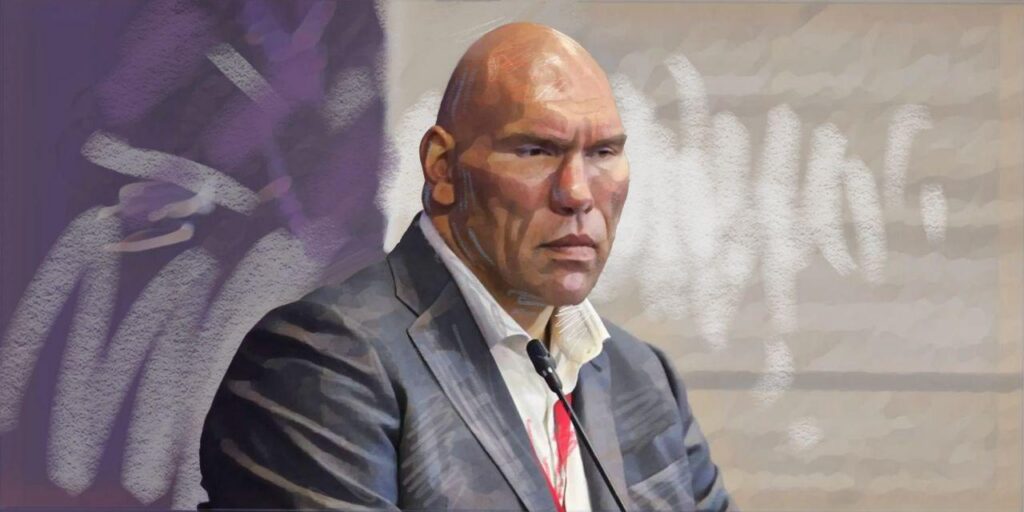
One recent and widely discussed episode involved a video that went viral on social media, allegedly showing Russian State Duma deputy and former heavyweight boxing champion Nikolai Valuev calling for a shift in Russia’s approach toward former Soviet republics from “carrots” to “sticks”, while also hinting at the possibility of a “special operation” in Central Asia. The footage sparked an immediate backlash and skepticism, particularly in Uzbekistan.

According to RIA Novosti, Valuev later publicly denied the authenticity of the video, asserting that it was a deepfake. The Russian news agency quoted him as saying the video “has nothing to do with me” and had been produced using AI. “I’m glad that technologies are developing so fast, but this was done with artificial intelligence,” he said, noting that he often discusses AI and deepfakes and that “apparently, AI has taken offense at me.”

Doubts about the video’s authenticity emerged almost immediately. Among those questioning it was Ruslan Chagaev, the former world boxing champion from Uzbekistan and one of Valuev’s former opponents, who publicly expressed his disbelief that the statements reflected Valuev’s actual views. Nonetheless, the incident fueled broader discussions in Central Asia about information manipulation, the role of deepfakes, and how aggressive narratives can gain traction, even when later debunked.

These concerns were echoed at a recent session of the analytical forum “Fikrat,” held in Tashkent under the theme National Interest and Global Pressure. The gathering brought together political scientists, economists, and historians to assess the growing volume of inflammatory rhetoric emerging from Russia and its implications for Central Asia. Participants stressed that, even when such narratives do not reflect or translate directly into policy, they can shape public perception and test societal and governmental responses.
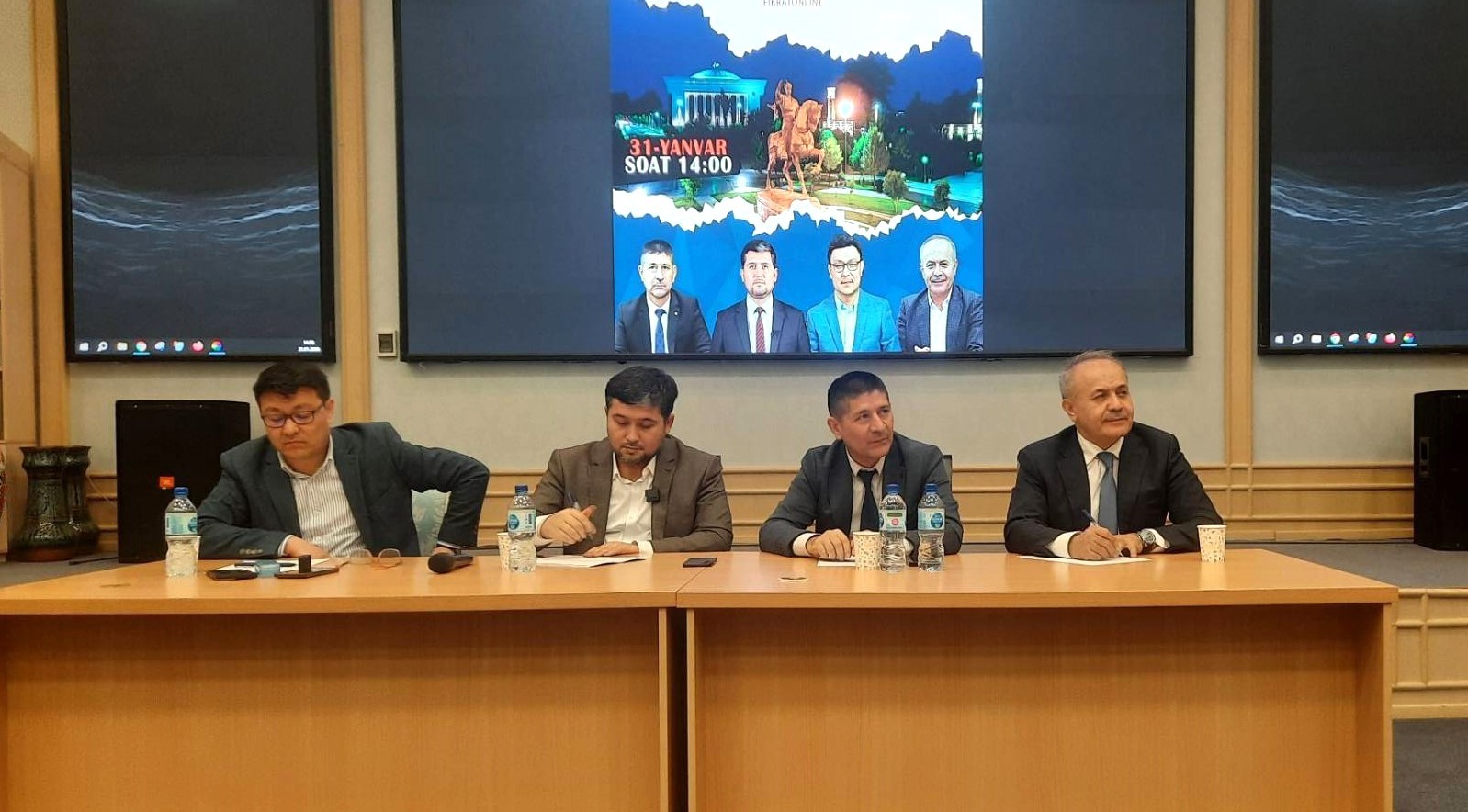
The Firkat Forum in Tashkent; image: TCA, Sadokat Jalolova.

Economist Abdulla Abdukadirov, First Deputy Director General of Uzbekistan’s Agency for Strategic Reforms under the President, addressed the ideological underpinnings of these narratives, identifying Russian nationalist figure Alexander Dugin as a central figure promoting imperialist ideas. “Dugin is an ideologue of Russian imperialism and a creator of narratives,” Abdukadirov stated. “It is not necessary that this narrative will be adopted by the authorities in Russia as a guide to action. But a narrative is a harbinger of popular and state ideology. It lays the groundwork and tests reactions.”

Abdukadirov emphasized that Central Asia’s response should be direct and unequivocal. “Enough talk about our sovereignty. You did not give it to us, and it is not for you to take it away,” he declared. Referencing the war in Ukraine, he called it a “hard and unambiguous lesson,” cautioning that reliance on coercion and violence would only provoke greater resistance. He further warned that external pressure could eventually backfire due to the strong centrifugal forces within the Russian Federation itself.

When asked by The Times of Central Asia whether Russia holds significant economic leverage over Uzbekistan, Abdukadirov identified labor migration as a key vulnerability. “First of all, migrants are our biggest vulnerability,” he said. He also noted that by 2022, Russian companies had acquired substantial assets in Uzbekistan’s energy, telecommunications, and media sectors. “They have very large control,” he said, though he added that their influence should not be exaggerated.

At the same time, Abdukadirov argued that control of assets alone is not decisive if market dynamics shift. “If the state manages the market correctly, a thousand assets can turn into nothing in one day,” he said. He pointed to China as a country that understands how market conditions determine asset value. “The market environment is more important than assets. The state creates that environment together with society,” he said, underscoring the need for continued dialogue.

Political scientist Hamid Sodiq focused on how the tone of external pressure has evolved, observing that rhetoric once limited to fringe voices has become mainstream. “Today, it has taken a naked form. No one is ashamed anymore,” he said, recalling that in earlier years, even provocative commentators were more cautious when discussing Uzbekistan’s sovereignty. According to Sodiq, this change reflects a shift in the nature of geopolitical discourse and heightens the need for internal resilience.

Sodiq warned that mounting external pressure can result in internal consequences, including the risk of political tightening if societies are unprepared. In such an environment, he argued, it is vital to maintain a balance, defending sovereignty while preserving the relationship between the state and society. “This is the time when we must join hands and act together,” he said, urging solidarity and open discourse.

The discussion in Tashkent also reflected on regional and global dynamics. Abdukadirov cited remarks by Canada’s prime minister at the World Economic Forum in Davos: “The middle powers must act together, because if we’re not at the table, we’re on the menu.” He added that when Central Asian nations act collectively, “we will not be on the menu, but among those placing the order.”
Uzbek Migration Agency Clarifies Legal Status Rules for Citizens in Turkey

Uzbekistan’s Migration Agency has issued an official clarification in response to social media posts and Telegram channel reports claiming that Uzbek citizens are no longer being deported from Turkey. The agency stated that such interpretations are misleading and do not reflect existing agreements or procedures.

According to the agency, the issue at hand is not the cancellation of deportations, but rather the possibility of legalizing migration status strictly within the boundaries of Turkey’s current legal framework.

“Responsibility for illegal stay and violations of migration law in Türkiye remains in force,” the agency said, urging citizens to rely exclusively on official sources and to view a detailed explanatory video published by the agency.

The clarification follows what the agency described as inaccurate portrayals of ongoing consultations. Officials stressed that some outlets had distorted the nature of the discussions, leading to confusion among the public. The agency emphasized that the safety and legal protection of citizens abroad can only be guaranteed when migrants comply with the laws of host countries.

Addressing the situation of undocumented migrants, the agency stated that Uzbek citizens currently residing or working illegally in Turkey may apply to Turkish migration authorities or to the agency’s representative office in Turkey to legalize their status, without facing deportation, provided they follow the established legal procedures. However, it warned that this does not mean individuals can leave Turkey without consequence if they have violated migration rules.

The clarification comes amid heightened attention to the status of Uzbek migrants in Turkey following a high-profile criminal case in Istanbul. As previously reported by The Times of Central Asia, on January 24 the body of an Uzbek woman, identified as Durdona H., was found in a garbage container in Istanbul. Two Uzbek men were detained while attempting to flee to Georgia in connection with the case. The killing sparked protests in Turkey, where women called for justice for Durdona and other victims.

On January 30, Uzbekistan’s Consulate General in Istanbul announced that Durdona’s body and her two children had been repatriated. The consulate stated that all related expenses were covered by the diplomatic mission and the Migration Agency.

The Migration Agency concluded its statement by reiterating its call for responsible information sharing, and warning against the spread of unverified claims that could endanger citizens abroad.

Turkmenistan Citizen Fighting for Russia in Ukraine Surrenders to Ukrainian Drone

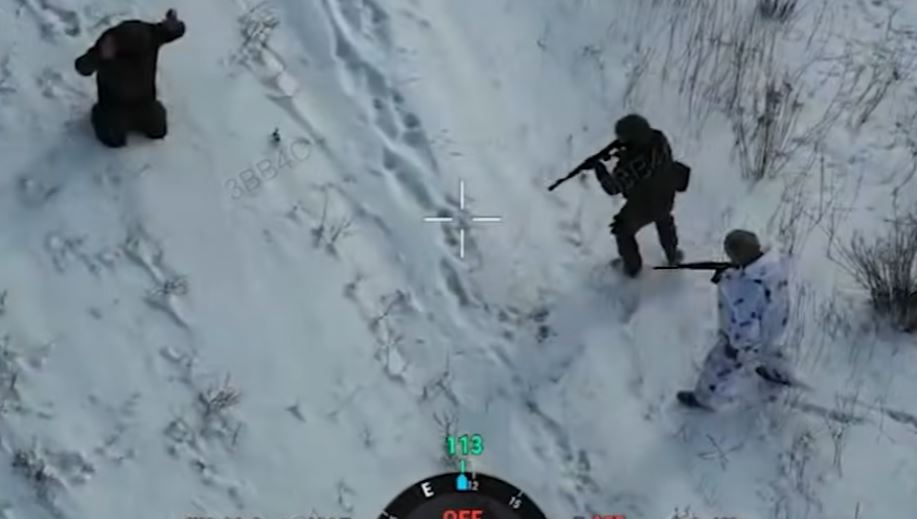
Maksat Meredov, a citizen of Turkmenistan who had been fighting on the Russian side in Ukraine, surrendered to the Ukrainian Armed Forces by signaling a drone with a white flag. The drone operator guided him toward Ukrainian positions.

According to the drone operator from the Ukrainian Pomsta (“Revenge”) brigade, military personnel were conducting reconnaissance using a thermal imager when they detected Meredov. After tracking his movements to a hiding place, the area was targeted and destroyed. Meredov then emerged, waving a white object. Recognizing it as a surrender gesture, Ukrainian forces ceased fire.

The drone activated its flashing lights and maneuvered to indicate the direction Meredov should follow. Footage showed him cold and exhausted, stopping frequently and attempting to eat snow. In response, Ukrainian troops dropped water, a note, and later a hot water bottle to him via drone.

During a filmed interrogation, the captive identified himself as Maksat Dovletmuradovich Meredov, born on March 24, 1980, and a citizen of Turkmenistan.

“I recently came to Russia to earn money for myself and my family. The contract was signed on November 14, 2025,” Meredov stated.

The video also displayed his documents. According to his passport, Meredov was born in the village of Akmeidan in Karakum district, Mary province, one of the most disadvantaged regions of Turkmenistan, known for persistent water shortages. After the rerouting of the Karakum Canal, reports indicated that some settlements in the region experienced flooding and livestock deaths, while others faced dried irrigation channels, forcing residents to drink from puddles.

A Russian-issued document confirmed his identity and showed that Meredov arrived in Russia in June 2025 for work in the Krasnoyarsk territory before moving to the Vladimir region. He later signed a one-year contract with military unit 11097, based in the city of Voronezh.

Similar incidents involving Turkmen nationals have been reported. In 2024, a mercenary from the town of Turkmenbashi fought in Ukraine for six months. His family used his earnings to purchase an apartment but later had to sell the property to pay a bribe to close a criminal case against him.

Kazakhstan to Launch Drone Production at Correctional Facility in Akmola Region

A correctional facility in Kazakhstan’s Akmola Region is preparing to launch full-cycle production of unmanned aerial vehicles (UAVs), according to Yermek Shurmanov, director of Enbek, a state-owned enterprise operating under the country’s penal system. A renovated hangar in the settlement of Arshaly, the administrative center of Arshaly District in Kazakhstan’s Akmola Region, has already been equipped with machinery needed to manufacture drone airframes, circuit boards, and develop onboard software.

Enbek oversees employment programs for inmates housed in penal institutions under the Ministry of Internal Affairs. Kazakhstan has 78 such facilities, holding around 23,000 able-bodied convicts. Of these, more than 18,000 are already engaged in various forms of industrial labor.

Shurmanov stated that the initiative involves not just drone assembly, but full-scale production taking place within the correctional facility. The project is being implemented in partnership with Kazakhstani businesses, which are placing production orders directly with the institutions.

Currently, correctional facilities in Kazakhstan manufacture furniture, construction materials, clothing, playground equipment, and small architectural forms, and operate greenhouse farming. Inmates also receive vocational training and work under formal labor contracts, in accordance with the national Labor Code.

As previously reported by The Times of Central Asia, drone production is already underway within Kazakhstan’s military sector. In Almaty, UAVs are being tested for commercial delivery services.

In East Kazakhstan, drones equipped with artificial intelligence are being used to monitor soil and crop conditions, and in Karaganda, engineers have unveiled prototypes for drones designed for public safety operations.

Opinion: Tokayev’s National Kurultai Address: A Moral Message, Not a Political One

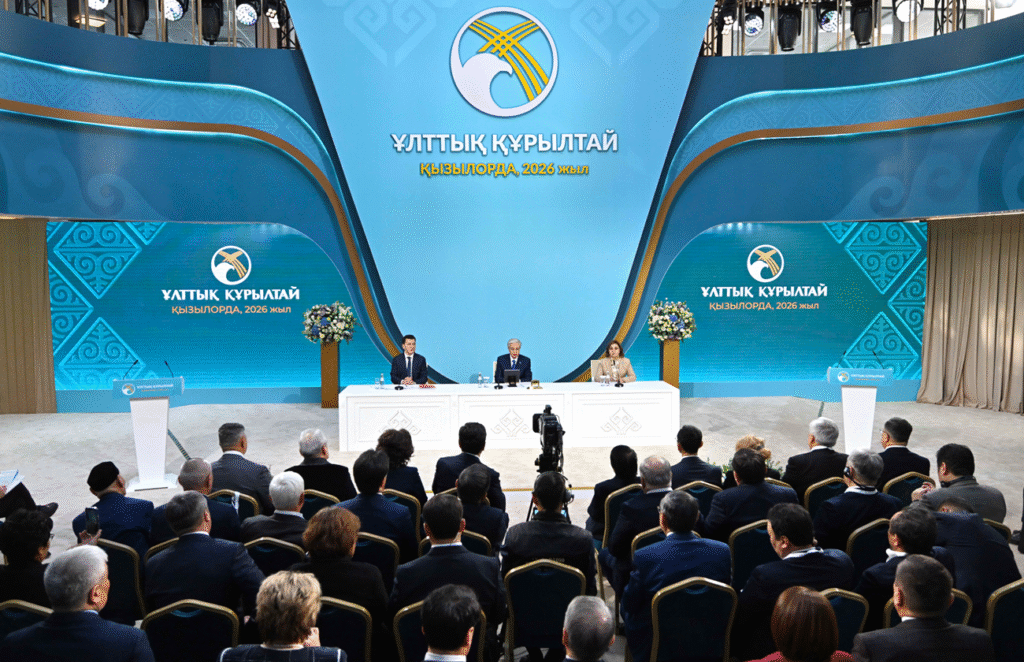
On January 20, 2026, Kassym-Jomart Tokayev, the President of Kazakhstan, addressed the nation at a session of the National Kurultai, an age-old platform for public dialogue, akin to a wise men’s council – at any rate, that’s how it’s often billed. To no one’s surprise, Tokayev pressed ahead with his stated agenda of political reform, highlighting foreign, economic, and development policies and goals. While not devoid of interest, those parts of the speech felt like little more than window dressing that tended to obscure the address’s underlying fire and true import.

Tokayev’s oration seemed at points to echo Alexis de Tocqueville’s ideas in Democracy in America: nations endure only when citizens pair civic participation with moral virtue and personal responsibility, because unchecked individualism ultimately weakens free societies and institutions, regardless of the presence of law and order. On closer examination, Tokayev’s thinking reflects Tocqueville’s view that building democracy is hard but doable. As Tocqueville wrote: “nothing is more wonderful than the art of being free, but nothing is harder to learn how to use than freedom,” pointing towards the belief that nation-building depends on freedom bound to virtue.

Tokayev’s Kurultai message went far beyond a list of technical fixes, platitudes about the economy, and empty cheerleading. Nor did it read as a sleight of hand or bait-and-switch tactic to preserve power in the face of a failing democracy. Those familiar with Tokayev know he has called for Tocquevillian-like responsible citizenship for years, which, to be sure, requires at times tough love.

Tokayev drove home a familiar theme, that the nation’s fate rests on the character and outlook of its people—not just on its economy, wealth, and politics. He maintained that traditional values present the vital adhesive of society, without which, every effort at statecraft withers—or worse, becomes easy prey to unsavory ambitions or certain secular ideologies which have taken on religious force in modern culture.

At the heart of Kazakhstan’s future, Tokayev thinks, there must lie a commitment to enduring human principles and timeless truths: unity, selflessness, sharing, mutual understanding, patience, compromise, and common sense. These values are not solely theoretical constructs but qualities evident for successful outcomes. They positively shape family formation, social relations, conflict resolution, and citizens’ engagement with the state and outsiders.

What’s more, economic and institutional strength is only possible when built upon a society united by common values, clarity of purpose, and a spirit of service.

Transforming Public Consciousness

President Tokayev stressed that changing minds matters more than changing laws and hollow pep talks. Without a common moral compass, nation-building is fragile. Strong cultural and spiritual roots foster social cohesion, building trust, identity, and civic duty.

Towards this end, he urged the older generation “to promote the values of work and enterprise, and wean young people from verbosity, glorification, laziness, indifference, and idleness.”

Tokayev’s strategy for consolidating national consciousness focuses on two core investments: on advancing cultural infrastructure (museums, theatres, libraries) and creative capital, thereby recharging towns and schools as sites of learning, dialogue, and shared identity. He says that celebrations of the country’s national heritage, which should be ideologically neutral, would strengthen self-confidence, facilitate cultural exchange, and promote interstate cooperation.

How does Tokayev want to accomplish this? Paraphrasing the Kazakh philosopher al-Farabi: “Knowledge without proper education is the enemy of humanity. Parenting is primarily the responsibility of parents. However, parents frequently set a poor example for their children. Some are indifferent to the issues concerning child upbringing, shifting all the responsibility to schools and teachers.

“The main source of wealth for the state is people, its citizens. This is obvious. In any case, parents are the ones who open the door to this world for their children. They do this for themselves, not for the state or for society. As a result, every parent should prioritize the development of a responsible generation.”

In other words, starting at the family level, citizens require a proper upbringing, rejecting selfish individualism for common good patriotism.

Tokayev also signaled that foreign actors are obstructing Kazakhstan’s nation-building—not to deflect blame from internal problems, but to caution against destabilizing external interference. “Today, we are witnessing an unprecedented rise in international tensions. Some large countries are trying to literally dictate their agenda, to impose their standards. Moreover, the clash of various ideas and approaches, often diametrically opposed, is now taking place not only in the sphere of geopolitics or economics, but even within culture and spiritual values, in other words, ideology. This is fraught with the most serious negative consequences for the secure coexistence of several states and peoples. The international situation is far from encouraging; therefore, the Republic of Kazakhstan should be united like never before.”

Tokayev’s National Kurultai address was more spiritual than political. It was anchored more in common sense than in power dynamics. It was more about the need for magnanimity – shaped by enduring values, shared purpose, and responsible liberty – than about small-mindedness, narrow thinking, pettiness, and a nihilistic outlook.

Whether Tokayev borrowed ideas from Tocqueville is unclear, but they seem to be on the same page; Tokayev could just as well have quoted Tocqueville in his National Kurultai address. As the French political thinker wrote: “There is no country in the world in which everything can be provided for by laws, or in which political institutions can prove a substitute for common sense and public morality.” Amid unfinished reforms, is Tokayev nudging the nation toward a Tocquevillian worldview, albeit one dressed in a Central Asian chapkan – the traditional long quilted coat of the region?

Time will tell if he succeeds.


The views expressed in this article are those of the author and do not necessarily reflect the official policy or position of the publication, its affiliates, or any other organizations mentioned.

Tajik Border Troops Kill Three Afghans Suspected of Opium Smuggling

An armed clash occurred on the evening of January 29 along the Tajik-Afghan border, in Tajikistan’s Shamsiddin Shokhin district, as local border forces intercepted an attempted drug smuggling operation.

According to the Border Troops of the State Committee for National Security (GKNB), the incident occurred around 7:30 p.m. in the area overseen by the Bahorak border post of military unit 0341.

The GKNB reported that five Afghan nationals illegally crossed into Tajikistan. Once the group was located, border guards attempted to apprehend them.

The intruders resisted arrest and opened fire in an attempt to retreat across the border. In the ensuing exchange, three were killed on the spot.

The GKNB identified the deceased as Jovid Valadi Davlatmand and Rashid Valadi Davlatmand, residents of Kariai Vorich, and Sobir Valadi Zohir from Kariai Andjir, Takhar province.

Two others managed to flee under the cover of darkness, retreating toward Afghan territory.

The Tajik-Afghan border has seen a steady rise in armed incidents over the past year, driven largely by drug trafficking and the movement of armed groups across remote mountain crossings. Tajik authorities have repeatedly warned that narcotics smuggling networks operating out of northern Afghanistan remain a persistent security threat despite stepped-up patrols and surveillance.

At the scene, border guards recovered three Kalashnikov rifles with four magazines, approximately 150 rounds of mixed-caliber ammunition, a large number of spent cartridges, and four bags containing 73 packages of narcotics, identified as hashish and opium. A boat, likely used for crossing the border, was also discovered.

Officials say drug trafficking remains the primary driver of cross-border violence in the region. Afghanistan remains the world’s largest producer of opiates, and Tajikistan is a key transit route for narcotics moving north toward Central Asia and Russia, making the border a frequent flashpoint for armed encounters.

The January 29 clash adds to a series of escalating incidents along the Tajik-Afghan border.

Two weeks ago, on the night of January 18, Tajik security forces killed four armed individuals, whom they identified as members of a terrorist organization, in the same border zone.

Border violence has intensified since last November. In two separate incidents, five Chinese citizens were killed in attacks originating from Afghan territory. In December, two Tajik border guards were killed during a confrontation with armed intruders in the Sarchashma border detachment’s area of responsibility.

Tajik security forces maintain that full control over the national border is being upheld, and have vowed to respond to all threats with force and immediacy.