• KGS/USD = 0.01144 0%
  • KZT/USD = 0.00196 -0%
  • TJS/USD = 0.10899 -0%
  • UZS/USD = 0.00008 -0%
  • TMT/USD = 0.28490 0%
  • KGS/USD = 0.01144 0%
  • KZT/USD = 0.00196 -0%
  • TJS/USD = 0.10899 -0%
  • UZS/USD = 0.00008 -0%
  • TMT/USD = 0.28490 0%
  • KGS/USD = 0.01144 0%
  • KZT/USD = 0.00196 -0%
  • TJS/USD = 0.10899 -0%
  • UZS/USD = 0.00008 -0%
  • TMT/USD = 0.28490 0%
  • KGS/USD = 0.01144 0%
  • KZT/USD = 0.00196 -0%
  • TJS/USD = 0.10899 -0%
  • UZS/USD = 0.00008 -0%
  • TMT/USD = 0.28490 0%
  • KGS/USD = 0.01144 0%
  • KZT/USD = 0.00196 -0%
  • TJS/USD = 0.10899 -0%
  • UZS/USD = 0.00008 -0%
  • TMT/USD = 0.28490 0%
  • KGS/USD = 0.01144 0%
  • KZT/USD = 0.00196 -0%
  • TJS/USD = 0.10899 -0%
  • UZS/USD = 0.00008 -0%
  • TMT/USD = 0.28490 0%
  • KGS/USD = 0.01144 0%
  • KZT/USD = 0.00196 -0%
  • TJS/USD = 0.10899 -0%
  • UZS/USD = 0.00008 -0%
  • TMT/USD = 0.28490 0%
  • KGS/USD = 0.01144 0%
  • KZT/USD = 0.00196 -0%
  • TJS/USD = 0.10899 -0%
  • UZS/USD = 0.00008 -0%
  • TMT/USD = 0.28490 0%
08 December 2025

Southern Kazakhstan Residents Earn Lower Incomes Than Peers in Other Regions

Kazakhstanis’ average cash income in the third quarter of 2023 was $662.30 per person, according to statistics cited by Finprom.kz analysts in a report, That’s 21.5% more than in the same period in 2022.  Total income growth in Kazakhstan for the full-year 2023 amounted to 16.5%. The earners who saw the smallest gains are all residents of the five southern regions.

Kazakhstan’s inflation rate last year at the end of the third quarter was 12.9% in annual terms. In terms of incomes, there were nine regions out of 20 where income was higher than the average for the whole country. First place in terms of earnings was Astana – almost $966 per month. In second place by average income level was Almaty at $870. Karaganda region, with an average income of $843, closes out the top three. The East Kazakhstan region ($802.7) and Ulytau region ($784.7) filled out the top five best regions in terms of earned incomes.

The lowest per capita monthly earnings in Kazakhstan were found in the Zhetysu region ($506), Kyzylorda region ($502.6), Shymkent city ($492.6), Zhambyl region ($474.6), and Turkestan region ($472).

Looking at the breakdown of incomes nationally, 75% of earnings were derived from labor activity ($496). Social transfers as a component of incomes accounted for almost $140 per capita. Material aid from relatives and acquaintances, as well as alimony, on average, amounted to $15.3 per month. Incomes from other sources accounted for only $11.5 per month.

Japan and UN WFP Support Vulnerable Citizens in Kyrgyzstan

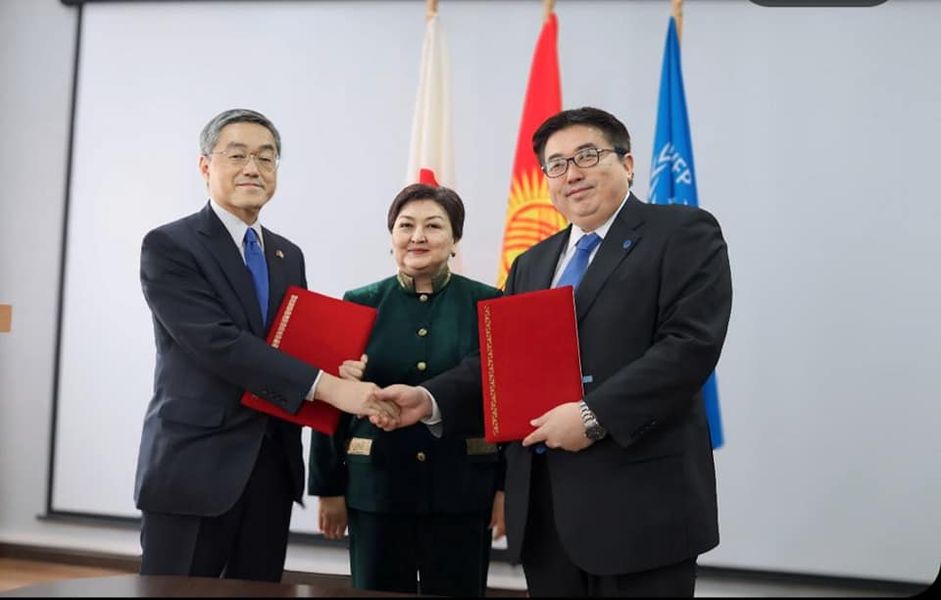
An agreement has been signed by Gulnara Baatyrova, Kyrgyzstan’s Minister of Labour, Social Security and Migration, Hideki Goda, Ambassador of Japan to Kyrgyzstan, and Kojiro Nakai, Country Director of the UN World Food Program (WFP) in the Kyrgyz Republic, to enhance self-sufficiency amongst Kyrgyzstan’s most vulnerable citizens.

An allocation of $3.5 million will be invested in a basic infrastructure to provide import-dependent food products such as flour and vegetable oil, and improve skills in entrepreneurship and agriculture amongst low-income residents of Batken, Issyk-Kul, Jalal-Abad, Naryn, and Osh.

Expressing her gratitude for aid pledged by the Government of Japan and the UN, Minister Baatyrova said: “This program is aimed at strengthening the food security of vulnerable groups and will boost the development of sustainable economic independence, thereby contributing to economic and social stability in the country. Supported by the Japanese government, existing enterprises for the production of apricot oil in the Batken region, and the processing of medicinal herbs in the Naryn region, have already created additional jobs.”

The C5+1 Concept: The Idea Behind This Week’s B5+1 Forum in Almaty

Recognizing that the Central Asia region could benefit more from initiatives in global security, business and trade if its countries strengthened their cooperation in key areas, the Center for International Private Enterprise (CIPE) created the ‘C5+1’ platform last year for just this purpose. The Center’s 5+1 group features the governments of the five Central Asian republics – Kazakhstan, Uzbekistan, Kyrgyzstan, Tajikistan and Turkmenistan – plus the United States, whose State Department and international chambers of commerce are central to the platform’s work.

An inaugural C5+1 Summit was held in September 2023, on the sidelines of the 78th session of the UN General Assembly in New York. At this high-level meeting, the presidents of each of the Central Asian nations joined US president Joe Biden in dialog on enhancing the region’s stability and prosperity through economic, energy, and security partnerships within the C5+1 framework. 

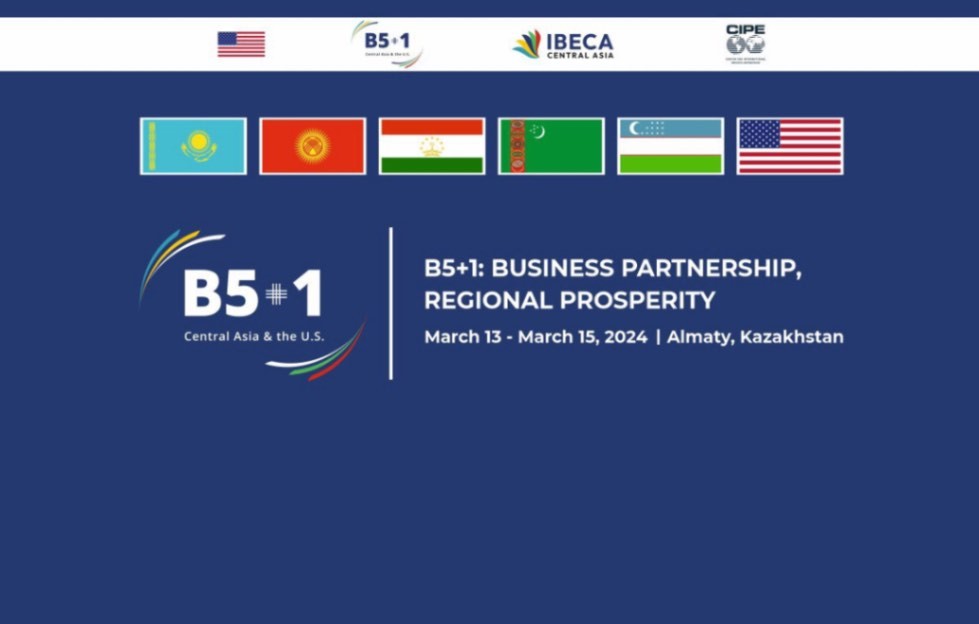
Building on this start made by C5+1, CIPE is now launching the ‘B5+1’ format, focused on cooperation in the global business context. The inaugural B5+1 Forum will take place this week in Kazakhstan’s business capital of Almaty, and will include presentations and panel discussions with policy makers from the United States, Central Asia and several other countries. On 14 and 15 March leaders from the public sector will discuss Central Asia’s economic integration, international trade and investment alongside dozens of influential private companies. 

The B5+1 Forum will pick up where the C5+1 Summit left off in exploring opportunities for American companies in Central Asia. This potential lies in key sectors such as critical minerals, renewable energy and manufacturing.

The Almaty event will also continue the conversation on enhancing regional connectivity via the Trans-Caspian International Transport Route, also known as the Trans-Caspian Corridor. At a time of geopolitical upheaval and disruption of existing supply chains, international investment in this trade route is being sought through the Partnership for Global Infrastructure and Investment.

The B5+1 Forum forms part of CIPE’s program called “Improving the Business Environment in Central Asia” (IBECA). CIPE themselves are affiliated to the US Chamber of Commerce – the catalyst behind the B7 and B20 platforms – and receive funding from the US Department of State. 

The establishment of B5+1 is closely aligned with commitments made during the C5+1 Summit last September, and outlined in a document called the New York Declaration. The upcoming Forum aims to deliver on two key commitments in the declaration.


The Times of Central Asia will be in attendance at the B5+1 Forum on 14-15 March, and will be publishing insight and analysis from the event.

Kazakhstan’s Ministry of Digital Development Takes Steps to Aid Victims of Data Leaks

In Kazakhstan, the State Technical Service has discovered a leak of personal data of more than 2 million people comprising those who have ever been clients of the microfinance organization zaimer.kz.

The situation was immediately communicated to the Ministry of Digital Development, Innovation and Aerospace Industry of the Republic of Kazakhstan (MDDIAI). Representatives of the ministry said that the data leak occurred from the platform Robo.finance, which contained the data of more than 3.6 million clients of various microfinance organizations.

IMDDIAI had the necessary competencies to notify citizens whose data may have been compromised through the state application eGov Mobile. Those notifications contained recommendations and instructions that seek to minimize the negative aftereffects of the data breach.

Furthermore, the Ministry of Finance asked citizens who received the notification, but have never been a client of the micro finance organization, to immediately contact the MDDIAI Information Security Committee. This is necessary in order to better understand the scope of the data breach and the punishment to be incurred by the guilty parties under Kazakh laws.

Before the discovery of the zaimer.kz breach, there was information on the Internet about the leakage of personal data through a spy program which was developed by a Chinese company.

Kazakhstan’s Unified National Pension Fund (EPPF) commented on this situation, specifying that a data leak involving citizens’ information from their database is impossible and has never occurred. Kazakhstan’s largest air carrier, Air Astana, also denied any data breach from their databases.

Currently the Ministry of Digital Development, together with the National Security Committee, are monitoring the situation.

Letting Women Lead: Bridging the Finance Gap for Women-Led Businesses

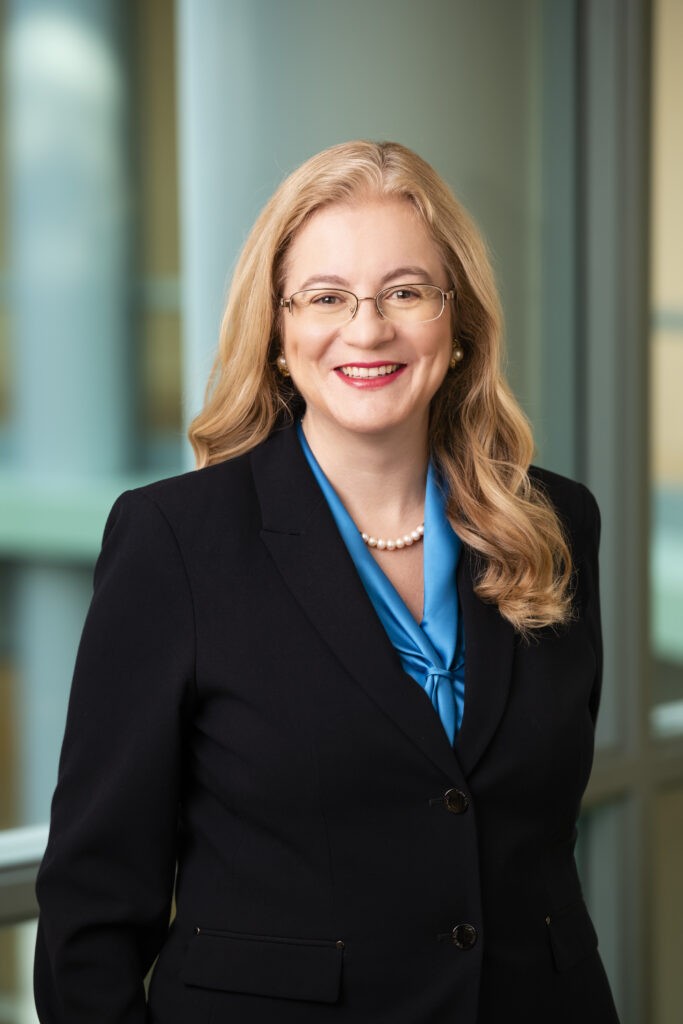
Opinion by Hela Cheikhrouhou, IFC Regional Vice President, Middle East, Central Asia, Türkiye, Afghanistan, and Pakistan

I get to meet many courageous women in my work for IFC in Southwest and Central Asia. [1] I’ve witnessed the seemingly insurmountable challenges they encounter every day.

I’ve seen the unyielding resolve of rural women in Tattha, Pakistan in the face of climate change-induced severe floods, and the stunting of their children due to a lack of potable water.

I’ve heard the heartening stories of female leaders shattering the glass ceiling in Kuwait.

I’ve had passionate discussions with women entrepreneurs who are struggling to secure financing in a region where very few formal enterprises are majority owned by women. In Kazakhstan, that proportion is just 23.8 percent. In Jordan, it’s 8.1, in Lebanon, 4.7.

Closing the economic gender gap is even more urgent due to the region’s poor performance in the World Bank’s Women, Business and Law 2023 score: Nearly half its countries ranked lowest on the index.

Their struggles remain largely invisible to the world. But, with entrenched economic challenges and escalating fragility and conflict, we can no longer afford to avert our eyes from the issues faced by half of the global population.

The numbers reveal a disturbing gender disparity. In 2022, female labor force participation in the Middle East, Central Asia, Afghanistan, Pakistan, and Türkiye (MCT) stood at 26 percent of women at working age, compared to 75 percent for men. This isn’t just a matter of equity—failing to bridge economic gender gaps in these countries casts a dark shadow on the region’s annual GDP.

The valiant voices I’ve encountered have shone a light on the key challenges preventing women from thriving in, or even entering the work force: the lack of flexible working arrangements, robust measures to combat harassment, safe transportation, affordable childcare, and better access to a quality education. Showcasing female role models would also help inspire girls and young women to pursue a career.

In the entrepreneurial landscape, the uneven playing field makes survival and growth an uphill battle for women-led businesses. The dearth of funding directed towards women entrepreneurs is another key obstacle—a mere 7 percent of private equity and venture capital in emerging markets is invested in women-founded startups.

Many factors contribute to women’s limited access to startup capital. One reason is this staggering statistic: only about 15% of all VC ‘cheque-writers’ are women. This glaring absence of a female perspective in the venture capital space invites unconscious biases. A lack of collateral, due to limitations on women’s access to asset ownership, further exacerbates women entrepreneurs’ lack of access to funding.

But the challenges go far beyond finance. Social and cultural norms act as significant barriers to women’s entrepreneurship. For example, cultural expectations see childcare responsibilities placed mainly on women—preventing them from excelling in the entrepreneurship space.

Yet hidden behind these challenges are outsized opportunities. The potential benefits of financing women-led businesses are substantial for both banks and investors. Research consistently shows that a gender-balanced portfolio outperforms its peers. [2]

Diverse leadership—especially in terms of gender balance—yields higher returns. Private equity and venture capital funds with gender-balanced senior investment teams have demonstrated 10 to 20 percent higher returns.

We can bridge the finance gap for women-led businesses by strengthening the enabling environment, building the capacity of ecosystem players, encouraging mentorship and networking opportunities, promoting education, and training, and fostering collaboration between the public and private sectors.

Investing in women is more than just a smart investment decision. It’s an investment in our future—a future where half the region’s population are recruited and empowered to play a pivotal role in driving positive societal change.


[1]Middle East, Central Asia, Türkiye, Afghanistan, and Pakistan.

[2] by more than 5.5 percentage points in valuation increase per year. Source: https://www.ifc.org/content/dam/ifc/doc/mgrt/moving-toward-gender-balance-final-3-22.pdf   , p 33

Kazakhstan soars on gender data transparency amid mixed results from rest of Central Asia

Open Data Watch, an international non-profit organization supported by the Bill and Melinda Gates Foundation, published in late 2023 a Gender Data Compass (GDC) report on the availability and openness of 53 key gender indicators in 185 countries. With numerous outlets and articles celebrating international women’s day last week, now is a good opportunity to revisit this important document to see where Central Asian countries rank in the world in terms of gender data transparency. The most interesting finding from the report is Kazakhstan’s remarkable success: The country has secured a coveted fourth position globally, coming just behind Great Britain, South Korea and Denmark, and is the only country from Central Asia that entered the top five. By comparison, Kyrgyzstan holds the 45th place out of 185 countries, Uzbekistan the 56th, Tajikistan the 159th, and Turkmenistan holds the 171st spot. The United States, on the hand, came in 48th globally.

The GDC provides information on national gender data systems and the environment in which they operate. It investigates whether a country has policies and laws that encourage the production and dissemination of official gender data, as well as the strengths of their regulatory frameworks, funding structures and national capacities in terms of ability to support transformative changes. Kazakhstan has scored 60 out of 100 on both “openness” and “availability” of its gender data, according to Open Data Watch. It is important to note that the front runner of the rankings, the United Kingdom, has scored just 55 on “availability” and 74 on “openness”, underlining a need even in developed countries for improving gender data coverage gaps and publishing data in more open and available formats, among other things.

The goal of this report is to provide necessary insights and serve as a practical guide to relevant national authorities as well as to their partners to take effective action towards gender equality.