• KGS/USD = 0.01144 0%
  • KZT/USD = 0.00214 0%
  • TJS/USD = 0.10508 0.48%
  • UZS/USD = 0.00008 0%
  • TMT/USD = 0.28571 0%
  • KGS/USD = 0.01144 0%
  • KZT/USD = 0.00214 0%
  • TJS/USD = 0.10508 0.48%
  • UZS/USD = 0.00008 0%
  • TMT/USD = 0.28571 0%
  • KGS/USD = 0.01144 0%
  • KZT/USD = 0.00214 0%
  • TJS/USD = 0.10508 0.48%
  • UZS/USD = 0.00008 0%
  • TMT/USD = 0.28571 0%
  • KGS/USD = 0.01144 0%
  • KZT/USD = 0.00214 0%
  • TJS/USD = 0.10508 0.48%
  • UZS/USD = 0.00008 0%
  • TMT/USD = 0.28571 0%
  • KGS/USD = 0.01144 0%
  • KZT/USD = 0.00214 0%
  • TJS/USD = 0.10508 0.48%
  • UZS/USD = 0.00008 0%
  • TMT/USD = 0.28571 0%
  • KGS/USD = 0.01144 0%
  • KZT/USD = 0.00214 0%
  • TJS/USD = 0.10508 0.48%
  • UZS/USD = 0.00008 0%
  • TMT/USD = 0.28571 0%
  • KGS/USD = 0.01144 0%
  • KZT/USD = 0.00214 0%
  • TJS/USD = 0.10508 0.48%
  • UZS/USD = 0.00008 0%
  • TMT/USD = 0.28571 0%
  • KGS/USD = 0.01144 0%
  • KZT/USD = 0.00214 0%
  • TJS/USD = 0.10508 0.48%
  • UZS/USD = 0.00008 0%
  • TMT/USD = 0.28571 0%

Uzbekistan Probes Alleged Personal Data Leak from State Information Systems

Reports circulating on social media and Reddit have raised concerns that the personal data of Uzbek citizens may have been leaked from government information systems and shared on darknet forums.

In response, several state agencies have issued statements confirming that investigations are underway, and that their systems remain secure.

According to posts shared on Reddit, links were posted to online platforms, including darknet sites, allegedly containing data from Uzbek state institutions. Some users claimed the leak could involve personal information on as many as 15 million citizens. These claims quickly gained traction across social media, prompting official responses.

On February 3, Uzbekistan’s Cybersecurity Center acknowledged the reports and confirmed that it had launched an investigation. “In recent days, messages have been observed on social networks about the alleged dissemination of personal data of Uzbek citizens from certain state information systems,” the Center said in a statement. It added that a comprehensive review is ongoing and that further details would be shared upon completion of the inquiry.

The Center also issued guidance to the public, urging citizens not to disclose personal information to third parties, to use complex usernames and passwords when accessing state and other digital systems, and to avoid entering data through suspicious links.

In response to public speculation that information from the recent population and agricultural census may have been compromised, the Statistics Agency also issued a statement. It affirmed that all data collected during the online census, conducted between January 15 and 31, is securely stored. “All collected data are kept in encrypted form on a separate server. There is no reason for concern regarding the safety of census-related information,” the agency said.

The State Tax Committee similarly denied any breach involving its systems. Addressing claims circulating on social media and various websites, the committee said it had implemented all necessary cybersecurity measures and that its interactive services and systems were functioning normally and without interruption.

The Ministry of Internal Affairs echoed these reassurances, stating that the integrity of its information systems is fully intact. The ministry confirmed that no unauthorized access to personal data under its control had been detected.

Authorities emphasized that investigations are ongoing and urged the public to rely on official sources for updates as checks continue.

B5+1 Forum Opens as U.S. Companies Expand Economic Footprint in Central Asia

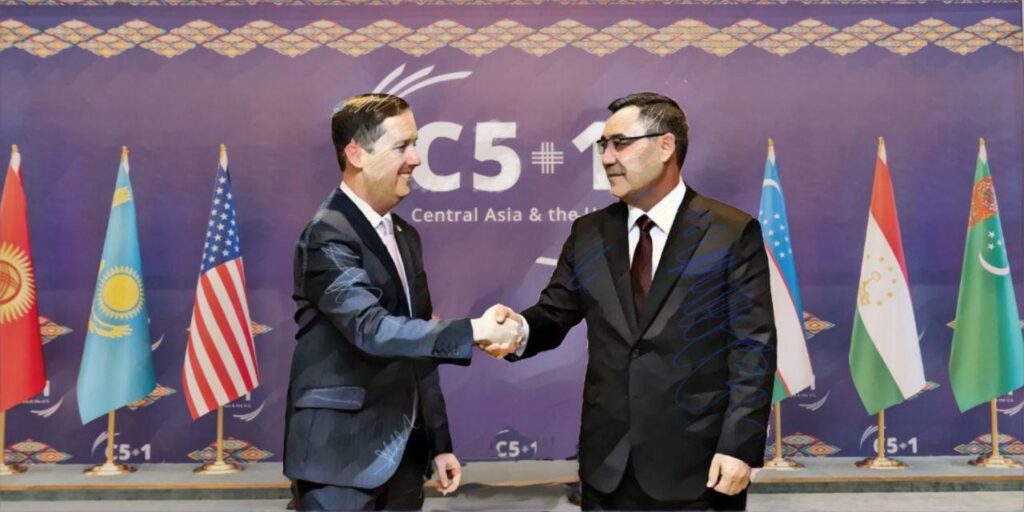
Business leaders and government officials from Central Asia and the United States gathered in Kyrgyzstan’s capital on February 4 for the start of the second B5+1 Business Forum. Co-organized by the Kyrgyz government and the Center for International Private Enterprise (CIPE), the event is intended to bring together private companies, business associations, officials, and experts interested in expanding U.S.–Central Asia commercial ties. More than 50 U.S. companies are participating in the event.

The B5+1 is the business-track counterpart to the C5+1 diplomatic format that links the United States with Kazakhstan, Kyrgyzstan, Tajikistan, Turkmenistan, and Uzbekistan. The B5+1 brings companies and policymakers together to identify barriers to investment and propose cross-border regulatory changes.

This week’s meeting in Bishkek follows the inaugural B5+1 forum held in Almaty on March 14–15, 2024, which drew more than 250 stakeholders from across Central Asia and the United States. It produced 21 private-sector recommendations aimed at easing trade, improving regulations, and building regional economic integration. The Bishkek agenda is built around reviewing progress on those recommendations and setting priorities for the next phase of work.

Central Asian officials have used the event to signal interest in region-wide coordination rather than country-by-country deals. In comments made in Bishkek, Kazakhstan’s Minister of Industry and Construction, Ersaiyn Nagaspaev, emphasized that foreign investors increasingly assess Central Asia as a single market, reflecting a push to align regulations and investment conditions across borders. Nagaspaev noted that more than 600 U.S. companies currently operate in Kazakhstan.

Kyrgyzstan, meanwhile, used the forum to highlight domestic economic performance within that regional context. In a speech at the forum, Kyrgyzstan’s First Deputy Chairman of the Cabinet of Ministers, Daniyar Amangeldiev, said Kyrgyzstan’s economy grew by 11.1% in 2025, which he described as one of the highest growth rates in the region.

Addressing the forum, U.S. Special Envoy for South and Central Asia Sergio Gor stated that the United States intends to expand its economic engagement with Central Asia. “The private sector, not intergovernmental agreements, will become the key instrument of interaction,” he told those in attendance, identifying electronic commerce, artificial intelligence, critical minerals, agriculture, and transport infrastructure as priority areas.

Gor noted that the American companies present at the forum represent the largest and most comprehensive U.S. commercial delegation ever to visit Central Asia. The U.S. recognizes the importance of Central Asia in global trade and connectivity, he stated.

“The United States is open for business. We’re open for peace. We’re opening to strengthen our ties around the world. So that’s why it’s fitting that the first C5 event in 2026 is this B5 + 1 forum,” Gor said, linking the Bishkek discussions to economic commitments made at the C5+1 summit in Washington in November 2025.

“The Transport Corridor for Peace and Prosperity will provide reliable connectivity from Central Asia through the South Caucasus to global markets,” Gor said. “This is a historic opportunity to strengthen economic integration and long-term prosperity across the region.”

During his visit to Bishkek, Gor also met with Kyrgyz President Sadyr Japarov, with the meeting covering economic cooperation and U.S. business engagement in Kyrgyzstan, including the participation of American companies in the B5+1. The Kyrgyz presidency said the two sides also discussed prospects for expanding trade, attracting investment, and developing cooperation in priority economic sectors.

Discussions in Bishkek highlighted how the B5+1 is being positioned as a standing mechanism rather than a one-off meeting. CIPE has framed the forum as part of an ongoing cycle in which private-sector proposals are developed through working groups and carried forward between annual meetings.

U.S. officials have linked the B5+1 more directly to Washington’s broader economic approach toward Central Asia. During his regional trip, which also includes Uzbekistan, Sergio Gor’s schedule has centered on business engagement and investment promotion rather than security or political consultations.

For the Kyrgyz authorities, hosting the forum is part of a broader effort to position the country as a regional convening hub. A December notice from Kyrgyzstan’s Ministry of Economy and Commerce described the B5+1 as a regional business mechanism within the C5+1 framework, rather than a Kyrgyz-specific initiative.

Previous B5+1 recommendations have focused on regulatory alignment, trade facilitation, and investment conditions, but no public timeline has been announced for publishing updated recommendations from the Bishkek meeting. CIPE has said outputs from earlier forums were compiled after consultations rather than issued as immediate communiqués.

The absence of signed agreements or joint statements on the opening day has kept attention focused on whether the forum produces measurable follow-up. Earlier B5+1 recommendations from the 2024 Almaty meeting were published weeks after the event, following additional consultations with governments and business groups.

The B5+1 concludes on February 5. Any updated recommendations or sector-specific commitments are expected to emerge after the forum rather than during the event itself.

Man Imprisoned in Kyrgyzstan for Evading Child Support

In Kyrgyzstan’s southern Batken region, a man who had evaded court-ordered child support payments since 2017 has been sentenced to two years in prison, according to the Bailiff Service under the Prosecutor General’s Office of the Kyrgyz Republic.

This is reportedly the first known prison sentence for such an offense in Kyrgyzstan, signaling a shift as authorities move to strengthen penalties against non-compliant parents following divorce.

Under a July 3, 2017 ruling by the Batken District Court, the man was ordered to pay one-quarter of his income in child support until his child reached the age of 18. However, he failed to comply with the court’s decision. As of September 1, 2025, his arrears totaled 501,000 Kyrgyz som (approximately $5,700).

On February 2, the Batken Regional Court sentenced him to two years in prison for non-payment.

Klara Masalbekova, Head of the Department for Enforcement of Court Decisions at the Prosecutor General’s Office, noted that failure to fulfill child-support obligations falls under Article 178 of Kyrgyzstan’s Criminal Code. This article has been progressively tightened in recent years. Under current law, evading child support can result in a prison sentence of up to three years.

According to the Prosecutor General’s Office, 1,205 individuals in Kyrgyzstan are currently wanted for child-support evasion.

The Family Code of the Kyrgyz Republic stipulates the following alimony contributions for children under 18:

  • One child – 1/4 of the parent’s income
  • Two children – 1/3 of the income
  • Three or more children – 1/2 of the income

In a related development, the Kyrgyz parliament has approved in the first reading a bill introducing stricter penalties for non-compliance with alimony agreements or court orders, 24.kg reported.

The proposed measures include:

  • Three days’ arrest for a three-month overdue payment
  • Community service of 100-200 hours or up to one year of imprisonment for a 12-month overdue payment
  • A fine of 100,000 som (approx. $1,140) or up to three years in prison for concealing income, understating wages, or refusing employment mandated by a court order

The bill aims to reduce the number of delinquent child-support cases and improve compliance with family law rulings across the country.

Uzbekistan Becomes First Central Asian Buyer of Embraer C-390

The aviation engineering company Embraer announced on February 3 at the Singapore Airshow that Uzbekistan is the previously undisclosed buyer of its C-390 Millennium military transport aircraft. In its announcement, Embraer Defense & Security identified Uzbekistan as the first Central Asian country to acquire and operate the aircraft.

The Uzbek Air Force will primarily use the C-390 for transport and humanitarian missions, enhancing the country’s airlift capabilities and emergency response infrastructure. The acquisition marks a major milestone in the modernization of Uzbekistan’s military aviation fleet and aligns it with a growing list of global C-390 operators.

“We officially welcome the Republic of Uzbekistan to the group of C-390 operators as the Uzbekistan Air Force modernizes its transport capabilities,” said Bosco da Costa Junior, President and CEO of Embraer Defense & Security. He added that the company is “honored by the choice of this leading Central Asia Air Force” and committed to ensuring reliable and effective aircraft operation.

Designed and built in the 21st century, the C-390 Millennium is described by Embraer as the most modern military transport aircraft in its class. It can carry payloads of up to 26 tons, reach speeds of 470 knots, and cover longer distances than other medium-sized transport aircraft. It is equipped for a wide range of missions including cargo and troop transport, medical evacuation, search and rescue, firefighting, and humanitarian aid.

Notably, the C-390 can operate from unpaved or temporary runways, making it suitable for deployment in difficult terrain. When fitted with quick-install air-to-air refueling systems, the aircraft operates under the KC-390 designation, capable of serving as both tanker and receiver. It is fully NATO-interoperable and designed for Agile Combat Employment (ACE) operations.

Uzbekistan joins an expanding list of C-390 Millennium customers, including Brazil, Portugal, Hungary, South Korea, the Netherlands, Austria, the Czech Republic, Sweden, Slovakia, and Lithuania, according to Embraer.

Kazakhstan and China Launch Project to Double Capacity of Shymkent Oil Refinery

Kazakhstan and China have agreed on the basic parameters of a major expansion project at the Shymkent oil refinery, which will double its processing capacity from over 6 million to 12 million tons of oil per year.

According to national oil company KazMunayGas, the Shymkent refinery became Kazakhstan’s leading facility in 2025 in terms of processing volume, handling 6.23 million tons of oil. By comparison, the Pavlodar Petrochemical Plant processed 5.76 million tons, and the Atyrau Oil Refinery 5.47 million tons. Shymkent also topped production output, delivering over 2.28 million tons of gasoline and more than 2.1 million tons of diesel fuel.

The refinery is jointly owned by KazMunayGas JSC and China National Petroleum Corporation (CNPC). The two partners plan to expand the plant’s production capacity by constructing new processing infrastructure.

A delegation from Kazakhstan’s Ministry of Energy, led by Daulet Arykbayev, Director of the Oil Transportation and Refining Department, participated in a strategic meeting in Qingdao, China, to prepare a feasibility study for the expansion. Following the meeting, both sides approved the project’s basic framework.

A central decision was the adoption of the “6+6” configuration: two processing lines, each with a 6-million-ton annual capacity, fully integrated into the refinery’s existing operations. Officials stressed the importance of meeting project deadlines, with the core feasibility work scheduled for completion by 2032 under the framework agreement.

The Ministry of Energy also noted that, under Kazakhstan’s broader refinery modernization program, the goal is to increase total national processing capacity from 18 million to 39 million tons of oil per year. Simultaneously, the government is seeking investors for the construction of a new refinery with an annual capacity of up to 10 million tons.

The Times of Central Asia previously reported on state plans to attract foreign investment for a proposed fourth major refinery. Government estimates suggest that expanding the three existing refineries to 39 million tons will require investments of $15-19 billion.

In March 2025, the Agency for the Protection and Development of Competition recommended partial privatization of the Pavlodar and Atyrau plants to boost efficiency and attract private capital. However, in December, Energy Minister Yerlan Akkenzhenov stated that KazMunayGas currently has no plans to privatize these assets.

Kazakhstan Plans to Ban Dismissal of Single Parents Regardless of Gender

Kazakhstan’s lawmakers have proposed amendments to labor legislation that would prohibit the dismissal of single parents, regardless of gender. Currently, such legal protections apply only to single mothers.

Yerlan Sairov, a deputy of the Mazhilis (the lower house of parliament), said the provision is part of a bill to amend and supplement the Labor Code. The bill proposes replacing the term “single mothers” with “single parents,” thereby extending protection from dismissal to single fathers raising children on their own.

The Mazhilis has already approved the bill in its second reading and forwarded it to the Senate for consideration.

The draft law also introduces significant reforms in pension rights. Under the proposed changes to the Social Code, time spent by non-working fathers caring for young children will be counted toward their length of service when calculating old-age pensions. This amendment follows a February 2025 ruling by the Constitutional Court, which found gender inequality in the previous legislation after a citizen filed a constitutional appeal.

The bill covers a range of related areas. New provisions are being introduced into the Code on Public Health and the Healthcare System regarding the classification of occupational injuries. It also mandates the inclusion of rules on benefits and compensation, such as those related to workplace accidents, in collective labor agreements. Notably, occupational safety and health officers will be required to report directly to the head of the organization, thereby establishing management’s personal accountability for workplace conditions.

On the government’s initiative, the draft law includes amendments to the Law “On Permits and Notifications,” introducing licensing requirements for the provision of special social services in the field of social protection. It also outlines specific types of production that cannot be halted during strikes.

The bill expands the powers of the authorized labor body to approve procedures for providing employees with therapeutic and preventive nutrition. It further proposes setting permissible ratios between the highest and lowest salaries for a given profession or position within an organization, to be included in collective agreements.

As previously reported by The Times of Central Asia, the government is considering broader labor law reforms to address workforce shortages in key sectors. In January, lawmakers discussed lowering the retirement age for shepherds and herders amid a shortage of workers in rural areas.