• KGS/USD = 0.01143 -0%
  • KZT/USD = 0.00192 -0%
  • TJS/USD = 0.10820 0.19%
  • UZS/USD = 0.00008 0%
  • TMT/USD = 0.28575 0%
  • KGS/USD = 0.01143 -0%
  • KZT/USD = 0.00192 -0%
  • TJS/USD = 0.10820 0.19%
  • UZS/USD = 0.00008 0%
  • TMT/USD = 0.28575 0%
  • KGS/USD = 0.01143 -0%
  • KZT/USD = 0.00192 -0%
  • TJS/USD = 0.10820 0.19%
  • UZS/USD = 0.00008 0%
  • TMT/USD = 0.28575 0%
  • KGS/USD = 0.01143 -0%
  • KZT/USD = 0.00192 -0%
  • TJS/USD = 0.10820 0.19%
  • UZS/USD = 0.00008 0%
  • TMT/USD = 0.28575 0%
  • KGS/USD = 0.01143 -0%
  • KZT/USD = 0.00192 -0%
  • TJS/USD = 0.10820 0.19%
  • UZS/USD = 0.00008 0%
  • TMT/USD = 0.28575 0%
  • KGS/USD = 0.01143 -0%
  • KZT/USD = 0.00192 -0%
  • TJS/USD = 0.10820 0.19%
  • UZS/USD = 0.00008 0%
  • TMT/USD = 0.28575 0%
  • KGS/USD = 0.01143 -0%
  • KZT/USD = 0.00192 -0%
  • TJS/USD = 0.10820 0.19%
  • UZS/USD = 0.00008 0%
  • TMT/USD = 0.28575 0%
  • KGS/USD = 0.01143 -0%
  • KZT/USD = 0.00192 -0%
  • TJS/USD = 0.10820 0.19%
  • UZS/USD = 0.00008 0%
  • TMT/USD = 0.28575 0%
13 December 2025

Once Lost from Kyrgyzstan, Little Bustard Population Soars in Northern Valleys

The Little Bustard, a pheasant-sized bird native to Asia and southern Europe, has reached a nesting population of around 1,900 individuals in Kyrgyzstan this year. This marks a remarkable recovery, as the species was nationally extinct in the country less than 20 years ago.

The Little Bustard was listed as extinct in the Red Book of Kyrgyzstan in 2006. However, recent ornithological surveys have discovered breeding populations in the Chuy and Talas valleys in the north of the country, thought to be between 1,400 and 1,900 individuals.

Signs of a wider recovery first appeared in 2009, with the discovery of four nests in the Talas valley. In 2019 a nest outside Bishkek suggested that Little Bustards were returning to the Chuy valley.

Once common throughout the country, the species’ decline was caused by the industrialization of Soviet Kyrgyzstan’s agriculture industry in the 1950s, which destroyed the birds’ natural habitat. By the 1970s only a few residual groups remained, in the non-cultivated steppe areas near the Kazakh border.

In recent years, surveys by the Ornithological Society of the Middle East (OSME) each spring have tracked their breeding activity, using listening points spaced through known and potential habitats.

While Little Bustards’ migratory and wintering patterns eastwards remain mostly unknown, recent observations suggest numbers in wintering areas may also be rising.

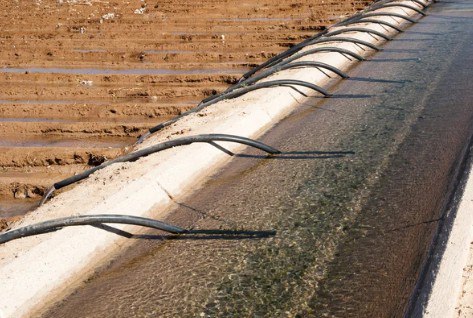
Despite the strong growth of its population, the bird remains vulnerable in Central Asia. Current threats to their habitats are a consequence of modern changes in farming, including increased use of pesticides, and the turning of traditional steppe into irrigated crops. Illegal hunting of Little Bustards is also a problem.

The species is currently classified in the national Red Book as Near Threatened. The Little Bustard is also considered Near Threatened by the International Union for Conservation of Nature (IUCN).


Kazakhstan’s Central Bank Raises Base Rate to 18% Amid Surging Inflation

The Monetary Policy Committee of the National Bank of Kazakhstan has raised the base rate to 18% per annum, with a corridor of +/- 1 percentage point, in an effort to contain accelerating inflation and stabilize macroeconomic conditions.

“The easing of monetary conditions amid accelerating inflation, signs of demand outpacing supply growth, and an active fiscal policy required a significant response to stabilize inflation dynamics and prevent the risk of an inflationary spiral,” the central bank said in a statement.

According to the National Bank, inflation in Kazakhstan is rising across all major components. Annual inflation reached 12.9% in September, surpassing expectations. Food prices remain the primary contributor (up 12.7%), while non-food inflation is also accelerating (10.8%).

“Inflation expectations among the population over a 12-month horizon remain elevated and volatile, with continued uncertainty in assessments. Market professionals have revised their inflation forecasts for the year from 11.3% to 12%. External inflationary pressure remains persistent. Risks are mounting, especially from global food markets, where record price increases have been observed in categories such as meat and vegetable oils. These dynamics, coupled with active exports, are feeding into higher domestic prices,” the statement noted.

In response to inflation exceeding projections, the Committee opted to tighten monetary policy by raising the base rate. It also signaled that further tightening may be considered if current measures prove insufficient.

Economists are raising concerns as the country enters what they describe as a “phase of expensive money.” According to a recent report by the Analytical Center of the Association of Financiers of Kazakhstan (AFK), banks are hiking interest rates, margins are narrowing, and access to credit for both households and businesses is declining.

After a local peak of 7.1% in the first quarter of 2025, the real interest rate dropped sharply to 3.6%. With the base rate held steady, rising inflation eroded returns on tenge-denominated assets and weakened incentives for investment.

The combination of a spring rate hike and rising inflation has hit deposit rates the hardest, which are growing faster than lending rates. The spread between corporate loan and deposit rates fell from 4.1% to 3.6%, while the spread for retail products narrowed from 7.8% to 6.7%.

“Banks are operating under conditions of rising funding costs. The cost of attracting funds is increasing, while returns on loans are not keeping pace. This is squeezing margins and prompting banks to adopt a more cautious lending policy,” the AFK report stated.

The Times of Central Asia previously reported that inflation continues to exceed official forecasts. In August, annual inflation stood at 12.2%, and it is projected to reach 14% by the end of 2025, well above the National Bank’s target range of 5-6%.

Economists point to Kazakhstan’s reliance on imports, including food, fuel, medicine, equipment, and consumer goods, as a key driver of inflation. Wage and pension growth have failed to keep up with rising prices.

Putin Admits Russian Missile Shrapnel Hit Azerbaijani Airliner

Russian President Vladimir Putin said on Thursday that Russian missile fire had damaged an Azerbaijani airliner that crashed in Kazakhstan on Dec. 25, 2024, offering new details about an incident that fueled tension between Moscow and Baku this year.

Putin spoke about the crash, which killed 38 of the 67 people on board, in a meeting with Azerbaijani President Ilham Aliyev on the sidelines of a regional summit in Dushanbe, Tajikistan. The Russian leader’s comments represented an effort to repair relations with Azerbaijan, which had harshly criticized what it described as Russian efforts to avoid responsibility for the disaster.

Kazakhstan is leading an investigation of the crash, which occurred near the city of Aktau after the Azerbaijan Airlines plane was struck while trying to land in Grozny, Chechnya, and then diverted across the Caspian Sea.

Details about the extent of Russia’s collaboration with the probe led by Kazakhstan have not been publicly announced. But Putin, who previously made a general apology without taking full responsibility, said Russia is providing “every possible assistance” to the investigation as it nears a conclusion.

“The first thing is that there was a Ukrainian drone in the sky. We were tracking three such drones, which crossed the Russian Federation border at night,” Putin said, according to RIA Novosti, a Russian state-owned news agency. He also said there was a technical failure in the air defense system.

“The two missiles that were fired did not directly hit the aircraft (if that had happened, it would have crashed on the spot), but exploded – perhaps self-destructing – a few meters away, somewhere around ten meters,” RIA Novosti quoted Putin as saying. “And so, the hit occurred, but not primarily from the warheads, but most likely from debris from the missiles themselves. That’s why the pilot perceived it as a collision with a flock of birds, which he reported to Russian air traffic controllers, and all of this is recorded in the so-called ‘black boxes.’”

Some security analysts have said the missiles may have been designed to explode near targets and spray them with shrapnel, a theory that would raise questions about Putin’s account of a technical failure.

Putin said compensation and other matters related to the crash will be done, but it will “require some time.”

AZERTAC, Azerbaijan’s state news agency, carried a similar account of Putin’s comments, which were welcomed by Aliyev.

“You are personally overseeing the course of the investigation, and we had no doubt that it would thoroughly and objectively determine all the circumstances,” Aliyev said, according to AZERTAC. “Therefore, I would like once again to express my gratitude that you deemed it important to address this issue during our meeting.”

Even so, questions remain about whether Azerbaijan will secure everything it has asked for in connection with the crash. While Russia says insurance payments have been made to crash survivors, victims’ relatives, and Azerbaijan Airlines, there is no word on whether those believed to have fired on the aircraft will face judgment.

At one point, Azerbaijan had grown so frustrated with the dispute that it said it would seek redress in international courts.

First Kazakh Woman in Space Returns to Earth on Blue Origin Flight

On October 8, 2025, Kazakh citizen Danna Karagussova successfully completed a suborbital flight aboard Blue Origin’s New Shepard spacecraft, becoming the first woman from Kazakhstan and the wider CIS, to travel into space. The mission marked the 15th crewed flight and the 16th successful launch and landing of the NS4 rocket operated by the company owned by billionaire Jeff Bezos.

Karagussova’s return was announced by her son, Aituar Alibekov, on the social media platform Threads: “She’s back. The first space tourist from Kazakhstan and the CIS. Love you and so proud of you, Mom.”

According to SciNews, the New Shepard launched from Blue Origin’s West Texas facility and returned to Earth approximately 10 to 12 minutes later, landing at 13:30 UTC (08:30 Texas time).

Karagussova was joined by five other passengers: entrepreneur Jeff Elgin, engineer Clint Kelly III, startup founder Aaron Newman, Ukrainian businessman Vitalii Ostrovsky, and one individual who remained anonymous. The spacecraft reached an altitude of around 100 kilometers, crossing the Kármán line, the internationally recognized boundary of space, where passengers experienced several minutes of weightlessness and panoramic views of Earth.

Ticket prices for Blue Origin’s commercial flights have not been publicly disclosed.

Before the launch, Karagussova shared a photo from aboard the spacecraft, generating significant attention on social media. Kazakh blogger and entrepreneur Beibit Alibekov, her former husband, praised her accomplishment, emphasizing its historic significance.

Earlier this year, The Times of Central Asia reported on Karagussova’s upcoming flight as part of Blue Origin’s NS-36 mission, part of a series of suborbital flights the company has conducted since 2021.

Karagussova is a prominent Kazakh entrepreneur with more than 25 years of experience in media, event management, and distribution. She is also the co-founder of the Portals project, which combines science, art, and digital self-regulation technologies.

Beyond her professional life, she is an avid mountaineer, having climbed Mount Kilimanjaro and Mount Elbrus, endeavors she sees as symbolic of her persistence and ambition.

“The future of humanity lies in space. By exploring new horizons, we not only advance technology but also expand our own potential. For me, the NS-36 mission with Blue Origin is part of a research project and a step toward a dream I have pursued for many years,” she wrote on Instagram.

Karagussova’s flight represents a milestone for Kazakhstan and the post-Soviet region. Globally, only a limited number of non-professional astronauts have traveled beyond Earth’s atmosphere, making her achievement a noteworthy addition to the growing history of commercial spaceflight.

Russia–Central Asia Summit in Dushanbe Tests Putin’s Grip

Russian President Vladimir Putin arrived in Tajikistan on October 8 for a three-day state visit that includes a Russia–Central Asia summit in Dushanbe, and a larger Commonwealth of Independent States (CIS) meeting. His arrival comes at a time of geopolitical flux in Central Asia, with Russia seeking to reaffirm its waning influence amid migration tensions, economic pressures, and security challenges on its southern flank.

The Visit and Summit: What Has Happened So Far

Putin was greeted at Dushanbe airport by Tajik President Emomali Rahmon, who has governed the country since 1992. Upon his arrival, the two leaders conducted a private meeting and later presided over expanded talks with their delegations. In his opening remarks, Putin told Rahmon that Russia and Tajikistan are “reliable allies” and pledged that Moscow would fulfil its obligations to Dushanbe, particularly in terms of security. In the first seven months of 2025, bilateral trade rose by more than 17%, a figure Putin cited to underscore that relations are developing “very positively.” Following the meeting, the two leaders signed a joint statement on “deepening the strategic partnership and alliance” between their countries.

Alongside Rahmon, on October 9, Putin met with the presidents of Kazakhstan, Kyrgyzstan, Turkmenistan, and Uzbekistan as part of the Russia–Central Asia summit. As previously reported by The Times of Central Asia, the summit agenda includes cooperation in trade, transport, energy, security, migration, and environmental policy. A concluding communiqué is expected to lay out joint priorities for 2025–2027 in these fields.

Following the Russia–Central Asia gathering, a broader CIS head-of-state meeting is scheduled for October 10. Alongside Russia and the Central Asian states, representatives from Armenia, Azerbaijan, and Belarus will also attend. Draft agendas suggest the adoption of a military-cooperation concept through 2030, counterterrorism and border security strategies, efforts to fight transnational crime, and discussions on a “CIS Plus” format that would allow third-party countries and international organizations to participate in selected CIS events.

Russia’s Defense Minister Andrei Belousov held talks in Dushanbe with his Tajik counterparts on October 8, stating that “cooperation between our two military institutions” is key to regional stability. Tajikistan hosts Russia’s largest foreign military base and shares a long, porous border with Afghanistan, which makes the security relationship central to both sides’ calculus.

Historical and Geopolitical Context

Russia has long viewed Central Asia as its strategic backyard, but since 2022, its dominance has been challenged. Sanctions on Russia due to the war in Ukraine have constrained its economic leverage, while China has expanded its presence via Belt and Road investments. At the same time, the European Union has elevated its engagement with Central Asian states through trade, infrastructure funding, and diplomatic outreach.

Central Asian governments have shown increasing boldness in balancing their relations between Moscow, Beijing, and the West. None of the Central Asian governments has openly backed Russia’s full-scale invasion of Ukraine. Surveys in Kazakhstan show that only 15% of respondents explicitly support Russia, while a larger share leans toward Ukraine or nonalignment. Kazakhstan has refused to recognize the “quasi-state territories”  of Donetsk and Luhansk, citing the principles of sovereignty and territorial integrity.

Russia also has reason to patch up relations with Azerbaijan, which have been damaged since the December 2024 crash of an Azerbaijan Airlines flight over Kazakhstan. Azerbaijan accused Russian ground fire of downing the aircraft and demanded accountability. In a televised address, Azerbaijan’s President Aliyev expressed his “surprise, regret, and righteous indignation” over what he described as “absurd” Russian explanations for the crash. On the eve of the summit, Putin and Aliyev held talks, during which Putin admitted Russia’s culpability and assured his Azerbaijani counterpart that Russia would fully cooperate with the investigation and provide compensation.

“The two missiles that were launched did not hit the plane directly; if that had happened, it would have crashed on the spot, but they exploded, perhaps as a self-destruction measure, a few metres away,” Putin said. “So the damage was caused, mainly not by the warheads, but most likely by the debris from the missiles themselves. That is why the pilot perceived it as a collision with a flock of birds, which he reported to Russian air traffic controllers, and all this is recorded in the so-called ‘black boxes.'” In response, Aliyev expressed his gratitude.

In the context of geopolitical shifts and fractious relations, Tajikistan occupies a dual role. As the poorest country in the region, it relies heavily on remittances from migrant workers in Russia. At the same time, Tajikistan’s security concerns – especially regarding Afghanistan – tie it to Moscow.

Another complicating factor is that Tajikistan is a member of the International Criminal Court (ICC), which in 2023 issued an arrest warrant for Putin over alleged war crimes tied to the forced transfer of Ukrainian children. Human Rights Watch called for Tajikistan to deny Putin entry or detain him, but as with other ICC members who have hosted him, Tajikistan ignored the warrant, prioritizing political and economic ties with Russia.

Migration: A Tense Underpinning

One of the most politically sensitive issues on the agenda is the fate of the approximately 1.2 million Tajik migrants working in Russia, mainly in the construction and service sectors. The money they send home is vital: remittances amount to nearly half of Tajikistan’s GDP, providing an economic lifeline. But that reliance has also become a vulnerability. Following the March 2024 terrorist attack at Moscow’s Crocus City Hall, which Russian authorities linked to militants from Tajikistan, Central Asian migrants in Russia have faced a surge of hostility. As previously reported by The Times of Central Asia, Tajik migrant workers in Russia have been the subject of police raids, harassment, and new biometric registration requirements.

The backlash to these events has put Dushanbe in an uncomfortable position. Tajik officials, usually cautious in dealing with Moscow, have protested following a series of abuses against their citizens, even summoning the Russian ambassador in 2024 – an unusually sharp diplomatic gesture. Analysts warn that if large numbers of workers were forced to return home suddenly, Tajikistan could face mounting unemployment and the risk of some disaffected youth being drawn to extremist groups. For Moscow, meanwhile, despite rising xenophobia, migrants remain indispensable to fill labor shortages created by a demographic decline and the war in Ukraine.

Projections and Strategic Stakes

The real measure of the summit will come in its aftermath. Only if promises translate into concrete outcomes – such as new infrastructure projects, expanded security support, and tangible safeguards for Tajik migrant workers – will Moscow be able to claim renewed relevance in a region where other powers are steadily gaining ground.

For Tajikistan, the stakes are particularly urgent; President Rahmon needs to show progress on migration and security. Without clear gains, frustrations over the treatment of migrants in Russia or continued economic fragility could fuel domestic discontent.

Yet Russia’s ability to deliver remains uncertain. Sanctions and the ongoing war in Ukraine have stretched its resources, and Central Asian states are increasingly hedging their bets, preserving ties with Moscow while deepening partnerships with China, the European Union, the U.S., and Gulf countries. Should Moscow fail to follow through, its influence could erode further.

Dushanbe Hosts Central Asia-Russia Summit and CIS Heads of State Meeting

Dushanbe has become the center of Eurasian diplomacy this week as it hosts the “Central Asia-Russia” summit alongside the meeting of the Council of CIS Heads of State. Over two days, leaders from across the region are set to discuss security, economic ties, transport infrastructure, energy cooperation, and new models of regional integration.

The inaugural “Central Asia-Russia” meeting took place in Astana in October 2022, focusing on counterterrorism, support for small and medium-sized enterprises, and initiatives in energy, industry, and digitalization. Analysts note that the current summit does not duplicate the functions of existing integration frameworks such as the Eurasian Economic Union (EAEU) or the Collective Security Treaty Organization (CSTO). Instead, it complements them by offering a more flexible and pragmatic platform for dialogue.

“The Central Asia-Russia format has the potential to become not just a venue for political signaling, but an instrument for the rapid implementation of infrastructure and regulatory solutions,” said Alibek Tazhibaev, Director of the Center for Eurasian Monitoring. He noted that the region has become a natural zone of industrial cooperation and logistics for Russia, with mutual economic interdependence deepening under the pressure of sanctions.

Among the key priorities being discussed are the development of North-South and East-West transport corridors, Russian gas transit through Kazakhstan, and the construction of new energy facilities. In 2024, trade turnover between Central Asian countries and Russia totaled $44.7 billion, an increase of 11.3% from the previous year.

Tazhibaev also argued that Central Asia could emerge as an independent “Eurasian hub” if it transitions from a simple transport corridor to a region that integrates added value. “Central Asia can offer a ‘door-to-door’ logistics service if it builds digital gateways, assembly warehouses, and unified logistics standards. This would help retain profit margins and manage standards within the region,” Tazhibaev said.

CIS: Pragmatism and New Initiatives

The second major component of Dushanbe’s diplomatic agenda is the summit of the Commonwealth of Independent States (CIS). Despite persistent criticism, the CIS continues to serve as a relevant platform for cooperation.

Taisiya Marmontova, Associate Professor at Astana International University and Director of the Institute for Regional Integration Studies, noted that the CIS has “preserved a space for dialogue and joint projects after the collapse of the USSR.”

According to the CIS Executive Committee, the combined GDP of member states is growing at an average annual rate of 4.5%, while internal trade has risen by 40% over the past five years. Kazakhstan remains a key player, with trade turnover with CIS countries reaching $37.3 billion in 2024, including $4.3 billion in services.

During the summit, leaders are expected to consider several initiatives proposed by Kazakh President Kassym-Jomart Tokayev, including the creation of a “CIS+” dialogue format and the launch of the “Commonwealth Fair” intergovernmental program. The first such fair is scheduled to take place in Taraz in 2026.

Member states have also agreed on the Strategy for Transport Corridor Digitalization, the Strategy for Scientific and Technological Development until 2035, and a new Concept for Construction Pricing.

“Integration and communication are the path to navigating the geopolitical storm we are witnessing today,” Marmontova emphasized.

Experts note that the CIS Council is maintaining a balance between pragmatism and collaboration. New mechanisms, from a free trade agreement on services to the digitalization of multimodal transport, are contributing to what some are calling a “second wind” for the organization. In this context, Central Asia is emerging not only as a bridge between Europe and Asia but also as a new center of gravity in an increasingly multipolar world.