• KGS/USD = 0.01144 0%
  • KZT/USD = 0.00194 0%
  • TJS/USD = 0.10879 0%
  • UZS/USD = 0.00008 0%
  • TMT/USD = 0.28571 0%
  • KGS/USD = 0.01144 0%
  • KZT/USD = 0.00194 0%
  • TJS/USD = 0.10879 0%
  • UZS/USD = 0.00008 0%
  • TMT/USD = 0.28571 0%
  • KGS/USD = 0.01144 0%
  • KZT/USD = 0.00194 0%
  • TJS/USD = 0.10879 0%
  • UZS/USD = 0.00008 0%
  • TMT/USD = 0.28571 0%
  • KGS/USD = 0.01144 0%
  • KZT/USD = 0.00194 0%
  • TJS/USD = 0.10879 0%
  • UZS/USD = 0.00008 0%
  • TMT/USD = 0.28571 0%
  • KGS/USD = 0.01144 0%
  • KZT/USD = 0.00194 0%
  • TJS/USD = 0.10879 0%
  • UZS/USD = 0.00008 0%
  • TMT/USD = 0.28571 0%
  • KGS/USD = 0.01144 0%
  • KZT/USD = 0.00194 0%
  • TJS/USD = 0.10879 0%
  • UZS/USD = 0.00008 0%
  • TMT/USD = 0.28571 0%
  • KGS/USD = 0.01144 0%
  • KZT/USD = 0.00194 0%
  • TJS/USD = 0.10879 0%
  • UZS/USD = 0.00008 0%
  • TMT/USD = 0.28571 0%
  • KGS/USD = 0.01144 0%
  • KZT/USD = 0.00194 0%
  • TJS/USD = 0.10879 0%
  • UZS/USD = 0.00008 0%
  • TMT/USD = 0.28571 0%
15 December 2025

Kazakhstan Maintains Diplomatic Balance Following Gaza Ceasefire

On Monday, the Palestinian group Hamas handed over the final 20 surviving hostages to Israel in a two-stage exchange, reportedly mediated with the involvement of Qatari representatives. By midweek, the outcome of the latest ceasefire attempt between Israel and Hamas may become clearer. On October 13, U.S. President Donald Trump addressed the Knesset in Israel, before traveling to Egypt for a summit. The hostages had been held for more than two years, mirroring the duration of Israel’s military campaign that has reverberated across the region.

The two-stage exchange formed part of a broader ceasefire framework backed by the United States, Egypt, and Qatar. Washington has framed the deal as a cornerstone of its renewed Middle East peace initiative, which aims to establish a long-term truce and pave the way for gradual reconstruction in Gaza. Trump described the agreement as the “beginning of a new security architecture for the region,” though analysts caution that deep mistrust between the parties could still derail implementation.

The ongoing war in the Middle East is impacting Kazakhstan, as it is across Central Asia. Anti-Israeli sentiment has grown in this majority-Muslim country, though the government continues to advocate for a balanced and diplomatic approach. For Astana, maintaining neutrality amid the polarized reactions to the war is not just a matter of diplomacy, but also a matter of regional stability. Kazakhstan’s leadership views itself as a potential bridge between Muslim-majority nations and Western partners, drawing on its history of multivector foreign policy. Officials stress that Astana’s engagement is guided by the principles of dialogue and international law rather than religious or ideological alignment.

A Delicate Diplomatic Position

Kazakhstan has consistently supported international peacekeeping efforts. On September 30, President Kassym-Jomart Tokayev backed Trump’s Gaza peace plan, and on October 9, Tokayev welcomed the ceasefire agreement in the Gaza Strip and the release of hostages, as announced by his press secretary, Ruslan Zheldibay. Tokayev commended the mediation efforts of Egypt, Qatar, and Turkey, and acknowledged the contributions of the United States and President Trump in advancing peace negotiations in the region.

Kazakhstan recognized the State of Palestine in 1992 and established diplomatic ties. While economic relations remain minimal, the recognition holds symbolic political significance. At the same time, Kazakhstan maintains relatively strong relations with Israel, with a notable volume of bilateral trade. The country’s longstanding diplomatic stance emphasizes the principle of “two states for two peoples.”

Bilateral trade between Kazakhstan and Israel exceeded $450 million in 2023, driven primarily by exports of Kazakh metals and imports of Israeli technology and agricultural products. Cooperation in water management, healthcare, and defense technologies has continued despite regional instability. Kazakh officials have also emphasized the importance of Israeli investment in innovation and renewable energy sectors.

Kazakhstan’s diplomatic position has been reiterated consistently. In November 2023, the Ministry of Foreign Affairs reaffirmed that the only sustainable solution to the conflict lies in the creation of two sovereign states.

Amid intensified hostilities in October 2023, Israel imposed a blockade on Gaza. At that time, 76 Kazakhstani citizens, 161 individuals including family members, were reported in the Gaza Strip. One Kazakhstani woman and her Palestinian daughter were killed during Israeli shelling. Dozens sought evacuation, which commenced in November after negotiations with Israel.

Despite its support for Palestinian self-determination, Kazakhstan has maintained constructive ties with Israel. Following the collapse of the USSR, a significant number of Kazakh Jews emigrated to Israel, strengthening people-to-people connections. However, the war has strained personal, social, and business relationships.

In September 2023, Air Astana launched its first direct flight between Almaty and Tel Aviv. The route was suspended a month later due to regional security concerns.

Still, diplomatic engagement continues. On October 8, 2025, Kazakhstan’s Minister of Foreign Affairs, Yermek Kosherbayev, held a phone call with his Israeli counterpart, Gideon Saar, to discuss bilateral cooperation and the implementation of high-level agreements.

Public Sentiment and the Risk of Radicalization

Social media has amplified the emotional impact of the Gaza conflict in Kazakhstan. Hashtags supporting Palestinians have trended on local platforms, while pro-Israel voices often faced online backlash. Analysts say this digital polarization has blurred the line between political critique and religious hostility, prompting media regulators to call for “responsible discourse” in online spaces.

While analysts say most Kazakhstani citizens view the Middle East conflict as “not our war,” the escalation in Gaza has triggered a surge in anti-Israeli sentiment, with rising religiosity across Central Asia contributing to a more emotionally charged public discourse.

In December 2023, Israel’s National Security Agency raised its threat level for Central Asia, advising Israeli citizens to “avoid non-essential” travel to Kazakhstan, Uzbekistan, Kyrgyzstan, and Turkmenistan. The advisory surprised many, as there had been no reported anti-Semitic incidents in Kazakhstan at the time.

In contrast, in October 2023, violent riots erupted in Makhachkala, Russia, following the arrival of a flight from Tel Aviv. Thousands stormed the airport in what authorities described as an anti-Semitic pogrom, resulting in dozens of arrests.

Similar incidents were reported in parts of Western Europe, including France and Germany, which experienced a rise in anti-Semitic attacks. However, no comparable travel advisories were issued for those countries or for Russia. Several Western European countries, such as France and Germany, were upgraded to Level 2 (“exercise increased caution”), reflecting elevated, but what were comparatively perceived to be lower risk levels.

In response, Kazakhstan’s Ministry of Information and Social Development expanded its programs on interfaith tolerance and online monitoring of extremist narratives. The government has also increased cooperation with international partners to counter hate speech and prevent radicalization, emphasizing prevention through education and community engagement rather than repression.

In April 2025, concerns were raised domestically over proposals to relocate a Jewish cemetery near the mausoleum of Khoja Ahmed Yasawi in Turkestan. Public figure Turarbek Kusainov linked these calls to rising anti-Semitism and criticized some sermons by religious figures as inciting hatred against Jews and Christians. “In speeches by some imams and leaders within the Spiritual Administration of Muslims of Kazakhstan, Jews are described as a people upon whom God’s wrath has fallen,” said Kusainov in an interview. “This language fosters interreligious hostility and promotes anti-Semitic narratives. Christians are also labeled as ‘lost’ in similar rhetoric.”

Kusainov and other civil society members have submitted appeals to government bodies calling for action against hate speech. He emphasized Kazakhstan’s long tradition of religious coexistence, noting the peaceful presence of Bukhara Jews and various Christian communities in the region.

Despite isolated incidents and growing tensions, Kazakhstan remains committed to interfaith harmony and dialogue, as evidenced by Astana hosting the 8th Congress of Leaders of World and Traditional Religions in September 2025, where Tokayev called on “religious figures to help prevent global chaos, reminding politicians of common sense, goodwill, and moral responsibility.” The Kazakh authorities continue to take steps to protect religious sites of all faiths, and there are currently no organized domestic movements demanding Palestinian statehood.

Ultimately, Kazakhstan’s approach to the Middle East crisis reflects its broader foreign-policy philosophy: a multivector strategy that balances relations with the West, the Islamic world, and regional partners. By maintaining dialogue with both Israel and Palestine, Astana is seeking to preserve internal cohesion while reinforcing its image as a responsible actor in international peacebuilding.

Uzbekistan’s Akbar Juraev Takes Three Golds at World Weightlifting Championships

Uzbek weightlifter Akbar Juraev delivered one of the standout performances of the 2025 World Weightlifting Championships by claiming three gold medals in the men’s 110 kg class, breaking world records and asserting his dominance in the sport.

The championships, held October 2–11 in Førde, Norway, drew nearly 500 athletes from 87 countries to compete under the auspices of the International Weightlifting Federation (IWF). On Day 9, the 110 kg division was one of the marquee finals, especially as two Uzbek Olympic champions – Juraev and Ruslan Nuridinov – faced off in the same category. 

Juraev, 25, came in with a formidable résumé: already a world champion in 2021 and 2023, and an Olympic gold medalist from Tokyo 2020. After a near-miss at the 2024 Paris Games, where he took silver in the 102 kg class, Juraev said he was “back at my right weight” and hungry for redemption. 

In Norway, Juraev delivered a flawless sequence. On his third snatch attempt he lifted 196 kg, setting a new world record in the snatch. He followed that with a 232 kg clean and jerk, reaching a combined total of 428 kg, also a world record. He even attempted 245 kg in the clean and jerk, later joking that he was “just messing around.”

After the victory, Juraev said, “I am back at my right weight. I can eat properly, train properly. I feel good, very happy.” He added that last year’s Olympic disappointment still drives him: “That’s why I have silver and not gold.” 

Juraev’s sweep of snatch, clean & jerk, and total golds made him a three-time world champion.

Meanwhile, his compatriot Nuridinov, the 33-year-old veteran and Rio 2016 Olympic champion, also shone in Førde. He lifted 186 kg in the snatch and 228 kg in the clean and jerk, earning two bronzes (in clean & jerk and total) with a combined 414 kg. His performance underscored not only his own resilience but also Uzbekistan’s continuing dominance in the world of weightlifting.

Japan to Build Central Asia’s Largest Airport in Uzbekistan by 2028

Japan’s Sojitz Corporation is set to launch one of Central Asia’s most ambitious infrastructure projects: the construction of a new international airport in Tashkent. According to Express Asia, construction will begin in 2025 and is expected to be completed by 2028, with a total project cost estimated at $1 billion.

The airport will be developed through a public-private partnership (PPP) with Saudi Arabia’s Vision Invest. Japan’s investment is projected to reach several hundred million dollars. Once completed, the airport will have a capacity of up to 20 million passengers annually and support more than 40 take-offs and landings per hour, making it the largest aviation hub in Central Asia.

Sojitz brings experience in airport development from projects in Japan’s Kumamoto and Okinawa prefectures, as well as on the Pacific island of Palau. In Uzbekistan, its activities extend beyond aviation: in partnership with Turkey’s Rönesans International, the company is planning an 800-bed hospital in Samarkand, a 1 GW wind power plant, and a 1.6 GW thermal power plant.

Driven by consistent GDP growth of around 6% per year, Uzbekistan continues to attract Japanese investment, bolstered by favorable tax policies and a 15% corporate tax rate. The number of Japanese companies operating in the country has doubled over the past five years to 54. Among them, Toyota Tsusho, through Eurus Energy Holdings, is developing a 500 MW wind power project, while Marubeni is collaborating with UAE firms on a wastewater treatment facility.

In 2024, President Shavkat Mirziyoyev met with a Japanese delegation led by Tadashi Maeda, Chairman of the Japan Bank for International Cooperation (JBIC), and representatives of Sojitz. The parties agreed on a three-year cooperation program with JBIC and a strategic roadmap with Sojitz for future projects in high-tech sectors. JBIC currently supports over $3.7 billion in joint ventures across Uzbekistan’s petrochemical, textile, energy, and infrastructure sectors.

Sojitz also reaffirmed its commitment to expanding its footprint in the country, including its role in the Syrdarya II IPP project, one of Uzbekistan’s largest planned power generation facilities.

Opinion: Trump’s Tariff Policy Will Propel the Asian Century More Rapidly Than Ever Before

The concept of the Asian Century draws a parallel to the characterization of the 19th century as Britain’s Imperial Century and the 20th century as the American Century. The Asian Century refers to the anticipated dominance of Asian politics and culture in the 21st century, contingent upon the continuation of specific demographic and economic trends. A study by the Asian Development Bank indicated that by 2050, approximately three billion Asians — equating to 56.6% of the projected 5.3 billion total inhabitants of Asia — could attain living standards comparable to those in Europe today. Furthermore, this region is expected to contribute to over half of global output by the middle of this century.

It seems pertinent to explore further insights on this topic. China is home to approximately 1.4 billion people, while India’s population is expected to reach around 1.45 billion by mid-2025. The share of South-South trade, i.e., trade between emerging economies, is expected to rise significantly, increasing from 18% in 2013 to approximately 40% by 2030. This shift will bring these nations back to a trading prominence reminiscent of their historical dominance roughly 200 years ago. Such a trend underscores the changing dynamics of economic power and highlights the growing importance of these countries in the global marketplace.

It is interesting to note that China and India, together, accounted for approximately 50% of the worldwide GDP during the 19th century, according to economist Angus Maddison. However, predicting how these nations will integrate into the global economy proves challenging, as historical events like Germany’s reunification and the fall of the Iron Curtain provide inadequate comparisons for this process. Following those milestones in 1990, a significant number of individuals entered the global economy; yet, the scale of that influx pales in comparison to what is expected with the simultaneous rise of China and India.

Whether this development is welcomed or not, the future of the world is inextricably intertwined with the trajectories of these two nations, Russia, and the former communist countries, such as those in Central Asia, as well as Pacific countries.

It is widely acknowledged that Asia’s impressive economic performance over the three decades leading up to 2024, especially in comparison to the rest of the world, arguably presents the strongest case to date for the emergence of an Asian Century. While this disparity in economic achievement had been recognized for some time, specific individual setbacks — such as the 1997 Asian financial crisis — often overshadowed the broader trends and general trajectory.

However, by the early 21st century, it became increasingly clear that this superior economic performance was not only sustainable but also possessed a force and significance that could dramatically reshape the global distribution of power. Consequently, leadership in various critical domains — such as international diplomacy, military strength, technology, and soft power — may soon be assumed by one or more of Asia’s nation-states.

The Asia-Pacific Region is also a vast geographical area, from Vladivostok, Russia, in the North to Australia in the south, and from Middle and Central Asia in the West to Kiribati in the east. Overall, the Asia-Pacific is characterized by diverse landscapes, climates, societies, cultures, religions, and economies.

To grasp the concept of reciprocal tariffs, often referred to as the Trump Tariff, it is crucial to recognize that these tariffs have exacerbated the situation. We can explore the calculations behind the tariff rates (or Trump tariffs) aimed at addressing bilateral trade deficits, ideally reducing them to zero. While international trade models suggest that trade balances will naturally adjust over time, the reality is starkly different; the United States has faced persistent current account deficits for the last fifty years. Proponents of these tariffs argue that this ongoing trend suggests that the fundamental assumptions underlying these trade models may no longer hold as previously believed.

The reasons for the inability of trade balances to stabilize are complex and varied. Economic factors, both those related to tariffs and those unrelated to them, play a critical role in this issue. Experts highlight several regulatory challenges that American products face, including stringent environmental assessments, differing consumption tax rates, and the costs associated with compliance requirements. These challenges particularly affect the competitiveness of U.S. manufacturing when products are made in the USA due to high labor costs.

Additionally, issues such as exchange rate manipulation and currency undervaluation complicate the situation, making it less appealing for consumers to purchase American goods and contributing to imbalanced trade.

The consequences of these dynamics are significant, as shown by a marked shift in U.S. consumer demand. This shift has increasingly favored global markets over domestic products, leading to job losses. According to the Bureau of Labor Statistics (BLS), the United States experienced significant net job losses from 1979 to 2009, especially in the manufacturing sector, which lost millions of jobs due to the shift toward a service-oriented economy. This period encompassed the Great Recession (2007-2009), during which the unemployment rate peaked at 10% in October 2009. Manufacturing employment hit a peak of 19.6 million jobs in June 1979 but declined sharply by 2009.

Key industries, such as fabricated metals and machinery, experienced significant job losses between 1979 and 1990, while the computer and electrical products sector also faced steep declines after 2001. It is worth noting that initially, a two-stage tariff plan was proposed: a baseline 10% tariff on most imports, followed by “reciprocal” tariffs for partners with significant U.S. trade deficits. Later, steeper measures targeting China, India, and Brazil were announced. Analysts warn these actions may increase costs and won’t significantly restore factory jobs in the USA.

One must recognize the demographic realities and the shortage of a skilled workforce in the United States. Consequently, the country relies heavily on highly qualified immigrants who have made significant contributions to technological advancements and the growth of the US economy. While the current policy may yield short-term benefits, it poses serious long-term risks to the US economy, potentially leading to inflation, recession, and unemployment — all of which are already becoming evident.

Experts suggest that alternative approaches exist to addressing these issues, advocating for a restructuring of the US economy rather than pursuing strategies that focus solely on immediate gains. The implications of this situation could extend beyond the US, affecting the entire world.

The concept of the Asian Century is no longer just a theoretical discussion; it has transformed into a palpable reality. At the heart of this shift are the vast and dynamic marketplaces of China and India, which are quickly becoming central players in the global economy. The integration of abundant natural resources from Russia and Central Asia, paired with the technological advancements and skilled labor pools from India and China, creates a robust foundation for growth and innovation. Additionally, the influx of investments from multinational corporations worldwide significantly contributes to this evolution.

This convergence of resources, talent, and capital is poised to redefine global economic landscapes. However, it is essential to recognize that the production of military goods is not a sustainable answer for nations seeking progress. The historical ramifications of a militarized approach are profound, having led to the tragic loss of millions of lives and instigating widespread hunger and suffering.

This has done little to promote unity among countries, highlighting the pressing need for a more collaborative and peaceful path forward. This fundamental truth must be urgently acknowledged and addressed as we navigate the complexities of this new era.


The views expressed in this article are those of the author and do not necessarily reflect the official policy or position of the publication, its affiliates, Samarkand State University, or any other organizations mentioned.

Clashes on Afghan-Pakistani Border Hinder Central Asian Trade Hopes

A recent surge in border fighting between Pakistan and Afghanistan is a reminder that Central Asian prospects for developing trade and energy networks through both those countries rest on fragile hopes for long-term security in the region. 

Some of the worst clashes since the Taliban took power again in Afghanistan in 2021 appeared to have tapered off by Sunday. While both sides have professed their openness to dialogue, there was little sign of a sustained move to address grievances that have simmered for many years. 

On Sunday, Pakistan accused Afghanistan of “unwarranted aggression” and said it had repulsed attacks by the Afghan Taliban and other armed groups at the border, inflicting heavy losses. On Saturday night, Afghanistan’s Ministry of National Defense said its military had conducted a “successful retaliatory operation” against Pakistani security forces following Pakistani ground incursions and airstrikes on Afghan soil. 

The conflicting claims were difficult to verify. But the Afghan ministry said its military operation had ended, signaling that it did not intend to prolong this round of fighting. Pakistan, which closed border crossings, said it wanted good relations with its neighbor.

The clashes come as Central Asian countries seek to diversify trade routes, looking to Afghanistan as a path to ferry goods to Pakistani seaports and onward to the Indian Ocean. Such a route offers an alternative to more traditional corridors that were disrupted after Russia’s full-scale invasion of Ukraine in early 2022. 

But projects such as the Trans-Afghan railway, which is awaiting a feasibility study, depend on a stable political environment in a part of the world that is also prone to conflict. The TAPI natural gas pipeline project, which would connect Turkmenistan, Afghanistan, Pakistan, and India, is also vulnerable to regional instability. 

Afghan Foreign Minister Amir Khan Muttaqi visited Pakistan’s chief rival, India, on October 9, just before the weekend escalation of border clashes.

EU Criticizes Tajikistan for Failing to Arrest Putin on ICC Warrant

The European Union says Tajikistan was obligated under international law to arrest Russian President Vladimir Putin during his visit to the Central Asian country for a regional summit this week.

“Tajikistan is a State Party to the Rome Statute of the ICC (International Criminal Court) and failed to comply with its obligations under the Statute to execute the arrest warrant,” the EU’s diplomatic service said in a statement on Thursday.

“Vladimir Putin is under an arrest warrant by the ICC for international crimes, specifically alleged crimes of unlawful deportation and unlawful transfer of children from temporarily occupied Ukrainian territories in the context of his illegal war of aggression against Ukraine,” the service said.

Russia rejects the authority of the court, which issued the warrant for Putin’s arrest in March 2023.

Tajikistan signed the Rome Statute, which established the International Criminal Court, in 1998. But it maintains close political, economic, and security ties with Russia. At a joint appearance with Putin in Dushanbe on Thursday, Tajik President Emomali Rahmon noted the “high level of relations between Tajikistan and Russia.”

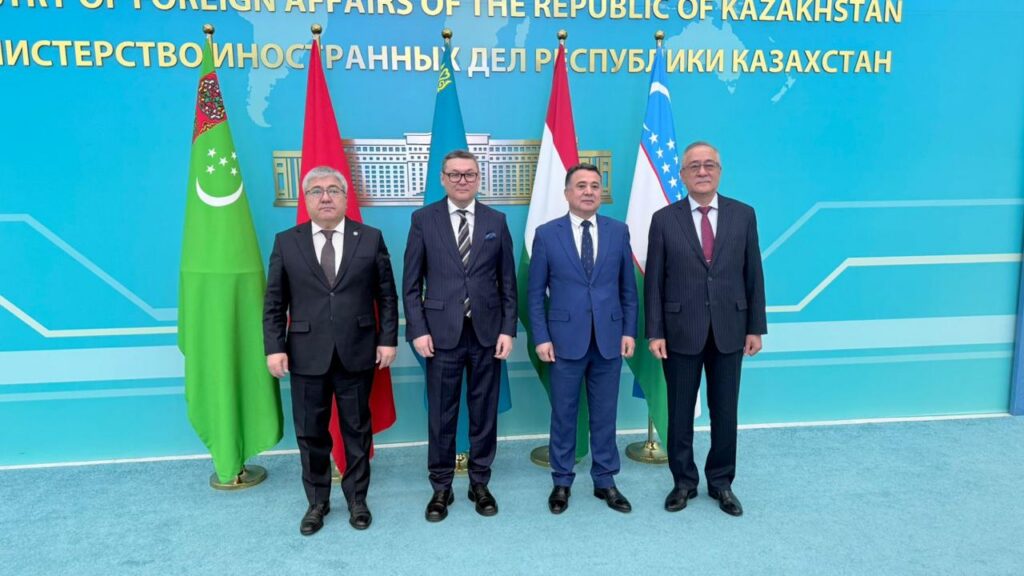
Putin also met the leaders of Kazakhstan, Kyrgyzstan, Turkmenistan, and Uzbekistan at the Russia-Central Asia summit.