Editor’s note: This guest essay is by Efim Rezvan, editor-in-chief of Manuscripta Orientalia and a researcher involved in the Essences of the 1001 Nights project.
What was the most valuable cargo carried by medieval caravans crossing Central Asia, or aboard Arab-Muslim ships transporting goods through the Indian Ocean and the Red Sea to the Middle East and Europe? Silk? Porcelain? Yes, in terms of overall volume, that is true. But if we compare volume or weight with value, prized incense and aromatic resins rank among the most valuable goods, with some varieties often compared with gold.
Historical data and modern zoological studies suggest that a Bactrian camel in a Silk Road caravan could carry about 150 to 300 kilograms. Aromatic resins and other incense materials were often compared with gold, which helps explain why a relatively small load could represent extraordinary value. Of course, merchants would not treat gold and incense as identical cargo: the caravan system, refined over centuries, prioritized the safety and preservation of goods. As today, wars and epidemics influenced trade conditions, but the pricing trend remained the same.
Why did people value incense so highly for thousands of years? Answers to this and many other questions may emerge through the scientific and exhibition project Essences of the 1001 Nights, the launch of which was announced by the international academic journal Manuscripta Orientalia.
Researchers from the International Center for Islamic Studies at the Kunstkamera and Saint Petersburg State University are studying the history of Eastern fragrances in an effort to “bring medieval manuscripts to life” and, for the first time, present the public with the olfactory dimension of the legendary tales. Modern research now makes it possible to imagine more clearly what scents might have filled, for example, the bedroom of Scheherazade or the library of Shahryar, the protagonists of One Thousand and One Nights.
The project promises not only comprehensive academic research. It will also take the form of an innovative exhibition, a journey through time and space, from the oases of Hadramaut in Yemen to the evergreen region of Dhofar in Oman, long associated with frankincense production and trade; from the streets and mosques of Bukhara and Samarkand to the shores of Sumatra and Java; from manuscript libraries to the offices of historians, chemists, and pharmacologists.
The project’s main artistic innovation is the use of olfactory storytelling; narrative through scents. Organizers plan to present ten aromatic compositions that will serve as guides into the world of the Islamic Golden Age.
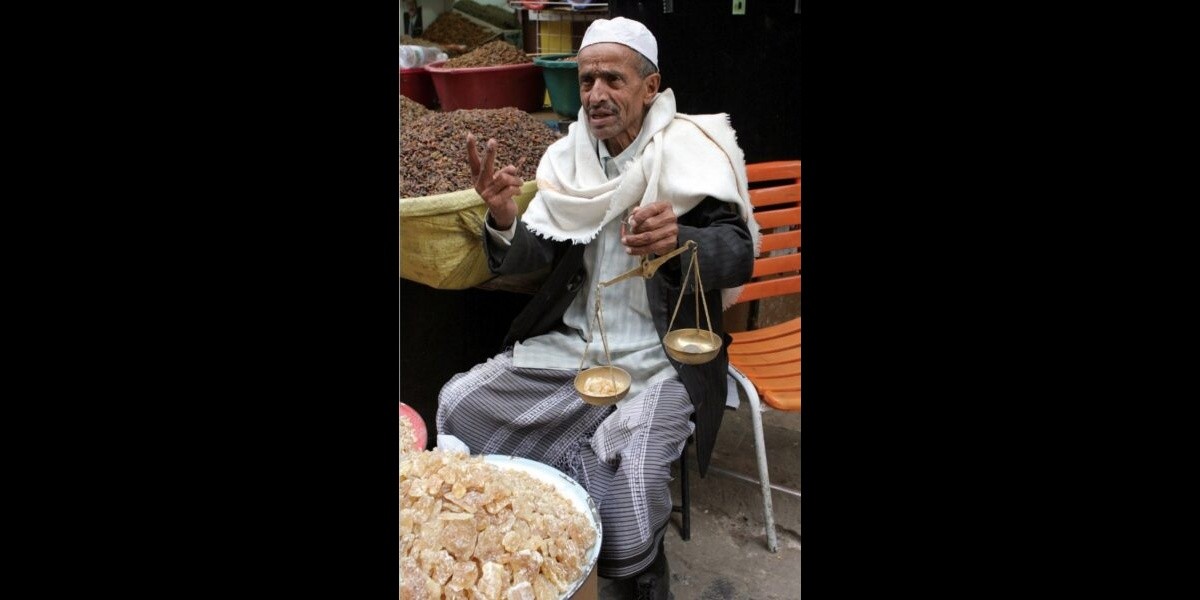
Incense seller. Sanaa, Yemen.
Scents of the Islamic Golden Age
Why scents? The corpus of One Thousand and One Nights had largely taken shape by the early 16th century. Its oldest roots and many of its plots originated in India. Persian culture served as a bridge between India and the Arab world. It was the Persian collection Hezar Afsaneh (“A Thousand Tales”) that became the direct precursor of One Thousand and One Nights. The framing story of King Shahryar and the wise Scheherazade likely traces back to these roots. The collection reached its familiar form in the Arab world, where translated and adapted stories acquired details, characters, and realities linked to the caliphate. A substantial layer of the texts is linked to Egypt, and the cycle’s development appears to have slowed after the Ottoman conquest of Egypt in 1517.
By the early 16th century, centuries of Arab-Islamic trade across the Indian Ocean basin and along the Silk Road had created a complex world of scents that became an essential part of Islamic identity. Many people still understand what is meant by an “Eastern fragrance”: a blend of incense, oils, resins, spices, and ritual memory.
The Battle of Diu in 1509 marked a major shift in the Indian Ocean trade system. Afonso de Albuquerque had already tried to impose Portuguese power at Hormuz in 1507, and Portugal consolidated its influence there after his return in 1515. These events may have interrupted the further development of this world of scents. Like the tales themselves, this aromatic complex emerged through interaction among civilizations around the Indian Ocean and Central Asia.
Take one example. In One Thousand and One Nights, beds made of juniper are mentioned frequently: “Upon a raised platform stood a bed of juniper, adorned with precious stones…” These lines remind me of a moment years ago when I witnessed a Kazakh yurt being fumigated with juniper smoke to ward off illness and evil spirits. Similar traditions exist among many indigenous peoples of Central Asia and Southern Siberia. Kyrgyz people also cleanse yurts with juniper smoke to protect newborns and mothers. Among Altai peoples, juniper smoke drives away evil spirits; in Tuva, it was central to shamanic practices. In Buddhism, too, juniper purifies space and dispels negative energy.
For us, it is important that comparing the scents used in Buddhism, Hinduism, and Chinese ritual culture with the most popular aromas of One Thousand and One Nights shows how the East accumulated unique shared knowledge over millennia about the significance and effectiveness of fragrances in many areas of life.
A bridge between Buddhism, Hinduism, and the ritual practices of the Islamic world was Sufism. As Sufi teachings became part of “popular Islam,” the magical element in daily life grew. Sufi lodges were shaped by dreams, symbols, prophecies, and rituals. Numbers, words, incantations, colors, and scents played a special role.
Among the most important fragrances were musk, celebrated by Jalal ad-Din Rumi as a symbol of divine love, as well as oud, ambergris, and sandalwood. These scents became part of “purifying consciousness,” serving both as offerings and as tools of meditation and interaction with subtler aspects of reality.
In the Islamic world, scents were also part of sophisticated medical and psychophysiological practices that have often been underestimated in Eurocentric accounts. Science has shown, for example, that fumigating with juniper has real antiseptic properties. Entire chapters on fragrances appear in The Canon of Medicine by Avicenna. In this way, the miraculous became sacred, and the sacred gradually entered daily life.
The tales of One Thousand and One Nights vividly show how scents, as parts of ancient living rituals, became part of everyday life. Rooms were filled with bakhoor, incense burned in special burners using pieces of agarwood, sandalwood, or frankincense. The thick, fragrant smoke filled the room with a sense of calm and sweetness. Importantly, each room required its own specific fragrance according to its purpose.
Women also applied pure oil blends known as attars to specific points on the body. Ideally, these compositions were selected individually. They created a unique scent trail that unfolded throughout the day. Such perfumes usually included at least one of five legendary ingredients: oud, Taif rose, ambergris, black musk, and saffron. Women used different aromatic compositions depending on the time of day and season, as humidity and temperature changed.
The world remembers only one man who traveled across nearly all the routes of the Silk Road: Ibn Battuta. Over his lifetime, he covered more than 120,000 kilometers, from the Volga to China.
In September 1344, Ibn Battuta arrived in the Maldives. Soon he was persuaded to stay and serve as chief judge. He later married into the ruling elite and wrote admiringly of Maldivian women. One of his wives, he recalled, would fumigate his clothes with incense while laughing, always behaving kindly. Later, he described how noblewomen would perfume their husbands with rosewater and musk oil, practices meant to refresh the body, calm the mind, and awaken desire. Scents in these stories were keys to the heart and doors to magic.
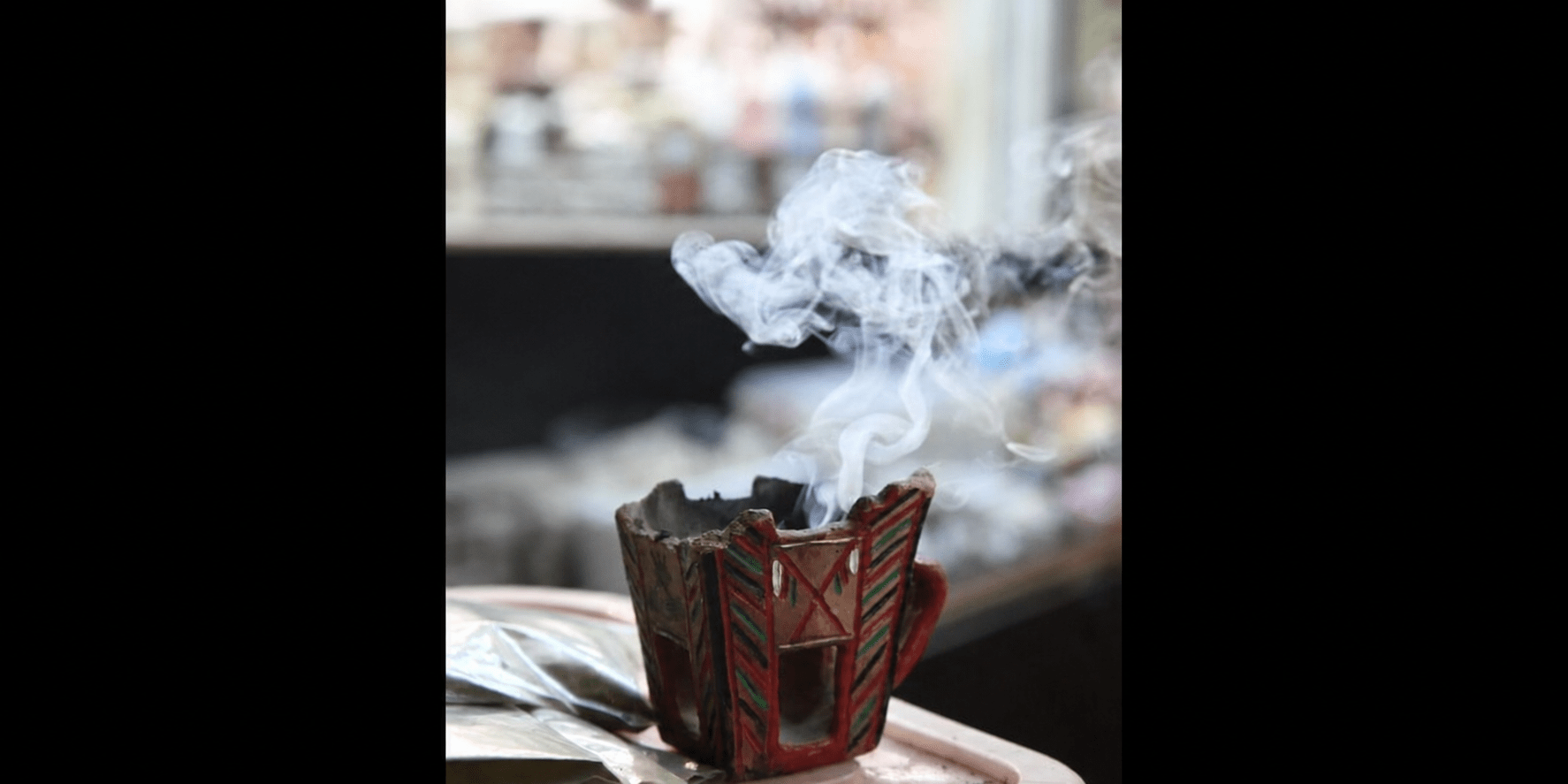
Bakhur at the bazaar in Salalah (Oman). Expedition for the project “The Material World of the Qur’an (everyday life in Arabia during the time of the Prophet)”.
Nusantara: Symbol of Untold Wealth
A central role in the production and trade of core aromatic ingredients belonged to Nusantara, the Malay term for the Indonesian archipelago. The flourishing of Arab-Islamic trade would have been impossible without the islands’ rich resources. Nusantara produced some of the most sought-after spices and fragrances of antiquity and the Middle Ages.
For Arab and Persian merchants, this market was a major source of extraordinary profit. The demand for unique scents and spices fueled the rise of cities and states, and the desire to control these resources ultimately helped trigger the Age of Exploration. Yet these riches were not easily obtained. The dangers of these waters became symbolized by the mythical Roc bird, mentioned by medieval travelers and writers.
Today, Indonesia remains a “perfume giant,” producing more than 80% of the world’s patchouli oil used in luxury perfumery. The Essences of the 1001 Nights project aims to bridge the ages: visitors will not only see artifacts but also smell the scents once experienced by Sinbad and real Silk Road merchants a thousand years ago.
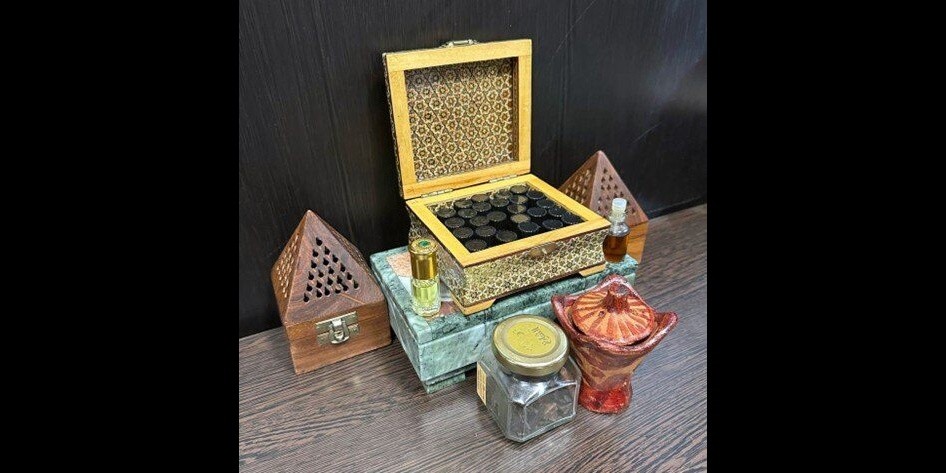
Fragrances from One Thousand and One Nights
Neural Networks, Expeditions, and a Living Catalogue
Technically, the project is a synthesis of classical museum work and cutting-edge digital formats. It is built on the experience of numerous expeditions carried out by St. Petersburg specialists over the last 25 years, with fieldwork still ongoing.
The project includes three main components. First is the olfactory storytelling exhibition itself, where ten scents will accompany paintings and artifacts brought back from expeditions by the Kunstkamera. Second is a historical-artistic video series of ten three-minute episodes created by specialists working in AI visualization, where paintings and museum objects are “brought to life.” Finally, there will be a scholarly-artistic catalogue featuring academic essays and ten fantasy-style literary stories, new tales of One Thousand and One Nights, whose modern protagonists project their personal challenges and joys onto the timeless plots of the classic stories. Samples of the exhibition’s fragrances will also be included.
For millennia, the world understood itself as civilized through the transport system known as the Silk Road. It ran not only from oasis to oasis, market to market, island to island, it linked sacred places across the world like a nervous system within the human body.
Trade intertwined with pilgrimage. Buddhist centers became Nestorian, then Muslim. Millions of pilgrims followed these paths over centuries. It is difficult to say what came first. What mattered was that this open system enabled the transmission of knowledge in the broadest sense, religious beliefs, technologies, artistic methods, migration, and ultimately humanity itself.
Fairy-tale narratives and healing fragrances became part of this shared inheritance.
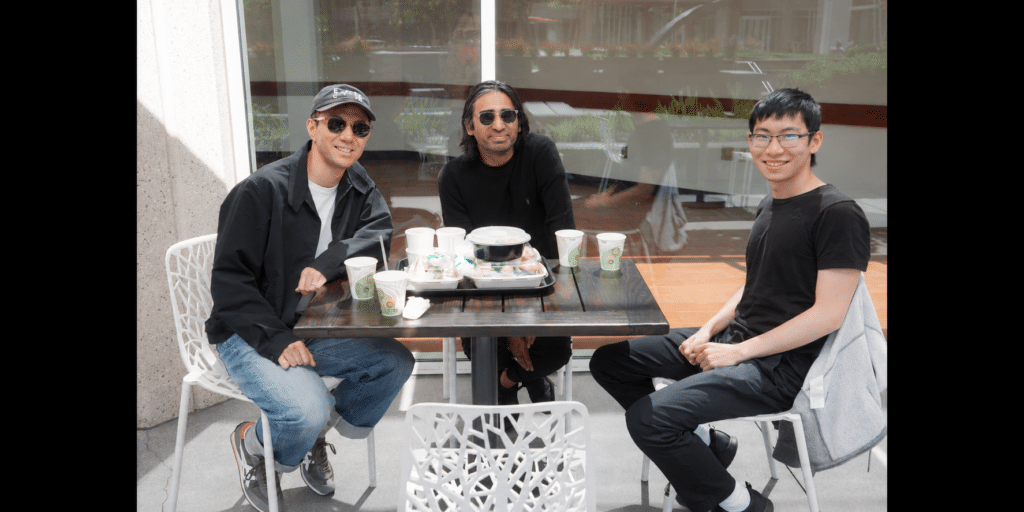
We have just returned from a scientific and business trip to Indonesia, carried out with the support of the analytical portal Eastern Tribune. Our main goal was to find interested partners for both the scientific program and the exhibition tour.
Many years of collaboration, joint expeditions, publications, and other projects connect us with colleagues and friends across Central Asia. We very much hope to find opportunities for cooperation with them within this project as well.