The global deployment of foreign educators has emerged as a response to teacher shortages and the growing demand for high-quality education. Kyrgyzstan is no exception. On May 14, 2026, The Times of Central Asia reported that Kyrgyz lawmakers are actively exploring mechanisms to attract foreign teachers to address the country’s shortage of educators. The rationale is compelling: recruiting internationally qualified teachers enables students to access global-standard education without leaving their home country, preserving social capital and mitigating the risk of brain drain.
Unfortunately, policy discourse on this issue remains disproportionately focused on academic qualifications and competencies, while largely overlooking a variable of equal consequence: cross-cultural competence.
Beyond Qualifications: The Cultural Dimension
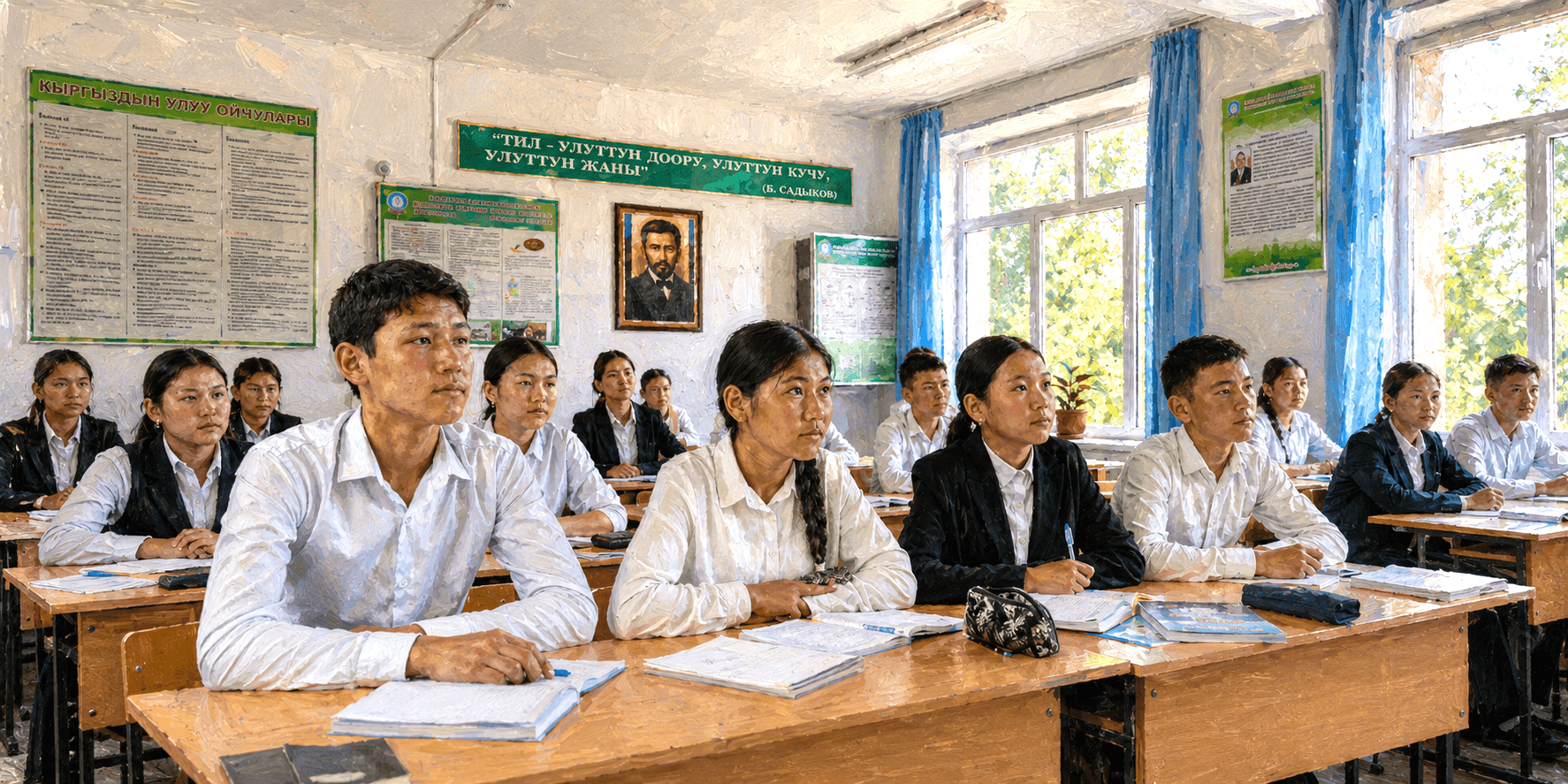
Even highly qualified foreign educators may encounter significant professional difficulties if they are unprepared for the cultural environment in which they teach. Consider a teacher from Indonesia entering a Kyrgyz school corridor for the first time, only to be asked by random students whether or not he is Muslim.
In Indonesian professional contexts, such a question directed at a teacher would typically be regarded as inappropriate, given cultural norms favoring indirect communication and the maintenance of formal boundaries between educators and students. In Kyrgyzstan, however, the same question reflects a culturally embedded expression of warmth and social curiosity rather than disrespect.
This moment of potential misinterpretation illustrates a broader challenge; foreign educators must choose between interpreting unfamiliar behaviors through their own cultural frameworks or making a deliberate effort to understand what those behaviors signify in their new context. While the former approach risks persistent misunderstanding, the latter requires cultural preparation and training that most current recruitment models do not provide.
Drawing on personal experience as an Indonesian educator working in Kyrgyzstan, the contrast between the two cultural contexts becomes instructive. In Indonesia, students conventionally avoid posing direct questions about a teacher’s religion or personal life, as such inquiries may be perceived as presumptuous. After sustained engagement in the Kyrgyz educational environment, however, it becomes evident that directness in social interaction is normative rather than transgressive. Students who pose seemingly personal questions are not seeking to offend; they are engaging in the relational practices through which trust and connection are established within their cultural context.
Policy Recommendations for Sustainable Teacher Mobility
Attracting foreign educators to Kyrgyzstan offers systemic advantages over sending domestic students abroad. It distributes the benefits of international educational exposure across the entire system, from rural schools to urban universities, without concentrating opportunity among a select demographic. It also reduces dependency on the return of overseas-trained graduates, whose repatriation remains statistically uncertain.
Nevertheless, effective implementation requires a policy that extends beyond academic considerations alone. Three measures would make such recruitment more sustainable:
First, pre-service cultural orientation should be made a formal prerequisite for all incoming foreign teachers. Such a program should go beyond classroom rules and address community expectations and the distinctive social role of educators in Kyrgyz society. Research on international teacher mobility consistently demonstrates that cultural preparedness is among the strongest predictors of early retention and professional satisfaction. A well-designed orientation developed collaboratively by experienced foreign and local educators can offer significant insights for new foreign teachers.
Second, peer-support systems should be established to guide foreign teachers through their initial days of service, especially when the risk of cultural misattribution is highest. Pairing incoming educators with experienced local colleagues can provide a contextual framework for interpreting unfamiliar social behaviors. For instance, a student’s direct personal question may reflect inclusive intent, while a parent’s silence at a school meeting does not necessarily indicate disengagement. Such a peer-support system can also contribute to professional integration and reduce the sense of institutional isolation that foreign educators frequently report in their first weeks of teaching.
Third, institutions should institutionalize systematic feedback mechanisms through which foreign teachers can report challenges and share observations in a psychologically safe environment. Without dedicated channels for this exchange, minor cross-cultural frictions tend to accumulate into more serious disengagement. Quarterly reflective sessions involving both foreign and local teaching staff, for example, would generate actionable data to strengthen program design over time.
Culture Is Not an Afterthought
International teacher mobility is poised to become a structural feature of contemporary education systems rather than a provisional response to workforce shortages. As this trend deepens, the field must move beyond a technocratic emphasis on contractual arrangements. Effective international education depends equally on the human capacity for cultural understanding, adaptability, and reciprocal respect.
Foreign educators can make a substantial and enduring contribution to Kyrgyzstan’s educational development. They are expected to enrich institutional knowledge while also honoring local traditions. That contribution will be strongest when they arrive prepared not only to teach, but also to understand the culture of the communities they serve.