• KGS/USD = 0.01144 0%
  • KZT/USD = 0.00212 0%
  • TJS/USD = 0.10523 0%
  • UZS/USD = 0.00008 0%
  • TMT/USD = 0.28530 0%
  • KGS/USD = 0.01144 0%
  • KZT/USD = 0.00212 0%
  • TJS/USD = 0.10523 0%
  • UZS/USD = 0.00008 0%
  • TMT/USD = 0.28530 0%
  • KGS/USD = 0.01144 0%
  • KZT/USD = 0.00212 0%
  • TJS/USD = 0.10523 0%
  • UZS/USD = 0.00008 0%
  • TMT/USD = 0.28530 0%
  • KGS/USD = 0.01144 0%
  • KZT/USD = 0.00212 0%
  • TJS/USD = 0.10523 0%
  • UZS/USD = 0.00008 0%
  • TMT/USD = 0.28530 0%
  • KGS/USD = 0.01144 0%
  • KZT/USD = 0.00212 0%
  • TJS/USD = 0.10523 0%
  • UZS/USD = 0.00008 0%
  • TMT/USD = 0.28530 0%
  • KGS/USD = 0.01144 0%
  • KZT/USD = 0.00212 0%
  • TJS/USD = 0.10523 0%
  • UZS/USD = 0.00008 0%
  • TMT/USD = 0.28530 0%
  • KGS/USD = 0.01144 0%
  • KZT/USD = 0.00212 0%
  • TJS/USD = 0.10523 0%
  • UZS/USD = 0.00008 0%
  • TMT/USD = 0.28530 0%
  • KGS/USD = 0.01144 0%
  • KZT/USD = 0.00212 0%
  • TJS/USD = 0.10523 0%
  • UZS/USD = 0.00008 0%
  • TMT/USD = 0.28530 0%

Turkmenistan Opens the Door a Little Wider to Europe

Turkmenistan has historically been a difficult partner to deal with.

The Turkmen government’s isolationist policies run counter to deep cooperation with any foreign party, but the Turkmen authorities seem to now perceive that these policies are costing them opportunities and revenue.

In one of the latest shifts in foreign policy, Turkmenistan appears to be warming up relations with the European Union, though currently, the EU has its own reasons to boost interaction with Turkmenistan.

Let’s Meet

For decades, the EU and many other countries and international organizations have gone through frustrating efforts to establish a reliable relationship with Turkmenistan.

Ashgabat’s form of governance is based on a cult of personality, a supposedly infallible leader capable of protecting the country from the evils of the outside world.

The UN recognition in December 1995 of Turkmenistan’s neutrality was used by its government to seal off the country.

It would normally be easy for the rest of the world to ignore Turkmenistan. However, Turkmenistan possesses the planet’s fourth-largest proven natural gas reserves, and it is located on what is developing into a key global trade route.

On March 20, the European Investment Bank’s (EIB) regional representative for Central Asia, Olivier Kueny, complimented Turkmenistan for its “ambitions in transport and… projects that reduce greenhouse gases.“

Kueny noted that, “with direct access to the Caspian Sea, [Turkmenistan] is a key node” of the Trans-Caspian International Transport Corridor (TITR). He hinted the EIB could be interested in investing in Turkmenistan’s “rail, road, rolling stock and port infrastructure [that] could help reduce the cost and time needed to move goods between continents.“

On March 26, Charlotte Adriaen, the head of the EU division for Central Asia and Afghanistan, met in Ashgabat with Turkmenistan’s Deputy Foreign Minister, Myahri Byashimova, to discuss energy cooperation. The two also reviewed EU programs for sustainable energy, trade, and digital connectivity.

On the same day, there was also a “New Horizons for Connectivity, Investment and Sustainable Growth” Turkmenistan-EU business forum in Ashgabat. Turkmenistan’s Minister of Finance and Economy, Mammetguly Astanagulov, addressed more than 200 delegates attending the forum, telling them his country is ready to expand trade, transport, and energy cooperation with the EU. Astanagulov noted EU-Turkmenistan trade increased from $1.1 billion in 2024 to $2.1 billion in 2025.

EU Ambassador to Turkmenistan Beata Peksa also spoke at the forum. She noted Turkmenistan’s growing role in global transport corridors between Europe and Asia and said the EU is seeking to work more closely with Turkmenistan on improving investment conditions in the country. Peksa also mentioned helping Turkmenistan improve regulatory frameworks and investment in modern technologies to increase efficiency in moving cargo.

On April 1, Adriaen met with representatives from Turkmenistan’s State Service of Maritime and River Transportation at the Turkmenbashi International Seaport on the Caspian coast to discuss the port’s role in the TITR and projects at the Balkan shipbuilding yard.

And on April 7, the European Bank for Reconstruction and Development (EBRD) co-sponsored an “Export Experience Exchange” conference in Ashgabat, the aim of which was to help Turkmen companies increase their presence in international markets.

The Turkmen Leadership Goes to Europe

On April 8, Gurbanguly Berdimuhamedov, the Chairman of Turkmenistan’s Halk Maslahaty (People’s Council), started a two-day visit to Austria. Berdimuhamedov was Turkmenistan’s president from late 2006 until 2022, during which time he built his own cult of personality.

His predecessor, Turkmenistan’s first president, Saparmurat Niyazov, was officially referred to inside the country as “Turkmenbashi,” the “Leader of the Turkmen.” Berdimuhamedov was given the title “Arkadag,” or “Protector.” State media called him by this title for years before expanding it to “Hero Arkadag.”

He stepped down as president in early 2022, making way for his son, Serdar, to be elected president in March that year. Apparently, the father missed being Turkmenistan’s leader, and one year later, the constitution was changed, making the Halk Maslahaty (People’s Council) the supreme body and its chairman the supreme leader.

The reason for Berdimuhamedov Senior’s presence in Vienna was not clear. Turkmen media confined their reporting of the visit to brief reviews of Austrian-Turkmen ties. But the visit to Vienna follows a visit to Germany in February.

Arkadag first traveled to the United States. Reportedly, he was in Florida to discuss golf courses, tour local equestrian facilities, and hold some meetings with U.S. business representatives.

He stopped over in Germany on his way back, and was reportedly there to discuss preparations for the 2026 FEI World Equestrian Championships in Aachen and an Akhal-Teke horse (Turkmenistan’s native horse) beauty contest scheduled to take place in the Netherlands.

It is possible those were the only reasons the elder Berdimuhamedov made the trip, but it seems there must have been more to the visits that was reported. Certainly, in the last decade or so, when he was president, Gurbanguly Berdimuhamedov made very few foreign trips, and when he did, he was usually gone for less than 24 hours. A stopover in Germany and a visit to Austria two months apart are unusual for Arkadag.

His son, President Serdar Berdimuhamedov, is going to Brussels sometime later this year.

EU Ambassador Peksa announced the visit on February 17, and Turkmen media said the exact date of the trip was still being discussed.

Signs of the Times

The EU Global Gateway initiative will see 12 billion euros invested in projects in Central Asia in the coming years. Many of these projects focus on connectivity; others involve access to Central Asian energy resources.

Turkmenistan spent some $1.5 billion on the construction of the Caspian port at Turkmenbashi city. The seaport opened in 2018 and can handle approximately 17 million tons of cargo annually. The volume of cargo currently transiting the port is far below capacity.

The EU would like to see that increase and Turkmenistan become a key transit country in the TITR, also known as the Middle Corridor. A reliable railway, road, and maritime network in Turkmenistan would complement the similar trade network Kazakhstan has been developing to the north.

As for energy cooperation, there is still only limited potential, though clearly, with the situation in the Strait of Hormuz threatening to cause huge gas and oil shortages, the EU would like to be able to import more hydrocarbon resources from Central Asia.

Unfortunately, there is insufficient infrastructure to export large amounts of Turkmen gas or oil to the West. Turkmenistan does have a small oil tanker fleet in the Caspian that has alternated over the years between unloading in Russia and Azerbaijan, but its shipments are limited to tens of thousands of tons annually.

Plans to build a Trans-Caspian Pipeline that could carry up to 30 billion cubic meters of Turkmen gas to Europe have made no real progress. The EU continually mentions the desirability of importing Turkmen gas, but the possibility still does not exist.

Still, for Turkmenistan, now might be the time to inquire whether the EU still has an interest, and possibly a solution, and funding, for importing some of Turkmenistan’s vast hydrocarbon resources.

Turkmenistan’s attempts to export its gas have been thwarted at almost every turn. Admittedly, much of the fault lies with Turkmenistan, as the government’s policy for years was that any party interested in buying Turkmen gas needed to build a pipeline to the Turkmen border.

There were not many takers. China did build three pipelines from Turkmenistan and is now the only major gas customer Turkmenistan has. Iran built two pipelines, but neither is operating after Turkmenistan turned off the supplies almost a decade ago over unpaid Iranian bills.

The Turkmenistan-Afghanistan-Pakistan-India (TAPI) gas pipeline that aims to carry some 33 bcm of Turkmen gas is not much closer to being realized than it was 30 years ago when the idea first emerged. Turkmenistan has constructed its section leading from Turkmen gas fields to the Afghan border. But the TAPI section in Afghanistan is inching forward and at the moment only extends some 25 kilometers on route to the city of Herat.

Months of fighting between Afghanistan and Pakistan suggest it will be many years before TAPI progresses any further than Herat, if the pipeline ever progresses at all.

Turkmenistan has been trying to arrange swap agreements that would allow gas sales to Iraq, Turkey, and Azerbaijan, but all these deals involve Iran, and the current situation there indicates it could be many years before such agreements could be fulfilled.

That leaves the transit of goods as Turkmenistan’s best chance of boosting state revenue. Increasing cargo shipments is certainly having a positive financial effect in Kazakhstan, where the government has embraced the rapid development of road, rail, and maritime infrastructure along the Middle Corridor.

In light of the recent uptick in activity between the EU and Turkmenistan, it is interesting that Gurbanguly Berdimuhamedov made one other trip in 2026, to China in March.

Turkmenistan literally cannot afford to remain walled off to the outside world any longer, and the Middle Corridor represents opportunity knocking on its door. Apparently, for once, Turkmenistan is opening the door, at least a little bit.
Sindarov and Asaubayeva: Two Top Chess Players from Central Asia Form Friendship

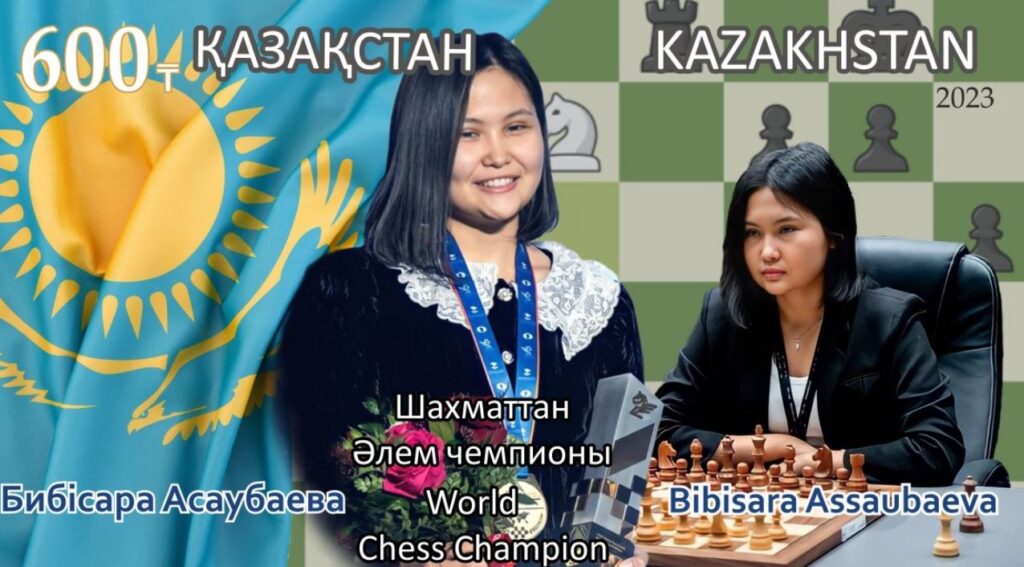
He’s from Uzbekistan, and she’s from Kazakhstan. They’re elite chess players and good friends accustomed to the high-pressure environment of international tournaments. They went horse-riding together during downtime in South Africa and, on another occasion, played a game in which they had to guess each other’s character quirks.

Both are competing right now in Cyprus, where Uzbekistani Javokhir Sindarov is the frontrunner in the eight-player FIDE Candidates Tournament that will determine who challenges the world champion later this year. On the women’s side, Kazakhstani Bibisara Asaubayeva was tied for first place in the early stages of the event but has since slipped further down in the field.

Sindarov, 20, became a grandmaster at the age of 12, won the 2025 World Cup in Goa, India, and has impressed the chess community with his commanding performance in Cyprus so far. Asaubayeva, 22, won the Women’s World Blitz Championship in 2021, 2022, and 2025, and achieved grandmaster status last year as well.

Sindarov and Asaubayeva talk with each other about chess, and the player from Kazakhstan said her friend from Uzbekistan wrote to her when he won last year’s World Cup, which led to his qualification for this year’s candidates tournament.

In an interview with the TimesofIndia.com, Asaubayeva said she was delighted when her “closest friend” won in Goa.

FIDE, the international governing body of chess, described the pair as “2 Happy Winners!” after they won their round three games in Cyprus and left the venue together.

In December, Sindarov and Asaubayeva took a horse-riding break together during the Freestyle Chess Grand Slam Finals, which was held at the Grootbos Private Nature Reserve near Cape Town in South Africa. They took a selfie together.

Predictably, the friendship has led to social media chatter about whether there is a romance, as well as speculation about whether chess might one day have a “king” and “queen” if they become world champions or eventually reach the top of the rankings.

One thing seems sure: They don’t mind poking fun at each other and themselves.

A Freestyle Chess video short shows them answering questions, including “Who is more likely to blunder the queen in time trouble?” and “Who gets angry more quickly?” and “Who has the better haircut?” and “Who would survive longer in a zombie apocalypse?”

The answer to the last one: Asaubayeva thinks she would do better against the zombies, but Sindarov believes he’d last longer.

Uzbekistan Moves Forward with $6 Billion Biofuel Project in Khorezm

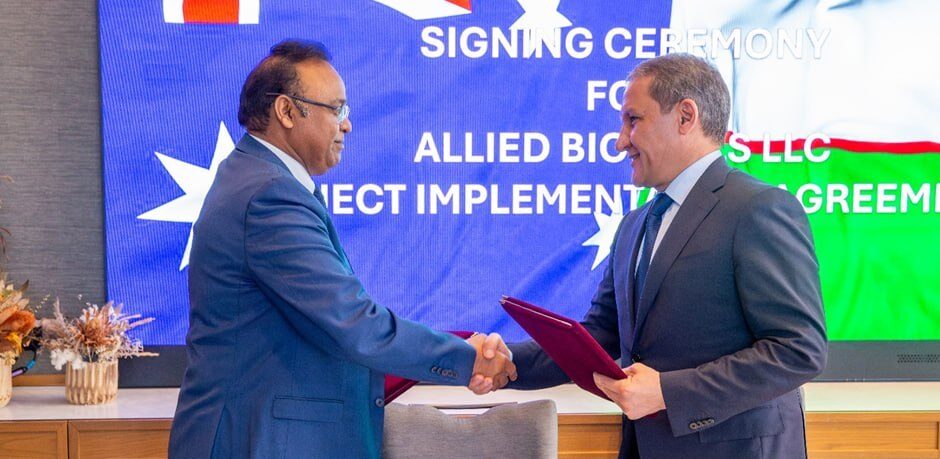
Uzbekistan has announced a major step toward developing large-scale clean energy infrastructure with the signing of a binding implementation agreement for a $6.08 billion biofuel project in the Khorezm region.

The Project Implementation Agreement (PIA) was signed between Allied Biofuels FE LLC and the regional government of Khorezm, formalizing plans to build what the developers describe as Central Asia’s first integrated biofuel refinery. The agreement was concluded on April 2 in Perth, Australia, by Khorezm regional governor Jurabek Rakhimov and Alfred Benedict, chairman and general director of Allied Biofuels.

According to Allied Biofuels, the project has been granted special economic zone status under a presidential decree, providing tax exemptions and customs incentives aimed at ensuring long-term financial stability and investor confidence.

Once completed, the facility is expected to produce sustainable aviation fuel (SAF), electro-synthetic SAF (e-SAF), and green diesel at an industrial scale. Annual output is projected to reach approximately 160,400 tonnes of SAF, 257,000 tonnes of e-SAF, and 5,040 tonnes of green diesel.

The refinery will be supported by a large renewable energy system, including battery storage and hydrogen production capacity. The project also incorporates a closed-loop model that converts biogenic carbon dioxide into fuel while using agricultural feedstock as a primary input.

Officials say the initiative is designed not only to produce fuel but also to strengthen industrial capacity and introduce advanced technologies. The construction phase alone is expected to generate around 2,000 direct and indirect jobs.

Speaking at the signing, Rakhimov said the project would help build a “high value-added industrial chain” in the region and expand export potential. He added that cooperation with Allied Biofuels would support the transfer of advanced green technologies and position Khorezm as “an emerging international hub for green industry.”

Benedict described the agreement as “a defining moment” for both the company and the broader clean energy sector. “This project sends an unambiguous message to the global investment community, Uzbekistan is not merely open for business; it is ready to lead,” he said.

The project is being developed in partnership with international technology providers, including hydrogen systems supplied by Plug Power. Advisory support for the transaction was provided by Affinity Capital Group.

Turkmenistan’s Air Connectivity Shows Little Change Despite Expansion Plans

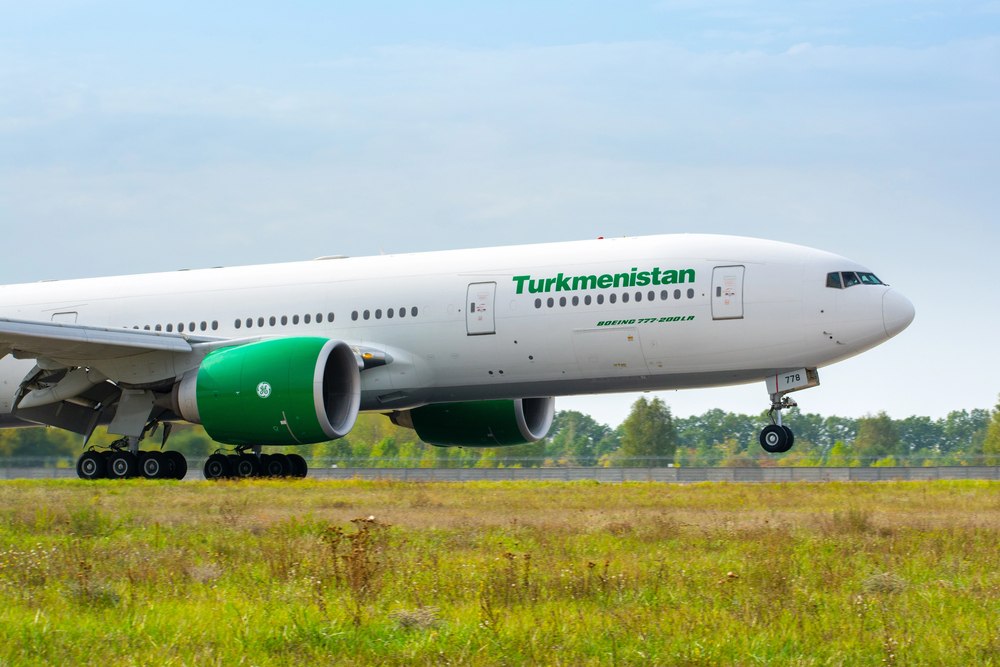
Turkmenistan’s airport schedules remain largely unchanged, with no new destinations added and previously announced flights yet to begin operating. Plans to expand international air links from Turkmenistan have been discussed for years, but little has changed in practice.

At the end of last year, Russia’s S7 Airlines announced the launch of the Ashgabat-Novosibirsk route starting March 31. Tickets went on sale at the time, with flights planned once a week. However, as of early April, the flights are absent both from the airline’s schedule and from airport data. Only connecting options remain in booking systems. No official explanation has been provided, despite considerable interest in the route.

Flights from Turkmenistan to Russia remain in high demand, significantly exceeding supply. Tickets sell out almost immediately despite high prices, which passengers often associate with monopoly conditions and possible corruption schemes. At present, the choice is limited to two routes: S7 Airlines operates Ashgabat-Moscow flights, while national carrier Turkmenistan Airlines serves only the Ashgabat-Kazan route.

The limited number of direct routes forces passengers to seek alternatives. One of the most common is transit through Uzbekistan. The neighboring country can be reached by land, and from there dozens of flights to Russian cities are available.

At the same time, there is separate demand for travel to Uzbekistan itself, including for business, education, and tourism. Nevertheless, Turkmenistan has no direct air links with any neighboring country. The restoration of flights with Uzbekistan was discussed in 2025 by presidents Serdar Berdimuhamedov and Shavkat Mirziyoyev, but no specific timelines or routes have been announced since.

Some travel takes place via Azerbaijan. In the first two months of this year, more than 4,000 citizens of Turkmenistan entered the country. A significant share of these trips is related not to tourism but to obtaining European visas, as doing so from within Turkmenistan is more difficult. Meanwhile, discussions on transport cooperation between Ashgabat and Baku have focused mainly on cargo transportation.

The only notable change has been an increase in the number of flights between Ashgabat and Istanbul, driven by the foreign carrier Turkish Airlines.

Moldova Moves to Leave CIS as Post-Soviet Bloc Loses Another Member

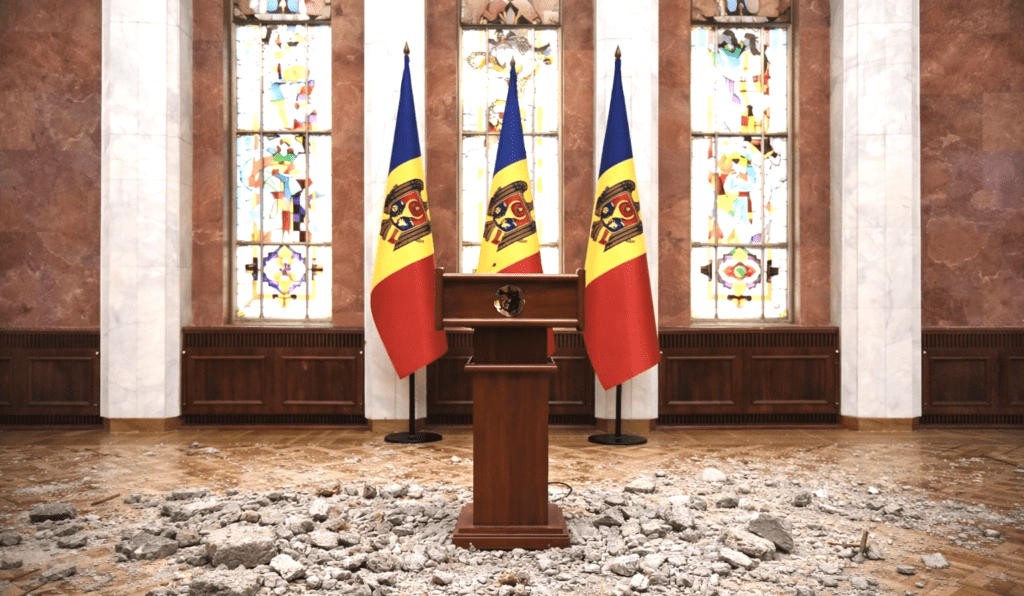
Moldova’s parliament approved, in final reading on April 2, the country’s withdrawal from the Commonwealth of Independent States (CIS), with 60 deputies voting in favor. President Maia Sandu then promulgated the denunciation decrees, which were published in the Official Journal on April 8 and entered into force, with the Foreign Ministry set to notify the CIS. If Moldova’s withdrawal takes full legal effect after notification and the relevant notice period, eight CIS member states would remain: Armenia, Azerbaijan, Belarus, Kazakhstan, Kyrgyzstan, Russia, Tajikistan, and Uzbekistan.

The CIS was created immediately after the collapse of the Soviet Union as a framework to manage the breakup and maintain post-Soviet cooperation among former republics. Moldova’s denunciation concerns a structure originally formed by 11 former Soviet states, not all 15 Soviet republics. Moldova’s exit further weakens the CIS politically, though the bloc will continue to exist if the remaining member states stay in place.

Moldova has already approved the denunciation of the 1991 Agreement on the Establishment of the CIS, the related Protocol, and the 1993 CIS Statute. The Moldovan authorities say the CIS’s core values and principles are no longer being respected, especially the recognition of territorial integrity and the inviolability of borders. They cite Russia’s war against Ukraine, acts of aggression against Georgia, and the illegal military presence of Russian troops on Moldovan territory. Chisinau says the move is consistent with Moldova’s European path, while the European Union remains its main economic partner.

Economic ties with the Commonwealth have significantly declined: in 2025, CIS countries accounted for 5.9% of Moldova’s exports, while the European Union accounted for 67.5%.

Moldova’s final withdrawal from the CIS may not, therefore, come as a surprise to its other members. On January 19, Deputy Prime Minister and Foreign Minister Mihai Popșoi announced the start of the process to denounce the three core CIS agreements underpinning Moldova’s membership.

“We are already in the process of getting approvals for the denunciation of three agreements with the CIS. They are the agreements that form the basis of our affiliation to the CIS, namely: the CIS Statute, the CIS Founding Agreement, and the Annex to this agreement,” Popșoi said. He added that this would mean Moldova was no longer a CIS member legally, while participation had already been suspended de facto.

Moldova set a course toward breaking its remaining ties with its Soviet past after the 2020 presidential elections, when new president, Maia Sandu, announced a path toward EU integration and refused to participate in CIS summits. Moldova has spent the past several years unwinding CIS-linked agreements. As of January 2026, Moldovan officials said the country had signed 283 CIS agreements, of which 71 had already been rescinded, and about 60 more were in process.

On December 12, 2025, Moldova’s parliament approved the denunciation of the 1992 Bishkek agreement on visa-free travel for CIS citizens. For Uzbekistan, Kazakhstan, and several other states, visa-free travel with Moldova remains in place under bilateral agreements. Moldovan authorities said the denunciation of the Bishkek agreement would affect only Tajikistan and Kyrgyzstan, which do not have similar bilateral arrangements with Moldova.

Ukraine, notably, was among the founding members of the CIS alongside Russia and Belarus. On December 7-8, 1991, in Viskuli, in the Belovezhskaya Pushcha on the territory of Soviet Belarus, Boris Yeltsin, Leonid Kravchuk, and Stanislav Shushkevich signed the agreement that formalized the dissolution of the Soviet Union and the creation of the CIS.

On December 13, a meeting of the presidents of five Central Asian states, Kazakhstan, Kyrgyzstan, Tajikistan, Turkmenistan, and Uzbekistan, took place in Ashgabat. The group issued a joint statement expressing readiness to join the CIS based on equal participation and recognition of all members as founders.

On December 21, in Almaty, the leaders of 11 former Soviet republics signed the Alma-Ata Declaration, which set out the CIS’s goals and principles and broadened the framework created earlier that month.

Post-Soviet integration began almost as soon as the Soviet Union collapsed, but it moved along more than one track. Alongside the CIS, Kazakhstan’s Nursultan Nazarbayev promoted deeper Eurasian economic integration, an effort that developed from the Customs Union into the Single Economic Space and then the Eurasian Economic Union. Armenia and Kyrgyzstan later joined that bloc, expanding a framework first built by Russia, Kazakhstan, and Belarus.

That makes Moldova’s withdrawal from the CIS part of a wider reordering rather than an isolated step. Armenia, meanwhile, has moved in a different political direction, with its parliament approving a law on launching the process of accession to the European Union in March 2025, even though the country remains a member of the EAEU. That does not amount to an Armenian exit from the EAEU, and it is too early to present it as one. But it does suggest that former Soviet states are no longer aligning around a single post-Soviet center of gravity.

Kazakhstan Announces Crackdown on Counterfeit Cellular Base Station Scheme

Kazakhstan’s Financial Monitoring Agency (AFM) has reported the dismantling of a cyber fraud scheme involving counterfeit cellular base stations. According to the agency, this is the first such case identified in the post-Soviet region. Authorities say the criminal group used the equipment to intercept data on a large scale and send phishing messages.

According to the AFM, the attackers used a special device, a so-called SMS blaster that imitated the operation of mobile operator base stations.

The device generated a strong signal within a radius of up to 300 meters, causing mobile phones to connect to it automatically and switch to a less secure network. This allowed the attackers to bypass operators’ security mechanisms.

After connecting, subscribers received fake SMS messages purportedly sent on behalf of well-known companies, offering the chance to redeem accumulated bonuses. Clicking the link led to phishing websites, where users were prompted to select products and then enter personal information, including phone number, full name, bank details, CVV code, and SMS confirmation codes. This enabled the attackers to access confidential information and funds.

According to the agency, the equipment was placed in vehicles and used while in motion to expand coverage and avoid detection.

The messages were sent primarily in crowded areas, such as markets and near shopping and entertainment centers. The devices’ technical capabilities allowed them to send up to 100,000 messages per hour, significantly increasing the potential scale of the fraud.

The operation to disrupt the group’s activities was carried out by the AFM under the coordination of the Prosecutor General’s Office, with the participation of cybersecurity specialists from a mobile operator.

The uncovered scheme comes amid a broader rise in telephone and internet fraud in Kazakhstan. As previously reported by The Times of Central Asia, nearly 85 million fraudulent calls were blocked in the country in 2025. At the same time, authorities are introducing additional regulatory measures, including mandatory biometric identification for mobile subscribers, aimed at strengthening efforts to combat digital crime.