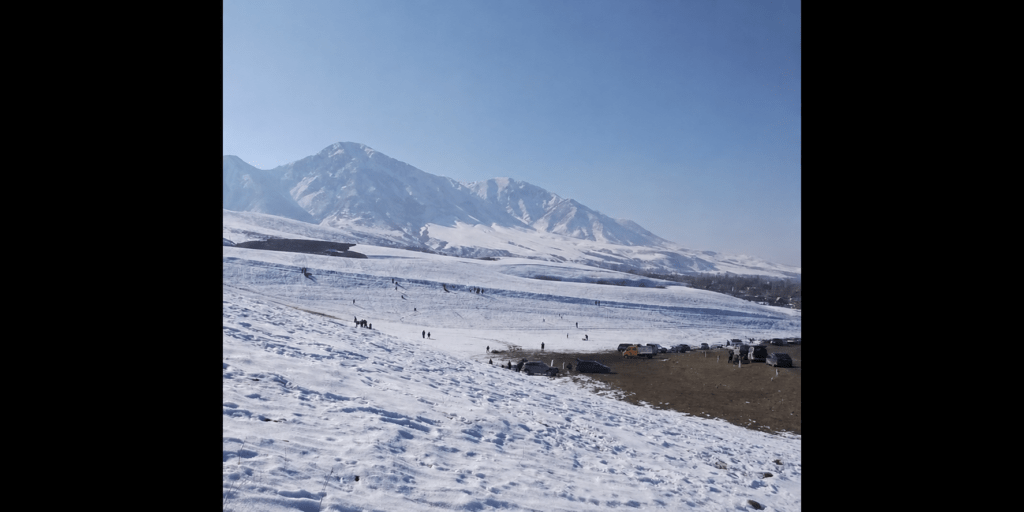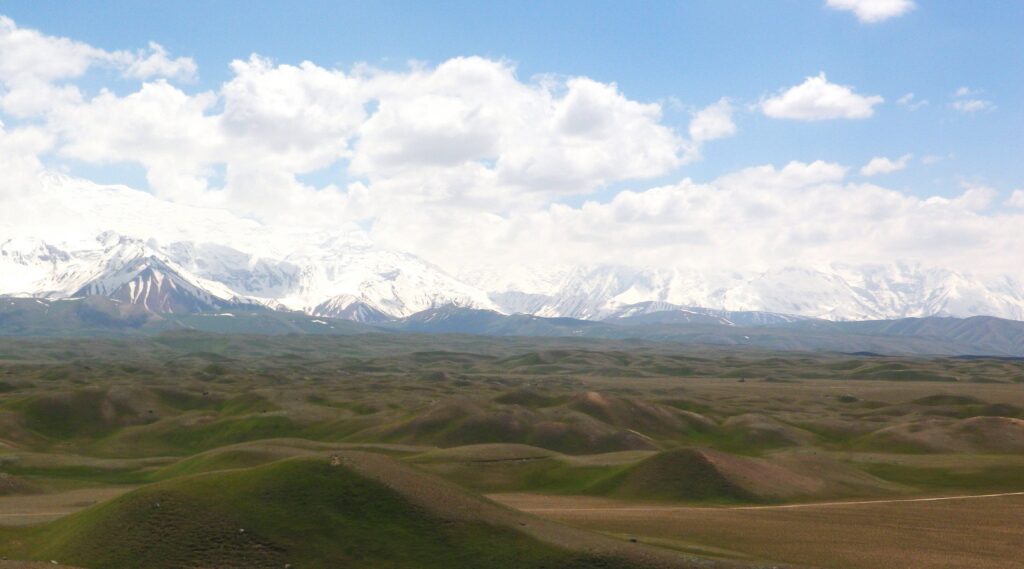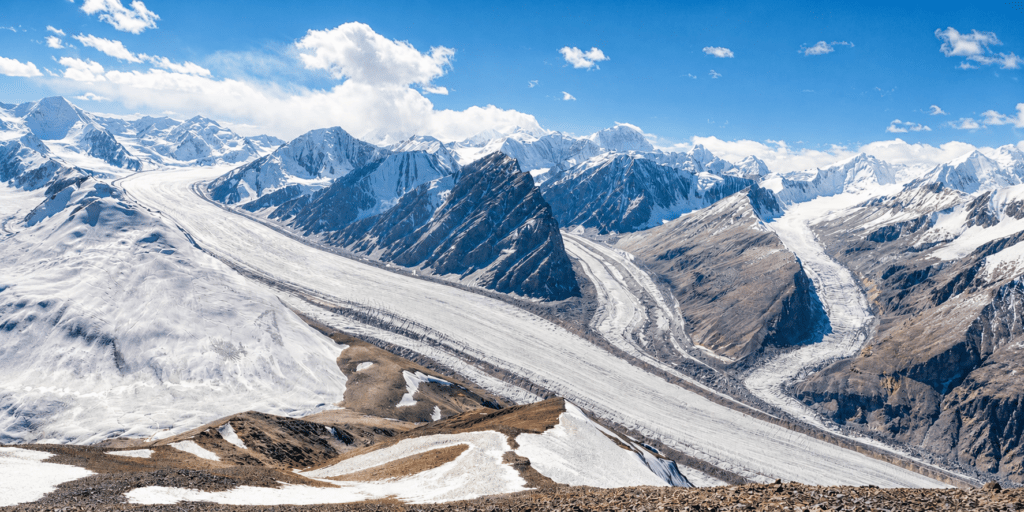
For years, the Pamir-Karakoram anomaly stood as a rare outlier in global climate trends: a region where glaciers remained relatively stable despite accelerating global warming. Now, new research from the Institute of Science and Technology Austria (ISTA) confirms that even these “last strongholds” have begun to lose mass at an alarming rate.
Snow Deficit and Rising Heat
Data collected from a climate monitoring station on the Kyzylsu glacier in the northwestern Pamirs, active from 1999 to 2023, reveals a sharp shift. According to an international research team led by Francesca Pelliccotti, the tipping point came in 2018, when a significant decline in snow cover and precipitation irreversibly altered the glaciers’ mass balance.
Once past this “point of no return,” glaciers began rapidly depleting their own reserves to compensate for the lack of new snowfall, a process accelerating their melt.
Since 2018, the region has experienced a persistent snow deficit. Snow depth has fallen by approximately 40 cm, and annual precipitation has declined by 328 mm, about one-third of the historical average. Seasonal snow melts earlier, is less stable in spring, and is no longer sufficient to replenish glacier mass.
July 2022 was the hottest month on record, and during this period, the Kyzylsu glacier recorded unprecedented mass loss, melting at a rate eight times faster than the 1999-2018 average. Scientists identify increasingly hot summers and a lack of precipitation as the primary causes.
Even the intensified ice melt has not made up for reduced snowfall: water inflow into rivers dropped by roughly 189 mm in water equivalent. The contribution of glacial runoff to total river flow rose from 19% to 31%, but this increase was still insufficient to offset the overall decline in water volume.
The situation is most severe at altitudes above 4,000 meters, where solid precipitation has declined sharply. Snow from avalanches, which previously helped sustain the glaciers, has dropped nearly threefold from 0.21 to 0.08 m per year.
Implications for Central Asia
Experts warn that this is not a localized issue. The Pamir and Karakoram glaciers feed the Amu Darya and Syr Darya rivers, lifelines for millions across Central Asia. Diminishing glacial mass threatens freshwater availability, agriculture, hydropower generation, and overall socio-economic stability.
“Due to the lack of accurate forecasts, we cannot yet say definitively whether the Pamir glaciers have passed the point of no return. However, since 2018, the processes have changed dramatically, and the reduction in precipitation has had a critical impact on their stability,” said ISTA researcher Achille Joubert.
Data Gaps and New Monitoring Efforts
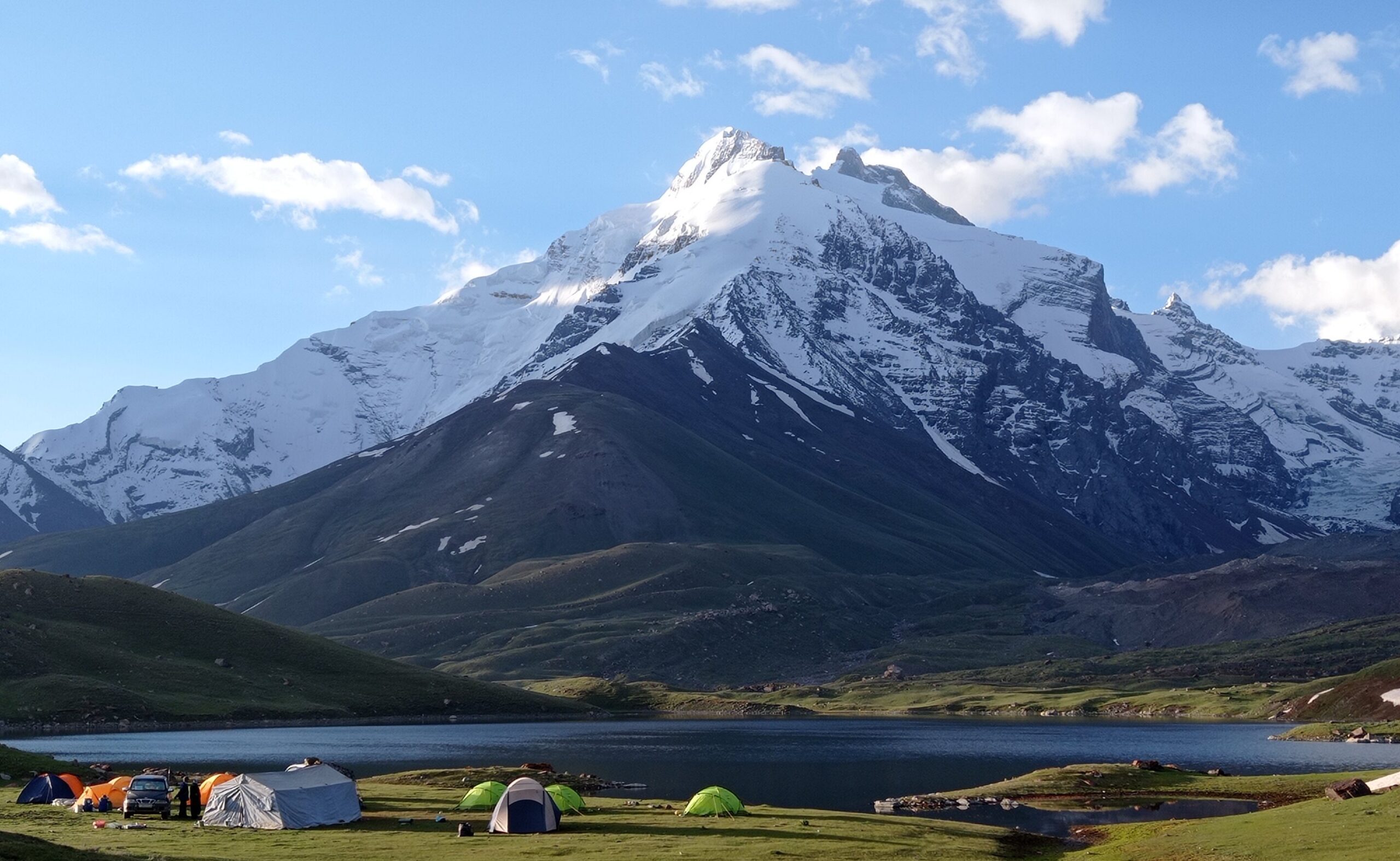
Following the collapse of the Soviet Union, glacier monitoring in the region was largely suspended for nearly two decades. Systematic observations resumed only in 2021, when international researchers reinstalled instruments on the Kyzylsu glacier, one of the Vakhsh River’s primary sources.
These new measurements confirmed a drastic drop in precipitation and snow thickness starting in 2018, with consistently unfavorable conditions persisting since.
Compared to the late 1990s, spring and summer snow now melts much faster, and the “cold reserves” that once preserved glacier stability are disappearing rapidly.
The study’s findings were published in Communications Earth & Environment, reinforcing that even the most resilient glaciers in Central Asia are succumbing to climate change.
“The disappearance of glaciers means not only a shortage of water, but also a threat to climate stability,” the researchers warn.
The loss of these natural freshwater reserves could trigger cascading effects from reduced electricity generation to ecosystem degradation.
The end of the Pamir-Karakoram anomaly is not just a regional alarm bell. It signals the urgency of coordinated international climate action. Without it, scientists say, the process may already be beyond reversal.
For Central Asia, this carries profound geopolitical and economic implications. Water stress is already a driver of tension between upstream and downstream states, and shrinking glaciers will exacerbate disputes over allocation and dam construction. Governments are under pressure to accelerate adaptation strategies – modernizing irrigation, investing in alternative energy, and expanding regional cooperation on water-sharing agreements.
Researchers also stress the importance of filling data gaps with sustained monitoring. Long-term, high-resolution observations are critical for forecasting river flow and planning infrastructure. International support, they argue, could help countries like Tajikistan and Kyrgyzstan upgrade their hydrological networks, while linking local data into global climate models.
Ultimately, the fate of the Pamir and Karakoram glaciers will not be decided in the mountains alone. Their survival, or disappearance, depends on global emissions trajectories and the political will to implement serious mitigation measures. What happens here, at the heart of Asia’s water towers, will ripple far downstream into the lives of millions.