Washington D.C. – Acting on President Kassym-Jomart Tokayev’s push to convert strategic alignment with Washington into tangible commercial gains, senior Kazakh officials told U.S. investors on April 14 that the bilateral relationship is entering a deeper phase focused on energy, critical minerals, and transport infrastructure. Within that context, the country has undertaken constitutional reforms and other modernization efforts to digitize and improve the investment climate.
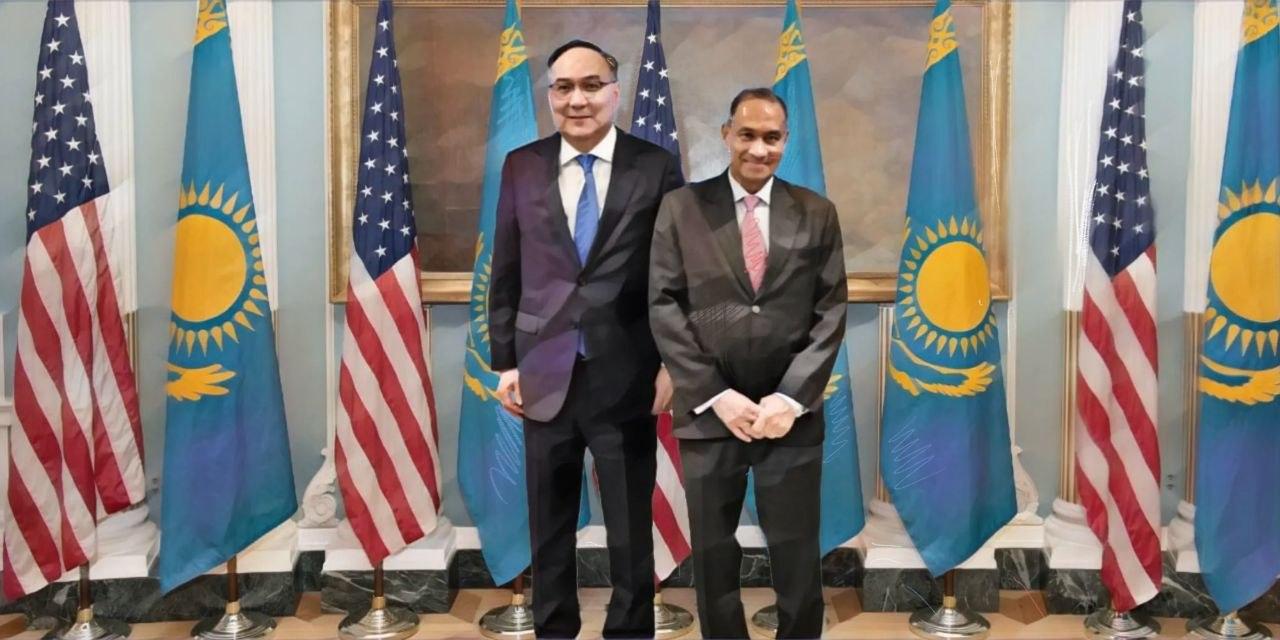
The Kazakhstan delegation was led by Erzhan Kazykhan, President Kassym-Jomart Tokayev’s Special Representative for Negotiations with the United States on priority issues of bilateral cooperation, and included National Bank Governor Timur Suleimenov and Deputy Foreign Minister Alibek Kuantyrov, who traveled to Washington for the meetings. Kazakhstan’s Ambassador to the United States, Magzhan Ilyassov, also participated.
A Delivering Partner, Not a Prospective One
Kazykhan presented the new commercial push as a direct outgrowth of Tokayev’s November 2025 Oval Office meeting with President Trump, casting the Kazakh leader as a partner in a more ambitious phase of U.S.-Kazakhstan relations aimed at converting political trust into practical cooperation on energy security, critical minerals, and strategic transport corridors. He placed that agenda within the framework of Kazakhstan’s participation in U.S.-backed regional diplomacy as well, pointing to Kazakhstan joining the Abraham Accords and President Trump’s broader peace initiatives. Kazykhan also highlighted Kazakhstan’s role as a founding member of the Board of Peace, noting that Tokayev signed its charter in Davos in January and participated in its inaugural meeting in Washington on February 19. Kazakhstan is positioning itself as a constructive U.S. partner not only in Eurasian connectivity and resource security, but also in Middle East stabilization through support for reconstruction, healthcare, education, and longer-term peace-building efforts.
Kazakhstan is seeking to set itself apart as a partner that delivers. While many countries pitch cooperation with Washington in terms of future potential, Astana’s message is that engagement has already produced tangible commercial outcomes. Following the Oval Office meeting, 29 agreements had been signed, including with Cove Capital, Boeing, Cerberus Capital Management, and Wabtec, with a combined value of more than $17 billion. Kazykhan added that more than 600 American companies operate in Kazakhstan and that cumulative U.S. investment has exceeded $60 billion, making the United States the country’s largest foreign investor.
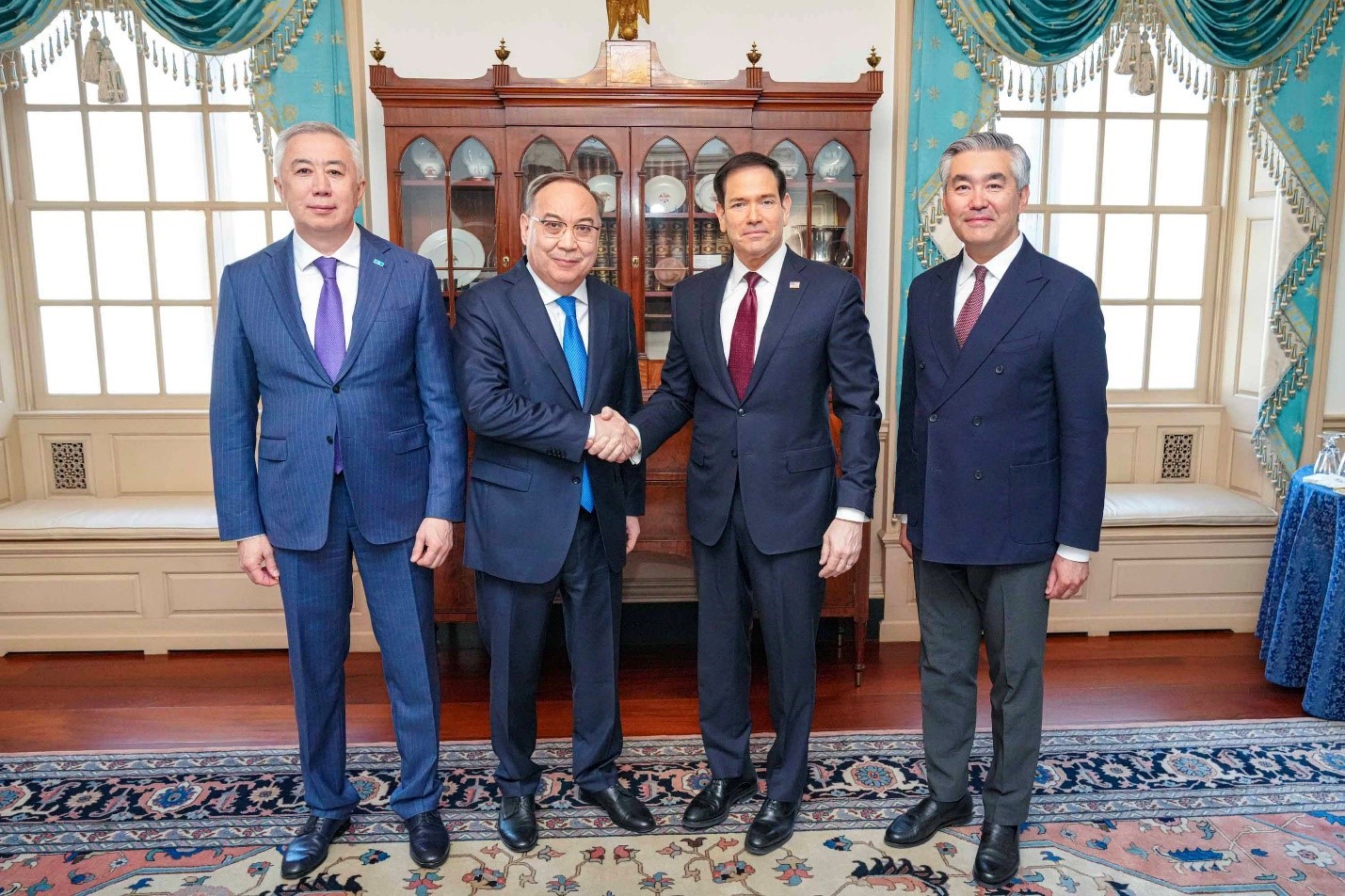
Kazakhstan Deputy Prime Minister and Minister of National Economy Serik Zhumangarin; Special Representative for Negotiations with the United States, Erzhan Kazykhan; and Kazakhstan’s Ambassador to the United States Magzhan Ilyassov meet with U.S. Secretary of State Marco Rubio on April 15 to strengthen commercial ties and advance regional cooperation. Image: USDOS
No Longer a Startup Market
Ambassador Ilyassov said the discussion was more in-depth than a typical roundtable, because the relationship with U.S. partners has matured over many years. The tone of the session matched that description. The discussion centered on specifics of expansion, supply chains, regulation, and long-term capital rather than general market entry.
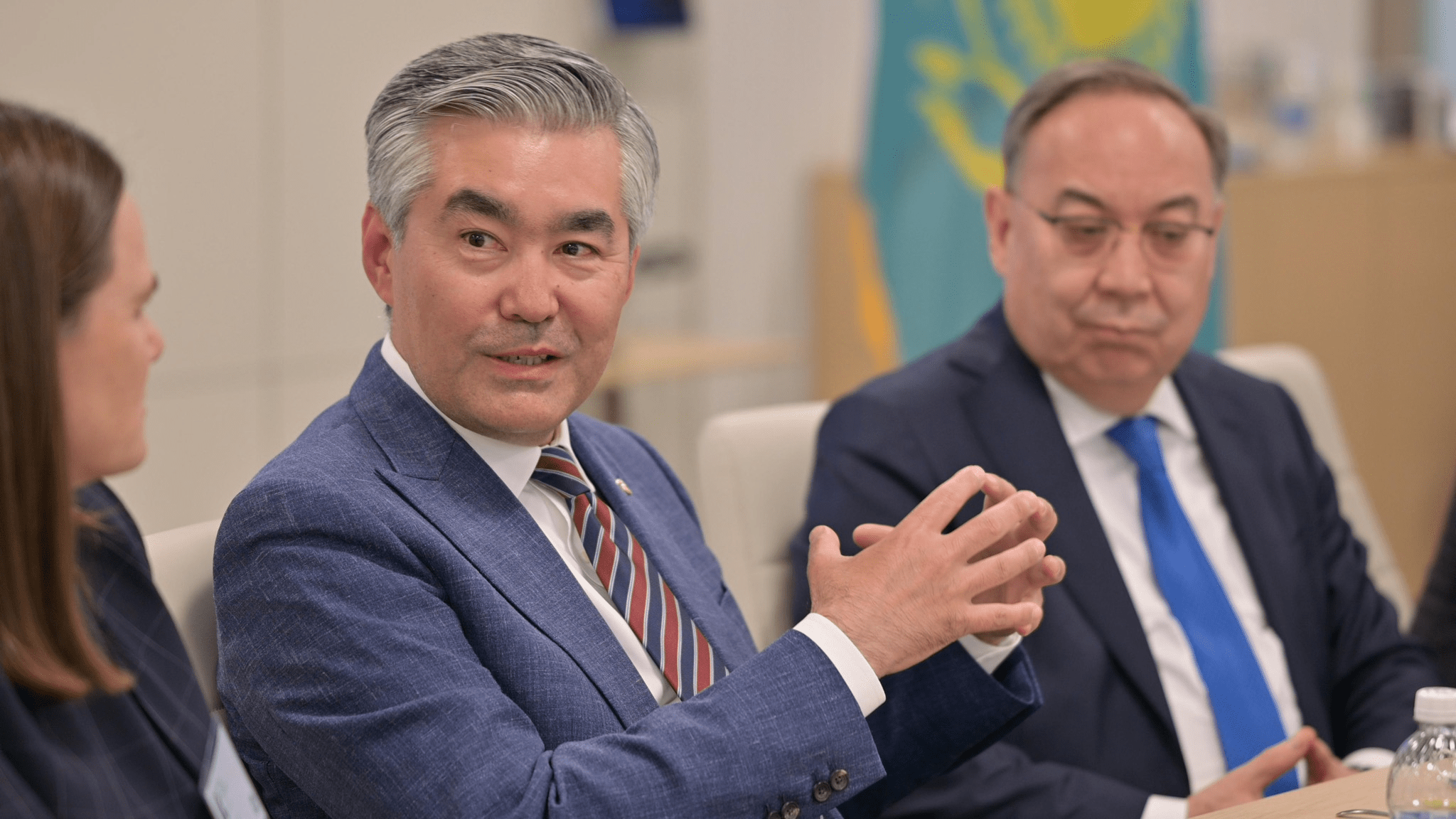
Kazakhstan’s Ambassador to the United States, Magzhan Ilyassov; image: Kazakhstan Embassy, U.S.
Unlike the rest of Central Asia, Kazakhstan has evolved beyond being a startup market. Kazykhan said the country accounts for more than 70% of all foreign direct investment in Central Asia, remains the region’s largest economy, and recorded GDP above $300 billion last year with growth of 6.5%. Ilyassov also pointed to Kazakhstan’s 34th-place position in the IMD World Competitiveness Ranking. The long U.S. corporate record in the country was part of that case: Chevron and Exxon, Wabtec and Boeing, Oracle, PepsiCo, and Mars have all operated in Kazakhstan through multiple cycles.
Rare Earth Development Built on Existing Extraction and Processing Experience
Kazakhstan’s presentation in Washington rested heavily on sectors that now rank high on the U.S. agenda. Kazakhstan is among the world’s leading holders of tungsten, molybdenum, tantalum, nickel, cobalt, lithium, and beryllium, and remains the world’s largest uranium producer, accounting for 40% of global output and supplied 24% of uranium delivered to U.S. civilian reactors in 2024.
Kazykhan presented the tungsten project with Cove Capital as such a model in which Kazakhstan’s natural resource base is linked to existing industrial capacity to create long-term supply arrangements. Kazykhan said Kazakhstan was “uniquely positioned to serve as a reliable partner for the United States on critical minerals and wider supply chains.”
Kazykhan also highlighted the June 10–11 C5+1 Critical Minerals Dialogue in Astana, followed immediately by the Astana Mining and Metallurgy Congress on June 11–12, as an important opening for U.S. firms to engage directly with both public and private-sector counterparts. The message was that these convenings should serve as a springboard for concrete commercial discussions. More broadly, he stressed that Kazakhstan’s objective is to “move beyond extraction and develop full value chains, including processing and advanced manufacturing,” reinforcing the country’s interest in downstream investment and long-term industrial cooperation.
The Middle Corridor: Kazakhstan’s Second Oil
Kazykhan also placed Kazakhstan at the center of Eurasian transport planning, stating that the country is investing in route diversification through the Middle Corridor and describing Kazakhstan as a major east-west transit platform. He said that this framing reflects one of Tokayev’s most important strategic ideas, that transport and logistics can become Kazakhstan’s “second oil,” a long-term source of national leverage built not on extraction, but on geography, infrastructure, and Eurasian connectivity. He added that five rail transit routes and seven major road corridors cross the country, a point meant to illustrate that Kazakhstan is offering Washington not just raw materials, but also geography, infrastructure, and access.
A Push to Become a Fully Digital Economy
Digitization was another major theme. Kazykhan said Kazakhstan wants to become a fully digital economy within three years and pointed to an Alem AI center, the most powerful supercomputer in Central Asia, a planned data-center cluster in northern Kazakhstan, and work on a Kazakh-language large language model. Executives welcomed the government’s pro-innovation course and reform agenda, saying international firms had taken notice.
New Constitution Reinforces Investor Protections
Officials also tied those opportunities to rules, institutions, and macroeconomic discipline. Kazykhan said a new constitution adopted after a national referendum marked a major political change and strengthened investment security through equal protection of all forms of property. He said Kazakhstan remains committed to honoring obligations and settling disputes through established legal mechanisms and pointed to the Astana International Financial Centre as a familiar framework for international investors. Those institutional changes were presented as part of the Tokayev-era reform agenda, with political modernization and investment security advancing in tandem.
Suleimenov Points to Fiscal Stability and Expanding U.S. Financial Ties
National Bank Governor Timur Suleimenov added the fiscal and financial side of the case in separate remarks to U.S. executives, pointing to a new tax code and budget code, a projected narrowing of the budget deficit over the next several years, and low public debt. He also said Kazakhstan’s ties with the United States run well beyond direct investment: the country manages nearly $200 billion in long-term assets, roughly one-third of which are invested in U.S. securities, while about $50 billion is handled by American firms through custodial and asset-management arrangements.
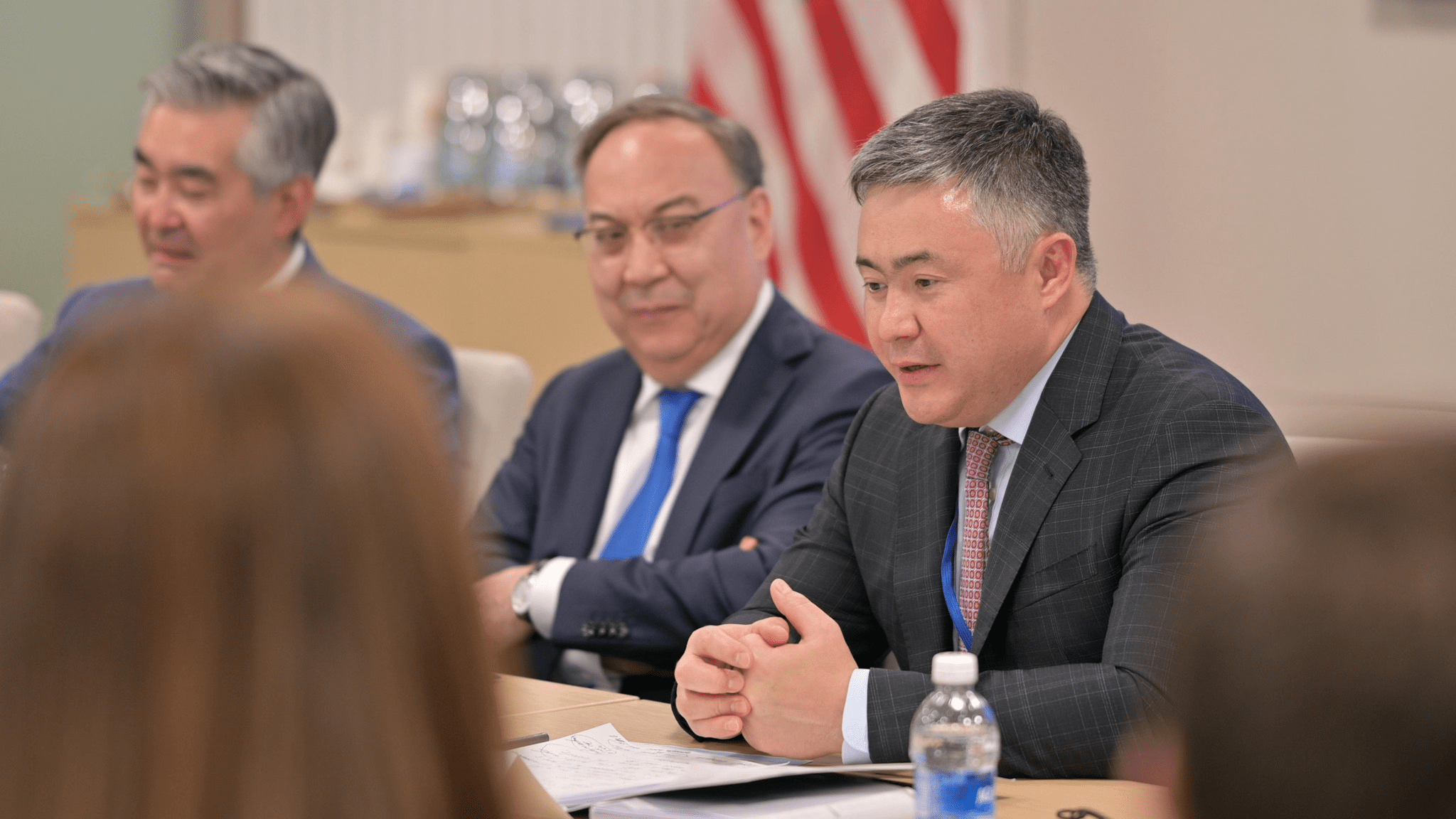
National Bank Governor Timur Suleimenov; Image: Kazakhstan Embassy, U.S.
From the U.S. Chamber side, Khush Choksy, U.S. Chamber of Commerce Lead on U.S.–Kazakhstan Business Engagement, said, “Kazakhstan’s strong financial position, robust energy and mineral resources, combined with expanding trade corridors and growing digital connectivity, make the country a competitive destination for U.S. private investment. The U.S. Chamber’s U.S.-Kazakhstan Business Council sees the ability to partner to help fill gaps in global resource demand.”
Aligning Higher Education with Future Industry Needs
The business leaders asked how Kazakhstan’s push to bring more foreign universities into the country would connect to the industries it wants to build next and whether the country is building the workforce and supplier base to match a long-term business horizon. Kazykhan said the government is putting more emphasis on bringing foreign university partnerships into Kazakhstan itself. Suleimenov and Deputy Foreign Minister Alibek Kuantyrov linked that effort to the skills needed for sectors such as machinery, robotics, pharmaceuticals, biochemistry, transport technology, and critical minerals.
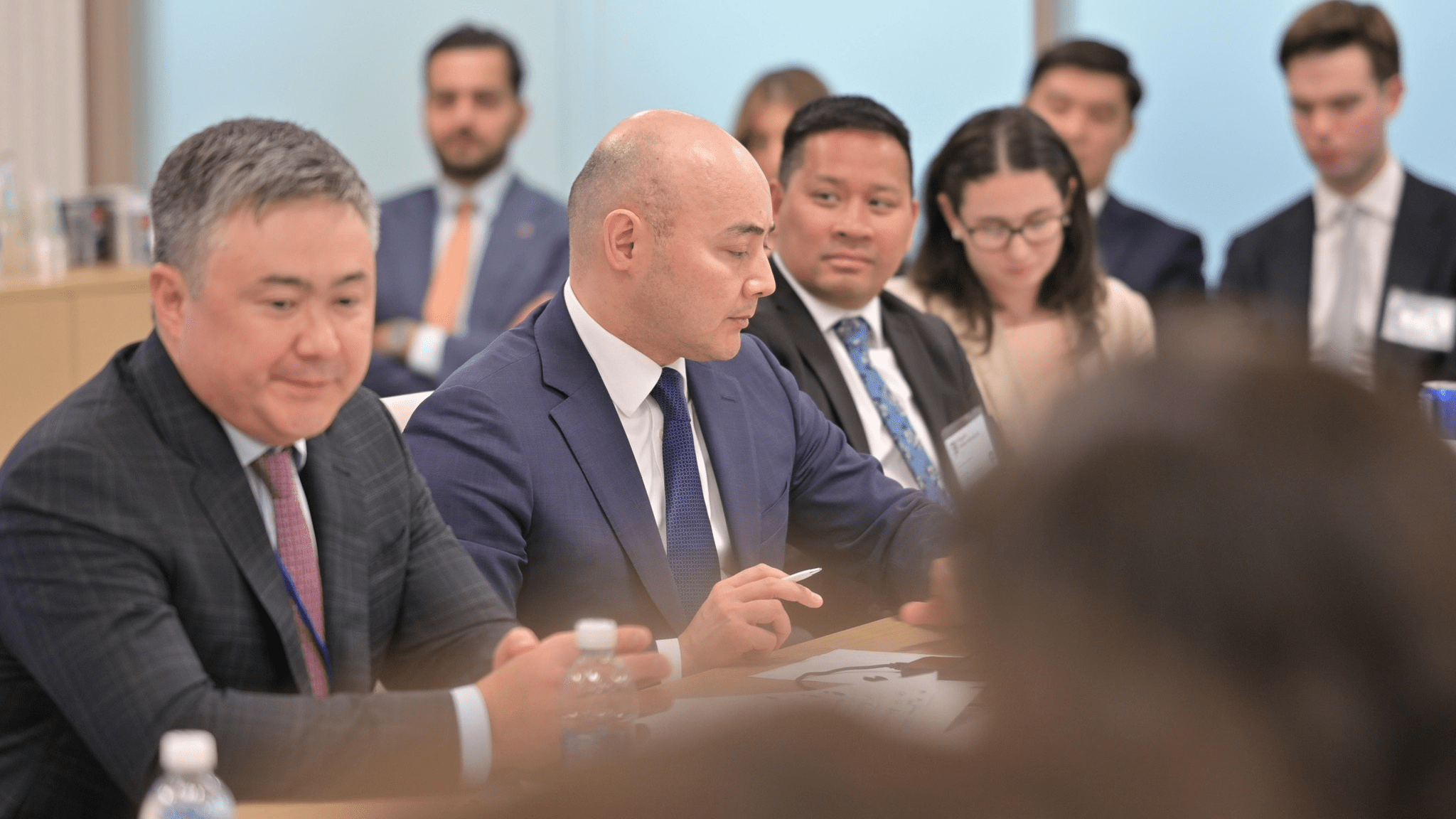
Image: Deputy Foreign Minister, Alibek Kuantyrov; Image: Kazakhstan Embassy, U.S.
The Kazakhstan-U.S. Bilateral in the C5+1 Context
In the wider C5+1 context, the April 6 launch of the American-Uzbek Business and Investment Council in Washington highlighted Uzbekistan’s effort to convert stronger political ties with the United States into a more structured investment framework. Led by co-chairs Sergio Gor and Saida Mirziyoyeva, the council is designed to strengthen coordination, financing, and project implementation. This is a significant step for Uzbekistan, where investor interest is growing, but the institutional and commercial pipeline remains under development. Kyrgyzstan, Tajikistan, and Turkmenistan also figure in the broader regional landscape, but the main U.S. commercial comparison remains between Uzbekistan’s emerging platform and Kazakhstan’s more advanced one.
Kazakhstan’s April 15 roundtable reflected a different stage of engagement. The U.S. companies in the room were already operating in the market, and the discussion focused on scaling activity, improving supply chains, and addressing regulatory and investment conditions rather than on initial entry. In that sense, Kazakhstan stands apart as Central Asia’s only maturing emerging-market economy with an established and expanding commercial relationship with the United States. Washington is giving greater strategic attention to Central Asia as a corridor for trade, connectivity, and resources, and Kazakhstan is seeking to present itself as a globally competitive destination for sustained U.S. private-sector engagement.
These kinds of institutionalized economic relationships also serve a broader strategic purpose. In an increasingly turbulent geopolitical environment, stronger commercial ties can help buffer supply chains, reinforce bilateral trade and investment links, and provide a more stable foundation for government-to-government economic cooperation. For Kazakhstan and the rest of Central Asia, deeper engagement with U.S. business is therefore not only an economic objective, but also a means of building resilience in a more fragmented global system.
For more on the Astana Mining & Metallurgy Congress and Exhibition 2026, see our special coverage.
See our complete special coverage of the developments strengthening Central Asia’s role in U.S. mineral supply chains.