Tajikistan plans to provide at least 90% of its population with access to a centralized water supply by 2040, in a long-term infrastructure project that would reduce disparities in water services for urban and rural residents.
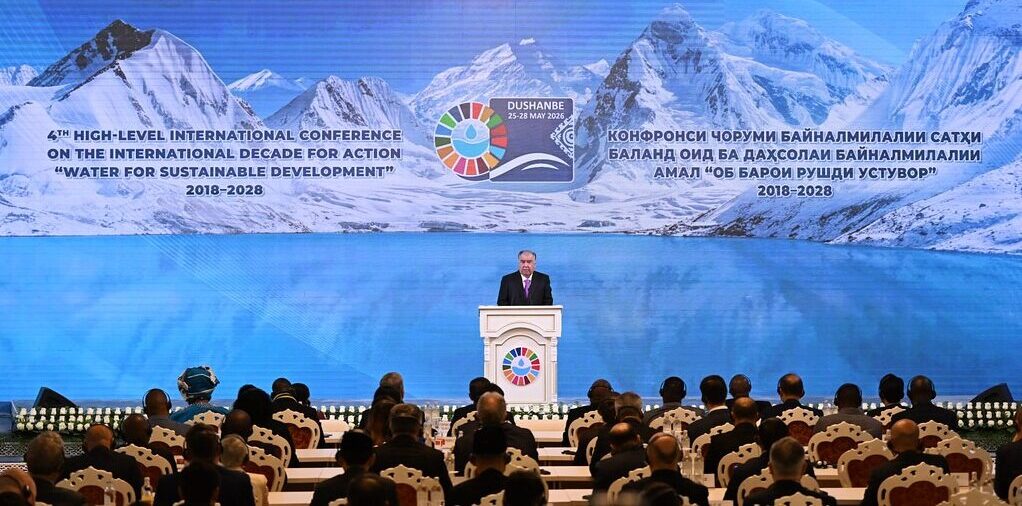
President Emomali Rahmon spoke about Tajikistan’s water goals as well as wider collaboration in Central Asia during a speech at a Dushanbe conference that has drawn delegates from around the world for discussions on water scarcity. Tajikistan and the United Nations are co-hosting the four-day event, which ends on Thursday and is a prelude to a U.N. water conference in the United Arab Emirates in December.
In 2023, the World Bank noted that Tajikistan has significant water resources, but said its infrastructure needed large-scale investment and about 55% of its population had access to “safely managed” water supplies. Only 24% of the Central Asian country’s rural population had piped water services, reflecting the big difference between urban and rural areas, according to the World Bank. It also said Tajikistan allocated a far smaller percentage of its annual budget to water supply and sanitation than in other countries in Europe and Central Asia.
In his speech on Tuesday, Rahmon said “we are committed to ensuring access” to centralized water supply — a system that can promote quality of service quality and lower costs — for 90% of people in Tajikistan by 2040.
“Through this measure, we are determined to guarantee access to clean drinking water for every citizen,” said the president, who has led the country for more than three decades.
Tajikistan has more than 10 million people.
Rahmon also described “transboundary cooperation in the water sector” as a priority and said Tajikistan will push for more dialogue in Central Asia on addressing critical water challenges. The International Fund for Saving the Aral Sea is an effective platform for promoting the “sustainable development” of water resources, according to the president.
Other leaders in Central Asia have made similar comments about the fund, a collective effort to address the ecological disaster that followed the collapse of what was once one of the largest lakes in the world. The Aral Sea started shrinking decades ago after Soviet engineers diverted rivers for irrigation.
Regional cooperation on water management has gained momentum in recent years, though some officials and analysts are still concerned that water shortages could stir tension between upstream and downstream countries in Central Asia.