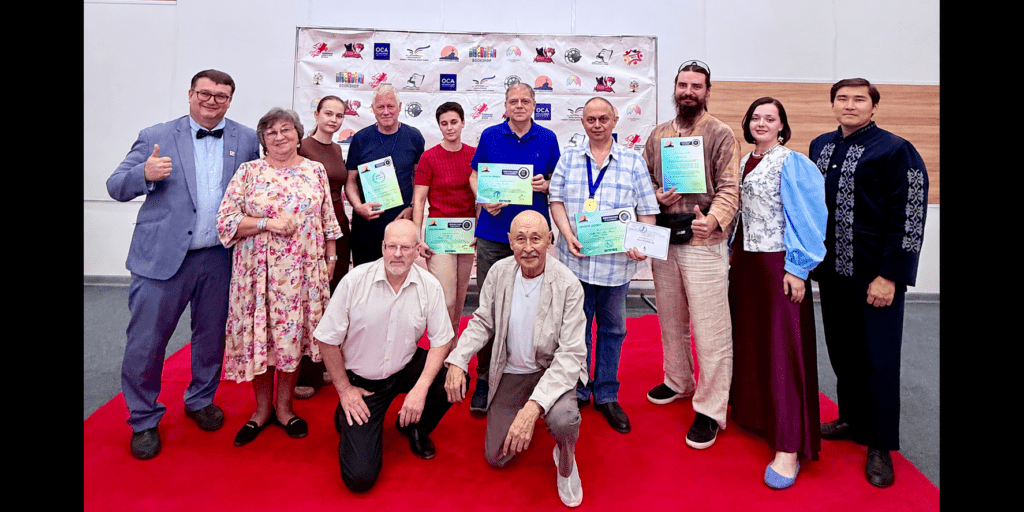
The ninth edition of the ECG Eurasian Film Festival has concluded in London, bringing together films from Central Asia, the Caucasus, and the wider post-Soviet space. The festival, held in partnership with the Romford Film Festival, was created to promote Eurasian cinema in the English-speaking world and connect filmmakers from the region with international audiences and industry professionals. It is also listed by FestivalFinder, the European Festivals Association’s platform for film festivals.
The festival still gives filmmakers from smaller Eurasian film industries access to London audiences and industry professionals. Too often, movies from across Eurasia are framed through a narrow lens as “regional,” “political,” or useful mainly for their cultural differences. The London program suggests something broader. Its strongest entries were not simply statements about places, but stories about youth, memory, technology, art, identity, and imagination.
This year, the top prize went to K-Poper by Iranian director Ebrahim Amini. The film follows a teenage girl who becomes fascinated by a Korean pop star and dreams of traveling to Seoul, despite her mother’s opposition. It is a story rooted in Iran, but its subject is immediately recognizable: pop culture, generational tension, and the private worlds young people build for themselves.
Other winners showcased the range of the program. The animation prize went to Swiss photographer Bellopropello for a film about the way smartphones are reshaping human behavior. Best Documentary was awarded to Russian director Vladimir Sumashedov for a film about an artist who tries to confront the violence of World War II through art. The Best Book Trailer award went to Armenian writer Elena Aslanyan’s The Gold of the Aryans.
Central Asian works also formed a key part of the selection. The Uzbek film Batyr Zakirov & Frank Sinatra: The Meeting That Could Have Happened… won the Audience Choice Award, imagining a cultural encounter between the Soviet East and American popular music. Kazakhstan was represented by Saule Rysbaeva’s Children, the Seeds of the Future, while Uzbekistan’s Legends of the Great Silk Road revisited the region’s cultural inheritance through animation.
The value of festivals like ECG is not only in the awards. It is in giving audiences a chance to see Eurasian cinema as cinema first: varied, ambitious, and fully part of the global film conversation.