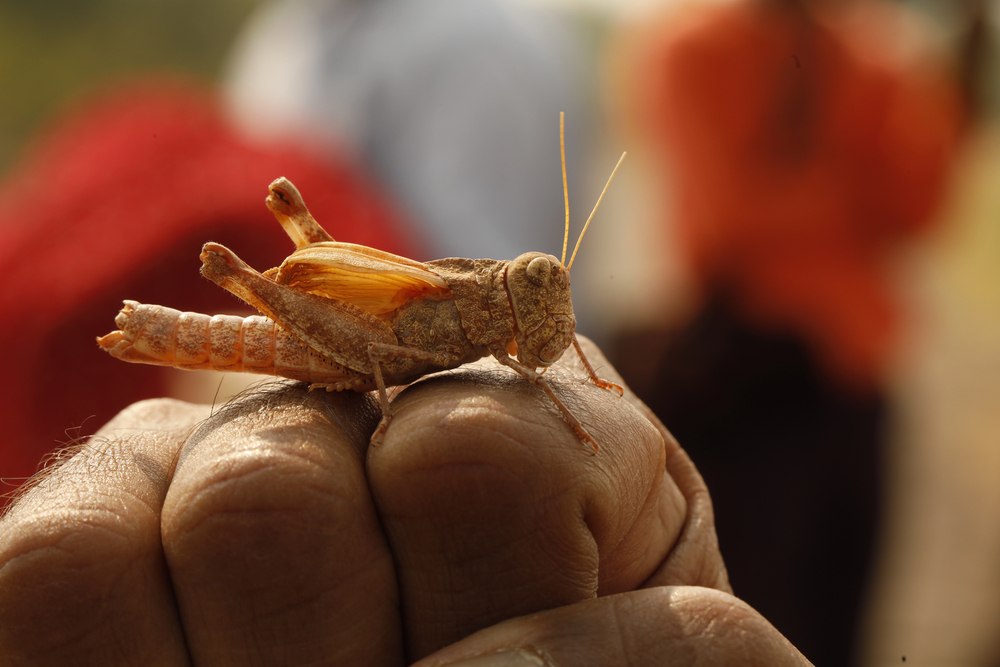
Scientists from Kazakhstan and China have completed field trials of a new biological pesticide designed to combat Moroccan locust infestations, offering a possible lower-impact alternative to conventional chemical insecticides.
The trials took place in Kazakhstan’s southern Turkestan Region and showed the effectiveness of a biocontrol agent based on the entomopathogenic fungus Metarhizium anisopliae, according to Kazakhstan’s Ministry of Agriculture.
The research was conducted as part of a joint international project focused on developing and demonstrating fungal technologies for preventing and controlling locust outbreaks in transboundary breeding areas. The project involved specialists from Kazakhstan’s Zhazken Zhiembayev Kazakh Research Institute of Plant Protection and Quarantine and researchers from the Institute of Plant Protection of the Chinese Academy of Agricultural Sciences.
Field testing was carried out on pastureland in the Kazygurt district of Turkestan Region, where researchers monitored the effect of the fungal preparation on populations of Moroccan locusts (Dociostaurus maroccanus), one of the most destructive agricultural pests in Central Asia.
To assess effectiveness, treated insects were placed in field cages containing 20 individuals each. Control groups were established 24 hours after application, and researchers monitored mortality rates daily throughout the trial period.
According to the Ministry of Agriculture, the first signs of fungal infection appeared three days after treatment. Mortality rates reached 70-80% by the fifth day, and by the ninth day all locusts in the experimental groups had died.
Moroccan locusts are considered among the most dangerous migratory pests in the region, capable of causing extensive damage to pastureland and agricultural crops.
Kazakhstan’s Ministry of Agriculture said the results highlight the potential of biological crop protection methods as part of broader efforts to reduce the environmental impact of agricultural pest control.
Researchers said the successful trial demonstrated the effectiveness of entomopathogenic fungi in suppressing locust populations without the additional ecological risks associated with large-scale chemical spraying.
The next phase of the project will involve wider testing in different climatic zones across Kazakhstan, as well as practical recommendations for incorporating the technology into national locust monitoring and control systems.
Locust infestations remain a major agricultural challenge across Central Asia. Last year, Kazakhstan, Uzbekistan, and Kyrgyzstan agreed to expand regional cooperation on locust outbreaks. Kazakhstan has also pursued similar work with Russia and China to coordinate monitoring and pest-control measures across borders.