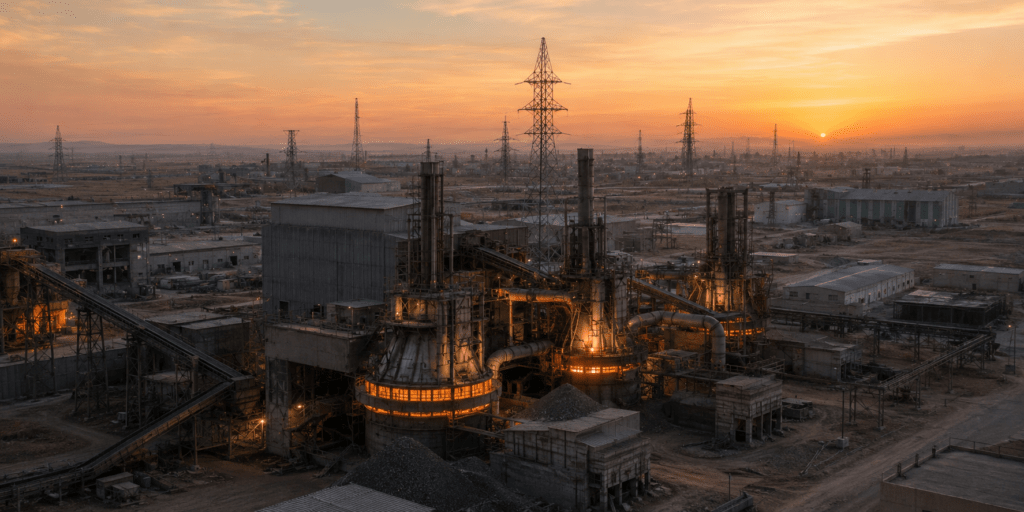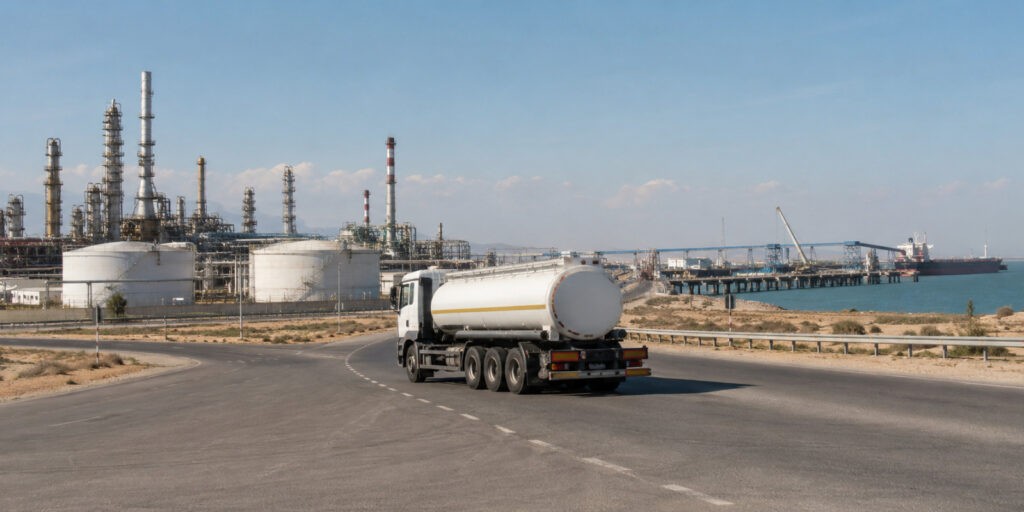
Kazakhstan has lifted a railway export restriction on petroleum products from mini-refineries. For small plants, many of which operate well below capacity, the decision restores an opportunity to sell their products outside the country.
Kazakhstan Temir Zholy (KTZ), the national railway company, revoked the restriction following an August 7 decision by the country’s Chief Transport Prosecutor’s Office. The timing is notable: after a series of strikes on its refineries, Russia is facing fuel shortages and has already begun importing gasoline from abroad, including Kazakhstan.
Other restrictions on fuel exports from Kazakhstan remain in force, so the KTZ decision does not fully reopen gasoline and diesel exports. Some fuels remain subject to separate bans, and exports to Russia are treated differently from shipments outside the Eurasian Economic Union.
What Mini-Refineries Produce
The number of mini-refineries actually operating in Kazakhstan depends on how such facilities are defined. Official documents have referred to roughly 30 small petroleum-product producers.
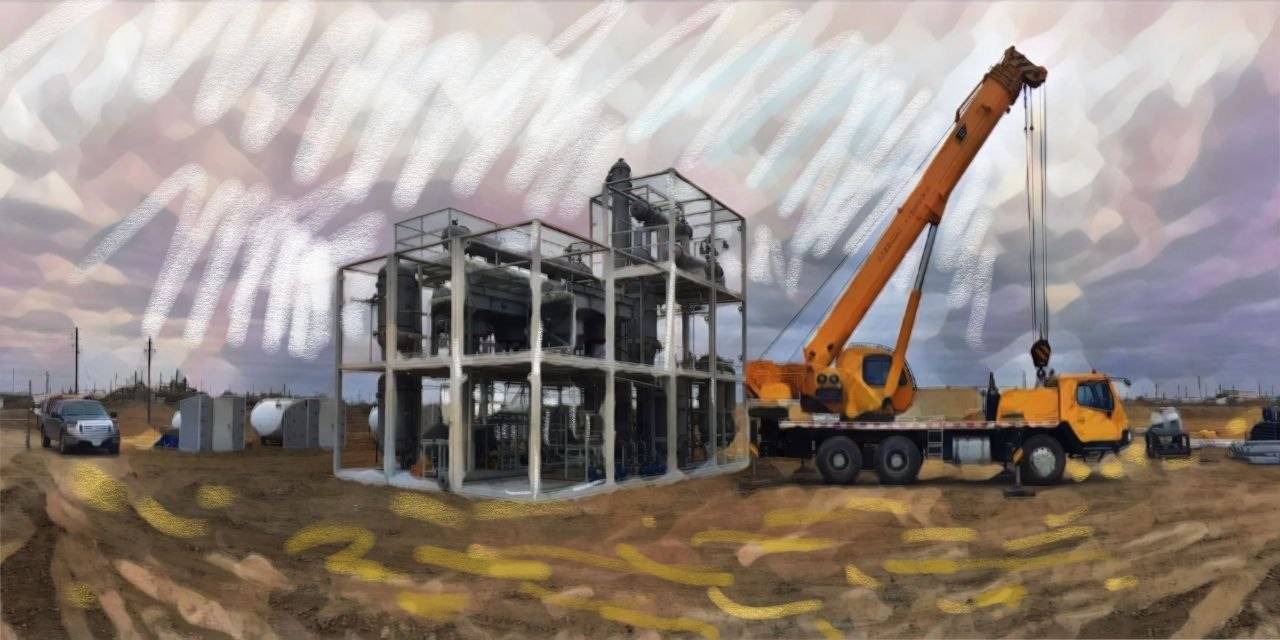
More recent industry data provide a clearer picture: more than 30 mini-refineries are registered, with declared crude-processing capacity of about 4.5 million metric tons a year. Of these, 22 are considered operational, with a combined capacity of about 2 million tons. Actual processing is considerably lower, having increased from roughly 400,000 to 800,000 tons annually over the past five years.
These are not smaller versions of Kazakhstan’s major refineries in Atyrau, Pavlodar, and Shymkent. Most mini-refineries lack equipment for deep refining, so their output is simpler. Their main products include fuel oil, heating and marine fuels, naphtha, and other distillates. In 2023, mini-refineries processed 895,000 tons of feedstock and produced 346,000 tons of fuel oil, 145,000 tons of diesel fuel, and 171,000 tons of bitumen.
Much of this output was not intended for Kazakhstan’s motorists. Mini-refineries produce semi-finished products, including straight-run fuel oil with a relatively high share of light fractions that can be processed further. Their opportunities on the domestic market are also limited by product quality: Kazakhstan has required K4 and K5 motor-fuel standards since 2018, while official assessments say mini-refineries generally lack the equipment to produce fuel above the K3 standard.
Restoring export opportunities could therefore have a tangible economic effect for these businesses. The plants have spare capacity but insufficient domestic demand for much of their current product range. Rail exports once again give them a way to look for buyers outside Kazakhstan.
And that inevitably raises the question of Russia.
Russia Is Looking Abroad for Fuel
There is no direct evidence that KTZ lifted the restriction specifically because of the Russian market. Neither the Kazakh authorities nor the railway company has made such a connection.
But the decision comes at a convenient time for potential Russian buyers. Ukrainian drone strikes and unplanned refinery outages have reduced Russian gasoline production and contributed to domestic shortages. Moscow has responded by restricting fuel exports and increasing imports from abroad.
Russia has already turned to several suppliers. In July, Belarus shipped a record 212,000 tons of gasoline to Russia, while Moscow has also begun importing gasoline from India, Kazakhstan, and Morocco. At least 60,000 tons had been dispatched from India by early July, while Russia was seeking to import as much as 400,000 tons a month from several countries.
By mid-August, the flow was continuing. A shipment of about 68,000 tons of Indian gasoline reached Russia’s Arctic port of Vitino, while at least two further Indian cargoes were expected to arrive within two weeks.
Kazakhstan had appeared in this story even before the latest KTZ decision. Russia had discussed purchases of Kazakh gasoline, and another option subsequently emerged: processing Russian crude at Kazakh refineries, with some of the resulting fuel remaining in Kazakhstan and the rest returning to Russia. Kazakhstan’s Energy Ministry confirmed that such a proposal was under consideration, although specific refineries and volumes were not publicly identified.
The relationship between the two countries is unusual in this respect. Russia has traditionally been a supplier of petroleum products to Kazakhstan. Kazakhstan, for example, still imports substantial quantities of Russian jet fuel because domestic production does not fully cover demand. That flow has been disrupted in 2026 as Russia has restricted aviation-fuel exports amid its own shortages.
Now, some fuel flows are beginning to move in the opposite direction.
How Much Could the Mini-Refineries Supply?
The capacity of Kazakhstan’s small refineries looks very different when compared with the size of the Russian market.
If all 22 operating mini-refineries were running at their combined capacity of about 2 million tons a year, they could process roughly 5,500 tons of feedstock a day. At the current annual processing level of about 800,000 tons, the figure is only around 2,200 tons a day.
And that is feedstock, not gasoline. The resulting products include fuel oil, bitumen, naphtha, diesel, marine and heating fuels, and other fractions.
The comparison therefore has an important limitation: mini-refinery processing capacity cannot be treated as potential gasoline supply. Kazakhstan’s own industry data indicate that these facilities primarily produce semi-finished petroleum products rather than large volumes of finished motor gasoline.
This means Kazakhstan’s mini-refineries cannot solve Russia’s fuel shortage. Their products could provide incremental supplies to Russian traders or refiners, but the Russian market operates on an entirely different scale.
For the mini-refineries themselves, however, the calculation is reversed. Even relatively modest export volumes could be commercially significant for plants currently operating well below capacity.
Kazakhstan Is Expanding Its Own Refining Industry
Kazakhstan, meanwhile, is preparing for a major increase in domestic refining capacity. In 2025, the country processed 18.4 million tons of crude oil and produced 15.47 million tons of petroleum products.
The government plans to increase the capacity of the Pavlodar refinery from 5.5 million to 9 million tons a year, the Shymkent refinery from 6 million to 12 million tons, and the Atyrau refinery from 5.5 million to 6.7 million tons. Kazakhstan is also working on plans for a new refinery with an annual capacity of 10 million tons.
For mini-refineries, the challenge is different. The government has proposed requiring them from 2029 to produce a much larger share of higher-quality, commercially demanded petroleum products, a change that would require substantial modernization. For now, their economics remain heavily dependent on relatively simple processing and the ability to sell semi-finished products.
Russia’s current fuel shortage therefore creates an unusual coincidence of circumstances: a huge potential market sits just across the border at the same time that a railway restriction on mini-refinery exports has been removed.
As The Times of Central Asia previously reported, problems at Russian refineries are already altering established fuel flows in the region. Russia is being forced to seek additional supplies while Kazakhstan is simultaneously protecting its domestic market and expanding its refining capacity.
There is no evidence that the KTZ decision was designed to supply Russia. Nevertheless, the potential economic impact is very different for the two sides. For Russia, products from Kazakhstan’s mini-refineries would be a relatively small addition to a vast market. For the mini-refineries themselves, access to Russian buyers could be considerably more important.