Kyrgyzstan, which has depended almost entirely on Russian fuel for years, is accelerating its search for alternative suppliers. On August 17, the authorities began direct talks with China’s Sinopec. The search has become more urgent as Russian supplies have grown less reliable and gasoline prices in Bishkek have risen. Some filling stations have also periodically run out of AI-95 gasoline.
Erlist Akunbekov, Kyrgyzstan’s deputy chairman of the Cabinet of Ministers, met with executives from China Petroleum & Chemical Corporation (Sinopec) in Urumqi on August 17. Representatives of more than ten Kyrgyz oil-sector companies traveled to China with him. The sides discussed direct supplies of petroleum products, including transportation and customs clearance.
“Kyrgyzstan is interested in increasing supplies of petroleum products from China. This area has great potential and, I believe, represents a long-term direction for trade and economic cooperation between our countries,” Akunbekov said during the meeting.
Until recently, Bishkek had little reason to change the established arrangement. Russia is relatively close and supplies petroleum products to Kyrgyzstan duty-free under agreed indicative balances within the Eurasian Economic Union. Russian fuel accounts for more than 90% of Kyrgyzstan’s imported petroleum products. From January through May 2026, Russia supplied more than 251,000 tons of gasoline and 235,150 tons of diesel fuel. Jet fuel deliveries reached 48,150 tons.
But the reliability of this model has come into question amid problems at Russian refineries. Ukrainian drone strikes and refinery maintenance have reduced available supplies. Seasonal demand and export restrictions have added further pressure, while renewed attacks in late July and early August worsened the situation. By mid-August, restrictions on fuel sales were in place in at least ten Russian regions, while gasoline sales on the St. Petersburg International Mercantile Exchange had fallen by about 20% since the beginning of the month.
Particularly significant for Central Asia was the strike on the Orsk refinery in Russia’s Orenburg region, near the border with Kazakhstan. The refinery, with an annual processing capacity of about 6 million tons, halted operations after an August 11 attack. Regional authorities have said repairs could take up to six months.
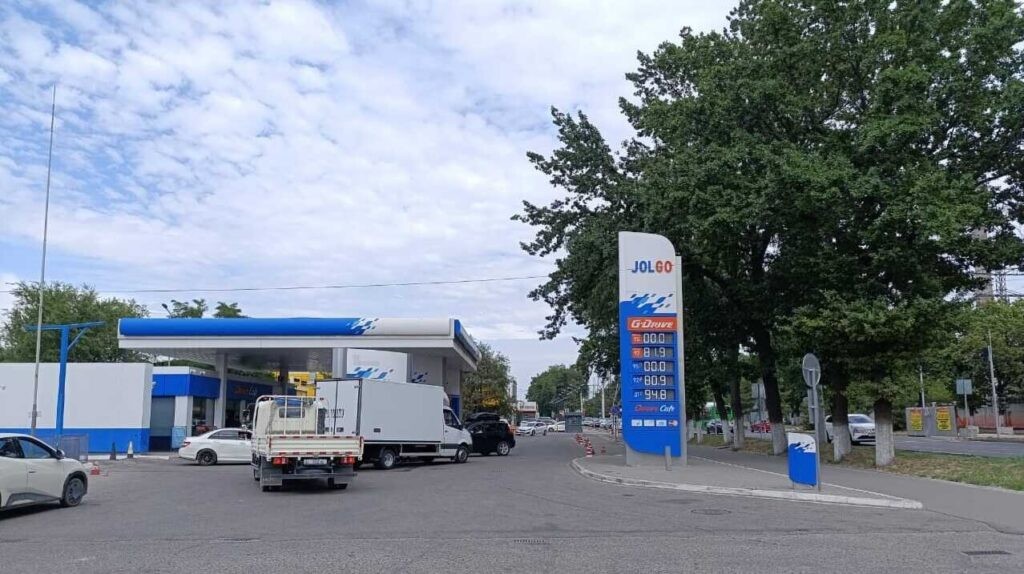
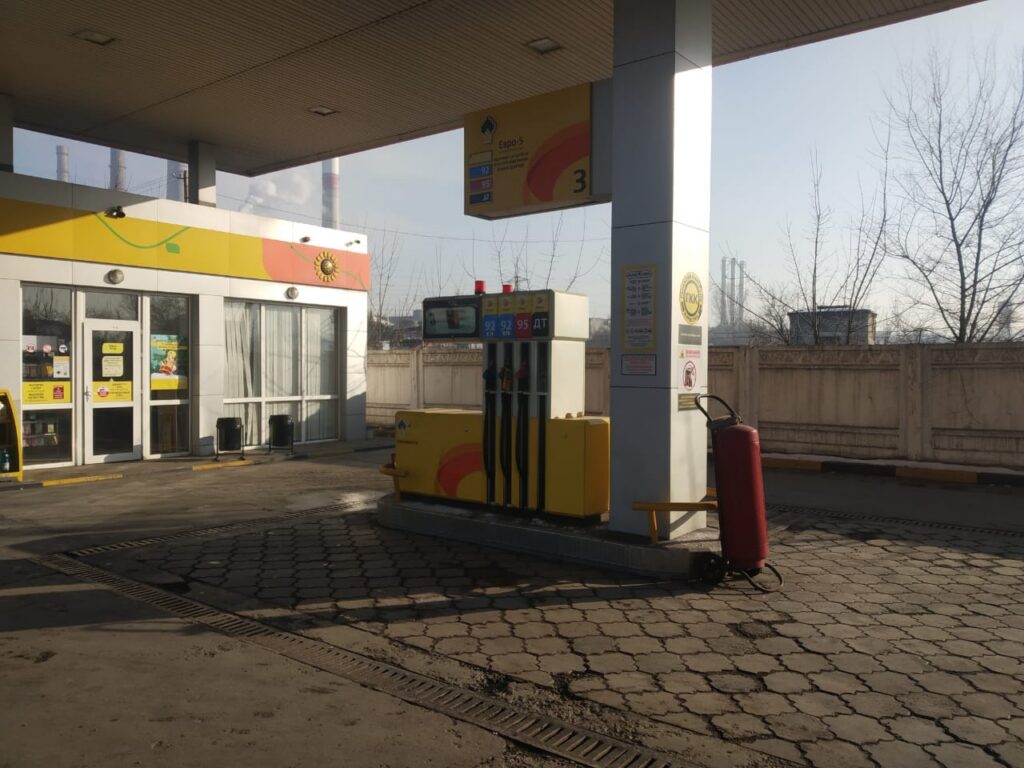
For Kyrgyzstan, problems in Russia quickly show up at the pump. In May, a liter of AI-92 gasoline in Bishkek cost an average of 78.4 soms, or about $0.90. By August 17, the price of the country’s most popular gasoline grade had reached 87.9 soms, about $1 per liter. AI-95 was selling for 109.9 soms, about $1.25, while diesel cost 99.9 soms, about $1.14 per liter. Some filling stations have been unable to offer AI-95, while others have temporarily stopped operating. The government initially introduced price controls in late May, then partially rolled them back in July as maintaining fixed prices became increasingly difficult amid rising import costs.
The search for alternatives began before the latest meeting with Sinopec. Kyrgyzstan has held talks with Kazakhstan and Belarus, while separate discussions have involved Uzbekistan. Azerbaijan and Turkmenistan have also been approached. Agreements have already been reached with Belarus for supplies of diesel and jet fuel, while the first shipment of petroleum products from China was sent by road in July.
Replacing Russian fuel with Chinese supplies presents difficulties. There is currently no railway connecting the two countries, so fuel must be transported by road through the mountainous Torugart and Irkeshtam border crossings. China also regulates refined petroleum exports through a quota system, while domestic fuel prices are higher than in Kyrgyzstan. Logistical constraints and higher costs prevent Bishkek from rapidly increasing Chinese imports.
Kazakhstan could become another supplier. Astana has agreed to send Kyrgyzstan between 15,000 and 20,000 tons of fuel oil per month. For Kyrgyzstan, the fuel oil is primarily useful as refinery feedstock and can be processed domestically to produce AI-92 gasoline and diesel.
But Kyrgyzstan cannot yet replace imports with domestic refining. President Sadyr Japarov recently acknowledged that the country’s two major operating refineries would not be enough to meet demand even after modernization.
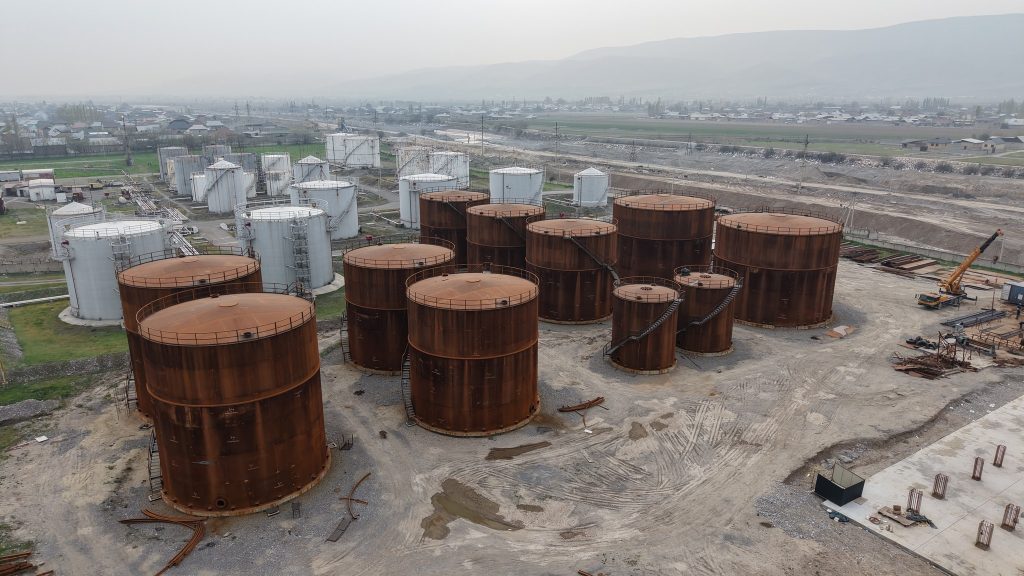
Kyrgyz Petroleum Company, located in Manas, the city formerly known as Jalal-Abad, can process up to 500,000 tons of crude oil annually. The refinery currently produces mainly AI-80 gasoline, for which domestic demand has largely disappeared. Modernization is intended to allow the plant to switch to AI-92 and AI-95 gasoline meeting K4 and K5 standards. The Times of Central Asia previously reported on the company’s efforts to increase production of the more widely used AI-92 by processing accumulated stocks of low-octane gasoline.
The second major refinery, Junda in Kara-Balta, has an annual processing capacity of about 800,000 tons of feedstock. Investment of $193.75 million is planned for its modernization. After the upgrade, authorities expect the refinery to increase its processing depth and produce fuel meeting modern standards.
“Currently, we have only two refineries operating: Junda in Kara-Balta and Kyrgyz Petroleum Company in Jalal-Abad. Together, these two plants cannot meet 100% of our needs,” Japarov said.
According to government estimates, even after modernization, the two plants will be able to cover only about half of the country’s demand. To meet the remainder, the authorities have proposed building two more refineries, one in Kemin in the north and another in Osh or Jalal-Abad in the south. Japarov has suggested locating the southern refinery near the China-Kyrgyzstan-Uzbekistan railway now under construction. This could allow feedstock to be imported from Russia and Iran, with additional supplies coming from Azerbaijan or Turkmenistan.
Over time, the railway could change Kyrgyzstan’s fuel supply system more significantly than individual contracts with Sinopec. Today, the lack of a direct rail connection makes large-scale imports of Chinese fuel expensive. The China-Kyrgyzstan-Uzbekistan railway is intended to connect Kyrgyzstan directly with China by rail and create a new freight route through Central Asia.
For now, however, Bishkek has limited room to maneuver. Kyrgyzstan consumes between 1.6 million and 2 million tons of petroleum products a year, with Russian supplies accounting for the overwhelming majority of the market. China and other regional suppliers can provide additional volumes, but none can quickly replace Russia.