Uzbekistan is deepening trade and transport ties with Afghanistan despite continuing political and humanitarian concerns, drawing its southern neighbor closer to Central Asian markets.
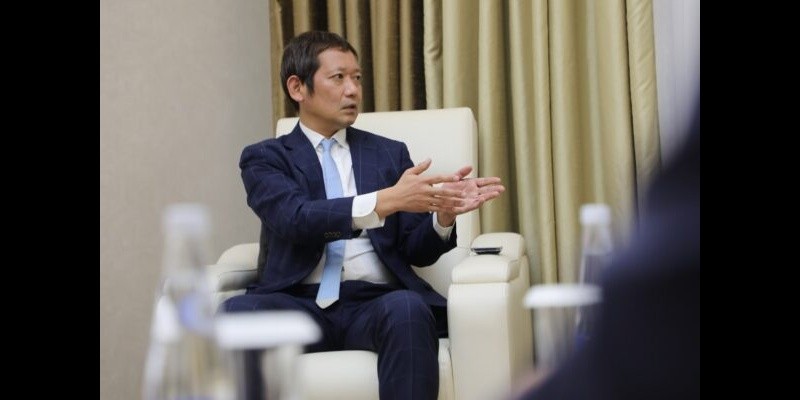
In an interview with The Times of Central Asia, Sota Tosaka, chief representative of the Japan International Cooperation Agency (JICA) for Afghanistan, described that engagement as part of a practical regional approach. Uzbekistan and other Central Asian countries, he said, are seeking areas where economic cooperation can continue.
Tosaka, who previously worked at JICA headquarters overseeing Central Asia and the Caucasus, has also visited Uzbekistan several times, including Termez. He said his current position gives him a different perspective on the relationship between Afghanistan and its northern neighbors.
“I previously visited Termez in 2019 when I was overseeing the Central Asia and Caucasus region at JICA headquarters,” Tosaka told The Times of Central Asia. “At that time, the free trade zone aimed at facilitating business with Afghanistan did not exist yet. Returning to Termez recently, I was genuinely surprised to see how much progress has been made and how actively various cross-border initiatives are now being explored and implemented through Termez to connect Uzbekistan and Afghanistan.”
Since taking charge of JICA’s Afghanistan operations, his work has focused on supporting Afghan people through international organizations.
Tosaka noted that JICA’s primary focus remains on addressing the immediate needs of the Afghan population. To ensure that assistance directly reaches local communities and vulnerable groups, the agency coordinates its support through United Nations agencies and international partners.
“Our priority is to deliver tangible support directly to the people of Afghanistan,” he said. “Working alongside UN partners allows us to effectively implement humanitarian activities that address daily challenges on the ground.”
“Although the geopolitical environment surrounding Afghanistan has shifted significantly, Central Asian nations are actively pursuing opportunities to expand economic ties from their respective strategic viewpoints,” Tosaka continued. “Recognizing the importance of regional stability, countries like Uzbekistan are taking pragmatic steps to foster trade and commercial cooperation that serve mutual interests.”
In particular, Uzbekistan’s proactive approach to encouraging business initiatives reflects a broader regional trend aimed at maintaining essential economic linkages.
For Uzbekistan, the economic relationship has already become significant. Deputy Prime Minister Jamshid Khodjaev said in February that bilateral trade between Uzbekistan and Afghanistan has increased 2.5 times over the past five years, from $653 million in 2021 to $1.7 billion in 2025. The two countries have set a goal of raising annual trade to $5 billion.
Tosaka noted that this economic orientation may become increasingly crucial given the diplomatic and logistical constraints Afghanistan faces on its eastern and western borders.
“Complex relations with Pakistan and the geopolitical situation involving Iran present significant challenges for Afghanistan,” he explained. “Consequently, deepening economic ties with its northern neighbors becomes a vital strategic alternative. In this context, Central Asian nations serve as indispensable partners, creating mutually beneficial opportunities for sustainable regional development.”
In parallel with these macro-economic trends, JICA is dedicated to strengthening grassroots economic resilience by empowering Afghan entrepreneurs, particularly women, in partnership with the United Nations Development Program (UNDP).
Products made by Afghan women entrepreneurs are currently sold mainly in the domestic market, but Tosaka sees export potential if they meet regional quality standards.
“Our objective is to expand economic opportunities for female entrepreneurs, empowering them to build sustainable livelihoods and secure a better future for their families,” he stated. “We hope these programs will not only revitalize local economies but also help grassroots producers access broader regional export markets. Over time, sustained economic interaction can foster greater regional stability and trust.”
From Poppy Cultivation to Cotton: Promoting Alternative Livelihoods
JICA is working with the United Nations Office on Drugs and Crime to support alternative livelihoods for Afghan farmers following the de facto authorities’ ban on poppy cultivation. In April, an exposure visit supported by the Chamber of Commerce and Industry of Uzbekistan brought Afghan agricultural representatives and cotton farmers together with Uzbek buyers to explore commercial opportunities. Both sides expressed interest in establishing business ties, although price volatility remained a concern.
“Buyers naturally seek price stability and prefer annual contractual agreements over short-term fluctuations to ensure commercial predictability,” Tosaka explained. “Supported by regional partners, these exposure visits provide a practical platform for dialogue, allowing producers and buyers to directly engage and explore viable business opportunities. Ultimately, our primary objective is to enhance the livelihoods of Afghan farmers while building reliable, long-term trade partnerships across the region.”
Termez as a Hub for Regional Cooperation and Knowledge Sharing
“When I revisited Termez, I was deeply impressed by the strong dedication not only from the Uzbek government but also from the private sector,” Tosaka observed. He pointed to the free trade zone’s hotels, hospital, and educational center, along with Afghan merchants arriving from Hairatan.
“Because of its proximity to the border and the 15-day visa-free policy for Afghan citizens within the zone, Termez hosts a vibrant flow of merchants from Hairatan daily,” Tosaka explained, adding that the activity also attracts businesspeople and buyers from elsewhere in the region.
In his view, Termez could expand regional trade and provide an operational base for future development programs and knowledge-sharing, particularly as Afghanistan faces diplomatic and logistical constraints on its eastern and western borders.
JICA’s work elsewhere in Central Asia includes the One Village One Product (OVOP) initiative, a model drawn from Japan’s regional development experience. It began in the Kyrgyz Republic, later expanded to Tajikistan, and is also being developed in Kazakhstan and Uzbekistan. The program helps communities turn local resources into products for visitors and regional consumers.
“The vast expertise and practical lessons accumulated through the OVOP movement in Central Asia can be highly applicable to Afghanistan,” Tosaka noted. “In the future, we hope to create opportunities for knowledge-sharing and cross-border learning, allowing Afghan communities to draw on the success of their Central Asian neighbors to spur local entrepreneurship and sustainable economic growth.”
Transport could deepen ties
The existing Hairatan-Mazar-i-Sharif railway is already an important connection between Uzbekistan and northern Afghanistan. In May 2026, a new section of the railway was reactivated, including 70 kilometers of main track, 30 kilometers of branch lines, and five stations. A new cargo terminal was also opened along the route.
The much larger Trans-Afghan railway project could eventually take regional connectivity much further. Uzbekistan, Afghanistan and Pakistan are working on a railway corridor that would connect Uzbekistan with Pakistan through Afghan territory.
The route has evolved during negotiations. The countries have been working on the Termez–Naibabad–Maidan Shar–Logar–Kharlachi route, which would connect with Pakistan through the Kharlachi border crossing. In February 2026, Uzbekistan approved an agreement to jointly prepare a technical and economic feasibility study for the project. The project is intended to provide Uzbekistan and other Central Asian countries with another route toward South Asian markets and Pakistani seaports.
Navigating Regional Engagement and Practical Solutions
Tosaka noted that relative stability in recent years has made local travel easier and reduced conflict-related casualties in some areas, although serious socioeconomic challenges remain.
“Central Asian nations demonstrate a highly pragmatic and forward-looking approach,” Tosaka observed. “Sharing direct borders, countries across the region recognize that maintaining functional economic, trade, and logistical connections is essential for sustained regional stability and local livelihoods.”
“Rather than allowing communication channels to stall, Central Asia’s active engagement in trade, transport, and practical development cooperation provides a vital foundation,” Tosaka explained. “Identifying clear areas where constructive cooperation is possible allows regional actors to deliver tangible benefits for the civilian population while fostering long-term stability.”
Reflections on Advancing Practical Progress While Sustaining Dialogue
“In my personal view, while we should continue to patiently address challenging issues through ongoing dialogue, I believe it is equally important to focus on practical domains where we can bring immediate, positive impacts to the lives of the Afghan people,” Tosaka reflected. “My hope is that by maintaining thoughtful dialogue on key issues while building reliable, community-level cooperation in areas like economic self-reliance, we can gradually foster mutual trust with local communities and lay a stronger groundwork for long-term engagement.”
Sharing Experience in Modern Irrigation and Agricultural Efficiency
Asked about the Qosh Tepa Canal, Tosaka discussed sharing expertise in sustainable agriculture and irrigation management. In Afghanistan, field-level approaches such as the terminal irrigation and agricultural development models promoted by Peshawar-kai have shown how to deliver water effectively to farmland while improving community management. In Uzbekistan, JICA’s two-step loans have supported agricultural modernization, including water-saving irrigation for horticulture.
“What is crucial for the future is how countries and development partners can share their respective knowledge and practical achievements in agricultural modernization,” Tosaka noted. “Whether it is Peshawar-kai’s community-based terminal irrigation techniques in Afghanistan or Uzbekistan’s experience with modern water-saving technologies in horticulture, each country possesses distinct and valuable lessons.”
“By focusing on practical techniques that improve field efficiency and support agricultural livelihoods, partners can engage around shared technical expertise,” he reflected. “Utilizing these accumulated lessons, we hope to contribute to sustainable development for local communities throughout the region.”