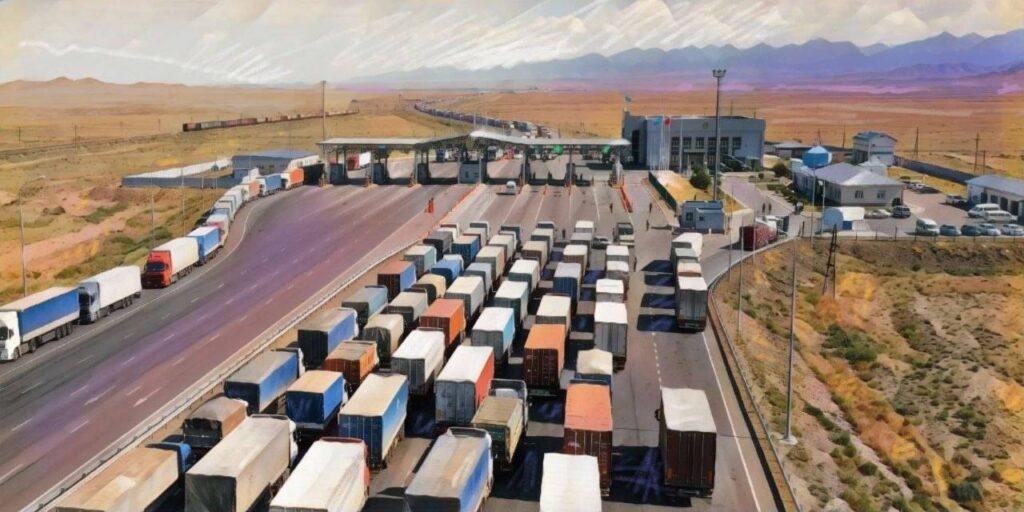
Estonia will close its road border with Russia on December 1, while Latvia is considering a similar move. For Central Asian transport companies already facing tighter Russian customs procedures and signs of weakening demand for international freight services, the restrictions mean fewer available routes to Europe and potentially higher operating costs.
Alternative routes across the Caspian Sea are developing, but limited capacity, high transport costs, and unpredictable delivery times continue to constrain their use.
Closing Borders
The Estonian government cited national security concerns in its decision to close road crossings with Russia. The decision followed an attempted sabotage attack on an Estonian drone manufacturer that Tallinn attributed to Russian military intelligence. The restrictions will be reviewed after six months. Rail freight services through Narva will continue, subject to existing sanctions. On November 24, Estonian Prime Minister Kristen Michal said closing the railway crossing could be the next step.
The restrictions could affect approximately 2,000 freight journeys annually by carriers from six countries. The Estonian authorities specifically highlighted the consequences for carriers from Kazakhstan, Kyrgyzstan, Uzbekistan, Azerbaijan, Armenia, and Georgia. Approximately 80% of these journeys involve goods in transit through Estonia.
Following Russia’s full-scale invasion of Ukraine in 2022, Finland closed its road border with Russia, while Poland, Lithuania, and Latvia restricted operations at several border crossings.
According to Ermo Perolainen, secretary general of the Estonian Association of International Road Carriers, fewer than ten trucks a day have recently passed through the Luhamaa and Koidula border crossings. Many transport companies have already redirected their operations through Latvia. Of the approximately 500 Estonian companies operating on Russian routes before 2022, fewer than 50 remain active in that market.
On November 23, Latvian Prime Minister Andris Kūlbergs instructed the ministries of foreign affairs and transport to prepare proposals for a possible closure of the country’s land border with Russia. On November 25, Kūlbergs criticized Estonia for rushing its decision and called for a coordinated approach among the Baltic states. He said a decision on the next steps was planned for November 26.
Guntis Pujāts, head of Latvia’s State Border Guard, warned that the closure of Estonia’s border crossings would redirect traffic flows, lengthen queues, and place additional pressure on Latvian border guards.
Lithuania’s experience illustrates how quickly border restrictions can reshape competition in the freight market. In the fall of 2025, approximately 2,000 Lithuanian trucks became stranded in Belarus after Minsk prevented their departure in retaliation for Lithuanian border restrictions.
According to Povilas Drižas, secretary general of Lithuania’s International Transport and Logistics Alliance, companies lost some of their customers in Central Asia and China while their vehicles were immobilized. Polish and Latvian carriers began taking over their business. Storage costs in Belarus averaged approximately $6,500 per detained truck.
For smaller Central Asian transport companies, similar delays and rising delivery costs under existing contracts could be particularly damaging.
Pressure on Central Asian Carriers
For Kazakh and Kyrgyz trucking companies, difficulties begin at Russia’s borders.
During the first nine months of 2026, the number of requests for international road freight services originating in Kazakhstan on the ATI.SU logistics platform fell by 34%, while average freight rates for deliveries into the country rose by 18%. Routes involving Russia accounted for most of the decline in demand on the platform.
Renata Zobova, director of ATI.SU’s Kazakhstan office attributes the decline to tighter customs controls, border queues, stricter regulatory requirements, and Russia’s fuel crisis. Companies engaged in international trade face additional costs associated with Russia’s introduction of a system known as SPOT, which requires importers to declare shipments in advance and, where applicable, make security deposits against tax liabilities.
In the first quarter of 2026, ATI.SU recorded declining demand for freight services into Kazakhstan from Poland, Lithuania, and Germany. Demand from Türkiye and Belarus, however, increased.
In Kyrgyzstan, ATI.SU recorded a 29% decline in requests for road freight services to Russia in the third quarter, while requests in the opposite direction declined by 69%. Meanwhile, demand for freight deliveries from Türkiye doubled.
Emirlan Beyilbayev, director of ATI.SU’s Kyrgyzstan office attributes the decline on Russian routes to changes in import regulations, the introduction of security deposits, and the expanded use of electronic tracking seals.
Meanwhile, Uzbekistan is gradually redirecting some of its European freight traffic across the Caspian Sea. Between 2021 and 2025, the Middle Corridor’s share of Uzbekistan’s freight traffic with EU countries increased from 12% to 28%.
Tashkent is developing the CASCA+ multimodal transport route connecting China, Kyrgyzstan, Uzbekistan, Turkmenistan, Azerbaijan, Georgia, Türkiye, and Europe.
Uzbekistan has also introduced electronic exchanges of international road transport permits with Kazakhstan, Kyrgyzstan, Azerbaijan, Georgia, and Türkiye.
For Tajik carriers, accessing the trans-Caspian route involves crossing several international borders before reaching Caspian ports. Road transport accounted for 95.5% of Tajikistan’s total freight volume, including domestic shipments, in the first nine months of 2026.
Despite having its own Caspian port, Turkmenistan has seen local carriers redirect a substantial share of their journeys under the TIR international customs transit system away from Türkiye and toward Kazakhstan and Russia in recent years.
According to a study by the United Nations Economic Commission for Europe (UNECE), this shift was facilitated by simplified transit procedures between Kazakhstan and Turkmenistan. The Turkmen Association of International Road Carriers, together with the International Road Transport Union and Turkish customs authorities, is exploring ways to remove barriers to freight transportation through Türkiye.
Delays also occur within Central Asia itself. In November, approximately 990 trucks were backed up at the Konysbayev crossing on the Kazakhstan-Uzbekistan border. Drivers reported waiting for several days.
Rail Transit and Competition for Baltic Ports
Rail freight along the northern transport corridor faces separate restrictions. In October, Russian Railways (RZD) twice restricted freight deliveries to and through Belarus.
From October 28 to November 3, the restrictions applied to most freight from all five Central Asian countries, Azerbaijan, Armenia, and Georgia passing through the Krasnoye-Osinovka and Zlynka-Zakopytye railway border crossings. The restrictions did not apply directly to freight originating in Russia or China.
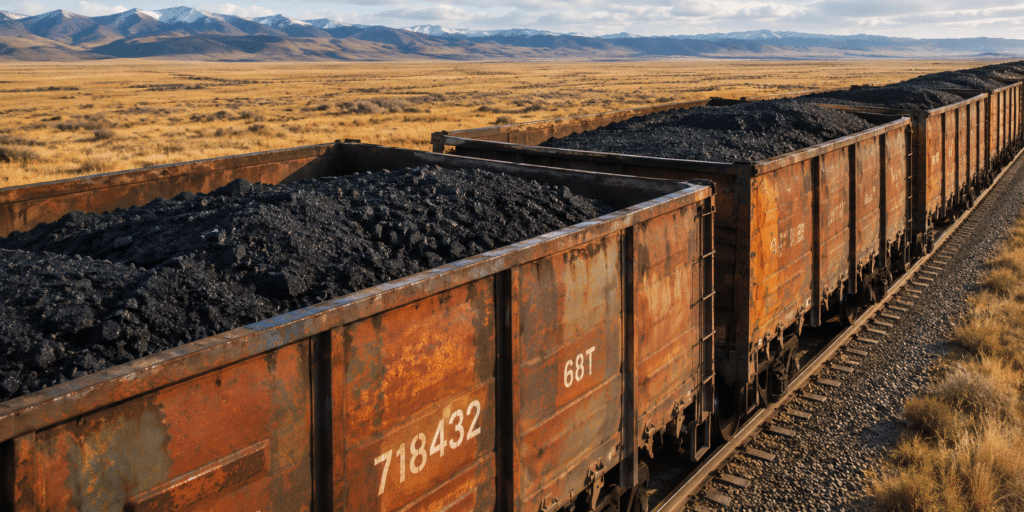
Having lost a substantial share of Russian and Belarusian transit traffic, ports in Latvia and Estonia are seeking to attract freight from Central Asia. Their 1,520-mm railway gauge allows Kazakh grain and coal to be transported to Riga, Ventspils, Liepāja, and Estonia’s Muuga port without changing wheelsets.
According to Arthur Raichmann, commercial director of Estonian Railways, inbound rail freight volumes have fallen from more than 10 million metric tons annually before the war in Ukraine to approximately 200,000 tons in 2026. Most recent requests to transport Kazakh grain through Estonian ports, however, have not been approved. Limited capacity on Russia’s railway network has been cited as the reason.
Disruptions at ports on the Sea of Azov and the Black Sea have prompted Russian exporters to redirect some shipments toward the country’s northwest. Kazakh suppliers must compete with Russian companies for access to railway infrastructure.
According to commodity market intelligence agency Argus, transit shipments of Kazakh coal through Russia increased by 20% between January and July 2026, reaching 7.8 million metric tons. Of that volume, 4.7 million tons passed through Russia’s Baltic port of Ust-Luga and 2.6 million tons through the Black Sea terminal at Taman.
Following the suspension of loading operations at Taman in early August, pressure on Baltic routes increased. For October and November, Russian Railways did not approve a single request for the transit of Kazakh coal to Baltic ports. Russian exporters were also affected by the restrictions. Kazakhstan is examining four alternative export routes in response.
The Cost of Bypassing Russia
The Middle Corridor allows freight from China and Central Asia to reach Europe without crossing Russian territory, via the Caspian Sea, Azerbaijan, Georgia, and Türkiye or Black Sea ports.
During the first ten months of 2026, container shipments along this route reached 57,300 twenty-foot equivalent units (TEUs), up 64% year on year. Kazakhstan aims to increase annual volumes to 300,000 TEUs by 2029.
However, efforts to expand the corridor’s capacity have coincided with rising transport costs.
According to a study by the Organisation for Economic Co-operation and Development (OECD), Kazakhstan’s national railway operator, Kazakhstan Temir Zholy (KTZ), raised freight tariffs ten times between January 2023 and May 2025. Charges for access to the main railway network increased by 130%, while locomotive traction costs rose by 70%.
Businesses surveyed by the OECD reported congestion at railway hubs, repeated inspections of trucks, informal payments during inspections, and difficulties in planning long-term transportation costs.
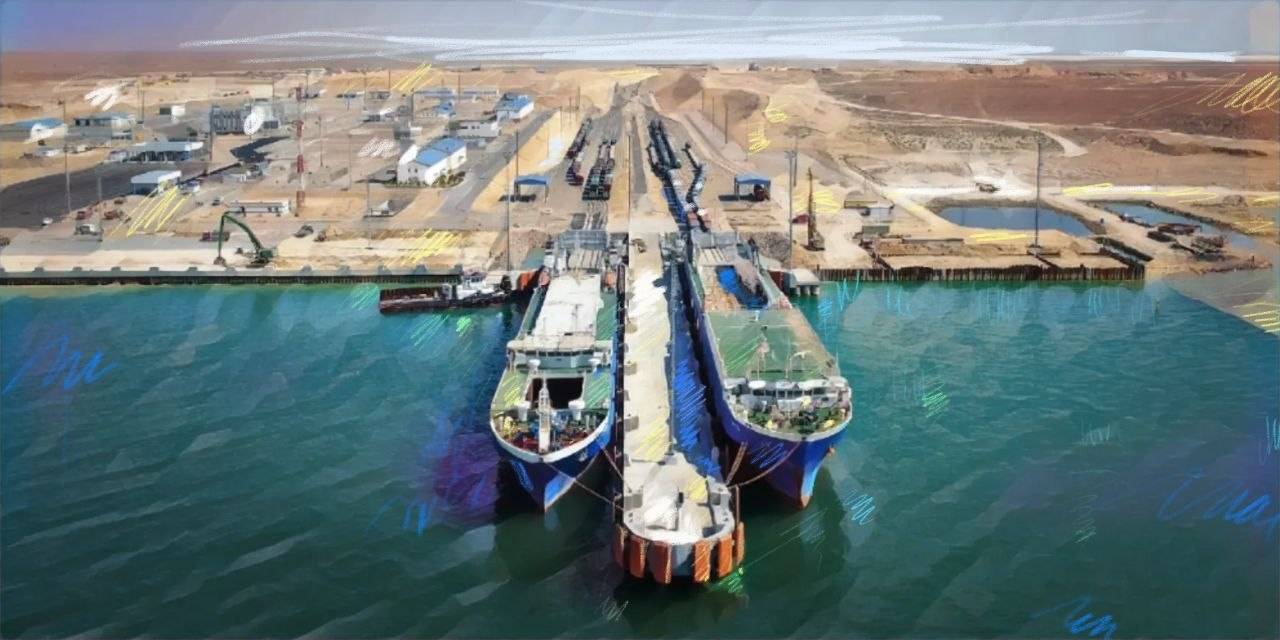
Unlike on the northern overland route, trucking companies using the Middle Corridor must contend with limited ferry capacity, sailing schedules, and unpredictable weather.
At a November meeting of the Organization for Security and Co-operation in Europe (OSCE) in Vienna, Kazakhstan’s Ministry of Transport representative Gulshat Daueshova announced plans to increase terminal capacity by more than 30% by 2028.
Yerzhan Medeuov, a representative of the Aktau International Sea Commercial Port, drew participants’ attention to declining Caspian Sea levels and the need to adapt port infrastructure to climate change.
According to Alakbar Azizli, a representative of the Azerbaijan Caspian Shipping Company, falling sea levels mean that one of the company’s ferries can operate at only 80% of its cargo-carrying capacity when transporting freight from Kazakhstan.
The World Bank estimates that at least $25 billion will be needed to modernize the Middle Corridor’s transport infrastructure through 2040. An additional $30.5 billion will be required to develop supporting infrastructure and facilities, including industrial zones and agricultural processing plants.
In February 2026, the World Bank approved an $846 million guarantee to mobilize commercial financing for a railway project in Kazakhstan. An additional $564 million in guarantees is expected from the Asian Infrastructure Investment Bank.
Competing Routes and China’s Interests
China, the European Union, and the United States are interested in developing transport links between Central Asia and Europe. Kazakhstan is seeking to expand cooperation with all three.
During a November visit to Yerevan, Kazakhstan’s Deputy Prime Minister and Minister of Transport Assel Zhanassova discussed the possibility of linking the Middle Corridor with the U.S.-backed Trump Route for International Peace and Prosperity (TRIPP).
The project envisages developing transport links through southern Armenia between mainland Azerbaijan and its Nakhchivan Autonomous Republic, with onward connections to Türkiye. Rail services between Azerbaijan and Türkiye currently run through Georgia. According to Armenian Foreign Minister Ararat Mirzoyan, work on the legal and contractual framework for TRIPP is ongoing.
Kazakhstan also hopes to attract European investment in transport infrastructure through the EU’s Global Gateway initiative.
China is also developing alternative transport routes while retaining access to the northern corridor.
According to the Eurasian Development Bank (EDB), approximately 310,000 TEUs were transported in both directions between China and Europe through Kazakhstan, Russia, and Belarus in 2025 using services provided by the United Transport and Logistics Company – Eurasian Rail Alliance (UTLC ERA). By comparison, total container shipments along the Middle Corridor amounted to just over 41,000 TEUs.
More than 20 transport infrastructure projects involving Chinese companies, with a combined value exceeding $12 billion, are being implemented in Central Asia. More than $7 billion in financing comes from Chinese sources.
In November, Kazakhstan and China discussed establishing a joint investment fund of up to $200 million to develop the Middle Corridor.
Beijing is also participating in the construction of the China-Kyrgyzstan-Uzbekistan railway. In a study by the Association of Investors of Kazakhstan, Kazakh economist Almas Chukin views the project as complementary to Kazakhstan’s transit capabilities rather than a threat to its position in the transport market.
Chinese shippers can use infrastructure developed with EU financial support and, should TRIPP materialize, the new route through Armenia.
For Central Asian carriers, an expanding transport network offers more routing options. In the near term, however, alternative corridors do not eliminate dependence on Russian infrastructure, particularly for bulk commodities such as coal and grain, for which transportation costs largely determine competitiveness in European markets.