BISHKEK (TCA) — The introduction of a single currency within the Eurasian Economic Union (EEU) without risks for Kyrgyzstan will be possible in some 20-25 years. An earlier introduction would entail a risk of insolvency and bankruptcy of the country’s banking sector participants, which would result in social instability, Kyrgyz expert Marat Sultanov said at a conference devoted to 25th anniversary of the National Bank of the Kyrgyz Republic (NBKR).
Kyrgyzstan should grow economically and its fiscal policy should be equal with other EEU countries; otherwise the country would repeat the negative experience of Greece which faced big problems in the economic sector after entering the Eurozone, he added. Problems in the monetary and foreign exchange policy of this country were resolved through the support from the European Stability Mechanism (ESM), the Eurozone’s permanent bailout fund for struggling economies. There is no such an agency in the EEU.
Head of the Union of Banks of Kyrgyzstan, Anvar Abdraev, is also against the introduction of a single EEU currency. “This issue is not on the agenda today,” he said.
History and results
Chairman of the National Bank of the Kyrgyz Republic (NBKR) Tolkunbek Abdygulov spoke about the history and results of the country’s central bank.
Kyrgyzstan’s new banking system was launched after the collapse of the Soviet Union in December 1991. Firstly, conditions for expanding banking services were created and interest rates for loans reduced. As a result, the banking system became stable and competitive, and the banking market transparent. In 2018, the Kyrgyz currency, the som, will be 25 years old, and it has proven its consistency and stability despite external factors, Abdygulov said.
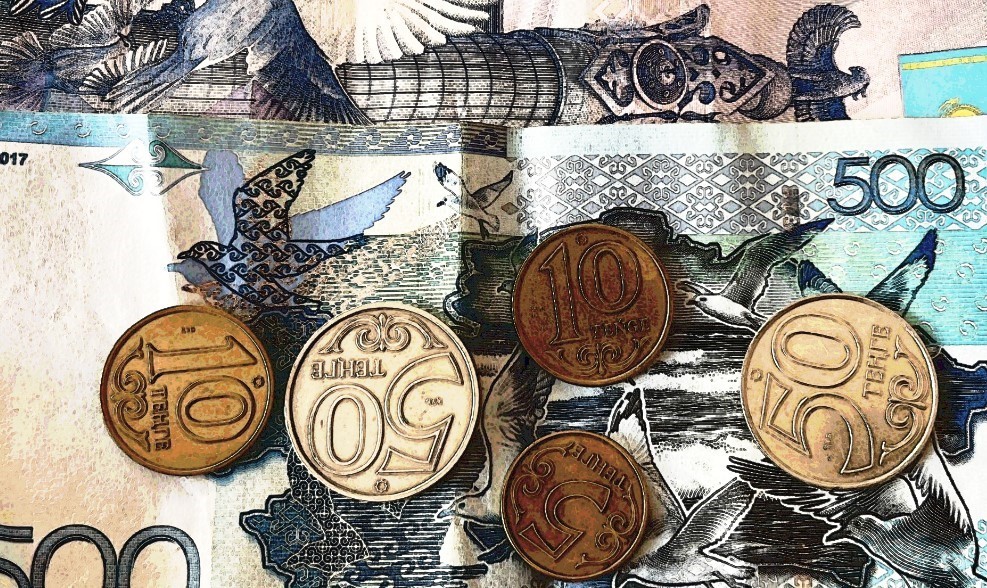
In 2016, the som depreciated by 29%, while the currencies of other EEU member countries fell more significantly – the Russian ruble by 30% and Kazakhstan’s tenge by 86%.
Kyrgyzstan’s gold and foreign exchange reserve is now worth almost $2 billion compared to $63 million in the first years of independence.
Switching to market monetary policy
In 1992, prices increased more than 20-fold in Kyrgyzstan, but that problem was eliminated. In 1993, the national currency was introduced. The Government established the National Bank and introduced a free floating exchange rate for the som.
By the late 1990s, the NBKR had fully switched to market monetary policy. It controlled commercial banks, and access of economic entities to loans became more effective, and the population’s confidence in the NBKR policy and the national currency increased.
From 1994 to 1998, inflation in Kyrgyzstan was 10-30%.
Kyrgyzstan’s economy was more resilient to external shocks thanks to small and medium-sized businesses, the private sector, monetary policy, and free floating exchange rate.
Due to the lack of domestic funds, all economic projects were funded with foreign borrowings. Since 1994, there was a period of accumulation of the country’s external debt. The growing external debt became a problem for the National Bank. Pessimists predicted that the country’s monetary policy would collapse in 2003. The National Bank and the Government began to restructure the external debt, which was completed in March 2003. It was a victory and an achievement, Abdygulov said.
Adapting to EEU conditions
In 2014, the NBKR switched to a new monetary and credit policy, and in 2015 it started introducing new instruments for adaptation to the EEU conditions.
The national currency of Kyrgyzstan is now among the most stable among the post-Soviet countries. Kyrgyzstan has left the group of low-income countries, Abdygulov said.
The situation in neighboring countries affects the foreign exchange market in Kyrgyzstan. For the first time the country experienced this after the first devaluation of the Kazakh tenge in 2014, when the Kazakh currency fell by 24%, followed by a sharp increase in the US dollar exchange rate in the Kyrgyz market.
Prompt actions of the Kyrgyz economy and finance ministries allowed to stop panic and normalize the situation in the currency market within a few days.
However, after the Kazakh tenge’s second devaluation in 2015, there was some confusion and delay in decision-making but the NBKR coped with the situation. Now the Kyrgyz national currency is stable and even strengthening, the NBKR head concluded.
MFIs
Kyrgyz microfinance institutions have not succeeded in attracting deposits in recent years because the population trusts banks more than microfinance institutions.
In 2016, the amount of microcredits decreased by 5 billion soms in Kyrgyzstan, the National Statistical Committee said. Last year, microcredit institutions issued loans worth 13.3 billion soms, 27.4% less than in 2015. Most of microcredits (30.5 billion soms) were issued in 2014.
In four oblasts of Kyrgyzstan, the amount of microcredits decreased by more than 60% and only increased in Bishkek by 1.8% in 2016.
Microcredits have decreased because two leading microfinance organizations, FINCA and Kompanion, received bank licenses in 2015 and 2016. Before that, another microfinance organization — Bai Tushum — had transformed into a bank.