• KGS/USD = 0.01144 0%
  • KZT/USD = 0.00212 0%
  • TJS/USD = 0.10432 -0.29%
  • UZS/USD = 0.00008 0%
  • TMT/USD = 0.28571 0.28%
  • KGS/USD = 0.01144 0%
  • KZT/USD = 0.00212 0%
  • TJS/USD = 0.10432 -0.29%
  • UZS/USD = 0.00008 0%
  • TMT/USD = 0.28571 0.28%
  • KGS/USD = 0.01144 0%
  • KZT/USD = 0.00212 0%
  • TJS/USD = 0.10432 -0.29%
  • UZS/USD = 0.00008 0%
  • TMT/USD = 0.28571 0.28%
  • KGS/USD = 0.01144 0%
  • KZT/USD = 0.00212 0%
  • TJS/USD = 0.10432 -0.29%
  • UZS/USD = 0.00008 0%
  • TMT/USD = 0.28571 0.28%
  • KGS/USD = 0.01144 0%
  • KZT/USD = 0.00212 0%
  • TJS/USD = 0.10432 -0.29%
  • UZS/USD = 0.00008 0%
  • TMT/USD = 0.28571 0.28%
  • KGS/USD = 0.01144 0%
  • KZT/USD = 0.00212 0%
  • TJS/USD = 0.10432 -0.29%
  • UZS/USD = 0.00008 0%
  • TMT/USD = 0.28571 0.28%
  • KGS/USD = 0.01144 0%
  • KZT/USD = 0.00212 0%
  • TJS/USD = 0.10432 -0.29%
  • UZS/USD = 0.00008 0%
  • TMT/USD = 0.28571 0.28%
  • KGS/USD = 0.01144 0%
  • KZT/USD = 0.00212 0%
  • TJS/USD = 0.10432 -0.29%
  • UZS/USD = 0.00008 0%
  • TMT/USD = 0.28571 0.28%

Pannier and Hillard’s Spotlight on Central Asia: New Episode Out Now

As Managing Editor of The Times of Central Asia, I’m delighted that, in partnership with the Oxus Society for Central Asian Affairs, from October 19, we are the home of the Spotlight on Central Asia podcast. Chaired by seasoned broadcasters Bruce Pannier of RFE/RL’s long-running Majlis podcast and Michael Hillard of The Red Line, each fortnightly instalment will take you on a deep dive into the latest news, developments, security issues, and social trends across an increasingly pivotal region.

This week, the team examine a series of major developments across Central Asia, from the results of Kazakhstan’s constitutional referendum to the announcement of new Chinese-funded border outposts and fortifications along Tajikistan’s frontier. We also look at the continuing fallout from the security shake-up in Kyrgyzstan, with further arrests and resignations, as well as the increasingly strange foreign movements of Turkmenistan’s senior leadership while war continues to rage just across the border in Iran, alongside Tehran’s threats to strike Turkmen infrastructure. The episode then turns to the escalating conflict between Afghanistan and Pakistan, where some of the heaviest fighting in months is raising fresh questions about border stability, regional security, and the risk of wider spillover. Finally, for our main story, we bring on a panel of experts to discuss the growing issues surrounding the Rogun Dam and its resettlement project, and how both are likely to affect the states downstream.

On the show this week:

– Eugene Simonov (Rivers Without Boundaries Coalition) – Mark Fodor (Coalition for Human Rights in Development)

Drone Strikes on Russian Baltic Ports Raise Risks for Kazakhstan’s Oil Exports

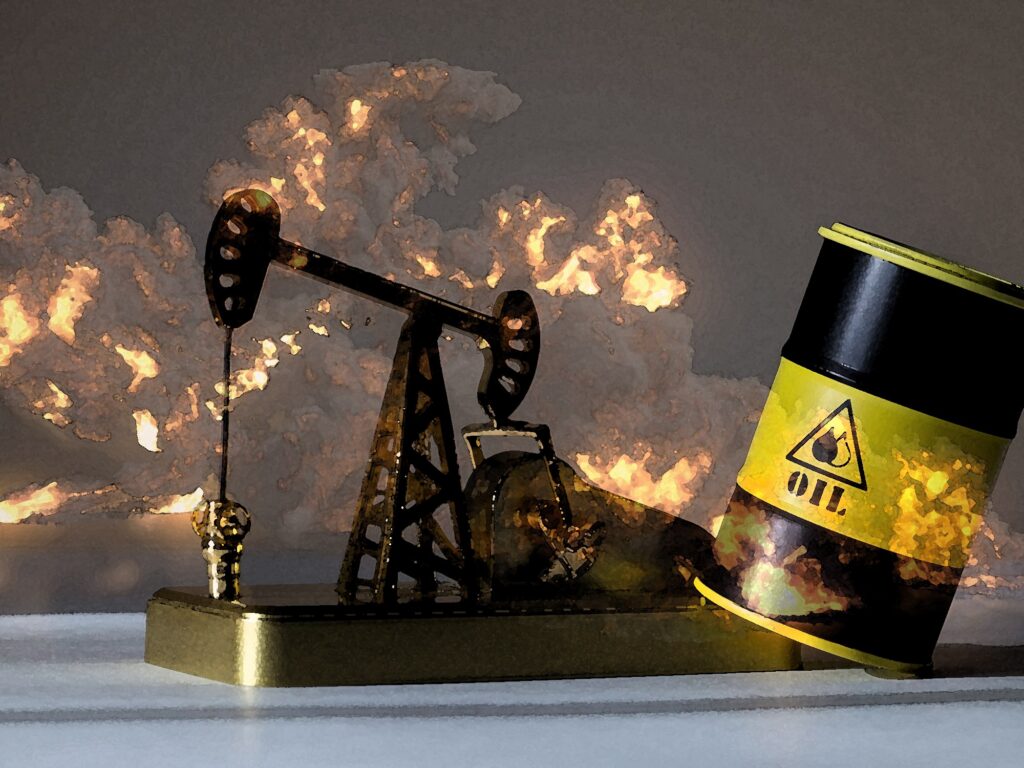
Drone attacks on Russian Baltic ports have heightened concerns about potential risks to Kazakhstan’s oil export routes. Ukrainian drone strikes targeted the ports of Primorsk and Ust-Luga in Russia’s Leningrad Oblast earlier this week, disrupting operations at both major oil export hubs. Primorsk has an estimated capacity of around one million barrels of crude oil and approximately 300,000 barrels of diesel fuel per day. Large fuel storage facilities are also located at both ports.

Further strikes were reported on March 25, when drones again targeted both ports. Media reports indicated that shipments of oil and petroleum products were suspended, and that fires broke out at Ust-Luga. As of March 26, loadings at both ports were reportedly still suspended following the latest strikes, with no confirmed return to normal operations.

Kazakhstan has increasingly used Baltic routes for part of its oil exports following periodic disruptions to the Caspian Pipeline Consortium (CPC) system. Commenting on the situation, Kazakh oil and gas journalist Oleg Chervinsky said that the port of Ust-Luga has been used to export Kazakh crude marketed under the KEBCO brand, with volumes rising after earlier challenges affecting CPC shipments.

Kazakhstan’s national pipeline operator, KazTransOil, transports crude through Russian pipeline infrastructure under agreements with Russia’s Transneft. From there, oil can be delivered to Germany, shipped via Baltic ports such as Ust-Luga, or exported through Black Sea terminals, including Novorossiysk, which has also been targeted by drone attacks in the past year.

According to open-source intelligence analysts cited in international media, energy infrastructure in the Ust-Luga industrial zone, including facilities linked to NOVATEK’s gas processing complex, was affected by the latest strike. The Ust-Luga site is located roughly 850 kilometres from the Ukrainian border.

A similar attack on infrastructure in the Ust-Luga area was reported in August 2025. At that time, Kazakhstan’s Ministry of Energy stated that Kazakh oil exports had not been affected.

As of March 26, the ministry had not publicly commented on the latest incidents. Officials have previously emphasized the importance of diversifying export routes amid geopolitical risks and infrastructure disruptions.

Caspian Escalation Raises Stakes for Central Asia

Central Asia, which has increasingly sought to present itself as a coordinated actor on the global political stage, has until recently maintained a cautious, non-aligned stance regarding the escalation in the Middle East. However, attacks affecting infrastructure in the Caspian region have altered the diplomatic balance.

The Caspian Sea is a critical transit zone for Central Asia, linking Kazakhstan and Turkmenistan to Azerbaijan and onward to European and Middle Eastern markets. It forms part of key east–west and north–south trade corridors that have gained importance since Russia’s war in Ukraine disrupted traditional transit routes.

In recent years, regional dynamics have also been shaped by Azerbaijan’s growing engagement with Central Asian states, including its formal inclusion in the expanded Central Asian consultative format, which has effectively evolved from the C5 into the C6. Baku has played an important role in regional connectivity. It has developed close relations with both Turkey and Israel, factors that influence geopolitical calculations in the Caspian basin, which directly borders Kazakhstan and Turkmenistan. This growing alignment has reinforced efforts to develop the Middle Corridor across the Caspian, linking Central Asia to Europe via the South Caucasus.

Turkey maintains political, economic, and cultural influence in Kazakhstan, Kyrgyzstan, and Uzbekistan through the Organization of Turkic States. Russian political discourse has at times portrayed this cooperation as part of a broader pan-Turkic geopolitical project, a characterization widely dismissed by officials and analysts in Central Asia. Nevertheless, Astana and Baku continue to maintain strong relations with Ankara, a development that has periodically caused concern in Moscow.

Under President Kassym-Jomart Tokayev, Kazakhstan has also strengthened ties with Gulf states. Qatar, Kuwait, the United Arab Emirates, and Saudi Arabia have become significant investors in the country’s economy. In this context, Iranian attacks on Gulf states not directly involved in the conflict have shaped Astana’s diplomatic positioning during the current crisis. Reports of drone attacks widely blamed on Iran targeting the Azerbaijani exclave of Nakhchivan have further heightened regional tensions.

At the initial stage of the escalation, Kazakhstan’s response was largely limited to diplomatic contacts with regional leaders. At the same time, several Central Asian countries, along with Azerbaijan, expressed concern over the humanitarian consequences of the conflict and began dispatching aid to Iran. Azerbaijan sent nearly 30 tons of food and medical supplies on March 10, followed by another 82 tons of humanitarian aid on March 18. Uzbekistan delivered approximately 120 tons of humanitarian supplies, including flour, vegetable oil, sugar, and canned food, according to regional media reports. Turkmenistan also sent humanitarian aid consisting of medicines, medical supplies, and other goods, primarily intended for children. The Tajik government reported sending a convoy of 110 heavy trucks carrying humanitarian cargo to Iran, with a total weight of 3,610 tons.

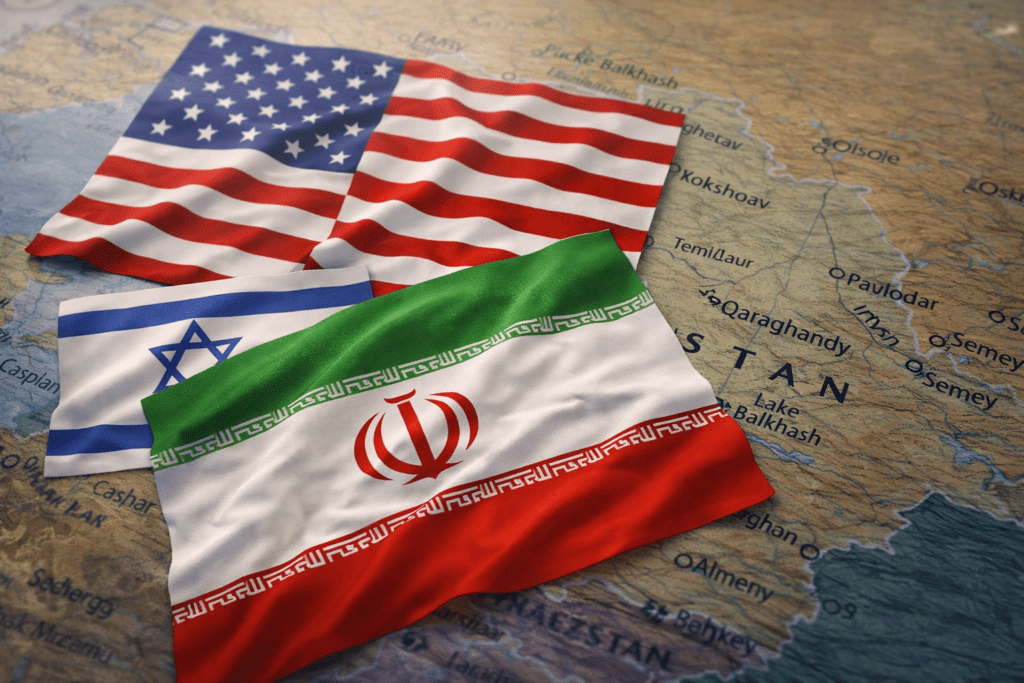
The diplomatic environment shifted further after Israeli air strikes on March 18 targeting Iranian naval facilities in the Caspian Sea. According to Israeli military statements cited by international media, the targets included a major port of the Iranian Navy, where, reportedly, “dozens of ships were destroyed,” as well as “the central command post of the Iranian Navy and infrastructure used for the repair and maintenance of Iranian military vessels.”

The basin is also central to regional energy flows, with offshore infrastructure, shipping routes, and pipeline-linked export systems connecting Caspian producers to global markets. Any expansion of conflict into this space raises risks for both energy exports and maritime transport.

Security in the Caspian basin is a shared concern for both littoral states and their regional partners. According to analyst Denis Borisov, Iran’s Caspian transport infrastructure forms part of regional corridors used by Central Asian states, making stability in the basin strategically important.

Kazakhstan, one of the five Caspian littoral states, began actively signaling support for de-escalation shortly after the strikes. On March 21, speaking in the Turkestan region, President Tokayev called for an end to attacks on civilian and economic targets and urged parties to engage in negotiations. He reiterated Kazakhstan’s readiness to host potential peace talks.

On March 22, the presidents of Kazakhstan and Iran exchanged congratulatory messages on the occasion of Eid al-Fitr and Nauryz. Tokayev expressed hopes for strengthened unity and stability in the Middle East.

Diplomatic contacts intensified on March 23, when Azerbaijan’s Foreign Minister Jeyhun Bayramov held a telephone conversation with his Iranian counterpart Seyed Abbas Araghchi to discuss regional developments and possible steps toward reducing military tensions, including the need to maintain security in the Caspian region.

On the same day, Turkmenistan’s Foreign Minister Rashid Meredov also spoke with Araghchi. Iranian readouts of the call warned that recent strikes could have security and environmental consequences for the Caspian Sea.

Also on March 23, Tokayev received the United Arab Emirates Ambassador to Kazakhstan, Mohammed Said Mohammed al-Ariqi. During the meeting, Tokayev expressed concern over Iranian bombardments targeting the UAE, reiterated Kazakhstan’s opposition to involving neutral states in the conflict, and once again offered Kazakhstan as a platform for peace talks.

The escalation affecting the Caspian region has therefore acted as a catalyst for intensified diplomatic engagement by Central Asian states and Azerbaijan aimed at steering the crisis toward dialogue. As Tokayev has suggested, such efforts may prove critical before the window for negotiated solutions narrows. As the conflict edges closer to key transit and energy routes, the stakes for Central Asia are no longer peripheral, but immediate.

Monument to Human Chain Rescue Unveiled in Almaty

In 2016, residents of Almaty formed a human chain to rescue a dog and its owner who had become trapped in a river. Ten years later, in March 2026, an art installation commemorating the dramatic rescue was unveiled on the Ulken River, which flows into the Sairan Reservoir, one of the city’s most popular recreational areas.

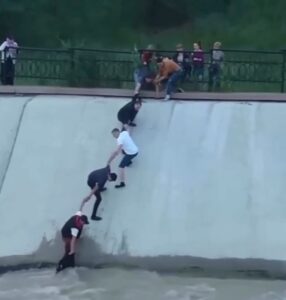
The sculpture stands near the site of the incident. The dog had fallen into the water and was unable to climb out because of the steep riverbanks. Its owner climbed down in an attempt to help but also became stranded. Witnesses then joined forces to pull them to safety. A video of the rescue quickly went viral, reportedly attracting about 15 million views on the Daily Mail’s Facebook page and a further 6.5 million views across other social media platforms. International television networks also covered the story.

The installation depicts a chain of people holding onto one another, symbolizing solidarity and mutual assistance. The hand of the final figure extends beyond the fence, allowing visitors to grasp it and symbolically take part in the rescue. City officials said the sculpture was funded by private donations. According to media reports, the identities of the individuals who took part in the rescue remain unknown.

“The concept of the installation is based on the ideas of mutual aid, solidarity, and unity. The composition shows figures linked in a chain, symbolizing support and collective action in overcoming difficulties. It is inspired by an image that resonated widely with the public and reflects values close to every resident,” an official statement said.

Still from the 2016 rescue video

The installation was created by Yerbosyn Meldibekov, a prominent contemporary artist from Kazakhstan whose works are held in museum collections in Antwerp, Hong Kong, Singapore, and other cities.

This is not the first time that acts of animal rescue in Kazakhstan have inspired artistic tributes. In 2019 in Almaty and in 2020 in Karaganda, murals were painted on residential buildings in memory of forestry inspector Yerlan Nurgaliyev, who was killed by poachers. The murals depict him holding a rescued saiga calf and are based on a photograph that went viral after his death.

The incident took place in January 2019 in the Karaganda Region. Game wardens Pyotr Nitsik and Yerlan Nurgaliyev were pursuing poachers illegally hunting saiga antelopes when they were attacked. Nurgaliyev was killed, while his colleague survived with serious injuries. The perpetrators were later detained. Nurgaliyev was posthumously awarded the Order of Barys for bravery and self-sacrifice in the line of duty, and Nitsik also received a state award.

Kyrgyzstan’s Domestic Debt Rises Amid Strong Demand for Government Bonds

Kyrgyzstan is experiencing a gradual increase in domestic public debt, driven by growing demand for government securities. According to the National Bank, the volume of domestic debt has risen by approximately $34 million over the past ten days following the placement of government treasury bonds.

Trading data show that the total volume of government securities in circulation increased from $4.24 billion on March 13 to $4.27 billion by March 23.

Although the increase remains moderate in absolute terms, the pace of growth suggests renewed activity in the domestic debt market. Long-term instruments are currently the most popular among investors. Over the ten-day period, placements of five-year government bonds amounted to roughly $23 million.

Demand for ten-year securities has also remained stable. Their total volume rose from $631 million to $642 million during the same period, indicating investors’ willingness to lock in yields over longer horizons.

Interest in government bonds is largely supported by relatively high returns. Yields on ten-year securities currently stand at around 16% per annum, while five-year bonds offer slightly more than 15%. These rates are close to average corporate bond yields, estimated at approximately 18%.

Against this backdrop, government securities are widely viewed as a more reliable investment instrument with competitive returns. In contrast, short-term bonds attract significantly lower demand.

Yields on one-year government securities and other short-term instruments remain at about 5–6%, making them less appealing to investors. Nevertheless, demand for these bonds remains stable, albeit limited.

Analysts note that the expansion of domestic borrowing has coincided with increased participation by citizens in the financial market. Since the early 2020s, financial authorities have gradually raised yields on government securities to attract funding for the state budget and encourage retail investment.

At the same time, the National Bank and the Ministry of Finance have introduced financial literacy initiatives aimed at broadening public engagement with investment instruments.

Uzbekistan Launches First Concrete Works at Planned Nuclear Power Plant

Construction of Uzbekistan’s first nuclear power plant has entered a new phase, with initial concrete works officially launched at the project site in the Farish district of the Jizzakh Region, according to the country’s Atomic Energy Agency, Uzatom.

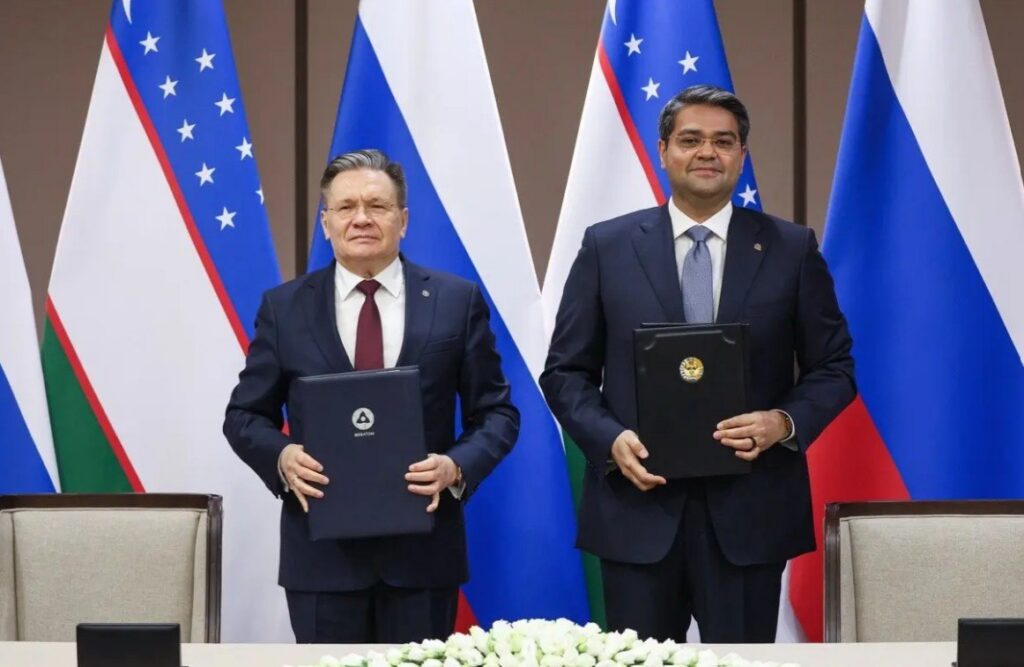
The milestone was marked on March 24 during simultaneous ceremonies held in Tashkent and at the construction site. During the events, Uzatom and Russia’s state nuclear corporation Rosatom signed a number of strategic documents, formally advancing the project to the stage of practical implementation.

Among the agreements were a cooperation roadmap covering nuclear and related sectors, as well as an addendum to the contract for the construction of an integrated nuclear power facility in Uzbekistan. The documents were signed by Uzatom Director Azim Akhmedkhadjaev and Rosatom Director General Alexey Likhachev.

According to Uzatom, the roadmap outlines cooperation in areas such as project implementation phases, workforce training, public engagement on nuclear energy, and the development of infrastructure for a future town for plant personnel. Uzbek officials said the agreement establishes a comprehensive partnership expected to contribute to both economic and social development.

At the construction site, work has begun on laying the concrete foundation beneath the reactor building for a small modular unit using the RITM-200N design. Approximately 900 cubic meters of concrete are scheduled to be poured, with this stage expected to be completed by April 2026. The foundation will incorporate the waterproofing and grounding systems required for the reactor structure.

The updated configuration of the plant involves two large power units equipped with Generation III+ VVER-1000 reactors, as well as two smaller units using RITM-200N reactors, each with a capacity of 55 MW. Once fully operational, the facility is expected to generate around 15.4 billion kilowatt-hours of electricity annually, more than 15% of Uzbekistan’s current power consumption.

Uzatom stated that regulatory approval for use of the site has already been granted following safety assessments that identified no significant risks related to seismic activity, tectonic faults, or karst formations. The agency said the location meets nuclear, environmental, and technical safety requirements.

“The start of concrete works marks an important step in implementing Uzbekistan’s national nuclear energy program,” Akhmedkhadjaev said, adding that the project is proceeding in line with established timelines and safety standards.

Separately, Uzatom confirmed that a mission from the International Atomic Energy Agency is expected to visit Uzbekistan in the second half of 2026 to assess progress on the project.