• KGS/USD = 0.01144 0%
  • KZT/USD = 0.00211 0%
  • TJS/USD = 0.10454 -0.1%
  • UZS/USD = 0.00008 0%
  • TMT/USD = 0.28571 0.28%
  • KGS/USD = 0.01144 0%
  • KZT/USD = 0.00211 0%
  • TJS/USD = 0.10454 -0.1%
  • UZS/USD = 0.00008 0%
  • TMT/USD = 0.28571 0.28%
  • KGS/USD = 0.01144 0%
  • KZT/USD = 0.00211 0%
  • TJS/USD = 0.10454 -0.1%
  • UZS/USD = 0.00008 0%
  • TMT/USD = 0.28571 0.28%
  • KGS/USD = 0.01144 0%
  • KZT/USD = 0.00211 0%
  • TJS/USD = 0.10454 -0.1%
  • UZS/USD = 0.00008 0%
  • TMT/USD = 0.28571 0.28%
  • KGS/USD = 0.01144 0%
  • KZT/USD = 0.00211 0%
  • TJS/USD = 0.10454 -0.1%
  • UZS/USD = 0.00008 0%
  • TMT/USD = 0.28571 0.28%
  • KGS/USD = 0.01144 0%
  • KZT/USD = 0.00211 0%
  • TJS/USD = 0.10454 -0.1%
  • UZS/USD = 0.00008 0%
  • TMT/USD = 0.28571 0.28%
  • KGS/USD = 0.01144 0%
  • KZT/USD = 0.00211 0%
  • TJS/USD = 0.10454 -0.1%
  • UZS/USD = 0.00008 0%
  • TMT/USD = 0.28571 0.28%
  • KGS/USD = 0.01144 0%
  • KZT/USD = 0.00211 0%
  • TJS/USD = 0.10454 -0.1%
  • UZS/USD = 0.00008 0%
  • TMT/USD = 0.28571 0.28%

NoMad Nights: Celebrating Kazakh Identity at New Year in New York

There’s no party like a New Year NoMad Kazakh Party. Staged slightly ahead of New Year’s Eve to align with the weekend, the glamorous event marked a welcome to the incoming 2026 as well as a celebration of Kazakh culture in New York City. The Sky Wise Lounge, a fashionable Asian fusion venue with regular live entertainment, is located in Brooklyn’s Sheepshead Bay. The neighborhood has a sizable Central Asian population rooted in the former Soviet diaspora and sustained by post-Soviet migration.

Events like this one are part of an expanding series of multi-city gatherings across the United States hosted by ATB Promotions, led by Kazakhstani entrepreneur, Talgat Abdrakhmanov. A rotating group of about half a dozen DJs brings high-energy sets that fuse their own mixes with crowd-favorite Kazakhstani hits.

Talgat Abdrakhmanov (right) at NoMad Nights

Abdrakhmanov, originally from Karaganda, has achieved the American dream. Like other successful immigrants, he has built a business by adopting, adapting, and commercializing the enterprising customs of the U.S. After arriving in New York City in 2012, Abdrakhmanov worked his way up from a dishwasher and a waiter to a customer service representative. He later worked as an IT quality assurance analyst and in the competitive worlds of Wall Street and Silicon Valley. But it was not all work. While navigating employment and IT studies, Abdrakhmanov also embraced the play element of his American life, particularly nightlife and dance music, where he began to notice an unmet demand within his community.

During this time, he developed an idea rooted in his own downtime preferences and a desire to cater to fellow immigrants from Kazakhstan. Initially, he organized small meetups with friends at restaurants and sports bars, as well as group outings to soccer games and boxing matches, including bouts featuring former Kazakhstani middleweight world champion Gennady Golovkin, widely known as GGG.

“That was the initial spark that gave me an idea to make parties and events in the future,” Abdrakhmanov told The Times of Central Asia. “That’s how ATB Promotions came up.”

The Kazakhstani community in the U.S. was receptive to Abdrakhmanov’s first networking foray, KazCommunity USA.

“I started KazCommunity USA back in 2016, because I had held many jobs and gained a lot of experience, and people were often asking me for advice, where to find a job, where to find a place to live, how to do this, how to do that. Based on those questions, I decided to create chats and groups on Facebook, Telegram, and WhatsApp, so they exist across different social media platforms.

“KazCommunity USA is really about the community. I never charged any money for it. It’s more like a nonprofit initiative that helps people find work, find a place to live, and connect with each other. That includes organizing meetups and events, some of which I later did through ATB Promotions. But KazCommunity itself is free and focused on helping people and building connections within the community.”

Abdrakhmanov’s efforts to connect U.S.-based Kazakhstani communities evolved from casual meetups and unofficial parties into a structured, for-profit business. ATB Promotions, named after the initials of Abdrakhmanov and his father, officially launched on June 27, 2018. ATB Promotions has brought Kazakh-themed nightlife events and major Kazakh artists to U.S. audiences, including Kalifarniya, The Limba, Irina Kairatovna, and RaiM, through concerts held in New York, Los Angeles, Chicago, and Miami.

“As the organizer and main event manager, I handle everything from start to finish, from logistics and basic needs to working directly with the artists. Organizing concerts requires a significant budget, so I also have to attract sponsors, investors, and potential partners. I tried to do that as much as possible, but most of the work was done by me personally.

“Concerts are much larger and more complex than parties, but they gave me valuable experience. Between 2022 and 2025, I organized a total of 14 concerts.”

Abdrakhmanov has observed that both audience size and musical atmosphere vary by city. While New York and Chicago draw the largest crowds, he notes that the overall feel of events and music preferences differ from place to place, with smaller Kazakh communities spread across cities such as Houston, Boston, Washington, DC, Seattle, and parts of North Carolina.

Abdrakhmanov notes that his events increasingly draw both first- and second-generation Kazakhstani Americans. While younger attendees often navigate hybrid identities, he points out that first-generation migrants tend to adapt pragmatically to American life while maintaining cultural ties. In his view, the events function less as entertainment alone and more as shared cultural spaces that ease the tension of living between identities. In some cases, the use of “NoMad” in the event series name even inspires guests to arrive in party attire, referencing Kazakhstan’s historic nomadic traditions.

“It’s a flexible, pragmatic balance, integration without full cultural abandonment, but also without strong resistance to Americanization.”

Looking at the community today, Abdrakhmanov believes that many Kazakhstanis who have spent several years in the U.S. now treat the country as their main base. He adds that while ties to Kazakhstan remain, they are “more emotional and cultural than practical, nostalgia, language, family ties, and periodic visits rather than concrete plans to return.”
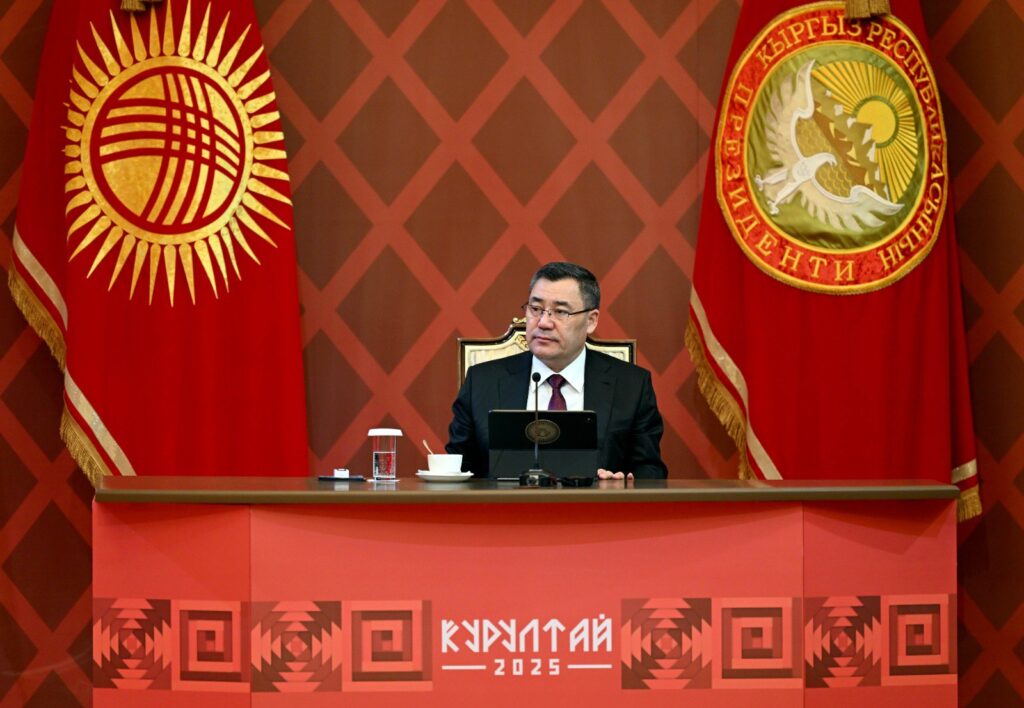

Japarov Outlines Development Priorities at Fourth People’s Kurultai

Kyrgyzstan’s fourth People’s Kurultai, a national forum for direct dialogue between citizens and state leadership, was held in Bishkek on December 25-26. Addressing delegates, President Sadyr Japarov outlined the government’s economic, social, and environmental priorities for the coming years.

Sustained Economic Growth

Japarov described the past three years as a period of strong economic performance, with average annual GDP growth of 9.8%. Real GDP grew by 10.2% in the first 11 months of 2025. GDP per capita in 2024 reached approximately $2,513. Unemployment dropped to 3.7%, while the poverty rate declined from 29.8% to 25.7% year-on-year.

Small and medium-sized enterprises (SMEs) have emerged as the backbone of the economy, with their contribution to GDP rising from 42.6% to 51.7% during the first nine months of 2025.

National Development Program Through 2030

Japarov presented the government’s National Development Program through 2030, which is centered on four key pillars: industrialization, transformation into a regional transport and logistics hub, agricultural and tourism development, and expansion of green energy.

The industrialization strategy includes the creation of industrial and technology zones and the construction of new production facilities to double industrial output by 2030. Large-scale investments in railways, highways, logistics centers, and warehouses are expected to bolster Kyrgyzstan’s role as a regional transit corridor.

Tourism is also a major focus. Japarov emphasized efforts to modernize the sector in line with international standards, citing the construction of new hotels, roads, airports, tourist routes, and recreational infrastructure. By 2030, the tourism sector is projected to contribute 7% to GDP.

Agricultural Development and Food Security

With nearly 58% of the population living in rural areas, agriculture remains a strategic priority. Japarov stated that Kyrgyzstan is currently self-sufficient in six of nine key food products, milk, potatoes, vegetables, meat, eggs, and sugar.

Agricultural reform centers on the development of agro-industrial clusters that bring together farmers, processors, logistics providers, and financial institutions to create integrated value chains. The goal is to shift from raw-material exports toward higher-value-added production.

Climate Change and Water Resources

Japarov also warned of worsening climate-related challenges, particularly declining water resources. Over the past 70 years, Kyrgyzstan has lost around 16% of its glacier area, endangering river flows, irrigation systems, and hydropower production.

Lake Issyk-Kul is of particular concern. Since the mid-19th century, the lake’s water level has dropped by nearly 14 meters. The number of rivers feeding into the lake has declined from more than 100 to approximately 30-35. The president cautioned that continued degradation could have serious environmental and socioeconomic consequences.

Water scarcity, he noted, also threatens food security, with 95% of national water consumption tied to agriculture. He called for more efficient irrigation, glacier protection, and expanded reforestation efforts.

From Social Spending to Development Focus

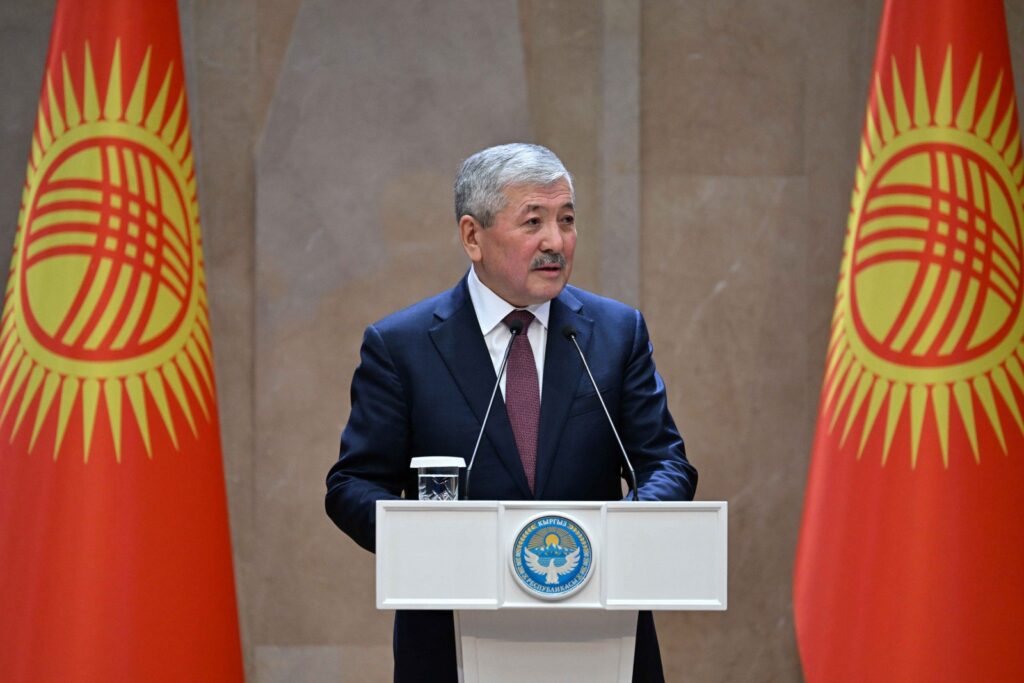
Japarov’s remarks were echoed by Chairman of the Cabinet of Ministers Adylbek Kasymaliev, who addressed parliament a day earlier.

Kasymaliev stated that the state has shifted from a “social economy” to a “development economy.” In 2025, 35% of government spending was allocated to the production sector, compared to 23% for social expenditures.

According to the cabinet, 102 new enterprises were launched in 2024, attracting investments totaling $796.8 million and creating more than 8,300 jobs. In 2025, a further 119 enterprises opened, backed by $715.6 million in investment and generating over 8,400 jobs.

Taken together, the speeches offered a vision of a government aiming to convert rapid economic growth into long-term structural transformation, while confronting enduring challenges in rural development, food security, and climate resilience.

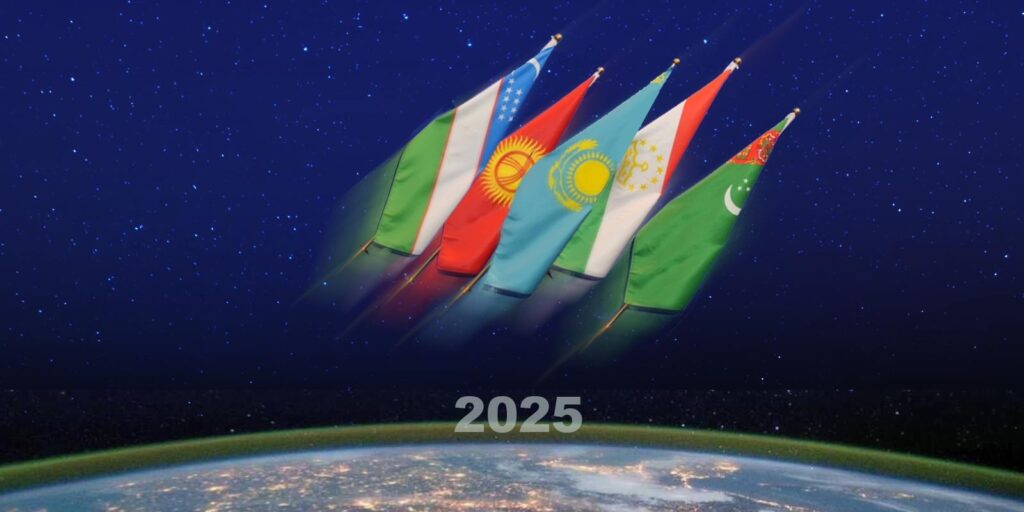
2025: The Year Central Asia Stepped Onto the Global Stage

For much of the post-Soviet era, Central Asia occupied a peripheral place in global affairs. It mattered to its immediate neighbors, but rarely shaped wider debates. In 2025, that changed in visible ways. The region became harder to ignore, largely not because of ideology or alignments, but because of assets that the world increasingly needs: energy, minerals, transit routes, and political access across Eurasia.

One of the clearest signs came in April, when the European Union and the leaders of Kazakhstan, Kyrgyzstan, Tajikistan, Turkmenistan, and Uzbekistan met in Samarkand for their first summit at the head-of-state level. The meeting concluded with a joint declaration upgrading relations to a strategic partnership, with a focus on transport connectivity, energy security, and critical raw materials. The document marked a shift in how Brussels views Central Asia, moving beyond development assistance toward geopolitical cooperation, as outlined in the official EU–Central Asia summit joint declaration.

European interest is rooted in necessity. Russia’s war in Ukraine has forced EU governments to rethink energy imports, supply chains, and overland trade routes. Central Asia sits astride the most viable alternatives that bypass Russian territory. It also holds resources essential to Europe’s green transition, including uranium and a range of industrial metals. The region’s leaders spent much of the year framing their diplomacy around these tangible advantages, rather than abstract political alignments.

The United States followed a similar track. Through the C5+1 format, Washington deepened engagement with all five Central Asian states, with particular emphasis on economic cooperation and supply-chain resilience. A key element has been the Critical Minerals Dialogue, launched to connect Central Asian producers with Western markets. This initiative formed part of a broader U.S. effort to diversify access to strategic materials and reduce dependence on Russia and China.

Russia remained a central but changing presence in Central Asia throughout 2025. Economic ties, labor migration, and shared infrastructure ensured that Moscow continued to matter across the region. At the same time, however, Russia’s war in Ukraine constrained its ability to act as the dominant external power it once was. Central Asian governments maintained pragmatic relations with Moscow, but they increasingly treated Russia as one partner among several rather than the default reference point. Trade continued, security cooperation persisted, and political dialogue remained active, yet the balance shifted toward hedging rather than dependence.

Uranium sits at the center of this shift, with the United States having banned imports of certain Russian uranium products under federal law, with waivers set to expire no earlier than January 1, 2028. As Washington restructures its nuclear fuel supply chain, Central Asia’s role has grown sharply. According to the U.S. Energy Information Administration’s 2024 Uranium Marketing Annual Report, Kazakhstan supplied 24% of uranium delivered to U.S. reactor operators, while Uzbekistan accounted for about 9%. Canada and Australia remain major suppliers, but the Central Asian share is now strategic rather than marginal.

That economic weight translated into political visibility. In December, U.S. President Donald Trump said he would invite Kazakhstan and Uzbekistan to attend the U.S.-hosted G20 summit in 2026. While guest invitations do not confer membership, they offer access to senior leaders and investors at a critical moment in global supply-chain restructuring. This move is part of a broader U.S. effort to expand engagement with Central Asia.

The region’s growing global presence was also reflected beyond diplomacy, from Uzbekistan’s qualification for the 2026 football World Cup to increased international media attention on Central Asian economies, reform agendas, societies, and infrastructure projects.

Investment trends reinforced the political signals. The European Bank for Reconstruction and Development reported record investment in Central Asia – including Mongolia – committing nearly €2.26 billion across 121 projects, with Kazakhstan and Uzbekistan receiving the largest shares. The EBRD described the surge as driven by infrastructure, energy, and private-sector development. Mongolia’s growing inclusion reflects a wider regional pull, with Ulaanbaatar stepping up engagement with its Central Asian neighbors through trade, transport cooperation, and multilateral investment initiatives.

Energy security was not limited to nuclear fuel. Hydropower returned to the regional agenda in 2025, especially in discussions around Kyrgyzstan’s long-delayed Kambarata-1 project. The dam, with a planned capacity of 1,860 megawatts, is seen as critical for stabilizing electricity supply across parts of Central Asia. It was reported that the EBRD could consider lending up to $1.5 billion for the project, underscoring how regional infrastructure is now tied to international financing and diplomacy. Regional cooperation among the five Central Asian states also deepened, with leaders increasingly coordinating on water management, energy sharing, and cross-border transport rather than addressing these issues in isolation.

Security concerns also shaped the year. Violence along the Tajikistan-Afghanistan border, including attacks near sites employing Chinese nationals, exposed the region’s vulnerability to instability spilling over from Afghanistan. The incidents prompted warnings from Beijing and renewed scrutiny of border security in Central Asia. The Times of Central Asia has reported on the situation as part of a wider examination of how insecurity affects foreign investment and regional stability.

China’s role in Central Asia stayed substantial and highly visible. Beijing remained the region’s largest single trading partner and a key investor in infrastructure, mining, and energy projects. In 2025, however, Chinese engagement also faced sharper scrutiny, with the risks that accompany China’s deep economic footprint increasingly highlighted. For Central Asian governments, the challenge was to preserve Chinese investment while asserting greater control over security and diversification. The result was not a retreat from China, but a more cautious and negotiated engagement.

Despite these risks, Central Asian governments resisted pressure to align exclusively with any single power. Instead, they pursued a strategy of increasing diversification. The EU, the United States, China, and Russia all remained engaged, but none dominated the region’s external agenda.

Ties with Azerbaijan also deepened in 2025, driven by shared interests in transport, energy, and westward connectivity. Baku emerged as a key partner in linking Central Asia to the South Caucasus and onward to European markets, particularly through Caspian transit routes. This cooperation increasingly took shape within the C6+1 framework, which brings Azerbaijan together with the five Central Asian states to coordinate infrastructure planning, trade facilitation, and regional connectivity. This underscored a growing recognition that Central Asia’s global role depends not only on internal links, but on reliable Western gateways.

Turkmenistan, traditionally cautious in its diplomacy, also expanded engagement around energy exports and transport links across the Caspian, reinforcing its role in regional connectivity.

Japan played a quieter but increasingly consistent role in Central Asia in 2025. Tokyo focused on economic cooperation, infrastructure financing, and technical assistance, often emphasizing transparency and long-term sustainability. Japanese engagement carried less geopolitical weight than that of larger powers, but it offered Central Asian states another option for diversification. Japan’s steady presence reinforced the region’s ability to widen its external partnerships without triggering strategic friction.

This approach gave Central Asian states greater leverage and reduced their exposure to shifts in any one relationship. Whilst 2025 may not have been a decisive turning point, it was a clear step. The region did not suddenly acquire global influence, but it increasingly demonstrated why it matters on a global stage. Strategic documents, investment flows, and energy data all point to the same conclusion: Central Asia entered the year as a subject of geopolitical discussion, and ended it as a participant. Whether that momentum continues will depend on execution. Summits must continue to turn into contracts, and contracts into infrastructure and industry. For now, the direction is unmistakable. In 2025, Central Asia stepped onto the global stage not by seeking attention, but by offering what the world increasingly needs.

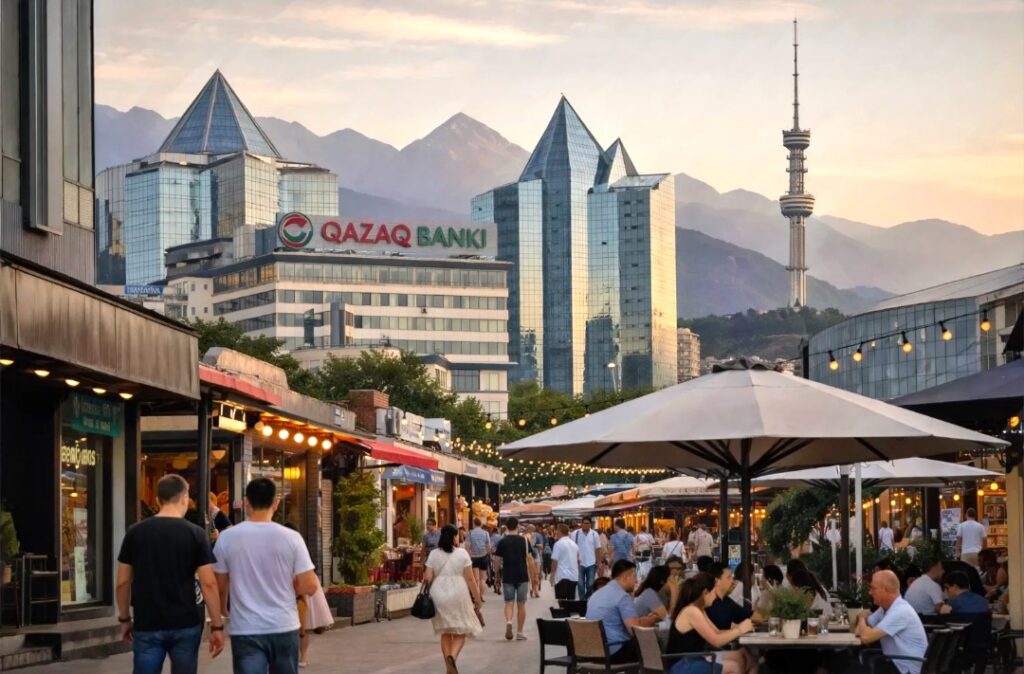
Drone Delivery Pilot Project to Launch in Almaty

A pilot project for drone-based goods delivery is set to launch in Kazakhstan’s largest city, Almaty. The initiative follows the signing of a memorandum between the Ministry of Artificial Intelligence and Digital Development of Kazakhstan and the private company Freedom Lifestyle.

According to the ministry, the agreement outlines plans to jointly test drone delivery services in urban settings, with an emphasis on safety, regulatory compliance, and public convenience. Freedom Lifestyle will finance and implement the project, integrating unmanned delivery into its digital platforms. Since early 2025, the company has been building a team of drone operators and testing technology at its Freedom X R&D laboratory.

The ministry will focus on developing regulatory frameworks, ensuring aviation safety, and facilitating the integration of drone technology into the urban infrastructure. Gizzat Baitursynov, Chairman of the Committee on Digital Assets and Breakthrough Technologies, stated that the pilot phase will help test the system in real-world conditions and inform the creation of long-term regulatory solutions.

The pilot will involve drone delivery of food, daily necessities, and medicines. Each drone will be capable of carrying up to 10 kilograms over a 3-kilometer radius between locations in the upper and central parts of the city. Flights are scheduled to take place during daylight hours and in favorable weather.

To minimize risks, drones will operate primarily over green zones and along designated street corridors. Each vehicle is equipped with safety systems, including parachutes and autonomous control in case of communication loss. As the system’s safety and efficiency are validated, the number of drones and service coverage will be expanded, including potential rollouts in rural areas.

Kazakhstan has already seen increasing adoption of drone technologies. As previously reported by The Times of Central Asia, unmanned systems are currently used for agricultural land monitoring and are being developed for public safety applications.

Development Spending in Kyrgyzstan Surpasses Social Spending for the First Time

The Kyrgyz government has reported strong economic performance in 2025, highlighting robust GDP growth and strengthened public finances. At a year-end meeting, Chairman of the Cabinet of Ministers Adylbek Kasymaliev announced that all state objectives had been met despite challenging conditions.

According to Kasymaliev, gross domestic product is expected to grow by more than 10% by year’s end, positioning Kyrgyzstan among the global leaders in economic growth. The country’s GDP reached $20.5 billion, and for the first time in its history, the consolidated budget surpassed $11.5 billion. A budget surplus of $392 million was recorded, which Kasymaliev described as a sign of growing financial stability.

He emphasized the country’s accelerated infrastructure development, with 341 new facilities commissioned in 2025. Projects include roads, parks, cultural and sports centers, and residential buildings, many implemented under State Mortgage Company initiatives. Notably, for the first time, development expenditures outpaced social expenditures, a shift aligned with the recommendations of international financial institutions.

Macroeconomic improvements were also supported by data from the National Bank of Kyrgyzstan. As of the third quarter of 2025, the banking sector showed strong lending growth: the overall loan portfolio rose by 10.5% over the quarter and approximately 33% year-on-year. Consumer loans made up the largest share at 16.6%, followed by mortgages at 10.5% and agricultural loans at 3.1%.

Expansion in the construction sector has been driven by both state spending and foreign investment. Meanwhile, the dollarization of the loan portfolio continued to decline, falling to 17.8% from over 20% at the start of the year.

“High activity among the population and businesses has contributed to an increase in lending in the national currency over the nine months of 2025,” the National Bank stated.

Are Kazakhstan’s Small Businesses Really Leaving Over Taxes?

As Kazakhstan prepares for tax reforms set to take effect in 2026, a new wave of panic has surfaced in the national discourse, one suggesting that small businesses are facing a stark choice: shut down or relocate to neighboring countries promising more favorable tax environments.

This narrative has gained traction twice in the second half of 2025. The first wave came in mid-autumn, triggered by reports suggesting that Kazakhstani entrepreneurs were looking to move operations to Kyrgyzstan or Uzbekistan. These claims quickly spread across Kazakh social networks, particularly Threads.

However, early signs indicated that the alarm was not being sounded by small businesses themselves, but by representatives of the B2B services sector, especially consultants and accountants. Media outlets amplified comments that stirred fear, reinforcing what increasingly appeared to be media-driven panic.

One such moment came in late September when the Kazakhstan Association of Tax Consultants hosted a presentation by its chairman, Saken Karin, titled “Tax Reality 2026: Opportunities and Risks.” Karin warned that the proposed reforms would “tear apart the B2B and B2C sectors,” criticizing state approaches to tax administration.

Even then, experts argued that large-scale relocation of Kazakhstani businesses made little practical sense.

“Which Kazakhstani businesses can realistically relocate to Kyrgyzstan? Probably only IT companies, which are location-independent. Most SMEs in Almaty rely on the quasi-public sector or the domestic market, which is considerably larger and wealthier than that of our neighbors,” said financier Rassul Rysmambetov.

The numbers back this up: in 2024, the economy of Almaty alone reached $60 billion, compared to Kyrgyzstan’s national GDP of approximately $17.5 billion.

Despite this, a second wave of panic is now gaining momentum, this time shifting focus to Uzbekistan as a destination for potential business migration. Once again, social networks, particularly Threads, are amplifying the noise, citing interviews such as one with tax expert Maxim Baryshev, who praised the tax systems of Uzbekistan and Kyrgyzstan.

Baryshev represents the professional accounting organization Uchet.kz. His colleague, Uchet.kz manager Timur Abiev, has previously spoken out against what he views as unfounded panic surrounding tax reform.

Despite growing anxiety on social media, government officials have yet to launch a strong counter-narrative. This lack of response reinforces the idea that panic is being stoked by peripheral sectors rather than the business community itself.

When Finance Minister Madi Takiev was asked about claims of a mass relocation of small businesses to neighboring countries, he dismissed them as unfounded. He argued that tax thresholds and turnover requirements in those countries are broadly comparable to Kazakhstan’s and noted that businesses relocating abroad would still be subject to domestic taxation if their economic center of interest remained in Kazakhstan, making such moves economically unviable.

As for the accounting industry, its vocal opposition to reform may be tied to structural weaknesses. Kazakhstan’s accounting sector has been slow to adapt to changing demands and is struggling to train enough professionals to meet market needs. The number of established training institutions remains small.

A recent government meeting focused on SME support included plans for the Ministry of Finance to launch a “People’s Accountant” campaign in early 2026. The program aims to assist individual entrepreneurs and small businesses in preparing and submitting accounting and tax reports. It will include online consultations via official platforms and Telegram, as well as webinars and seasonal advisory sessions.

With the state stepping in to support small businesses and build accounting capacity, existing players in the professional services market may indeed feel under pressure. Whether this justifies the ongoing panic is another matter.