• KGS/USD = 0.01144 0%
  • KZT/USD = 0.00192 -0%
  • TJS/USD = 0.10866 0.18%
  • UZS/USD = 0.00008 0%
  • TMT/USD = 0.28571 0%
  • KGS/USD = 0.01144 0%
  • KZT/USD = 0.00192 -0%
  • TJS/USD = 0.10866 0.18%
  • UZS/USD = 0.00008 0%
  • TMT/USD = 0.28571 0%
  • KGS/USD = 0.01144 0%
  • KZT/USD = 0.00192 -0%
  • TJS/USD = 0.10866 0.18%
  • UZS/USD = 0.00008 0%
  • TMT/USD = 0.28571 0%
  • KGS/USD = 0.01144 0%
  • KZT/USD = 0.00192 -0%
  • TJS/USD = 0.10866 0.18%
  • UZS/USD = 0.00008 0%
  • TMT/USD = 0.28571 0%
  • KGS/USD = 0.01144 0%
  • KZT/USD = 0.00192 -0%
  • TJS/USD = 0.10866 0.18%
  • UZS/USD = 0.00008 0%
  • TMT/USD = 0.28571 0%
  • KGS/USD = 0.01144 0%
  • KZT/USD = 0.00192 -0%
  • TJS/USD = 0.10866 0.18%
  • UZS/USD = 0.00008 0%
  • TMT/USD = 0.28571 0%
  • KGS/USD = 0.01144 0%
  • KZT/USD = 0.00192 -0%
  • TJS/USD = 0.10866 0.18%
  • UZS/USD = 0.00008 0%
  • TMT/USD = 0.28571 0%
  • KGS/USD = 0.01144 0%
  • KZT/USD = 0.00192 -0%
  • TJS/USD = 0.10866 0.18%
  • UZS/USD = 0.00008 0%
  • TMT/USD = 0.28571 0%
12 December 2025

Taliban Again Urges Uzbekistan and Tajikistan to Return Military Helicopters

Afghanistan’s acting Foreign Minister Amir Khan Muttaqi has once again called on Uzbekistan and Tajikistan to return military helicopters flown out of the country by Afghan pilots during the collapse of the previous government in August 2021. The appeal was reported by Afghan news outlet Tolonews, following Muttaqi’s meeting with diplomats and representatives of international organizations in Kabul.

“We ask those countries that, four years ago following political developments, took part of our helicopters and transferred them to neighboring countries, to return these helicopters to the Afghan people so they can be used in humanitarian operations,” Muttaqi said.

He also criticized ongoing sanctions on Afghanistan, particularly banking restrictions that he claimed have prevented Afghans abroad from sending money to families affected by natural disasters. “Unfortunately, due to the unjust and unlawful restrictions imposed on Afghanistan, our compatriots have been unable to send aid to those affected by the earthquake,” he added.

An earthquake that struck eastern Afghanistan on August 31 killed around 2,200 people and destroyed more than 5,000 homes, according to Al Jazeera. Both Tajikistan and Uzbekistan have since sent humanitarian aid, including food, medical supplies, and tents, to assist survivors.

Muttaqi emphasized that providing sustained assistance to those affected remains a top priority for the Taliban government.

Earlier this month, The Kabul Times quoted Taliban spokesman Zabihullah Mujahid as saying that Uzbekistan had agreed to return 57 helicopters. However, Ahror Burkhanov, spokesman for Uzbekistan’s Foreign Ministry, dismissed the claim as “fake news,” stressing that Tashkent’s position on the matter has not changed.

Kazakhstan Sees Growth in Urban Cancer Cases

The incidence of cancer has risen in Kazakhstan’s cities, while rural areas have seen a decline, according to Energyprom.kz, which cited data from the Ministry of Health.

In 2024, cancer incidence in urban areas reached 239.2 cases per 100,000 people, up from 230 the previous year. The highest rates, exceeding the national average, were recorded in the Karaganda region (353.5 per 100,000), Kostanay region (352.7), East Kazakhstan region (349.4), and Abay region (302.4).

Environmental factors are believed to contribute. Karaganda, the hub of Kazakhstan’s coal and metallurgical industries, was ranked the world’s third most polluted city in 2024, according to the World Air Quality Report by IQAir.

By contrast, cancer incidence in rural areas decreased to 147.1 per 100,000 people in 2024, down from 173.8 in 2023.

Regional Data

The total number of cancer patients in Kazakhstan reached 230,900 in 2024, an increase of 12,800, or 5.8%, compared to the previous year.

  • Almaty, the country’s largest city, recorded the highest number of patients: 34,200. However, its incidence rate per 100,000 people was slightly below the national average.
  • Karaganda region ranked second with 21,400 patients.
  • Astana followed with 16,800.

In 2024, 41,300 people in Kazakhstan were diagnosed with cancer for the first time. The largest numbers of new cases were in Almaty (5,200), Karaganda region (3,800), and Astana (3,000).

Medical statistics also showed that the rate of primary diagnoses declined slightly, from 208.6 to 204.8 per 100,000 people.

Kazakhstan in Regional Contex

Within Central Asia, Kazakhstan has the highest cancer incidence, followed by:

  • Kyrgyzstan – 86 per 100,000
  • Uzbekistan and Turkmenistan – 74.1
  • Tajikistan – 32.1

The cancer mortality rate in Kazakhstan also rose in 2024, from 65.1 to 68 deaths per 100,000 people.

Measures to Combat Cancer

To expand treatment access, Kazakhstan has launched domestic production of oncological drugs. In October 2024, Swiss pharmaceutical company F. Hoffmann-La Roche Ltd., in partnership with Nobel Almaty Pharmaceutical Factory JSC, began producing three biotechnological medicines in Almaty for the treatment of HER2-positive breast cancer, an aggressive form affecting up to 20% of breast cancer patients in Kazakhstan.

Each year, around 5,000 new cases of breast cancer are registered in the country, with about 1,200 resulting in death.

Learning Across Borders: Education at the Heart of Central Asia–Japan Relations

For more than three decades, Japan has cultivated a distinctive partnership with the countries of Central Asia, one rooted not in geopolitics or grand strategy alone, but in human connection. Education has emerged as one of the strongest pillars of this relationship, as young people from Uzbekistan, Kyrgyzstan, Kazakhstan, Tajikistan, and beyond increasingly look to Japan for academic training, language study, and professional development. Tokyo’s support for scholarships, university exchanges, and Japanese language programs reflects a long-term vision: to invest in people-to-people ties that strengthen mutual understanding and prepare a new generation of leaders across the region.

The Times of Central Asia spoke with Central Asian students at the International University of Japan to gauge their experiences.

Ilyos from Uzbekistan: “As an international student, I found Japan to be a country of fascinating contrasts – deeply rooted in tradition, yet highly modern. I was struck by the coexistence of fast-paced, bustling cities and quiet, remote towns, each offering a very different atmosphere and way of life.

“I chose Japan because I’d previously studied in South Korea at the undergraduate level. That experience made me curious about Japan, as I expected certain similarities but also wanted to explore the differences. I thought that if Japan were similar to Korea, the adjustment would be smooth, and if it offered something new, it would be an even greater opportunity to broaden my perspective and prepare for my career.

“I’ve been truly impressed by how consistently Japanese people follow rules, respect social order, and demonstrate a high level of etiquette in everyday interactions. This has left a strong impression on me and has shaped the way I think about discipline, respect, and community values.”

Farrukh from Tajikistan: “I first visited Japan back in 2019. At that time, it was a business trip, and I spent a month here. I’d been thinking about studying in Japan for a long time, but I finally had the opportunity last year when the JICE JDS Scholarship in my home country was announced.

“In the time I’ve been here, I’ve never felt I was treated differently from other people, even locals. There have been minor instances when Japanese people acted very strictly, but I guess that’s how they usually are. In terms of cultural differences, one thing I noticed was how hard they work; there is a lack of work-life balance.”

Azmat from Uzbekistan: “Most of my colleagues from work got their Master’s degrees in Japan, and we have some agreements between the Japanese government and our organization about studying here. My ex-director, my current deputy director, and the head of division are graduates of Japanese universities. So, listening to their stories, I ended up studying in Japan.

“I find the people of Japan to be very polite and patient. The way they treat us as foreigners is really good. Of course, there are some difficulties – Japan is a country of rules – but they’re minor.”

As Central Asia deepens its educational links with Japan, the stories of students and professionals illustrate the quiet but profound impact of these exchanges. Beyond academic credentials, they carry home lessons in discipline, cultural respect, and global perspectives, qualities that ripple into their workplaces and societies. For Japan, these connections represent more than soft power; they are bridges of trust and collaboration that outlast political shifts. And for Central Asia, they offer a pathway to global engagement through shared knowledge, cultural appreciation, and enduring friendship.

Central Asians in Putin’s War: Fighting for Ukraine, Forced for Russia

As the war in Ukraine continues to drag on, fighters from across Central Asia have found themselves on both sides of the frontlines. In Kyiv, Kazakh national Zhasulan Duysembin has traded his past life as a sales agent for a rifle, sporting a tattoo of Kazakhstan’s flag on his back as he battles to defend his adopted home. He now fights, he says, to protect his children and believes that “Russia will not stop in Ukraine, it will go further. We must make every effort to ensure that our Kazakhstan does not suffer.” Alan Zhangozha, an ethnic Kazakh who grew up in Kyiv and now serves as a public relations officer in the Ukrainian Army, echoes this sentiment. “Ukraine’s victory will also be a victory for my Motherland,” he told The Diplomat.

But as the war drags on, in Kazakhstan, families mourn men like 22-year-old Kiril Nysanbaev – a labor migrant in Russia coerced into signing up for the war who only came home in a coffin. His sister recalls how her brother told her that Russian officers beat and forced him to enlist while he was detained on dubious charges in Chelyabinsk. Nysanbaev was killed in Ukraine’s Donetsk region in March 2024, news that only reached his family three months later.

Citizens of all five Central Asian countries have been pulled into the conflict since Russia’s invasion in 2022. Some have volunteered to fight for Ukraine, driven by personal ties or ideals, while others, mostly labor migrants, have been recruited, enticed, or pressured into fighting for Russia. These parallel currents reflect the complex impact of the war on a region that remains officially neutral but was historically deeply entwined with Moscow. While a handful of Central Asians now wear the blue-and-yellow insignia in Ukraine’s defense, far more have ended up in Russia’s ranks, often as expendable foot soldiers.

From Bishkek to Bucha

In November 2022, a Kyrgyz former labor migrant, Almaz Kudabek uulu, announced the creation of the Turan Battalion, a volunteer unit of Turkic-speaking fighters formed to assist Ukraine. “Kyrgyzstan is my homeland; I will always love it. But Ukraine is my home now; I am fighting for Ukraine,” he told reporters. The battalion, joined by volunteers from Kyrgyzstan, Kazakhstan, Azerbaijan, and elsewhere, operates as a semi-autonomous unit supported by private donations and allied Ukrainian brigades. Back in Kyrgyzstan, however, the authorities opened a criminal case against Kudabek, punishable by up to eight years in prison, and local media that covered his story faced pressure.

Others have supported Ukraine in tangible, humanitarian ways. Early in the war, members of Ukraine’s Kazakh diaspora erected traditional yurts in cities like Bucha and Kyiv as heated shelters dubbed “Yurts of Invincibility.” These spaces provided food, tea, and electricity during blackouts, a gesture of solidarity that irritated Moscow but drew only a muted response from Kazakhstan’s government.

Moscow’s Migrant Recruits: Coercion and Casualties

Far greater numbers of Central Asians have ended up fighting for Russia, which hosts millions of migrant workers from Central Asia, creating a vulnerable pool for recruitment. Reports have detailed raids on dormitories and markets in Moscow, where migrants are detained and told to either sign military contracts or face deportation.

Yusuf, a migrant from Uzbekistan, told RFE/RL he was beaten by the police after refusing to enlist. He escaped only by threatening to alert his embassy. Others had no such choice: Nysanbaev, the young Kazakh killed in Donetsk, was forced to enlist after a fabricated robbery charge and buried in Russia.

Despite these abuses, recruitment has accelerated. A 2022 decree from President Vladimir Putin offered fast-track Russian citizenship to foreigners who serve a year in the army, an incentive for migrants seeking stability. Cash bounties are also offered, though many recruits never live to collect them. By September 2024, at least 47 Uzbeks had been reported killed fighting for Russia.

The Ukrainian-run project “I Want to Live” has identified more than 3,000 Central Asians who have signed Russian contracts since 2022, including over 1,100 Uzbeks and 900 Tajiks. Hundreds have already been confirmed killed. President Volodymyr Zelenskyy has also claimed that citizens of Uzbekistan and Tajikistan are among the foreign mercenaries fighting for Russia on Ukraine’s northeastern front, alongside recruits from Africa and Pakistan.

Among these, Tajiks appear to suffer a disproportionately high casualty rate. By late 2024, 51 Tajik nationals had been reported dead, though the real toll may be higher. Kyrgyz citizens have also been swept up: in the first half of 2025 alone, 327 Kyrgyz signed contracts with Russia, nearly equaling the total from the previous two years combined. Bishkek has arrested several recruiters, including one from a Russian government agency.

Even Turkmenistan, the most closed of the region’s states, has been affected. At least 122 Turkmen citizens signed Russian contracts in the first six months of 2025. According to the I Want to Live project, they are often thrown into dangerous units for expendable “meat assaults,” and rarely receive the passports or payments they were promised.

Although Central Asian governments have largely maintained their neutrality, some have permitted limited public demonstrations in support of Ukraine. In March 2022, Kazakhstan allowed thousands to gather in Almaty for a peace rally condemning the war, one of the largest pro-Ukraine events in the region. Around the same time, the authorities in Kazakhstan, Kyrgyzstan, and Uzbekistan also allowed smaller anti-war protests and civic initiatives to collect aid for Ukraine, reflecting both public sympathy and the authorities’ balancing of foreign policy pressures.

Central Asian governments have worked to preserve this neutrality by making deliberate policy choices rather than remaining on the sidelines. Kazakhstan, for instance, has tightened customs oversight and closed branches of sanctioned Russian banks to protect access to Western markets while signaling that it will not be used to circumvent sanctions. These steps illustrate how neutrality is a matter of active management, designed to safeguard sovereignty and economic stability.

At the same time, leaders have pursued quiet diplomacy to keep channels open with both Kyiv and Moscow. Kazakhstan has sent humanitarian aid and hosted high-level discussions aimed at promoting dialogue, while Uzbekistan and Kyrgyzstan have issued repeated warnings to their citizens against joining the conflict. No Central Asian state has recognized Russia’s claims to Ukrainian territory. Kazakhstan, in particular, has stated it will not recognize the “quasi-state territories” of Luhansk and Donetsk.

Hidden Losses, Complex Identities

The Central Asian governments’ neutrality, however, has not shielded their societies from the conflict’s effects: families grieve for sons killed in Russia’s ranks, migrants face pressure to enlist under threat of deportation or lost livelihoods, and remittance dependency in Tajikistan, Kyrgyzstan, and Uzbekistan gives Moscow leverage. Although some citizens have chosen to fight for Ukraine, far more have been swept into Russia’s war, their experiences underscoring how deeply the conflict’s repercussions extend into the region.

Meanwhile, the bodies of Central Asian recruits continue to return quietly. Many funerals are held without publicity, as families fear stigma or legal consequences. “I think people should not go to Russia,” Kamilla Nysanbaeva, Kiril’s sister, told RFE/RL. “Many people go to Russia on their own accord and then complain about what has happened to them… I warn them to avoid going.”

According to the 2021 Russian Census, there were 591,570 ethnic Kazakhs living in Russia, primarily in regions along the Kazakhstan border, such as Astrakhan, Volgograd, Samara, and Orenburg. In contrast to labor migrants from Uzbekistan, Kyrgyzstan, and Tajikistan – who often retain their home citizenship – demographers estimate that well over 90% of those ethnic Kazakhs are historic residents who hold Russian citizenship. Yet when they are killed in Ukraine, media reports often identify them only by their ethnicity, obscuring their Russian citizenship and highlighting the complex identities caught in the war.

Caught Between Laws and Loyalties

Most Central Asian countries have laws forbidding their citizens from serving in foreign conflicts, with penalties ranging from fines and travel bans to prison terms. In December 2023, a court in Qaraghandy, Kazakhstan, sentenced Aleksei Shompolov to six years and eight months in prison for joining Russia’s Wagner group and fighting in Bakhmut. His payment was also confiscated. In July 2025, the Romitan District Criminal Court in the Bukhara region sentenced two Uzbek nationals found guilty of mercantilism for Russia to five years and three years, respectively. In the city of Osh, a Kyrgyz court sentenced an unnamed man to five years in prison for fighting for the Russian forces in Ukraine.

These are not isolated incidents. Together, they highlight how Central Asia’s citizens – whether volunteers, coerced migrants, or returnees facing prosecution – have become entangled in a distant war, leaving governments to walk a precarious line between enforcing the law, protecting their people, and preserving neutrality. The war’s frontlines may be in Ukraine, but its shadows stretch deep into Central Asia.

Tajik Book on Cultural Ties Gains International Recognition, but Remains Overlooked at Home

Orientalist and art historian Munira Shahidi, daughter of the renowned Tajik composer Ziedullo Shahidi, has brought international attention to her book “Cultural Ties Between East and West in the 21st Century.”  The work explores cultural parallels and literary connections between civilizations, highlighting the Tajik people’s role as guardians of the intellectual legacy of great thinkers. While presented at events in Cambridge and Berlin, the book has yet to be showcased in Tajikistan.

From Oslo to Amazon

“I showed that in Tajikistan people speak the language of great classics such as Khayyam, Hafiz, Ferdowsi, and Mawlavi, who are also recognized in the Western world. This demonstrates a new dignity of the Tajik people to the world,” Shahidi explained.

Publishing the book, however, was not straightforward. With no funding available, unexpected assistance came from two Iranian visitors to the Ziedullo Shahidi Museum of Music Culture, who offered to publish it free of charge. The book was released in Oslo at the end of 2024 in both Tajik and English.

The publication soon entered Amazon’s global network and spread through major universities worldwide. Yet, this platform does not cover Tajikistan. Only ten copies of the book reached the country, purchased by the Tajik Embassy in Uzbekistan.

European Presentations

The book’s first public presentation was held in Baku at a conference supported by the Tajik Ministry of Culture. Shahidi was subsequently invited to the Azerbaijan Center for Cultural Studies.

Later, during a four-month stay in Cambridge, England, she presented her work three times at university colleges.

“Students realized that British Orientalists were among the first translators of Khayyam, Hafiz, Ferdowsi, and Mawlavi into English,” she noted.

The book was also introduced in Berlin, Prague, London, and Samarkand. No official presentation has yet been organized in Tajikistan.

An Undervalued Heritage

Shahidi laments that classical Tajik and Persian literature is insufficiently studied in her homeland.

“If their works were included in school and university programs, conversations would become more pleasant, and people’s behavior would improve. The philosophy of Mawlavi, for example, is a whole world of treasures,” she said.

She also expressed concern over declining interest in reading, suggesting that television and radio could play a larger role in promoting literature and the arts through live programs and discussions on poets, philosophers, and composers.

Another source of disappointment for Shahidi is the neglect of her father’s creative legacy.

“The songs of my father, Ziedullo Shahidi, are no longer heard on radio or television. Yet songs like ‘Vatan, Vatan,’ ‘My Star,’ ‘Our Home,’ and ‘Your Village’ were once very popular,” she said.

To address these challenges, the Ziedullo Shahidi International Foundation was established and now operates under the Public Council of the President of Tajikistan. According to Munira, the foundation regularly raises issues of art and international cooperation.

“The art of the Tajik people is great, but the world does not know it. We need to establish more ties with Iran and Afghanistan and present our potential to the world,” she concluded.

Kazakhstan Wins Team Gold at World Boxing Championships in Liverpool

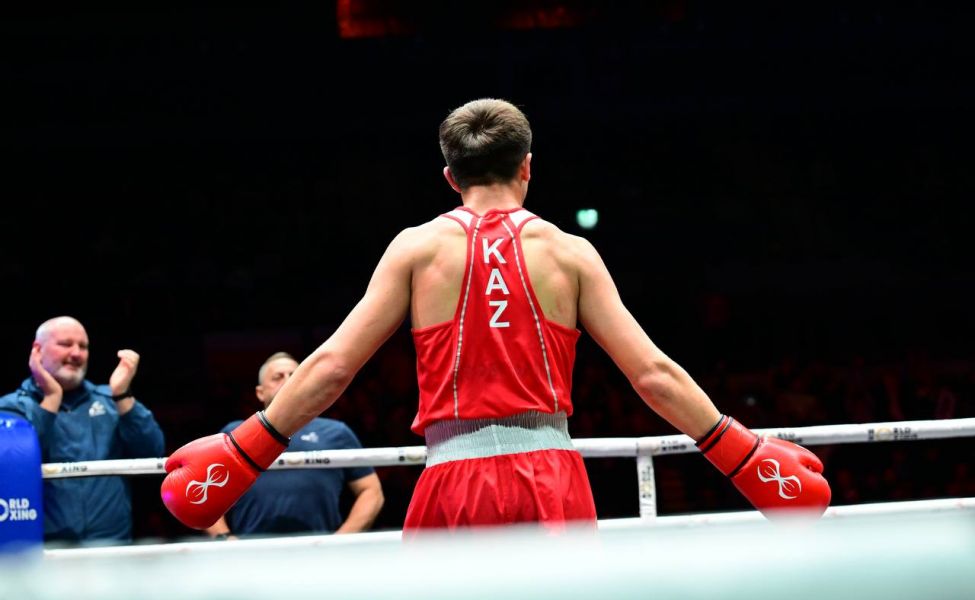
Kazakhstan’s national boxing team has clinched the team gold medal at the inaugural World Boxing Championships held in Liverpool, England, edging out Uzbekistan by securing more gold medals.

A total of 554 athletes from 68 countries participated in the competition, including 20 boxers from Kazakhstan, 10 male and 10 female. On September 14, eight Kazakhstani and eight Uzbekistani boxers advanced to the finals.

Heading into the decisive final bout, both Kazakhstan and Uzbekistan had secured six gold medals each. The tie-breaker unfolded in the super heavyweight category (over 90 kg), where Kazakhstan’s Aibek Oralbay faced Uzbekistan’s Jahongir Zokirov. Zokirov had the upper hand after the first round, but Oralbay mounted a comeback and ultimately won by a 3:2 split decision.

With this victory, Kazakhstan topped the overall medal table with seven gold medals. Uzbekistan followed with six, while India claimed third place with two.

President Kassym-Jomart Tokayev congratulated the national team, praising gold medalists Sanzhar Tashkenbay, Mahmud Sabyrkhan, Alua Balkibekova, Aida Abikeeva, Torehan Sabyrkhan, Natalia Bogdanova, and Aibek Oralbay, as well as silver medalist Nazym Kyzaibay and bronze winners Victoria Grafeeva and Eldana Talipova. He wished success to those still competing in Liverpool and emphasized that while Kazakhstan’s performance at the championships was a major success, intensive preparation must continue ahead of the upcoming Olympic Games in the United States.

This tournament marked a significant milestone as the first world championship organized by World Boxing, a breakaway international federation established in 2023 in response to ongoing governance and financial issues within the International Boxing Association (IBA). Following the IBA’s failure to implement required reforms, the International Olympic Committee (IOC) revoked its accreditation, placing boxing’s Olympic status in jeopardy.

World Boxing, now recognized by the IOC as of spring 2025, brought together more than 100 national federations and was granted the authority to organize Olympic qualifying events. Liverpool thus became the historic venue for the first world championship under the new structure.

Athletes from Brazil (4), India and Poland (3 each), Turkey, Australia, and England (2 each), as well as France, Mongolia, Spain, Japan, Bulgaria, the USA, Taiwan, and Ireland (1 each) also reached the finals.

As previously reported by The Times of Central Asia, Olympic champion Lazizbek Mullojanov, who won gold at the 2024 Games, was not included in Uzbekistan’s lineup. Mullojanov was suspended in mid-2025 amid an ongoing anti-doping investigation.