• KGS/USD = 0.01144 0%
  • KZT/USD = 0.00212 0%
  • TJS/USD = 0.10432 0%
  • UZS/USD = 0.00008 0%
  • TMT/USD = 0.28490 0%
  • KGS/USD = 0.01144 0%
  • KZT/USD = 0.00212 0%
  • TJS/USD = 0.10432 0%
  • UZS/USD = 0.00008 0%
  • TMT/USD = 0.28490 0%
  • KGS/USD = 0.01144 0%
  • KZT/USD = 0.00212 0%
  • TJS/USD = 0.10432 0%
  • UZS/USD = 0.00008 0%
  • TMT/USD = 0.28490 0%
  • KGS/USD = 0.01144 0%
  • KZT/USD = 0.00212 0%
  • TJS/USD = 0.10432 0%
  • UZS/USD = 0.00008 0%
  • TMT/USD = 0.28490 0%
  • KGS/USD = 0.01144 0%
  • KZT/USD = 0.00212 0%
  • TJS/USD = 0.10432 0%
  • UZS/USD = 0.00008 0%
  • TMT/USD = 0.28490 0%
  • KGS/USD = 0.01144 0%
  • KZT/USD = 0.00212 0%
  • TJS/USD = 0.10432 0%
  • UZS/USD = 0.00008 0%
  • TMT/USD = 0.28490 0%
  • KGS/USD = 0.01144 0%
  • KZT/USD = 0.00212 0%
  • TJS/USD = 0.10432 0%
  • UZS/USD = 0.00008 0%
  • TMT/USD = 0.28490 0%
  • KGS/USD = 0.01144 0%
  • KZT/USD = 0.00212 0%
  • TJS/USD = 0.10432 0%
  • UZS/USD = 0.00008 0%
  • TMT/USD = 0.28490 0%

Kazakhstan’s Central Bank Links Tenge Strengthening to Rising Oil Prices

Governor of the National Bank of Kazakhstan, Timur Suleimenov, has attributed the recent strengthening of the tenge to rising global oil prices, which have increased export revenues and boosted the supply of foreign currency on the domestic market.

According to the regulator, the tenge appreciated by 3.9% in March, reaching 478.15 KZT to the dollar. The average daily trading volume on the Kazakhstan Stock Exchange increased from $335 million to $372 million, while total trading volume reached $6.7 billion.

Currency sales from the National Fund totaled $400 million, supporting transfers to the state budget. In addition, approximately $391 million was supplied through the mandatory sale of foreign currency earnings by quasi-state sector entities. No foreign exchange interventions were conducted during the period.

As a result, the National Fund accounted for about 6% of total trading volume, or roughly $22 million per day. Exporters remained the primary source of foreign currency supply, Suleimenov noted.

“Kazakhstan’s main export is oil. Prices are rising, volumes remain unchanged, and accordingly, export revenues and currency supply are increasing,” he said.

Preliminary estimates indicate that National Fund currency sales in April will total $300-400 million, broadly in line with March levels.

Suleimenov also said the tenge remains stable despite earlier forecasts by some analysts suggesting a potential weakening to 1,000-2,000 KZT to the dollar. At the same time, he warned of inflationary risks linked to rising tariffs. According to him, the government plans to factor inflationary pressures into future adjustments of utility and fuel prices.

As of April 1, the moratorium on increases in utility and fuel tariffs in Kazakhstan, introduced in October 2025, has expired.

The Times of Central Asia previously reported that economist Aidarkhan Kusainov had suggested the tenge could weaken to 1,000 per dollar or even further, arguing that the national currency is overvalued.

Sindarov Ahead in Candidates, While Asaubayeva Shares Women’s Lead

Javokhir Sindarov of Uzbekistan is leading after four rounds of the FIDE Candidates Tournament, the elite chess contest that will determine the challenger to the world champion. In the women’s competition, Bibisara Asaubayeva of Kazakhstan is tied for first place.

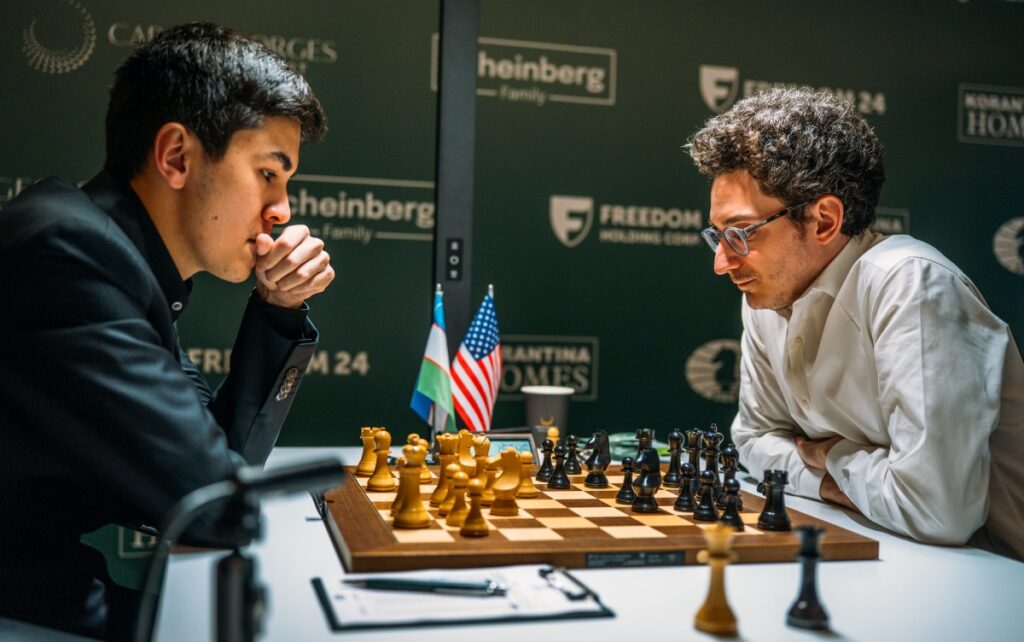
Sindarov, winner of the 2025 World Cup in Goa, India, played with the white pieces and defeated Fabiano Caruana on Wednesday for his third win of the candidates tournament at the Cap St Georges Hotel & Resort near Paphos, Cyprus. Sindarov put early pressure on the American and built a sizeable advantage on the clock.

The 20-year-old Uzbekistani player faces Hikaru Nakamura of the United States in the fifth round on Friday. Featuring eight players, the 14-round tournament began on March 28 and ends on April 16. The winner will challenge the current world champion, India’s Gukesh Dommaraju, later this year.

In an interview with the Lichess platform, Sindarov said preparation was the key to the win over Caruana and he hasn’t been focused on whether other players would catch his early lead in the tournament. He currently has 3.5 points, while Caruana is in second place with 2.5 points.

“I don’t think about this a lot,” he said. “I was just playing chess.”

Sindarov’s style of play often includes “bold sacrifices, energetic attacks, and creative solutions to difficult positions,” making him an unpredictable competitor in Cyprus, according to the candidates tournament website. It noted his strong results at the elite level, among them a gold medal at the Chess Olympiad in 2022 in Chennai, India, “where Uzbekistan sensationally won ahead of many traditional chess powers.”

In the FIDE Women’s Candidates Tournament, Asaubayeva, 22, drew in a game against China’s Tan Zhongyi on Wednesday. The Kazakhstani player and Anna Muzychuk of Ukraine are currently joint tournament leaders with 2.5 points.

Asaubayeva plays against Kateryna Lagno of Russia in round five on Friday. The winner of the tournament will challenge the women’s world champion, Ju Wenjun of China.

Asaubayeva won the Women’s World Blitz Championship in 2021, 2022 and again in 2025. FIDE, the Switzerland-based governing body of chess, awarded grandmaster status to Asaubayeva last year.

“Unlike purely positional grinders, she thrives in active positions where initiative and momentum matter,” says the candidates tournament website, noting the Kazakhstani player’s standout composure in knockout and high-tempo formats.

Literary Competition Showcases Outstanding New Kazakh Novels

The “Modern Kazakh Novel” competition, in partnership with Eurasian Resources Group (ERG), was launched last year as a national cultural initiative.

The project was designed to stimulate the growth of contemporary Kazakh prose and foster closer ties between authors and readers. With more than 3,000 submissions, the competition highlighted the Kazakh public’s interest in literature.

Eight authors reached the final stage of the competition. Seven finalists were each awarded 3 million tenge ($6,300), while the winner of the grand prize received 15 million tenge ($31,500).

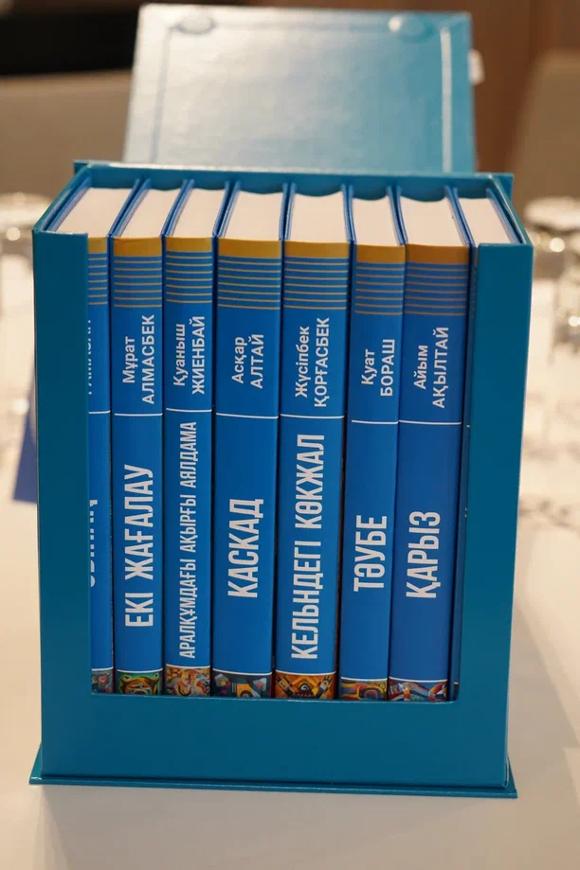
A notable achievement of the initiative was the publication of the shortlisted works. A thousand copies of each novel were printed and officially presented to the public. Of these, 750 copies were transferred to the National Library of the Republic of Kazakhstan, allowing the books to be distributed widely through the national library network.

@ERG

The finalists were Duman Ramazan (with a novel called Trial), Kuanysh Zhienbay (The Final Stop in Aralkum), Nurzhan Kuantaiuly (Unfaithful Game), Askar Altay (Cascade), Murat Almasbek (Two Shores), Kuat Borash (Repentance), and Aiyum Akyltai (Debt).

The grand prize was awarded to Zhusipbek Korgasbek for his novel The Wolf from Cologne. Plans have also been announced to adapt the work into a feature film.

In his message to participants, ERG’s Chairperson Shukhrat Ibragimov highlighted the value of national literature and expressed confidence in contemporary writers. He stressed that national values remain vital for younger generations, as they connect historical heritage with the demands of a rapidly evolving world shaped by innovation and digital technologies.

Ibragimov also noted that one of literature’s key roles is to shape new characters that reflect the realities of each new era. In this context, such competitions create meaningful opportunities for emerging writers and help reinterpret national identity from fresh perspectives.

According to jury chair Qaynar Olzhai, the initiative was initially intended to support novels written in the Kazakh language. Over the course of a year, hundreds of applications were received. From 220 promising novel projects reviewed by experts, five finalists were originally planned. However, due to the unexpectedly high quality and quantity of submissions, the sponsor agreed to expand the shortlist by adding two more finalists.

@ERG

Ultimately, every meaningful achievement is rooted in intellectual and spiritual development. From pilots and mountaineers to global business leaders, many groundbreaking ideas originate from reading and literature.

In this sense, the “Modern Kazakh Novel” project is an effort to support the creative community and encourage literary innovation.

Poems by the Kazakh Poet Abay Recited in Paris in Nine Languages

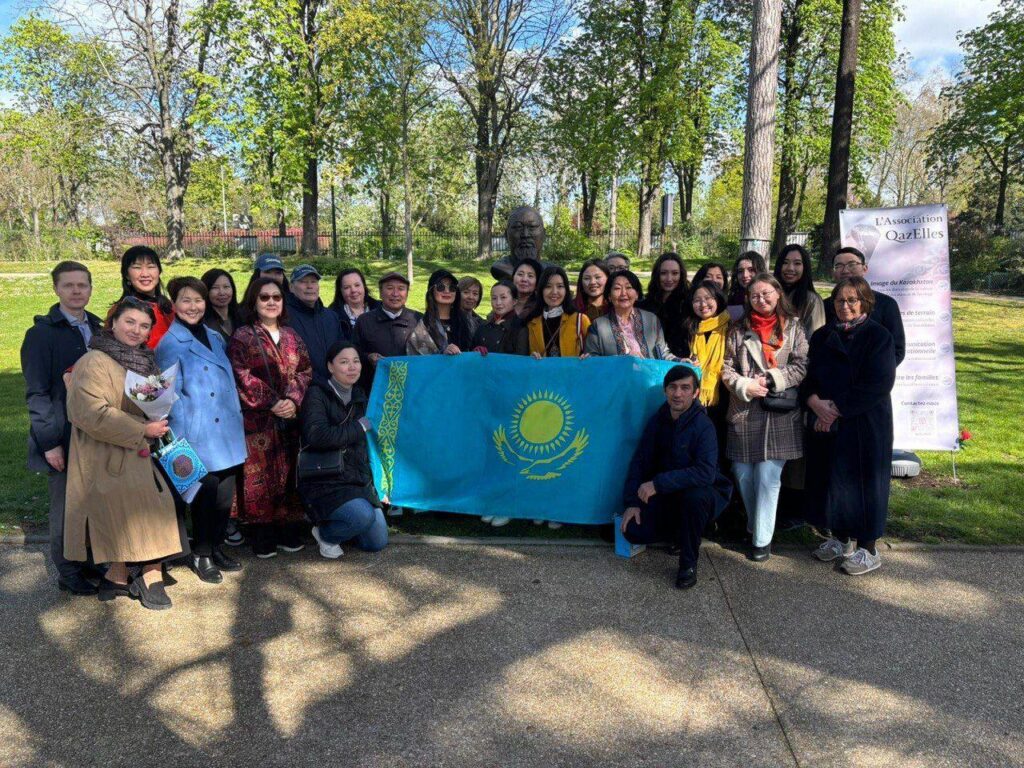
The legacy of the Kazakh poet Abay Kunanbayev recently brought together representatives of different nations in Paris. His works were recited in Kazakh, French, Russian, Chechen, Buryat, Kalmyk, Ingush, Tuvan, and Yakut. The Association of Kazakh Women in France, “QazElles,” thus supported the recently announced proposal to include Abay’s work Words of Admonition on the UNESCO World Heritage List.

“As you know, UNESCO’s headquarters are in Paris, so the news that one of Kazakhstan’s most significant literary monuments could officially become part of UNESCO’s World Heritage List is very personal to us. How can we support this? By bringing together those who are not yet familiar with Abay’s work and introducing them to his major poetic masterpieces.

This year, Abay’s works will be presented in the languages of various diasporas living in France with whom we are friends,” said Madina Kulmanova, president of the “QazElles” association, in an interview with The Times of Central Asia.

QazElles photos archive

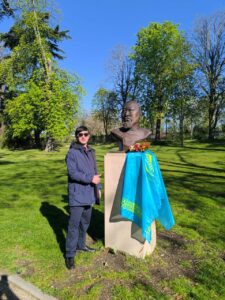
The monument to Abay, located in the Poets’ Square of the French capital, has become a regular meeting place for admirers of his work since its unveiling in 2021. For Kazakhs living in France, it has become a tradition to hold the “Abay Readings” annually at the poet’s bust to promote the legacy of the founder of Kazakh written literature.

This time, Abay in Paris brought together not only Kazakh and French people, but also representatives of the peoples of the Caucasus, as well as Buryat and Kalmyk associations in France.

Said Musa Batyrgereev, a representative of the Chechen diaspora: “I am here representing the Association ‘Guardians of Mountain Cultures in France’ and as a representative of the Chechen people. Today we have gathered at the monument to Abay Kunanbayev to honor his memory. Abay was a great poet and a wise man who taught kindness, respect, and humanity. And today I would like to thank the Kazakh people from the bottom of my heart for the help and support they provided to the Chechen people in 1944. We will never forget this.”

Representatives of the “Peuple du Baïkal” association, which unites representatives of the peoples of Russia’s Baikal region, thanked the “QazElles” association for the invitation to the annual readings of Abay Kunanbayev’s poems.

In the poem they chose to read, “Quiet Night Under the Moon” (“Jelsiz tünde jaryq ai”), the poet lovingly describes the beauty of nature and the tenderness of relationships.

QazElles photos archive

Radmila Boyer, a representative of the association, noted that listening to Abay’s poem immerses one in a world of beauty and love.

“This poetic morning brought us, different peoples, closer together, gave us a wonderful mood, the joy of communication, and inspiration for future joint cultural projects,” she said.

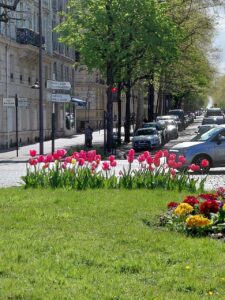
Tulips were laid at the Abay monument in honor of the readings. This served as a reference to another project by the “QazElles” association, which, with the support of the Shymkent city authorities, the Embassy of Kazakhstan in France, and the City Hall of Paris’s 17th arrondissement, organized the planting of Kazakhstani tulips on Place Wagram. This spring, Shymkent tulips bloomed in Paris for the first time.

As a memento of these readings, representatives of the diaspora were presented with copies of Abay’s works in French. One of these copies was left on a bookshelf in the Poets’ Square so that Parisians, while strolling past the monument to the Kazakh poet, could also become acquainted with his work.

India–Central Asia: Connectivity, Security, and Sustainable Partnerships in a Multipolar World

A widening conflict in West Asia is forcing India and Central Asia to reassess trade routes, diplomacy, and regional security, with key projects such as Iran’s Chabahar port now facing growing uncertainty. These risks framed discussions in New Delhi on March 25–26, where experts gathered under the banner of “India–Central Asia: Connectivity, Security, and Sustainable Partnerships in a Multipolar World,” with The Times of Central Asia in attendance.

The conference unfolded against the backdrop of two active Eurasian wars—the Russo-Ukrainian and the Israel/U.S.-Iran conflict. Central Asian and Indian participants agreed that the West Asian crisis is widening, putting not only ports and logistics routes but also economies across the globe under serious threat. India’s Chabahar link to Afghanistan and Central Asia is now a high-risk, uncertain investment, weakening overall continental strategic thinking across Eurasia, including efforts to consolidate new trans-Caspian trade corridors. If the conflict cripples or destroys Chabahar, years of progress, hard-won partnerships, and millions in strategic investment would be erased.

On the sidelines, some participants suggested that India could help cool what’s becoming a dangerously global conflict. Unbeknownst to them, India had already held an all-party meeting on March 25 on the West Asia crisis. External Affairs Minister S. Jaishankar’s message: India will not mediate. The revelation surprised some participants—others, not at all. In any event, Central Asian states, in principle, have backed any diplomatic push for peace.

With West Asia in turmoil and platitudes in abundance, conference participants emphasized the need to rethink geopolitics, trade, security, and cultural ties beyond stale frameworks at a time of conflict. Four themes defined the Central and South Asian moment: the dangers of bloc politics, even as regional organizations continue to evolve and expand their influence, the ascendancy of national interests over external pressure, and the emergence of a firm refusal to pick sides in the midst of frictions between competing global pressures.

Dr. Raj Kumar Sharma, a member of the India Central Asia Foundation, stated: “The conference provided an important platform to move beyond theoretical discussion and toward practical engagement. With Central Asia’s ambassadors to India present, we focused on exploring concrete mechanisms to promote peace through sustained diplomatic efforts. Despite the proximity of the conflict in West Asia to both Central Asia and India, participants expressed confidence that dialogue and restraint – buttressed by trade and investment – will ultimately guide outcomes, with particular concern for civilians and those enduring hardship. Notably, the crisis did not overshadow the conference’s primary agenda or its scholarly contributions. Overall, the gathering can be seen as a constructive step in reinforcing diplomatic initiatives dedicated to peace and stability in a conflict-affected region.”

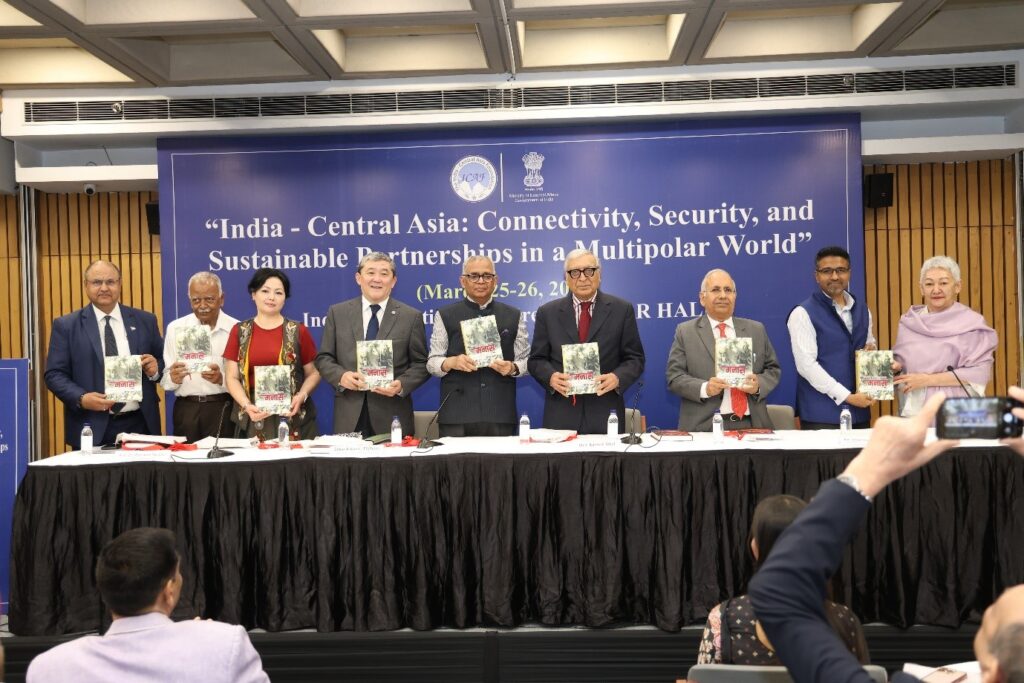
The conference witnessed the release of three significant publications on India–Central Asia relations: India – Kazakhstan Partnership in a Changing Geopolitical Order (eds. Ramakant Dwivedi, Lalit Aggarwal, Kuralay Baizakova), Manas: Kirgiz Vir Gatha Kavya by Ramakant Dwivedi & Hemchandra Pandey and India and Central, East and Southeast Asia: Enhancing the Partnership (eds. Ramakant Dwivedi & Lalit Aggarwal).
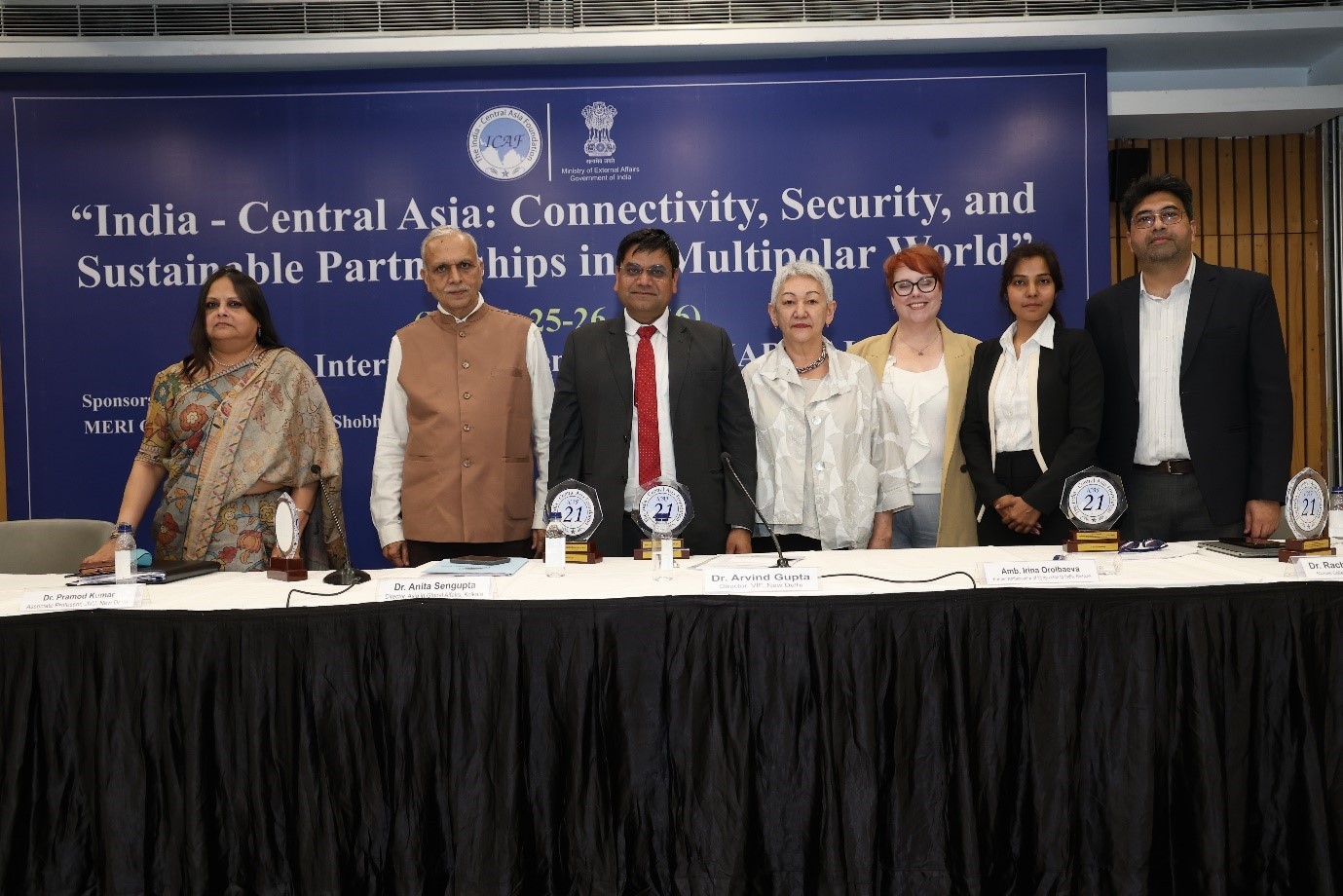
(L-R): Dr Anita Sengupta, Dr Arvind Gupta, Dr Pramod Kumar, Ambassador Irina Orolbaeva, Dr Rachael M. Rudolph, Dr Beena & Dr Raj Kumar Sharma, who all spoke on the role of regional institutions in Central Asian development; image: TCA

Geopolitics in Flux – Central Asia and the Emerging Multipolar Order

At the conference, a clear theme emerged: Central Asia holds an increasingly important place in an emerging multipolar world due to its geography and resources. As conflicts and power plays intensify, especially in West Asia, countries in the region must work to reshape security, trade, and diplomacy to better promote economic development through peace.

For Central Asia and India, understanding these geopolitical shifts is key to navigating risks and maintaining stability. The conference speakers emphasized that, confronted with shared threats, India and Central Asia need even deeper collaboration with Afghanistan through intelligence sharing, training, and joint mechanisms to bolster resilience and sustain regional stability within a complex global environment – this applies equally to the Afghan-Pakistan conflict currently unfolding. All participants underscored the importance of patience, peace, and sober foreign policies, while preserving sovereign autonomy and national interests within a multi-dimensional approach to diplomacy.

The Role of Regional Institutions in Central Asian Development

The participants highlighted that there are many regional institutions in Central Asia, most of which reflect the ideas, interests and needs of external powers. The Central Asian countries need to enhance regional cooperation mechanisms among themselves so that they become the real arbiters of their aspirations and development. Dr Raj Kumar Sharma and Dr Beena, Assistant Professor at MERI Centre for International Studies, highlighted that the Central Asian countries should focus on cooperative climate governance in the region and move towards a green transition collectively. Dr. Sharma called on Central Asia and India – with the agreement of all – to unite in advancing enduring peace and sustainable progress across the region.

Trade, Connectivity and Infrastructure – Challenges and Prospects for Regional Cooperation

Without stronger connectivity, Central Asia will never reach its full potential, conference participants concurred. Central Asian participants expressed their willingness and support for further integration through active multi-vector foreign policies in order to deal with their connectivity and infrastructure challenges. Turkmenistan’s position of maintaining its non-aligned status reflects its geo-economic priorities over geo-political gamesmanship.

Unsurprisingly, the Russo-Ukraine war has reconfirmed certain vulnerabilities of Central Asian countries given their dependence on transportation limitations and longstanding external links, necessitating a reexamination of trade routes, with all options on the table.  In addition, sovereign autonomy means greater intra-regional self-reliance.

Since 2018, Consultative Meeting of Heads of States in Central Asia has become the main advisory mechanism for regional cooperation. Early signs of regional cooperation include agreements on joint border management and customs simplification, discussions on shared water and energy resource management, and coordinated positions in international forums. Both Central Asian and Indian participants highlighted that India should continue to reach out to all parties to the conflict in West Asia to safeguard their economic interests in Iran – this applies immediately to Chabahar Port and to oil exports in the first instance.

On the education front, participants noted that with visa barriers going up in America and elsewhere, Indian students are looking for alternative educational markets; Central Asia, in many ways, is ideal for many because it is geographically closer to India and the fees are relatively low. Indian students have become the largest group of international students in Kazakhstan, with nearly 10,000 to 12,000 enrolled as of 2025, marking a massive 211.9% increase from 2022 levels.

India – Central Asia: Historical and Cultural Ties

The organizers stressed that centuries of trade, migration, and cultural exchange have created lasting bonds between India and Central Asia—bonds that will drive future cooperation. India and Central Asia’s ancient economic ties—forged through the Silk Road and the Kushan Empire (which linked northern India with modern Uzbekistan, Tajikistan, Afghanistan, and Turkmenistan)—were fractured by 19th‑century colonialism. Now, experts urge a clear path forward: reconstruct the geo-cultural bridge through education, joint publications, think tank outreach, and media collaboration.

Olimjon Toshkenboyev, Uzbek Tightrope Master and Cultural Figure, Dies

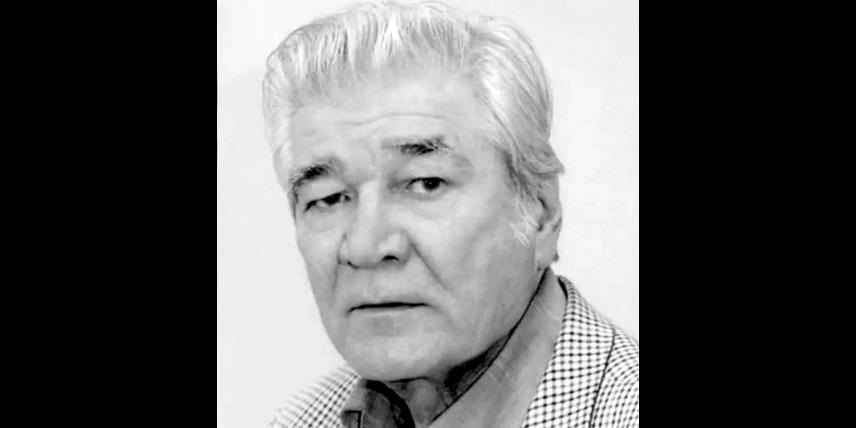
Olimjon Toshkenboyev, an acrobat from a family dynasty of performers who promoted the Uzbekistani tightrope walking art known as dorbozlik, has died at the age of 81.

In a condolence message to Toshkenboyev’s family, Uzbekistan’s Ministry of Culture said he was “a famous representative of Uzbek circus art” who made big contributions to national heritage and was a mentor to many students.

“Under his leadership, the ‘Uzbekistan Dorbozlari’ group successfully showcased their art in many foreign countries, including Poland, Germany, Egypt, Belgium, the Netherlands, Switzerland, Brazil, Argentina, Colombia, Ecuador, and others,” the ministry said on Telegram on March 28.

Toshkenboyev, whose son and daughter participated in dorbozlik programs, was also the director of Uzbekistan’s state circus association. The Tashkent circus is housed in a landmark Soviet-era building that some observers have compared to a flying saucer.

Dorbozlik has a storied history in Uzbekistan. Some accounts say ropewalkers participated in shows in the palace of Amir Temur, the 14th-century Central Asian conqueror who is also known as Tamerlane.

“Dorbozes skillfully demonstrated their stunts (running back and forth; jumping; walking with knives and trays tied to their legs; dancing on one or paired ropes blindfolded and with a sack on their heads, etc.) by holding langar (a balancer or long balancing pole) on a rope, which was installed at the height of 25-30 m,” says a website listing Uzbekistan’s “intangible cultural heritage.”

Ropewalkers’ performances were combined with those of strongmen, illusionists, dancers, comedians and musicians, according to the account. As the folk art evolved, performances moved from fairgrounds and market squares to indoor circuses, wire replaced ropes, metallic poles replaced wooden ones, and safety belts were introduced.

At a UNESCO meeting in Namibia in 2015, a committee noted that boys and men were the traditional practitioners of ropewalking in Uzbekistan, and girls were increasingly getting involved. It said there were more than 40 ropewalking troupes in Uzbekistan and that skills were transmitted from generation to generation within families.

However, the committee did not accept Uzbekistan’s proposal that the art be included on the U.N. cultural agency’s list of intangible cultural heritage. It raised concerns about the danger, particularly to children, of ropewalking, as well as questions about the originality of the art, since other countries have similar types of performance.