• KGS/USD = 0.01144 0%
  • KZT/USD = 0.00216 0%
  • TJS/USD = 0.10456 0%
  • UZS/USD = 0.00008 0%
  • TMT/USD = 0.28490 0%
  • KGS/USD = 0.01144 0%
  • KZT/USD = 0.00216 0%
  • TJS/USD = 0.10456 0%
  • UZS/USD = 0.00008 0%
  • TMT/USD = 0.28490 0%
  • KGS/USD = 0.01144 0%
  • KZT/USD = 0.00216 0%
  • TJS/USD = 0.10456 0%
  • UZS/USD = 0.00008 0%
  • TMT/USD = 0.28490 0%
  • KGS/USD = 0.01144 0%
  • KZT/USD = 0.00216 0%
  • TJS/USD = 0.10456 0%
  • UZS/USD = 0.00008 0%
  • TMT/USD = 0.28490 0%
  • KGS/USD = 0.01144 0%
  • KZT/USD = 0.00216 0%
  • TJS/USD = 0.10456 0%
  • UZS/USD = 0.00008 0%
  • TMT/USD = 0.28490 0%
  • KGS/USD = 0.01144 0%
  • KZT/USD = 0.00216 0%
  • TJS/USD = 0.10456 0%
  • UZS/USD = 0.00008 0%
  • TMT/USD = 0.28490 0%
  • KGS/USD = 0.01144 0%
  • KZT/USD = 0.00216 0%
  • TJS/USD = 0.10456 0%
  • UZS/USD = 0.00008 0%
  • TMT/USD = 0.28490 0%
  • KGS/USD = 0.01144 0%
  • KZT/USD = 0.00216 0%
  • TJS/USD = 0.10456 0%
  • UZS/USD = 0.00008 0%
  • TMT/USD = 0.28490 0%

Kazakhstan Targets Growth in Real Household Income

The government of Kazakhstan plans to increase real household income by 2–3% by 2029, according to the Ministry of National Economy.

The program includes measures to stimulate employment, raise wages, support entrepreneurship, and create sustainable jobs.

Key priorities include increasing wages for public utility workers, civil servants, and agricultural workers; expanding the share of wages in GDP; creating jobs in the manufacturing sector; supporting export-oriented enterprises; and reducing the financial burden on households.

The ministry said 2026 will be a pivotal year for establishing sustainable income growth. A joint plan by the government, the National Bank, and the Agency for Regulation and Development of the Financial Market aims to reduce inflation to 9-11% in 2026, 5.5-7.5% in 2027, and 5-7% in 2028.

Authorities expect that slowing inflation will increase the purchasing power of incomes. Inflation has already declined from 12.9% in September 2025 to 11% in March 2026.

From April 1, tariff policy will be implemented more cautiously. The ministry estimates that tariff increases will add no more than 0.35 percentage points to inflation. At the same time, electricity and transportation tariffs for producers of socially significant goods are set to be reduced by up to 70%.

The government also plans to limit the growth of budget expenditures, with their share of GDP expected to decline to 15.1% in 2026. Reductions in transfers from the National Fund will continue, and for the first time in five years, the budget is expected to be executed without targeted transfers.

In 2025, targeted transfers from the fund amounted to approximately $6.9 billion, while the guaranteed transfer for 2026 has been set at $5.8 billion.

According to the National Statistics Bureau, nominal household income grew by 10.2% in 2025, while real income declined by 1.1%. Average per capita income stood at approximately $506.

The ministry noted that the decline in real incomes indicates that economic growth is not sufficiently translating into improved living standards, underscoring the need for additional measures to create jobs and raise wages.

The Times of Central Asia previously reported that Prime Minister Olzhas Bektenov called for increasing the share of wages in GDP to 40%. 

Ukrainian Deputy Foreign Minister: Astana and Kyiv Seeking to Restore Trade

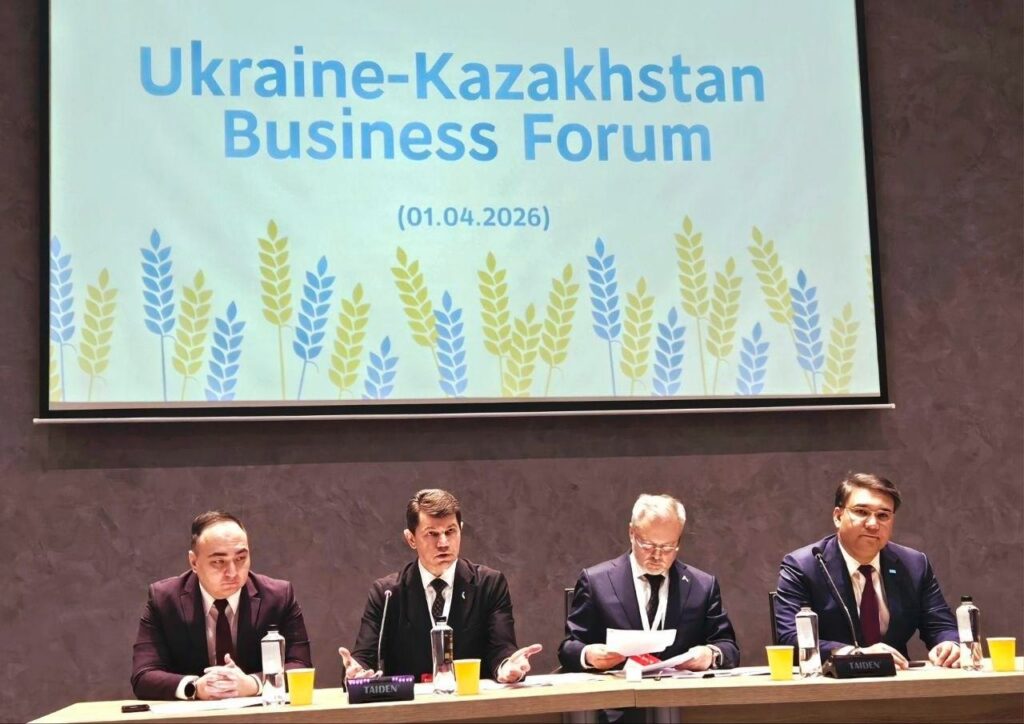
Ukrainian Deputy Foreign Minister, Olexandr Mishchenko, discussed prospects for trade and economic cooperation, including the possible resumption of the Intergovernmental Commission on Trade and Economic Cooperation, during a meeting on April 2 with Serik Zhumangarin, Kazakhstan’s Deputy Prime Minister and Minister of the National Economy.

In comments to The Times of Central Asia, the Ukrainian Foreign Ministry representative said Astana and Kyiv are aiming to restore bilateral trade.

Trade between Kazakhstan and Ukraine reached approximately $5.5 billion annually before the war but has since declined sharply. However, according to Kazakh data, the situation has begun to improve. The Ministry of National Economy reported that trade turnover between the two countries totaled $415.8 million in 2025, up 5.4% from $394.3 million in 2024. Kazakhstan’s main exports to Ukraine include ferroalloys, fertilizers, and rice, while imports from Ukraine consist of chocolate and other cocoa products, flour and confectionery, medicines, cheese, and cottage cheese.
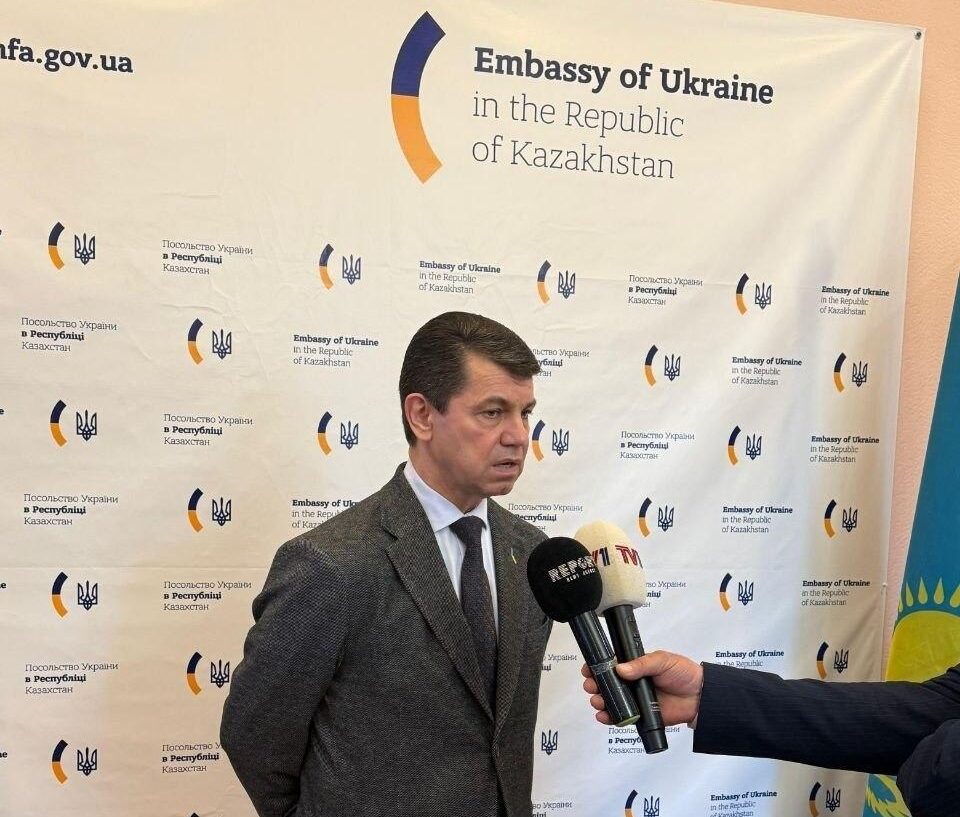
Image: Ukrainian Embassy in Kazakhstan

Astana and Kyiv also intend to expand the range of goods traded. During interdepartmental consultations held in Astana, the sides discussed trade, investment, agriculture, logistics, and humanitarian cooperation, with a focus on export diversification. They agreed to intensify business contacts, consider resuming the Intergovernmental Commission, and expand cooperation in priority sectors, particularly the agro-industrial complex.

Mishchenko said the countries also plan to strengthen cooperation in the energy sector and restore logistics chains. Until 2022, Ukraine provided key transit routes for Kazakh exports to Europe. Before 2022, a significant share of Kazakhstan’s westbound trade relied on routes passing through or near Ukrainian infrastructure. The war disrupted those pathways and forced a broader regional shift toward alternative corridors, including routes across the Caspian and South Caucasus, which remain longer, more complex, and often more expensive.

“Territorial integrity remains the cornerstone of our cooperation. We are deeply grateful to Kazakhstan for its humanitarian aid: more than 600 tons were collected, particularly during the winter. This support was critical to Ukraine’s resilience,” Mishchenko said.

The visit marked the first trip by a senior Ukrainian government representative to Kazakhstan in recent years. A large delegation of Ukrainian entrepreneurs accompanied Mishchenko, seeking to re-establish business ties with Kazakh partners.

“Despite the ongoing conflict, Ukraine is already looking toward the post-war future, and concrete proposals for cooperation, including in energy, are being developed through bilateral engagement with Kazakhstan,” Mishchenko told The Times of Central Asia. “Kazakhstan’s energy resources create opportunities for mutually beneficial cooperation, including potential integration into Ukrainian markets.”

Mishchenko noted that a Ukrainian business mission, the first in many years, visited Kazakhstan, including the Pavlodar Region, a major industrial hub with significant heavy industry and energy capacity. “This creates real demand for modernization, engineering solutions, and equipment supplies,” he said.

The delegation held meetings with government officials, financial institutions, and business representatives, alongside regional visits aimed at launching joint projects.

In Astana, talks were held with the leadership of Baiterek National Management Holding. Ukrainian entrepreneurs also visited the Astana International Financial Centre and the city administration, where they were briefed on investment opportunities, special economic zones, and investor support mechanisms.

The regional program included a visit to the Karaganda Region and the Sary Arka Special Economic Zone, where participants examined investor conditions, state support tools, and production localization opportunities. Meetings with regional authorities focused on potential joint projects.

The delegation also visited several enterprises, including Qarmet, Qaragandy Power Silicon, and the Shans farm, to assess production capacity and identify areas for cooperation.

In the Pavlodar Region, Ukrainian representatives met with leading industrial companies, including Aluminum of Kazakhstan, Eurasian Energy Corporation, and EkibastuzFerroAlloys, to discuss cooperation in industry, energy, and equipment supply.
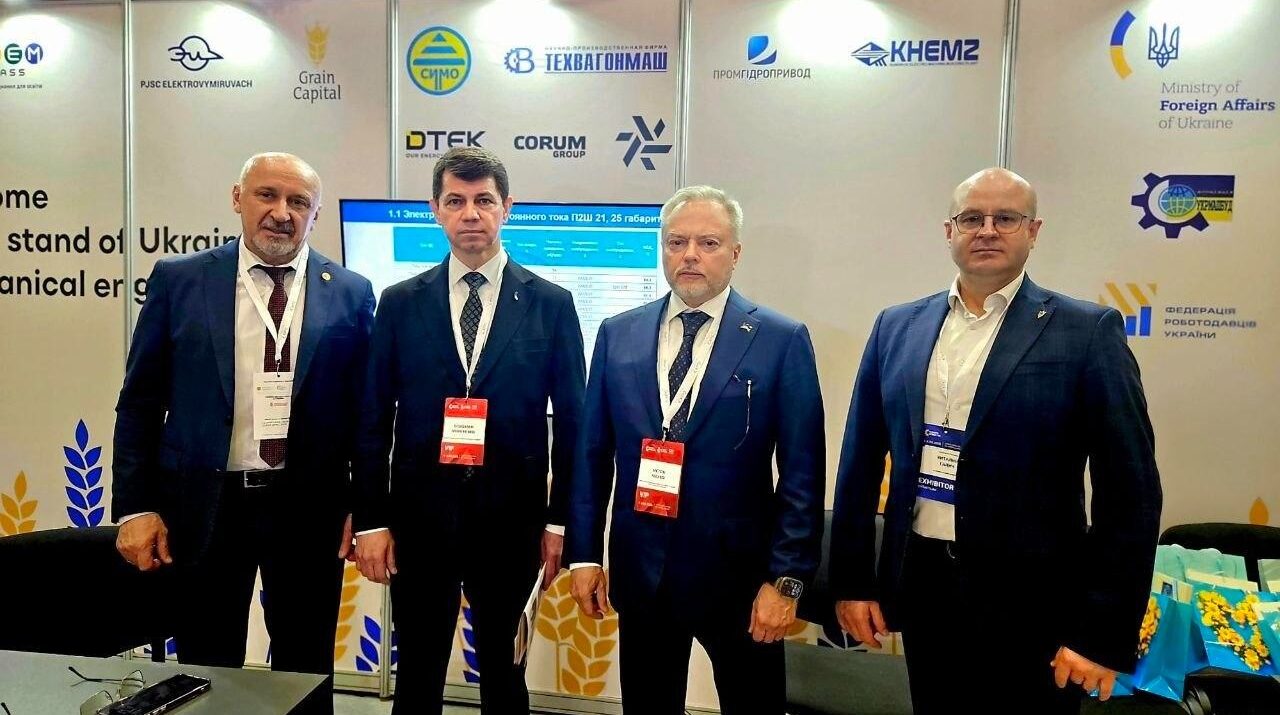
Image: Ukrainian Embassy in Kazakhstan

“Our entrepreneurs also visited the Pavlodar Special Economic Zone, where they reviewed investor conditions and state support measures, and met with regional authorities to discuss local needs and how Ukrainian technologies could address them,” Mishchenko added.

The delegation also traveled to Kokshetau, the administrative center of the Akmola Region, a key hub for Kazakhstan’s agro-industrial sector.

“Such visits allow Ukrainian businesses not only to present their capabilities but also to respond to the specific needs of regions and enterprises in Kazakhstan,” Mishchenko said. “We are ready to explore cooperation in mechanical engineering, agriculture, and other sectors. During my visit, I also met members of Kazakhstan’s parliamentary delegation to discuss industrial cooperation, humanitarian issues, and the possible resumption of academic exchanges.”

The agro-industrial sector remains a key area of cooperation. Dairy farms in several Kazakh regions have worked with the Ukrainian Milk Producers Association for years on breeding livestock supply and professional training. Logistics is also expected to play a central role in restoring bilateral ties.

“We are exploring the possibility of restoring transport routes via the Black Sea and the Caspian region, which could become a strategically important corridor,” Mishchenko said. “Before the war, trade between our countries reached $5.5 billion. We intend to actively restore and expand economic cooperation.”

Previously, Ukraine’s Ambassador to Kazakhstan Victor Mayko told The Times of Central Asia that the two economies are complementary and that bilateral trade could double pre-2022 levels.

Uzbekistan Drafts New Law to Strengthen Animal Protection

Lawmakers in Uzbekistan are preparing a draft law aimed at strengthening protections for animals and addressing animal cruelty more systematically, according to the Ecological Party’s faction in the Legislative Chamber.

Despite a reported decline in incidents in recent years, cases of animal cruelty continue to be reported, often without a clear motive and sometimes for entertainment, the party said. Deputies argue that existing measures, although recently tightened, remain insufficient to fully address the problem.

On March 25, Uzbekistan adopted amendments increasing penalties for animal cruelty. Under the revised rules, offenders may face fines ranging from 15 to 25 times the base calculation amount (approximately $34) or up to 15 days of administrative detention. However, lawmakers say these measures should be complemented by a broader legal framework.

The new draft law, titled “On the Protection of Animals from Cruel Treatment,” is being developed as a comprehensive response. According to the party, it draws on international experience and is designed not only to punish violations but also to prevent them.

Among its key provisions is a clearer legal definition of acts constituting animal cruelty, along with stricter prohibitions. The draft also proposes revising criminal liability, including increasing fines to up to 200 times the base calculation amount (approximately $6,775) or introducing prison sentences of up to one year.

In addition, the legislation would require offenders to fully cover veterinary treatment costs for injured animals, even if those costs exceed the animal’s market value. It also outlines responsibilities for pet owners, including proper care and a ban on abandoning animals.

The draft includes provisions to support the development of pet-friendly public spaces and proposes legal recognition of guide dogs and emotional support animals in public transport. It also emphasizes education and public awareness through schools and media to encourage more humane treatment of animals.

Afghanistan Aims to Increase Trade with Central Asia to $10 Billion

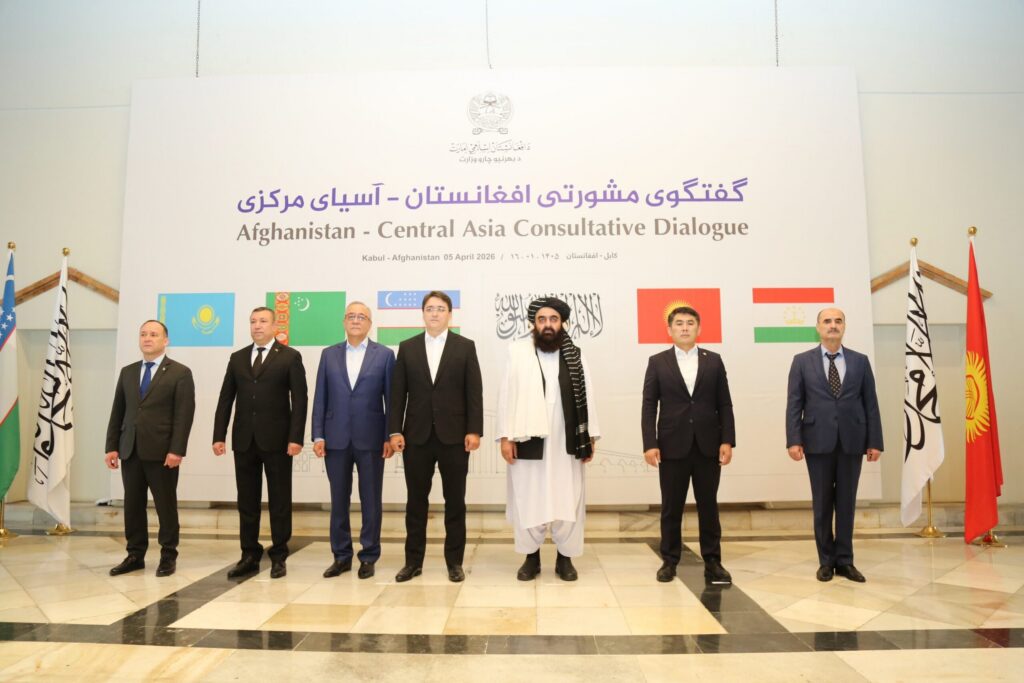
Afghanistan aims to increase trade with Central Asian countries to $10 billion over the next three to four years, Foreign Minister Amir Khan Muttaqi said at a meeting in Kabul.

According to Muttaqi, Afghanistan’s trade turnover with countries in the region reached approximately $2.7 billion in 2025, marking a significant increase compared to previous years.

The statement was made during a consultative dialogue involving representatives from Kazakhstan, Uzbekistan, Kyrgyzstan, Tajikistan, and Turkmenistan, focused on regional cooperation, trade, and the development of transit routes.

Muttaqi said Afghanistan intends to leverage its geoeconomic position to connect Central Asia with markets in South and West Asia. Among key projects, he highlighted the TAPI gas pipeline, which is currently under construction.

Afghan authorities are seeking to expand economic ties despite ongoing international sanctions affecting the banking sector, which continue to constrain investment inflows. At the same time, Russia remains the only country to have officially recognized the Taliban government that came to power in 2021. Several countries, including China, India, Turkey, and the United Arab Emirates, maintain a diplomatic presence in Kabul.

Landlocked Central Asian countries view southern routes through Afghanistan as an alternative to northern corridors via Russia, which have been complicated by sanctions.

Afghanistan shares a border of more than 2,300 km with Tajikistan, Uzbekistan, and Turkmenistan, and continues to face security challenges, including threats from extremist groups, drug trafficking, and irregular migration. However, Muttaqi said the situation along the borders remains generally stable.

Earlier reports indicated that Kazakhstan is exploring the possibility of investing in rare earth metal mining in Afghanistan. The national company Tau-Ken Samruk is conducting laboratory analysis of samples collected in Afghanistan and Rwanda.

Kyrgyzstan Weighs Nuclear Power as Rosatom Talks Advance

Kyrgyzstan is still in talks with Russia’s state-owned nuclear power company Rosatom about building a nuclear power plant (NPP) in Kyrgyzstan. But on March 3, Kyrgyz Deputy Chairman of the Cabinet of Ministers, Daniyar Amangeldiyev, was already speaking about conducting a national referendum on the construction of a nuclear power plant.

It is clear why Rosatom is anxious to build the NPP, but it is less clear why Kyrgyzstan needs it.

Kyrgyzstan’s Road to Nuclear Power

Rosatom is active in Central Asia, receiving the contract to build Kazakhstan’s first NPP in June 2025.

Uzbekistan had already signed a contract with Rosatom in May 2024, and in late March 2026, the first concrete was poured for the NPP that Rosatom is constructing in Uzbekistan.

At first glance, Central Asia might not seem like an ideal market for nuclear power. But after Russia’s full-scale invasion of Ukraine in February 2022, Finland canceled its contract for Rosatom to build the Hanhikivi-1 NPP, and while several  European countries are building or considering building NPPs, Hungary is the only country committed to partnering with Rosatom.

With limited prospects for new contracts in Europe, Rosatom is likely to focus on securing additional deals in non-European markets to expand its already extensive portfolio.

Kyrgyzstan’s Energy Ministry and Rosatom signed a Memorandum of Understanding for a small NPP in January 2022. The initial plan for Kyrgyzstan’s NPP was to build a small RITM-200N with a 55-megawatt (MW) capacity.

In May 2025, Director General of Rosatom, Alexey Likhachev, said his company was offering Kyrgyzstan a modular NPP project that could generate anywhere from 110 MW to 440 MW using RITM-200N reactors, equivalent to two to eight units. In late March 2026, Likhachev said current talks with Kyrgyzstan were not only focused on the construction of a small NPP but also a medium-sized NPP.

Kyrgyz Deputy Chairman of the Cabinet of Ministers Amangeldiyev said in June 2025 that Kyrgyz officials and Rosatom representatives were already looking at potential sites for the NPP. Reports about the planned NPP in Kyrgyzstan don’t mention the cost of construction, and it remains unclear how many and what size reactors will be installed.

According to Uzbek officials, the six 55-MW units that Rosatom was initially contracted to build (the project has since changed) would have cost “less than $2 billion.”

An Agreement or Not

In March 2024, Kyrgyzstan’s Deputy Energy Minister Taalaybek Baygaziyev signed an agreement with Rosatom on the development and implementation of the NPP investment project.

In September 2025, Altynbek Rysbekov was appointed Kyrgyzstan’s Deputy Energy Minister, and he said, “There is a possibility of building a (nuclear power) station, but no fundamental decision has been made yet.” However, Rysbekov’s further comments indicated he supported the idea of building an NPP in Kyrgyzstan, and he reconfirmed that the search for an appropriate site for the NPP continued.

On April 3, 2026, Amangeldiyev said negotiations with Rosatom are continuing.

“We are collaborating with Rosatom on infrastructure development and personnel training,” Amangeldiyev stated. “Only after that can we consider construction.”

That was when Amangeldiyev added that Kyrgyzstan would hold a national referendum on the construction of the NPP before any final agreement was signed, thus following the same route as Kazakhstan.

Does Kyrgyzstan Need Nuclear Power?

Kyrgyzstan has suffered from electricity shortages since the country became independent in late 1991.

In 2023, at the urging of Energy Minister Taalaybek Ibrayev, Kyrgyz authorities imposed a state of emergency in the country’s energy sector that would last until the end of 2026. That was later extended to last until 2028.

Kyrgyzstan has huge hydropower potential, with most of the country’s domestically produced power coming from hydropower plants (HPP). Several years ago, Kyrgyzstan launched a program to build new HPPs.

President Sadyr Japarov said in an interview in November 2025 that 41 small- and medium-HPPs would start operation in 2026 and 2027, and in 2028 another 1200-MW unit would be launched at the Kambar-Ata-2 HPP. He also mentioned other projects, such as the 1200-MW thermal power plant being built in northeastern Kyrgyzstan at Kara-Keche.

“Once construction is completed, by 2028–2029, we will supply electricity without any restrictions. We will no longer import electricity,” Japarov said, adding that soon after this, Kyrgyzstan would be exporting electricity.

Kazakhstan and Uzbekistan are helping Kyrgyzstan build the massive Kambar-Ata-1 HPP that will generate some 1860 MW. Officials are optimistic that the first unit at the HPP could be launched before the end of 2028.

However, depending on hydropower as the effects of climate change become more pronounced in Central Asia might not be a long-term sustainable solution to power problems. The region is already recording reduced rainfall and melting glaciers.

But Kyrgyzstan is also building wind farms and solar power plants. Energy Minister Ibrayev said in February 2026 that solar and wind projects were moving forward that would add 650 MW in the near future.

Why Kyrgyzstan needs to have an NPP that adds, seemingly, at most 440 MW is not clear. And it will take some ten years before the NPP would start operation.

Much of Central Asia lies in seismically active zones, and reports on the search for a suitable site for Kyrgyzstan’s NPP note that earthquake risk is a major consideration.

Amangeldiyev’s remark about a national referendum seems to indicate a final agreement with Rosatom is near. But it is difficult to see why Kyrgyzstan needs this NPP with so many other environmentally-friendly options available.

Pannier and Hillard’s Spotlight on Central Asia: New Episode Out Now

As Managing Editor of The Times of Central Asia, I’m delighted that, in partnership with the Oxus Society for Central Asian Affairs, from October 19, we are the home of the Spotlight on Central Asia podcast. Chaired by seasoned broadcasters Bruce Pannier of RFE/RL’s long-running Majlis podcast and Michael Hillard of The Red Line, each fortnightly instalment will take you on a deep dive into the latest news, developments, security issues, and social trends across an increasingly pivotal region.

This week, we examine a series of significant developments across Central Asia, from the deepening fallout of Kyrgyzstan’s political power struggle, with fresh arrests, widening investigations, and reports of military build-ups in one of the country’s key districts, to a meeting of the Organisation of Turkic States carrying implications that could reverberate well into the rest of the year. We also look at Kazakhstan’s announcement of a new oil discovery so substantial it comes close to rivalling Kashagan, alongside the decision by four of Central Asia’s five states to dispatch aid convoys in support of the humanitarian response in Iran, as well as a notable diplomatic development where two neighbouring states are finally moving to establish formal relations for the first time since 2021. Before finally turning to the escalating conflict between Afghanistan and Pakistan, where some of the heaviest fighting in months is raising fresh questions about border stability, regional security, and the risk of wider spillover.

Special guest on the show this week:

– C. Christine Fair, professor in the Security Studies Program within the Edmund A. Walsh School of Foreign Service at Georgetown University, and an expert in the Pakistani military and Afghan relations.