• KGS/USD = 0.01144 0%
  • KZT/USD = 0.00210 0%
  • TJS/USD = 0.10528 0.19%
  • UZS/USD = 0.00008 0%
  • TMT/USD = 0.28490 0%
  • KGS/USD = 0.01144 0%
  • KZT/USD = 0.00210 0%
  • TJS/USD = 0.10528 0.19%
  • UZS/USD = 0.00008 0%
  • TMT/USD = 0.28490 0%
  • KGS/USD = 0.01144 0%
  • KZT/USD = 0.00210 0%
  • TJS/USD = 0.10528 0.19%
  • UZS/USD = 0.00008 0%
  • TMT/USD = 0.28490 0%
  • KGS/USD = 0.01144 0%
  • KZT/USD = 0.00210 0%
  • TJS/USD = 0.10528 0.19%
  • UZS/USD = 0.00008 0%
  • TMT/USD = 0.28490 0%
  • KGS/USD = 0.01144 0%
  • KZT/USD = 0.00210 0%
  • TJS/USD = 0.10528 0.19%
  • UZS/USD = 0.00008 0%
  • TMT/USD = 0.28490 0%
  • KGS/USD = 0.01144 0%
  • KZT/USD = 0.00210 0%
  • TJS/USD = 0.10528 0.19%
  • UZS/USD = 0.00008 0%
  • TMT/USD = 0.28490 0%
  • KGS/USD = 0.01144 0%
  • KZT/USD = 0.00210 0%
  • TJS/USD = 0.10528 0.19%
  • UZS/USD = 0.00008 0%
  • TMT/USD = 0.28490 0%
  • KGS/USD = 0.01144 0%
  • KZT/USD = 0.00210 0%
  • TJS/USD = 0.10528 0.19%
  • UZS/USD = 0.00008 0%
  • TMT/USD = 0.28490 0%

Middle East Crisis: Kazakhstan Could Become an Alternative Supplier of Petroleum Products to Asia

The two-week ceasefire announced after Pakistani mediation between Iran and the U.S. has reduced the risk of immediate escalation in the Strait of Hormuz, but disruptions to one of the key routes of global oil trade have already triggered structural changes in energy markets. Against this backdrop, Kazakhstan and other countries in the region are increasingly being viewed as alternative suppliers of hydrocarbons, at least from the perspective of South Korea and Japan.

Despite the agreement on a two-week pause, Iran has made it clear that it retains control over shipping in the strait, including the potential to impose restrictions and coordinate tanker movements with its military. This has heightened concerns among importers, many of whom depend heavily on this route.

The most notable shift is taking place in Asia. South Korea, which receives about 61% of its crude imports and 54% of its naphtha imports through the Strait of Hormuz, is sending a high-level delegation to Kazakhstan, Oman, and Saudi Arabia to seek alternative sources of supply. Talks in Astana are expected to focus on oil and naphtha for industrial use.

South Korea, Asia’s fourth-largest economy, has proven to be among the most vulnerable to disruptions in the Strait of Hormuz. In response, Seoul is taking urgent diplomatic and economic measures, with Presidential Chief of Staff Kang Hoon-sik traveling to Kazakhstan as a special envoy for strategic economic cooperation. The delegation includes representatives from relevant ministries and major energy companies, underscoring the urgency of the effort.

The purpose of the visit is not only to address a potential short-term shortfall but also to establish sustainable alternative supply channels. South Korea has already secured a 24 million-barrel supply deal with the UAE, and shipments are already arriving at its ports, though officials say that volume is still insufficient given the ongoing instability.

The government is coordinating efforts with private fuel importers and logistics operators to ensure uninterrupted supplies until tankers arrive at the country’s ports.

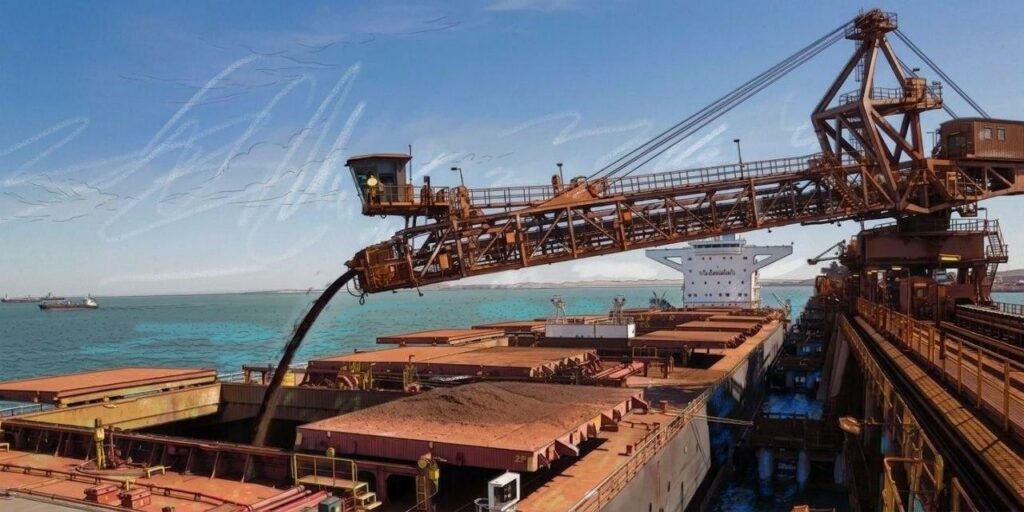
Kazakhstan, which possesses large oil fields including Kashagan, is emerging as a key candidate to partially replace Middle Eastern volumes. However, geography imposes clear limitations: oil from the region requires more complex logistics, including transit across the Caspian Sea and onward through the Caucasus or the Black Sea. This is compounded by a projected decline in the country’s oil production. In March, Energy Minister Yerlan Akkenzhenov stated that output could fall by 2-4 million tons by the end of 2026 due to disruptions linked to attacks on infrastructure belonging to the Caspian Pipeline Consortium (CPC), as well as fires at the Tengiz field.

Initial projections placed Kazakhstan’s 2026 oil production at 100.5 million tons, potentially a record level. However, the minister indicated that actual output will most likely fall short of this target.

Japan is also reassessing its supply strategy. With more than 90% of its oil traditionally sourced from the Middle East, Tokyo is considering increasing imports from Kazakhstan and Azerbaijan through projects involving the national company INPEX.

Japanese experts note that oil from the Caspian region is broadly similar in quality to Middle Eastern crude, making it easier to process at existing refineries. However, alternative transport routes, such as shipments via the Red Sea and Mediterranean, or around Africa, extend delivery times to between 25 and 55 days and significantly increase costs.

Overall, the current crisis may accelerate a long-term reassessment of the role of Central Asia and the South Caucasus in the global energy sector. However, any significant increase in supply will be constrained by infrastructure and transport limitations. Most of Kazakhstan’s oil exports continue to rely on routes passing through Russia, introducing an additional geopolitical dimension.

While negotiations between Tehran and Washington continue, markets are already reacting to perceived risks. Jet fuel and diesel prices in Europe have risen sharply, and EU officials are discussing emergency measures including delayed refinery maintenance, lower grid tariffs and electricity taxes, and a possible revival of some 2022-era crisis tools. Even so, a partial reallocation of supply flows could stimulate investment in alternative routes, including the Trans-Caspian corridor and the expansion of existing pipeline networks.

Bukhara Demolitions Resurface as Developer Faces Financial Trouble

Concerns over demolition works linked to the “Eternal Bukhara” tourism project have resurfaced following renewed questions directed at Uzbekistan’s Cultural Heritage Agency, as the project’s main developer faces financial difficulties.

In 2024, The Times of Central Asia reported that construction of the large-scale tourism complex near the historic center of Bukhara had drawn criticism from local residents and UNESCO. The project, located in the buffer zone surrounding the ancient city, was seen as a potential threat to the integrity of one of Central Asia’s most significant cultural sites.

According to Uzbek outlet Uzdiplomat, the issue was raised again during a recent briefing, where journalists questioned officials about the consequences of last year’s demolitions. The project’s main investor, Enter Engineering, has since encountered financial problems and is reportedly selling assets to repay debts to banks, the government, and employees. While construction has slowed, concerns remain over the damage already caused to the cultural environment.

The demolitions carried out in 2024 sparked strong reactions from the public, architects, and international organizations. Several buildings, including administrative and social facilities in central Bukhara, were reportedly demolished as part of preparations for the tourism complex. At the time, international heritage group Alerte Héritage called for a halt to the process, arguing that it could contradict global preservation commitments.

Responding to questions, a representative of the Cultural Heritage Agency said the works were conducted outside UNESCO’s core protected area and instead took place in the buffer zone. According to the agency, all required documentation, including a master plan and impact assessments, was submitted, and UNESCO was informed of the process.

Officials also addressed criticism over the demolition of buildings that, while not officially listed as cultural heritage, were considered by some to have historical value. Deputy head of the agency Tursunali Kuziyev said the agency can only intervene in cases involving officially registered heritage sites. He added that granting such status requires a formal scientific review and legal procedure.

Questions about whether the agency could take a broader stance in defense of the public interest were met with similar responses. Officials reiterated that decisions regarding non-listed buildings fall under the authority of local governments and urban planning bodies.

Kazakhstan’s Bublik Remembers Clay Court Moment with Monfils

Kazakhstan’s Alexander Bublik shared a memory at the net with Gaël Monfils after defeating him at the Monte-Carlo Masters, in the French veteran’s last appearance at the Roland Garros tune-up.

“Do you know what? Exactly 10 years ago, I was a hitting partner here,” Bublik, ranked 11th in the world, told Monfils after beating him 6-4, 6-4 in the round of 32 on Tuesday.

As the two men embraced and the crowd cheered, Bublik asked Monfils if he remembered what he had said a decade ago.

Monfils responded: “I told you grass is not the main, here is your main! Remember that.”

The 39-year-old Frenchman, who has said the 2026 season will be his last in professional tennis, was onto something when he told Bublik to focus on clay court tennis all those years ago. Although the Russia-born player was once open about his distaste for the surface, he reached the French Open quarterfinals and won two clay titles last year during a resurgence that propelled him up the rankings.

Bublik, 28, was in command against Monfils, mixing up baseline drives with feathered drop shots that his opponent couldn’t reach.

Monfils was once ranked as high as sixth in the world and has won 13 ATP titles. Bublik has won nine titles. The two men are considered among the most entertaining on the tour, for their shotmaking and flamboyance on the court.

In Monaco on Tuesday, as they approached the umpire’s chair for a handshake, Monfils said to Bublik: “Good luck, brother.”

Tokayev Welcomes Middle East Truce, Reaffirms Kazakhstan’s Support for Peace Efforts

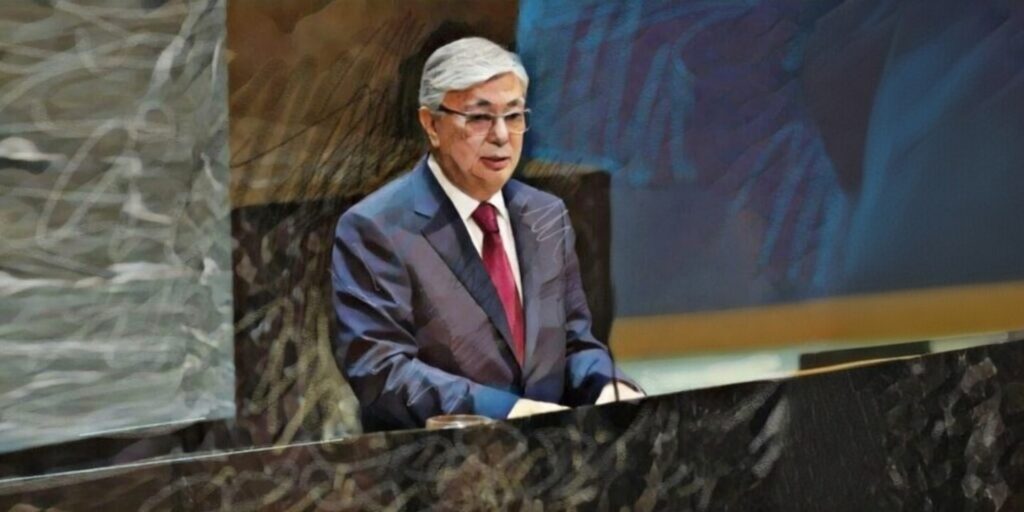
President Kassym-Jomart Tokayev has welcomed the “ceasefire and truce” announced in the Middle East, praising the mediation efforts of Pakistani Prime Minister Shehbaz Sharif and Pakistan’s Chief of Army Staff, Field Marshal Asim Munir.

According to Kazakhstan’s presidential press office, Tokayev stated that “this agreement became possible due to the goodwill and wisdom of the President of the United States, Donald Trump, and the senior leadership of Iran, as well as all countries involved in the military conflict.”

He added that he hoped the agreement would be lasting and would contribute to global trade and the economic prosperity of nations.

Tokayev’s statement is consistent with his broader support for diplomatic peace initiatives. On January 22, 2026, Tokayev signed the Charter of the Board of Peace in Davos. At the Board’s inaugural meeting on February 20, Tokayev said Kazakhstan’s decision to join the Abraham Accords was fully aligned with the Board of Peace’s mission and could help advance peace, security, and wider humanitarian and economic cooperation in the Middle East.

Kazakhstan has also framed its decision to join the Abraham Accords as part of a larger effort to reduce confrontation and encourage dialogue. In official remarks, Tokayev said the move was intended to contribute to lasting peace in the Middle East and reflected Kazakhstan’s multilateral diplomacy aimed at promoting peace and security.

By linking the truce to trade and prosperity, Tokayev underscored Kazakhstan’s view that peace and economic stability go hand in hand. The statement reinforces Astana’s position that dialogue, bridge-building, and sustained diplomacy remain the strongest path toward regional stability and long-term growth.

Opinion: Supply Chains of Power: How Critical Minerals Are Shaping China–U.S. Competition in Central Asia

Central Asia is no longer a distant frontier for global geopolitics. It is developing into a central arena of competition for critical minerals, supply chains, and industrial power, where minerals are no longer simple commodities but have instead become key components of contemporary statecraft.

In essence, this transformation highlights a recognition in Washington and other capitals that critical mineral supply chains are fundamental to next-generation energy systems, the development of artificial intelligence (AI), and strategic defense capabilities. Even as the global economy is multipolar, critical mineral supply chains remain highly concentrated and dominated by China.

Control of rare earths is increasingly geopolitical, with clear economic, political, and security consequences. The significance of that imbalance is now shaping U.S. foreign policy, Central Asia’s development strategies, and the future of global economics.

China’s Strategy: Control the Chain, Not Just the Mine

Though many years in the making, China’s critical minerals strategy is still often misunderstood as focused primarily on resource access. However, Beijing’s efforts are far broader and more effective. Not only securing raw materials, the Chinese leadership has also worked to control the entire supply chain—from extraction to processing, refining, and manufacturing.

China’s long-term focus and investments began in the 1980s with efforts that culminated in the Made in China 2025 plan for national and overseas manufacturing. In 2023 alone, Chinese firms invested more than $120 billion in overseas mining and processing, targeting key elements used in energy supply chains. Beijing also fed its industrial base by providing over $220 billion for the production of electric vehicles, batteries, and renewable infrastructure.

As a result, China now controls approximately 60% of lithium processing, more than 70% of cobalt refining, and over 90% of battery material manufacturing. Strategically, China controls roughly 90% of global rare earth refining and associated technologies. Early investments in supplies enabled Beijing to subsequently concentrate funds into refining capacity to feed its industrial sector. This integrated approach has shifted the power dynamic for global supply chains tied to the critical minerals economy.

As evidenced by Beijing’s near monopoly on processing, market control is not just associated with geological supplies but with processing capacity. China’s willingness to weaponize access not only to rare earths but also to processing technology demonstrates Beijing’s market muscle.

This distinction is critical. Rare earth elements are not inherently scarce, but they are rarely found in concentrated deposits, making them difficult to extract and refine. Over decades, Beijing developed unique refining capabilities and subsidized an industrial base that disincentivized competition and encouraged processing to shift to China.

The Vicious Circle

Prohibitive investment costs, long development timelines, and market volatility have discouraged Western investment in alternative supply chains. Each stage (mining, processing, refining, manufacturing) is interdependent: miners won’t invest without buyers and offtake agreements, processors and refiners need secure financing and stable mineral supply, and manufacturers need steady inputs. Such interdependence creates an investment standoff and heightens perceptions of risk.

By integrating all stages, Beijing exerts influence across global markets, from pricing to production. This has conditioned global markets to depend upon Chinese materials and standards. To build competing systems requires substantial up-front capital and long-time horizons, which together can pose significant deterrents to investment.

While some countries are seeking to break out of this vicious cycle of dependency, China is also adapting to compensate. Through the Belt and Road Initiative (BRI), Beijing is advancing loan and infrastructure projects in exchange for expanding into offshore processing partnerships tied to long-term offtake agreements. This secures Beijing stable supplies for its industries, but also extends its influence across global markets.

The U.S. Shifts to Being a Strategic Actor

The United States has been slow to respond, but this is changing. Critical minerals are now a national security priority. Initiatives such as Project Vault, the Critical Minerals Ministerial, and the FORGE framework represent a strategic shift. These are not simply funding efforts but strategic attempts to build U.S. resilience while disrupting and restructuring the global mineral market away from China’s unchecked dominance.

Project Vault, a $12 billion public–private initiative, is designed as a strategic reserve to stabilize demand and support investment. Building off the 1939 U.S. National Defense Stockpile initiative, Project Vault goes beyond defense to protect broader U.S. industrial needs, using price floors and trade mechanisms to reduce volatility and encourage private investment.

FORGE represents a broader ambition of building a parallel supply chain among trusted partners with aligned policies and access. Elevating multilateral economic cooperation, this new market would create a trusted trading system outside of China’s orbit.

However, out of the new and expanded list of 60 critical minerals identified by the U.S. Geological Survey, the United States is completely “import-reliant” on 11 of these minerals and rare earth elements. Of the remaining minerals needed by U.S. industries, many depend upon foreign sources for more than half of their supply. Overall, China remains the central supplier.

With so high a level of dependence comes acute vulnerability. U.S. supply chains are exposed not only to market fluctuations but to geopolitical leverage. China’s 2025 imposition of export controls on rare earth elements (germanium and gallium) in retaliation for U.S. semiconductor restrictions is a prime example of how effectively such leverage can be deployed.

Central Asia: From Frontier to Strategic Market

Central Asia is gaining prominence in this context. Long viewed as a frontier zone under Russian and Chinese influence, the region is now emerging as an independent and strategic market with scale and growth potential. The region’s fundamentals are strong: over 7% GDP growth, significant foreign investment, and a young population of 80 million. It also possesses major reserves of rare earths and critical minerals, producing 50% of global uranium along with significant gold and copper.

Historically, infrastructure tied the region to exporting raw materials to China and Russia.  China’s BRI investments further incentivized these transfers through large-scale infrastructure projects that promised transformative benefits. But sales and shipments of cheap raw ore from Central Asia to China for refining and processing only netted significant added value for Beijing.

Central Asian governments are now seeking to change the equation. They aim to capture more value at home while foreign backers get secure, off-take supplies at better prices than from Beijing. This shift reflects both a newfound economic ambition and geopolitical awareness.

Leaders across the region emphasize diversification and multi-vector partnerships. Noting that Astana is working with U.S. partners on major mineral projects, Kazakhstan’s President Kassym-Jomart Tokayev implies that critical minerals are not just a resource, but a pathway to economic development and geopolitical agency.

The Missing Ingredient: Long-Term Capital

Despite momentum, a key constraint remains—lack of capital. Western investment has been limited and inconsistent, while mining and processing projects require decades of commitment. Many Central Asian deposits have already been located, but developing a major mining project can still take decades from inception to production. Processing and refining require additional capital and technology.

Political cycles further complicate investment. While projects require long-term commitments, policy and political cycles are often much shorter. China has filled this gap, offering long-term project financing and development packages that sometimes created a significant debt burden for the Central Asians, which enabled Beijing to lock down mineral resources and export networks.

Central Asian governments are increasingly seeking to diversify partnerships and regain autonomy and agency in managing their relations. To reverse China’s existing supply chain and export advantages, sustained Western engagement (financial, diplomatic, and institutional) will be needed to compete.

Wars and the New Geopolitical Geography

Recent geopolitical developments are accelerating Central Asia’s importance. The war in Ukraine has catalyzed the development of the Middle Corridor, a transport route linking Asia and Europe while bypassing Russia. At the same time, instability in the Middle East has exposed vulnerabilities in maritime routes such as the Strait of Hormuz. Overland transport, especially rail, is gaining further importance as a result.

Central Asia sits at the intersection of these shifts—as both a resource base and a transit hub. Freight along the Middle Corridor has increased fivefold in seven years. Kazakhstan has expanded oil output and refining capacity in response to global disruptions.

This convergence enhances the region’s strategic value. It is not only what Central Asia produces, but how those resources reach global markets. The Middle Corridor is evolving from a convenience to a necessity, representing a resilient routing that provides vital economic flexibility, redundancy, and risk reduction for Central Asia.

The Next Phase of Competition

Power in today’s global economy is evolving. Critical minerals are now central to industrial capacity, technological leadership, and geopolitical influence. China’s dominance reflects decades of sustained strategy and investment. Building alternatives will require a similar commitment. The United States must move from recognition to execution by developing long-term frameworks that endure beyond political cycles.

Central Asia presents a rare and timely opportunity combining resource abundance with growing economic dynamism and a desire for diversifying its partnerships. Plus, the region is seeking to move beyond extraction toward value creation. Yet the window for competitors to enter is narrowing as China expands its integrated supply chain model and raises barriers.

Western policymakers have begun to recognize that the competition over critical minerals is not just about output, but about who controls supply chains and industrial systems. Recent rare earth export restrictions, sanctions, and war-related disturbances highlight the core reality that supply chains must be built before crises emerge and not in response to disruption.

Mines and associated processing capabilities take decades to develop. For the United States and its partners, the imperative is to move beyond discussion to implementation. Capital needs to be mobilized, policies aligned, and institutional frameworks that enhance resilience need to be built. For Central Asia, the opportunity is transformative. By building value chains and leveraging geography, it can move from the periphery to the center of global markets.

The stakes extend far beyond economics. Control over critical mineral supply chains may help define not only patterns of trade and production but also the balance of power in the 21st century.


The views expressed in this article are those of the author and do not necessarily reflect the official policy or position of the publication, its affiliates, or any other organizations mentioned.

The American-Uzbek Business Council Launches in Washington

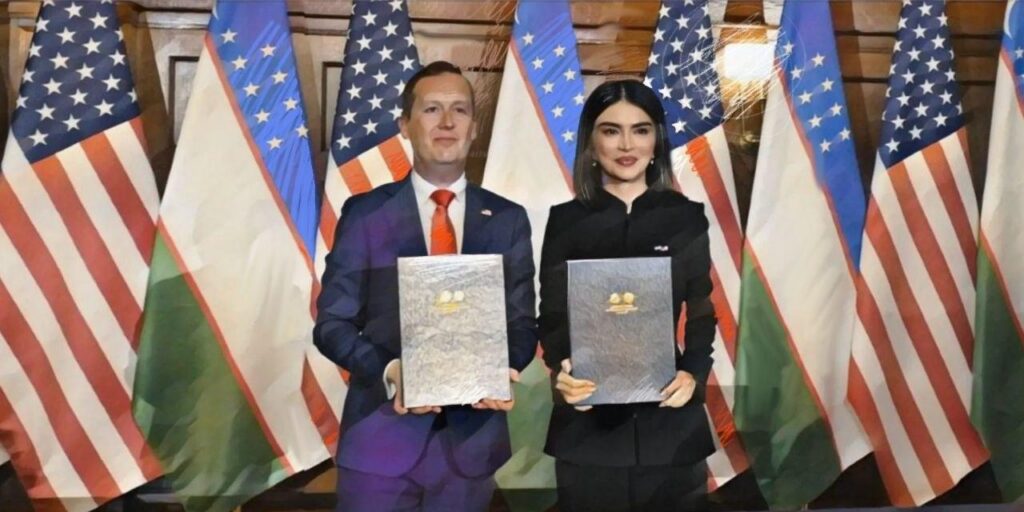
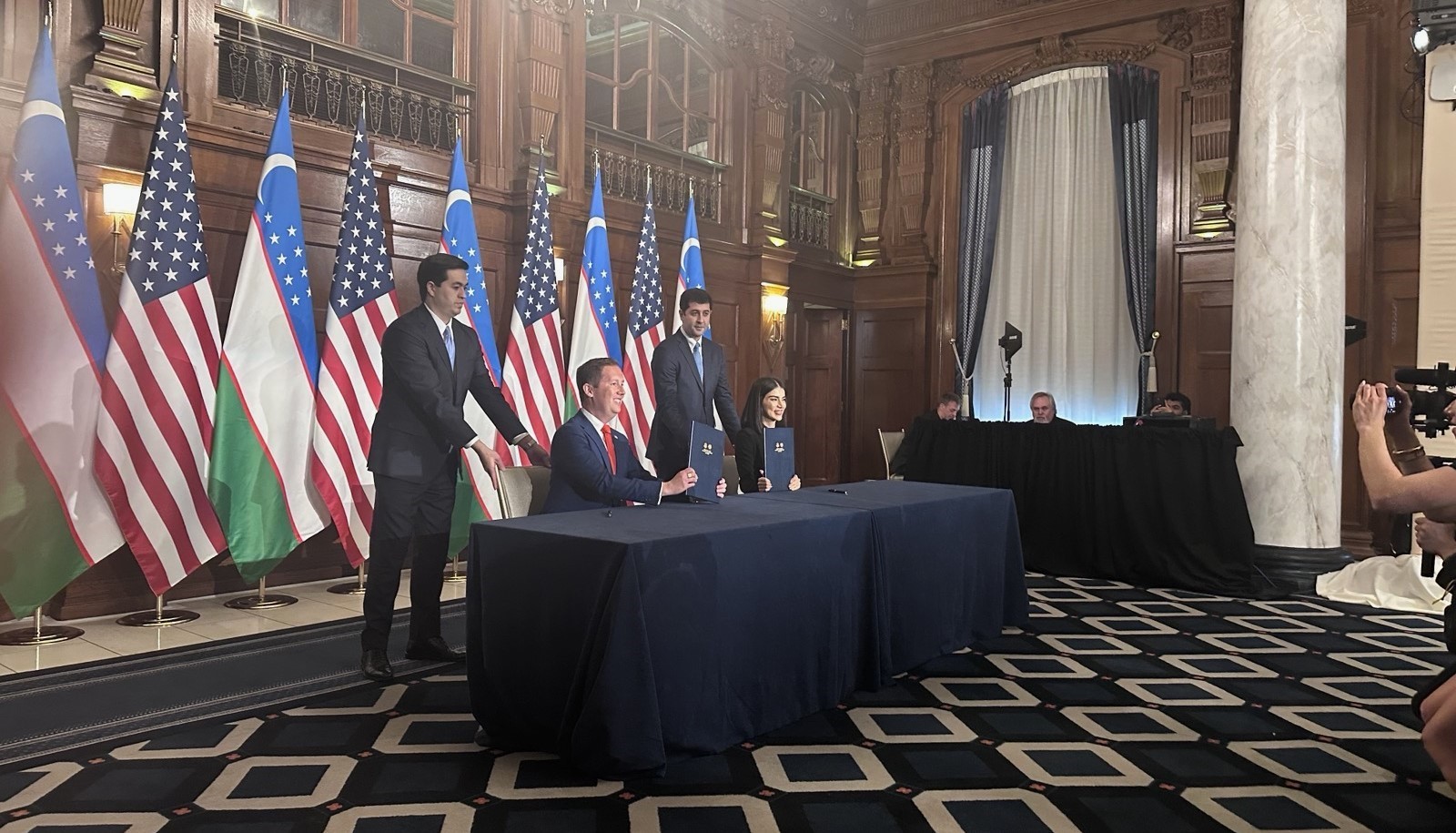
Washington D.C. – At the launch of the American-Uzbek Business and Investment Council in Washington on April 6, the most revealing line came early. Ambassador Sergio Gor, the White House’s special envoy for South and Central Asia, and Co-Chair of the Council, did not begin with trade statistics or a list of deliverables. He began with a blunt assessment of how the region has been treated in Washington. “For too long, this region has not found the attention that it deserves,” he said.

That observation is hardly novel to anyone who follows Central Asia. What made it notable was the speaker and the setting. U.S. policy toward the region has often been episodic, driven at different times by Afghanistan, by Russia, by sanctions enforcement, or by concern over Chinese influence rather than sustained by a coherent regional economic strategy. Gor’s remarks suggested an attempt, at least by the current administration, to correct for that pattern. He was equally clear, however, that this was a political opening, not yet a settled doctrine. “Take this opportunity that the next two and a half years present,” he told the room, an unusually candid acknowledgment that Washington’s attention may be real without yet being durable.

His other key formulation explained how the administration wants to make that attention count. “Never before in the history of the U.S. government has commercial diplomacy been such a major pillar of U.S. foreign policy,” Gor said. Whatever the phrasing, the intended shift was clear. Washington is signaling that in Central Asia, economic statecraft will not be treated as a side channel to politics, but as a primary instrument of policy. In that sense, the new council is less a ceremonial bilateral upgrade than a mechanism for turning political attention into projects, financing, and institutional follow-through.

Image: TCA

Saida Mirziyoyeva, head of Uzbekistan’s presidential administration and the Uzbek co-chair of the council, answered that shift with a line that was just as pointed. “We are no longer at the stage where we speak about potential,” she said. “We are at the stage where we must deliver.” For a government that has spent years presenting Uzbekistan as a reforming economy open to outside capital, that was a significant change of emphasis. The argument is no longer that Uzbekistan deserves credit for opening up but that it now expects to be judged by execution.

Her most substantive remarks were about institutions rather than ambition. The council matters, she said, because it should help “solve problems quickly, without unnecessary bureaucracy” and ensure that “no project is lost along the way.” That is a more serious claim than the language of partnership that usually fills these forums. Mirziyoyeva was effectively acknowledging the gap that often opens between political endorsement and project delivery. Uzbekistan’s challenge is no longer simply attracting attention from foreign partners but getting projects through financing, approvals, and implementation without losing momentum inside the state apparatus.

That urgency reflects the scale of the opportunity. Uzbekistan, with a population of more than 38 million, has an economy that has been growing strongly, with official data showing 7.7% real GDP growth in 2025. For foreign partners, the appeal lies not only in its scale, but also in Uzbekistan’s strategic location and its push into higher-value sectors including energy, mining, logistics, and digital infrastructure. Together, those advantages help explain why delivery now matters more than rhetoric.

The rest of the program put practical detail behind those two opening keynotes. Laziz Kudratov, Uzbekistan’s minister of investments, industry and trade, argued that bilateral engagement had moved “from dialogue to implementation,” pointing to projects and negotiations across energy, petrochemicals, transport, agriculture, and digital infrastructure. David Fogel, the U.S. assistant secretary of commerce, gave the American version of the same story that bilateral trade has crossed the $1 billion mark, U.S. exports are up, and several billion dollars in deals remain in the pipeline. Those are not transformative figures in themselves, but they matter in a region where the U.S. economic presence has often lagged behind its diplomatic interest.

More important than the trade numbers was the repeated focus on financing mechanisms. Across the program, officials on both sides described the same operating model in different terms: build a pipeline, de-risk projects, align export credit and development finance, and move from political endorsement to bankable transactions. The language of the meeting may have been diplomatic, but its logic was financial.

The sector where strategy and commerce most clearly intersected was mining. Bobir Islamov, Uzbekistan’s mining minister, laid out the country’s ambitions in gold, copper, uranium, tungsten, and rare earth elements, but he was careful to stress that Tashkent does not want to remain merely an exporter of raw material. The objective, he said, is processing and higher value-added production inside Uzbekistan. Caleb Orr from the State Department connected that directly to U.S. priorities, arguing that rising demand for copper and uranium makes Uzbekistan a relevant candidate to a wider push for more diversified and resilient supply chains.

The launch of the council reflects Washington’s broader, deepening economic engagement in Central Asia. C5+1 remains the principal regional framework, but U.S. commercial diplomacy in the region also advances through country-specific relationships and business platforms alongside it. In that wider setting, the American-Uzbek Business and Investment Council gives one strand of that regional push a more formal bilateral vehicle in Uzbekistan, anchoring it in financing, coordination, and project delivery.

The presence of private-sector participants helped ground the discussion. Melissa Schaeffer of Air Products pointed to the company’s existing industrial footprint in Uzbekistan, including projects in industrial gas and hydrogen. Mirziyoyeva, for her part, highlighted changes in digital regulation and the push to create conditions for global payment and technology platforms to operate more fully in the Uzbek market. Those details broadened the picture beyond mineral access and strategic signaling to include the less visible work of making commercial activity function.

The significance of the council lies in its attempt to translate Washington’s renewed attention to Central Asia into working mechanisms—financing tools, project pipelines, and institutional coordination—while allowing Tashkent to anchor that attention in implementation. Gor’s opening line acknowledged a long-standing reality that the region has often been underprioritized. Mirziyoyeva’s shifted the focus to delivery. If the council proves successful, it will be because both sides manage to turn moments of political attention into structures that can outlast them.