• KGS/USD = 0.01144 0%
  • KZT/USD = 0.00194 0%
  • TJS/USD = 0.10879 -0.18%
  • UZS/USD = 0.00008 0%
  • TMT/USD = 0.28490 0%
  • KGS/USD = 0.01144 0%
  • KZT/USD = 0.00194 0%
  • TJS/USD = 0.10879 -0.18%
  • UZS/USD = 0.00008 0%
  • TMT/USD = 0.28490 0%
  • KGS/USD = 0.01144 0%
  • KZT/USD = 0.00194 0%
  • TJS/USD = 0.10879 -0.18%
  • UZS/USD = 0.00008 0%
  • TMT/USD = 0.28490 0%
  • KGS/USD = 0.01144 0%
  • KZT/USD = 0.00194 0%
  • TJS/USD = 0.10879 -0.18%
  • UZS/USD = 0.00008 0%
  • TMT/USD = 0.28490 0%
  • KGS/USD = 0.01144 0%
  • KZT/USD = 0.00194 0%
  • TJS/USD = 0.10879 -0.18%
  • UZS/USD = 0.00008 0%
  • TMT/USD = 0.28490 0%
  • KGS/USD = 0.01144 0%
  • KZT/USD = 0.00194 0%
  • TJS/USD = 0.10879 -0.18%
  • UZS/USD = 0.00008 0%
  • TMT/USD = 0.28490 0%
  • KGS/USD = 0.01144 0%
  • KZT/USD = 0.00194 0%
  • TJS/USD = 0.10879 -0.18%
  • UZS/USD = 0.00008 0%
  • TMT/USD = 0.28490 0%
  • KGS/USD = 0.01144 0%
  • KZT/USD = 0.00194 0%
  • TJS/USD = 0.10879 -0.18%
  • UZS/USD = 0.00008 0%
  • TMT/USD = 0.28490 0%
15 December 2025

Daughter of Uzbekistan’s President – His Aide as Well – Gets Promoted

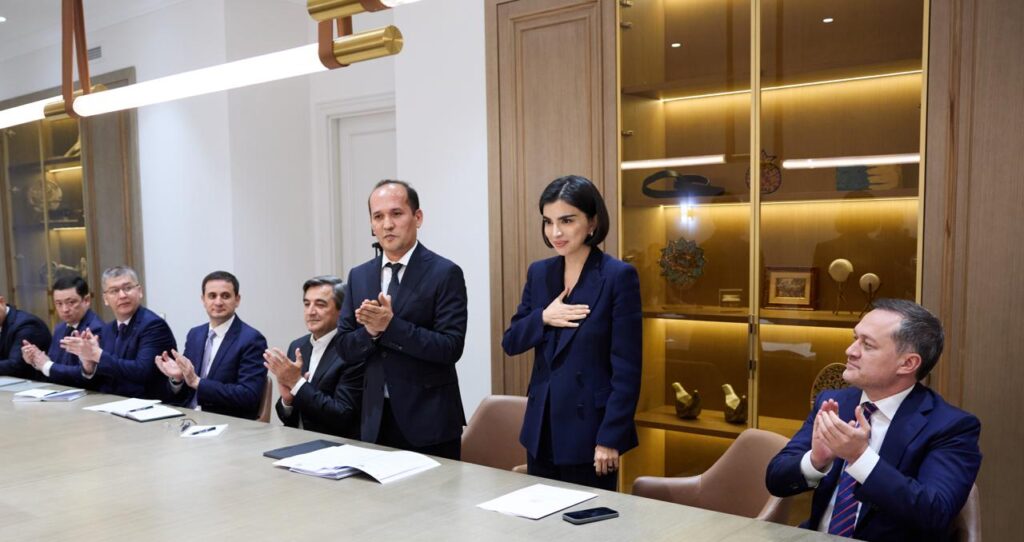
The eldest daughter of Uzbek President Shavkat Mirziyoyev has been elevated to head of the presidential administration, strengthening her power at top levels of the government of the Central Asian country.

Saida Mirziyoyeva, 40, already had a high-profile role in Uzbekistan’s government, meeting international dignitaries in her role as a presidential aide. Now she will take on a newly created role that is likely to stir debate about whether she could become a candidate to eventually succeed her father.

“By decree of the President of the Republic of Uzbekistan, changes were made to the structure of the Presidential Administration. The position of Head of the Presidential Administration was established,” and Mirziyoyeva was appointed to the job, presidential spokesman Sherzod Asadov said Monday. Asadov’s post on Telegram included a photo of Mirziyoyeva standing and acknowledging the applause of officials around a table.

Mirziyoyeva has spoken in support of freedom of speech and women’s rights, issues that have sometimes run up against conservative culture and tight political controls in Uzbekistan. While her father, President Mirziyoyev, has pursued economic reforms and closer ties with international partners, OSCE observers said in a statement that there was a lack of political competition in legislative elections last year and the vote “did not offer voters a real choice.”

Mirziyoyev, 67, has been president of Uzbekistan since 2016. He was re-elected in a 2023 vote after a constitutional amendment that reset the number of his terms in office and lengthened presidential terms from five to seven years.

Kazakhstan to Launch New AQMOLA Industrial Zone to Attract Foreign and Domestic Investment

Kazakhstan marked the groundbreaking of a major industrial development on June 20 with a ceremony inaugurating the AQMOLA Industrial Zone in the Akmola region, near the capital city of Astana.

Spanning nearly 1,000 hectares, the new industrial zone is designed to host production facilities for both domestic and international investors. Seven investment projects are already underway, backed by companies from China, Turkey, Singapore, and Kazakhstan. The initiative is expected to create over 4,500 new jobs.

At the launch event, Akmola region Akim (Governor) Marat Akhmetzhanov underscored the strategic significance of the project.

“The industrial zone will accommodate production facilities of leading companies from Kazakhstan and abroad. Concentrating production capacities in one location will have a multiplier effect on agriculture, processing, logistics, and other sectors, providing a boost to the region’s development,” he stated.

Key Investment Projects

Among the cornerstone ventures is a deep wheat-processing complex by China’s Dalian Hesheng Holdings. The three-phase project, scheduled from 2025 to 2028, will produce sodium glutamate, gluten powder, and other high-demand products targeting markets in China, the Middle East, Southeast Asia, and Europe.

Turkey’s YDA Group will construct an agrochemical complex for manufacturing fertilizers and pesticides.

The Kazakh Institute of Oil and Gas plans to establish a liquefied natural gas production facility.

Meanwhile, China’s Eagle Architecture Technology Co., Ltd. will build a diverse industrial plant to manufacture bitumen waterproof roofing materials, autoclaved aerated concrete blocks, polyvinyl chloride products, aluminum facades, stained glass, windows, and doors.

The AQMOLA Industrial Zone represents a key step in Kazakhstan’s broader strategy to attract foreign direct investment and develop regional industrial hubs that contribute to national economic growth.

Former Kyrgyz Prime Minister Proposes Special Status for Citizens in Russia

At the St. Petersburg International Economic Forum (SPIEF-2025), Temir Sariyev, head of the Kyrgyz Chamber of Commerce and Industry and former prime minister, proposed granting Kyrgyz citizens a special status in Russia. The statement sparked mixed reactions in both Moscow and Bishkek.

Speaking at the Kyrgyzstan-Russia business dialogue, Sariyev, who was involved in Kyrgyzstan’s accession negotiations to the Eurasian Economic Union (EAEU), highlighted Bishkek’s consistent political and economic support for Moscow.

He drew on historical ties, citing Kyrgyz support during the Great Patriotic War. “If we recall the Great Patriotic War, it was the 28 Panfilov Guardsmen who defended Moscow. It was a turning point. When the special military operation began, the first to extend a helping hand, without fear, was the Kyrgyz Republic,” Sariyev said, referring to the Russian invasion of Ukraine.

He proposed exploring the possibility of granting Kyrgyz migrants in Russia a special status, citing longstanding bilateral ties.

However, the initiative met resistance in the Russian State Duma. Konstantin Zatulin, First Deputy Chairman of the Duma Committee on CIS Affairs, dismissed the proposal, noting that Kyrgyz citizens already enjoy considerable privileges under the EAEU framework, such as visa-free entry, the right to work without a permit, and exemption from patent requirements.

“What additional special status could we be talking about? It is impractical. Kyrgyzstan is already in a more advantageous position than other Central Asian countries that are not members of the Union,” Zatulin said.

Pushback also came from within Kyrgyzstan. Deputy Prime Minister Edil Baisalov criticized both Sariyev’s proposal and the broader outcomes of Kyrgyzstan’s EAEU membership. In a post on X, Baisalov wrote: “Of course, our people have a special status, but not because of their participation in the 1941-1945 war. Special status should come from real membership in the EAEU, which hastily accepted us without sufficient guarantees. In reality, there is neither equal access to the labor market nor full access to our goods.”

He urged Kyrgyz authorities not to appeal to “pity” or “sympathy,” but instead to demand the full implementation of EAEU commitments.

As of now, Sariyev’s proposal has not been officially introduced. Analysts suggest that amid Russia’s sensitive migration and geopolitical climate, the initiative is unlikely to gain traction in the near term.

After U.S. Bombs Iran, Central Asia Calls for Diplomacy and Restraint

In the early hours of June 22, the United States launched airstrikes on Iran’s nuclear facilities, triggering widespread concern across Central Asia. Despite the potential economic upside for Kazakhstan, with the possibility of rising oil prices, the region’s governments have uniformly called for restraint and a peaceful resolution.

The operation, dubbed “Midnight Hammer” by the U.S. Department of Defense, reportedly targeted facilities in Fordow, Natanz, and Isfahan. While Washington claimed success, the Iranian authorities asserted they had evacuated uranium from the Fordow site in advance, calling the mission a failure. Military experts continue to debate the extent of the damage.

Coordinated Responses from Central Asian Capitals

The foreign ministries of Kazakhstan, Uzbekistan, Kyrgyzstan, Turkmenistan, and Tajikistan issued similarly worded statements expressing concern over the rapidly deteriorating situation.

Kazakhstan’s Ministry of Foreign Affairs stated that the U.S. airstrikes marked a dangerous escalation and emphasized the need for negotiations grounded in the UN Charter.

“Kazakhstan is part of the group of Caspian countries and is developing cooperation with Iran in various areas. Our country believes that all disagreements, including nuclear issues, should be resolved through negotiations,” the statement said. It also urged international efforts to prevent nuclear proliferation and establish security guarantees for nations adhering to the non-proliferation regime.

Uzbekistan’s Foreign Ministry echoed this sentiment and advised citizens to avoid traveling to Israel and Iran. It also urged those currently in those countries to leave high-risk areas where possible.

Kyrgyzstan called on all parties to exercise “maximum restraint” and avoid steps that could exacerbate the crisis.

Turkmenistan reaffirmed its policy of “positive neutrality,” stressing the importance of diplomacy and adherence to international law. Ashgabat stated that it “does not accept the use or threat of force as a means of resolving political and other disputes”.

Tajikistan, meanwhile, issued the strongest statement, condemning the U.S. and Israeli strikes outright and warning that the conflict could lead to a prolonged regional war. Dushanbe called on the UN, IAEA, and other global bodies to prevent violations of international law and work towards peace and environmental safety.

The Economic Subtext: Rising Oil Prices

While official reactions were uniformly cautious, analysts in Kazakhstan noted the economic implications. Expert Olzhas Baidildin pointed out that shares in KazMunayGas surged by 11% following the strikes, with its market capitalization rising to 10.3 trillion KZT ($19.8 billion).

Baidildin previously argued that Iran is unlikely to follow through on threats to block the Strait of Hormuz. Nevertheless, he noted that such a move would dramatically increase the strategic importance of Kazakhstan and other Central Asian energy producers to major consumers such as China and India.

Financial analyst Andrei Chebotarev agreed, stating:

“Iran’s threat to close the Strait of Hormuz is no longer the ace it once was. The West has diversified away from Gulf oil, while the real impact would fall on China, the region’s largest importer. Meanwhile, the U.S. could benefit from a price surge through its shale exports”.

It is estimated that China purchases approximately 90% of Iran’s oil exports to the global market.

A Shifting Geopolitical Landscape

Political scientist Daniyar Ashimbayev offered a broader view, suggesting that traditional geopolitical blocs are losing their relevance.

“Terms like the Islamic world, the collective West, the Turkic world, or the Global South are becoming less practical. What matters more now are geography, historical ties, and strategic partnerships,” Ashimbayev wrote. “Kazakhstan is uniquely positioned, with logistics, trade networks, and balanced relationships with multiple powers”.

As the crisis in the Middle East deepens, Central Asia finds itself in a delicate position, balancing regional diplomacy, economic opportunity, and geopolitical realignment.

China-Kazakhstan Economic Ties: Strong Trade, Weakening Investment

For the second consecutive year, China remains Kazakhstan’s largest foreign economic partner. In 2023, China’s share of Kazakhstan’s total trade turnover surpassed 20%, up from 15.1% in 2019, according to analysts at Ranking.kz.

Trade Dynamics: What Kazakhstan Sells and Buys

Data from the National Statistics Bureau of the ASPiR RK show that bilateral trade between Kazakhstan and China reached $30.1 billion in 2023. Kazakhstan exported goods worth $14.9 billion to China, while imports from China totaled $15.2 billion.

In the first quarter of 2025, trade turnover stood at $5.9 billion, a 5.1% decrease compared to the same period in 2024. Analysts attribute this dip primarily to reduced exports from Kazakhstan.

Kazakhstan’s exports to China consist predominantly of raw materials: oil and gas, ores, metal concentrates, uranium, and agricultural products. China, in return, exports transport equipment, electronics, construction materials, clothing, and footwear to Kazakhstan. Notably, Kazakhstan spent over $100 million on Chinese sock imports last year.

Digital technology also represents a significant share of imports, with Kazakh companies spending approximately $683.6 million on computers and laptops.

Chinese Investment: From Energy to Industrial Zones

China ranks among the top five foreign investors in Kazakhstan. In 2024, direct investment from China amounted to $1.2 billion, almost 50% less than the previous year. This decline mirrors broader trends affecting other major investor countries.

Overall, 2024 marked a record low for gross foreign direct investment (FDI) inflows into Kazakhstan. Between 2015 and 2022, 25 joint projects valued at $7.4 billion were implemented. According to KAZAKH INVEST and Halyk Research, an additional 30 major initiatives worth $5.2 billion are in the pipeline.

One flagship project is the $1.5 billion copper smelter in the Abai region, a joint venture between KAZ Minerals and Chinese investors, expected to be completed by the end of 2028.

Another major initiative is an industrial town in the Zhetysu region’s special economic zone (SEZ), with investments totaling $638 million. The site will host enterprises in non-ferrous metallurgy, electronics, and food production, spanning over 1,000 hectares.

China is also a key player in Kazakhstan’s renewable energy sector, financing wind farms in the Abai, Aktobe, Mangistau, and Ulytau regions at an estimated cost of $1.2 billion.

As of May 1, 2025, more than 4,100 legal entities with Chinese participation were registered in Kazakhstan, which is 3.5 times the number recorded in 2019, according to the Bureau of National Statistics. Of these, approximately 40.7 percent (about 1,700 companies) are involved in trade, while others operate in industry (354 enterprises), construction (352), and mining (209).

Central Asian Migrants Coerced Into Russia’s War in Ukraine

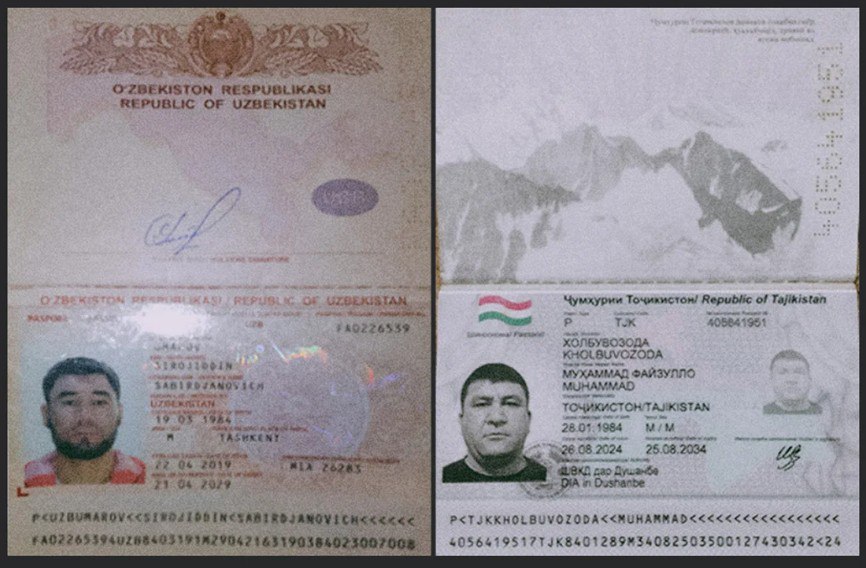
Citizens of Central Asian countries, including Uzbekistan and Tajikistan, are increasingly being coerced into joining Russia’s war effort in Ukraine, according to a recent statement from Ukraine’s military intelligence agency. Many of those affected are labor migrants who originally traveled to Russia for work but were later pressured or misled into signing military contracts.

Reports suggest that Russian army representatives have been enticing migrants with promises of fast money through short-term enlistment. In practice, however, many of these so-called “volunteers” are deployed to the most dangerous front-line positions. Ukraine’s Defense Intelligence claims most do not survive. Among the recently reported casualties were nationals from Uzbekistan and Tajikistan who had enlisted earlier this year.

Ukraine’s warning also highlights the legal risks facing survivors. Returning home after fighting in a foreign conflict can expose them to criminal charges and potentially long prison sentences under national laws that prohibit participation in overseas military operations.

Russian officials have also acknowledged the recruitment of migrants. Alexander Bastrykin, head of Russia’s Investigative Committee, stated during a legal forum in St. Petersburg that his office had identified around 80,000 individuals who received Russian citizenship but then attempted to evade military service. Of those, approximately 20,000 are currently serving on the front lines in Ukraine, according to Bastrykin.

As of September 2024, Russia hosted nearly four million citizens from Central Asia. Uzbekistan accounted for the largest share with an estimated 1.79 million migrants, followed by Tajikistan and Kazakhstan.

While some migrants sign military contracts out of economic desperation, others reportedly face coercion, threatened with the loss of citizenship or imprisonment for avoiding conscription.

The practice of deploying foreign labor migrants to the battlefield has caused mounting concern across Central Asia. Families fear for the fate of relatives drawn into a distant and escalating conflict, often without clear legal protection or state support.