• KGS/USD = 0.01144 0%
  • KZT/USD = 0.00217 0%
  • TJS/USD = 0.10456 0%
  • UZS/USD = 0.00008 0%
  • TMT/USD = 0.28490 0%
  • KGS/USD = 0.01144 0%
  • KZT/USD = 0.00217 0%
  • TJS/USD = 0.10456 0%
  • UZS/USD = 0.00008 0%
  • TMT/USD = 0.28490 0%
  • KGS/USD = 0.01144 0%
  • KZT/USD = 0.00217 0%
  • TJS/USD = 0.10456 0%
  • UZS/USD = 0.00008 0%
  • TMT/USD = 0.28490 0%
  • KGS/USD = 0.01144 0%
  • KZT/USD = 0.00217 0%
  • TJS/USD = 0.10456 0%
  • UZS/USD = 0.00008 0%
  • TMT/USD = 0.28490 0%
  • KGS/USD = 0.01144 0%
  • KZT/USD = 0.00217 0%
  • TJS/USD = 0.10456 0%
  • UZS/USD = 0.00008 0%
  • TMT/USD = 0.28490 0%
  • KGS/USD = 0.01144 0%
  • KZT/USD = 0.00217 0%
  • TJS/USD = 0.10456 0%
  • UZS/USD = 0.00008 0%
  • TMT/USD = 0.28490 0%
  • KGS/USD = 0.01144 0%
  • KZT/USD = 0.00217 0%
  • TJS/USD = 0.10456 0%
  • UZS/USD = 0.00008 0%
  • TMT/USD = 0.28490 0%
  • KGS/USD = 0.01144 0%
  • KZT/USD = 0.00217 0%
  • TJS/USD = 0.10456 0%
  • UZS/USD = 0.00008 0%
  • TMT/USD = 0.28490 0%

Major Hydrocarbon Field Discovered in Kazakhstan

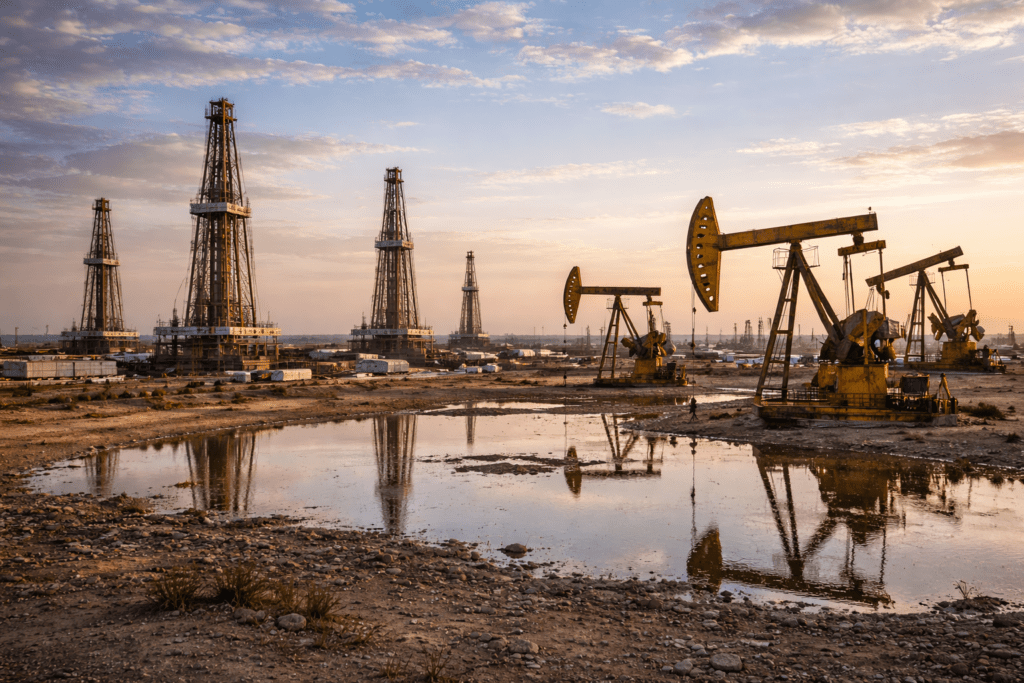
A major hydrocarbon field has been discovered in Kazakhstan’s Atyrau Region, with reserves potentially comparable to those of the Kashagan oil field, the country’s largest oil source, according to Kurmangazy Iskaziyev, First Deputy Chairman of the Management Board of KazMunayGas.

The site is located on the Zhylyoi Platform near the Caspian Sea coast. Its onshore location could significantly reduce development costs, although the deposits are believed to lie at considerable depths.

Kashagan has long stood as the symbol of both Kazakhstan’s oil wealth and the technical difficulty of extracting it. The offshore field cemented the country’s position as a major crude producer, but also became known for cost overruns, delays, and the engineering challenges of operating in the northern Caspian. Any onshore discovery mentioned in the same breath immediately raises expectations that it could avoid some of those constraints while delivering comparable scale.

Kashagan, discovered in the northern Caspian Sea, remains one of the largest oil fields found globally in recent decades. Its recoverable reserves are estimated at 9–13 billion barrels of oil, with gas reserves exceeding 1 trillion cubic meters. Development is carried out by the North Caspian Operating Company consortium, which includes Shell, TotalEnergies, ExxonMobil, Eni, China National Petroleum Corporation, Inpex, and KazMunayGas.

Speaking at the Geoscience & Exploration Central Asia forum, Iskaziyev said the resource potential of the Zhylyoi Block, including Karaton, Kazhygali, and Zhylyoi, is estimated at 4.7 billion tons, with total geological potential reaching up to 20 billion tons of oil equivalent.

At this stage, such figures reflect geological potential rather than proven, recoverable reserves. In Kazakhstan, as elsewhere, moving from estimate to production depends on depth, pressure, sulfur content, and the cost of drilling and processing. Large discoveries can take years to confirm commercially, particularly in high-pressure or technically complex formations.

KazMunayGas has already begun exploration work. A well 5,750 meters deep has been drilled at the Karaton site, and five promising targets have been identified as part of a joint project with Tatneft. During testing at one of these sites, a gas flow containing hydrogen sulfide was recorded.

The main challenge remains the depth of the deposits, which may reach up to 9 km. According to Iskaziyev, these conditions are comparable to projects undertaken by KazMunayGas’s Chinese partners, including Sinopec and China National Petroleum Corporation, where drilling depths can reach up to 11 km.

The company plans to expand geological exploration into neighboring areas, including Kazhygali, and is negotiating subsoil use contracts.

The timing is significant. Kazakhstan is under growing pressure to demonstrate that its oil sector can still deliver major new projects as existing fields mature. A large onshore discovery in Atyrau would reinforce the region’s role as the core of the country’s energy system and support efforts to sustain export volumes and investor interest.

At the forum, a memorandum of understanding was also signed between KazMunayGas and BP on cooperation in geological exploration and the development of the Ustyurt Block in the Mangistau Region.

The Times of Central Asia previously reported that Kazakhstan is involved in an international arbitration dispute with the North Caspian Operating Company consortium over environmental issues related to the Kashagan project.

That dispute reflects a broader pattern. Kazakhstan’s experience with Kashagan shows that giant oil projects rarely develop smoothly. The field brought vast reserves but also years of delays, technical setbacks, and regulatory friction. That legacy is likely to shape how officials and investors approach any new discovery presented as a potential peer to the country’s largest oil asset.

Meeting of the Organization of Turkic States Held in Baku

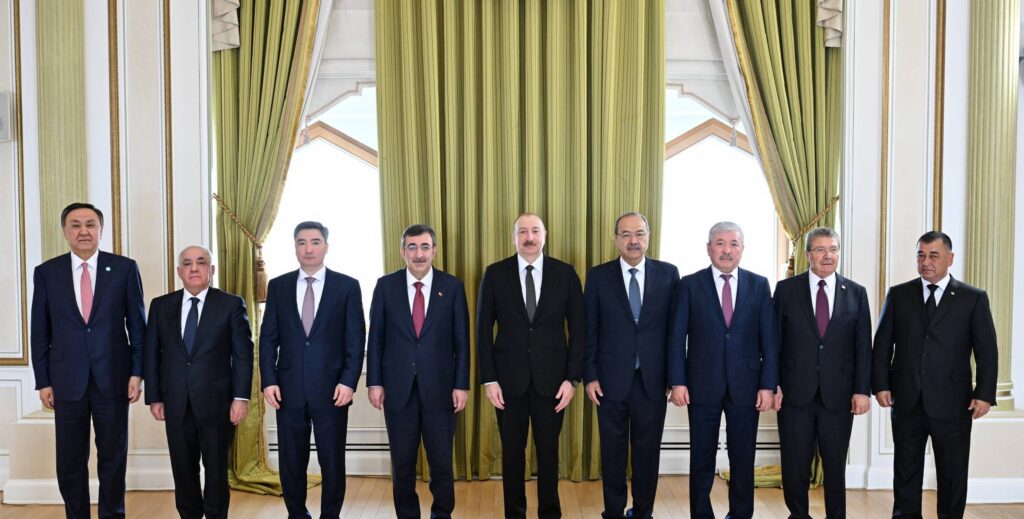
On April 2, Azerbaijani President Ilham Aliyev met with participants of a meeting of the heads of government of the Organization of Turkic States (OTS) in Baku, outlining key areas of cooperation.

Among those attending were Turkish Vice President Cevdet Yılmaz, Uzbek Prime Minister Abdulla Aripov, Kazakh Prime Minister Olzhas Bektenov, Kyrgyz Prime Minister Adylbek Kasymaliev, Deputy Chairman of the Cabinet of Ministers of Turkmenistan Nokerguly Atagulyev, Prime Minister of the Turkish Republic of Northern Cyprus Unal Ustel, and OTS Secretary General Kubanychbek Omuraliev.

Opening the meeting, Aliyev stressed the importance of dialogue.

“This meeting of the heads of government of the Organization of Turkic States is being held in Baku. I warmly welcome you all,” he said.

According to Aliyev, such meetings allow not only for the discussion of economic issues but also for reaffirming unity among member states. He noted that cooperation within the organization remains a priority of Azerbaijan’s foreign policy.

He also reiterated a key message that ran throughout his speech:

“We have repeatedly stated from various platforms that the Turkic world is our family; we have no other family,” Aliyev said.

Special attention was devoted to economic cooperation. According to the president, trade between member states is growing, and investment volumes are increasing.

He noted that Azerbaijan has invested more than $20 billion in the economies of OTS member states. Most of this has been directed to Turkey, though investment activity is expanding elsewhere. In particular, joint funds have been established with Uzbekistan, Kazakhstan, and Kyrgyzstan to support project implementation.

Aliyev also thanked partners for their participation in the reconstruction of Karabakh. Facilities built with the support of OTS countries are already operational in the region, including the Mirza Ulugbek School, the Kurmangazy Children’s Creative Center, and the Manas School. In addition, a garment factory has been opened in Khankendi with the participation of Uzbekistan.

He also highlighted mutual support among member states. Following the earthquake in Turkey, Azerbaijan financed the construction of the “Azerbaijani Quarter” in Kahramanmaraş, valued at $100 million.

Transport and logistics projects were another key topic. According to the president, infrastructure development remains a top priority.

These include the Middle Corridor, the Trans-Caspian route, and the Zangezur Corridor, all of which are gaining importance in the current geopolitical environment.

Aliyev said that infrastructure within Azerbaijan is largely complete. Railways, the Baku port, highways, and airports are operational. Construction of the Zangezur Corridor is also progressing, with the highway nearly 90% complete and the railway approximately 70% complete.

He also noted the construction of the Kars-Nakhchivan railway line in Turkey, which is expected to enable a new international route with an initial capacity of about 15 million tons of cargo.

In conclusion, Aliyev said these projects are aimed not only at serving regional interests but also at expanding international transport connectivity. He expressed confidence that the meeting would contribute to the further development of the OTS and strengthen cooperation among member states.

Kyrgyzstan to Install 300,000 Smart Electricity Meters Purchased from China

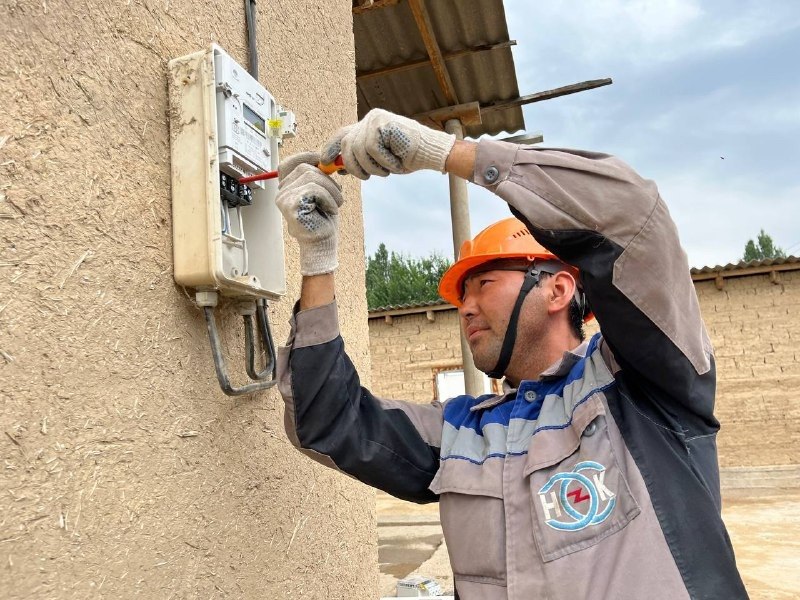
Kyrgyzstan’s Ministry of Energy has signed a contract with Shenzhen Kaifa Technology for the purchase of 300,000 smart electricity meters for the National Electric Network in 2026, according to the ministry.

Negotiations are also underway for an additional 90,000 units.

The National Electric Network of Kyrgyzstan has introduced an automated electricity control and metering system that has helped strengthen financial discipline in the energy sector. As of the end of 2025, 500,100 smart meters had been installed across the country, bringing the total number of installed meters to more than 923,000. This has improved metering accuracy and reduced electricity losses from 11.7% to 10.6%.

Smart meters offer several advantages. They enable automatic data transmission, with readings sent to a central server in real time, eliminating the need for manual inspections. They also allow for remote control: electricity supply can be automatically suspended in cases of non-payment and restored once payment is made.

In addition, smart meters help protect against overloads, support voltage stability in the grid, and reduce human error by minimising manual data entry. This also contributes to lowering electricity theft.

The rollout is part of the Kyrgyz Energy Modernization and Sustainability Project, supported by the World Bank. The project aims to modernise the energy sector, improve the accuracy of electricity metering, and reduce power losses.

Smart metering is particularly important for Kyrgyzstan, which continues to face electricity shortages and relies on imports to meet growing demand from industry and households.

Kazakh Lawmaker Proposes Tougher Penalties for Poaching

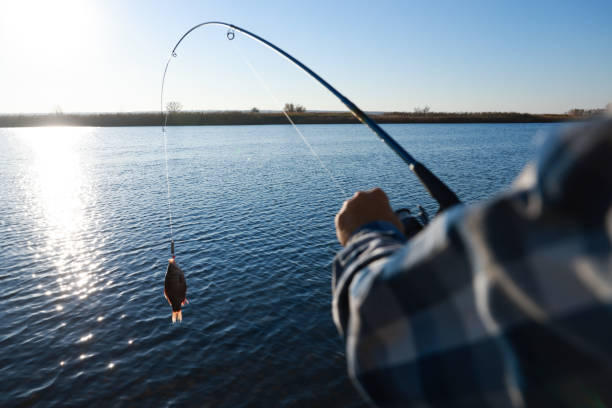
Kazakh Senator Andrei Lukin has called for tougher penalties for poaching amid a rise in violations, including illegal fish exports and document forgery.

In a parliamentary inquiry, he urged a review of existing sanctions, greater transparency in industry subsidies through digital platforms, and stronger independence for relevant scientific organizations.

Current legislation provides for fines of up to $27,000 and prison sentences of up to 10 years. However, Lukin argued that these measures are insufficient.

According to his data, 84,000 tons of fish were seized from illegal trade between 2022 and 2025. At the same time, stocks of commercially important species are declining. In Lake Zaysan, pikeperch volumes fell from 9,300 to 4,000 tons, while carp has nearly disappeared.

The senator also highlighted discrepancies between fishing quotas and export volumes. For example, with quotas set at 16,000 tons for 2022-2024, approximately 32,000 tons of pikeperch were exported, with a total value of around $115 million.

He further criticized the effectiveness of the 2021-2030 fisheries development program. Of the $564 million allocated, only $38 million has been used. Cases of embezzlement of budget funds and the repeated use of documents in processing export licenses have also been identified.

In response, Lukin proposed tightening export controls, ensuring compliance between quotas and actual catch volumes, and accelerating the rollout of the E-Fish digital system.

The E-Fish system, mandatory since August 2025, automates the recording of catches and product turnover. According to the Ministry of Agriculture of Kazakhstan, more than 95% of market participants are registered in the system, which has reduced the shadow market by 2,000 tons.

The Times of Central Asia previously reported on the expansion of state support for aquaculture, despite continued growth in fish production.

Turkmenistan Introduces Fuel Limits for Vehicles Leaving the Country

Turkmenistan introduced new rules governing fuel exports at the beginning of April. Under the regulations, the amount of diesel in the tanks of vehicles leaving the country must not exceed 300 liters. If this limit is exceeded, a fee of approximately $1 per additional liter is charged.

The new rules primarily affect heavy-duty trucks, which traditionally carry large volumes of fuel.

Enforcement has been assigned to the State Border Service, the State Customs Service, and the state-owned company Turkmenneft. Specialists from the General Directorate of Türkmennebitönümleri, the entity responsible for the distribution of petroleum products, are tasked with measuring fuel volumes at border checkpoints.

The fuel volume of each vehicle is checked and entered into an electronic system. If the limit is exceeded, the driver is issued two receipts: one remains with the driver, while the other is sent to a bank for payment. All measurements are also recorded in a dedicated logbook. According to the authorities, this system is intended to reduce the risk of fraud and informal payments.

The reasons for tightening the regulations are clear. Diesel in Turkmenistan costs around $0.05 per liter. By comparison, in the summer of 2025, it cost about $1 in Uzbekistan, approximately $0.60 in Kazakhstan, and around $0.90 in Russia.

This price disparity has long created conditions for black-market activity. Fuel is smuggled abroad and resold, while domestic shortages periodically occur. Drivers face restrictions at filling stations, and additional fuel is often sold at a surcharge that can reach 200% of the official price. As a result, the market has become distorted, with potential state revenue reportedly being diverted through corrupt practices.

Another contributing factor is the recent rise in global fuel prices, driven in part by escalating tensions in the Strait of Hormuz, a critical route for global oil and gas shipments.

Similar measures have been introduced elsewhere in the region. Kazakhstan tightened regulations on the export of petroleum products and, in autumn 2025, imposed a full ban that remains in effect until May this year. Russia also restricted fuel exports starting April 1, with the measures expected to remain in place until at least July 31.

Central Asia Pushes Back on “Not Free” Label as Debate Over Rankings Grows

According to Freedom House’s Freedom in the World 2026 report, all five countries in Central Asia are classified as “Not Free.” Nevertheless, governments in the region are increasingly questioning the impartiality of such assessments. At the same time, some regional experts point to ongoing political and economic reforms as signs that the region is making progress.

A “Not Free” Region

In its report released on March 19, 2026, Freedom House classifies all five Central Asian states as “Not Free.” The designation is based on Freedom House’s assessment of political rights and civil liberties. According to the report’s authors, the ranking reflects pressure on independent media, tightening control over civil society, and the absence of genuine political competition.

Kazakhstan received 23 points out of 100. The report highlights restrictions on opposition groups and civil society activists, pressure on independent journalism, and tightly managed elections that do not ensure genuine political competition.

Kyrgyzstan, long considered the most politically open country in the region, scored 25 out of 100 and was also classified as “Not Free.” The organization says the score fell by one point from the previous year, reflecting continued pressure on independent media, the designation of several outlets as ‘extremist,’ and criminal cases against journalists, alongside concerns about election integrity.

Uzbekistan scored 12 out of 100. Freedom House points to the concentration of power in the executive branch, the absence of a genuine parliamentary opposition, and severe restrictions on independent human rights defenders and journalists.

Since President Shavkat Mirziyoyev took office in 2016, Uzbekistan has pursued a series of controlled political and economic reforms aimed at opening the country after decades of isolation. These have included currency liberalization, efforts to end the use of forced labor in the cotton sector, and steps to ease restrictions on business and foreign investment. While critics say political liberalization remains limited, supporters argue the reforms mark a significant shift from the policies of the previous era.

Tajikistan received just 5 points. The report highlights the long rule of President Emomali Rahmon, the elimination of legal opposition, systematic persecution of its members and their families, and a de facto lack of electoral competition.

Turkmenistan recorded one of the lowest scores globally, with just 1 point. The report describes the country as one of the most repressive in the world, citing total state control over political life and the media, the absence of opposition participation in elections, and harsh punishment for dissent.

Turkmenistan remains one of the most closed countries in the world, with extremely limited access for foreign media and independent observers. Political life is tightly controlled, and reliable information about internal developments is scarce. While the authorities have signaled gradual generational change following the 2022 transfer of power to President Serdar Berdimuhamedov, there has been little visible shift in the country’s political system.

Impartiality in Doubt?

Trust in international assessments has also been affected by developments in U.S. foreign aid policy and a wider shift in global perceptions about the appropriateness of Western-linked organizations categorising the political and social systems of Global South countries. In January 2025, U.S. President Donald Trump signed an executive order suspending new U.S. foreign development assistance, including funding for the United States Agency for International Development.

The administration later moved to terminate 5,800 of 6,200 USAID contract awards, according to a State Department memo reported by AP in February 2025.

USAID has previously supported analytical and reporting work in Central Asia through grants to journalists, activists, and researchers.  The agency has funded programs and reporting focused on governance and freedoms in Central Asia. In Kazakhstan, members of parliament called for a comprehensive audit of USAID-funded programs. Publicly available data indicates that USAID allocated around $2 million to support human rights and equality initiatives in Central Asia between 2022 and 2025.

Criticism of USAID from senior U.S. officials has reinforced long-standing skepticism in the region toward external evaluations. Some policymakers argue that even long-established organizations assessing democracy and freedoms may themselves be subject to deeply rooted institutional bias.

Such skepticism is not new. Governments in Central Asia have frequently questioned why domestic reforms and legislative changes are not fully reflected in international rankings. Human rights organizations, however, have maintained that restrictions on political opposition, media, and civil society in Central Asia remain well-documented and systemic.

Allegations of Bias

In 2025, Kazakh President Kassym-Jomart Tokayev publicly criticized international organizations, including the Organization for Security and Co-operation in Europe (OSCE), questioning their objectivity.

“I do not care about the assessments made by the OSCE, because this organization is very biased,” Tokayev said in response to criticism of recent elections.

At the same time, he emphasized that Kazakhstan remains an active OSCE member and continues to cooperate with European partners.

Tokayev also expressed skepticism toward recent assessments by Human Rights Watch, stating that the country should not necessarily follow the recommendations of human rights organizations.

In the same 2026 Freedom House ranking, China received 9 points. China is currently Central Asia’s largest economic partner and a major global competitor to the European Union and the United States. Freedom House is headquartered in Washington, and the organization has historically received substantial U.S. government funding for its broader operations, prompting questions in the region about the neutrality of such assessments. Freedom House says its Freedom in the World 2026 report received no government funding.

Democratic Reforms

At the same time, some Western observers have viewed reforms in Uzbekistan positively. In September 2025, Detlef Prinz, president of the Germany-Uzbekistan Forum, noted growing international recognition of reforms under President Shavkat Mirziyoyev. Prinz pointed to what he described as significant positive changes in Uzbekistan, which he said have been well received in German political and business circles.

Following the constitutional referendum of March 15, 2026, the Kazakh authorities said parliament would review a package of new laws and related amendments to implement the new constitution. Five constitutional laws have been submitted to parliament, aimed at reshaping the balance of power, including presidential authority and parliamentary structures. A new advisory body, the Khalyq Keneşi (People’s Council of Kazakhstan), is also expected to be created, bringing together representatives of civil society and public institutions.

In Kyrgyzstan, meanwhile, the country’s former reputation as an “island of freedom” has come with significant political instability. Three revolutions have occurred since independence in 1991, and recurring elite power struggles have hindered sustained economic reform.

According to some analysts, current President Sadyr Japarov is pursuing a more centralized model of governance in an attempt to project an image of stability that Kyrgyzstan has, to date, failed to maintain in the eyes of international investors. 

Thus, the situation regarding rights and freedoms in Central Asia is far more complex than it may appear from an “outside perspective,” and questions are increasingly being raised about the appropriateness of Freedom House’s methodology and how relevant such external rankings are to Central Asian countries today