• KGS/USD = 0.01144 0%
  • KZT/USD = 0.00215 0%
  • TJS/USD = 0.10637 0%
  • UZS/USD = 0.00008 0%
  • TMT/USD = 0.28530 0%
  • KGS/USD = 0.01144 0%
  • KZT/USD = 0.00215 0%
  • TJS/USD = 0.10637 0%
  • UZS/USD = 0.00008 0%
  • TMT/USD = 0.28530 0%
  • KGS/USD = 0.01144 0%
  • KZT/USD = 0.00215 0%
  • TJS/USD = 0.10637 0%
  • UZS/USD = 0.00008 0%
  • TMT/USD = 0.28530 0%
  • KGS/USD = 0.01144 0%
  • KZT/USD = 0.00215 0%
  • TJS/USD = 0.10637 0%
  • UZS/USD = 0.00008 0%
  • TMT/USD = 0.28530 0%
  • KGS/USD = 0.01144 0%
  • KZT/USD = 0.00215 0%
  • TJS/USD = 0.10637 0%
  • UZS/USD = 0.00008 0%
  • TMT/USD = 0.28530 0%
  • KGS/USD = 0.01144 0%
  • KZT/USD = 0.00215 0%
  • TJS/USD = 0.10637 0%
  • UZS/USD = 0.00008 0%
  • TMT/USD = 0.28530 0%
  • KGS/USD = 0.01144 0%
  • KZT/USD = 0.00215 0%
  • TJS/USD = 0.10637 0%
  • UZS/USD = 0.00008 0%
  • TMT/USD = 0.28530 0%
  • KGS/USD = 0.01144 0%
  • KZT/USD = 0.00215 0%
  • TJS/USD = 0.10637 0%
  • UZS/USD = 0.00008 0%
  • TMT/USD = 0.28530 0%

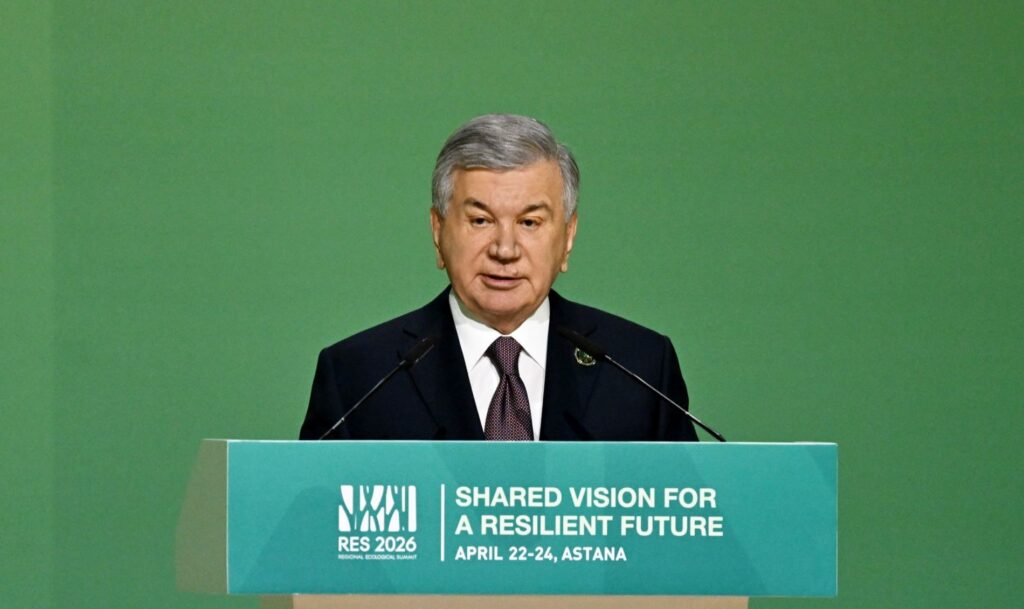
Mirziyoyev Calls for Central Asian Environmental Solidarity at Astana Summit

Uzbek President Shavkat Mirziyoyev used the opening of the Regional Ecological Summit in Astana on April 22 to argue that Central Asia must treat climate and environmental pressure as a shared regional challenge rather than a set of national problems. The meeting comes as Kazakhstan tries to turn ecology into a broader platform for regional coordination, investment, and policy action,

Addressing fellow leaders and delegates, Mirziyoyev backed the summit’s theme, “Shared Vision for a Sustainable Future,” and said the meeting built on the regional dialogue launched at last year’s Samarkand Climate Forum. He said environmental diplomacy in Central Asia was becoming more systematic and consistent at a time when warming in the region was moving at twice the global rate.

Mirziyoyev pointed to the loss of nearly one-third of Central Asia’s glaciers, unstable rainfall, growing water shortages, and land degradation affecting 80 million hectares. His remarks landed as water security has become one of the most urgent regional concerns ahead of the 2026 growing season, as recently reported by The Times of Central Asia. He also criticized what he described as weakening global environmental solidarity and called for fairer access for developing countries to climate finance, advanced technologies, and innovation.

While welcoming regional efforts to put environmental protection at the center of cooperation, Mirziyoyev stated that, “Countries that have contributed least to global climate change are once again being left alone to deal with its consequences.”

Mirziyoyev also highlighted Uzbekistan’s domestic record, including tree planting under the Yashil Makon program and afforestation on the dried bed of the Aral Sea. He also proposed new regional initiatives, including a Clean Air consortium, a Green Trade Corridor, a shared climate investment portfolio, and a Central Asian Red Book for biodiversity protection.

Armenian President Delivers Speech at Astana Summit, Emphasizing Climate Action and Biodiversity

Astana, Kazakhstan – Armenian President Vahagn Khachaturyan addressed the Regional Ecological Summit (RES 2026) today, speaking about the urgent challenges of climate change, biodiversity loss, and the need for strengthened international cooperation. The summit, themed “Shared Vision for a Resilient Future,” opened its sessions on Earth Day under the patronage of Kazakh President Kassym-Jomart Tokayev.

In his remarks, President Khachaturyan expressed deep gratitude to his Kazakh counterpart, the government, and the people of Kazakhstan for their warm hospitality and the excellent organization of this important event. “It is an honor to address the Regional Ecological Summit in Astana,” he stated. He praised Kazakhstan’s leadership in advancing global and regional cooperation on climate change and environmental protection, describing the event as an important platform for dialogue bringing together governments, the scientific community, civil society, and international partners.

President Vahagn Khachaturyan gives address at the Regional Ecological Summit in Astana; Image: TCA

Highlighting Armenia’s unique vulnerabilities, the President noted that, as a landlocked, developing, and mountainous nation, Armenia is already experiencing severe effects of climate change despite contributing just 0.02% of global greenhouse gas emissions. “Over the past decades, the average temperature in the country has increased by more than one degree Celsius and is projected to continue rising by mid-century,” he said. These changes have triggered more frequent extreme weather events, including floods and droughts, leading to significant ecological losses, declining precipitation, glacier retreat, and growing water scarcity — particularly affecting rural communities and mountain ecosystems.

President Khachaturyan welcomed Kazakhstan’s initiative to convene international consultations on strengthening cooperation for effective water resource management and said Armenia will actively participate.

On the climate front, he reaffirmed Armenia’s ambitious nationally determined contributions (NDCs): a 44% reduction in greenhouse gas emissions by 2035 compared to 1990 levels through domestic measures, rising to 52% with international support. “Armenia undertakes these commitments with full awareness of its national capacity and the importance of international cooperation,” he emphasized, citing the principles of equity and common but differentiated responsibilities.

Turning to biodiversity, the President stressed that rising temperatures are a major driver of biodiversity loss, with profound consequences for ecosystems, human health, food security, and economies worldwide. He announced that Armenia will host the 17th Conference of the Parties (COP17) to the Convention on Biological Diversity in Yerevan in October later this year. “These efforts reflect our small country’s strong commitment to promote global nature conservation,” Khachaturyan declared, inviting all participants to join the landmark gathering “to review our progress and identify ways to accelerate efforts to restore and protect the environment for present and future generations.”

The Armenian President concluded by underscoring the critical role of international cooperation, including the mobilization of financial resources, sharing of expertise, and the transfer of technology. “Armenia stands ready to cooperate with regional and international partners, to share our experience and to learn from others,” he said. “Together, we can protect our planet Earth, ensure long-term resilience and well-being for our societies.”

President Khachaturyan’s address highlights Armenia’s efforts to present itself as an active participant in global environmental diplomacy despite its modest emissions footprint, particularly through its upcoming role hosting COP17. The three-day Regional Ecological Summit continues through April 24, focusing on climate resilience, biodiversity, and sustainable development across the region.

Kazakhstan President Highlights New Constitution and Calls for Fair Global Ecological Cooperation at Astana Summit

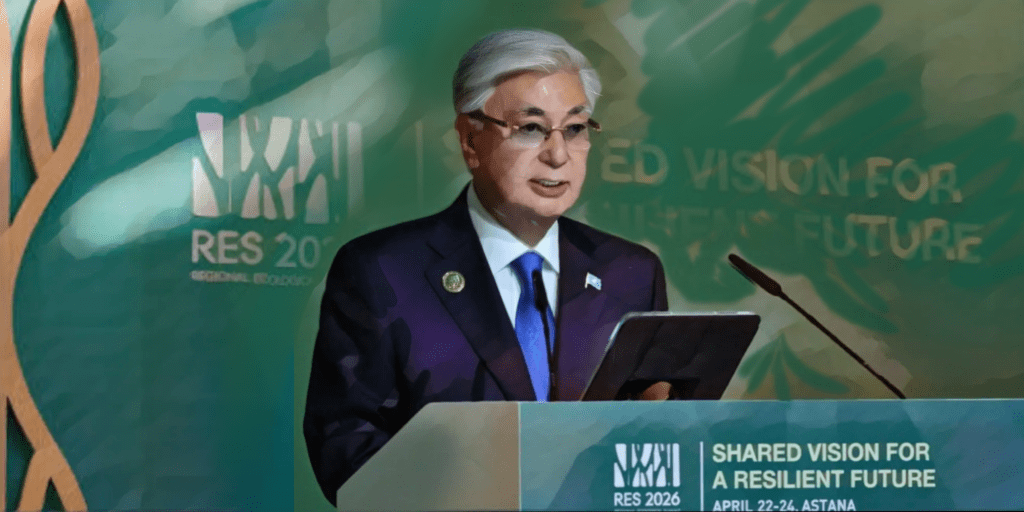
Astana, Kazakhstan – President Kassym-Jomart Tokayev used his opening address at the Regional Ecological Summit in Astana to underline Kazakhstan’s strengthened constitutional commitment to environmental protection and to call for fair, pragmatic, and unified global cooperation on ecological challenges.

Speaking on Earth Day before regional leaders and senior United Nations representatives, Tokayev described ecology as far more than climate policy alone. “It is the very foundation of human livelihood,” he said. “It is about clean air and safe water, healthy soils and secure food systems. It is about the stability of communities and the dignity of future generations. It is also about clarity of thought, harmony of our societies, and their happiness.”

The President said Kazakhstan’s new Constitution clearly reflects environmental protection as a fundamental priority of state policy and public responsibility. He described this constitutional commitment as embedding ecological safety and prosperity into the country’s long-term vision and “national DNA.”

Tokayev warned against double standards in international environmental policy, saying developing and emerging economies must not be placed at a disadvantage as the world moves toward cleaner growth models. “The global transition to cleaner models must be fair, balanced, and stimulating,” he stated.

Environmental cooperation, he added, should unite rather than divide nations and must be based on partnership, trust, and shared responsibility, “with no naming, no shaming, and no blaming.” Stressing the need for consistency in international norms, Tokayev also said: “The UN Charter is not Haute Cuisine, and cannot serve as a cherry-picking platform.”

The President identified the region’s most urgent shared ecological challenges as water scarcity and poor water management, desertification, glacier retreat, air pollution, and biodiversity vulnerability. “The time for indicating successes is over; the time for making solutions has come,” he said.

Tokayev then outlined concrete steps Kazakhstan is taking across several priority areas.

On energy transition, he said Kazakhstan intends to increase the share of renewable energy to 15% by 2030 while reducing emissions by almost 35%. Renewable sources already generate more than 7% of Kazakhstan’s electricity, and the country is moving to expand clean generation capacity while modernizing major energy facilities. As the world’s leading uranium exporter, Kazakhstan is also advancing plans for its first nuclear power plant while introducing cleaner technologies at coal-fired generation sites.

On water security, Tokayev highlighted the restoration of the Northern Aral Sea, where about 36% of the water surface has been recovered, improving water quality and fish stocks. He described the Aral tragedy as a warning for the wider region and the international community. “The Aral Sea remains a stark reminder of the consequences of unsustainable policies,” he said.

He also pointed to a new interstate program aimed at preventing further degradation of the Caspian Sea, supported by a dedicated scientific research institute. Tokayev renewed his proposal, first advanced in Ashgabat last December, to establish an International Water Organization as a United Nations agency, and said the summit would host the first round of international consultations on the initiative.

Addressing the Caspian region more broadly, Tokayev emphasized that ecological security must be accompanied by peace and stability. “Any use of military arms in the Caspian region must be excluded and banned,” he said, adding that environmental cooperation cannot be separated from the need to preserve regional trust and security.

On biodiversity and reforestation, Tokayev cited Kazakhstan’s progress in restoring key species and natural habitats. He pointed to the rebound of the saiga population and the doubling of the country’s snow leopard population to around 190 animals. He also said more than 1.5 billion trees have been planted across one million hectares over the past five years. Kazakhstan, he added, is inviting international partners to join a new International Fund for rare species and biodiversity conservation.

The President also emphasized public engagement. He said the nationwide “Taza Kazakhstan” movement has mobilized nearly one million volunteers and welcomed the United Nations’ designation of 2026 as the International Year of Volunteers for Sustainable Development. He noted that Kazakhstan’s new Constitution gives appropriate status to the volunteer movement and recognizes the state’s duty to support such civic participation.

Tokayev also highlighted the role of technology in environmental governance, noting that Kazakhstan has declared this year the Year of Digitalization and Artificial Intelligence. He said successful responses to ecological challenges are impossible without artificial intelligence, which can create new opportunities for protecting natural resources and improving environmental governance. Kazakhstan, he added, is ready to support the development of a regional digital ecosystem for ecological management.

Concluding his address, Tokayev said the adoption of the Astana Declaration on Ecological Solidarity in Central Asia, together with substantive agreements reached on the sidelines of the summit, reflected the participants’ shared commitment to a stronger regional ecological partnership. He expressed confidence that the summit’s deliberations would produce concrete joint initiatives and help transform a shared vision of a resilient future into practical action benefiting the peoples of the region.

Protecting the planet, Tokayev emphasized, is not only an environmental task, but also a moral duty, an economic necessity, and a strategic priority for peace and stability.

Rather than relying on declarations alone, the address presented Kazakhstan’s regional role as grounded in concrete green commitments and deliverables at the national, regional, and international levels – combining domestic action on renewable energy, reforestation, biodiversity protection, and volunteer mobilization with regional cooperation on water security, Caspian stability, and broader international initiatives in environmental governance.

Life After the Water: Uzbekistan Brings the Aral Sea Story to Milan

Uzbekistan made its debut at Milan Design Week 2026 on April 20, with When Apricots Blossom, an immersive exhibition at Palazzo Citterio exploring how craft and design can respond to environmental crisis. Running through April 26, the project is organized by the Uzbekistan Art and Culture Development Foundation (ACDF), commissioned by its chairperson, Gayane Umerova, and curated by Kulapat Yantrasast, founder of WHY Architecture. It marks the country’s first major presentation at one of the world’s leading design platforms.

At the center of the project is Karakalpakstan, a region in northwestern Uzbekistan that has experienced one of the world’s most severe environmental crises. Over the past six decades, the shrinking of the Aral Sea has transformed the area’s landscape, economy, and way of life. Once a vast inland body of water, the sea has largely disappeared, leaving behind desert, salt plains, and struggling communities.

The Garden Pavilion at Palazzo Citterio, indicative render: Lightweight latticed framework ‘deconstructed yurt’ by Kulapat Yantrasast. When Apricots Blossom, Milan Design Week 2026. Courtesy of ACDF and WHY Architecture

When Apricots Blossom traces this transformation while also looking ahead.

“The Aral Sea is both a cautionary tale and an opportunity to offer a blueprint for other regions facing extreme environmental change,” Umerova said ahead of the opening. She emphasized that design and craft are not separate from these challenges, but part of the response. “They begin with people and knowledge.”

Inside Palazzo Citterio, the exhibition unfolds as a journey through the region’s past, present, and possible futures. The main gallery features an installation of reed-like structures that evoke the landscapes of Karakalpakstan. Within this setting, visitors encounter objects and ideas connecting everyday life with broader environmental questions.

A key focus is on three traditional practices: bread-making, yurt-building, and textile crafts. These are presented not as relics of the past, but as systems of knowledge shaped by generations of adaptation.

Bethan Laura Wood at Palazzo Citterio – When Apricots Blossom – commissioned by ACDF. Image courtesy of ACDF

Twelve international designers have worked with Uzbek and Karakalpak artisans to create new pieces inspired by these traditions. Among them are custom bread trays and stamps (chekich), reflecting the central role of bread in Uzbek culture. Made from materials such as wood, felt, ceramics, and reeds, the works reinterpret familiar forms while remaining rooted in local techniques.

Alongside these contemporary designs are artifacts selected by participants of the Aral School, an international postgraduate program that treats the region as a site for creative and critical exploration. The exhibition also premieres Where the Water Ends, a new film by filmmaker Manuel Correa and architect Marina Otero Verzier, offering a closer look at landscapes and communities shaped by the Aral Sea’s decline.

The main gallery interior, indicative render: Reed-link forms by WHY Architecture. When Apricots Blossom – Milan Design Week 2026. Courtesy of ACDF and WHY Architecture

Together, these elements form a broader narrative about how people adapt to change, not only through technology, but through culture.

The exhibition also serves as a platform to announce the next Aral Culture Summit, which will take place in Nukus from September 11 to 13. Held every 18 months, the summit brings together designers, scientists, and policymakers to explore how culture can contribute to environmental and social regeneration.

According to ACDF, these initiatives are part of a wider ten-year vision supported by the Uzbek government to revitalize the Aral Sea region, with a focus on cultural, economic, and social development.

Beyond the main exhibition spaces, visitors are drawn into the palazzo’s garden, where Yantrasast has created a pavilion inspired by the traditional yurt. Known as the Garden Pavilion, the structure reinterprets the portable homes used by nomadic communities across Central Asia.

Traditional bread stamps (chekich). When Apricots Blossom – Milan Design Week 2026. Courtesy of ACDF.

“The yurt is one of the most honest pieces of architecture ever made,” Yantrasast said. “It was designed to move with its people and respond to changing conditions.”

For the exhibition, he has taken this idea further, creating what he describes as a “deconstructed yurt.” The structure serves as a gathering space for talks, workshops, and discussions, while also symbolizing absence, including the loss of water and ways of life in the Aral Sea region.

“We wanted to open it up,” Yantrasast explained. “To show not only what it holds, but also what has been lost.”

The pavilion will host daily events throughout the week, including demonstrations by Uzbek artisans, such as bread-stamp carving and tassel-making. It will also provide a space for conversations between local practitioners and international designers, linking traditional knowledge with global debates on sustainability.

By placing Uzbekistan at the center of Milan Design Week, the exhibition aims to reach a wider audience and reshape how the Aral Sea is understood.

A Thousand Voices – When Apricots Blossom – by Ruben Saakyan and Roman Shtengauer, commissioned by ACDF – MDW 2026 – Image Credit: ACDF

Rather than focusing solely on environmental damage, When Apricots Blossom highlights resilience, the ability of communities to adapt, create, and endure.

For Umerova, this message is central. “We are sharing the story of Karakalpakstan not only as a history of loss,” she said, “but as a story of creativity and possibility.”

As the exhibition opens this week, it positions Uzbekistan not just as a participant in global design, but as a contributor to ongoing conversations about climate, culture, and the future of communities facing environmental change.

Astana Ecological Summit Turns Regional Climate Pressure Into a Call for Joint Action

On April 22, 2026, leaders from Central Asia and neighboring states opened the Regional Ecological Summit 2026 in Astana on Earth Day with an urgent and practical message: the region’s environmental crisis is no longer a future risk, but a present constraint on water, food, energy, and economic security.

The summit, held under the theme “A Shared Vision for a Sustainable Future,” was organized by Kazakhstan with the United Nations and international partners. Its stated purpose is to develop policy tools for protecting, restoring, and jointly using ecosystems, water and land resources, and conserving biodiversity in Central Asia. The program includes 58 events, consultations on a possible International Water Organization within the UN system, and expected documents, including a Central Asian declaration on environmental solidarity and a 2026–2030 regional action program.

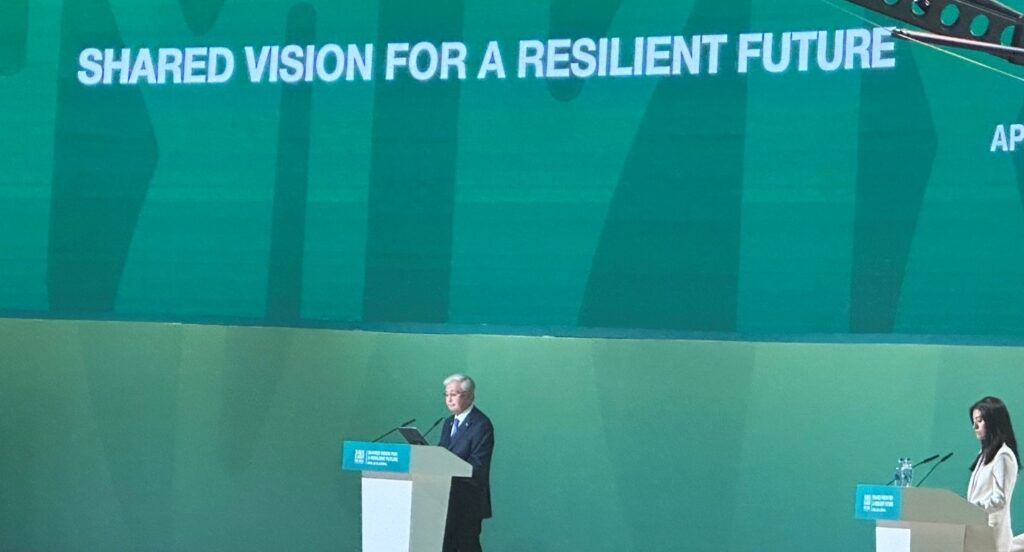
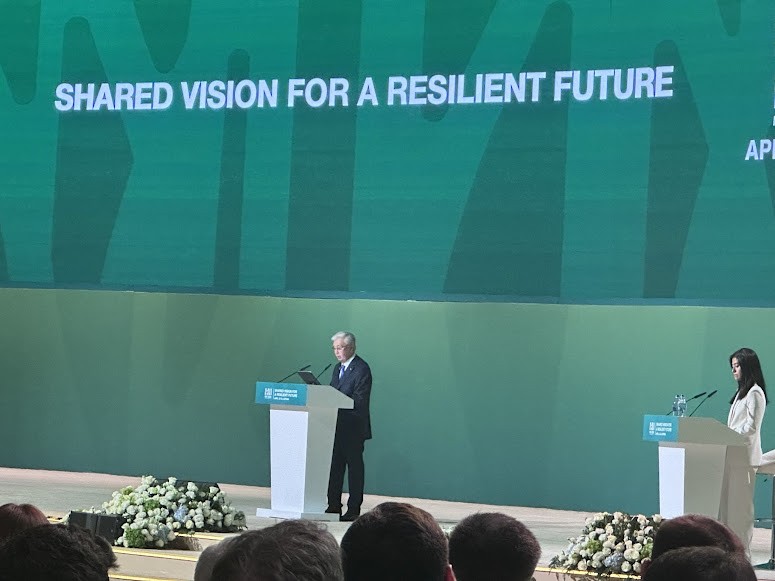
President Tokayev gives his keynote address at the Regional Ecological Summit in Astana; Image: TCA

Opening the plenary, Kazakhstan’s President Kassym-Jomart Tokayev argued that environmental policy must not become another dividing line in global politics. He called for a fair and balanced green transition, especially for developing economies, and warned that Central Asia’s shared rivers, landscapes, and climate risks demand shared responsibility. Tokayev singled out water scarcity, desertification, glacier melt, air pollution and biodiversity loss as the region’s core challenges. He also highlighted Kazakhstan’s plans to expand renewable energy, protect the Caspian Sea, restore the Northern Aral, and start consultations on a proposed International Water Organization.

The water question dominated the speeches. President Sadyr Japarov said that Kyrgyzstan bears a disproportionate burden despite its small contribution to global emissions. He pointed to a sharp increase in mudflows and floods, shrinking glaciers, and the fact that most water formed in Kyrgyzstan flows to neighboring states. His proposal was blunt: downstream users should help co-finance the water infrastructure and ecosystem services that upstream countries maintain.

Uzbekistan’s President Shavkat Mirziyoyev turned the summit into a platform for concrete regional initiatives. In his official speech, he said that Central Asia is warming twice as fast as the global average, has already lost nearly a third of its glaciers, and faces land degradation across 80 million hectares. He proposed a Clean Air consortium, a regional desertification and drought center, a green trade corridor, a unified climate-investment portfolio, an environmental atlas and a Central Asian Red Book.

Tajikistan’s President Emomali Rahmon brought the glacier crisis into sharp relief. Tajikistan supplies much of Central Asia’s water, but its glaciers are retreating, threatening water balance and increasing disaster risks. Rahmon linked the environmental agenda to hydropower, green finance, biodiversity protection, and water diplomacy, and invited partners to continue the discussion at a high-level water conference in Dushanbe.

Turkmenistan’s President Serdar Berdimuhamedov backed a stronger institutional approach, proposing a UN-supported regional council on water use to align national policies and manage transboundary resources more transparently. He also announced a high-level Caspian Sea ecology meeting in Turkmenistan for October 2026.

Heads of state from beyond Central Asia widened the frame. Armenia’s President Vahagn Khachaturyan stressed climate impacts on agriculture, ecosystems and water security, while calling for finance, science and technology to support emissions reductions and biodiversity protection. Mongolia’s President Ukhnaagiin Khürelsükh focused on fragile mountain ecosystems, desertification, and future water shortages. Georgia’s President Mikheil Kavelashvili said environmental protection now directly affects national economies and citizens’ daily lives, making green governance and inclusive growth strategic priorities. Azerbaijan’s Prime Minister Ali Asadov added that water security is now a priority on the international agenda, backing Kazakhstan’s proposed UN-supported international water organization and pointing to cooperation among Caspian states on the sea’s declining water level.

The summit’s significance lies less in any single speech than in the convergence of themes: water must be governed jointly; climate finance must reach vulnerable states; and environmental cooperation needs institutions, not just declarations. In Astana, ecological diplomacy became regional statecraft.

How Kazakhstan Is Preparing for Parliamentary Elections

Kazakhstan is preparing for a major political reset centered on the introduction of a unicameral parliament, the Kurultai. Until now, legislative power in the country has been exercised by two chambers, the Mazhilis and the Senate. On April 10, President Kassym-Jomart Tokayev announced that elections would take place in August 2026.

According to Tokayev, political parties will have a clear planning horizon and enough time to prepare for the campaign and voter outreach.

A Stage Already Passed

In 2023, Kazakhstan introduced significant changes to its political system. For the first time in 19 years, a mixed electoral model was used in elections to the lower chamber, the Mazhilis. Under this system, 69 deputies were elected via party lists, while 29 were chosen in single-member constituencies, allowing candidates to run independently of party affiliation. This option has now been removed, although the reasons remain unclear.

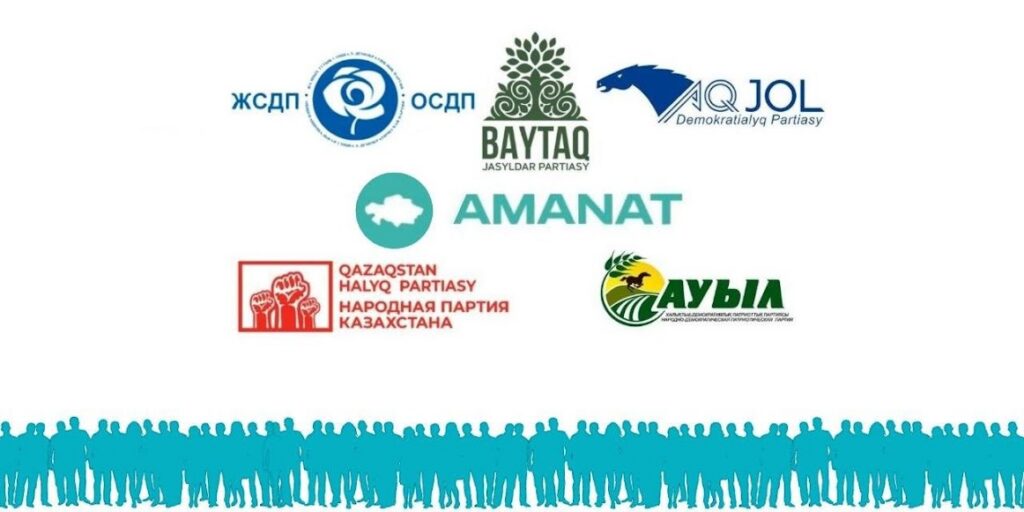
These reforms were presented as part of a broader democratization effort. In the 2023 parliamentary elections, six parties passed the 5% threshold. Amanat, formerly Nur Otan, won 53.9% of the vote, followed by Auyl with 10.9%, Respublica with 8.59%, Aq Jol with 8.41%, the People’s Party of Kazakhstan with 6.8%, and the Nationwide Social Democratic Party (OSDP) with 5.2%. The Baytaq party received 2.3% and did not enter parliament.

In practice, however, Amanat has remained the most active force in the Mazhilis. Some initiatives from Aq Jol, traditionally focused on business interests, have also stood out, while other parties have been less visible to voters.

Amanat has advantages not available to other parties, including the presence of many senior officials in its ranks. The Auyl party was expected to represent agrarian and conservative interests, but its initiatives have not been clearly articulated. The OSDP, which has long positioned itself as an opposition party, previously claimed it was excluded from parliament. However, once represented in the Mazhilis, its initiatives have largely focused on narrow issues and have had limited impact on the broader political agenda.

The People’s Party of Kazakhstan, once known for raising sharp issues, has been less active in the current parliament. Against this backdrop, Aq Jol has been comparatively stronger, showing a greater ability to shape the agenda and articulate clear positions. Baytaq has occupied an environmental niche, but despite the country’s significant ecological challenges, its voice has remained faint, making its prospects of entering the Kurultai uncertain. Respublica, a new party founded by young entrepreneurs, has also struggled to produce notable results.

A potential eighth party, Adilet, may soon join the seven officially registered parties. The party has announced its launch and begun the registration process, though it has yet to name a formal leader.

Some political analysts have described Adilet as a pro-government party. Political analyst Daniyar Ashimbayev noted that the concept of multiple pro-government parties is not new in Kazakhstan and suggested that some deputies could shift to Adilet by July.

Systemic Criticism

Political parties represented in parliament are regularly criticized by analysts for holding positions that closely align with Amanat on many issues. While some deputies occasionally criticize the government sharply, such criticism often results in limited, case-by-case compromises.

Moreover, many parties tend to reduce their activity between elections, becoming more active only during campaign periods.

In February 2026, Senate Speaker Maulen Ashimbayev stated that Kazakhstan’s party system remains underdeveloped, with Amanat being the only party possessing a strong social base and nationwide presence.

According to Ashimbayev, other parties have limited public support, remain inactive in many regions, and in some cases operate at a minimal level. This weakens their ability to represent citizens’ interests and convey them to parliament and the government. In his view, the transition to a unicameral parliament elected exclusively through party lists could help strengthen Kazakhstan’s political parties.