• KGS/USD = 0.01144 0%
  • KZT/USD = 0.00215 0%
  • TJS/USD = 0.10641 0%
  • UZS/USD = 0.00008 0%
  • TMT/USD = 0.28530 0%
  • KGS/USD = 0.01144 0%
  • KZT/USD = 0.00215 0%
  • TJS/USD = 0.10641 0%
  • UZS/USD = 0.00008 0%
  • TMT/USD = 0.28530 0%
  • KGS/USD = 0.01144 0%
  • KZT/USD = 0.00215 0%
  • TJS/USD = 0.10641 0%
  • UZS/USD = 0.00008 0%
  • TMT/USD = 0.28530 0%
  • KGS/USD = 0.01144 0%
  • KZT/USD = 0.00215 0%
  • TJS/USD = 0.10641 0%
  • UZS/USD = 0.00008 0%
  • TMT/USD = 0.28530 0%
  • KGS/USD = 0.01144 0%
  • KZT/USD = 0.00215 0%
  • TJS/USD = 0.10641 0%
  • UZS/USD = 0.00008 0%
  • TMT/USD = 0.28530 0%
  • KGS/USD = 0.01144 0%
  • KZT/USD = 0.00215 0%
  • TJS/USD = 0.10641 0%
  • UZS/USD = 0.00008 0%
  • TMT/USD = 0.28530 0%
  • KGS/USD = 0.01144 0%
  • KZT/USD = 0.00215 0%
  • TJS/USD = 0.10641 0%
  • UZS/USD = 0.00008 0%
  • TMT/USD = 0.28530 0%
  • KGS/USD = 0.01144 0%
  • KZT/USD = 0.00215 0%
  • TJS/USD = 0.10641 0%
  • UZS/USD = 0.00008 0%
  • TMT/USD = 0.28530 0%

The Northern Silk Road and the Middle Corridor

The recent hostilities in the Persian Gulf and the ensuing naval blockades of Iran have brought into sharp relief the growing importance of the Middle Corridor – or Trans-Caspian International Transport Route (TITR) – the rapidly expanding trade link between Western China and Europe. This vast network of road, rail and maritime transport links had already increased in importance as a result of Russia’s invasion of Ukraine and the ensuing sanctions, which have crippled large parts of Russia’s economy.

With hundreds of container ships and oil tankers bottled up in the Gulf and the prospect of serious economic consequences, particularly in the developing world and for China and India, the idea of an overland – mostly – trade route to Europe is increasingly seen as a solution that provides a viable alternative in uncertain times. And not for the first time, as we shall discover.

The TITR is around 3,000 km shorter than the so-called Northern Corridor through the Russian Federation, and transit times from China to Europe now average 10-15 days, compared to double that time for the Northern Corridor and anything up to 60 days for sea transport. According to World Bank estimates, the Middle Corridor could soon account for 20% of overland trade between China and the EU, with a tripling of current traffic levels by 2030, mainly due to economic growth in the Greater Caspian region.

When planning began on the Middle Corridor almost 15 years ago, few people appreciated how rapidly it would develop. But as uncertainties over trade policies have increased, a route that avoids both the Russian Federation and the increasingly dispute-prone waterways in the Gulf and the Red Sea makes sense. Goods produced in Chinese factories in Chongqing, Xi’an and Urumqi can now be transported westward across Kazakhstan by rail to its Caspian Sea ports at Aktau and Kuryk. There are now major rail termini at the Kazakhstan-China border and more than 4,250 kms of rail lines in the network, together with 500 kms of sea transport.

In Aktau on the Caspian, containers are loaded onto ships bound for Baku in Azerbaijan, where they are transferred onto the rolling stock of the Baku-Tbilisi-Kars (BTK) Railway for shipment into Turkey. The original plan was designed to handle 6.5 million tons of freight annually, but this figure is expected to top 17 million tons by 2034.

New port facilities to handle the increasing number of containers arriving at Aktau and Kuryk have been financed by Kazakhstan’s Nurly Zhol Programme. Aktau, for example, is being dredged to enhance maritime safety and expand capacity. Its port currently handles up to 15 million tons of cargo a year.

According to the TITR itself, around 57,000 containers travelled along the route in 2024, up from 20,500 in 2023. The route has continued to gather momentum in 2026: from January to March, 125 container trains were dispatched from China via the corridor, a 34.4% increase over the same period last year. Rail traffic volume increased by 5.7% in Azerbaijan and by 63% in Kazakhstan. More than 50 large trains travelled along the BTK every month in 2025, compared to an annual total of 190 trains in 2024.

Georgia is also building a massive new deep-seaport at Anaklia on the Black Sea at a cost of $600 million. It is expected to handle around 600,000 containers a year by 2029. Kazakhstan is also spending $30 million to pay for the redevelopment of Georgia’s Poti port so that it can handle 80,000 containers a year. Kazakhstan also has plans to build a new terminal in Baku. The World Bank recently said that $7billion was needed to enhance efficiency along the TITR.

Overall spending on the project has already been substantial, with Kazakhstan investing over $35 billion in infrastructure projects that include the Middle Corridor. Georgian Railways has spent over $1 billion on modernising its railway, and Turkey has also spent around $660 million. The World Bank and the Asian Investment Bank have a joint $650 million financing package to improve parts of the corridor, whilst the European Bank for Reconstruction and Development and the EU have pledged over Eu10.5 billion in loans and grants to improve transport connectivity in Central Asia.

Of course, there are potential problems in creating such a huge new transport infrastructure in Central Asia. The TITR also depends on political stability, and this cannot be guaranteed. All the nations along the route have had periods of instability in the last 15 years. But compared to the much larger geopolitical conflicts that have affected countries to both the north and the south, they are minor. Questions remain about Russia’s attitude towards the TITR, not least because if it becomes successful, it will have an impact throughout the Russian Federation, which will lose transit fees. There is also the possibility that the TITR will become bigger and involve more countries. Already, there are moves to open a southern route through Iran, a Trans-Afghan corridor, and a new China-Kyrgyzstan-Uzbekistan rail link.

To students of history, none of this should come as a surprise. China has had an impact on world trade for much of the past 2,000 years or more. Throughout this period, the precise trade routes from east to west have shifted many times. Two millennia ago, for example, when Chinese silk was an ultra-luxury commodity in Rome, trade goods were moved westwards partly by sea and partly by land. So much money was being spent on silk that Roman legislators eventually banned its import on the grounds that too much silver and gold were leaving the empire to pay for it. The Emperor Tiberius, for example, who ruled from 14 to 37CE, restricted (to little effect) the use of silk and enacted laws that banned Roman men from wearing it at all because it weakened masculinity. Not until the 6th century did Byzantine agents smuggle silkworms out of China and finally end European reliance on Chinese imports. That in turn led to a partial collapse of some of the old trade routes.

Even the idea of a Middle Corridor is not particularly new. The old northern trade corridor from the east that cut northwards from China through northern Mongolia and then westward into southern Siberia is ancient. At one time, Chinese brick tea and textiles were the main commodities travelling eastwards, where they were traded for furs, horses and forest products such as honey, pine nuts, etc.

After a period of chaos early in the first millennium CE, caused by the mass movements of groups such as the Huns and the Turks moving across Eurasia, trade settled down once again, and by the 7th-8th centuries Sogdhian merchants in Central Asia had monopolised much of the China trade, moving goods between the cities they had established in mountain valleys and along the waterways.

The Arab invasions of the 7-8th centuries fractured these routes for several centuries and the succeeding trade routes were much more limited, not least because of the collapse of European markets. The Arabs concentrated most of their Central Asia resources on Samarkand and Bukhara, but mainly looked towards Baghdad or Persia for trade.

Further disruption to markets came with the arrival of the Mongols in the early 13th century. But the Mongols also brought safety and efficiency to the trans-Eurasian trade routes, not least because of the need to protect the substantial traffic that flowed from the Mongol heartlands to their outlying satellites in Persia and southern Russia. This was particularly the case following the death of Chinggis Khan in 1227, after which the empire was apportioned among the lines of his four sons: Jochi, Chagatai, Ögedei, and Tolui. Jochi had predeceased his father, and his western ulus later passed to his son Batu.

The Mongol Yam system of strictly controlled, well-equipped and strongly protected posthouses formed the real backbone of the Silk Road, along which the Mongols could send troops, weapons, provisions, even fodder for their horses and camels. Later, as the Mongols consolidated their empire, luxury goods formed much of the cargo. Not surprisingly, the most challenging route to the west was to the most distant region, namely Batu’s Golden Horde, which controlled all the land west of Lake Balkash as far as Moscow, including the Volga River basin.

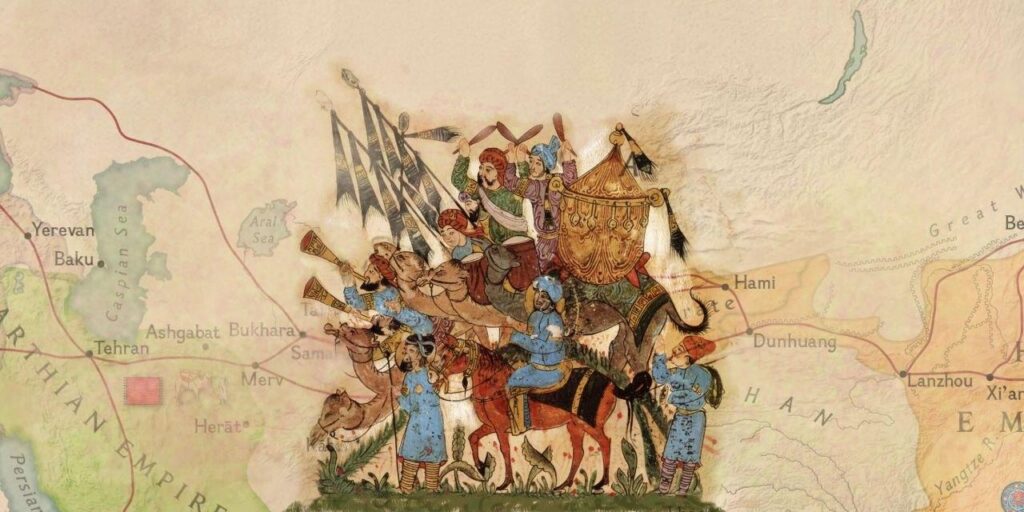
Under this Pax Mongolica, more trade goods began to flow directly out of China, especially after Chinggis Khan’s grandson, Kublai Khan, became Emperor. Besides the old northern corridor, the two main caravan routes in and out of China skirted the great Taklamakan Desert in present-day Xinjiang – a northerly path via Hami or a more southerly route that hugged the mountain massif to the north of Tibet. Those taking the Hami route still had the option of heading to Kashgar and reuniting with the southern route or striking off to the northwest, following the course of the Syr Darya River to the north of the Aral Sea and then on to the Volga Delta and Batu’s capital at Sarai.

This north-westerly route along the Syr Darya, which we can refer to as the Northen Silk Road, took the caravans through the cities of isfijab (now Sayram), Otrar, Turkistan, Sygnak, Sauran, Jend and Yangkent, and across the top of the Aral Sea, before the long desert crossing to the Volga Delta and then on to the heartland of the Golden Horde around the cities of Sarai and Kazan, or westwards to the Krim khanate (modern Crimea) on the Black Sea. In many ways, it was a precursor of the present-day Middle Corridor.
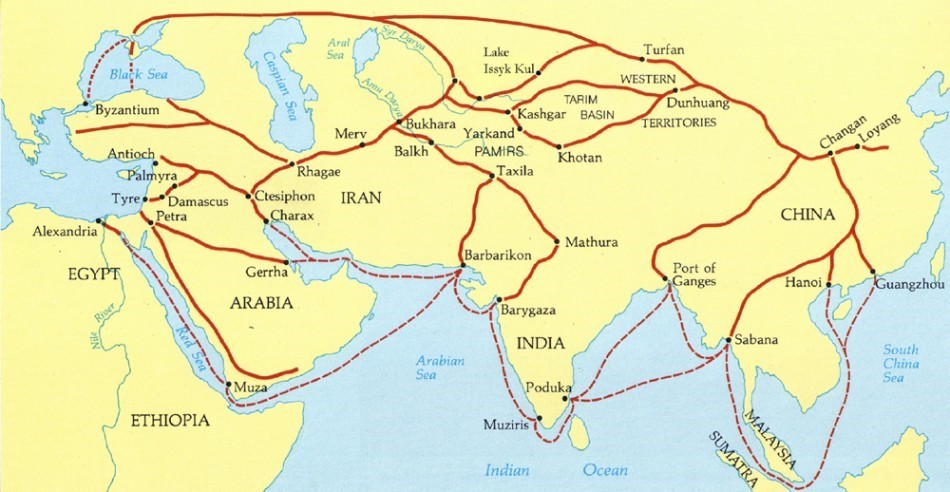
Main routes of the Silk Roads. Note the northern route that runs from Tarim and Issyk Kul, along the Syr Darya, past the Aral and Caspian Seas, towards Krim Tartary.

The early European Papal envoys William of Rubrouck and John de Pian Carpini both travelled eastwards along this well-established route in the 13th-century on their way to the Mongol capital at Karakorum. Remains of some of the cities along this route can be found in the Zhetysu region of Eastern Kazakhstan, although many were wrecked – including Aktam, Karamergen, and Agashayak – in the Mongol invasions.

The most important section followed the Syr Darya from near its source in the Pamirs of what is now Kyrgyzstan, through the Ferghana Valley, and then north-westwards through the Kyzyl Kum desert to the delta at the northern tip of the Aral Sea. Recent archaeological digs at some of the ruined cities scattered along the Syr Darya have led all the present-day states in the region to draw up recommendations to include them in the list of UNESCO World Heritage sites.

Kazakhstan, for example, has drawn up a list of nine archaeological sites, located in what is referred to as the Fergana-Syr Darya Corridor. This in turn links up with the 5,000-km Chang’an-Tian Shan Corridor that stretches westwards from Chang’an in central China to the Tian Shan mountains in present-day Kyrgyzstan and whose 33 cities flourished between the 6th century and the 16th century.
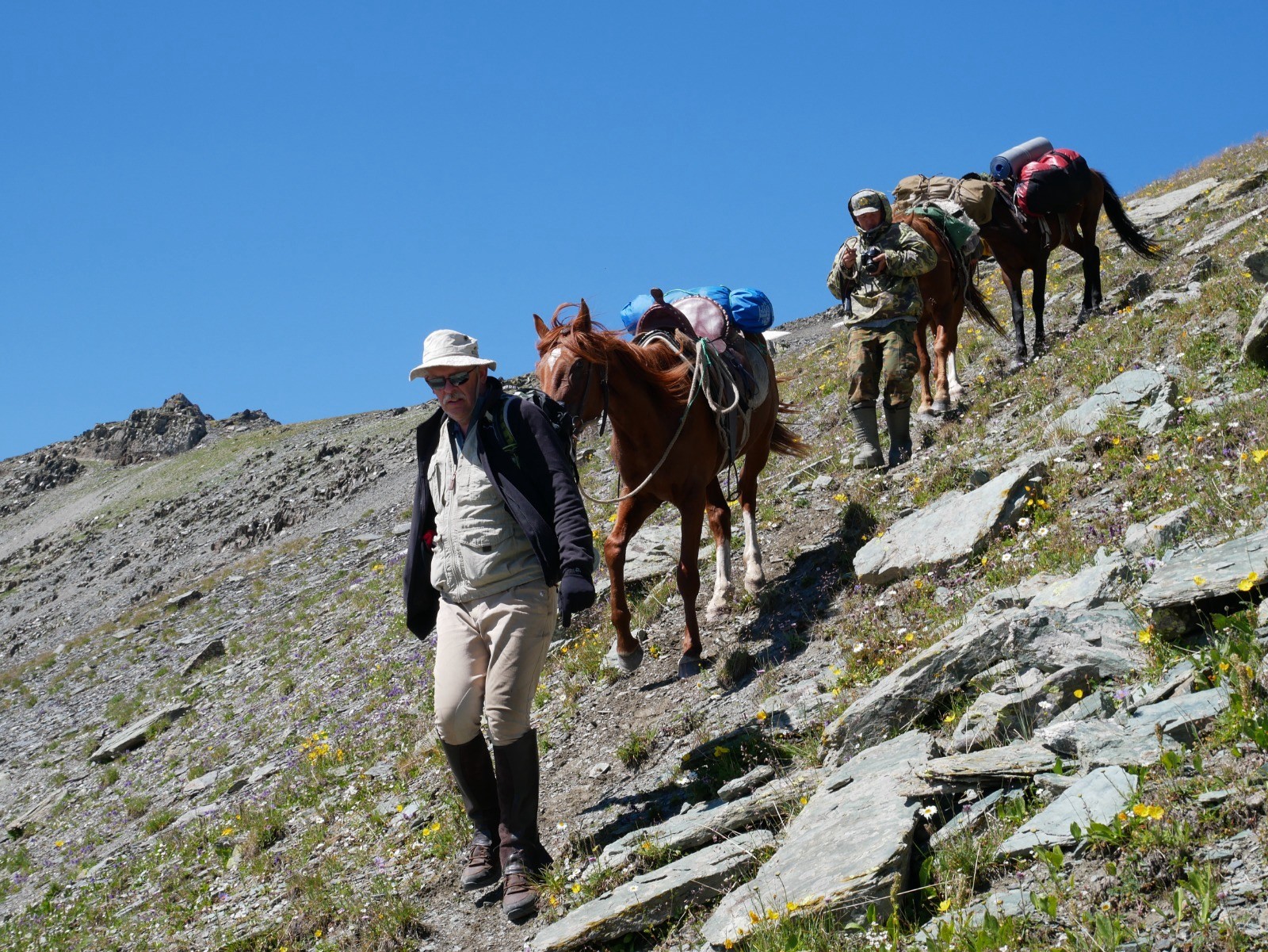
Expedition to the Djungar Alatau Mountains in Zhetysu, eastern Kazakhstan

The Ferghana-Syr Darya UNESCO submission for Kazakhstan describes each ancient city in detail, highlighting its historical significance, architectural features, periods of prosperity and decline, and the results of archaeological research. Otrar, for example, located close to the city of Turkistan, was a major administrative centre before its destruction by the Mongols, with a sophisticated irrigation system and trade connections to many regions. In 1200, Otrar’s population was 200,000, at a time when London had 40,000 inhabitants, Paris 110,000, and Venice 70,000.

Other cities on the Fergana-Syr Darya UNESCO list include Asanas, Kyshkala, Sygnak, Sauran, Zhankala, and Zhankent. Nor should we forget the city of Turkistan, with its famous Timurid mausoleum for Khoja Ahmed Yassavi – possibly the greatest of all the Timurid buildings. The city is built over the ruins of Yassy, which by the Middle Ages had become a commercial and religious hub, serving as a link between Central Asia, China, and the nomadic steppe. It later became the capital of the Kazakh khans, enhancing its regional role beyond trade.

Many of these cities were founded and flourished well before the Mongol conquest in the 12th-13th centuries, but before then, trade was mostly local. Some, like Otrar, which was destroyed by the Mongols, rose again once the Golden Horde had established itself in southern Russia. Nor was it just the Golden Horde that benefited from this trade. As one expert on the Golden Horde notes: “Until at least the sixteenth century Muscovy remained deeply involved in oriental trade, particularly with Persia, as did Yaroslavl and the annexed Volga khanates of Kazan and Astrakhan.”

However, after almost 200 years, which saw a huge expansion in trade and the increasing involvement of European merchants, this golden age of the Northern Silk Road was brought to an end with the defeat of the Golden Horde by Timur in 1391. Having conquered and devastated the region, Timur turned his back on Russia and diverted much of the Northern Silk Road trade from the Syr Darya cities towards Samarkand and Bukhara.

As this trade expanded and merchants found new routes to Europe via Persia, the newly wealthy members of Timur’s court were able to build beautiful palaces, mosques and madrassas in both cities and surround themselves with luxuries. Even today, despite depredations over the years, both Samarkand and Bukhara retain much of their beauty and still impress with their extraordinary textiles, architecture, and literary history.

With little left of the Golden Horde, the caravans that once sustained it now diverted towards more lucrative markets in Timur’s cities of Samarkand and Bokhara and then on towards the great cities of Merv and Herat, before reaching Persia and the Ottoman cities of Antioch and Tyre on the east coast of the Mediterranean in what is now Lebanon. The trade was dominated by Persians who were happy to sell their wares to Venetian and Genoan traders on the coast, who in turn resold their valuable cargoes across Europe – evident from the number of fine Turkish and Persian carpets that began to appear in European paintings.

Timur’s barbaric destruction of dozens of cities and their inhabitants was not a model for stable imperial government, even if, for a brief time, it allowed him to amass vast amounts of plunder to finance the beautification of Samarkand, Bukhara, Tashkent, and, most beautiful of all, Turkistan. Samarkand became one of the largest cities in the world under his rule, its riches obtained by the wholesale destruction of large parts of Central Asia, Persia, the Middle East, and northern India, and the enslavement or annihilation of their populations. After his death, his successors inevitably fell out with each other, and his empire too began to collapse.

By the mid-16th century – and particularly after the destruction by Ivan the Terrible of the khanates of Kazan and Astrakhan in the 1550s – the remaining trade along the Syr Darya fell into steep decline. As security collapsed, cities that had once relied on the caravan trade were abandoned or became shadows of their former selves. When the British merchant adventurer Anthony Jenkinson reached Bukhara in 1560, he was unable to continue his journey east due to numerous conflicts that had broken out along the route.

He was part of a small group of British merchants in the Muscovy Company who believed they could steal much of the Silk Road trade from the Genoese and Venetians operating in the Eastern Mediterranean and the Black Sea. Their idea was simple: divert the trade north again, either from Samarkand and Bukhara or northwards across the Caspian Sea from Persia towards Astrakhan and the Volga. By using the Russian rivers, goods could be taken to the White Sea in the far north and then transported by ship to England. Instead of Venetians and Genoans making super profits from trading in silk, jewels and spices, it would be English merchants controlling the trade.

As Michael Locke, a Muscovy Company agent stated at the time: “The traffic of Persia through Russia would be of exceedingly great importance to England for jewels, silks, drugs, galls [an insect product, used in tanning and dyeing], alum, and other merchandises there to be had at their fount; all of which might pass safely, without danger of the Turk, and without knowledge of Italy and Spain, and with no license from the King of Portugal. And all those commodities of Russia and Persia would pass abundantly by this North Sea into England and through England out again into Flanders, Germany, France, Spain and Italy, through the hands of Englishmen.”

The Muscovy Company received its royal charter in 1555, and two years later, Anthony Jenkinson set sail from London on what was the first of four expeditions aimed at unlocking the wealth of the Silk Road. He eventually reached Bukhara in 1560, thus becoming the first European to sail on the Caspian. Jenkinson would go on to visit Persia twice in an effort to make the business work. In fact, between 1557 and 1581 six English expeditions were sent down the Volga to Persia. When the Russian Tsars deprived the company of the right of free transit in the 1590s, the English opened trade relations in the Persian Gulf. They concluded an alliance with the Persian shah in 1620 and forced the Portuguese to give up their bases in the Gulf. In this way, they began to undercut the Genoans and Venetians in the Mediterranean and to establish the basis for a seaborne British empire.

New sea routes to the East meant goods were generally safer and no longer subject to the depredations of nomadic bandits on the Central Asian steppes. Although the Muscovy Company’s efforts to divert trade to the north were ultimately unsuccessful, even in the 18th century, English merchants were still trying to find a way of diverting the Persian trade northwards to Russia. In September 1743, for example, the English merchant Jonas Hanway left St Petersburg for Moscow, Tsaritsyn and Astrakhan, where he took a ship across the Caspian Sea to Persia.

Little came of Hanway’s efforts; much of his cargo was stolen, he became ill, and his ship was attacked by pirates. That, it seems, was the end of attempts by the British to divert the trade to the north. For the next 100 years or so, the cities of Central Asia continued their steady decline, left behind by a world increasingly dominated by the new modes of transport.

With the construction of the Transcaspian railway in the late 19th century – only possible due to Russia’s conquest of the khanates – travel to and within Central Asia became much easier. In fact, the military railway that the Russians opened in Spring 1888 as part of their project to control this vast region eventually became the main route into the heart of Central Asia. From the Caspian coast, it passed through Ashgabat and Merv before reaching Bukhara, Samarkand and Tashkent. As soon as the railway opened, it became a favourite with aspiring European tourists who could now reach the Registan in Samarkand almost without getting dust on their shoes.

At the same time, the fact that the new railway skirted the Syr Darya but took in both Samarkand and Bukhara only reinforced the view that these two cities were the most important survivors from the time of the Silk Road. Even before the beginning of the 20th century, the old Northern Silk Road along the Syr Darya had been almost completely forgotten.
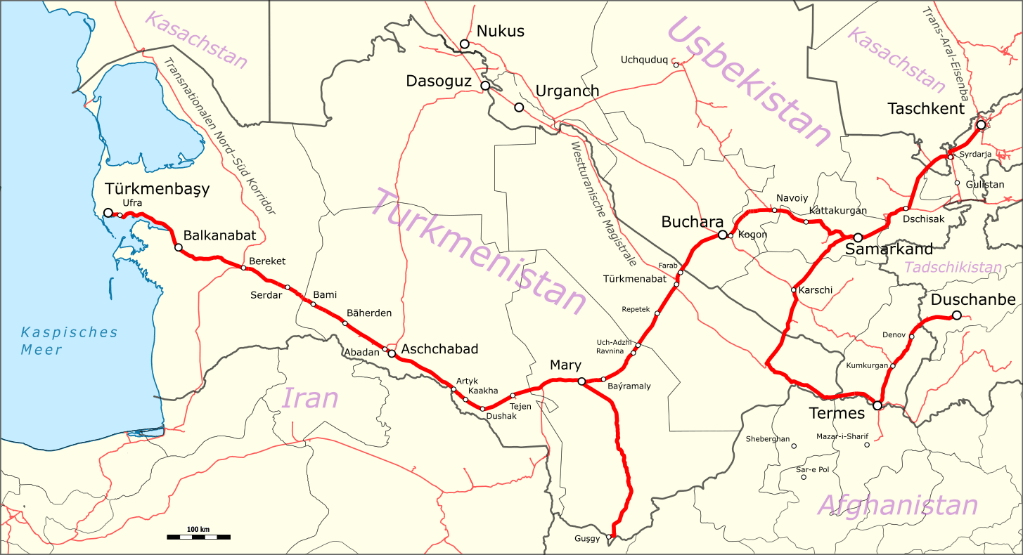
The Trans-Caspian railway opened in 1888

Today, the Middle Corridor is the phrase that is on everyone’s lips. The recent disruption to international shipping has reemphasised the importance of the old Eurasian land routes along the Syr Darya. Modes of transport may have changed, but safe, practical and efficient terrestrial systems may turn out to have an edge.


Kazakhstan Expands Accessible Transportation for People with Disabilities

Kazakhstan is expanding efforts to improve accessible transportation for people with disabilities. At a government meeting on April 21, Transport Minister Nurlan Sauranbaev reported on progress in implementing an inclusive policy in the transport sector.

He said that, as part of the Inclusive Policy Concept for 2025-2030, Kazakhstan is taking measures to ensure accessibility across three key areas: infrastructure, transport, and services.

In the rail sector, approximately 90% of trains have been equipped with lifts and compartments adapted for passengers with disabilities. By 2030, every train is expected to include at least one specialized carriage.

Railway stations are being modernized to include essential accessibility features such as ramps and lifting devices. Ticket offices and restrooms are also being upgraded. Passengers with disabilities receive a 50% discount on train tickets, and online booking for specialized compartments is available.

In 2025, around 580,000 passengers with disabilities traveled by rail in Kazakhstan.

In aviation, accessibility is also improving. Ten airports, including those in Astana and Almaty, now operate 13 lifts for passengers with disabilities. A further five airports are expected to be equipped by the end of the year.

In 2025, more than 9,000 passengers with disabilities traveled by air.

In the road transport sector, 80% of bus stations and 79% of city buses now meet accessibility requirements.

Kazakhstan is also continuing to develop the Invataxi project, which provides specially adapted minivans for passengers with limited mobility. The fleet has expanded by 30%, reaching 1,426 vehicles.

Cities across the country are working to improve accessibility more broadly. Infrastructure is being adapted to meet modern standards, while businesses and public institutions are increasingly responding to the needs of people with disabilities by improving access to buildings and interior spaces.

According to the Ministry of Labor and Social Protection, more than 29,500 social infrastructure facilities — 68% of the total — are now accessible to people with disabilities across Kazakhstan. By the end of 2026, this figure is expected to rise to over 34,000.

Mirziyoyev Calls for Central Asian Environmental Solidarity at Astana Summit

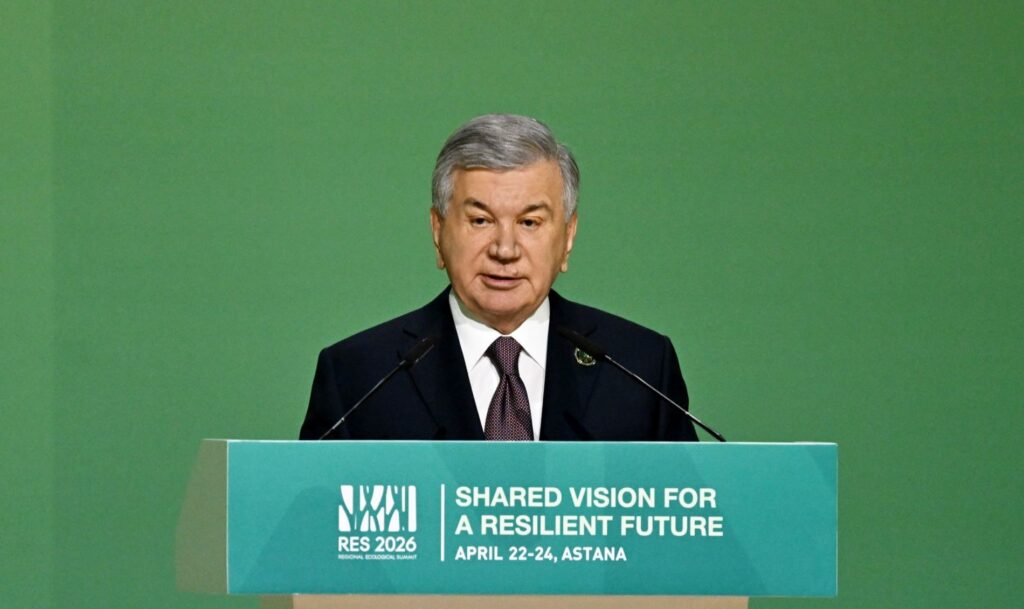
Uzbek President Shavkat Mirziyoyev used the opening of the Regional Ecological Summit in Astana on April 22 to argue that Central Asia must treat climate and environmental pressure as a shared regional challenge rather than a set of national problems. The meeting comes as Kazakhstan tries to turn ecology into a broader platform for regional coordination, investment, and policy action,

Addressing fellow leaders and delegates, Mirziyoyev backed the summit’s theme, “Shared Vision for a Sustainable Future,” and said the meeting built on the regional dialogue launched at last year’s Samarkand Climate Forum. He said environmental diplomacy in Central Asia was becoming more systematic and consistent at a time when warming in the region was moving at twice the global rate.

Mirziyoyev pointed to the loss of nearly one-third of Central Asia’s glaciers, unstable rainfall, growing water shortages, and land degradation affecting 80 million hectares. His remarks landed as water security has become one of the most urgent regional concerns ahead of the 2026 growing season, as recently reported by The Times of Central Asia. He also criticized what he described as weakening global environmental solidarity and called for fairer access for developing countries to climate finance, advanced technologies, and innovation.

While welcoming regional efforts to put environmental protection at the center of cooperation, Mirziyoyev stated that, “Countries that have contributed least to global climate change are once again being left alone to deal with its consequences.”

Mirziyoyev also highlighted Uzbekistan’s domestic record, including tree planting under the Yashil Makon program and afforestation on the dried bed of the Aral Sea. He also proposed new regional initiatives, including a Clean Air consortium, a Green Trade Corridor, a shared climate investment portfolio, and a Central Asian Red Book for biodiversity protection.

Armenian President Delivers Speech at Astana Summit, Emphasizing Climate Action and Biodiversity

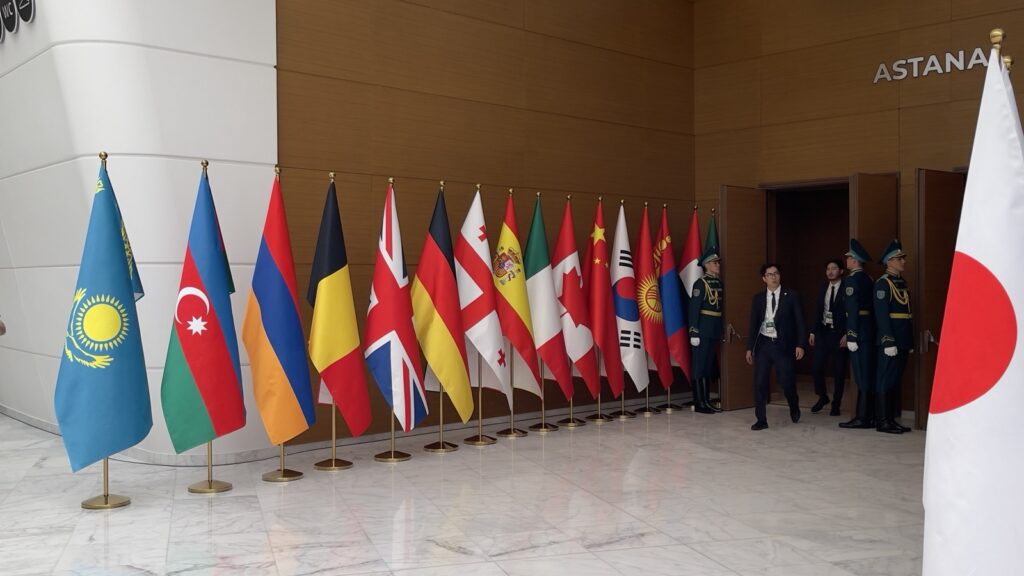
Astana, Kazakhstan – Armenian President Vahagn Khachaturyan addressed the Regional Ecological Summit (RES 2026) today, speaking about the urgent challenges of climate change, biodiversity loss, and the need for strengthened international cooperation. The summit, themed “Shared Vision for a Resilient Future,” opened its sessions on Earth Day under the patronage of Kazakh President Kassym-Jomart Tokayev.

In his remarks, President Khachaturyan expressed deep gratitude to his Kazakh counterpart, the government, and the people of Kazakhstan for their warm hospitality and the excellent organization of this important event. “It is an honor to address the Regional Ecological Summit in Astana,” he stated. He praised Kazakhstan’s leadership in advancing global and regional cooperation on climate change and environmental protection, describing the event as an important platform for dialogue bringing together governments, the scientific community, civil society, and international partners.

President Vahagn Khachaturyan gives address at the Regional Ecological Summit in Astana; Image: TCA

Highlighting Armenia’s unique vulnerabilities, the President noted that, as a landlocked, developing, and mountainous nation, Armenia is already experiencing severe effects of climate change despite contributing just 0.02% of global greenhouse gas emissions. “Over the past decades, the average temperature in the country has increased by more than one degree Celsius and is projected to continue rising by mid-century,” he said. These changes have triggered more frequent extreme weather events, including floods and droughts, leading to significant ecological losses, declining precipitation, glacier retreat, and growing water scarcity — particularly affecting rural communities and mountain ecosystems.

President Khachaturyan welcomed Kazakhstan’s initiative to convene international consultations on strengthening cooperation for effective water resource management and said Armenia will actively participate.

On the climate front, he reaffirmed Armenia’s ambitious nationally determined contributions (NDCs): a 44% reduction in greenhouse gas emissions by 2035 compared to 1990 levels through domestic measures, rising to 52% with international support. “Armenia undertakes these commitments with full awareness of its national capacity and the importance of international cooperation,” he emphasized, citing the principles of equity and common but differentiated responsibilities.

Turning to biodiversity, the President stressed that rising temperatures are a major driver of biodiversity loss, with profound consequences for ecosystems, human health, food security, and economies worldwide. He announced that Armenia will host the 17th Conference of the Parties (COP17) to the Convention on Biological Diversity in Yerevan in October later this year. “These efforts reflect our small country’s strong commitment to promote global nature conservation,” Khachaturyan declared, inviting all participants to join the landmark gathering “to review our progress and identify ways to accelerate efforts to restore and protect the environment for present and future generations.”

The Armenian President concluded by underscoring the critical role of international cooperation, including the mobilization of financial resources, sharing of expertise, and the transfer of technology. “Armenia stands ready to cooperate with regional and international partners, to share our experience and to learn from others,” he said. “Together, we can protect our planet Earth, ensure long-term resilience and well-being for our societies.”

President Khachaturyan’s address highlights Armenia’s efforts to present itself as an active participant in global environmental diplomacy despite its modest emissions footprint, particularly through its upcoming role hosting COP17. The three-day Regional Ecological Summit continues through April 24, focusing on climate resilience, biodiversity, and sustainable development across the region.

Kazakhstan President Highlights New Constitution and Calls for Fair Global Ecological Cooperation at Astana Summit

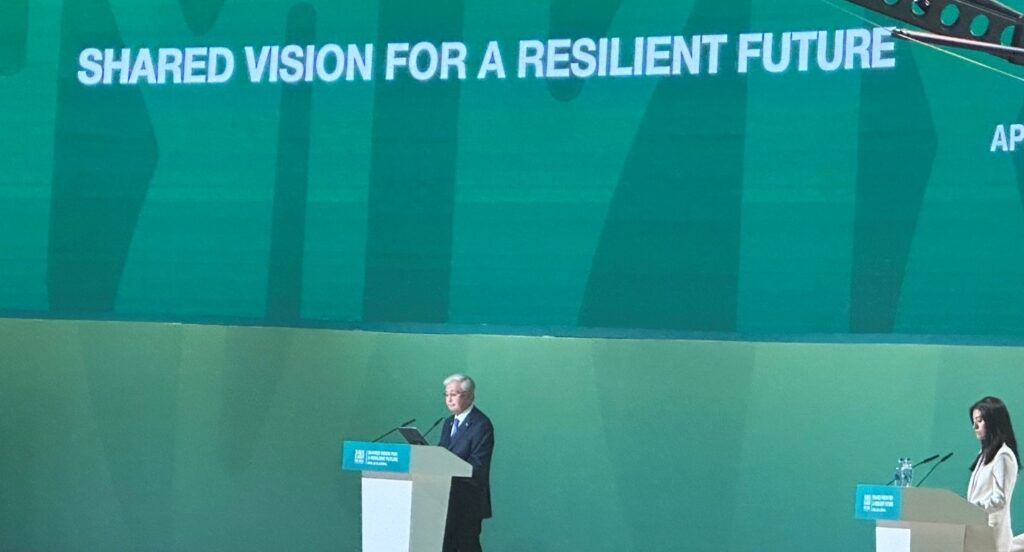
Astana, Kazakhstan – President Kassym-Jomart Tokayev used his opening address at the Regional Ecological Summit in Astana to underline Kazakhstan’s strengthened constitutional commitment to environmental protection and to call for fair, pragmatic, and unified global cooperation on ecological challenges.

Speaking on Earth Day before regional leaders and senior United Nations representatives, Tokayev described ecology as far more than climate policy alone. “It is the very foundation of human livelihood,” he said. “It is about clean air and safe water, healthy soils and secure food systems. It is about the stability of communities and the dignity of future generations. It is also about clarity of thought, harmony of our societies, and their happiness.”

The President said Kazakhstan’s new Constitution clearly reflects environmental protection as a fundamental priority of state policy and public responsibility. He described this constitutional commitment as embedding ecological safety and prosperity into the country’s long-term vision and “national DNA.”

Tokayev warned against double standards in international environmental policy, saying developing and emerging economies must not be placed at a disadvantage as the world moves toward cleaner growth models. “The global transition to cleaner models must be fair, balanced, and stimulating,” he stated.

Environmental cooperation, he added, should unite rather than divide nations and must be based on partnership, trust, and shared responsibility, “with no naming, no shaming, and no blaming.” Stressing the need for consistency in international norms, Tokayev also said: “The UN Charter is not Haute Cuisine, and cannot serve as a cherry-picking platform.”

The President identified the region’s most urgent shared ecological challenges as water scarcity and poor water management, desertification, glacier retreat, air pollution, and biodiversity vulnerability. “The time for indicating successes is over; the time for making solutions has come,” he said.

Tokayev then outlined concrete steps Kazakhstan is taking across several priority areas.

On energy transition, he said Kazakhstan intends to increase the share of renewable energy to 15% by 2030 while reducing emissions by almost 35%. Renewable sources already generate more than 7% of Kazakhstan’s electricity, and the country is moving to expand clean generation capacity while modernizing major energy facilities. As the world’s leading uranium exporter, Kazakhstan is also advancing plans for its first nuclear power plant while introducing cleaner technologies at coal-fired generation sites.

On water security, Tokayev highlighted the restoration of the Northern Aral Sea, where about 36% of the water surface has been recovered, improving water quality and fish stocks. He described the Aral tragedy as a warning for the wider region and the international community. “The Aral Sea remains a stark reminder of the consequences of unsustainable policies,” he said.

He also pointed to a new interstate program aimed at preventing further degradation of the Caspian Sea, supported by a dedicated scientific research institute. Tokayev renewed his proposal, first advanced in Ashgabat last December, to establish an International Water Organization as a United Nations agency, and said the summit would host the first round of international consultations on the initiative.

Addressing the Caspian region more broadly, Tokayev emphasized that ecological security must be accompanied by peace and stability. “Any use of military arms in the Caspian region must be excluded and banned,” he said, adding that environmental cooperation cannot be separated from the need to preserve regional trust and security.

On biodiversity and reforestation, Tokayev cited Kazakhstan’s progress in restoring key species and natural habitats. He pointed to the rebound of the saiga population and the doubling of the country’s snow leopard population to around 190 animals. He also said more than 1.5 billion trees have been planted across one million hectares over the past five years. Kazakhstan, he added, is inviting international partners to join a new International Fund for rare species and biodiversity conservation.

The President also emphasized public engagement. He said the nationwide “Taza Kazakhstan” movement has mobilized nearly one million volunteers and welcomed the United Nations’ designation of 2026 as the International Year of Volunteers for Sustainable Development. He noted that Kazakhstan’s new Constitution gives appropriate status to the volunteer movement and recognizes the state’s duty to support such civic participation.

Tokayev also highlighted the role of technology in environmental governance, noting that Kazakhstan has declared this year the Year of Digitalization and Artificial Intelligence. He said successful responses to ecological challenges are impossible without artificial intelligence, which can create new opportunities for protecting natural resources and improving environmental governance. Kazakhstan, he added, is ready to support the development of a regional digital ecosystem for ecological management.

Concluding his address, Tokayev said the adoption of the Astana Declaration on Ecological Solidarity in Central Asia, together with substantive agreements reached on the sidelines of the summit, reflected the participants’ shared commitment to a stronger regional ecological partnership. He expressed confidence that the summit’s deliberations would produce concrete joint initiatives and help transform a shared vision of a resilient future into practical action benefiting the peoples of the region.

Protecting the planet, Tokayev emphasized, is not only an environmental task, but also a moral duty, an economic necessity, and a strategic priority for peace and stability.

Rather than relying on declarations alone, the address presented Kazakhstan’s regional role as grounded in concrete green commitments and deliverables at the national, regional, and international levels – combining domestic action on renewable energy, reforestation, biodiversity protection, and volunteer mobilization with regional cooperation on water security, Caspian stability, and broader international initiatives in environmental governance.

Life After the Water: Uzbekistan Brings the Aral Sea Story to Milan

Uzbekistan made its debut at Milan Design Week 2026 on April 20, with When Apricots Blossom, an immersive exhibition at Palazzo Citterio exploring how craft and design can respond to environmental crisis. Running through April 26, the project is organized by the Uzbekistan Art and Culture Development Foundation (ACDF), commissioned by its chairperson, Gayane Umerova, and curated by Kulapat Yantrasast, founder of WHY Architecture. It marks the country’s first major presentation at one of the world’s leading design platforms.

At the center of the project is Karakalpakstan, a region in northwestern Uzbekistan that has experienced one of the world’s most severe environmental crises. Over the past six decades, the shrinking of the Aral Sea has transformed the area’s landscape, economy, and way of life. Once a vast inland body of water, the sea has largely disappeared, leaving behind desert, salt plains, and struggling communities.

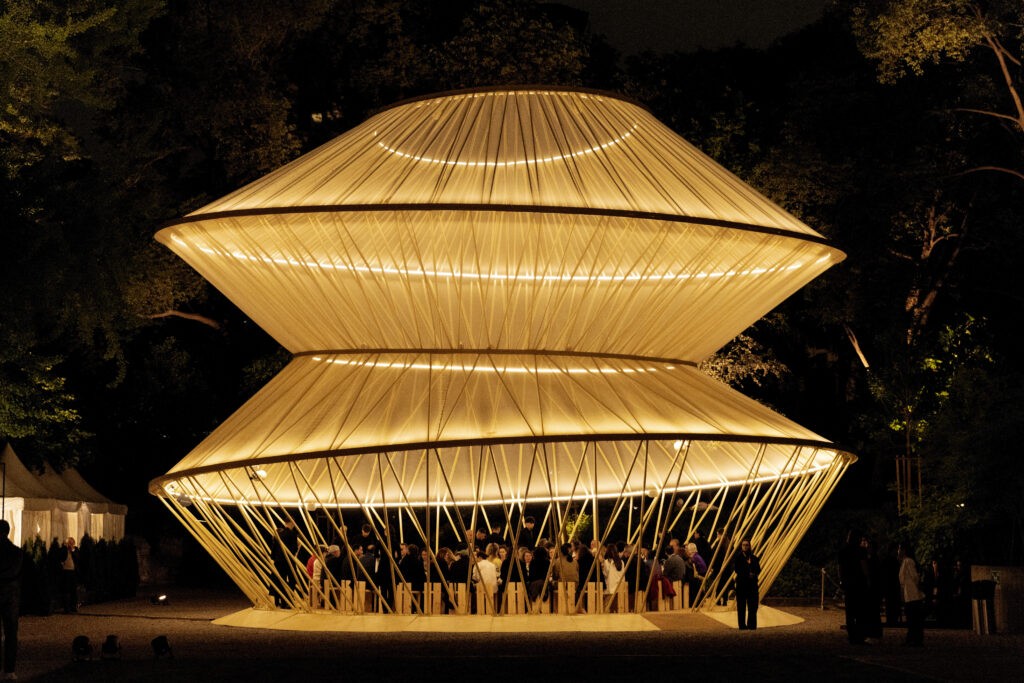
The Garden Pavilion at Palazzo Citterio, indicative render: Lightweight latticed framework ‘deconstructed yurt’ by Kulapat Yantrasast. When Apricots Blossom, Milan Design Week 2026. Courtesy of ACDF and WHY Architecture

When Apricots Blossom traces this transformation while also looking ahead.

“The Aral Sea is both a cautionary tale and an opportunity to offer a blueprint for other regions facing extreme environmental change,” Umerova said ahead of the opening. She emphasized that design and craft are not separate from these challenges, but part of the response. “They begin with people and knowledge.”

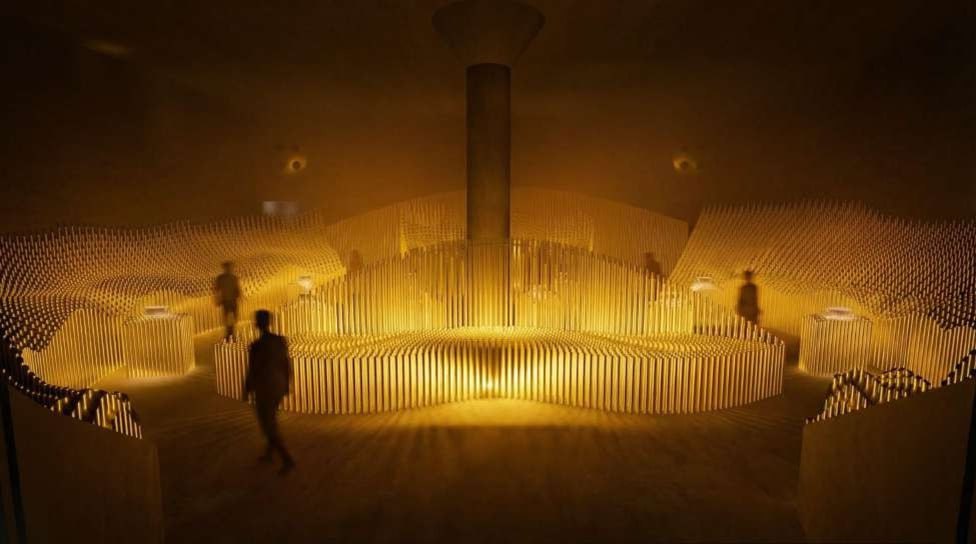
Inside Palazzo Citterio, the exhibition unfolds as a journey through the region’s past, present, and possible futures. The main gallery features an installation of reed-like structures that evoke the landscapes of Karakalpakstan. Within this setting, visitors encounter objects and ideas connecting everyday life with broader environmental questions.

A key focus is on three traditional practices: bread-making, yurt-building, and textile crafts. These are presented not as relics of the past, but as systems of knowledge shaped by generations of adaptation.

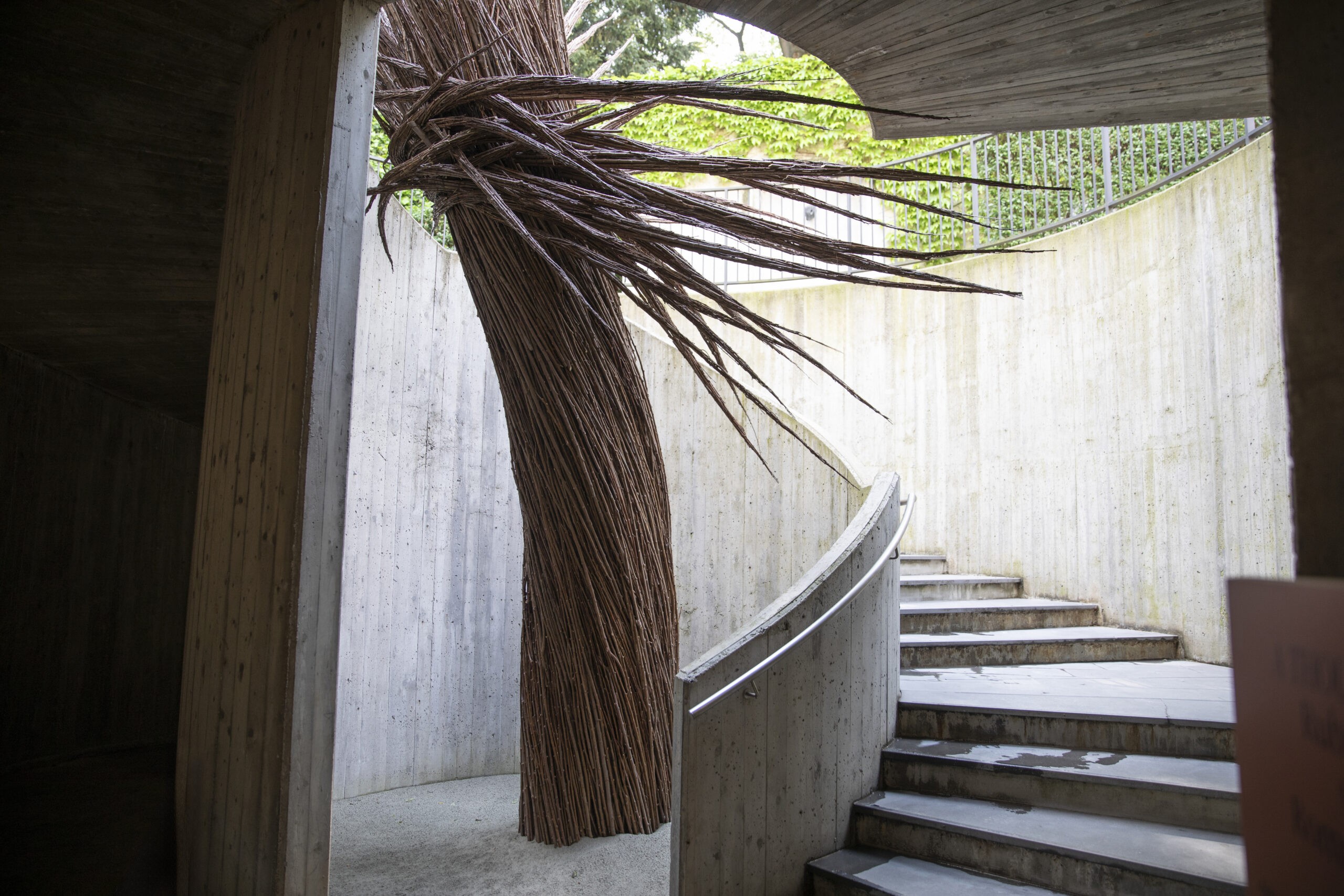
Bethan Laura Wood at Palazzo Citterio – When Apricots Blossom – commissioned by ACDF. Image courtesy of ACDF

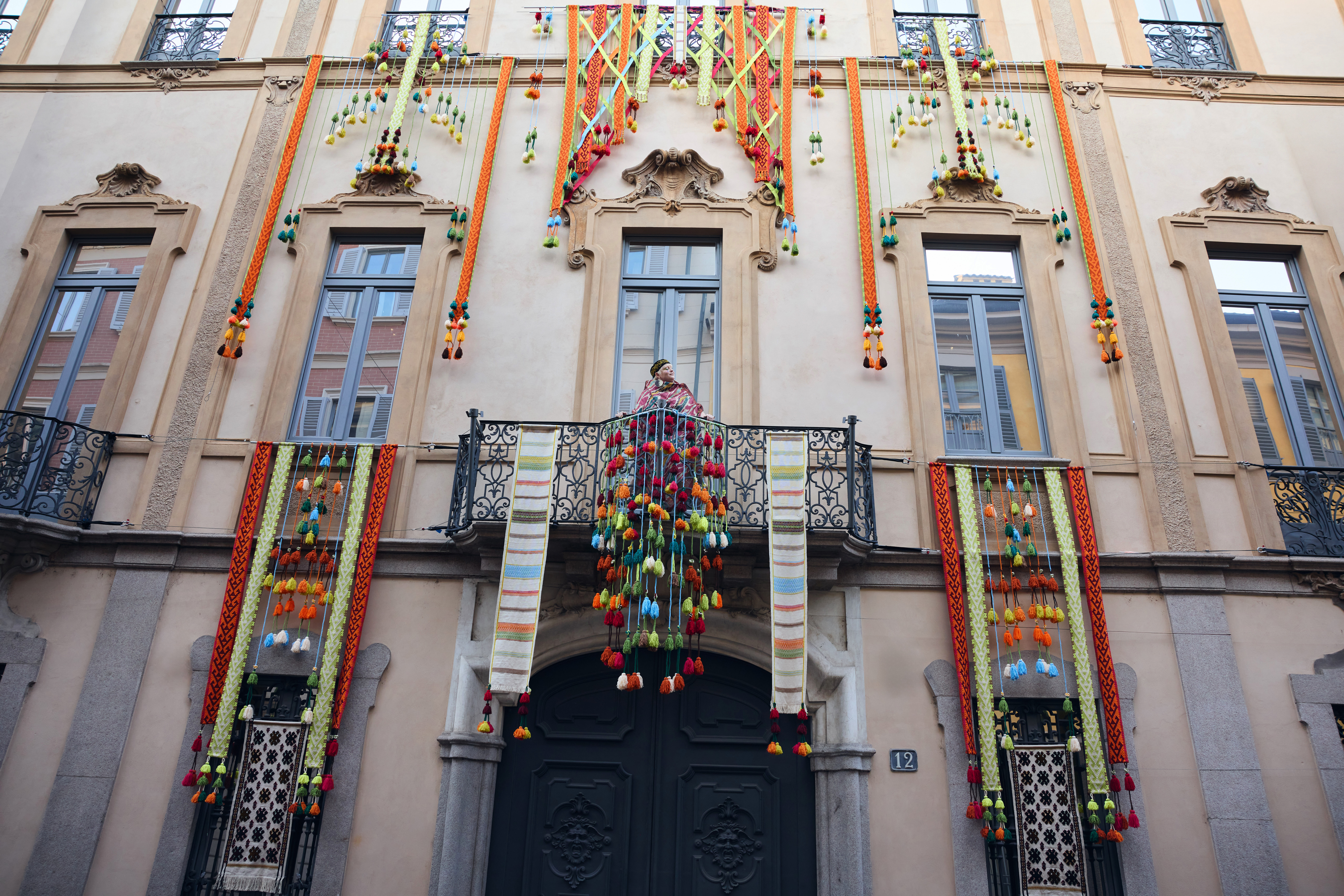
Twelve international designers have worked with Uzbek and Karakalpak artisans to create new pieces inspired by these traditions. Among them are custom bread trays and stamps (chekich), reflecting the central role of bread in Uzbek culture. Made from materials such as wood, felt, ceramics, and reeds, the works reinterpret familiar forms while remaining rooted in local techniques.

Alongside these contemporary designs are artifacts selected by participants of the Aral School, an international postgraduate program that treats the region as a site for creative and critical exploration. The exhibition also premieres Where the Water Ends, a new film by filmmaker Manuel Correa and architect Marina Otero Verzier, offering a closer look at landscapes and communities shaped by the Aral Sea’s decline.

The main gallery interior, indicative render: Reed-link forms by WHY Architecture. When Apricots Blossom – Milan Design Week 2026. Courtesy of ACDF and WHY Architecture

Together, these elements form a broader narrative about how people adapt to change, not only through technology, but through culture.

The exhibition also serves as a platform to announce the next Aral Culture Summit, which will take place in Nukus from September 11 to 13. Held every 18 months, the summit brings together designers, scientists, and policymakers to explore how culture can contribute to environmental and social regeneration.

According to ACDF, these initiatives are part of a wider ten-year vision supported by the Uzbek government to revitalize the Aral Sea region, with a focus on cultural, economic, and social development.

Beyond the main exhibition spaces, visitors are drawn into the palazzo’s garden, where Yantrasast has created a pavilion inspired by the traditional yurt. Known as the Garden Pavilion, the structure reinterprets the portable homes used by nomadic communities across Central Asia.

Traditional bread stamps (chekich). When Apricots Blossom – Milan Design Week 2026. Courtesy of ACDF.

“The yurt is one of the most honest pieces of architecture ever made,” Yantrasast said. “It was designed to move with its people and respond to changing conditions.”

For the exhibition, he has taken this idea further, creating what he describes as a “deconstructed yurt.” The structure serves as a gathering space for talks, workshops, and discussions, while also symbolizing absence, including the loss of water and ways of life in the Aral Sea region.

“We wanted to open it up,” Yantrasast explained. “To show not only what it holds, but also what has been lost.”

The pavilion will host daily events throughout the week, including demonstrations by Uzbek artisans, such as bread-stamp carving and tassel-making. It will also provide a space for conversations between local practitioners and international designers, linking traditional knowledge with global debates on sustainability.

By placing Uzbekistan at the center of Milan Design Week, the exhibition aims to reach a wider audience and reshape how the Aral Sea is understood.

A Thousand Voices – When Apricots Blossom – by Ruben Saakyan and Roman Shtengauer, commissioned by ACDF – MDW 2026 – Image Credit: ACDF

Rather than focusing solely on environmental damage, When Apricots Blossom highlights resilience, the ability of communities to adapt, create, and endure.

For Umerova, this message is central. “We are sharing the story of Karakalpakstan not only as a history of loss,” she said, “but as a story of creativity and possibility.”

As the exhibition opens this week, it positions Uzbekistan not just as a participant in global design, but as a contributor to ongoing conversations about climate, culture, and the future of communities facing environmental change.