• KGS/USD = 0.01144 0%
  • KZT/USD = 0.00210 0%
  • TJS/USD = 0.10438 0%
  • UZS/USD = 0.00008 0%
  • TMT/USD = 0.28490 0%
  • KGS/USD = 0.01144 0%
  • KZT/USD = 0.00210 0%
  • TJS/USD = 0.10438 0%
  • UZS/USD = 0.00008 0%
  • TMT/USD = 0.28490 0%
  • KGS/USD = 0.01144 0%
  • KZT/USD = 0.00210 0%
  • TJS/USD = 0.10438 0%
  • UZS/USD = 0.00008 0%
  • TMT/USD = 0.28490 0%
  • KGS/USD = 0.01144 0%
  • KZT/USD = 0.00210 0%
  • TJS/USD = 0.10438 0%
  • UZS/USD = 0.00008 0%
  • TMT/USD = 0.28490 0%
  • KGS/USD = 0.01144 0%
  • KZT/USD = 0.00210 0%
  • TJS/USD = 0.10438 0%
  • UZS/USD = 0.00008 0%
  • TMT/USD = 0.28490 0%
  • KGS/USD = 0.01144 0%
  • KZT/USD = 0.00210 0%
  • TJS/USD = 0.10438 0%
  • UZS/USD = 0.00008 0%
  • TMT/USD = 0.28490 0%
  • KGS/USD = 0.01144 0%
  • KZT/USD = 0.00210 0%
  • TJS/USD = 0.10438 0%
  • UZS/USD = 0.00008 0%
  • TMT/USD = 0.28490 0%
  • KGS/USD = 0.01144 0%
  • KZT/USD = 0.00210 0%
  • TJS/USD = 0.10438 0%
  • UZS/USD = 0.00008 0%
  • TMT/USD = 0.28490 0%

Kazakhstan Increased Agricultural Export Revenue by More than a Third in 2025

Export revenues from Kazakhstan’s agro-industrial complex reached $7 billion in 2025, an increase of 37% compared to the previous year. This was announced by Deputy Minister of Agriculture Yerbol Taszhurekov.

A year earlier, export revenues from agriculture totaled $5.1 billion. That figure was nearly 1.7 times higher than in 2018, when Kazakhstan’s farmers exported $3.1 billion worth of products.

According to Taszhurekov, more than half of the export revenue in 2025, about $3.6 billion, came from processed agricultural products. Supplies of processed goods to foreign markets grew by 35% compared to 2024, when their exports amounted to $2.7 billion.

“Significant growth in production allows us not only to fully supply the domestic market, but also to actively increase export volumes,” the deputy minister said.

He also noted that the share of processed products in total agricultural output continues to rise. While it accounted for about 50% in 2024, preliminary data for 2025 suggests this figure has increased to 60%.

Overall, Kazakhstan’s gross agricultural output rose by 5.9% in 2025, reaching 9.8 trillion tenge (about $19.6 billion).

Among the sector’s key achievements were high yields of grain and oilseeds. Last year, the country harvested 25.9 million tons of grain in net weight, including 19.3 million tons of wheat. A record harvest of oilseeds was also recorded at 4.8 million tons, along with more than 1 million tons of legumes.

According to Taszhurekov, changes in the structure of cultivated areas were the result of a policy aimed at agricultural diversification. The area planted with wheat was reduced by nearly 900,000 hectares, while the area under legumes increased by 275,000 hectares and oilseed crops expanded by more than 1 million hectares.

“This creates a more sustainable agricultural model and expands the raw material base for processing enterprises,” he said.

One of the most promising areas of development remains deep grain processing. By 2028, Kazakhstan plans to launch new production facilities with a total capacity of 5.8 million tons per year. Investment in these projects is estimated at approximately 1.9 trillion tenge (about $3.8 billion), and more than 3,300 jobs are expected to be created.

The product range will also expand, with enterprises planning to produce amino acids, syrups, vitamins, and other high-value processed products.

Taszhurekov also noted the expansion of state support instruments for the agro-industrial complex. Preferential loans have been introduced for processing enterprises to purchase fixed assets at an interest rate of 2.5% and to finance working capital at a rate of 5%.

In addition, investment subsidy programs have been expanded. While the standard reimbursement rate is 25%, it has been increased for several priority sectors, to 40% for sugar production and egg processing, and to 50% for high-tech agricultural industries.

“Thanks to the state support measures adopted, the industry is showing steady positive dynamics,” the ministry representative said.

As previously reported by The Times of Central Asia, Kazakhstan also plans to bring one of its iconic agricultural products, Aport apples, to international markets.

Daines Retirement Leaves Uncertainty for Senate Central Asia Caucus

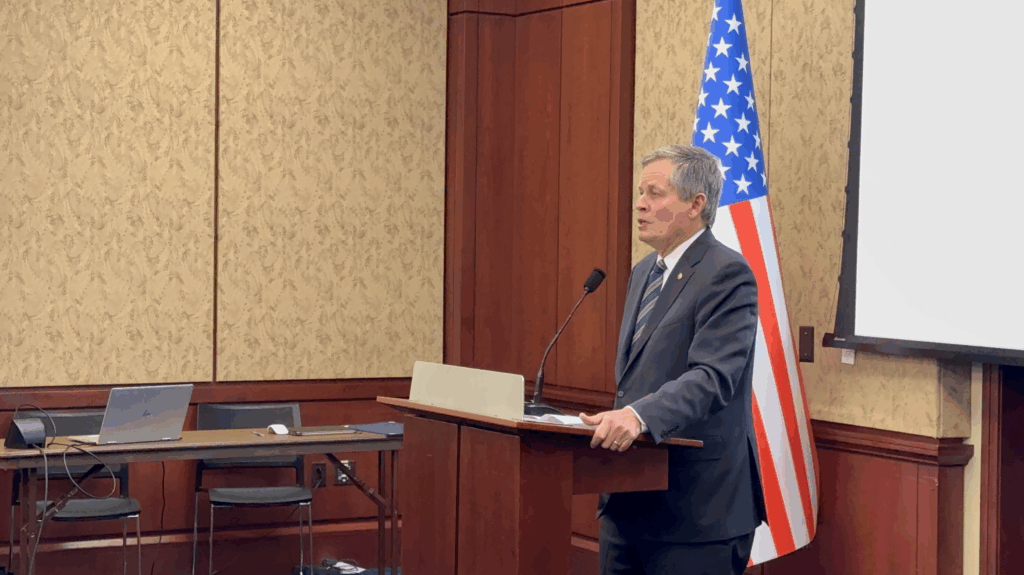
Senator Steve Daines has announced that he will not seek re-election in 2026, a decision that could have implications for congressional initiatives focused specifically on Central Asia. Daines has been among the most active advocates in Congress for strengthening U.S. engagement with the region, particularly on trade policy and economic cooperation with Kazakhstan, Kyrgyzstan, Tajikistan, Turkmenistan, and Uzbekistan.

In 2024, Daines partnered with Democratic Senator Gary Peters to launch the U.S. Senate Central Asia Caucus, a bipartisan forum intended to raise the region’s profile in Washington and encourage cooperation on trade, investment, and security. The initiative reflected growing interest in Congress as Central Asia has gained strategic importance amid shifting global supply chains and efforts by governments in the region to diversify partnerships beyond Russia and China.

One of the caucus’s key policy priorities has been the repeal of the Cold War-era Jackson–Vanik Amendment, which still applies to multiple former Soviet states. Its continued presence in U.S. law is widely viewed as an outdated barrier to deeper economic engagement. Momentum for its repeal has grown as policymakers seek to expand trade with Central Asia and modernize the legal framework governing U.S. economic relations with the region.

Supporters argue that removing the amendment would encourage American investment in sectors such as energy, infrastructure, and critical minerals while aligning U.S. trade policy with Washington’s broader strategic outreach to Central Asia. Debate in Washington over normalizing trade relations has increasingly been framed as part of a wider push to strengthen economic ties with the region. With both Daines and Peters expected to leave the Senate by 2027, the caucus’s founding leadership will soon depart Capitol Hill, potentially narrowing the window for congressional action on the issue.

Turkmen Natural Gas Could Supplement Azeri Supplies to Europe via the Southern Gas Corridor

Turkmenistan views the Trans-Caspian Gas Pipeline project as one of the most important directions for diversifying its energy exports and strengthening energy security on the European continent, Turkmenistan’s former president Gurbanguly Berdymuhamedov said in an interview with the Al Arabiya television channel during his visit to the United States in February, according to official Turkmen media.

The Trans-Caspian Gas Pipeline is a proposed infrastructure project designed to transport natural gas from Turkmenistan to Azerbaijan across the Caspian Sea, where it could connect to the Southern Gas Corridor (SGC).

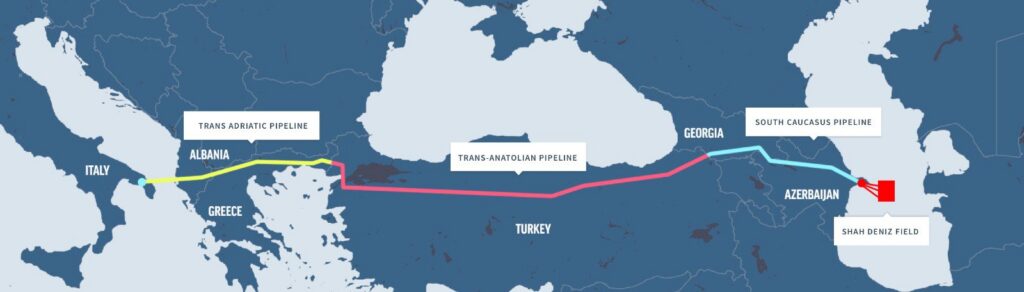
The SGC is intended to reduce Europe’s dependence on Russian gas and diversify the continent’s energy supplies by bringing natural gas from the Caspian region to European markets. Its primary supply source is Azerbaijan’s Shah Deniz gas field in the Caspian Sea. The corridor stretches from Azerbaijan through Georgia and Türkiye to Greece, Albania, and Italy.

Turkmenistan is widely viewed as a potential additional supplier for the SGC, which could become increasingly important if Azerbaijani gas alone proves insufficient to meet rising European demand.

Berdymuhamedov said that progress on the Trans-Caspian Gas Pipeline requires resolving international legal issues, particularly those related to the delimitation of the Caspian seabed. A Turkmen-Azerbaijani working commission has been established for this purpose.

“We hope that its work will yield significant practical results,” he said.

Berdymuhamedov also emphasized Turkmenistan’s large hydrocarbon resources, noting that the country ranks fourth globally in proven natural gas reserves.

“For some time in the past, the bulk of Turkmen natural gas exports went to Russia, which received up to 40 billion cubic meters per year. Currently, China is our main gas buyer, with supply volumes at roughly the same level,” Berdymuhamedov said.

He added that Turkmenistan’s policy of diversification allows the country to supply gas within the region through swap arrangements involving Iran and Azerbaijan, as well as Kazakhstan, Uzbekistan, and other neighboring states.

Turkey is also considered a key link for potential Turkmen gas exports to Europe.

Turkish Vice President Fuat Oktay previously said that, in cooperation with Azerbaijan, Turkmen natural gas could be transported through the Trans-Anatolian Natural Gas Pipeline (TANAP), which runs across Türkiye and forms the central segment of the Southern Gas Corridor.

Oktay expressed confidence that negotiations between Turkey’s Ministry of Energy and Natural Resources, the Turkish state energy company BOTAŞ, and Turkmenistan’s state-owned gas producer, Türkmengaz, could soon produce positive results.

He also stated that Turkish state companies are ready to participate in the development of hydrocarbon resources at the jointly developed Turkmen-Azerbaijani Dostluk field in the Caspian Sea.

Speaking at the 12th Ministerial Meeting of the Southern Gas Corridor Advisory Council in Baku on March 3, Zafer Demircan, Turkey’s Deputy Minister of Energy and Natural Resources, highlighted the corridor’s strategic importance.

“There is a strong common understanding of the crucial role of the Southern Gas Corridor in achieving long-term energy supply security,” Demircan said. “This valuable concept is evolving toward a Green Energy Corridor linking states in the Caucasus and Central Asia with Europe. Türkiye is the most feasible route not only for natural gas transportation but also for electricity transmission.”

Participants at the Southern Gas Corridor Advisory Council meeting emphasized the system’s growing role in supplying Azerbaijani gas to European markets. According to Azerbaijan’s Ministry of Energy, the country supplied 12.5 billion cubic meters (bcm) of natural gas to EU member states in 2025, a 53.8% increase compared with 2021 levels.

At the same meeting, EU Commissioner for Energy and Housing Dan Jørgensen said that Caspian gas has already contributed to a sharp reduction in Europe’s reliance on Russian energy supplies.

“With the help of Caspian gas, the EU’s dependence on Russian gas fell from 45% of total imports in 2022 to 12% in 2025, and these numbers will continue to fall,” Jørgensen said. “In less than two years, the remaining 35 billion cubic meters of Russian gas that we are still importing every year will be out of our markets.”

Jørgensen also reaffirmed the EU’s commitment to strengthening regional connectivity with the Black Sea region, Turkey, the South Caucasus, and Central Asia.

“The EU stands ready to explore further opportunities to strengthen energy connectivity and the energy transition in the region, including through the mobilization of guarantees and blended finance instruments,” he said.

Iran’s Ambassador in Tashkent Defends Tehran’s Position on Middle East Conflict

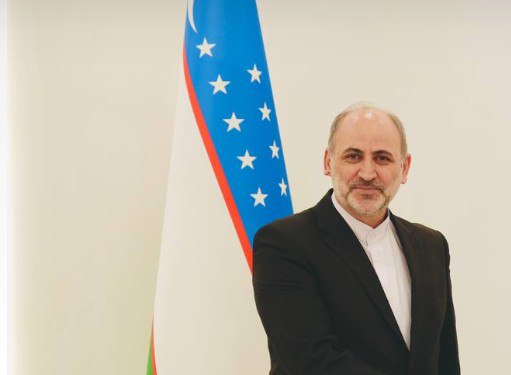
Iran’s ambassador to Uzbekistan, Mohammad Ali Iskandari, has held a press conference in Tashkent during which he sharply criticizing the United States and Israel for the escalating war in the Middle East.

According to the Uzbek diplomatic news platform UzDiplomat, Iskandari spoke with journalists about Tehran’s position on the fighting and the broader political tensions.

“We are fighting a mindset, the mindset that everything belongs to them,” Iskandari said on Wednesday, referring to Israel and the United States.

“We did not start this war,” the ambassador said, adding that the escalation began while diplomatic negotiations were still underway. He said the conflict was closely tied to Israel’s regional policies and the decisions of its leadership.

According to Uzbek journalist Sharofiddin Tulaganov, who attended the event and later described it on his Telegram channel, Iskandari said the air strike that killed Iranian Supreme Leader Ali Hosseini Khamenei was a violation of international law.

Iran’s theocratic leadership has long been a source of international concern because of its nuclear program, sponsorship of proxy forces in the Middle East, and bloody crackdowns on protesters seeking more freedom. U.S. President Donald Trump and senior administration officials cited those concerns in the run-up to the air strike campaign, indicating that the United States wants a change of leadership in Iran.

The Iranian ambassador also condemned an alleged air strike that hit a school in Iran, killing, by Iskandari’s account, 168 Iranian girls between the ages of seven and twelve. The U.S. military has said it is investigating the incident.

The ambassador maintained that Iran’s military actions have targeted only specific facilities, including U.S. military bases and intelligence centers belonging to the United States and Israel. However, some missiles and drones fired from Iran have reportedly hit civilian locations in several Gulf Arab states, and Azerbaijan said that drones launched from Iranian territory struck Azerbaijan’s Nakhchivan Autonomous Republic on Thursday. It said one drone fell on the terminal building of Nakhchivan International Airport, while another crashed near a school in the village of Shekerabad.

Governments in Uzbekistan, Kazakhstan, and other Central Asian countries have tried to maintain a balance, keeping in touch with their Iranian counterparts while expressing support for Gulf states that have activated air defense facilities because of the Iranian threat.

Iran War Highlights Central Asia’s Vulnerable Southern Trade Corridors

The widening war centered on Iran is reverberating far beyond the Middle East, exposing a structural vulnerability in Central Asia’s economic geography: the region’s reliance on transport corridors that pass through or near Iran and the Persian Gulf.

As fighting escalates and shipping risks spread across the region, insurers, shipping companies, and logistics firms are reassessing operations across the Gulf. War-risk insurance premiums have surged while some commercial carriers have scaled back bookings to parts of the region amid growing security concerns. Tensions around the Strait of Hormuz have already pushed shipping costs higher as governments and logistics firms weigh the risks of operating in one of the world’s most important maritime chokepoints.

For Central Asia’s landlocked economies, the crisis highlights how much regional connectivity strategies still depend on southern access routes linking the region to global markets.

The conflict has also edged closer to the transport routes linking Central Asia with Europe after what were alleged to be Iranian drone strikes on Azerbaijan’s Nakhchivan region, damaging facilities at the exclave’s airport and prompting diplomatic protests from Baku. While the strike did not directly disrupt trade corridors, it underscored how quickly the conflict could spill over into the South Caucasus, a key segment of the Middle Corridor. Nakhchivan is a landlocked Azerbaijani exclave bordering Iran and Turkey, separated from mainland Azerbaijan by Armenia, and lies at the frontier where Iranian territory meets the transport networks of the South Caucasus.

The South Caucasus also hosts energy infrastructure with wider geopolitical significance. The Baku–Tbilisi–Ceyhan (BTC) pipeline transports mostly Azerbaijani crude through Georgia to the Turkish Mediterranean port of Ceyhan, from where it is shipped to global markets. In 2025, Azerbaijani oil accounted for 46.4% of Israel’s crude imports, most of it moving through this supply chain before being shipped onward by tanker. The pipeline also carries limited volumes of Kazakh crude – 2-3% of Kazakhstan’s overall exports – making it far more significant for Israel’s energy supply than for Kazakhstan’s export system.

Iran’s armed forces have denied responsibility for the drone incident, instead accusing Israel of attempting to provoke tensions and disrupt relations between Muslim countries.

The Geography of Connectivity

Since independence, Central Asian governments have sought to overcome the constraints of geography. Landlocked and long dependent on Soviet-era transport networks running north through Russia, the region has spent three decades developing alternative corridors in multiple directions. Routes leading south have held particular appeal, offering the shortest overland access to ports on the Persian Gulf and the Indian Ocean.

Iran sits at the heart of several connectivity initiatives designed to connect Central Asian rail networks to ports on the Persian Gulf and the Indian Ocean. The Ashgabat Agreement — a multimodal transport framework linking Iran, Oman, Turkmenistan, and Uzbekistan and designed to connect Central Asia with ports on the Persian Gulf and the Gulf of Oman — was created specifically to facilitate international trade and transit between Central Asia and global shipping routes.

For countries such as Turkmenistan and Uzbekistan, rail routes running south through Iran provide one of the shortest overland connections to maritime trade. The Kazakhstan–Turkmenistan–Iran railway, opened in 2014 and linking Uzen in western Kazakhstan with Iran’s rail network via Bereket and Gorgan, created a continuous north–south corridor connecting Central Asia to ports on the Persian Gulf. The line forms part of a broader network of transit routes intended to move Central Asian commodities and manufactured goods toward Iranian ports and onward to global shipping lanes.

Iran’s port of Chabahar has long been promoted as a potential gateway for Central Asian trade, providing access to the Indian Ocean while bypassing some of the more congested maritime routes further west. In May 2024, India signed a long-term deal with Iran to develop and operate the port, which New Delhi views as a strategic link connecting Central Asia and Afghanistan to global shipping lanes. The port previously received limited exemptions from U.S. sanctions because of its role in facilitating trade with Afghanistan and Central Asia, allowing India to continue with the project despite broader restrictions on Iranian infrastructure.

The current war is now casting doubt on how reliable those routes may be during periods of geopolitical crisis.

Trade Routes Under Pressure

Even without a formal closure of the Strait of Hormuz, conflict in and around the Gulf is already altering shipping patterns. Rising insurance premiums and heightened security concerns are prompting vessels to reroute, delay voyages, or avoid the area altogether.

Roughly a fifth of the world’s oil normally passes through the Strait of Hormuz, making instability in the waterway a major risk for global energy markets and freight costs. Tensions in the strait have already led major importers such as China to call for additional security protections for vessels operating in the area, as concerns grow about the safety of commercial shipping.

For Central Asian exporters, the effects are indirect but significant. Freight moving across Eurasia ultimately depends on maritime shipping once cargo reaches ports, meaning instability in the Gulf can quickly ripple back into rail corridors thousands of kilometers away. This vulnerability is particularly acute for landlocked economies. Unlike coastal exporters that can shift cargo between nearby ports, Central Asian states must move goods across long overland routes before reaching maritime shipping lanes. Any disruption at the maritime end of those corridors, therefore, magnifies logistical uncertainty across the entire supply chain.

The Limits of Diversification

For more than a decade, Central Asian governments have sought to mitigate such vulnerabilities by investing in alternative transport corridors that connect the region with global markets in multiple directions.

The most prominent of these initiatives is the Trans-Caspian International Transport Route, widely known as the Middle Corridor. The route links Central Asia to Europe through the Caspian Sea, Azerbaijan, Georgia, and Turkey, creating an east-west connection that bypasses both Russia and southern maritime chokepoints. Cargo volumes along the corridor have increased significantly since 2022, but the route still faces logistical bottlenecks, particularly limited shipping capacity across the Caspian Sea and congestion at ports such as Aktau. Freight moving along the route typically travels by rail across Kazakhstan to ports such as Aktau or Kuryk before crossing the Caspian Sea to Azerbaijan and continuing toward Georgia and Turkey.

Kazakhstan has played a particularly active role in promoting the corridor as part of its broader connectivity strategy. As previously reported by The Times of Central Asia, governments and investors have accelerated efforts to expand capacity along the route as geopolitical tensions reshape Eurasian logistics networks and encourage companies to diversify supply chains.

The corridor has also attracted increasing attention from Western governments seeking more resilient transport links between Asia and Europe as companies attempt to diversify supply chains away from routes disrupted by geopolitical tensions. Cooperation between the United States and Central Asian countries has expanded in areas such as infrastructure development, critical minerals supply chains, and regional transport connectivity, as reflected in growing engagement through frameworks such as the C5+1 partnership.

A Reminder of Geography

Even as investment in the Middle Corridor expands, southern routes through Iran continue to occupy an important place in the region’s connectivity landscape. Iran’s geography gives it a unique position linking Central Asia with the Middle East, South Asia, and the Indian Ocean. In stable conditions, that location offers Central Asian states a comparatively direct path to global maritime trade.

The current conflict underscores the geopolitical risks that accompany transport corridors crossing politically volatile regions. Infrastructure projects designed to shorten trade routes can also expose supply chains to geopolitical shocks when tensions escalate.

Central Asian governments have therefore pursued a multi-vector connectivity strategy, developing transport links in multiple directions to avoid overreliance on any single corridor. Southern routes through Iran remain a valuable component of that network. At the same time, uncertainty created by the conflict reinforces the rationale behind expanding alternative corridors across the Caspian and toward Europe.

The war has not closed Central Asia’s southern trade routes, but it has exposed the strategic fragility that can emerge when geography, logistics, and geopolitics collide.

Wallet in Telegram Launches Crypto Stocks Pilot for 27 Million Users in Uzbekistan

A new digital investment service allowing users to trade tokenized U.S. stocks directly within Telegram has been launched in Uzbekistan as part of a pilot program overseen by the country’s National Agency for Prospective Projects.

On March 5, a new “Crypto Stocks” section was introduced within the Wallet feature in Telegram, giving users access to more than 60 tokenized shares and exchange-traded funds (ETFs). The one-month pilot program began in March 2026 and is being implemented with support from Asterium, described as Uzbekistan’s largest cryptocurrency exchange.

The service allows users to buy, sell, store, and transfer tokenized versions of shares in major U.S. companies such as Apple, Tesla, Netflix, and Amazon, as well as ETFs tracking the broader U.S. market, including funds linked to the S&P 500 index. These assets can be sent directly to other Telegram users within the app without requiring them to open accounts on traditional brokerage platforms.

According to the developers, the system is designed to make global investment tools easier to access for everyday users. Investments can start from as little as $1, allowing users to purchase fractional shares rather than full stocks.

According to Global Findex 2025 data cited in the release, more than 60% of Uzbekistan’s population now has an account with a bank or other financial institution. However, barriers such as limited funds, the distance to bank branches, and the cost of financial services continue to prevent many people from accessing traditional financial products.

Andrew Rogozov, founder and CEO of The Open Platform and Wallet in Telegram, said the new service aims to make global financial markets accessible through familiar digital platforms.

“By bringing tokenized equities into Telegram, we’re giving millions of people their first opportunity to participate in global financial markets directly where they communicate and use digital services,” he said.

Diyorbek Mukhammedov, Wallet’s regional director in Uzbekistan, said the initiative responds to growing interest in investing while addressing the complexity that often discourages new investors. Integrating the service into Telegram, he said, helps make financial tools more understandable and accessible.

The system operates through integration with the xStocks platform and a partnership with the Kraken cryptocurrency exchange. Tokenized assets are issued by Backed and are designed to maintain one-to-one backing with underlying U.S. stocks and ETFs. Trading on the platform is available 24 hours a day on weekdays.

Wallet in Telegram, backed by The Open Platform, reports more than 150 million registered users globally. The service became available in Uzbekistan in December 2025 after receiving a license from the National Agency for Prospective Projects.