• KGS/USD = 0.01143 -0%
  • KZT/USD = 0.00192 -0%
  • TJS/USD = 0.10820 0.19%
  • UZS/USD = 0.00008 0%
  • TMT/USD = 0.28575 0%
  • KGS/USD = 0.01143 -0%
  • KZT/USD = 0.00192 -0%
  • TJS/USD = 0.10820 0.19%
  • UZS/USD = 0.00008 0%
  • TMT/USD = 0.28575 0%
  • KGS/USD = 0.01143 -0%
  • KZT/USD = 0.00192 -0%
  • TJS/USD = 0.10820 0.19%
  • UZS/USD = 0.00008 0%
  • TMT/USD = 0.28575 0%
  • KGS/USD = 0.01143 -0%
  • KZT/USD = 0.00192 -0%
  • TJS/USD = 0.10820 0.19%
  • UZS/USD = 0.00008 0%
  • TMT/USD = 0.28575 0%
  • KGS/USD = 0.01143 -0%
  • KZT/USD = 0.00192 -0%
  • TJS/USD = 0.10820 0.19%
  • UZS/USD = 0.00008 0%
  • TMT/USD = 0.28575 0%
  • KGS/USD = 0.01143 -0%
  • KZT/USD = 0.00192 -0%
  • TJS/USD = 0.10820 0.19%
  • UZS/USD = 0.00008 0%
  • TMT/USD = 0.28575 0%
  • KGS/USD = 0.01143 -0%
  • KZT/USD = 0.00192 -0%
  • TJS/USD = 0.10820 0.19%
  • UZS/USD = 0.00008 0%
  • TMT/USD = 0.28575 0%
  • KGS/USD = 0.01143 -0%
  • KZT/USD = 0.00192 -0%
  • TJS/USD = 0.10820 0.19%
  • UZS/USD = 0.00008 0%
  • TMT/USD = 0.28575 0%
13 December 2025

U.S. Tech Giant Honeywell Expands Operations in Uzbekistan

Honeywell, a global leader in integrated technology solutions, has expanded its footprint in Uzbekistan by establishing a new legal entity, Honeywell Industrial Automation LLC. The initiative aims to support the digital transformation and automation of key industrial sectors in Uzbekistan and reflects a broader commitment to strengthening U.S.-Uzbek commercial ties.

The official launch was celebrated on March 25 at a reception hosted by U.S. Ambassador to Uzbekistan Jonathan Henick at his residence in Tashkent. The event was attended by Uzbekistan’s Minister of Energy, Jurabek Mirzamakhmudov.

Ambassador Henick reiterated the U.S. Embassy’s strong support for Honeywell’s initiatives, stating he looked forward to “the continued growth and success of American businesses in Uzbekistan.”

Honeywell emphasized its dedication to advancing Uzbekistan’s digital and energy strategies. The company has long-standing partnerships with both government and private sectors, especially in oil and gas, petrochemicals, mining, and metallurgy.

As part of its expansion, Honeywell announced plans to establish a Global Engineering Center (GEC) in Tashkent. The new center will serve as a regional hub for advanced engineering solutions, while also fostering local talent and innovation.

Earlier, Honeywell representatives held talks with the leadership of Uzbekneftegaz JSC to discuss the integration of cutting-edge technologies into Uzbekistan’s oil and gas sector.

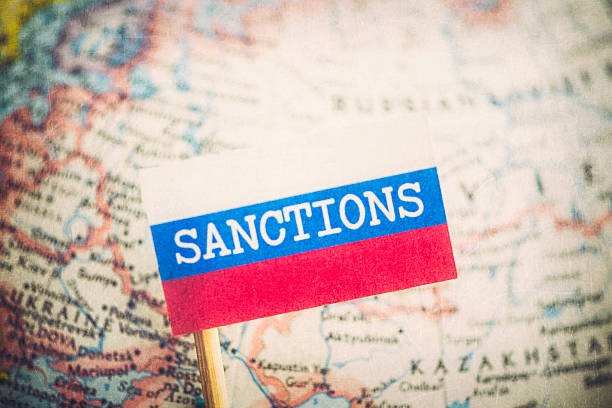
EU’s Kaja Kallas: Russia Must Not Use Central Asia to Bypass Sanctions

European Union sanctions against Russia are affecting Central Asian economies, but the EU remains determined to prevent the region from being used to circumvent those measures. This was emphasized by EU High Representative for Foreign Affairs Kaja Kallas during the 20th EU-Central Asia Ministerial Meeting held in Turkmenistan’s capital, Ashgabat.

“The EU has introduced 16 sanctions packages to weaken Russia’s military machine, and we are working on the 17th,” Kallas stated. “I understand these sanctions impact your economy, but we all want this war to end. Russian companies must not use Central Asia to bypass these restrictions.”

The ministerial meeting on March 27 brought together the foreign ministers of Kazakhstan, Kyrgyzstan, Tajikistan, Turkmenistan, and Uzbekistan. Discussions centered on preparations for the upcoming EU-Central Asia Summit, scheduled for April 2025 in Samarkand.

Strengthening U.S.-Uzbekistan Ties

In a parallel development, U.S.-Uzbekistan relations are showing signs of deeper engagement. On March 26, Ambassador Furkat Sidikov hosted a Congressional Breakfast with U.S. Representative Trent Kelly, focused on trade and investment opportunities. Congressman Kelly praised Uzbekistan’s ongoing reforms and expressed support for lifting the Jackson-Vanik Amendment, a Cold War-era restriction on trade.

A Shift in U.S. Strategy Toward Kazakhstan

Meanwhile, experts are calling for a more nuanced U.S. approach to Kazakhstan. Dr. Robert M. Cutler, Times of Central Asia correspondent, noted that Kazakhstan’s close ties with Russia and China stem from geopolitical necessity rather than ideological alignment. He urged Washington to maintain consistent engagement with Kazakhstan and prioritize economic and strategic cooperation over political pressure.

Singapore to Build Two Data Centers in Kazakhstan

Singaporean firm GK Hyperscale Ltd will participate in the construction of two major data processing centers (DPCs) in Kazakhstan’s Akmola and Karaganda regions, according to Minister of Digital Development, Innovation and Aerospace Industry Zhaslan Madiev.

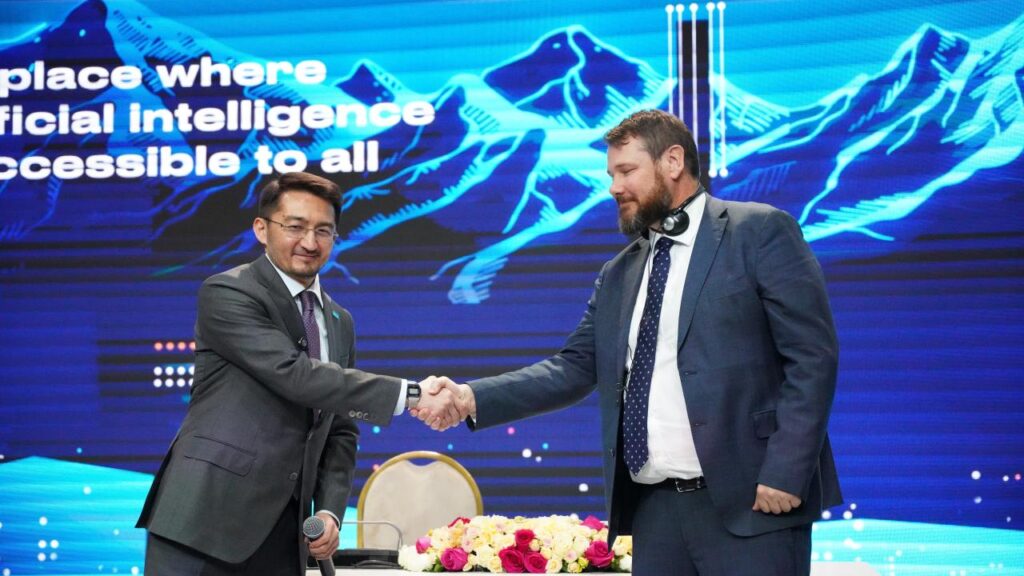
Speaking at the AlmatyFair.ai exhibition, Madiev informed Kazakh President Kassym-Jomart Tokayev and his Uzbek counterpart Shavkat Mirziyoyev of Kazakhstan’s plans to expand the use of artificial intelligence (AI) across industrial and social sectors. He emphasized that large-scale AI deployment requires robust infrastructure, including high-capacity data centers. To this end, two centers with a combined capacity of 200 megawatts will be built with Singaporean investment.

During the same event, an investment agreement was signed between the Kazakh government and GK Hyperscale Ltd. The deal will bring $1.5 billion in foreign direct investment to construct Tier 3-compliant data centers, an international standard defined by the Uptime Institute that ensures high reliability and availability.

According to the ministry, these facilities will provide essential infrastructure for the growth of cloud computing, AI, and high-performance computing in Kazakhstan.

“This project, in both scale and quality, will attract global technology giants such as Microsoft, Google, and Amazon, as well as companies specializing in big data and AI,” Madiev said. “It will bolster Kazakhstan’s position as a digital hub in Central Asia and drive the expansion of IT service exports.”

An additional $1.2 billion will be invested in acquiring and upgrading a power plant to serve the new infrastructure. Funds will also support the construction of a wind farm and an energy storage system to ensure a stable power supply.

Construction is scheduled to begin in the first quarter of 2026, with the first data center module expected to come online in 2027.

As The Times of Central Asia previously reported, Kazakhstan is also developing legislation to regulate artificial intelligence, ensuring human oversight in its application.

EU’s Kallas Tours Central Asia Ahead of Landmark Samarkand Summit

Last week, Kaja Kallas, the European Union’s High Representative for Foreign Affairs and Security Policy and Vice-President of the European Commission, toured Central Asia in advance of the first-ever EU-Central Asia Summit. The notable meeting is set to take place in the ancient Uzbek city of Samarkand on April 3-4.

EU-Central Asia Summit

Samarkand, a city increasingly popular among international travelers, has hosted high-level gatherings before, including the Shanghai Cooperation Organization Summit in September 2022. However, the upcoming summit marks the first time the top leadership of all five post-Soviet Central Asian republics will convene with the EU at this level.

Key topics on the agenda include energy cooperation, trade corridors, and climate change. The summit is expected to produce several agreements that will outline the progress of EU-Central Asia relations and establish strategic policy directions for the future.

Visit to Turkmenistan

Kallas began her tour in Ashgabat, where she chaired the 20th EU-Central Asia Foreign Ministers’ Meeting. There, she addressed the implications of EU sanctions on Russia.

“The European Union has enacted 16 sanctions packages and is currently preparing the 17th. I understand these measures impact the region’s economies, but Russian companies must not be allowed to use Central Asia to circumvent them,” Kallas warned.

The meeting also focused on the EU-Central Asia roadmap adopted in Luxembourg in October 2023. Discussions centered on deepening trade, economic, and transport ties, along with expanding digital connectivity as part of the EU’s Global Gateway initiative.

Kallas also met with Turkmen President Serdar Berdimuhamedov, praising Turkmenistan’s development and expressing appreciation for bilateral cooperation. Her remarks drew criticism from some observers. Belarusian political analyst Dzmitry Balkunets criticized Kallas on social media, accusing the EU of compromising its values by praising authoritarian regimes.

Uzbekistan Visit

In Tashkent, Kallas met with President Shavkat Mirziyoyev. Discussions highlighted the upcoming Samarkand summit and stressed the importance of deepening EU-Uzbek cooperation in trade, logistics, digitalization, green energy, and infrastructure.

Both sides also explored steps toward a new enhanced partnership agreement and Uzbekistan’s accession to the World Trade Organization.

Visit to Kazakhstan

Kallas concluded her tour in Astana, where she met with President Kassym-Jomart Tokayev on March 28. A statement from Tokayev’s office underlined Kazakhstan’s cautious diplomatic approach to global tensions.

“President Tokayev emphasized the importance of restraint and responsibility in evaluating complex global developments. Kazakhstan remains committed to resolving international conflicts through diplomacy,” the statement read.

Analysts suggest Kallas may have encouraged Tokayev to distance Astana from both Moscow and Washington, as Brussels often diverges from Washington on issues like the war in Ukraine. However, Tokayev reiterated Kazakhstan’s multi-vector foreign policy, which avoids aligning with any single global power.

In a notable development, Tokayev met with Uzbek President Mirziyoyev last weekend in Almaty. Though unannounced, the working visit suggests that the two leaders were coordinating positions ahead of the Samarkand summit. Whether their joint stance aligns with Brussels’ expectations remains to be seen.

Kazakhstan Launches Ambitious Project to Revive Legendary Aport Apple

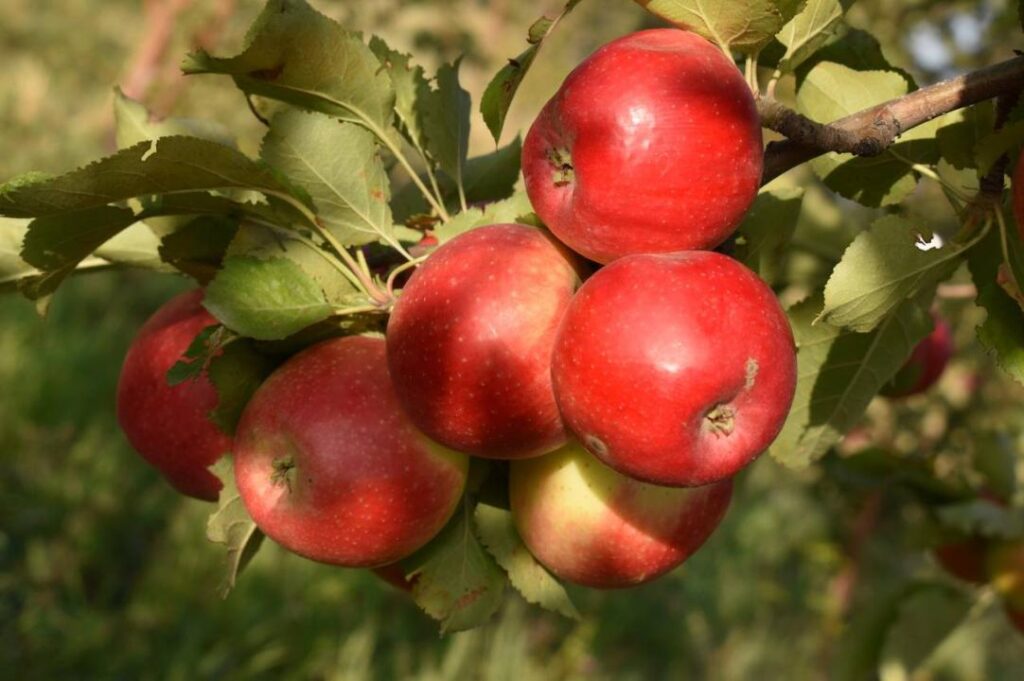
Kazakhstan has launched a major initiative to restore one of Almaty’s most iconic symbols, the Aport apple variety.

The Return of a National Symbol

According to the National Agrarian Scientific and Educational Center (NANOC), new Aport orchards will be planted in the Almaty region starting in 2025, covering an area of 110 hectares. The project, set to run through 2028, plans to introduce approximately 25,000 seedlings. Funding has already been secured, and experts from KazNII Horticulture LLP have begun implementing the roadmap.

“We are confident that the revival of this variety will be an important step in the development of domestic horticulture and will provide Kazakhstanis with high-quality and tasty fruits,” NANOC stated.

The first harvest is expected in eight years. According to scientific forecasts, yields could reach up to 57.7 kilograms per tree in the early stages and up to 100 kilograms as the orchards mature. Aport apples are known not only for their distinctive aroma and taste but also for their durability: with proper storage, they remain fresh until March, and with modern preservation methods, even until June.

A Fruit Steeped in History

The Aport apple is more than just a fruit, it’s a cultural brand of Almaty. With its large size, vibrant color, and rich aroma, the Aport became a hallmark of the city. Historical records show that in 1865, a peasant named Yegor Redko brought Aport seedlings from Russia’s Voronezh Province to the town of Verny (modern-day Almaty). Within a decade, the variety flourished in the unique climate of the Zailiyskiy Alatau, revealing its full potential.

By the early 20th century, Aport apples had gained international acclaim. At an exhibition in Germany in 1908, the variety won a prize. Since then, it has been recognized as a Kazakhstani brand. In 2023, the Aport was officially patented as a national product. Justice Minister Azamat Eskarayev has announced efforts to register the Aport as an international brand, including in European countries.

Decline and Recovery Challenges

The decline of the Aport apple began in the late 20th century, driven by rapid urbanization and the commercial development of former orchard lands. According to Saule Kazybayeva, Deputy Chair of the Board at the Kazakh Research Institute of Fruit and Vegetable Growing, the Aport was replaced by hardier and more commercially viable varieties like Golden Delicious.

Moreover, the Aport requires specific care and environmental conditions, making it less appealing for mass production. Another setback has been the degradation of its genetic qualities. The traditional method of grafting Aport onto wild Sivers apple stock is often not properly followed, especially by private farms, resulting in a loss of the variety’s signature flavor.

The Current Outlook

According to the Ministry of Agriculture, Aport orchards now cover 2,500 hectares across Almaty and Zhetysu oblasts, with around 416,000 trees in total. Almaty itself has about 230 hectares of Aport orchards. However, local authorities acknowledge that both the orchard area and fruit quality are in decline, largely due to disease susceptibility.

Despite these challenges, a revitalization program is already underway, supported by private investors and nurseries. Scientists hope the project will preserve this unique agricultural heritage and stimulate broader interest in horticulture across the country.

If successful, the Aport apple may once again become not only a national symbol but also a point of pride, returning to both store shelves and the hearts of Kazakhstanis.

Tajikistan to Chronicle Soccer Legacy with New Museum and Landmark Book

A museum dedicated to the history of Tajik soccer will be inaugurated in a new stadium currently under construction in Dushanbe. The project was initiated by Rustami Emomali, Mayor of Dushanbe and President of the Tajikistan Football Federation​.

A People’s Archive of Soccer Heritage

The Tajikistan Football Federation has called on fans, athletes, and sports veterans to contribute memorabilia related to the country’s soccer history. Sought-after items include match jerseys, medals, trophies, certificates, books, and any other artifacts that reflect the evolution of soccer in Tajikistan.

“The owners of valuable items and objects, as well as the authors of significant materials, will be recognized and encouraged,” the federation said in a public appeal.

In parallel with the museum, the federation is preparing to publish The History of Tajik Soccer, the first comprehensive volume covering all major milestones in the sport’s national development.

From the First Matches to the Soviet Leagues

Soccer began to gain popularity in Tajikistan in the early 1920s. In 1936, the Tajikistan Football Federation was formally established, and a year later, the first championship of the Tajik SSR took place. Dinamo, a club from Stalinobod (now Dushanbe), emerged as the inaugural champion.

In 1947, Dinamo debuted in the USSR championship, marking the beginning of Tajikistan’s participation in Soviet leagues. A defining moment came in 1989 when Dushanbe’s Pamir club competed in the Supreme League of the Soviet Union, a peak achievement during the Soviet soccer era that remains a point of pride for the country.

A New Era After Independence

With the dissolution of the Soviet Union in 1991, Tajik soccer entered a new chapter. The Tajikistan Football Federation became a member of FIFA and the Asian Football Confederation in 1994, enabling the country to participate in global and regional competitions.

Today, Tajikistan is investing in soccer infrastructure, focusing on youth training and international performance. The upcoming museum and book aim to celebrate the sport’s rich past while inspiring future generations of players and fans.