• KGS/USD = 0.01144 0%
  • KZT/USD = 0.00209 0%
  • TJS/USD = 0.10617 1.05%
  • UZS/USD = 0.00008 0%
  • TMT/USD = 0.28490 0%
  • KGS/USD = 0.01144 0%
  • KZT/USD = 0.00209 0%
  • TJS/USD = 0.10617 1.05%
  • UZS/USD = 0.00008 0%
  • TMT/USD = 0.28490 0%
  • KGS/USD = 0.01144 0%
  • KZT/USD = 0.00209 0%
  • TJS/USD = 0.10617 1.05%
  • UZS/USD = 0.00008 0%
  • TMT/USD = 0.28490 0%
  • KGS/USD = 0.01144 0%
  • KZT/USD = 0.00209 0%
  • TJS/USD = 0.10617 1.05%
  • UZS/USD = 0.00008 0%
  • TMT/USD = 0.28490 0%
  • KGS/USD = 0.01144 0%
  • KZT/USD = 0.00209 0%
  • TJS/USD = 0.10617 1.05%
  • UZS/USD = 0.00008 0%
  • TMT/USD = 0.28490 0%
  • KGS/USD = 0.01144 0%
  • KZT/USD = 0.00209 0%
  • TJS/USD = 0.10617 1.05%
  • UZS/USD = 0.00008 0%
  • TMT/USD = 0.28490 0%
  • KGS/USD = 0.01144 0%
  • KZT/USD = 0.00209 0%
  • TJS/USD = 0.10617 1.05%
  • UZS/USD = 0.00008 0%
  • TMT/USD = 0.28490 0%
  • KGS/USD = 0.01144 0%
  • KZT/USD = 0.00209 0%
  • TJS/USD = 0.10617 1.05%
  • UZS/USD = 0.00008 0%
  • TMT/USD = 0.28490 0%

Uzbek Scholar Proposes Unified Writing System for Turkic Languages

Across the Turkic-speaking world, debates over language policy and writing systems are gaining renewed importance. More than 300 million people across Eurasia speak Turkic languages, yet they use different scripts, Cyrillic, Latin, and Arabic. Uzbek scholar Bakhtiyor Karimov argues that this diversity of alphabets weakens cultural and intellectual connections among Turkic societies.

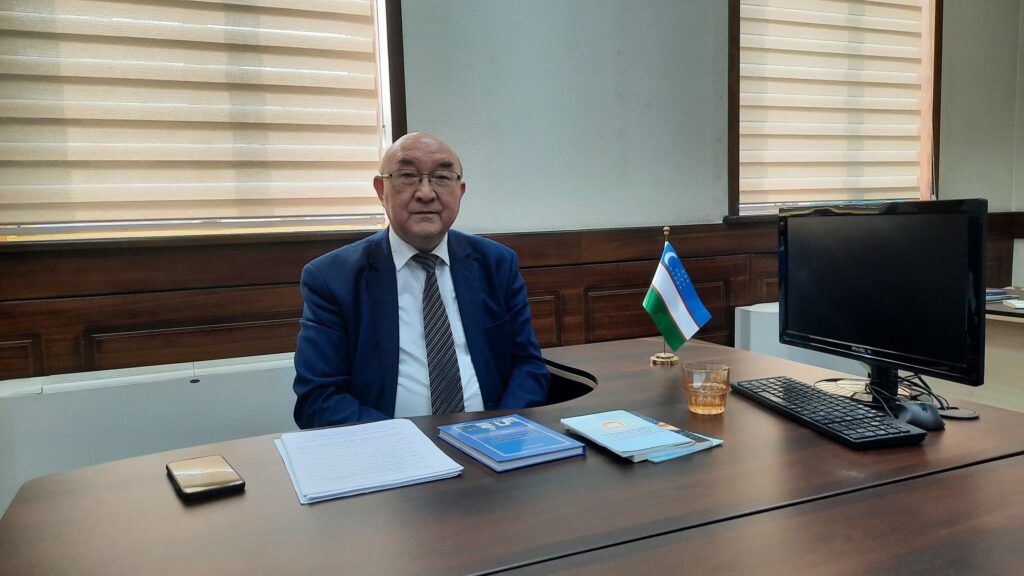
Karimov, a linguist and professor who helped develop the pan-Turkic auxiliary language Ortaturk, is an academician of the Turon Academy of Sciences and director of its Ortaturk Language Research Institute. Together with Shoahmad Mutalov, he developed the concept of the Ortaturk language. In this interview, he discusses the challenges posed by alphabet diversity, his proposal for a new writing model, and his view that language policy is closely linked to political and geopolitical developments.

A fragmented writing landscape

Karimov describes alphabet diversity as one of the most serious challenges facing Turkic-speaking communities.

“Roughly thirty Turkic languages exist,” he said. “About twenty use the Cyrillic alphabet, three use the Latin alphabet, two are transitioning toward Latin, and many communities still rely on the Arabic script. In numerical terms, around 100 million Turkic speakers use Arabic, another 100 million use Latin, and another 100 million use Cyrillic.”

The situation has deep historical roots. Over the past century, shifting political systems and state policies have shaped the writing traditions of Turkic languages. As a result, speakers of closely related languages often find it difficult to read each other’s texts.

For example, Uyghurs in China write using the Arabic script, while Uzbeks in Afghanistan also rely on Arabic-based writing. In Uzbekistan, both Cyrillic and Latin scripts are used. Azerbaijani communities in Iran use the Arabic script, whereas Azerbaijan employs a Latin-based alphabet. Most Turkic languages within Russia continue to use Cyrillic.

Karimov also notes legal constraints. He points to Russian legislation requiring languages used in official contexts to employ the Cyrillic alphabet, arguing that this limits the ability of Turkic-speaking communities in Russia to adopt Latin scripts even if they wish to do so.

“About twenty Turkic peoples living in Russia are effectively restricted to Cyrillic,” he said.

Meanwhile, Turkey, Azerbaijan, and Turkmenistan have fully adopted Latin alphabets. Uzbekistan and Kazakhstan are gradually transitioning, although the process has been uneven. Kyrgyzstan continues to rely primarily on Cyrillic.

“All of this means that the Turkic world is linguistically connected but graphically divided,” Karimov said.

Efforts toward a common alphabet

Recognizing this challenge, the Organization of Turkic States established a working group of linguists to explore the creation of a unified Turkic alphabet. Experts from Uzbekistan, Azerbaijan, Kazakhstan, Kyrgyzstan, Turkmenistan, and Turkey participated in the initiative.

“They worked together for about two years and produced a draft proposal,” Karimov said. “However, the project remains under discussion and has not yet been formally adopted. Ultimately, political leaders must reach a consensus.”

Karimov believes the draft proposal contains technical shortcomings, particularly in how certain sounds are represented.

“In some cases, a single phoneme is represented by more than one graphic symbol,” he said. “From a computational perspective, this creates complications. Ideally, each sound should correspond to one letter.”

The “Ortabitik” proposal

Karimov has developed an alternative model, which he calls the “Ortabitik writing system.” Rather than replacing existing alphabets, his concept seeks to link them through digital technology.

“In this system, each phoneme corresponds to one symbol that can be displayed simultaneously across several writing systems,” he explained. “The same text can appear in Latin, Cyrillic, Arabic, and the ancient Orkhon-Yenisey script.”

The approach relies on automated digital conversion. Once a text is entered in one script, software generates parallel versions in others.

“If a book is written in Cyrillic, a computer can instantly produce versions in Latin, Arabic, and Orkhon-Yenisey,” Karimov said. “Readers can simply choose the script they prefer.”

He argues that such a system could reduce communication barriers among Turkic-speaking communities.

“An older Uzbek accustomed to Cyrillic could continue reading in that script, while younger readers might prefer Latin. Uzbeks in Afghanistan could access the same text in Arabic script,” he said.

Karimov also highlights the symbolic importance of including the ancient Orkhon-Yenisey script, used in early Turkic inscriptions discovered in Central Asia and Siberia.

Technology, information, and identity

Karimov says modern digital tools make such integration feasible. Together with programmer Ilkhom Mannonov, he has developed a prototype capable of converting texts between alphabets and generating phonetic transcriptions based on international linguistic standards.

“This means that even readers unfamiliar with a language could pronounce Turkic texts correctly,” he said.

The system also assigns numerical codes to phonemes, enabling texts to be represented in encrypted numeric form.

“This allows texts to appear in multiple alphabets, phonetic transcription, and even coded numeric formats,” Karimov added.

Toward a shared intellectual space

Beyond linguistic considerations, Karimov views the project as part of a broader cultural and geopolitical vision.

“In the modern world, information is a key resource,” he said. “Access to knowledge creates advantages in science, technology, and economic development.”

He argues that a shared information space could give Turkic-speaking populations access to a much larger body of intellectual work.

“For instance, an Uzbek reader in Afghanistan could access the collective knowledge of the Turkic world in a familiar script,” he said.

Karimov believes that wider access to information could strengthen human capital and stimulate innovation across Turkic societies.

Historical references and future ambitions

Karimov often draws inspiration from historical figures such as Alisher Navoi and Zahiriddin Muhammad Babur, who played significant roles in shaping Turkic literary traditions.

“Five centuries ago, through the work of thinkers like Navoi and Babur, Turkic became one of the major literary languages of the region and the world,” he said. “It stood alongside Persian and Arabic.”

He suggests that renewed linguistic integration could contribute to what Uzbek leaders have described as a “Third Renaissance” in Central Asia.

Language and geopolitics

Karimov also links language policy to regional cooperation and security. He argues that stronger cultural and informational ties among Turkic states could foster closer political collaboration.

“In today’s competitive geopolitical environment, smaller states need cooperation to safeguard their independence,” he said.

He frequently refers to the well-known slogan of Crimean Tatar reformer Ismail Gaspirali: “Unity in language, work, and opinion.”

“If unity in language develops, unity in thought may follow and that can lead to unity in action,” Karimov said.

Looking ahead

Karimov emphasizes that his proposal remains at an early stage. He hopes that an international group of linguists and technology specialists will further refine the concept.

He suggests that the Organization of Turkic States could coordinate such work, potentially through the creation of a dedicated research center.

“For me, the ultimate goal is simple,” he said. “Every Turkic-speaking person should be able to access the intellectual heritage of the entire Turkic world.”


Kazakhstan May Miss Record Oil Output Target in 2026 Amid Infrastructure Disruptions

Kazakhstan’s oil production could decline by 2-4 million tons by the end of 2026 following disruptions linked to attacks on the infrastructure of the Caspian Pipeline Consortium (CPC) and fires at the country’s largest oil field, Tengiz. This was stated by Energy Minister Yerlan Akkenzhenov in response to journalists’ questions.

In 2025, Kazakhstan produced more than 99.5 million tons of oil, exceeding the initial forecast of 96.2 million tons. Output for 2026 had originally been projected at 100.5 million tons, a potential record for the country.

However, the minister indicated that actual production is now likely to fall short of this target.

“According to the economic development plan, oil production in 2026 was expected to reach 100.5 million tons. However, due to events at the end of last year and the beginning of this year, attacks on CPC infrastructure and fires at Tengiz, production is likely to be in the range of 96-98 million tons,” Akkenzhenov said.

Earlier reports suggested that Kazakhstan had been forced to urgently revise its oil export routes following drone attacks on CPC facilities.

In January two fires broke out at electric generators at the Tengiz field. Although the incidents were quickly contained, they caused power outages and temporarily reduced production by nearly 20%.

According to the minister, production at Tengiz had been fully restored by early March.

“Tengiz has returned to a production level of 120,000 tons per day. A commission is currently finalising its investigation into the causes of the fire, and the results will be announced shortly,” Akkenzhenov said.

Akkenzhenov also noted that global oil markets remain volatile amid ongoing tensions in the Middle East.

He said that oil prices had recently peaked at $119 per barrel before declining to around $87.

“Prices fluctuate daily. At the same time, attacks on oil infrastructure in Persian Gulf countries continue, reducing physical supply and keeping prices relatively high,” he said.

Akkenzhenov added that rising global oil prices have not yet significantly affected domestic gasoline prices in Kazakhstan.

According to the minister, future price dynamics will largely depend on developments in the Middle East. Military escalation in the region, including hostilities involving Iran that began in late February 2026, has already affected global energy markets and may continue to influence oil prices and supply stability.

Growing Trade Disputes Test the Eurasian Economic Union

Trade disputes within the Eurasian Economic Union (EAEU) are as old as its creation. Restrictions on the import and export of certain goods have long been common practice. However, analysts increasingly warn that tensions have reached a point at which the organization risks losing its core function, ensuring the free movement of goods across borders and maintaining simplified conditions for migrant workers.

Mounting Restrictions

The EAEU currently comprises Armenia, Belarus, Kazakhstan, Kyrgyzstan, and Russia. Economic integration among several post-Soviet states began in 2000 with the establishment of the Eurasian Economic Community (EurAsEC), formed by Belarus, Kazakhstan, Kyrgyzstan, Russia, and Tajikistan. Uzbekistan joined in 2006, but suspended its participation in 2008. The foundation of this organization was the Customs Union agreement, intended to abolish customs duties among member states.

The structure of the integration project has since evolved. The EAEU treaty was signed in 2014 and entered into force on January 1, 2015. Tajikistan and Uzbekistan did not join, while Armenia became a member in 2015. More than two decades after the first integration agreements, however, many of the bloc’s original promises remain only partially fulfilled.

Experts have long argued that protectionist measures remain widespread within the bloc and that full freedom of movement for all categories of goods, including strategic products, has not been achieved. They also point to pronounced economic asymmetry: Russia accounts for approximately 85–87% of the union’s combined GDP, whereas Kazakhstan accounts for approximately 9–10%.

Russia’s significantly larger population and political influence have further reinforced perceptions of structural imbalance.

Moscow is now preparing new regulatory measures affecting its partners. From April 1, 2026, a national system for confirming the arrival of goods will be introduced for road imports from EAEU countries. According to the Russian authorities, shifting key control procedures to the pre-border stage is intended to improve transparency in the administration of indirect taxes. Previously, such checks were conducted after goods entered the country through desk and field audits.

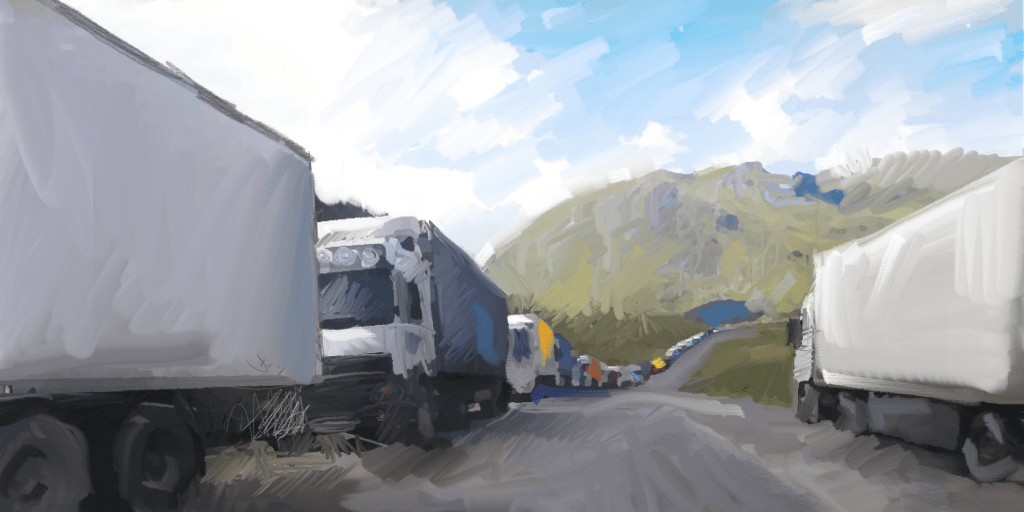
At the same time, Russia has intensified selective customs controls on its borders with Kazakhstan and Belarus, officially citing efforts to combat counterfeit goods. Particular scrutiny is being applied to product labelling and accompanying documentation. Controls were tightened last summer, when mobile checkpoints were established along the Kazakh-Russian border, followed by the inspections of vehicles leaving Belarus in the autumn.

Full-scale checkpoints are now operating on the Kazakh-Russian border, while a simplified regime linked to the Union State and EAEU agreements continues to apply on the Belarusian-Russian border.

Logistics industry representatives report that stricter controls on the Kazakh border have significantly increased transit delivery times. Carriers often face lengthy delays at checkpoints even when their documentation is in order. According to Alexandra Pokumeiko, head of a freight-forwarding department, the changes have created uncertainty in delivery schedules along Belarus-Russia transport corridors and on transit routes through Russia to Kazakhstan.

The growing number of administrative restrictions has begun to spill into specific sectors of the economy, triggering retaliatory measures between member states.

Escalating Tensions in the Automotive Sector

A new dispute has emerged between Kazakhstan and Russia over vehicle recycling fees. On March 10, Kazakhstan announced plans to raise the scrap fee on Russian-made cars, describing the move as a reciprocal response to measures introduced by Moscow.

Although the relevant order is yet to be formally signed, Kazakhstan’s Minister of Industry and Construction, Yersayin Nagaspayev, has stated that the increase would mirror Moscow’s policy. Within Russia, recycling fees on vehicles imported from Kazakhstan have reportedly risen tenfold and are set to increase further under a progressive scale through 2029-2030. Astana argues that the reciprocal step is necessary to support its domestic automotive industry.

Nagaspayev emphasised that the value of Russian passenger vehicles accounts for only around 3.7% of Kazakhstan’s car imports, suggesting limited market impact and no expectation of sharp price increases.

Meanwhile, Russian media outlets have reported that since spring 2024, more than 30,000 Hyundai, Kia, and Skoda vehicles assembled in Kazakhstan have entered the Russian market within the EAEU framework.

Debate Over the Union’s Future

The dispute has revived debate in Kazakhstan about the country’s economic gains from EAEU membership and speculation about the bloc’s long-term viability.

Olzhas Zhorayev, an expert at the Association for Analysis and Management of Public Policy, argues that the institutional structure of the Eurasian Economic Commission complicates the promotion of national interests. According to him, the multinational composition of the bloc’s leadership positions sometimes makes dispute resolution difficult and contributes to perceptions that Eurasian integration remains largely declarative.

Zhorayev also highlights concerns about the preparedness of some national officials working within integration bodies, suggesting that a limited understanding of economic conditions may reduce the effectiveness of their representation.

Economist Arman Beisembayev takes a more critical view, arguing that Kazakhstan derives limited economic benefit from its membership in the union. Beisembayev points to a significant trade imbalance with Russia, noting that Kazakhstan imports substantially more from its northern neighbour than it exports. At the same time, he notes that Kazakhstan remains heavily dependent on Russian supplies in sectors such as food and pharmaceuticals.

Labour Migration Disputes

Russia has also tightened legislation governing labour migration. In January, Kyrgyzstan filed a case with the EAEU Court, arguing that Russia’s refusal to provide compulsory medical insurance to the families of migrant workers violates union agreements guaranteeing access to social protection.

In March, however, the court’s Grand Chamber clarified that member states are not required to automatically extend compulsory medical insurance coverage to migrants’ family members. The ruling emphasised the distinction within EAEU agreements between social security provisions and access to medical assistance.

Armenia’s Strategic Dilemma

Armenia’s shifting foreign policy priorities add another layer of uncertainty to the union’s future. The country’s leadership has repeatedly signalled hesitation between deepening integration with the EAEU amid moves aimed at potentially strengthening ties with the European Union.

In the summer of 2025, Armenian Prime Minister Nikol Pashinyan joined an EAEU forum via video link rather than attending in person, prompting speculation in regional media about Yerevan’s commitment to the bloc. Belarusian President Alexander Lukashenko later suggested that Armenia may have its own reasons for adopting a more critical stance toward the organization.

Simultaneous membership in both the EAEU and the European Union is not feasible, meaning Armenia may eventually face a strategic choice.

Rising Tensions Ahead of Key Meetings

Internal disputes are likely to influence discussions at the upcoming EAEU summit of heads of state in May, as well as during the Russian president’s planned state visit to Kazakhstan, scheduled to coincide with the event. Kazakhstan assumed the rotating chairmanship of the EAEU from January 1, 2026. Recent trade disputes suggest that Astana intends to pursue a more assertive position within the organization rather than simply aligning with Moscow’s policy preferences.

Taken together, these disputes highlight growing contradictions within the EAEU. While the union was designed to remove barriers to trade and labor mobility, member states have increasingly resorted to unilateral restrictions when national economic interests are at stake. The result is a system that formally promotes integration but frequently operates through ad-hoc controls, exemptions, and retaliatory measures.

Whether the EAEU can reconcile these tensions remains uncertain. For countries such as Kazakhstan and Kyrgyzstan, the union still offers access to a large regional market and simplified migration rules, but recurring trade conflicts and regulatory asymmetries continue to fuel debate about how much members are willing to sacrifice for integration. As the bloc approaches another summit, the question is less about whether disagreements exist and more about how far they can escalate before the mechanisms of the union itself begin to erode.

Uzbekistan-Born Israeli Citizen Killed in Rocket Strike Near Tel Aviv

A 62-year-old man born in Uzbekistan was killed in a rocket strike at a construction site in the Israeli city of Yehud on March 9, according to the Embassy of Uzbekistan in Israel.

The victim, Rustam Gulomov, had been living in Israel for the past 14 years. The embassy stated that he renounced his Uzbek citizenship in 2017 and subsequently obtained Israeli citizenship.

Information about the incident first appeared in several media reports and on social media following the rocket attack on the construction site where Gulomov was working. The embassy later confirmed his identity and expressed condolences to his family and relatives.

“As of March 11, the embassy has not received information about any injuries among citizens of Uzbekistan,” the diplomatic mission said in a statement.

At the same time, the embassy warned that the security situation in Israel remains tense and urged Uzbek nationals in the country to strictly follow safety instructions and respond promptly to official warning signals.

The diplomatic mission also called on Uzbek citizens working temporarily or residing permanently in Israel to pay close attention to air-raid alerts and comply with all emergency safety regulations.

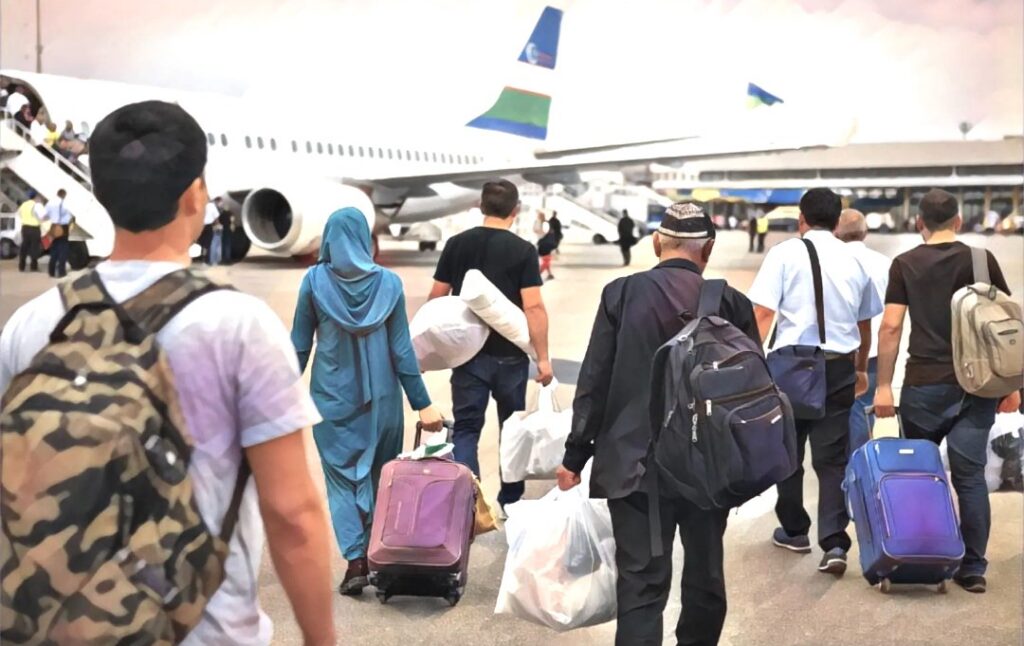
Meanwhile, Uzbekistan continues efforts to repatriate its citizens from several countries in the Middle East. According to the Ministry of Foreign Affairs, a total of 25,047 Uzbek nationals had returned to the country as of March 10.

Officials said the majority were evacuated from Saudi Arabia, where 21,017 people were repatriated. Additional returns included 3,555 citizens from the United Arab Emirates, 394 from Qatar, 47 from Iran, 27 from Bahrain, and seven from Oman.

The ministry noted that repatriation efforts are being conducted in stages, with evacuation flights mainly organised through countries whose airspace remains open to civilian aviation.

Frankfurt Book Fair Director: Kazakhstan Could Become Future Guest of Honor

In recent years, Kazakhstan has become increasingly active at the Frankfurter Buchmesse, the Frankfurt Book Fair. Each year, a national stand brings together publishers and literary institutions that engage with international partners and expand professional networks. Participation in this global event has supported a range of initiatives aimed at introducing Kazakh literature and culture to a broader international audience. On this occasion, we spoke with Juergen Boos, Director of the Frankfurter Buchmesse, about opportunities for entering the global publishing market and the significance of becoming a Guest of Honor at the Frankfurt Book Fair.

TCA: As the world’s largest book fair, what new mission or direction is the Frankfurter Buchmesse pursuing today?

Juergen Boos: Frankfurter Buchmesse today serves not only as the world’s leading marketplace for rights and content but also as a global platform for cultural exchange and professional dialogue. In a rapidly evolving geopolitical and technological environment, our mission is to strengthen international publishing networks, uphold freedom of expression, and facilitate sustainable cooperation across regions. We aim to connect established and emerging markets alike, encouraging long-term partnerships that extend well beyond the fair itself.

TCA: What major changes have you observed in the global publishing industry in recent years?

Juergen Boos: The publishing industry is undergoing significant structural transformation. Digital distribution channels, audio formats, evolving licensing models, and the growing application of artificial intelligence are reshaping the sector. At the same time, we are witnessing gradual diversification in the global publishing landscape. Regions that previously had limited international visibility are increasingly seeking engagement beyond their domestic markets. Central Asia is among those regions demonstrating a clear interest in strengthening its international profile, which adds valuable perspectives to the global literary conversation.

Photo credit: Frankfurter Buchmesse

TCA: How are digital technologies and artificial intelligence transforming the book market?

Juergen Boos: Digital technologies and AI are influencing translation processes, metadata management, copyright issues, discoverability, and market analysis both positively and negatively. On the positive side, AI can increase efficiency and expand access to content. We are already seeing AI evolve from an experimental tool into an integral part of everyday publishing practice. For me, however, literature remains fundamentally human in its origin and intention. Storytelling, cultural nuance, and intellectual depth cannot be automated. The key challenge for the publishing sector lies in integrating technological innovation responsibly while preserving creative integrity and editorial independence.

TCA: Can literature help strengthen mutual understanding between nations? If so, how?

Juergen Boos: Yes, I believe it can. Literature allows readers to understand other societies through lived experiences rather than political abstractions. Through translation and international circulation, books foster empathy and cultural literacy. Book fairs provide a structured professional framework for such exchange. They enable sustained relationships between publishers, authors, and institutions, thereby contributing to long-term cultural understanding.

TCA: Has the importance of books and cultural dialogue increased in today’s geopolitical climate?

Juergen Boos: In times of uncertainty and polarization, the role of thoughtful cultural dialogue becomes even more significant. Books create space for reflection and complexity, offering perspectives that go beyond immediate political narratives. International cooperation in the publishing sector can therefore serve as a stabilizing and constructive element in broader global relations.

TCA: How do you evaluate Kazakhstan’s participation in the Frankfurter Buchmesse?

Juergen Boos: Kazakhstan’s recent presence at the fair has been marked by renewed engagement and visible commitment. Following a period of lower activity, the country returned with a well-conceived national stand, a dedicated stage program, and a range of professional events. The participation of publishers, alongside representatives of the national publishers’ association, reflects institutional support. In addition, for the third time, a representative from Kazakhstan’s publishing community took part in our Special Programme, indicating sustained professional interest. Overall, we are observing growing activity from Kazakhstan and the wider Central Asian region in seeking international cooperation within the publishing sector. This is a constructive and encouraging development.

TCA: How interesting is Central Asian literature for the German and broader European publishing community?

Juergen Boos: Central Asian literature presents considerable potential for discovery. European publishers are increasingly attentive to voices and narratives that have not yet been widely translated or internationally represented. The decisive factors are visibility, translation funding, and consistent professional networking. With sustained efforts in these areas, literature from the region can gradually build a stronger presence in European markets. There is genuine curiosity and a sense that important stories remain to be discovered.

TCA: Do you see Kazakhstan as a potential future Guest of Honor at the Frankfurter Buchmesse?

Juergen Boos: The Guest of Honor program is one of the most prominent cultural platforms in the international publishing world. From a personal perspective, I can certainly envisage Kazakhstan in this role. During my visit to Kazakhstan last year, I had the opportunity to encounter its literary heritage, contemporary writing, and vibrant cultural life first-hand. The richness and diversity I experienced left a strong impression, and it is clear that there is strong interest in reaching international audiences. In this regard, I would also like to acknowledge the work of the director of the Nomad Culture Foundation to foster cultural connections and to position Kazakhstan within global publishing networks contribute meaningfully to the long-term framework required for cooperation on this scale. If this trajectory of engagement continues in a coordinated and sustained manner, opportunities may well emerge in due course.

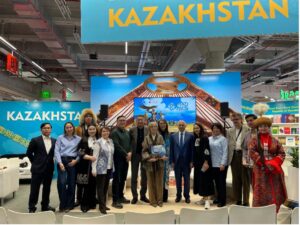
Kazakhstan’s National Stand at the Frankfurt International Book Fair.
Photo credit: Ministry of Culture of the Kazakhstan

TCA: If Kazakhstan were to pursue this status, what preparations or strategic steps would be most important?

Juergen Boos: Pursuing Guest of Honor status would require careful and sustained preparation over several years. A consistent and visible presence of Kazakh publishers at the Frankfurter Buchmesse would be essential to building professional relationships and strengthening international confidence. Equally important would be the establishment of a well-structured and adequately funded translation promotion program to make contemporary and classical works accessible to international audiences. Close coordination between the national publishers’ association and relevant governmental institutions would provide the necessary organizational stability.

In some cases, countries also consider strengthening existing structures or establishing dedicated bodies, such as a national book institute, to oversee long-term strategic development.

Ultimately, the foundation for a successful Guest of Honor presentation lies in a dynamic domestic publishing market and a vibrant contemporary literary scene capable of engaging international readers. As with all such presentations, the initiative must be organized and financed by the guest country itself and prepared well in advance, reflecting a substantial long-term cultural commitment.

TCA: What opportunities does the Frankfurter Buchmesse offer for young authors and independent publishers?

Juergen Boos: We offer international fellowship and professional development programs designed to connect emerging publishing professionals with global networks. Curated matchmaking formats and rights platforms provide particular opportunities for independent publishers. Encouraging new voices and ensuring diversity within the international publishing ecosystem remain central to our work.

TCA: How do you see the global publishing industry evolving over the next decade?

Juergen Boos: The coming decade is likely to bring further digital integration, cross-media collaboration, and increasingly interconnected markets. At the same time, credibility, trust, and cultural authenticity will become even more important in an AI-influenced information environment. Publishing sectors that invest strategically in translation, international partnerships, and cultural cooperation will be well positioned to strengthen their long-term global presence.

Deportation Flight from U.S. Returns 65 Nationals to Uzbekistan

Some 65 Uzbekistani nationals have returned to Uzbekistan after being deported from the United States because they didn’t have legal authorization to be there, according to the U.S. government.

The deportation flight concluded on Wednesday, in “the latest in a series of ongoing actions as the United States secures its borders,” the U.S. Embassy in Uzbekistan said.

The embassy said the United States had deported more than 1,000 Uzbekistanis since President Donald Trump took office for a second term in January 2025. As it has done following previous deportations, the agency thanked Uzbekistan for its “close cooperation.”

Trump launched an immigration crackdown, and Uzbekistan has urged its citizens in the United States to follow local laws. After one deportation flight last year, Uzbekistan said it had funded the transportation but later said its repatriated citizens should pay for their travel.