• KGS/USD = 0.01144 0%
  • KZT/USD = 0.00193 -0%
  • TJS/USD = 0.10866 0.55%
  • UZS/USD = 0.00008 0%
  • TMT/USD = 0.28490 0%
  • KGS/USD = 0.01144 0%
  • KZT/USD = 0.00193 -0%
  • TJS/USD = 0.10866 0.55%
  • UZS/USD = 0.00008 0%
  • TMT/USD = 0.28490 0%
  • KGS/USD = 0.01144 0%
  • KZT/USD = 0.00193 -0%
  • TJS/USD = 0.10866 0.55%
  • UZS/USD = 0.00008 0%
  • TMT/USD = 0.28490 0%
  • KGS/USD = 0.01144 0%
  • KZT/USD = 0.00193 -0%
  • TJS/USD = 0.10866 0.55%
  • UZS/USD = 0.00008 0%
  • TMT/USD = 0.28490 0%
  • KGS/USD = 0.01144 0%
  • KZT/USD = 0.00193 -0%
  • TJS/USD = 0.10866 0.55%
  • UZS/USD = 0.00008 0%
  • TMT/USD = 0.28490 0%
  • KGS/USD = 0.01144 0%
  • KZT/USD = 0.00193 -0%
  • TJS/USD = 0.10866 0.55%
  • UZS/USD = 0.00008 0%
  • TMT/USD = 0.28490 0%
  • KGS/USD = 0.01144 0%
  • KZT/USD = 0.00193 -0%
  • TJS/USD = 0.10866 0.55%
  • UZS/USD = 0.00008 0%
  • TMT/USD = 0.28490 0%
  • KGS/USD = 0.01144 0%
  • KZT/USD = 0.00193 -0%
  • TJS/USD = 0.10866 0.55%
  • UZS/USD = 0.00008 0%
  • TMT/USD = 0.28490 0%
11 December 2025

C5+1: Diplomats and Executives Define Investment Path

Before the historic White House meetings on November 6 between President Trump and the five Central Asian presidents, U.S. and regional diplomats and business leaders met at the Kennedy Center on the occasion of the C5+1 Business Forum, hosted by the U.S. Department of State, to launch a new chapter of cooperation, with a focus on strengthening commercial and investment ties in energy, finance, and manufacturing.

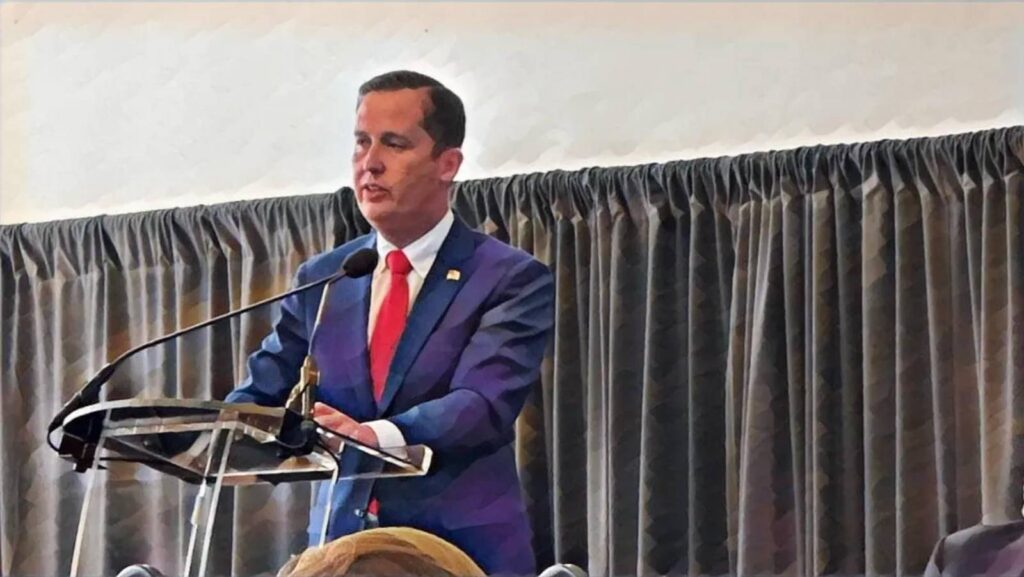
Deputy Secretary of State Christopher Landau, who moderated the panel discussion, said economic engagement is returning to the center of U.S. foreign policy. “The purpose of foreign policy is to increase the prosperity of the American people by finding opportunities for mutually beneficial economic and commercial interchange,” he said.

Executives from Chevron, Citi, Freedom Holding, and Uzbekistan’s UzAvtosanoat described how decades of partnership  had demonstrated the wisdom of making strategic investments in the region. These partnerships continue to reshape  the economic and financial landscape for the better.  Participants highlighted Central Asia’s economic stability, solid reserves, and consistent policies, and were confident in faster growth to be driven by increased capital flows and by regional projects like Kazakhstan’s Tengiz oil expansion. Both sides promised to translate diplomacy into dealmaking.

Landau further noted that under President Trump and Secretary of State Marco Rubio, the State Department has elevated commercial diplomacy to a core mission. He stressed that mutual respect, win-win agreements, and consistent engagement are key to driving results. Central Asians have waited decades for this: action, not talk. Two-way trade and investment are now front and center.

Chevron Points to Long-Term Energy Investment

Chevron Corp. Chief Executive Mike Wirth said the company’s 30-year presence in Kazakhstan remains one of its largest international operations. Chevron was the first major U.S. investor to enter the country after independence and is now the biggest foreign investor. The US$ 48 billion Future Growth Project at Kazakhstan’s Tengiz oilfield, co-managed by Chevron and 50%-partner Tengizchevroil LLP, is up and running with expansion underway.

“Our history is really founded on relationships and trust,” Wirth said. “The most enduring aspect of it (our work) is the respect and love that our American employees have for the culture and people of Kazakhstan.” He said more than 500 Kazakh employees have trained in Chevron operations worldwide, many of whom now hold senior roles in government and industry.

Citi Expands Access to Global Capital

Citi’s Managing Director Stephanie von Friedeburg outlined the bank’s activities in Central Asia, where it began operations more than three decades ago. Citi now serves about 800 corporate clients across the region, supporting private companies, governments and state-owned enterprises with strategic planning, capital issuance, and risk management services.

The bank has arranged Eurobond sales for the Kyrgyz Republic and Tajikistan and handled more than US$40 billion in fundraising for Kazakhstan since 2014. In Uzbekistan, Citi has supported 19 capital-market transactions and advised the government on improving its credit rating. “We help countries understand how rating agencies look at them (and) how to improve their ratings,” von Friedeburg said. “That allows them to borrow at longer tenors and better rates.”

She added that investor interest is increasing as regional governments coordinate policies on trade and infrastructure. “For the first time since 1991 these countries have the agency and the desire to work together to change their economic destiny,” she said.

Freedom Holding Targets Technology and Finance Links

Kazakhstan-based Freedom Holding Corp. Chief Executive Timur Turlov said his company is the only Central Asian financial group listed on Nasdaq and operating under U.S. regulation. The firm runs brokerage, banking, insurance, and consumer-services businesses in twenty-two countries, serving more than eleven million clients.

Turlov said Freedom Holding’s expansion has been supported by “progressive economic policies being implemented by the President of Kazakhstan” and by a government which focuses on smart and tangible private-sector development in Kazakhstan and overseas. Turlov aims to deepen ties with U.S. tech and financial firms through various initiatives including a California innovation lab, media partnerships for its Freedom Media streaming service, and equipment purchases from American chipmakers for data-center expansion.

“The United States is a country of future opportunities — a country you can trust,” Turlov said. “But to keep that trust and confidence, [partners] have to pay close attention to integrity and compliance.”

Uzbekistan’s Auto Industry Shows Manufacturing Growth

Bahodirjon Rahmonov, Senior Vice Chairman of Uzbekistan’s automotive group UzAvtosanoat JSC, cited the company’s joint venture with General Motors as one of the region’s longest-running U.S. industrial partnerships. The collaboration has produced more than 4.5 million Chevrolet vehicles for markets across Central Asia, the Caucasus, and the wider Eurasia.

Rahmonov said the venture demonstrates how local manufacturing and supply-chain development are compatible and produce long-term development, including stable employment. “We don’t look for quick growth, but focus on sustainable growth,” Rahmonov said. “This has allowed our partnership to create an ecosystem that not only manufactures and delivers Chevrolet vehicles, but also supports long-term growth through localization and resilient supply chains.” He also pointed to regulatory reforms under President Shavkat Mirziyoyev that have improved repatriation of profits and opened Uzbekistan to greater foreign partnerships.

Uzautosanoat is a three-tier, vertically integrated company representing over sixty entities—including manufacturers, localization firms, and dealer organizations—covering all sectors of the automotive industry.

Infrastructure and Digital Priorities

Panelists identified infrastructure, energy, and digital technology as the sectors most likely to attract new investment. Von Friedeburg said transport corridors and renewable-energy projects offer “huge opportunities,” while Turlov highlighted digital finance and telecom development as areas where U.S. expertise can accelerate growth.

Landau emphasized that the State Department seeks to support U.S. and Central Asian companies in business development and expanding trade opportunities – a nod to pragmatic engagement and American ingenuity. “These are largely untapped markets,” he said. “Our goal is to turn shared interest into shared prosperity.” The State Department champions U.S. foreign policy while shaping international strategies on economic growth, fair and reciprocal trade, energy, agriculture, and tech. The U.S. will keep building ties with Central Asia, deepening commerce and cooperation, despite risks, market volatility and intense geoeconomic competition.

A Market Beyond Diplomacy

The discussion emphasized investment and practical cooperation as the main drivers of regional growth, with less focus on creating new policy frameworks. A common underlying theme was to drive growth by investing in not only strategic enterprises but in foundational assets —like skills and infrastructure—and pair them with policies that circulate prosperity on a win-win basis, especially to small businesses. Both the United States and Central Asia are open for business.

Economic engagement between the U.S. and Central Asia is maturing toward practical, two-way commercial partnerships. The focus is now on tangible investments that align regional priorities with the strategic interests of all nations involved. The five Central Asian republics — Kazakhstan, Kyrgyz Republic, Tajikistan, Turkmenistan, and Uzbekistan — have a combined GDP of about $500 billion and a population of more than 80 million. Regional growth is projected to average 5 percent in 2025, supported by higher oil output, investment, and remittance inflows.
 

Tensions Simmer Between Pakistan and Afghanistan, in Setback for Central Asian Trade Hopes

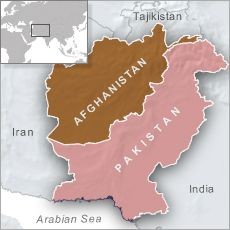
A round of peace talks between Pakistan and Afghanistan in Istanbul came under strain after another clash between the two countries along their border. A resolution to the conflict is important to Central Asian countries that want to trade south through Afghanistan and onward to Pakistani seaports that open the way to the Indian Ocean.

Pakistan’s government and the ruling Taliban in Afghanistan accused each other of instigating the latest confrontation on Thursday, though they still expressed commitment to a delicate ceasefire that was agreed to last month. Dozens of people were killed and cross-border trade was suspended during the fighting in October.  

According to the Taliban’s account, Pakistani forces fired on the Afghan border town of Spin Boldak as the talks in Turkey began on Thursday.  

Afghan forces, “out of respect for the negotiation team and to prevent civilian casualties, have so far shown no reaction. It is worth noting that in the previous round of negotiations, both sides had agreed to extend the ceasefire and prevent any acts of aggression,” Taliban spokesman Zabihullah Mujahid said on X. 

Pakistan’s Ministry of Information and Broadcasting, however, said firing started from the Afghan side and that Pakistan forces responded. 

“The situation was brought under control due to responsible action by Pakistani forces and the ceasefire remains intact. Pakistan remains committed to ongoing dialogue and expects reciprocity from Afghan authorities,” the ministry said.

Turkey, which along with Qatar is mediating, said ahead of the talks this week that the two sides had agreed to continue the ceasefire and establish “a monitoring and verification mechanism” to ensure peace and impose penalties for any violations. But Pakistani Information Minister Attaullah Tarar, while thanking the mediators, said late Friday that Afghanistan had failed to control terrorism, indicating that the talks in Istanbul had not overcome major sticking points.  

A key dispute is over Pakistani allegations that militants have used Afghan territory as a sanctuary while carrying out attacks against targets in Pakistan. The Taliban in Afghanistan denies those allegations. Additionally, Afghanistan doesn’t recognize its porous, 2,600-kilometer border with Pakistan, saying it’s a British colonial-era construct that divided the ethnic Pashtun populations that have traditionally dominated Afghanistan. 

These complexities pose a challenge for landlocked countries in Central Asia that are looking to diversity their trade routes. Several Central Asia-South Asia projects in the works – the Trans-Afghan Railway, the TAPI natural gas pipeline and the CASA-1000 electricity project – have a long way to go before completion. 

Meanwhile, the post-Soviet states of Kazakhstan, Kyrgyzstan, Uzbekistan, Turkmenistan and Tajikistan are working on other trade and investment opportunities. Their leaders held a summit with U.S. President Donald Trump in Washington on Thursday, building ties with the West even as they nurture more established contacts with Russia and China.  

Daines, Gor, Meredov Launch C5+1 Talks on Next-Gen U.S.–Central Asia Ties

Washington, D.C. — The United States and the five nations of Central Asia – Kazakhstan, Kyrgyzstan, Tajikistan, Turkmenistan and Uzbekistan – marked a decade of partnership on Thursday with an opening panel at the C5+1 Tenth Anniversary Business Conference hosted by the U.S. Department of State. U.S. Senator Steve Daines (Montana), Sergio Gor, the newly appointed U.S. Special Envoy for South and Central Asia and Ambassador to India and Rashid Meredov, Turkmenistan’s Foreign Minister kicked things off with a bold forward-looking vision centered on deeper economic cooperation, net two-way investment flows, and a bolstered U.S. commitment to the region.

Held at the Kennedy Center’s REACH campus, the session brought together senior U.S. officials, and Central Asian leaders and private sector companies to deepen a decade of growing cooperation, building on Trump’s transactional approach and first term achievements.

Celebrating a Decade of Cooperation

U.S. Senator Steve Daines, who moderated the session, not only praised the C5+1 platform’s record of achievements since 2015 but went further. He called the anniversary “a momentous occasion for our nations” to move forward in friendship and a sense of pragmatism, anchored in growing commerce, new investments, cultural exchange, and security cooperation.

Daines emphasized that relations with the C5 countries are “vitally important for our national security and prosperity,” adding that the event aimed to pave the way for stronger, results-driven partnerships.

Turning to the next speaker, Ambassador Sergio Gor, Daines offered unusually personal remarks, describing him as “truly one of the closest confidants of President Trump.” He noted that “Mr. Gor’s nomination demonstrates President Trump and his administration’s commitment to fostering closer ties between all of our nations.” Daines expressed eagerness to work with  “Sergio and the rest of President Trump’s team” to build upon the successes of previous US-Central Asian relations.

U.S. Envoy Stresses Renewed Engagement

In his address, Ambassador Sergio Gor,  underscored the administration’s renewed commitment to the region. He recounted that he and Deputy Secretary of State Christopher Landau had visited Kazakhstan and Uzbekistan just last week, praising the hospitality and partnership shown by both governments.

Gor extended his appreciation to Kazakhstan, which he noted had “recently become a sponsor of the Kennedy Center,” and thanked Ambassador Richard Grenell for hosting the forum. Gor emphasized that “this President is making this partnership a top priority,” adding that the focus on the five Central Asian nations “is something that has been ignored in past administrations.”

According to Gor, President Trump “has made a commitment and has instructed every individual here within the U.S. government to make sure [Central Asia] gets the priority that it deserves.” He emphasized the need to ramp up energy cooperation, open new trade avenues, and secure supply chains for critical minerals. “We are committed to further developing Central Asia’s vast mineral wealth and advancing critical-mineral security,” Gor underscoring C5+1’s shift from dialogue to deliverables and mutual cooperation.

He also previewed the White House leaders’ meeting and dinner scheduled for later in the day, noting that several “historic deals” in commerce and trade were expected to be signed during the evening session.

Turkmenistan Calls for Practical Economic Cooperation

Turkmenistan’s Foreign Minister Rashid Meredov, serving as this year’s C5+1 co-chair, welcomed the event’s “inclusive format” and described it as a practical step toward converting shared intentions into concrete projects. He emphasized long-term and systemic cooperation, particularly in digitalization, artificial intelligence, green standards, and transport diversification.

Meredov highlighted Turkmenistan’s major energy and logistics initiatives – North-South and East-West – and invited greater U.S. investment participation. He also called for an “effective institutional and legal framework” to support sustainable trade and business development between the United States and Central Asia.

Cultural and Institutional Significance

Wrapping up, Ambassador Richard Grenell praised U.S.–Central Asian teamwork behind the conference and urged guests to see America beyond D.C.—and Americans to ‘go visit Central Asia”, implying more deal flow in an atmosphere of mutual respect and net gains for all.

As C5+1 enters its second decade, Daines, Gor, and Meredov showcased a shared ambition to move U.S.–Central Asia ties from dialogue to action, driving lasting economic and strategic collaboration. As the Kennedy Center event wrapped up, the Presidents of the five Central Asian countries were moving to the White House to meet with President Trump.

Kyrgyzstan to Nationalize Driving Schools and Reform Driver Training

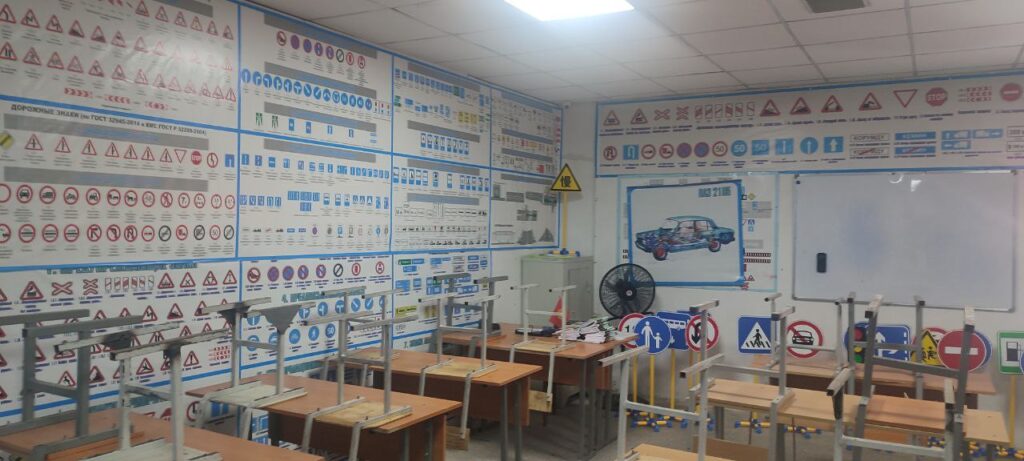
Kyrgyzstan has announced sweeping reforms to its driver training system, set to take effect at the beginning of 2026. All private driving schools will be brought under state control, and the duration of driver training will be extended from three months to fourteen.

The reform was presented at a press conference in Bishkek by Kanybek Tumanbaev, Chief of Staff to the President. He stated that the initiative aims to improve road safety and curb corruption in the issuance of driver’s licenses.

“There are too many traffic accidents in Kyrgyzstan today. Young people admit to purchasing driver’s licenses through private driving schools, where practical training often lasts just two or three hours,” Tumanbaev said.

Under the new system, practical instruction will take place across different seasons, including both summer and winter driving conditions. The curriculum will also include courses on vehicle maintenance and driving etiquette. All exams will be administered under state supervision to prevent bribery and ensure consistent standards.

Private driving instructors will not lose their jobs; instead, they will be integrated into the new state-run driving schools. The cost of training for citizens is expected to remain unchanged. Authorities also plan to introduce a partially online format for theoretical classes.

As part of the reform, Kyrgyzstan will abolish indefinite driver’s licenses. Beginning in 2026, all newly issued licenses will be valid for 10 years, aligning with international standards. Citizens holding permanent licenses will be required to exchange them for the new format starting in January 2026. The replacement process will be free of charge and will not require retesting.

The reforms are a response to persistently high accident rates and what officials describe as inadequate driver education. In 2024, Kyrgyzstan recorded 7,423 traffic accidents resulting in 514 deaths. In the first nine months of 2025, that figure rose to 9,078 accidents with 636 fatalities.

Washington Steps Up Focus on Central Asia Amid Strategic Competition with China

The United States has intensified its interest in Central Asia following China’s decision to restrict exports of rare earth elements. Amid the broader U.S.–China trade rivalry, Washington is seeking to diversify its sources of strategic raw materials and strengthen economic ties with countries in the region.

Analysts note that Central Asia is increasingly viewed as a key part of Washington’s strategy to reduce dependence on Chinese supply chains. However, they point to several obstacles, including high logistics costs, underdeveloped export infrastructure, and what they describe as a high-risk investment environment that limits the commercial viability of many projects.

Kazakhstan and Uzbekistan: Pillars of U.S. Engagement

Among the countries of the region, Kazakhstan and Uzbekistan offer the greatest potential for rare earth element extraction and present favorable conditions for U.S. cooperation. Kazakhstan is strengthening its partnerships with Western investors in the mining sector, while Uzbekistan has implemented market reforms and opened its economy to foreign capital in recent years.

Kazakh President Kassym-Jomart Tokayev, currently visiting the U.S., has reiterated his government’s interest in attracting American investment and technology, including through the C5+1 regional format. After his visit to Washington, he is scheduled to travel to Moscow for a meeting with Russian President Vladimir Putin on November 12, reflecting Kazakhstan’s longstanding policy of balancing relations among major powers.

Kyrgyzstan Banks on the Digital Economy

Lacking major oil and gas reserves, Kyrgyzstan is pursuing a different path by developing partnerships with the U.S. in financial technology and digital assets.

During talks with U.S. President Donald Trump in Washington, Kyrgyz President Sadyr Japarov said the country’s most valuable asset is its educated youth, who are increasingly active in the IT sector. Japarov outlined several initiatives, including the introduction of digital financial instruments such as the national stablecoin KGST.

He also noted the importance of the U.S. Genius Act, which regulates stablecoin circulation, calling it one of the most progressive in the world. In response, the U.S. expressed its readiness to expand cooperation in digital transformation and fintech development.

Tajikistan Prioritizes Energy and Security

Tajik President Emomali Rahmon participated in the C5+1 summit in Washington and held separate talks with President Trump. The discussions focused on energy, investment, and regional security.

Rahmon said that peace and stability are essential for sustainable development and reaffirmed Tajikistan’s readiness to expand cooperation with the U.S. in green energy and regional electricity transmission projects.

At present, more than 70 U.S.-affiliated companies operate in Tajikistan. American investment in mineral extraction and processing is viewed as a promising area for future collaboration. The two sides also discussed joint efforts to combat transnational threats, including terrorism, extremism, and drug trafficking.

Turkmenistan Maintains Its Neutral Stance

In contrast to the active diplomatic engagements of its neighbors, Turkmenistan continues to adhere to its traditional policy of neutrality. Ashgabat has so far refrained from joining initiatives that could be perceived as aligning with geopolitical blocs. Nonetheless, the U.S. remains interested in Turkmenistan’s energy potential, particularly regarding prospects for diversifying gas exports to Europe through the Caspian corridor.

Navigating Between Washington, Moscow, and Beijing

Central Asian countries continue to navigate the competing interests of Russia, China, and the United States, seeking to leverage this rivalry to their advantage. For Washington, the region remains strategically important as a source of critical raw materials, a transit corridor, and a partner in maintaining stability across the broader Eurasian space.

Ultimately, the success of U.S. engagement in Central Asia will depend not only on diplomatic momentum but also on Washington’s ability to provide credible economic alternatives to those offered by China and Russia.

Kyrgyz Authorities Reject Proposal to Let Wealthy Pay for Unlimited Electricity Amid Winter Deficit

As winter nears, the National Electric Grid of Kyrgyzstan introduced new electricity consumption limits for households, cutting the cap from 5 kilowatts to 3 kilowatts during peak morning and evening hours. At the same time, the company proposed allowing citizens to pay a higher tariff for unlimited electricity usage.

The proposal sparked immediate backlash amid Kyrgyzstan’s chronic autumn-winter energy shortages, when many households depend on electric heating.

President Sadyr Japarov swiftly condemned the initiative, calling it “unacceptable” during a period of scarcity. He warned that such a measure risked deepening social inequality and ordered the immediate cancellation of the unlimited-use tariff. Japarov also directed officials to implement equitable policies to ensure fair access to electricity for all citizens during the winter.

Following the president’s intervention, the Ministry of Energy stated that the proposal had been introduced without its approval. The ministry also announced disciplinary action against the leadership of the National Electric Grid of Kyrgyzstan.

On November 6, the Cabinet of Ministers introduced a series of emergency measures aimed at promoting responsible energy consumption. These include restrictions on the use of indoor and outdoor lighting and electrical equipment in government institutions between 6:00 p.m. and 6:00 a.m.

Exemptions apply to strategic facilities and institutions that provide defense, security, healthcare, and social services, as well as those operating 24/7. The Cabinet estimates that the new measures could save up to 40 million kilowatt-hours of electricity per month.

Government data shows that in the first nine months of 2025, electricity consumption increased by nearly 1 billion kilowatt-hours, largely due to the launch of new industrial sites, schools, and residential developments.

Energy Minister Taalaibek Ibraev recently warned that the upcoming winter could be among the most challenging in years, citing critically low water levels at the Toktogul reservoir, which supplies approximately 40% of Kyrgyzstan’s electricity.

In 2024, the country consumed 18.3 billion kilowatt-hours of electricity, up 1.1 billion kWh from the previous year. To cover the shortfall, Kyrgyzstan imported 3.6 billion kWh from Kazakhstan, Turkmenistan, Uzbekistan, and Russia. Additional imports have already been secured for the 2025-2026 winter.

President Japarov has pledged that Kyrgyzstan will achieve energy self-sufficiency during winter months within two and a half years.

“In two and a half years, we will no longer import electricity during winter. We will have enough domestically produced power,” Japarov said, urging citizens to remain patient as the government works to address the crisis.

The country’s long-term energy security hinges on the construction of the Kambarata-1 Hydropower Plant, which is expected to be the largest in Kyrgyzstan and Central Asia. Once completed, it will have an installed capacity of 1,860 MW and generate 5.6 billion kilowatt-hours annually. The project is being developed in partnership with Kazakhstan and Uzbekistan.