• KGS/USD = 0.01144 0%
  • KZT/USD = 0.00192 -0%
  • TJS/USD = 0.10849 0.37%
  • UZS/USD = 0.00008 0%
  • TMT/USD = 0.28571 0.28%
  • KGS/USD = 0.01144 0%
  • KZT/USD = 0.00192 -0%
  • TJS/USD = 0.10849 0.37%
  • UZS/USD = 0.00008 0%
  • TMT/USD = 0.28571 0.28%
  • KGS/USD = 0.01144 0%
  • KZT/USD = 0.00192 -0%
  • TJS/USD = 0.10849 0.37%
  • UZS/USD = 0.00008 0%
  • TMT/USD = 0.28571 0.28%
  • KGS/USD = 0.01144 0%
  • KZT/USD = 0.00192 -0%
  • TJS/USD = 0.10849 0.37%
  • UZS/USD = 0.00008 0%
  • TMT/USD = 0.28571 0.28%
  • KGS/USD = 0.01144 0%
  • KZT/USD = 0.00192 -0%
  • TJS/USD = 0.10849 0.37%
  • UZS/USD = 0.00008 0%
  • TMT/USD = 0.28571 0.28%
  • KGS/USD = 0.01144 0%
  • KZT/USD = 0.00192 -0%
  • TJS/USD = 0.10849 0.37%
  • UZS/USD = 0.00008 0%
  • TMT/USD = 0.28571 0.28%
  • KGS/USD = 0.01144 0%
  • KZT/USD = 0.00192 -0%
  • TJS/USD = 0.10849 0.37%
  • UZS/USD = 0.00008 0%
  • TMT/USD = 0.28571 0.28%
  • KGS/USD = 0.01144 0%
  • KZT/USD = 0.00192 -0%
  • TJS/USD = 0.10849 0.37%
  • UZS/USD = 0.00008 0%
  • TMT/USD = 0.28571 0.28%
11 December 2025

Uzbek Deputy Proposes Introducing Visa Regime With Russia

Russian politician Leonid Slutsky has proposed establishing a comprehensive set of mandatory rules for foreign workers in Russia, called the “Migrant Code.” Developed in coordination with diasporas and law enforcement agencies, the code outlines guidelines for migrants seeking legal employment in Russia.

According to Slutsky, the Migrant Code will require foreign workers to learn Russian and ensure their families also acquire language skills if residing in Russia. Migrants, he says, must respect Russian culture and traditions, adhere to public behavior standards, obtain official employment, and pay taxes. Additional requirements include securing insurance against deportation or expulsion, undergoing fingerprinting, genomic registration, and mental health testing.

In response, Alisher Qodirov, chairman of Uzbekistan’s Milli Tiklanish (National Revival) party, suggested introducing a visa regime with Russia to address potential instability and a rise in migration flows.

Qodirov underscored the importance of Uzbekistan and other Central Asian countries implementing stricter entry and exit controls to Russia, alongside enhanced requirements for job seekers. He emphasized the need for migrants to respect their host country’s language, culture, and laws while reaffirming the significance of national values.

He further stated that educating Uzbek workers on their rights and responsibilities would help mitigate social, political, and economic challenges for Uzbekistan. It would also protect citizens from exploitation and discrimination abroad, reinforcing the nation’s commitment to safeguarding its people.

Kazakhstan Opens Pavilion in Uzbek-Afghan Border Trade Center

Kazakhstan’s Ministry of Trade and Integration has announced the opening of a trade pavilion showcasing Kazakh products at the Termez International Trade Center, located in the town of Termez, Uzbekistan, near the Afghan border.

The pavilion is expected to serve as a strategic platform for promoting Kazakh goods in the markets of Uzbekistan and Afghanistan.

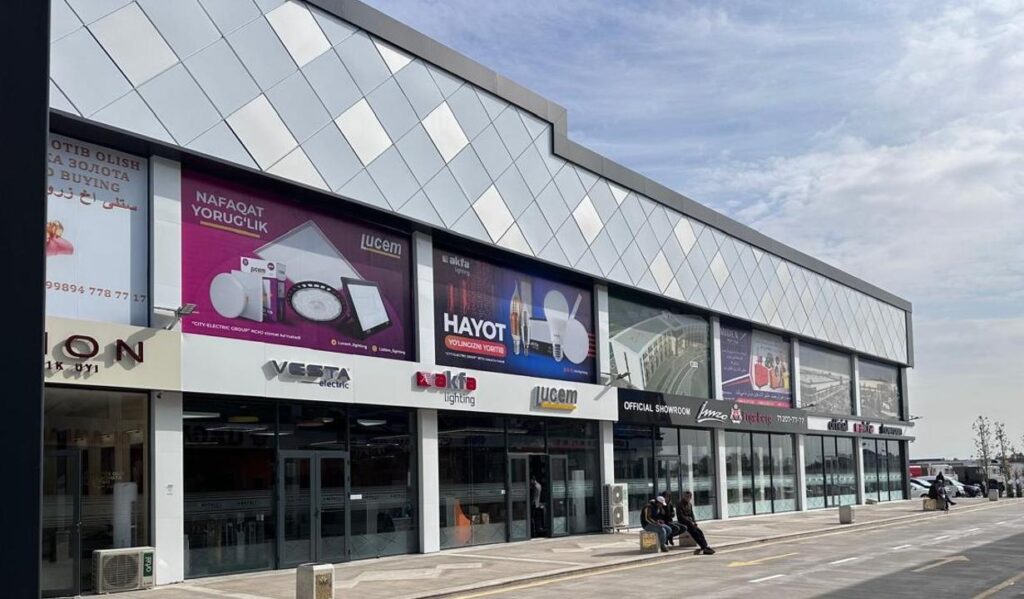
The Termez International Trade Center is a crucial hub at the crossroads of Central Asian trade routes, facilitating significant trade flows between Uzbekistan and Afghanistan. Opened on August 29, the center was inaugurated by Uzbek Prime Minister Abdulla Aripov and acting Afghan Deputy Prime Minister Abdul Ghani Baradar. The facility includes retail spaces, hotels, a medical center, and other amenities. Notably, it supports transactions in multiple currencies, such as U.S. dollars, euros, rubles, and yuan. Afghan citizens can visit and conduct trade at the Termez center for up to 15 days without requiring an Uzbek visa.

Kyrgyzstan has also secured a presence at the Termez International Trade Center. As The Times of Central Asia previously reported, on November 11, the Kyrgyz Ministry of Economy and Commerce acquired a trade pavilion, providing a strategic foothold to expand Kyrgyzstan’s influence in the markets of Uzbekistan and Afghanistan.

Kazakhstan and Kyrgyzstan have both removed the Taliban from their lists of terrorist organizations, aligning with broader efforts by Central Asian nations to deepen trade and economic ties with Afghanistan.

Turkmenistan’s Geopolitical Shift Toward the West

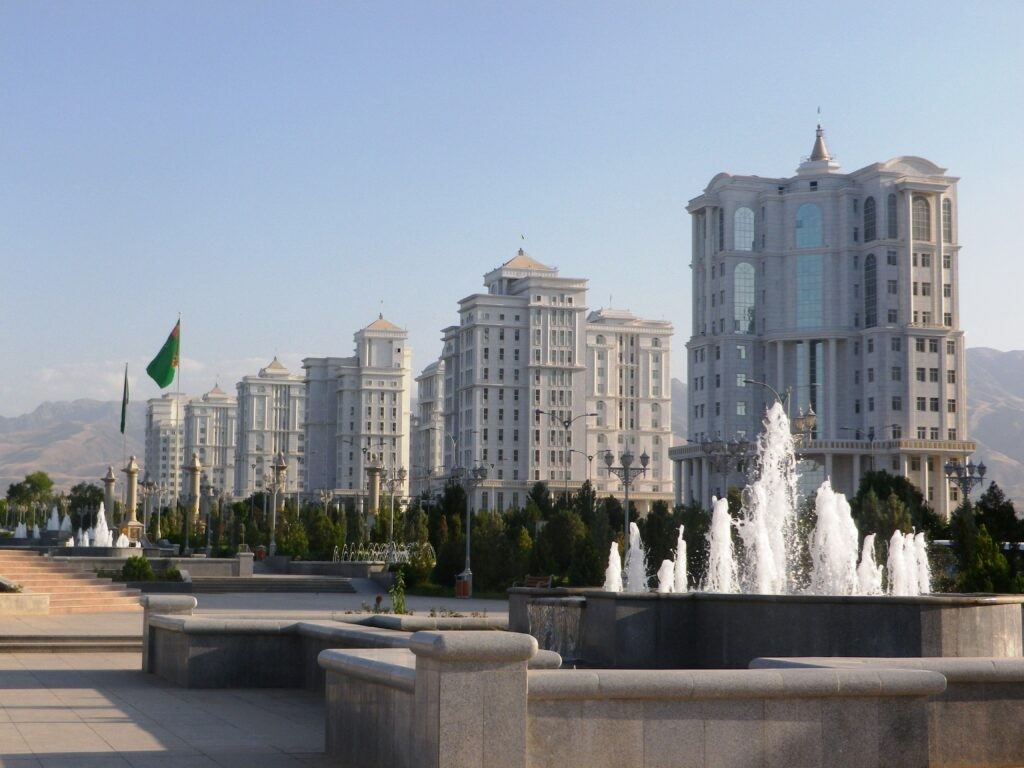
Turkmenistan, whose foreign policy since 1995 has been based on the principle of permanent neutrality, is reportedly seeking to establish closer ties with the West, primarily with the United States. The energy-rich nation has long expressed an intention to export natural gas to Europe, but its leadership’s recent moves suggest that Ashgabat might also aim to develop closer political and economic relations with Western countries.

Over the past few months, Turkmen and American officials have held several very important meetings. Most recently, on November 25, Turkmenistan’s President Serdar Berdimuhamedov hosted Steve Daines, U.S. Senator from Montana and member of the U.S. Senate Committee on Energy and Natural Resources. The fact that the Turkmen leader told the American politician that Ashgabat is “implementing a strategy for diversifying energy export routes” clearly shows that Turkmenistan’s ambition to begin exporting natural gas to Europe was on the agenda. But energy was unlikely the only reason why Daines came to Ashgabat.

He also met with the Turkmen Minister of Foreign Affairs Rashid Meredov, with whom he discussed “key aspects of partnership cooperation in political and diplomatic, trade and economic, cultural, humanitarian and other spheres.” According to reports, “the active dynamics of development of political ties at the highest state level was emphasized,” indicating that Turkmenistan has begun implementing its 2023 plan to strengthen ties with the United States. 

Moreover, as a result of the U.S. Senator’s visit to Ashgabat, a meeting of the Turkmenistan-US Business Council is scheduled to take place later this month. One of the reasons why the Turkmen authorities seek deeper economic ties with Washington is because they hope that such an approach can help their country join the World Trade Organization (WTO). 

On November 20-22, just days before Daines’ visit to Turkmenistan, the Ministry of Finance and Economy organized a training seminar as part of the country’s preparation for joining the WTO.  Interestingly enough, the U.S. Agency for International Development (USAID) “made a significant contribution to the event’s preparation”, while the U.S. Ambassador to Turkmenistan Elizabeth Rood attended the seminar. 

The United States undoubtedly sees Turkmenistan as an important regional actor. In February, American companies including John Deere, Boeing, Exxon Mobil, and General Electric met with the Turkmen business delegation in Washington, discussing various forms of cooperation. Nine months later, on November 6, Rahimberdi Dzhepbarov, Chairman of the Board of the State Bank for Foreign Economic Activity of Turkmenistan, was on a working visit to Washington to discuss “issues of further strengthening economic and environmental cooperation with the United States.” The following day, according to the Turkmen Ministry of Foreign Affairs, the U.S. “highly praised Turkmenistan’s achievements in fulfilling its international commitments on climate change.”

But Washington did not always have such a positive view on Turkmenistan. In 2018, in an annual State Department report, Ashgabat was criticized for “alleged torture, arbitrary arrests and detentions, involuntary confinement, imprisonment of political prisoners, severe corruption, lack of free and fair elections, and restrictions on freedom of religion, assembly, and movement.” Also, in May 2023, the U.S. Commission on International Religious Freedom described the government of Turkmenistan as an “extremely authoritarian regime with an abysmal record on human rights and freedom of the press.”

Things, however, started to change after Washington’s European allies took steps to significantly reduce their dependence on Russian energy. Although Turkmenistan’s primary export market is China – given that natural gas supply to China is the main source of Ashgabat’s budget revenues – Moscow still sees Turkmenistan as part of its “energy zone of influence.”

In 2008, the European Commission proposed the creation of the Southern Gas Corridor, where Turkmenistan was seen as one of the partner countries. It was reportedly expected that the former Soviet republic could supply about 30 billion cubic meters of gas annually through the Trans-Caspian gas pipeline. But the Trans-Caspian project has not yet been implemented, while Russia continues to push for the expansion of the Turk Stream pipeline, aiming to create a gas hub on the border of Turkey and the European Union, thus blocking the access of Turkmen gas to the European market.

Turkish President Recep Tayyip Erdogan, however, believes the supply of gas from Turkmenistan to Turkey and Europe is “only a matter of time.” Turkmen leaders seem to share the same view.

“We have good opportunities for exporting Turkmen natural gas and electricity to Kazakhstan, Azerbaijan and Turkey,” Gurbanguly Berdimuhamedov, Chairman of the Upper House of Parliament, said on March 12.

Preliminary agreements between Ankara and Ashgabat on the supply of Turkmen gas to Turkey and further to Europe suggest that Turkmen gas will eventually reach the EU borders – whether via the Caspian Sea or through Iran and Iraq. It is, therefore, no surprise that, on December 4, energy was given particular attention during the 23rd meeting of the Turkmenistan-EU Joint Committee in Brussels.

Besides energy, the EU and Turkmenistan also aim to strengthen political ties in various formats, with the Organization for Security and Co-operation in Europe (OSCE) unquestionably being one of them. The U.S. as a key OSCE member, actively supports Ashgabat’s “implementation of OSCE commitments”, which is why some Russian analysts argue that Turkmenistan is shifting its geopolitical orientation from the East to the West.

That, however, does not mean that the Central Asian nation will give up on its policy of permanent neutrality. But given that the U.S. openly announced that it is ready to stimulate investments in the Turkmen economy, and that the two countries recently explored opportunities to implement joint economic, energy, and infrastructure projects that align with sustainable development goals, Turkmenistan will almost certainly continue to deepen its relationship with the United States and its allies.

Central Asia Braces for Return of Radical Islamists Amid Syrian Turmoil

According to experts, the recent collapse of President Bashar al-Assad’s regime in Syria raises concerns about potential destabilization in Central Asia. This development may force regional governments to repatriate citizens who were lured by Islamist propaganda, while the future of the Astana format negotiations on Syria remains uncertain.

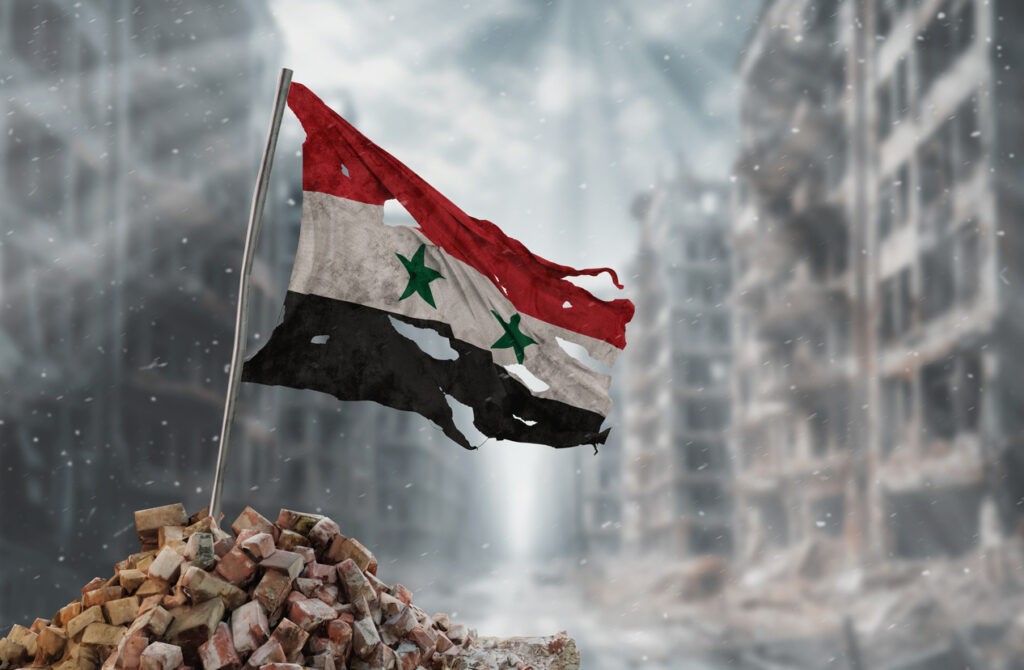
The swift coup d’état in Syria saw opposition forces capture Damascus and much of the country within days. Bashar al-Assad fled to Moscow, leaving a chaotic landscape dominated by the Islamist group Hayat Tahrir al-Sham, often described as a successor to ISIS and Al-Qaeda. The situation has plunged Syria into further instability.

The Impact of Operation Zhusan

Kazakhstan has firsthand experience dealing with the repercussions of Syria’s instability. Between 2013 and 2017, hundreds of Kazakh citizens succumbed to Islamist propaganda, crossing borders illegally to join the conflict, often with their families. In response to the humanitarian crisis, Kazakhstan launched Operation Zhusan (“Wormwood”) in January 2019 to repatriate citizens trapped in Syria.

The operation, conducted in five stages and completed by February 2021, repatriated 607 citizens, 37 men, 157 women and 413 children (34 of whom were orphans). The government set up a rehabilitation center near Aktau on the Caspian Sea to provide treatment, restore documents, and offer vocational training for adults and education for children.

All 37 repatriated men were detained and later convicted of terrorism-related activities, receiving sentences ranging between 6 and 14 years, whilst 18 women faced prosecution. Despite the operation’s success, many in Kazakhstan fear the returnees and their children might spread radical ideologies within the country.

Lessons from the Region

Other Central Asian countries have also grappled with the challenge of repatriating citizens from Syria. Bakhtiyor Babadjanov, an expert from the Institute for Strategic and Regional Studies under Uzbekistan’s president, detailed the experiences of Uzbek women lured to conflict zones. These women often found themselves deceived and abandoned in dire conditions, as described in an interview.

“The ‘happy caliphate’ turned out to be a myth,” Babadjanov explained, recounting stories of women and children abandoned without food or shelter during battles in Mosul. Survivors reported forced marriages, child abuse, and exploitation under the guise of religious duty.

The Uncertain Future of the Astana Process

Another significant connection between Central Asia and Syria has been the Astana process, a series of negotiations aimed at resolving the Syrian conflict. Since 2017, Kazakhstan has hosted 22 rounds of talks, including discussions on hostages, missing persons, and settlement efforts.

However, the recent escalation in Syria casts doubt on the process. In late November and early December, armed opposition groups launched a large-scale offensive, capturing key cities, including Aleppo and Damascus. Despite this upheaval, Russian presidential spokesman Dmitry Peskov insisted the Astana process remains relevant as a platform for dialogue and consultation, notwithstanding the fact that Assad is now in Moscow.

Heightened Risks of Destabilization

Experts in Kazakhstan and Central Asia have warned that the fall of Assad’s regime could lead to prolonged anarchy, ethnic and religious conflicts, and a refugee crisis. Political scientist, Daniyar Ashimbayev, emphasized the risks of Central Asians involved in Syria’s conflict returning home, potentially recruiting others to join extremist causes. His views were echoed by co-founder of Astana Open Dialogue, Alexander Danilov, who stressed the need for vigilance, writing that “when state institutions are seized by force, a serious power vacuum occurs, which ultimately leads to chaos and anarchy.”

Tajik political analyst, Sherali Rizoyon, has highlighted the renewed strength of radical groups, warning of increased extremist propaganda and jihadist recruitment. Rizoyon noted that Syria remains a magnet for fighters from Central Asia, making it a new epicenter of international jihadism. Fellow analyst, Rustam Azizi, concurred, predicting heightened activity from radical networks both in the region and online.

Uzbekistan Sets Sights on $1.5 Billion AI Industry by 2030

Uzbekistan’s Permanent Mission to the United Nations has hosted a presentation at the UN headquarters in New York, unveiling the country’s strategy for developing artificial intelligence (AI) technologies by 2030.

The event, organized in collaboration with the UN Counter-Terrorism Office and Interpol, drew attendance from UN officials, experts, and members of the diplomatic corps accredited in New York.

Ambitious AI Goals

Participants were introduced to the key directions outlined in Uzbekistan’s AI Strategy, along with the country’s ongoing reforms and achievements in the field. Emphasis was placed on President Shavkat Mirziyoyev’s commitment to advancing information technologies and fostering innovation.

The presentation highlighted Uzbekistan’s plans to grow its AI-based software products and services sector to $1.5 billion by 2030. This strategy also includes establishing ten scientific laboratories specializing in AI and strengthening the regulatory framework to support technological advancements.

Leadership in Responsible AI

As previously reported by The Times of Central Asia, Uzbekistan leads Central Asia in responsibly adopting AI, according to the Global Center on AI Governance. The nation’s AI initiatives prioritize cultural and linguistic diversity, foster international partnerships, enhance public sector skills, and promote transparency.

Capital Over Confinement in Sentencing of Raimbek “Millions” Matraimov

Raimbek Matraimov, infamously known as “Millions” for his tremendous wealth, once wielded immense power in Kyrgyzstan. Rising to prominence as deputy chairman of Kyrgyzstan’s Customs Service from 2015 to 2017, Matraimov’s tenure became synonymous with corruption and organized crime. His activities, alleged to have funneled monumental sums of money through shadowy operations, fashioned him not only as a dominant figure within the Customs Service but also as a key player in Kyrgyzstan’s criminal underworld.


The Rise of Raimbek Matraimov

During his time in the Customs Service, Matraimov amassed an extraordinary fortune. His influence extended beyond bureaucratic corridors, infiltrating the political landscape of Kyrgyzstan. Whispers of his role as an organized crime leader were persistent, yet his wealth and connections left him virtually untouchable in those years.

Speculation about his political influence peaked after the dramatic rise of Sadyr Japarov to Kyrgyzstan’s presidency in October 2020. Japarov’s elevation, from prison to the highest office amidst a tide of civil unrest, prompted many to suspect that Matraimov’s financial backing played a decisive role in the ascent. However, despite Japarov-appointed head of Kyrgyzstan’s State National Security Committee (GKNB), Kamchybek Tashiyev once describing him as a “good guy,” if Matraimov hoped to shelter under Japarov’s influence, his expectations were soon dashed.


The Turning Point

Japarov’s administration showed no hesitation in targeting Kyrgyzstan’s entrenched criminal networks. With Matraimov having bounced in and out of jail since October 2020, by October 2023, the GKNB had escalated their crackdown on organized crime, culminating in the death of Kamchybek Kolbayev, the country’s top crime kingpin – a member of the “Bratva” linked to heroin trafficking – during a security operation in Bishkek.

Sensing the shifting winds, Matraimov fled Kyrgyzstan shortly after Kolbayev’s death. However, his flight only seemed to intensify the resolve of the government in his homeland, where the authorities began seizing Matraimov’s assets and investigating his allies. Among those implicated was Matraimov’s brother, Iskender, a parliamentary deputy with significant political connections.


Extradition and Arrest

In late March 2024, Kyrgyzstan’s crackdown on Matraimov escalated when the GKNB detained five Azerbaijani nationals in Bishkek. These individuals, suspected members of a transnational organized crime group, were allegedly dispatched by Matraimov from Azerbaijan to assassinate top Kyrgyz government officials. This accusation  – one of countless similar claims regarding assassination attempts made by the Kyrgyz authorities this year alone – led to diplomatic action, and March 26, 2024, Matraimov along with three of his brothers were extradited from Baku to Kyrgyzstan.

Upon his arrival, Matraimov was immediately taken into custody. The legal net tightened further as the case against him unfolded, with allegations of illegal border crossings, hooliganism involving weapons, money laundering, and broader accusations regarding his criminal empire.


Asset Seizures and Financial Settlements

Prior to his sentencing, Matraimov had reportedly returned $200 million to the state budget, equivalent to over 17 billion Kyrgyz som, to be released from custody to house arrest pending his trial. Authorities also confiscated significant assets, including a 14-story business center in Bishkek valued at $53 million, which was repurposed into a hospital for law enforcement. Apartment buildings in the city of Osh, built under a partnership with the Ihlas company, were also seized and sold at a discounted rate for state use. In total, Matraimov is alleged to have laundered “at least $700 million“.


Plea Agreement and Sentencing

Despite this, on December 6, 2024, the Pervomaisky District Court of Bishkek handed down its judgment in a legal resolution as remarkable as Matraimov’s rise to power. Found guilty under charges including illegal border crossings and hooliganism involving dangerous weapons, having entered a plea agreement admitting his guilt, Matraimov was ordered to pay a fine of just 100,000 Kyrgyz som ($1,150), a remarkably lenient sentence given the extent of his crimes.

The plea agreement, approved by the Prosecutor General’s Office, was tied to Matraimov’s financial restitution and asset forfeiture. Under the terms of Kyrgyzstan’s criminal code, the court mitigated his punishment, favoring monetary penalties over imprisonment.


A Power Diminished

The legacy of Raimbek “Millions” Matraimov is both a tale of unchecked power and systemic corruption, as well as a reflection of Kyrgyzstan’s recent efforts to confront its network of dark influences. Though his plea agreement signaled a partial reckoning, the true accounting of Matraimov’s impact on Kyrgyzstan’s political and economic systems remains a subject of far-reaching national reflection.