• KGS/USD = 0.01144 0%
  • KZT/USD = 0.00196 -0%
  • TJS/USD = 0.10899 -0%
  • UZS/USD = 0.00008 -0%
  • TMT/USD = 0.28490 0%
  • KGS/USD = 0.01144 0%
  • KZT/USD = 0.00196 -0%
  • TJS/USD = 0.10899 -0%
  • UZS/USD = 0.00008 -0%
  • TMT/USD = 0.28490 0%
  • KGS/USD = 0.01144 0%
  • KZT/USD = 0.00196 -0%
  • TJS/USD = 0.10899 -0%
  • UZS/USD = 0.00008 -0%
  • TMT/USD = 0.28490 0%
  • KGS/USD = 0.01144 0%
  • KZT/USD = 0.00196 -0%
  • TJS/USD = 0.10899 -0%
  • UZS/USD = 0.00008 -0%
  • TMT/USD = 0.28490 0%
  • KGS/USD = 0.01144 0%
  • KZT/USD = 0.00196 -0%
  • TJS/USD = 0.10899 -0%
  • UZS/USD = 0.00008 -0%
  • TMT/USD = 0.28490 0%
  • KGS/USD = 0.01144 0%
  • KZT/USD = 0.00196 -0%
  • TJS/USD = 0.10899 -0%
  • UZS/USD = 0.00008 -0%
  • TMT/USD = 0.28490 0%
  • KGS/USD = 0.01144 0%
  • KZT/USD = 0.00196 -0%
  • TJS/USD = 0.10899 -0%
  • UZS/USD = 0.00008 -0%
  • TMT/USD = 0.28490 0%
  • KGS/USD = 0.01144 0%
  • KZT/USD = 0.00196 -0%
  • TJS/USD = 0.10899 -0%
  • UZS/USD = 0.00008 -0%
  • TMT/USD = 0.28490 0%
08 December 2025

A Final Deal Along Central Asia’s Deadliest Border

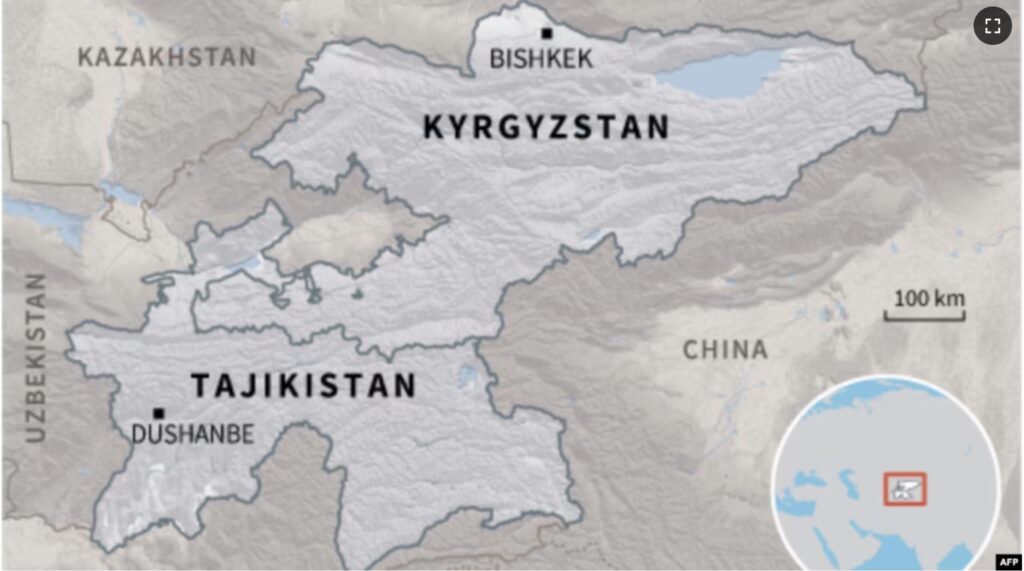
It took some 33 years, but on December 4, Kyrgyz and Tajik officials reached a final agreement on delimitation of the last sections of their 972-kilometer border.

It is a relief for the entire Central Asian region.

In those 33 years the five Central Asian countries (including Kazakhstan, Turkmenistan, and Uzbekistan) have been independent, the only open conflicts between the armed forces of two Central Asian countries happened between Kyrgyzstan and Tajikistan.

In the southern Kyrgyz city of Batken on December 4, Kyrgyz security chief Kamchybek Tashiyev and Tajik counterpart Saimumin Yatimov announced an agreement that Tajik state news agency Khovar said “fully completed the delimitation of the remaining sections of the Tajik-Kyrgyz state border.”

Most of the Kyrgyz-Tajik border runs through the Pamir Mountains. The eastern part, approximately two-thirds of the common frontier, passes through remote and sparsely inhabited areas. Agreement on where the dividing line between the two countries was easy to reach in this section.

The remaining one-third of the border in the west proved far more difficult to find compromises.
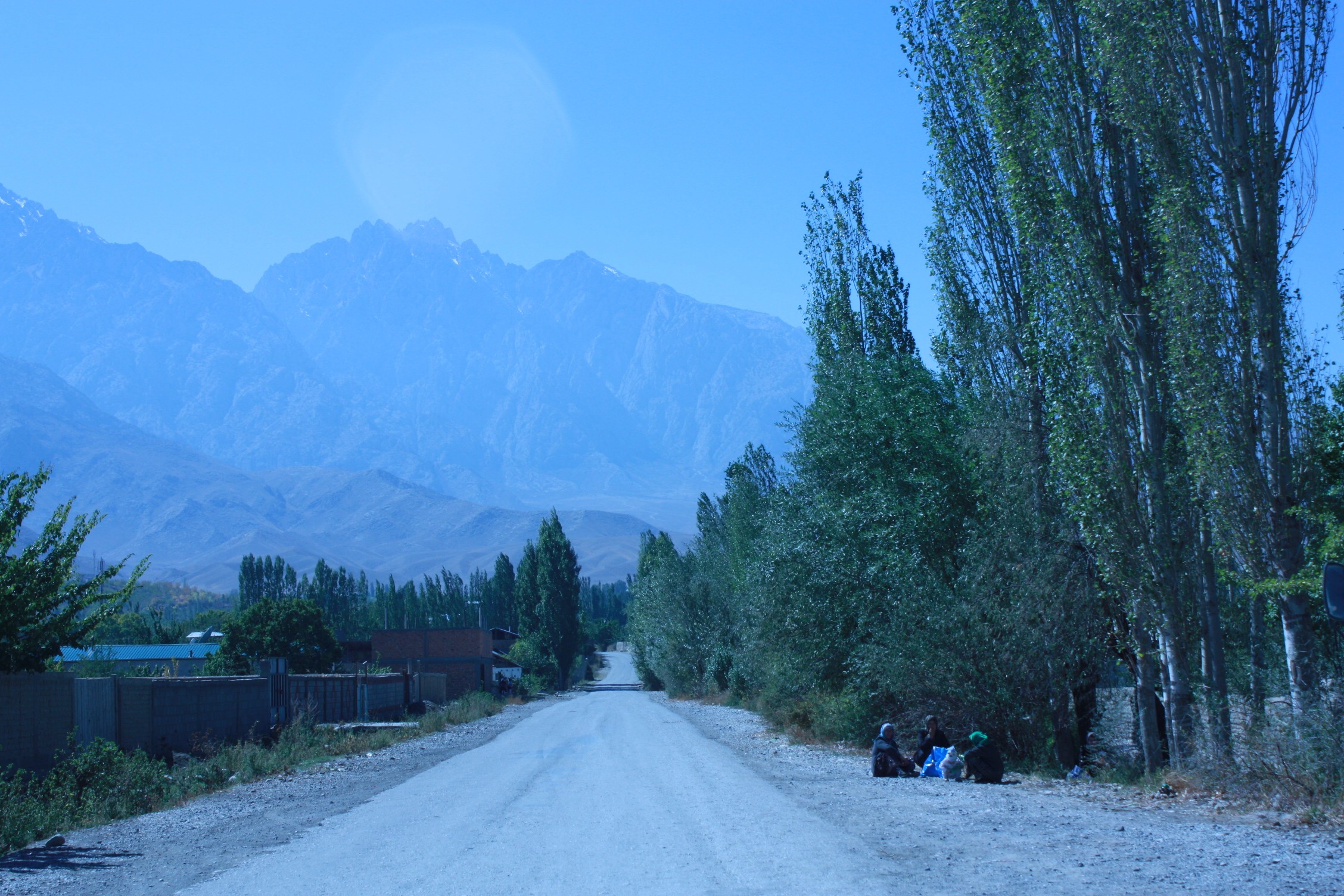
Road near the Kyrgyz village of Ak-Sai. On one side of the road is Tajikistan, the other side, Kyrgyzstan; image: Bruce Pannier

Kyrgyz and Tajiks are two of the oldest peoples in Central Asia. Their ancestors lived in what is now the border area many hundreds of years before there were any borders. The Soviet Union changed that when it created the Kyrgyz and Tajik Soviet Socialist Republics, not only drawing lines on a map, which were redrawn more than once, but also including enclaves on either side of the border.

Roads in the area zigzagged back and forth, one minute through Kyrgyzstan, and few minutes later through Tajikistan, over and over again.

As border tensions began to appear toward the end of the 2000-2010 period, both countries started building roads to avoid crossing into the neighboring state, but the terrain is rugged, limiting possibilities for alternate routes. Also, new road construction is expensive and Kyrgyzstan and Tajikistan are both poor countries.
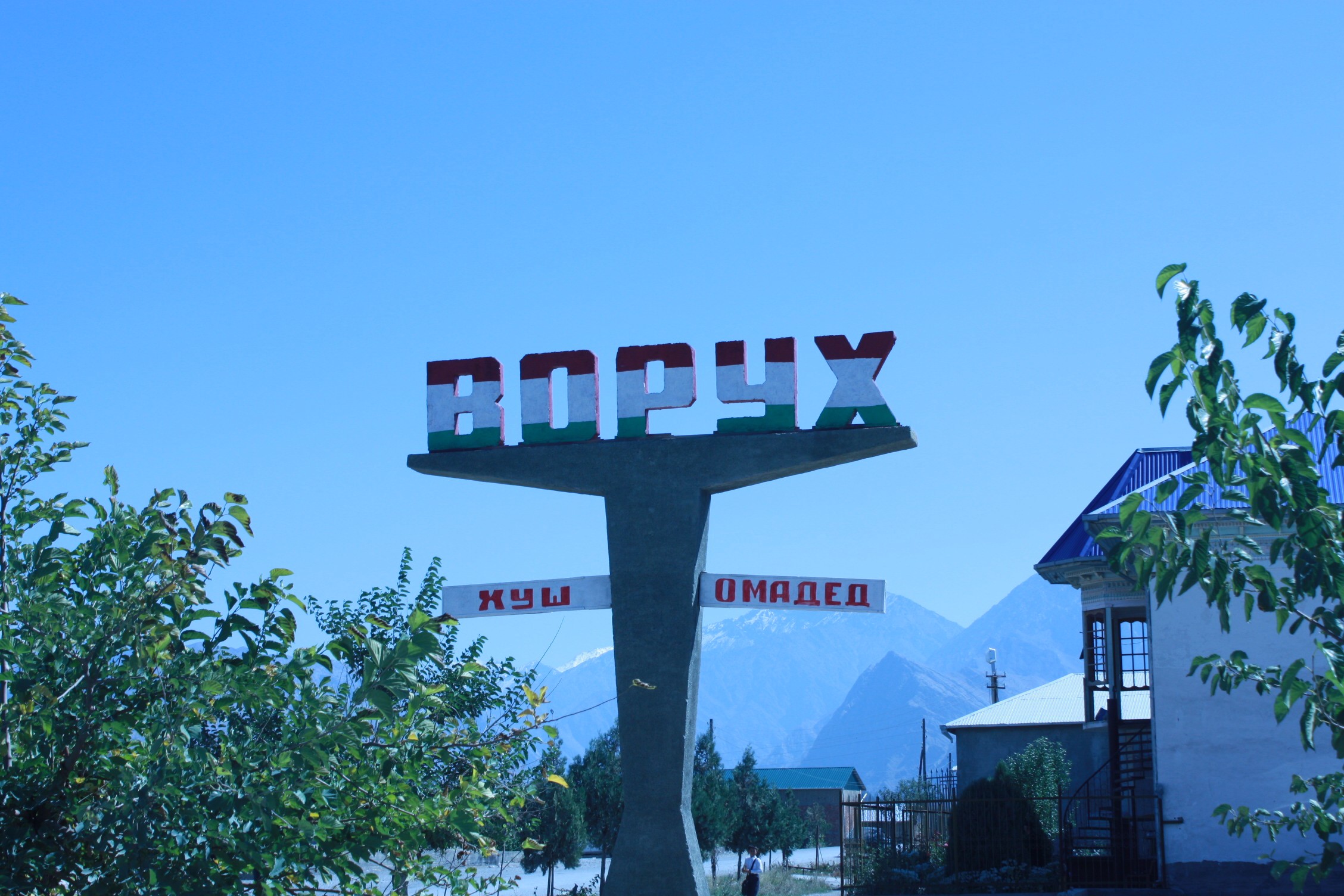
The entrance to Tajikistan’s Vorukh enclave; image: Bruce Pannier

The lone road leading from Batken to the Kyrgyz village of Ak-Sai and the Tajik enclave of Vorukh weaves through both countries several times and in some places, the road is the border.

Visible from any village in this area are the snow-capped mountains, but down in the valleys, water has always been a problem.

Like the roads, small rivers and canals meander across both sides of the border, and unsurprisingly, water use is a major source of tensions and has been a significant obstacle in deciding where the border should be.

The first hints of trouble came after 2000 and involved petty vandalism, usually children throwing rocks at passing vehicles with license plates from the neighboring country.

This escalated and after 2010, when incidents of physical altercations between members of border communities started, followed by vandalism targeting homes and businesses in border villages.

Since much of the border was not demarcated, arguments and fights often broke out whenever one country attempted to make any road repairs or build new structures in disputed areas.

On January 11, 2014, a gun battle started between border guards of the two countries. Tajik forces used grenade launchers and mortars to attack the Kyrgyz forces. Several servicemen on both sides were wounded, but after that incident the use of firearms in border disputes increased and after several years exchanges of fire became common when tensions flared up between border communities and border guards.

Both sides sent more troops with heavier weaponry, including artillery and armored vehicles.

Scuffles that previously involved throwing sticks and stones, turning into  brief but often deadly fire-fights.

The situation continued to grow gradually worse until April 28, 2021, when the militaries of the two countries engaged in fighting that included mortar and artillery fire and lasted for three days.

At one point Tajik forces crossed into Kyrgyz territory. Tajik helicopter gunships also fired on Kyrgyz villages.

Thirty-six Kyrgyz citizens and 19 Tajik citizens were killed.

Thousands of people were evacuated from communities on both sides of the border, and there was extensive damage to homes and other structures on both sides of the border.

As bad as that was, the fighting that broke out on September 14, 2022, was worse and occurred over a wider area than in 2021. Again, Tajik forces briefly crossed into Kyrgyz territory, and Kyrgyz authorities had to evacuate some 150,000 of its citizens from the area.

Kyrgyzstan also used its recently acquired Turkish military drones to attack Tajik positions.

At least 83 people on the Tajik side were killed, and 63 on the Kyrgyz side.

At that time, some 664 kilometers of the 972-kilometer border had been demarcated.

After the conflict of 2022, both countries were more serious in their efforts to reach a border deal. Delegations from the two countries have met almost every month since September 2022 to agree on new sections of the border, and Tashiyev and Yatimov met more than a dozen times.

At the December 4 meeting in Batken, both Tashiyev and Yatimov noted the agreement still needed to be ratified by their countries’ parliaments and there are other procedural matters that need to be worked out.

It is a positive development, but ultimately, the success or failure of the deal will be decided by the villagers living along the border. Animosity between communities along the border has grown in the last decade, often fueled by local officials who rejected giving even one square centimeter of what they considered their land to the other country.

Will these villagers abide with the decisions of their governments when water is scarce or when land they have used for years for farming or herding is given to the neighboring country?
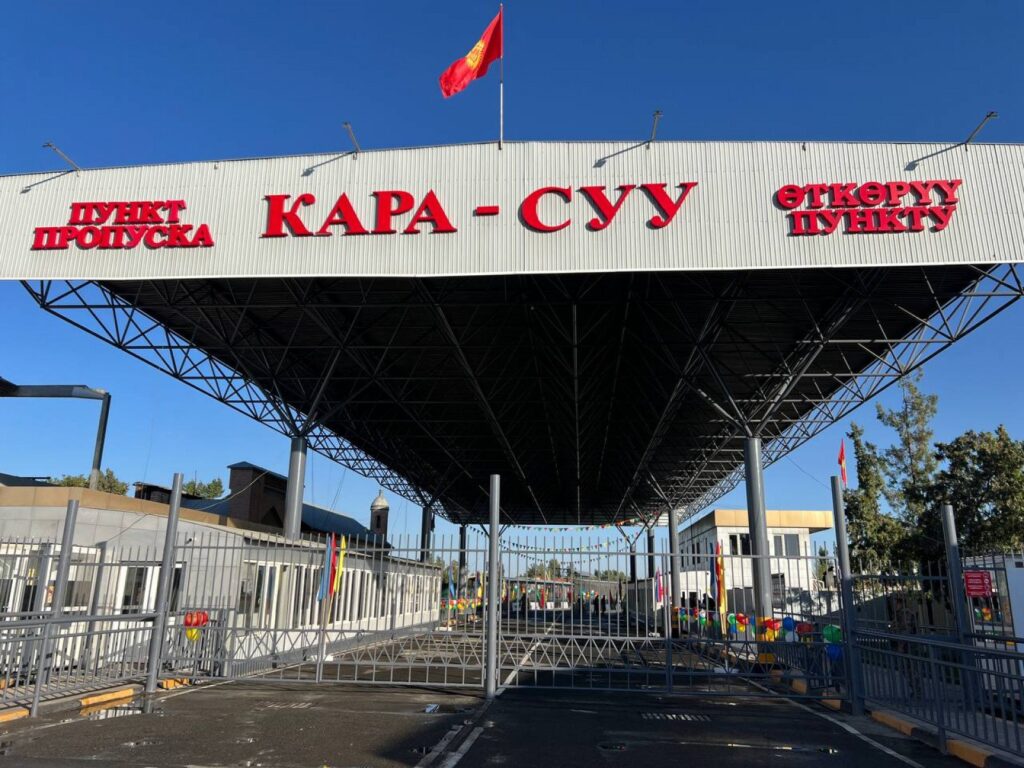

EU-Funded Electronic Queue Management System Aims to End Border Delays in Kyrgyzstan

Kyrgyzstan’s State Customs Service has launched a pilot Electronic Queue Management System (eQMS) at the Kyzyl-Kiya road border crossing with Uzbekistan. The system is designed to simplify and expedite border-crossing procedures for truck drivers. Using the eQMS website, drivers can reserve time slots and access a designated waiting zone at their scheduled time, according to the Delegation of the European Union to the Kyrgyz Republic.

European Union Support

Funded by the European Union, the eQMS is part of Kyrgyzstan’s broader effort to enhance economic and regional trade integration. The initiative is implemented with technical support from the International Trade Centre (ITC), a United Nations agency, under the Ready4Trade Central Asia: Fostering Prosperity Through the Trans-Caspian Transport Corridor project.

Marilyn Josefson, Ambassador of the European Union to the Kyrgyz Republic, emphasized the significance of the initiative:

“The European Union is proud to support Kyrgyzstan’s efforts to modernize its border management through the eQMS pilot initiative. Improving soft connectivity and facilitation of trade and border procedures is a crucial step in advancing the operational efficiency of the Trans-Caspian Transport Corridor and supporting the internationalization of Central Asian businesses, ultimately fostering sustainable economic development and stronger regional integration,” said Josefson.

Advancing Border Efficiency

Almaz Saliev, deputy chairman of the State Customs Service of Kyrgyzstan, highlighted the transformational nature of the project:

“This system is not only an operational improvement but also a commitment to a modern, user-centered approach to border management.”

The new system addresses longstanding issues faced by Kyrgyz exporters and freight forwarders, particularly delays at border crossings. While the pilot project focuses on the Uzbekistan border, border delays have also been a recurring problem for Kyrgyz trucks crossing into Kazakhstan. These delays have disrupted goods transit to Russia and other destinations, prompting periodic complaints from Kyrgyzstan about excessive queues.

The eQMS pilot project marks a significant step toward more efficient, transparent, and reliable border management, paving the way for smoother trade flows and stronger regional connectivity.

Kyrgyz, Tajik Delegations Finalize Border Deal After Long Dispute

Kyrgyzstan and Tajikistan have fully agreed on the demarcation of their border, Kyrgyz officials said Wednesday, in a major step toward ending the conflict between the two Central Asian countries that spilled into violence as recently as 2022. 

Delegations from the two nations “reached agreements and fully completed the description of the remaining sections of the Kyrgyz-Tajik state border,” Kyrgyzstan’s state-run Kabar news agency reported. It cited the press service of the Cabinet of Ministers of Kyrgyzstan.

The delegation chiefs of the two sides ordered working groups to finalize documents on the border agreement, Kabar said. It published photos of the meeting in the Kyrgyz town of Batken, including an image of the delegation chiefs in military uniform and shaking hands with each other. 

The Kyrgyz-Tajik border is nearly 1,000 kilometers long and the agreement followed months of negotiations over various stretches of the mountainous territory. 

In 2014, the border between the two countries was closed to Kyrgyz and Tajik citizens following clashes over a bypass road in disputed territory; mortars were fired and both armies suffered casualties. Violence broke out again in 2021 and 2022, resulting in more casualties and the evacuation of more than 100,000 civilians. 

Interview: A Profile of Women’s Rights in Central Asia from Equality Now

Equality Now is an international human rights organization that uses the law to protect and promote the rights of all women and girls worldwideThe organization combines grassroots activism with legal advocacy at national, regional, and international levels, and collaborates closely with local partners to ensure governments enact and enforce laws protecting women’s and girls’ rights.

The Times of Central Asia spoke with Equality Now’s Eurasia consultant Janette Akhilgova about the issues that women and girls in Central Asia face, and how women’s rights are being addressed.

TCA: Equality Now works in all regions of the world. Which social issues and inequalities are most affecting women and girls in Central Asia at the present time? 

JA: One of Equality Now’s main focuses in Central Asia is ending sexual violence and improving access to justice for survivors, specifically women and girls. In 2019, we published  “Roadblocks to Justice: How the Law is Failing Survivors of Sexual Violence in Eurasia,” examining laws on rape and other forms of sexual violence in 15 former Soviet Union countries. This report formed the basis of our work in Eurasia, helping us identify the major legal gaps in the region. 

A critical legal gap is the absence of a consent-based definition of rape, which means the law does not recognize a broad range of coercive circumstances where consent cannot be genuine, willing, or voluntary. This omission leaves some forms of sexual violence unpunished, perpetuating a culture of impunity. Inadequate support systems for sexual violence survivors compound the problem, enabling miscarriages of justice and fostering a widespread lack of trust in legal systems.

Another obstacle to justice for survivors is the provision for conciliation between parties in rape cases. This practice involves sexual violence survivors being encouraged or pressured to reach an agreement with their assailant outside of the formal criminal justice system. The approach often involves mediating a settlement, whether financial or otherwise, between the survivor and the accused, typically facilitated by families, communities, or even legal authorities.

Conciliation is sometimes not voluntary as survivors are often subjected to societal pressure. The social stigma attached to rape, a strong culture of victim blaming, and a lack of awareness about legal procedures are also factors that contribute to sexual violence cases not being reported to authorities and instead being dealt with privately.

TCA: Is progress being made to eradicate these issues? Conversely, are there any parts of life where women and girls see their rights eroded?

JA: Central Asian countries have made varying progress in advancing women’s rights and welfare.  The 2022 Global Gender Gap Report highlighted significant strides by Kazakhstan, such as lifting restrictions on “banned professions” so that women are no longer legally prohibited from doing certain jobs previously deemed “too dangerous” or “unsuitable” for women. The country has also adopted new and comprehensive laws to protect women’s and children’s rights. 

Another progressive legal reform in Kyrgyzstan was the introduction in 2024 of a law on domestic, sexual, and gender-based violence that strengthened access to justice for women and girls, including those with disabilities. 

The World Bank’s 2024 report, “Women, Business, and the Law,” named Uzbekistan one of the top five improvers in gender equality globally. This recognition was due in part to the passing of a bill that criminalized domestic violence and strengthened penalties for sexual violence and stalking. 

The new law incorporated many of the recommendations made by Equality Now in its 2022  submission to the Committee on the Elimination of Discrimination Against Women (CEDAW). This submission contained a detailed analysis of Uzbekistan’s laws on sexual violence and provided guidance to improving protections in compliance with international human rights standards. In 2024, a new bill aimed at strengthening protections for children from all forms of violence was passed, and the president is expected to sign this into law soon. 

For Kazakhstan, the country’s ranking in the Global Gender Gap report dropped from 65th place in 2022 to 76th in 2024 due to a widening gender wage gap and persistent barriers to women’s political participation. 

TCA: Equality Now counts Europe and Central Asia as one region. How does equality for women in Central Asia compare with situations in Europe?

JA: Equality Now’s work to end sexual and gender-based violence in Eurasia focuses specifically on countries that were part of the former Soviet Union. All countries grapple with a mix of challenges to women’s rights that reflect unique cultural, legal, and social contexts, while also manifesting patterns of gender discrimination and harm found globally. This is why it is vital to combine localized and global efforts to advance equality.

Europe has the highest gender parity and has established advanced legal frameworks to protect women’s rights, no country anywhere has achieved full gender equality.  The Council of Europe’s Istanbul Convention, which provides a comprehensive framework for the protection of women and girls from gender-based violence, has not been universally ratified across Europe, and none of the Central Asian countries have adopted it. 

Intersecting forms of discrimination – based on race, immigration status, disability, sexuality, and gender identity – create additional barriers to justice for women and girls. In Central Asia, access to justice for women is further complicated by a strong culture of shame and deeply rooted patriarchal norms. 

TCA: How receptive are Central Asian governments to the work you do? Are there any current initiatives you would highlight as being beneficial? Conversely, what problems do you face with certain governments?

JA: Equality Now has established productive cooperation with governments and local partners in the countries we work in and it is important to acknowledge the positive efforts to improve protections for women and girls against violence and gender inequality. 

In 2021, Equality Now published the manual “Effectively Investigating, Prosecuting, and Adjudicating Sexual Violence Cases in Georgia” to support practitioners working on improving access to justice for sexual violence survivors in Georgia. A similar manual for Kyrgyzstan, aimed at training legal aid lawyers on sexual violence and disability, is currently being developed in collaboration with the Commissioner on the Rights of the Child and Bar Association of Kyrgyzstan. We have also proposed incorporating training on the manual into Kyrgyzstan’s National Action Plan for implementing the Convention on the Rights of the Child (CRC).

Uzbekistan’s National Agency of Social Protection invited our network of civil society organizations to provide a proposal on legal reforms related to sexual violence against children. These collaborations show the governments’ receptiveness and willingness to seek and incorporate our expertise. 

However, promoting gender equality and women’s rights is not always easy in the region. For instance, in Kazakhstan, the government controls the women’s rights agenda by supporting pro-government groups while targeting organizations like NeMolchi (Do Not be Silent) Foundation, whose head, Dina Smailova, was forced to flee the country for speaking up against sexual violence.

In 2024, Kyrgyzstan introduced a “foreign agents” law, giving the state tighter control over non-governmental organizations that receive foreign funding and engage in activities deemed political. Impacted nonprofit organizations are required to register as “foreign representatives,” and the government now has greater powers to monitor their activities and suspend or shutter them. Alongside creating a more challenging working environment for civil society and human rights defenders, Kyrgyzstan has also been cracking down on independent media, including raiding media outlets and arresting journalists.

Why Kazakhstan Wants to Change Subsoil User Taxation

Kazakhstan is considering a significant change in the taxation of subsoil users, with Minister of Industry and Construction Kanat Sharlapayev proposing the introduction of royalties to replace the current mineral extraction tax (MET) for licenses issued from January 1, 2026. According to Sharlapayev, this shift would attract more investors to Kazakhstan and encourage the domestic processing of raw materials.

Why Investors Are Dissatisfied with MET

The MET, introduced in 2008, is levied on subsoil users for every type of mineral, hydrocarbon, underground water, and therapeutic mud extracted in Kazakhstan. Each resource is taxed at a separate rate, calculated based on the volume of extracted raw materials rather than their actual sale or revenue. This has caused dissatisfaction among both local and foreign subsoil users.

Over the years, discussions have intensified about replacing MET with royalties, which would calculate taxes based on the volume of products sold or profits earned. Sharlapayev stated during a recent government meeting that experts from the World Bank have recommended this change to make Kazakhstan’s mining sector more attractive to investors.

“Globally, the most popular taxation model in the mining and metallurgical sector is based on the volume of products sold or profits earned. Kazakhstan, however, uses the mineral extraction tax. Introducing royalties tied to the sales value of minerals would be more transparent and familiar to international mining players,” Sharlapayev explained.

Sharlapayev also emphasized that replacing MET with royalties would incentivize domestic production by imposing lower taxes on minerals processed within Kazakhstan compared to those exported without processing. He urged Prime Minister Olzhas Bektenov to instruct the Ministry of Finance and the Ministry of National Economy to include royalty provisions in the new Tax Code, expected to take effect in 2026. However, these changes would only apply to licenses issued from January 1, 2026.

Concerns Over the Transition

The Ministry of Finance has expressed reservations about the proposed shift, citing potential revenue losses. In September, Zhanybek Nurzhanov, Deputy Chairman of the State Revenue Committee, warned that transitioning to royalties could cost the state budget hundreds of billions of tenge.

“We can switch to royalties only if there are no losses for the budget. If we simply introduce royalties and reduce business payments, it raises a serious question—how do we offset nearly half a trillion tenge in lost tax revenue?” Nurzhanov said.

Additionally, Nurzhanov pointed out that determining the true value of exported raw materials would require the establishment of specialized laboratories, imposing financial burdens on both businesses and the state. This, coupled with the complexities of administering royalties, could deter subsoil users.

Kazakh economist Galymzhan Aitkazin echoed these concerns, noting that MET’s fixed rates provide predictability for both businesses and the government, while royalties—tied to revenue or market prices—introduce variability.

“The simplicity of flat MET rates allows companies to plan effectively and helps the government forecast revenues. By contrast, royalties linked to revenue or market prices could lead to payment variability, complicating financial planning for both parties,” Aitkazin explained.
He also emphasized that MET’s straightforward mechanism for calculating the tax base—based on production volume or value—is easier to administer than royalties, which require more detailed assessments of income and redistribution levels. This could increase the risk of tax evasion or reporting manipulation.

“Stimulating domestic processing and attracting investment is vital for Kazakhstan’s extractive sector,” Aitkazin concluded. “However, we cannot overlook the state budget’s reliance on tax revenues from the extractive industries. Whether this sweeping measure in the new Tax Code will justify potential shortfalls in revenue, given the high risks of evasion and falsification, remains a significant concern.”

New Fighting in Syria Throws Astana Talks Off Track

It’s called the Astana process: a long-running series of talks hosted by Kazakhstan whose stated aim is to deliver peace to conflict-torn Syria. Some Syrian opposition figures and other critics, however, have said the “guarantor” countries of the process – Iran, Russia and Türkiye – use it to promote their own political and military interests in the region.

The dialogue named after the Kazakh capital, which marked its 22nd round in Astana on Nov. 11-12, was undercut on Nov. 27 when Syrian rebels launched a surprise attack against government forces and seized most of Aleppo, Syria’s second largest city, within days. The stunning operation, which reignited the civil war that began in 2011, followed several years of relative quiet during which Syria was divided into areas of factional control and foreign influence.

Iran, Russia and Türkiye are talking about the Astana process as a way out of the current chaos. Visiting Türkiye on Monday, Iranian Foreign Minister Abbas Araghchi said the negotiations format must be “preserved” and that the foreign ministers of the guarantor countries would meet soon to discuss Syria, according to Iranian state media. Multiple media reports say the meeting could take place not in Astana, but on the sidelines of a forum in Doha, Qatar on Dec. 7-8.

“All agreed: NO ONE benefits from another war in Syria,” Araghchi said on the X platform.

Russia, which along with Iran supports Syrian President Bashar Assad and uses its military presence there to project power in the region and beyond, has also referred to the Astana framework as a way to stabilize the situation. At the same time, Russian jets have conducted bombing runs in response to the rebel offensive, and Iran says it would consider any Syrian government request to send troops.

Türkiye, on the other hand, has backed some Syrian rebel groups and blames the resurgence of fighting on Assad’s failure to engage with the opposition. Türkiye, which hosts several million Syrian refugees on its territory, has sent its own military into northern Syria and seeks to counter an autonomous Kurdish area in the northeast of the country.

The talks in Astana, which is perceived as a neutral venue, started in 2017 and have included the Syrian government and some Syrian opposition groups. There is also United Nations representation. Jordan, Lebanon, and Iraq have participated as observers. The United States initially took part as an observer, but dropped out several years ago, favoring a U.N.-backed peace process in Geneva.

The Astana track provided for so-called deescalation zones, though the Syrian government violated the agreement and seized some of those areas, squeezing rebels and civilians into a smaller area along the Turkish border.

While important to reconciliation efforts, the Astana dialogue “has been heavily influenced by the interests and positions” of the sponsoring countries – Iran, Russia and Türkiye, author Zenonas Tziarras wrote in an analysis published in 2022 by the Peace Research Institute Oslo, a non-profit group.

“As the scope of the process became wider, encompassing political and constitutional aspects, some of its shortcomings in the areas of representation and ownership became more salient,” Tziarras said. “It has thus been questionable the extent to which Astana contributes to peace in Syria or reinforces a status quo and legitimizes foreign involvement, against the country’s unity and political transition to a post-conflict future.”

A similar criticism came from Faysal Abbas Mohamad in a commentary published last year by the Carnegie Endowment for International Peace.

“This insistence on the Astana format reveals its true modus operandi: a mechanism for normalizing the military presence of its sponsors, while minimizing interstate friction,” Mohamad said.

Kazakhstan has raised its international profile over the years by hosting talks such as those on Syria, even if it is not actually participating in negotiations. The Kazakh government also provided a platform for Armenia and Azerbaijan to discuss an end to their long dispute.

At the end of the last round of Syria talks in Astana, the parties issued a 24-point statement of more than 2,000 words. Point No. 24? Meet again in Astana in the first half of 2025.