• KGS/USD = 0.01144 0%
  • KZT/USD = 0.00196 -0%
  • TJS/USD = 0.10899 0%
  • UZS/USD = 0.00008 0%
  • TMT/USD = 0.28490 0%
  • KGS/USD = 0.01144 0%
  • KZT/USD = 0.00196 -0%
  • TJS/USD = 0.10899 0%
  • UZS/USD = 0.00008 0%
  • TMT/USD = 0.28490 0%
  • KGS/USD = 0.01144 0%
  • KZT/USD = 0.00196 -0%
  • TJS/USD = 0.10899 0%
  • UZS/USD = 0.00008 0%
  • TMT/USD = 0.28490 0%
  • KGS/USD = 0.01144 0%
  • KZT/USD = 0.00196 -0%
  • TJS/USD = 0.10899 0%
  • UZS/USD = 0.00008 0%
  • TMT/USD = 0.28490 0%
  • KGS/USD = 0.01144 0%
  • KZT/USD = 0.00196 -0%
  • TJS/USD = 0.10899 0%
  • UZS/USD = 0.00008 0%
  • TMT/USD = 0.28490 0%
  • KGS/USD = 0.01144 0%
  • KZT/USD = 0.00196 -0%
  • TJS/USD = 0.10899 0%
  • UZS/USD = 0.00008 0%
  • TMT/USD = 0.28490 0%
  • KGS/USD = 0.01144 0%
  • KZT/USD = 0.00196 -0%
  • TJS/USD = 0.10899 0%
  • UZS/USD = 0.00008 0%
  • TMT/USD = 0.28490 0%
  • KGS/USD = 0.01144 0%
  • KZT/USD = 0.00196 -0%
  • TJS/USD = 0.10899 0%
  • UZS/USD = 0.00008 0%
  • TMT/USD = 0.28490 0%
08 December 2025

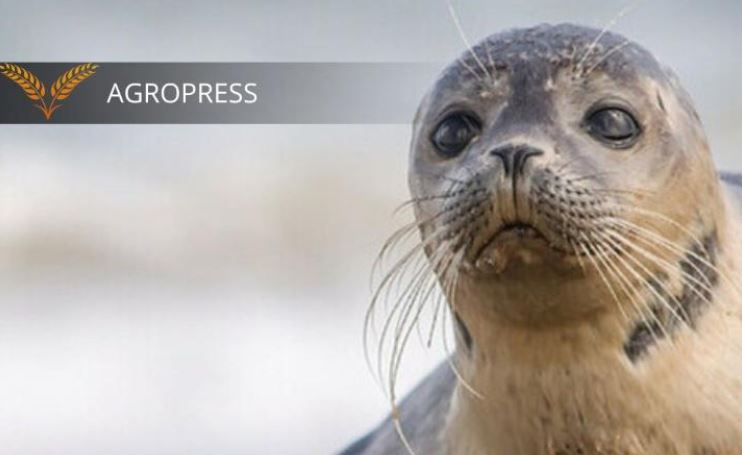
Scientists Investigate Deaths of 1,000 Caspian Sea Seals

More than 1,000 seal carcasses have washed ashore along a stretch of the Caspian Sea coast in the last month, according to the Kazakh government.

The mass death of seals in the area has previously been reported, and similar events have occurred over the years. But new data from the Ministry of Agriculture reveals the large scale of the latest losses as scientists study tissue samples taken from the carcasses to find out why the seals died.

“The Fisheries Committee suggests that natural phenomena, including natural gas emissions caused by underwater earthquakes, might be the reason behind the deaths,” the ministry said on Thursday. “Final conclusions regarding the causes of the seal deaths will be determined after laboratory tests are completed, which, according to scientific organizations, will take 3–4 months.”

Fisheries officials discovered 1,034 seal carcasses along the coast in the Tupkaragan district of the Mangystau region of western Kazakhstan between Oct. 24 and Nov. 13, according to the ministry. So far, tests of tissue samples are negative for a number of infectious diseases.

Kazakh officials attributed the deaths of nearly 200 seals in late 2022 to pneumonia, while noting that environmental pollution in the Caspian Sea had made their immunity systems more vulnerable to infectious diseases. Concerns about the impact of oil extraction, industrial waste and other environmental damage on the sea’s ecoystem are increasing.

Scientists have recorded mass deaths of seals in the Caspian Sea for more than two decades. In 2000, the deaths of about 10,000 seals was attributed to chronic toxicosis.

My First International Competition – Anara Ashimova, Silver Medalist in Shaolin Wushu

I was never a big sports person, but working at the computer and not moving much eventually made me realize I needed some kind of physical activity to cheer myself up and to recharge my body. After all, I wanted to be healthy and active in my maturity – I don’t want to call it old age.

I had doubts about my physical abilities, but I was resolute, so I decided to go for a sport with exercises that are possible for and improve the health of people of age. Therefore, I took up the sport of Wushu, starting in a large group under the guidance of Gaini Kypshakbai, a master of the art.

The first few months were challenging, but I slowly developed new skills. A lot of people quit during this time, and eventually only three of us were left in the group. Gradually, I developed an obsession with the classes as a way to strengthen my body and spirit. Our coach, Gaini, deserves a separate piece to be written about her for her patience and mentoring, but for now, I will just say that I’m grateful and full of respect for her.

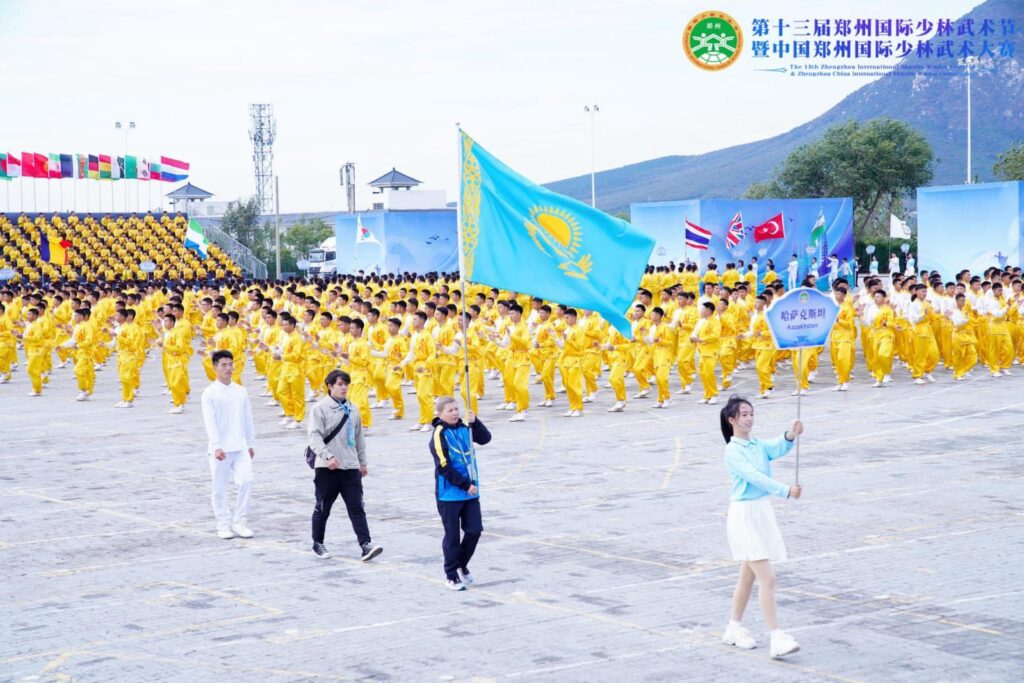
Laoshi (coach in Chinese) Gaini gently introduced us to the Tai Chi community, an association of enthusiasts who are passionate about what they do. In my third year of classes, I wanted to broaden my horizons, watch the masters, and show off my modest skills. So, after participating in the Championship for the Republic of Kazakhstan, we went to China for The 13th Zhengzhou China International Shaolin Wushu Competition.

Team Kazakhstan; image: A.Ashimova

Our team consisted of twelve people of different ages ranging from 30 to 65; it was the first international competition for all of us. Some of us were leaving Kazakhstan for the first time, but I’d been to Urumqi 20 years before. Everything that awaited us upon our arrival in China impressed and delighted us. The first thing that pleased me was how clean and organized everything was. People were friendly and willing to help, and, most importantly, it was completely safe. The cities we visited were very green with beautiful trees and lots of flowers; the parks were well-maintained, and the air was clean and fresh.

Almost every city had the same level of population as Kazakhstan, but it never felt crowded. Everything was organized, clear, and accessible. For us, the myth that the Chinese do not speak English was also dispelled. If we encountered a language barrier, it was easily overcome by modern online translators. The youth of China were very bright, independent, and open.

The Opening Ceremony of the festival was an indescribable delight. The small town of Danfeng welcomed us alongside representatives of 65 schools of Tai Chi. The competition was a festival celebrating the different styles of Wushu. We couldn’t contain our excitement as we took pictures on our smartphones and greeted the young athletes from the windows of the bus as thirty-five coaches filled with representatives from different countries moved along the streets of the city.

The Opening Ceremony reminded us of our Soviet childhood when large-scale events were accompanied by a huge number of students and kids running around the stadium and creating a lively atmosphere. For a short while, I was seized by nostalgia, which was replaced by a slight melancholy as I wondered why there is no longer such passion for sports in Kazakhstan. I would like us to start taking care of the younger generation at a state level. I would like to believe that the Nomad Games recently held in Astana will serve as an impetus to open children’s sports schools and academies.

During my time in China, I fell in love with the country because of its originality, combination of rich history and modernity, technology, and absolute self-sufficiency. A truly international affair, at the competition we met teams from Poland, Japan, Mexico, Romania, and the United States. It was a real celebration of the unity of people from different parts of the planet.

Image: A.Ashimova

Every evening, we met in the hotel restaurant for dinner with Mr. Wú Bīn, a Chinese martial arts master and Wushu coach who has trained more champions than any other instructor in China. Mr. Wú Bīn is the president of the Beijing Wushu Institute, director of the Beijing Wushu Team, and holds leadership positions in the Chinese Wushu Association and the Asian Wushu Federation. Even though he is a legendary figure, he is a man of extraordinary modesty, dignity, and openness. There was not a single team that did not take a picture with him and express their most profound reverence and respect. We were no exception, and gave Wú Bīn Kazakhstani chocolates.

As part of the festival, we visited a Shaolin Monastery, where we were plunged into this holy place’s ancient beauty and unhurried atmosphere, and watched the monks perform their martial arts skills. In the end, the festival’s purpose was not competition, but rather a way to popularize and involve more people in this sport. For all of us, it was an amazing experience and a huge lesson. The Tai Chi Association of the Republic of Kazakhstan will soon hold its international tournament, “Peaks of Tien Shan,” in Almaty. Teams from Kyrgyzstan, Uzbekistan, and different regions of Kazakhstan will join the competition. I dearly hope that the number of countries participating in the tournament will expand over time.

Anara Ashimova.

Silver medalist in the Shaolin Wushu Competition, specially for The Times of Central Asia


Fueling Growth: IFC Strategic Initiatives for Sustainable Development in Central Asia – An Interview With Hela Cheikhrouhou

With its headquarters in Washington, D.C. the International Finance Corporation (IFC) was established in 1956 as the private-sector arm of the World Bank. The institution offers advisory, and asset-management services to promote investment in developing countries. Recent ventures in Central Asia include solar power projects in Uzbekistan and Kyrgyzstan, and an entrepreneurship scheme for women and young people in Tajikistan. TCA spoke with Hela Cheikhrouhou, IFC Vice President for the Middle East, Central Asia, Türkiye, Afghanistan, and Pakistan about the IFC’s work in Central Asia.


TCA: Can you please give us an overview of IFC’s performance in Central Asia for fiscal year 2024 (July 1, 2023, to June 30, 2024)?

IFC had a pivotal year in Central Asia, making strides in sustainable development and inclusive growth across the region. Our efforts concentrated on climate finance, infrastructure, agriculture, and supporting smaller businesses. By coupling investments with advisory support, we helped expand the role of the private sector, creating jobs, promoting financial inclusion, strengthening infrastructure, and supporting the region’s green transition.

In the fiscal year 2024, IFC committed over $1 billion to Central Asia. This includes about $400 million in long-term financing from our own account, $600 million in mobilization, and $35 million in short-term trade and supply-chain finance to facilitate trade flows. Alongside these financial commitments, we engaged in advisory projects focused on improving financial inclusion, developing innovative public-private partnerships (PPPs), and advancing climate initiatives and gender equality.

Our results this year underscore our commitment to fostering sustainable, inclusive growth, and enhancing the resilience and sustainability of Central Asian economies.


 TCA: Can you highlight some of the IFC’s key achievements in Central Asia this year?

In addition to the strong financial commitments mentioned earlier, IFC expanded its presence in various sectors, including finance, capital markets, renewable energy, agriculture, and infrastructure. Through our advisory services, we helped structure impactful PPPs at the sectoral level.

A major focus this year has been strengthening local financial markets. IFC invested $228 million across ten financial institutions in Kazakhstan, the Kyrgyz Republic, Tajikistan, and Uzbekistan. Up to half this amount was dedicated to supporting women entrepreneurs and rural enterprises. We also helped these financial institutions expand portfolios related to their micro, small, and medium enterprise (MSME) businesses, advance climate finance, foster digital transformation, and issue the region’s first sustainability, social, and green bonds. Supporting MSMEs has enabled entrepreneurs to grow their businesses and generate employment. In the past fiscal year alone, IFC-supported projects created around 35,000 direct jobs, including opportunities for over 13,000 women across the region.

These efforts have been further bolstered by targeted investments and projects in individual countries across the region.

In Uzbekistan, IFC, together with the World Bank, financed a new solar plant equipped with the country’s first battery energy storage system. Once completed, the plant is expected to provide electricity access to around 75,000 households in the Bukhara region.

As part of its broader support for the Uzbek government’s efforts to reform its chemical sector, IFC assisted the State Asset Management Agency in privatizing Ferganaazot, a local nitrogen-based fertilizer producer. The asset was acquired by Indorama Corporation, an experienced international investor and partner of IFC, which plans to invest around $100 million in modernizing and upgrading Ferganaazot’s production facilities.

Additionally, we financed Anglesey Food LLC, the country’s leading grocery retailer operating the Korzinka chain, to support the construction of a state-of-the-art ‘green’ distribution center, facilitating the expansion of Korzinka’s retail store network. With IFC’s support, the company recently became the first in Central Asia to obtain EDGE gender certification, marking a significant milestone in promoting gender equality in the workplace.

In Tajikistan, IFC invested in the nation’s first green bond, issued by Eskhata Bank, which will support climate-smart initiatives and MSMEs engaged in environmental projects. As a strategic advisor, IFC assists the Tajik government in structuring a PPP to mobilize private sector expertise and capital for its inaugural 200-megawatt solar plant in the Sughd region. This landmark project is expected to significantly enhance Tajikistan’s solar energy capacity, mobilizing up to $200 million in private financing.

In Kazakhstan and the Kyrgyz Republic, IFC is not only focused on enhancing financial inclusion but also actively pursuing a diverse range of opportunities. These initiatives include PPPs in areas such as drinking water supply, renewable energy – including networked geothermal solutions for heating and cooling – railway projects as part of the Middle Corridor development, and introducing the first municipal green bonds in Central Asia. Additionally, IFC supports Kazakhstan’s accelerated methane abatement efforts in line with the Global Methane Pledge.

These achievements underscore IFC’s commitment to driving sustainable and inclusive development in Central Asia. We will continue collaborating closely with our partners to foster the region’s growth and resilience in the years ahead.


TCA: What are some of the opportunities and challenges in Central Asia?

Central Asia has made impressive progress in its development over the past two decades, underpinned by robust growth, averaging more than 6% per annum. Going forward, the economic opportunities for Central Asian countries are ample. By embracing economic openness, fostering mutually beneficial cooperation, and coordinating efforts, the region can achieve a qualitative breakthrough in its development while reducing vulnerability to external shocks through the promotion of internal growth drivers.

Looking ahead, Central Asia’s strategic significance in the Eurasian space is poised to grow, positioning it as an important player for neighboring countries and key economic partners. The region has a historic opportunity to leverage its transit position and expand into external markets through emerging international transport corridors. With its abundant energy resources and considerable potential for renewable energy, implementing energy projects – particularly in renewable sectors – will enhance the energy mix and create opportunities for future electricity exports.

However, unlocking the region’s economic potential requires coping with several challenges. These include landlocked geography, reliance on commodity exports, low levels of financial development, and exposure to the negative impacts of climate change. While overcoming these obstacles is crucial, it is equally important to seize opportunities in the global economy and develop and adapt digital and green technologies.

Going forward, creating new and better jobs is critical for Central Asia. As young countries, the region’s states need to create many jobs quickly. For example, by 2030, Uzbekistan will have the fifth-largest labor force in the Eastern Europe and Central Asia (ECA) region. The Kyrgyz Republic’s potential workforce is growing at about 2% per annum – faster than some of its neighbors in the ECA region. Job creation, though, has not kept pace with the increasing population. Job creation offers the surest path out of poverty, and I want to further collaborate with partners in Central Asia to ensure we achieve progress on this agenda.

Addressing infrastructure bottlenecks in transport, water, and energy will enhance productivity, expand trade and economic partnerships with the neighboring countries, and diversify production and exports. Improving governance and institutional environment remain vital for accelerating structural economic transformation across the region.

Central Asia is highly vulnerable to climate change, which poses risks to food security, water supply, and the energy mix. Biodiversity conservation is also a pressing concern. To address these issues, the region must undergo a green transformation by investing in resource-saving innovations, modernization of water and agriculture sectors, and reverse desertification.

Collaboration among Central Asian countries is essential for overcoming structural development challenges, particularly in enhancing transport and logistics infrastructure and mitigating climate-related risks. Joint efforts in the water and energy sectors are equally vital given the increased pressure on energy systems and shared river basins.


TCA: Looking ahead, what are IFC’s priorities for Central Asia in the next fiscal year?

In recent years, we have intensified our efforts in the region, maintaining a strong focus on key development challenges such as limited access to finance, significant infrastructure gaps, weak diversification, and unlocking the potential of the private sector. Simultaneously, we are committed to addressing cross-cutting issues like climate change and gender inequality.

IFC aims to deepen its engagement in Central Asia through a combination of investments and advisory services, anchored around three strategic pillars: activating private sector development, enhancing infrastructure connectivity, and facilitating a green transition. While these are common themes across the region, we customize our approach to align with each country’s unique profile and circumstances, informed by thorough research and analysis and discussions with governments, partners, and clients.

We look forward to continuing our collaboration with governments, investors, and development partners to help Central Asia achieve its ambitious development goals and promote sustainable and inclusive growth. This effort will be transformative not only for the region’s economies but also for its people.

First Train Tour Launched Between Kazakhstan and Uzbekistan

Kazakhstan is launching a new international train tour called “Silk Road,” connecting the cities of Almaty, Turkestan, and Tashkent. The first train on this route will depart on November 16.

According to the Ministry of Tourism and Sports of Kazakhstan, the four-day tour will allow travelers to plunge into the atmosphere of ancient cities along the historic Silk Road. The itinerary covers the most important sights of Turkestan and Tashkent and includes guide services, meals, transfers, and entrance fees.

Vice-Minister of Tourism and Sports Yerzhan Erkinbayev mentioned that the route will strengthen cultural ties between Kazakhstan and Uzbekistan and make travel more comfortable and affordable.

The tour program includes visits to historical places such as the ancient city of Otyrar, the mausoleum of Arystan Baba, the historical and cultural complex Azret Sultan, and the most significant tourist complex in Central Asia, Caravan-Saray. In Tashkent, tourists can familiarize themselves with historical sights and modern architecture.

Earlier, the media reported on the launch of a tourist route between China and Kazakhstan. The train from China, which began running in July 2024, passes through the Khorgos-Altynkol border crossing, adding a new opportunity for travel in Central Asia.

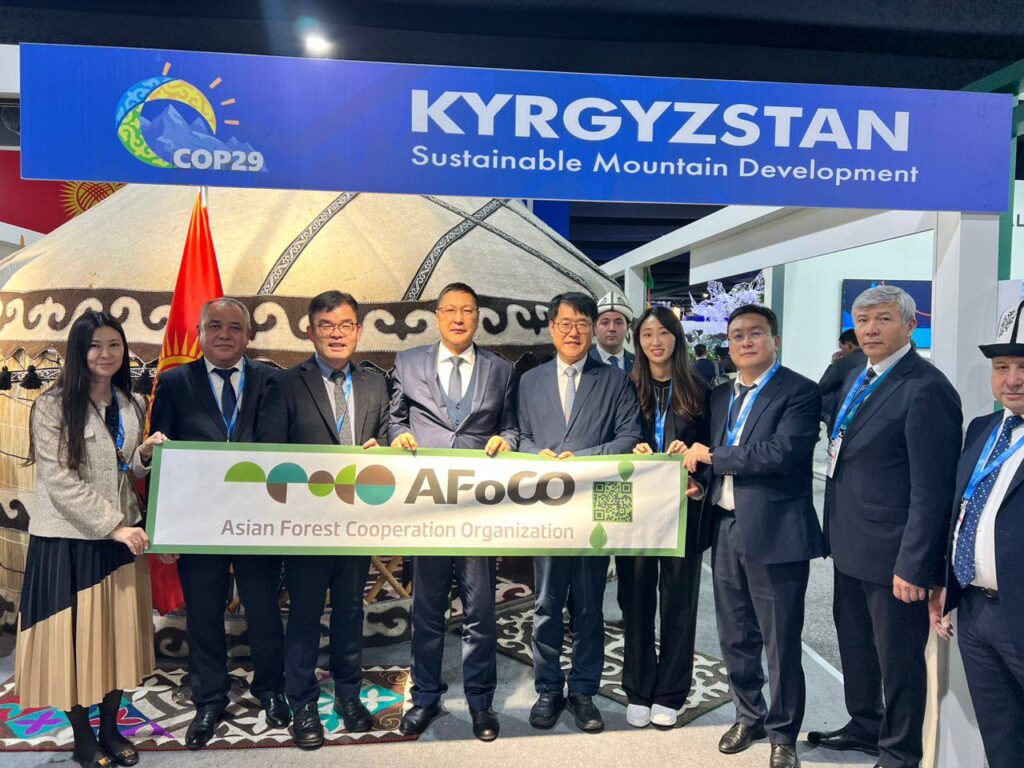
Bishkek Secures Multi-Million Dollar Grants at COP29 Conference in Baku

Boobek Azhikeev, the head of Kyrgyzstan’s Ministry of Emergency Situations, held several meetings with representatives of international institutions during the COP29 conference in Baku. Protocols and memorandums were signed, and a joint action plan for 2025-27 was developed.

“I would like to highlight our meeting with the regional director of the Green Climate Fund, where we discussed a $25 million grant,” stated Kyrgyz EMERCOM spokeswoman Elnura Muktarova. “These funds are intended to support Kyrgyzstan’s Hydrometeorological and Forestry Services, as well as the Training and Research Center of the Ministry of Emergency Situations. We anticipate beginning these projects next year.”

Azhikeev also negotiated with FETNet, a Finnish company that will provide advanced training for the Hydrometeorological Service. FETNet has offered to train Kyrgyz specialists in Finland and will present cutting-edge technologies to improve the accuracy and timeliness of weather forecasts.

In addition, the Ministry of Emergency Situations announced that it had reached an agreement with the Asian Development Bank (ADB) to secure $60 million for strengthening the banks of the Kara-Darya, Chu, and Yassy rivers. This funding aims to reduce flood risks and enhance the ecological situation in the region. Of the total, 40% will be provided as a grant, while the remainder will be offered as a loan.

During a meeting with representatives from the Financial Service under the Government of South Korea, discussions centered on financing Kyrgyzstan’s Forest Service. The South Korean representatives pledged support in the form of laboratory equipment, high-quality seeds, and digital mapping tools to combat pasture degradation and enhance forestry management.

Kyrgyz Ministry of Emergency Situations officials also met with Turkish EMERCOM representatives and the Turkish Cooperation and Coordination Agency (TIKA) to discuss joint efforts in responding to emergency situations.

Chinese Company Builds Cotton-Textile Cluster in South Kazakhstan

Xinjiang Lihua (Group) Co., Ltd., one of China’s largest companies specializing in the cultivation and deep processing of cotton, has commenced work on a cotton-textile cluster in Kazakhstan’s southern Turkestan region.

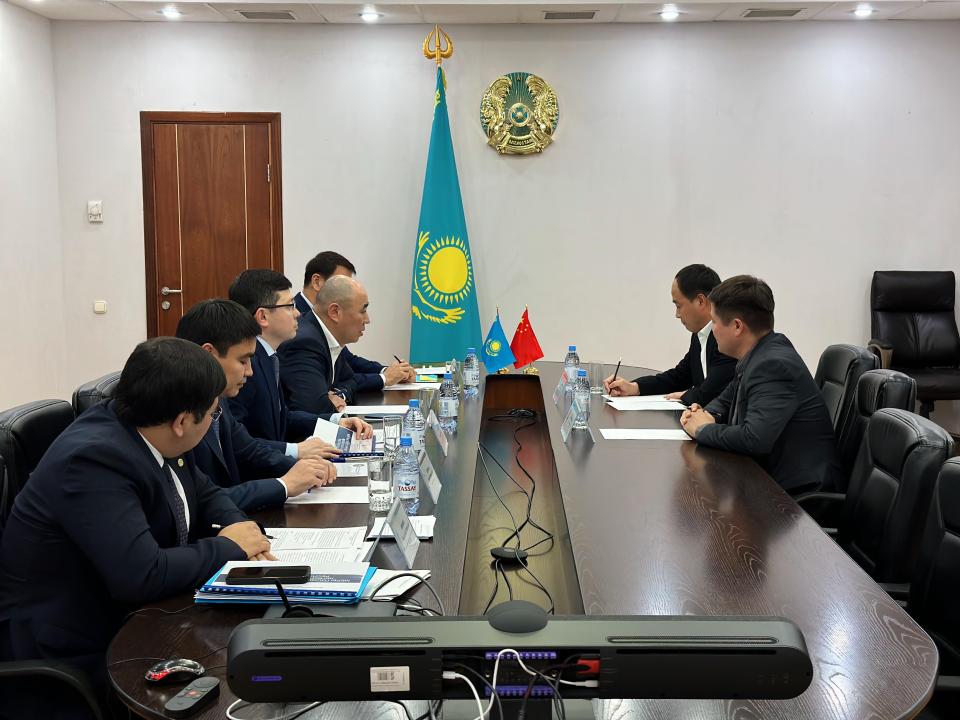
The project’s progress was reviewed on November 14 during a meeting between Kanat Sharlapaev, Kazakhstan’s Minister of Industry and Construction, and representatives of the company.

Located in the Turan Special Economic Zone, the joint venture involves the construction of facilities for PVC pipe manufacturing, drip irrigation systems, two cotton processing plants, a spinning mill, a weaving mill, a dyeing and finishing factory, and a garment factory.
The project, with a total cost of 180 billion KZT (over $363 million), is expected to generate more than 4,000 jobs.

This year, the initiative saw the installation of a drip irrigation system, cotton cultivation on 1,120 hectares, and the start of construction for the spinning mill.

Minister Sharlapaev underscored the project’s significance for the development of Kazakhstan’s light industry, pledging comprehensive government support to ensure its success.