• KGS/USD = 0.01144 0%
  • KZT/USD = 0.00196 -0%
  • TJS/USD = 0.10899 -0%
  • UZS/USD = 0.00008 -0%
  • TMT/USD = 0.28490 0%
  • KGS/USD = 0.01144 0%
  • KZT/USD = 0.00196 -0%
  • TJS/USD = 0.10899 -0%
  • UZS/USD = 0.00008 -0%
  • TMT/USD = 0.28490 0%
  • KGS/USD = 0.01144 0%
  • KZT/USD = 0.00196 -0%
  • TJS/USD = 0.10899 -0%
  • UZS/USD = 0.00008 -0%
  • TMT/USD = 0.28490 0%
  • KGS/USD = 0.01144 0%
  • KZT/USD = 0.00196 -0%
  • TJS/USD = 0.10899 -0%
  • UZS/USD = 0.00008 -0%
  • TMT/USD = 0.28490 0%
  • KGS/USD = 0.01144 0%
  • KZT/USD = 0.00196 -0%
  • TJS/USD = 0.10899 -0%
  • UZS/USD = 0.00008 -0%
  • TMT/USD = 0.28490 0%
  • KGS/USD = 0.01144 0%
  • KZT/USD = 0.00196 -0%
  • TJS/USD = 0.10899 -0%
  • UZS/USD = 0.00008 -0%
  • TMT/USD = 0.28490 0%
  • KGS/USD = 0.01144 0%
  • KZT/USD = 0.00196 -0%
  • TJS/USD = 0.10899 -0%
  • UZS/USD = 0.00008 -0%
  • TMT/USD = 0.28490 0%
  • KGS/USD = 0.01144 0%
  • KZT/USD = 0.00196 -0%
  • TJS/USD = 0.10899 -0%
  • UZS/USD = 0.00008 -0%
  • TMT/USD = 0.28490 0%
08 December 2025

85-Million-Year-Old Dinosaur Fossils Discovered in Tajikistan’s Sughd Region

Dinosaur fossils estimated to be 85 million years old have been discovered in Tajikistan’s Sughd region. The excavation took place in the village of Kansai, a renowned paleontological site known for its rich array of prehistoric animals, including ancient lizards, turtles, crocodiles, amphibians, and fish from the Cretaceous period.

The expedition, organized by Russian and Tajik scientists, builds on Kansai’s long-standing significance in paleontology. In the 1960s, Soviet scientist Anatoly Rozhdestvensky and his team uncovered numerous dinosaur remains, including a therizinosaur femur. In the 1980s, Lev Nesov identified traces of mammals from the Cretaceous period. This year, a team led by Associate Professor Pavel Skuchas from St. Petersburg State University has expanded research in Kansai, focusing on smaller vertebrates. Tajik researchers, including Umed Nabiev, a master’s student in paleontology, and ecologist Gafurjon Karimov, joined the excavation.

The fossils were excavated from the walls of a large canyon containing Upper Cretaceous sediment layers, where the team found remains of lizards, salamanders, frogs, and fish. “We used a washing technique to carefully extract even the smallest bones and teeth,” Nabiev explained, noting that a special adhesive was applied to the rock to protect these fragile finds.

Among the larger discoveries were crocodile and turtle shells, as well as the bones of an 85 million-year-old dinosaur. Further research will determine which parts of the dinosaur’s body these bones belonged to. The excavation is set to resume next May, and scientists plan to explore new canyon sections previously mined for cement production.

“Previously, the remains of large animals have been studied quite well, while the remains of smaller animals, such as amphibians and reptiles, have been neglected. In our next expedition, we will also search for small vertebrates,” Nabiev added.

Tajikistan has seen several significant archaeological discoveries in recent years. In 2023, artifacts unearthed at the Oshkhon site in the Eastern Pamirs indicated human presence dating back about 14,000 years.

In 2021, a joint Tajik-German expedition in the village of Khushdilon (Torbulak) near Danghara district uncovered the remains of a Hellenistic sanctuary dating from the 3rd to 1st centuries B.C. These findings continue to expand the historical and cultural understanding of the region.

Deported Tajik Opposition Activist Ikromov Sentenced to 23 Years in Prison

Tajik opposition activist Farrukh Ikromov, who had sought asylum in Europe, was deported from Poland to Tajikistan in April and subsequently sentenced to 23 years in prison in Dushanbe. Opposition sources have now informed Radio Ozodi of Ikromov’s sentencing, though the Tajik authorities have not issued any official statement on the matter.

According to Abdusattor Boboev, head of the Polish-based Citizens’ Committee for the Rescue of Political Prisoners in Tajikistan, Ikromov was transferred from a Dushanbe pre-trial detention center to prison in October. Another activist, Saidiskhok Boboev, corroborated this information, stating that a recently released prisoner saw Ikromov and confirmed his 23-year sentence.

Ikromov’s relatives, who reside abroad, lack detailed information about his sentencing. A close family member explained that they receive occasional updates about his status through a relative in Tajikistan.

Ikromov’s deportation followed the denial of his asylum request in Poland. After this initial denial, He sought protection in Germany, but he was returned to Poland, where he was placed in a migrant detention center before being deported to Tajikistan. According to Abdusattor Boboev, shortly before his deportation, he reported being unexpectedly photographed, after which all contact with him ceased.

Ikromov also participated in protests against Tajik President Emomali Rahmon’s visit to Germany in September 2023. Opposition activists had expressed concern that if deported to Tajikistan, Ikromov would face mistreatment and a lengthy prison term.

In recent years, several EU countries, including Germany, have complied with Tajikistan’s requests to extradite political activists, many of whom have subsequently received lengthy prison sentences. International human rights organizations have sharply criticized these actions.

The Times of Central Asia previously reported on another Tajik activist, Dilmurod Ergashev, whose deportation from Germany was ordered by the Kleve administrative court on October 28, shortly after he was detained. The court ruled that Ergashev should be deported despite his pending application for political asylum before another court. Prior to his anticipated deportation, Ergashev attempted suicide.

Ergashev, a member of the opposition Group of 24, has opposed the regime of Rahmon and joined the Reform and Development of Tajikistan movement in 2024. He has resided in Germany for 13 years.

Kazakhstan’s Lake Balkhash Receives 13.5 billion Cubic Meters of Water in 2024

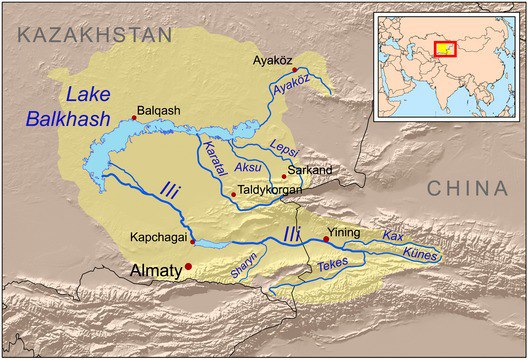
The Ministry of Water Resources and Irrigation of the Republic of Kazakhstan announced on November 8 that 13.5 billion cubic meters of water had been sent to Lake Balkhash via the Ili River from the Kapchagay Reservoir this year, raising the lake’s average water level to 341.6 meters above sea level.

The trans-boundary Ili River, originating in China, supplies about 70% of Lake Balkhash’s water. According to the ministry, this year’s average water flow at the Kazakhstan-China border was 384 cubic meters per second, a 17% increase from last year.

Lake Balkhash, located 280 kilometers northwest of Almaty, Kazakhstan’s largest city, is the world’s fifteenth-largest lake. In May, reports indicated that Balkhash’s water level had risen by 23 centimeters since the start of the year, largely due to increased rainfall and snowmelt-related floods this past spring.

Earlier this month, The Times of Central Asia reported that Kazakhstan and China have initiated negotiations on the joint management and allocation of water from shared rivers. A key goal for Kazakhstan in these talks is to maintain optimal water levels in Lake Balkhash.
Three major rivers in Kazakhstan — the Irtysh, Ili, and Emel — originate in China, making trans-boundary water management critical for the country.

In late August, The Times of Central Asia also reported that the Kapchagay Reservoir near Almaty had filled to capacity for the first time in a decade. The reservoir collects water from the Ili River and regulates its flow to Lake Balkhash.

CAREC Ministers Approve Climate Action Plan and Launch Regional Climate Fund

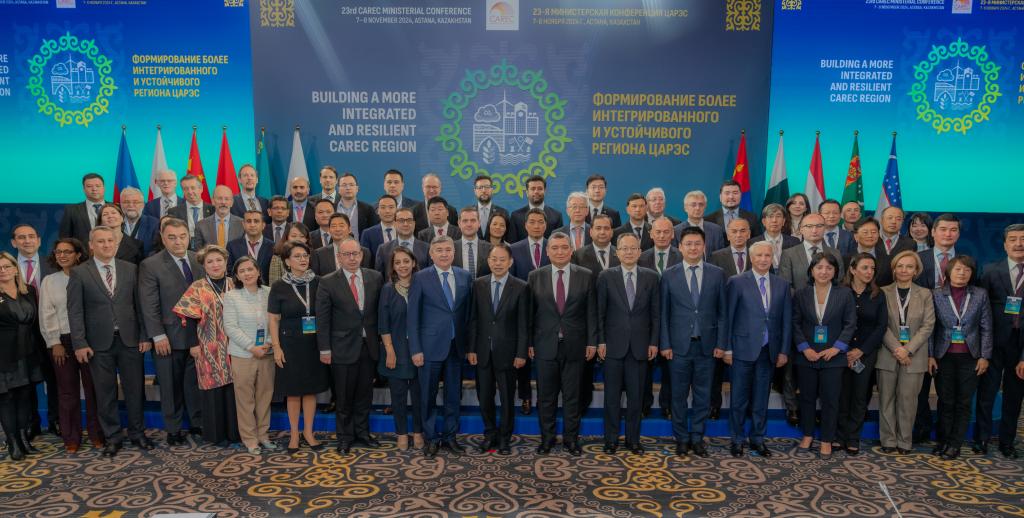
At the 23rd CAREC Ministerial Conference held in Astana on November 8, member countries of the Central Asia Regional Economic Cooperation (CAREC) Program—Afghanistan, Azerbaijan, China, Georgia, Kazakhstan, Kyrgyzstan, Mongolia, Pakistan, Tajikistan, Turkmenistan, and Uzbekistan—endorsed a new Climate Change Action Plan (CCAP) and launched the CAREC Climate and Sustainability Project Preparatory Fund (CSPPF). These initiatives aim to strengthen regional collaboration on climate resilience, low-carbon growth, and sustainable development.

The CAREC Program is a partnership of 11 countries and development partners that promotes sustainable development through regional cooperation, with the Asian Development Bank (ADB) hosting the CAREC Secretariat.

In his address at the conference, ADB President Masatsugu Asakawa stated, “The approval of the CAREC Climate Change Action Plan and the establishment of the Climate and Sustainability Project Preparatory Fund are significant milestones in our collective efforts to address climate change. By working together, we can build resilient infrastructure, develop early warning systems, and create a greener future powered by renewable energy.”

The CCAP, covering the period from 2025 to 2027, prioritizes initiatives aligned with the CAREC Climate Change Vision and focuses on four main areas to address climate challenges in the region. It aims to enhance climate risk preparedness, strengthen the water-energy-food nexus, promote low-carbon growth by reducing emissions and expanding renewable energy, and create a CAREC climate platform.
The CSPPF will support CAREC countries in developing viable regional climate projects that align with their commitments under the Paris Agreement.

On November 8, ADB signed fund contribution agreements with China’s Ministry of Finance and South Korea’s Ministry of Economy and Finance, generating an initial $5 million in funding for the CSPPF.

Speaking at the Ministerial Conference, Kazakhstan’s Prime Minister Olzhas Bektenov highlighted the CAREC Program’s significance for Central Asia, noting that over the past 20 years, it has mobilized about $51 billion for the region, with more than $9 billion invested in Kazakhstan.

During his visit to Kazakhstan, ADB’s Asakawa met with President Kassym-Jomart Tokayev to discuss ongoing cooperation and future initiatives.

From 1994 to 2024, ADB financed projects in Kazakhstan valued at approximately $7 billion. Notably, ADB participated in the construction of the Western Europe–Western China highway corridor and the reconstruction of the Aktobe–Kandyagash road.

Solidarity Center: Central Asian Migrant Workers Face Low Pay and Unsafe Workplaces

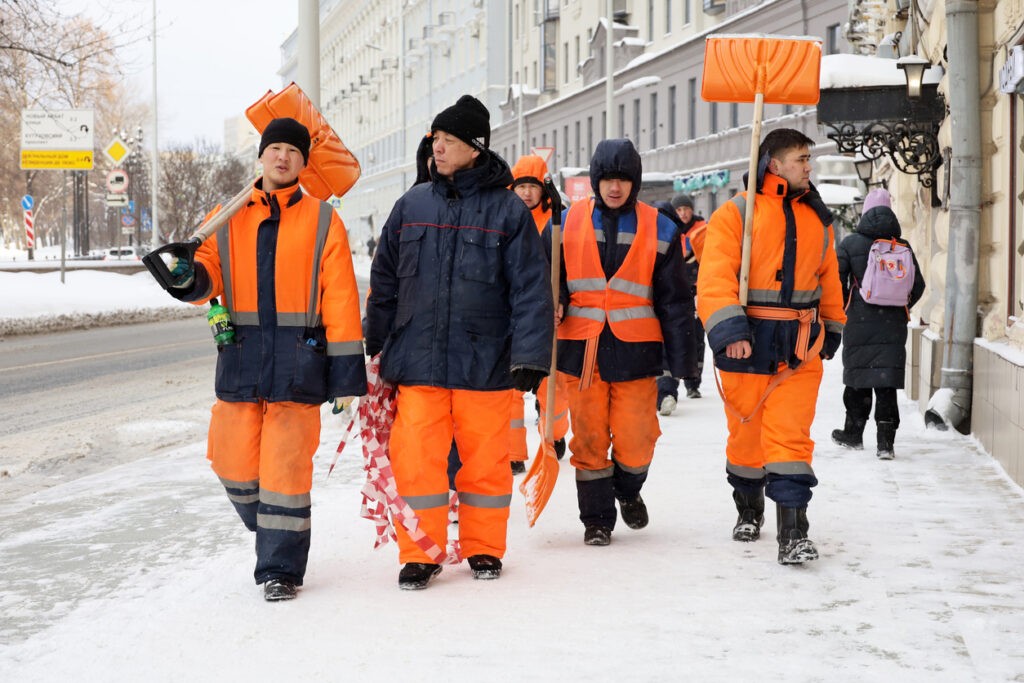
Central Asian migrant workers face new challenges as they look for well-paying jobs, with economic shifts and political instability adding to the uncertainty. More women and young people also choose to migrate, often facing unique risks. Panelists at a recent Solidarity Center webinar highlighted that protecting these workers’ rights is more effective when countries in the region work together on safe migration plans.

A Solidarity Center study involving over 1,000 migrant workers from Kazakhstan, Kyrgyzstan, and Uzbekistan found that Kyrgyzstan and Uzbekistan are the primary countries of origin, while Kazakhstan is becoming a growing destination. Most participants (58%) left due to low wages in their home countries, and 31% cited a lack of jobs as their main reason for migrating.

Russia, once a top destination for Central Asian workers, has seen a drop in migrant numbers since its economy took a hit following Russia’s invasion of Ukraine.

A migrant worker from Uzbekistan shared that overtime hours weren’t paid, and medical expenses had to come out of his pocket if he got sick. According to Lola Abdukadyrova, Solidarity Center’s regional director in Kyrgyzstan, this story reflects the harsh conditions many migrant workers face—no overtime pay, no sick leave, and frequent discrimination or harassment.

Abdukadyrova noted that for nearly 30% of Kyrgyz migrant households, money for food is often a struggle. In Uzbekistan, this rate rises to 45%, as shared by Nodira Karimova, director of the Republican Social Information Center Istiqbolli Avlod.

Abdukadyrova added that many migrants earn only enough for basic food, and they face delayed payments, heavier workloads without extra pay, and unsafe working conditions.

“Kazakhstan has endorsed the Global Compact for Safe, Orderly and Regular Migration (GCM) and participates in various regional migration dialogues,” said Aleksandr Mukha, director of the Mangistau Regional Branch of the Kazakhstan International Bureau for Human Rights and Rule of Law. In another significant win for migrant worker rights organizations, Kyrgyzstan issued the GCM in August to improve conditions for Kyrgyz citizens who travel abroad to earn their livelihoods.

The Times of Central Asia has previously written about how that Russia’s ongoing war in Ukraine has increased pressure on Central Asian migrants.

Turkey Ready to Buy Kazakh Meat at Twice the Price Offered by China

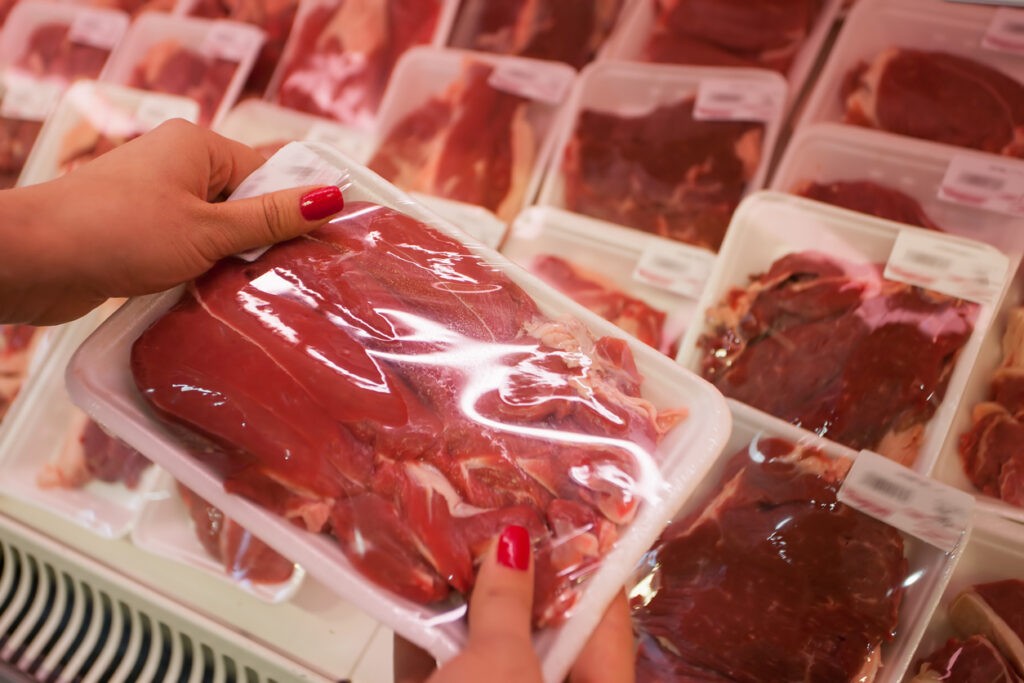
Kazakhstan’s Ministry of Agriculture is actively working to open the Turkish market to Kazakh meat exports. Deputy Minister Amangaly Berdalin reported that Turkish partners are willing to pay twice as much for Kazakh beef as China.

The Ministry of Agriculture has previously pursued access to the Chinese market for Kazakh livestock products. In February, Beijing lifted restrictions on Kazakh livestock imports, potentially enabling Kazakhstan’s southeastern regions to resume exports of frozen beef and pork to China. However, significant export volumes to China have yet to materialize. Maksut Baktibayev, head of the Meat Union of Kazakhstan, explained that the agreement between the countries only allows exports from four meat processing plants in Kazakhstan, with a combined capacity of 8,000 tons of frozen beef.

According to Berdalin, Kazakh producers are not utilizing even this limited capacity due to uncompetitive pricing. Chinese buyers offer $5.5 per kilogram of Kazakh beef, which is comparable to prices in Kazakhstan’s domestic market, ranging from 2,700 to 3,000 tenge ($5.4 to $6.1) per kilogram. Given these figures, transporting Kazakh meat to China is economically unviable for producers. In contrast, Turkey is prepared to pay nearly double, or $11 per kilogram, for Kazakh beef.

“Our ministry’s objective is to open as many markets as possible for our producers, particularly those offering attractive prices,” Berdalin stated at the Vet Astana 2024 International Exhibition on Feed and Veterinary in Astana. “That is why our inspectors are actively collaborating with Turkish officials to understand their export requirements.”

Berdalin noted that while specific export volumes of Kazakh beef to Turkey are not yet determined, there is optimism following a recent diplomatic visit. In August, Kazakhstan’s Minister of Agriculture Aidarbek Saparov visited Ankara, where business representatives from both countries signed contracts to supply Kazakh meat to Turkey, valued at $80 million over the coming years, contingent on Kazakhstan’s successful completion of required veterinary and epidemiological procedures.

The Turkish market has historically been closed to most Kazakh livestock products due to restrictions related to animal diseases, with some bans in place for approximately 20 years. Turkish authorities lifted these restrictions in June 2024. Kazakh producers are now navigating an extensive certification process to gain market access. Some required tests must be conducted in third countries, prompting Kazakhstan to rebuild its own laboratory capabilities. Berdalin shared that the Kazakh government has allocated 3.8 billion tenge ($7.7 million) this year to support veterinary laboratories.

“To export to a country, we must meet all its import requirements. For instance, to export our honey, we need to conduct 43 specific tests. Currently, we handle 20 in-house, but the remaining 23 are outsourced to laboratories in Latvia and Georgia,” Berdalin explained.

In addition to Turkey, the Ministry of Agriculture is working to open European markets for Kazakh meat. Last year, Kazakhstan exported over 53,000 tons of meat and meat products valued at $153 million. Poultry was the largest export category, at nearly 32,000 tons, followed by beef at 15,800 tons. Primary export destinations included Uzbekistan, the UAE, Kyrgyzstan, Iran, and Kuwait. Between January and May 2024, Kazakhstan exported 27,300 tons of meat, generating $71.7 million. Of the 5,000 tons of beef exported, 4,600 tons went to Uzbekistan, which, according to Kazakh producers, resells the meat to markets in the Middle East and Turkey.