• KGS/USD = 0.01144 0%
  • KZT/USD = 0.00196 -0%
  • TJS/USD = 0.10899 -0%
  • UZS/USD = 0.00008 -0%
  • TMT/USD = 0.28490 0%
  • KGS/USD = 0.01144 0%
  • KZT/USD = 0.00196 -0%
  • TJS/USD = 0.10899 -0%
  • UZS/USD = 0.00008 -0%
  • TMT/USD = 0.28490 0%
  • KGS/USD = 0.01144 0%
  • KZT/USD = 0.00196 -0%
  • TJS/USD = 0.10899 -0%
  • UZS/USD = 0.00008 -0%
  • TMT/USD = 0.28490 0%
  • KGS/USD = 0.01144 0%
  • KZT/USD = 0.00196 -0%
  • TJS/USD = 0.10899 -0%
  • UZS/USD = 0.00008 -0%
  • TMT/USD = 0.28490 0%
  • KGS/USD = 0.01144 0%
  • KZT/USD = 0.00196 -0%
  • TJS/USD = 0.10899 -0%
  • UZS/USD = 0.00008 -0%
  • TMT/USD = 0.28490 0%
  • KGS/USD = 0.01144 0%
  • KZT/USD = 0.00196 -0%
  • TJS/USD = 0.10899 -0%
  • UZS/USD = 0.00008 -0%
  • TMT/USD = 0.28490 0%
  • KGS/USD = 0.01144 0%
  • KZT/USD = 0.00196 -0%
  • TJS/USD = 0.10899 -0%
  • UZS/USD = 0.00008 -0%
  • TMT/USD = 0.28490 0%
  • KGS/USD = 0.01144 0%
  • KZT/USD = 0.00196 -0%
  • TJS/USD = 0.10899 -0%
  • UZS/USD = 0.00008 -0%
  • TMT/USD = 0.28490 0%
08 December 2025

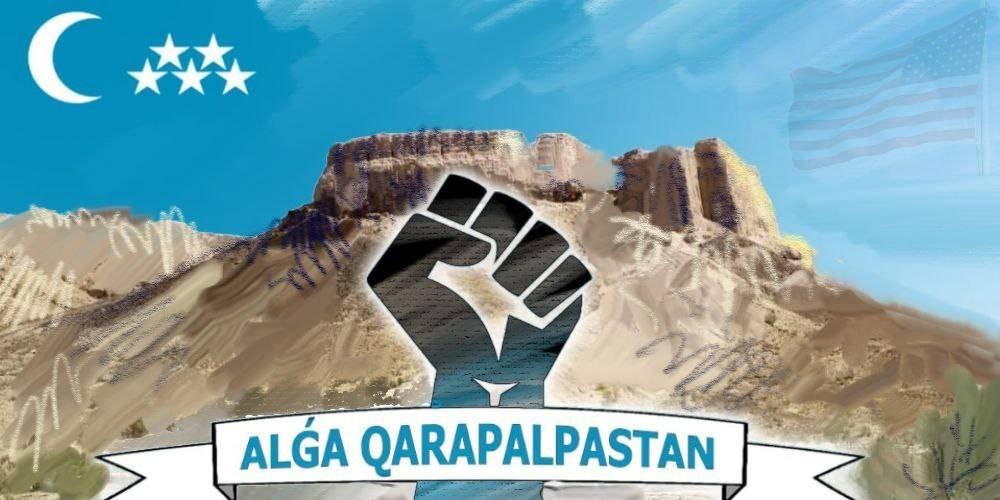
Karakalpak Activists Facing Charges in Uzbekistan, Granted Asylum in the United States

The waiting, worrying, and wondering are finally over for four Karakalpak activists who were detained in Kazakhstan some two years ago, and faced possible extradition back to Uzbekistan.

Zhangeldi Zhaksimbetov, Tleubike Yuldasheva, Raisa Khudaybergenova, and Ziuar Mirmanbetova received word on October 15 that they had been granted asylum in the United States.

It ended more than two years of uncertainty that started with the unrest in Karakalpakstan on July 1, 2022.

Karakalpakstan is part of Uzbekistan, but has a special status as a sovereign republic with its own parliament and constitution that allows the region to hold a referendum on seceding from Uzbekistan. Those unique privileges are also enshrined in Uzbekistan’s constitution, but in spring 2022 parliament proposed making amendments to the constitution.

The main reason for the amendments was to change the presidential term from five to seven years so that incumbent President Shavkat Mirziyoyev, who was serving his second and constitutionally last term at the time, could extend his stay in power.

However, the commission drafting the constitutional changes also dropped the articles referring to Karakalpakstan’s sovereign status and right to secede.

Those rights were nominal as there was no chance Uzbek authorities would allow Karakalpakstan to fully govern itself or secede.

Karakalpakstan accounts for some 37% of Uzbekistan’s territory, and also has large oil and natural gas reserves that have just started being developed in the past ten years.

The special rights Karakalpakstan had might have been nominal, particularly since ethnic Karakalpaks make up only about one-third of Karakalpakstan’s two million inhabitants. But these distinctions, albeit it only on paper, were important to the Karakalpaks, and when the proposed amendments were published at the end of June 2022, tensions started rising immediately in Karakalpakstan.

On July 1, Karakalpak community leaders went to apply for permission to hold a public meeting against the planned changes affecting Karakalpakstan. The group’s leader, activist and lawyer Dauletmurat Tazhimuratov, was detained.

Word spread and a large group numbering at least several thousand gathered, protesting peacefully outside the administration building in the Karakalpakstan capital, Nukus.

When police and security forces attempted to disperse the crowd, violence broke out, and when it was over and order finally restored, at least 21 people were dead and 243 injured.

Nearly all the casualties were Karakalpaks, and police and security forces were accused of using unnecessary and indiscriminate force against the protesters.

News of the proposed amendments, and the ensuing violence spread to the Karakalpak communities in other countries, notably to neighboring Kazakhstan, where, according to various estimates, anywhere from 50,000 to 200,000 Karakalpaks live.

Most have Kazakh citizenship, but some simply work in Kazakhstan and remain citizens of Uzbekistan.

Karakalpak activists in Kazakhstan followed events in Karakalpakstan in late June and early July 2022 and posted about it on social networks, sometimes with words of support for the protesters.

After Uzbek authorities had restored order in Kazakhstan and arrested more than 500 people, Uzbek officials requested the Kazakh government detain Karakalpaks in Kazakhstan who had been posting statements and information on social networks before, during, and after the violence.

Based on a warrant from Uzbekistan, Zhaksimbetov and Koshkarbai Toremuratov were detained in Almaty on September 13, 2022. Uzbek law enforcement accused them of encroaching on the constitutional order of Uzbekistan and disseminating material that threatened public safety and order in Uzbekistan.

On September 16, Karakalpak activist Khudaybergenova was detained in an Almaty suburb on the same charges from Uzbekistan, and at the start of October, Almaty police detained Mirmanbetova.

On October 14, 2022, Human Rights Watch released a statement calling on the Kazakh authorities not to extradite the Karakalpak activists to Uzbekistan, but Kazakhstan’s then-Foreign Minister Mukhtar Tleuberdi said his country’s position was that the four were citizens of Uzbekistan.

On November 13, Kazakh border guards apprehended Yuldasheva as she was trying to cross the border into Russia.

In all five cases, the Kazakh authorities initially ordered the Karakalpaks be held for 40 days, then extended their terms of detention to approximately one year.

All were released after that time, but they remained in legal limbo, trying to find political asylum in a third country while always fearing they could be detained again in Kazakhstan at any moment and sent back to Uzbekistan, where they would almost surely be imprisoned.

Toremuratov left for Poland, where his request for asylum is still under review.

Zhaksimbetov, Yuldasheva, and Khudaybergenova and her family left for the United States on October 15. Mirmanbetova is reportedly waiting for paperwork for a member of her family to be cleared, then they will both also depart for the United States.

Several Karakalpak activists are still being held in Karakalpakstan, notably Aqylbek Muratbai, who became the Karakalpaks’ main spokesman on what has been happening in Karakalpakstan since the July 2022 unrest.

For these Karakalpak activists remaining in custody in Kazakhstan, the fortuitous turn of events for Zhaksimbetov, Yuldasheva, Khudaybergenova, and Mirmanbetova is a good sign they too might be released from detention and find asylum in the United States.


Chinese Investment in Major Trade and Logistics Center in Northern Kyrgyzstan

On October 17, the Chairman of the Cabinet of Ministers of Kyrgyzstan, Akylbek Japarov, and the Chinese Ambassador to Kyrgyzstan, Du Dewen, attended a capsule-laying ceremony for the construction of a large trade and logistics center in the village of Leninskoye in the country’s northern Chui region.

Located just north of the capital, Bishkek, and a few kilometers from the border with Kazakhstan, the Manas Trade and Logistics City, will include a trading hub, an international exhibition center, a warehouse and logistics center with bonded areas, retail marketplaces, hotels, and residential compounds.

The facility will be built in partnership between a Chinese investor and a management company in which the Kyrgyz Cabinet of Ministers will have a 49% share.

In his address at the ceremony, the Cabinet’s head, Japarov, stated: “We are launching a major project—not just the construction of a trade and logistics center, but an entire town. It will have 30,000 retail outlets, -cover-700 hectares, and a total investment of $4.2 billion. $700 million will be invested in the first stage of construction. This center can be compared with the largest sea ports in terms of its importance and functions.”

Japarov added that the creation of the facility will significantly contribute to the expansion of regional and international trade, the creation of new jobs, and the improvement of conditions for product exports.

China is now one of Kyrgyzstan’s largest trading partners. According to official statistics, bilateral trade reached $20 billion in 2023, 32% more than in 2022.

Pupil’s Hand Stabbed by Teacher in Uzbekistan

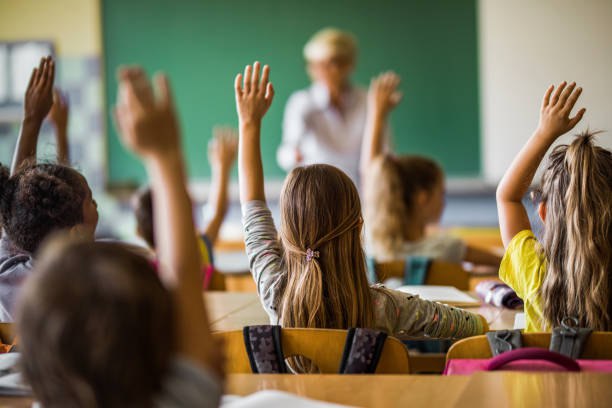
The publication “Bolalar dunyosi” (“Children’s world”) reports that in one of the schools in the Andijan region of Uzbekistan, a teacher punished a 1st grader by stabbing a needle in her hand and locked the classroom door to prevent the pupil from visiting the toilet.

In response, the girl’s father filed a complaint with the Internal Affairs Department, accusing the teacher of applying psychological pressure. He explained that his daughter had missed an additional lesson after class, which cost 50,000 UZS (approximately $3.90).

The Children’s Ombudsman of Uzbekistan, Surayyo Rahmonova, stated that following an examination of the girl’s injury, the issue had been resolved.

The case comes in the wake of  a previous report by The Times of Central Asia  concerning a Tashkent teacher who slapped a student for asking for the Russian language class to be taught in Russian; an event which caused broad public debate in Uzbekistan and a reaction from Russian politicians.

Soar in Lithuania’s Central Asian Migrant Population

Lithuanian intelligence reports that the number of Central Asian migrants in the country has increased 14-fold since 2021.

According to Prime Minister Ingrida Šimonytė, the number overall is still relatively small and is not a cause for concern. She explained that the labor market, once filled by workers from Ukraine and Belarus, has shifted following the call for Ukrainian men to fight in the war. As a result, more Central Asian workers are being hired.

Darius Jauniškis, head of Lithuania’s State Security Department, told LNK News that his agency cannot screen all migrants, raising counter-intelligence and terrorism concerns, and because the government is working on next year’s budget, his remark is perceived as a request for more funding for the VSD (State Security Department).

In response, the Prime Minister said the growth in migrants, though large, isn’t particularly high. She stated that only a few hundred foreign nationals had been issued with temporary residence permits in Lithuania this year, but added: “There were indeed problems. These problems were already partially regulated by existing  laws- and – from 2025 onwards, when the quota [for workers from third countries] who can come to Lithuania will be in force, it will be possible to impose additional regulations on these issues.”

Data from the Migration Department shows that as of October 1, around 10,600 Uzbeks were living in Lithuania, compared to 8,200 at the start of the year, and the 998 recorded in early 2022. Thus, Uzbeks now make up the fourth-largest foreign community in Lithuania. The number of migrants from Tajikistan also increased from 5,700 to 7,200 in the first nine months of 2024.

Italian University to Send its Professors to Turkmenistan

The Turkmen State University and the University of Perugia for Foreigners have signed a Memorandum of Understanding.

The main areas of cooperation include introducing modern methods of teaching foreign languages and exchanging advanced pedagogical experience. Special attention will be paid to developing university relations, which involves exchanging curricula, programs, and methodological materials. Scientific publications and textbooks will also be exchanged, improving the quality of foreign language teaching in both educational institutions.

A notable aspect of the agreement is the deployment of Italian language instructors from the University of Perugia to Turkmen State University. This initiative provides students with a unique opportunity to learn Italian directly from native speakers.

The University of Perugia for Foreigners, founded in 1921, is one of Italy’s oldest and most prestigious universities. It is the only institution of higher education in the country that specializes in teaching the Italian language and culture to international students. Located in the picturesque city of Perugia, the university offers a wide range of programs, from language courses to full degree programs in Italian language and culture.

Central Asia Finesses Pressure over Russia, Sanctions

Kyrgyzstan says it will cooperate with regional heavyweight Russia despite appeals from some Western countries not to do so.

The comment by President Sadyr Japarov of Kyrgyzstan reflects a broader effort by Central Asian countries to balance longstanding economic and security ties with Moscow alongside relationships with Europe and the United States, which have imposed multiple sanctions packages on Russia since its full-scale invasion of Ukraine in February 2022.

“Certainly, there are Western countries that ask us not to cooperate with Russia,” Japarov said in an interview with the state-run Kabar news agency that was published on Wednesday.

“However, I always openly and sincerely respond to them: ´We cannot refuse to cooperate with Russia. Our trade turnover with Russia exceeds $4 billion. We buy oil, gas, wheat and other foodstuffs from Russia. Geographically, we are in a landlocked area. Our road and rail routes to the world pass through Russia. Russia hosts about a million of our migrants. How can we not cooperate with Russia?”´

Japarov noted that trade between some European Union countries and Russia runs into billions of dollars a year despite sanctions, saying: “When you need it, you cooperate with Russia, but we are not allowed to. This is an unfair demand.”

The EU says it has imposed “massive and unprecedented” sanctions on Russia, including travel bans on individuals, asset freezes on individuals and entities and economic measures that target Russia’s financial, trade, energy, transport, technology and defense areas.

However, exemptions and loopholes mean that some trade continues, for example allowing EU member states that are especially dependent on Russian crude oil to continue receiving it by pipeline. Czechia has spent more than 7 billion euros on Russian oil and gas, over five times what it has provided in aid to Ukraine, according to a report released this week by the Center for the Study of Democracy, a European public policy institute.

Additionally, many analysts have pointed to a surge in European exports to Central Asia and the Caucasus since 2022 as a probable indication that EU and British companies are using the regions as a conduit to send goods to Russia, including at least a portion that are subject to sanctions. The difficulty of tracking products made it hard to confirm any sanctions-dodging, though an analysis of trade data by the European Bank for Reconstruction and Development last year concluded that changes in regional trade patterns “may be used to circumvent economic sanctions but on a limited scale.”

At the same time, there have been more reports of banks in Central Asian countries refusing to accept cross-border payments from Russian companies as the United States moved to impose secondary sanctions for doing business with Russian entities. Banks in China, Türkiye and the United Arab Emirates, all big trade partners with Russia, have taken similar action.

Kyrgyzstan is not the only Central Asian country that has expressed frustration about Western sanctions. Last year, Kazakh President Kassym-Jomart Tokayev said his country would comply with sanctions against Russia while still cooperating with its neighbor. But Serik Zhumangarin, Kazakhstan’s deputy prime minister and trade minister, told the Bloomberg news agency in August that Kazakhstan won’t always “blindly follow the sanctions” and will look out for its own economic interests.

Some Western policy makers understand that Central Asian countries won’t walk away from Russia and China as tensions with the West rise. Analysts at the German Institute for International and Security Affairs, which advises the German government and parliament, said “German and European efforts to win the support of regional states for Western sanctions against Russia must be measured against the realities on the ground.”