• KGS/USD = 0.01144 0%
  • KZT/USD = 0.00211 0%
  • TJS/USD = 0.10460 0.19%
  • UZS/USD = 0.00008 0%
  • TMT/USD = 0.28490 0%
  • KGS/USD = 0.01144 0%
  • KZT/USD = 0.00211 0%
  • TJS/USD = 0.10460 0.19%
  • UZS/USD = 0.00008 0%
  • TMT/USD = 0.28490 0%
  • KGS/USD = 0.01144 0%
  • KZT/USD = 0.00211 0%
  • TJS/USD = 0.10460 0.19%
  • UZS/USD = 0.00008 0%
  • TMT/USD = 0.28490 0%
  • KGS/USD = 0.01144 0%
  • KZT/USD = 0.00211 0%
  • TJS/USD = 0.10460 0.19%
  • UZS/USD = 0.00008 0%
  • TMT/USD = 0.28490 0%
  • KGS/USD = 0.01144 0%
  • KZT/USD = 0.00211 0%
  • TJS/USD = 0.10460 0.19%
  • UZS/USD = 0.00008 0%
  • TMT/USD = 0.28490 0%
  • KGS/USD = 0.01144 0%
  • KZT/USD = 0.00211 0%
  • TJS/USD = 0.10460 0.19%
  • UZS/USD = 0.00008 0%
  • TMT/USD = 0.28490 0%
  • KGS/USD = 0.01144 0%
  • KZT/USD = 0.00211 0%
  • TJS/USD = 0.10460 0.19%
  • UZS/USD = 0.00008 0%
  • TMT/USD = 0.28490 0%
  • KGS/USD = 0.01144 0%
  • KZT/USD = 0.00211 0%
  • TJS/USD = 0.10460 0.19%
  • UZS/USD = 0.00008 0%
  • TMT/USD = 0.28490 0%

Why Tajikistan Does Not Prosecute Individuals for Participation in the War in Ukraine

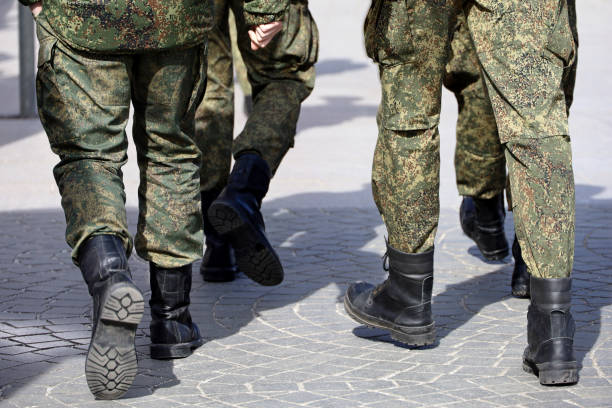
Russia’s full-scale war against Ukraine has been ongoing for nearly four years, and media outlets have repeatedly reported that citizens of Tajikistan are participating in the fighting. However, Tajikistan’s authorities state that no criminal cases have been initiated against citizens on these grounds. The country’s top law enforcement officials have explained their position.

At a press conference, Khabibullo Vokhidzoda said that over the past year no citizen of Tajikistan had been prosecuted for participation in Russia’s war in Ukraine.

He noted that many of those involved hold Russian citizenship. According to Vokhidzoda, such individuals are legally obligated to fulfill the military duties of the country whose citizenship they possess.

“Under Tajikistan’s legislation, we do not have the right to initiate criminal proceedings against citizens who also hold Russian citizenship and who participated in the conflict with Ukraine under an agreement with that country,” he said.

At the same time, he clarified that if a Tajik citizen who does not hold Russian citizenship takes part in hostilities abroad, a criminal case will be opened.

“The provisions of the Criminal Code of Tajikistan will definitely be applied to such actions. This is Article 401, Part 1 of the Criminal Code, which concerns illegal participation in armed clashes abroad,” the prosecutor general emphasized.

He added that the agency currently does not have verified official data on such cases. Vokhidzoda expressed a similar position in the summer of 2025.

Interior Minister Ramazon Rahimzoda confirmed that no criminal cases have been initiated in this category.

“We do not keep records of how many of our citizens are participating in the war in Ukraine, and we have no obligations in this regard,” he said.

For several years, media outlets have reported that thousands of Tajik nationals are involved in the conflict, with some estimates suggesting that the number of fatalities has reached into the hundreds. No official Tajik government body has confirmed or denied these figures.

On February 12, reports emerged of the death of 26-year-old Karomatullo Odinaev. His body was returned to his native village of Basmand in Devashtich district for burial. In 2025, the remains of other deceased Tajik nationals were also repatriated.

Tajikistan’s legislation prohibits the illegal participation of citizens and stateless persons in armed formations or military operations abroad. Article 401, Part 1 of the Criminal Code provides for a prison sentence of between 12 and 20 years for such offenses. However, individuals who voluntarily cease participation in armed groups before the end of a conflict and who have not committed other crimes may be exempt from criminal liability.

Approaches to the issue differ across Central Asia.

In Uzbekistan, a 38-year-old citizen was sentenced to three years in prison for participating in the war against Ukraine. According to the State Security Service, between 2022 and mid-2025, 338 criminal cases were opened over citizens’ participation in armed conflicts abroad.

In Kazakhstan, authorities reportedly opened around 700 criminal cases in 2025 involving citizens conscripted into Russian military service, with several convictions handed down. Criminal proceedings have also been initiated in Kyrgyzstan on similar grounds.

In April 2025, the Ukrainian state project I Want to Live published a list of 3,062 citizens of Tajikistan, Kazakhstan, Kyrgyzstan, and Uzbekistan who it said had signed contracts with the Russian Ministry of Defense.

Among them were 931 people from Tajikistan, 196 of whom the project reported as dead. Subsequently, an additional 446 names of Tajik nationals alleged to have died while serving in the Russian armed forces were published.

Trade Accounted for More Than a Quarter of Kazakhstan’s Economic Growth in 2025

The trade sector accounted for 26% of Kazakhstan’s total economic growth in 2025, according to the Ministry of Trade and Integration.

Data from the National Statistics Bureau show that the country’s GDP grew by 6.5% in January-December 2025, equivalent to $20.1 billion in nominal terms, bringing the total size of the economy to $305.9 billion. More than a quarter of this growth was generated by trade.

At a government meeting, the Ministry of Trade and Integration reported that domestic trade turnover reached $162.3 billion in 2025, while investment in the sector amounted to $2.6 billion. Non-resource exports totaled $41 billion, and services exports increased by 3.7% to $12.3 billion.

Speaking at the meeting, Deputy Prime Minister and Minister of National Economy Serik Zhumangarin said the ministry’s objective is not only to maintain current momentum but also to raise trade to a new level of efficiency and competitiveness. Key priorities include expanding wholesale and retail turnover, increasing the share of domestically produced goods in the market, ensuring stable supplies of socially important products, shortening the supply chain between producers and retailers, boosting exports, and systematically reducing the shadow economy in the trade sector.

Special emphasis was placed on measures to curb inflation and ensure adequate food supplies for the domestic market.

According to Zhumangarin, a preliminary pool of approximately 1,500 projects has been formed under the “Investment Order” initiative. These projects are aimed at expanding the production of goods with high import dependence, including more than 500 in the agro-industrial complex, over 400 in manufacturing, and the remainder in infrastructure. The ministry’s key task is to secure guaranteed sales channels for products manufactured within these projects.

The Times of Central Asia previously reported that trade between Central Asian countries and China exceeded $100 billion in 2025, setting a new record.

President Tokayev’s Washington Visit: Peace is Not a Bridge Too Far

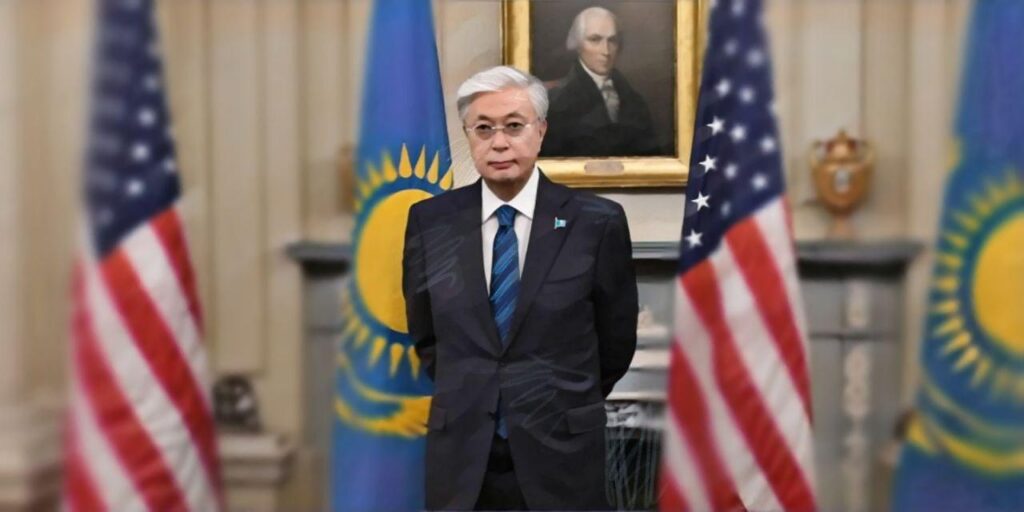
 On February 19, President Tokayev will meet President Trump for the third time in six months to advance Trump’s Board of Peace initiative – an undertaking that aligns with Kazakhstan’s long-articulated view that peace remains achievable, even in a war-torn world under seemingly impossible odds. This approach emphasizes sustained diplomacy, interfaith coexistence, economic integration, and respect for human dignity. Moreover, Washington has not only pivoted towards Central Asia but has found Kazakhstan a rational and predictable partner in an increasingly chaotic and multipolar world — one in need of credible mediators capable of engaging across political, economic, and religious divides.

In accepting Trump’s invitation to join the Board, Tokayev has assumed a role consistent with Kazakhstan’s long-articulated identity and practice as a bridge-builder. Kazakhstan’s lived experience of pluralism and balanced pragmatic diplomacy gives that role substance. Kazakhstan brings to the Board a distinctive societal composition that has, despite differences, remained cohesive and broadly tolerant.

Although it is a Muslim-majority country in Central Asia, it is also home to a substantial Christian, agnostic, and atheist population and has more than 100 ethnic groups. This demographic and religious diversity is not peripheral to its national identity and story as a relatively newly formed nation; it is foundational and will resonate as it carries out its responsibilities as a member of the Board. For decades, Kazakhstan has institutionalized interreligious dialogue as a matter of state policy rather than relying on symbolic rhetoric. In the process, it has learned to separate political ideology from the core principles of religious freedom and freedom of conscience.

The Board of Peace initiative fits squarely within Tokayev’s priorities. As he said recently, this new platform is a “timely and relevant initiative designed to deliver meaningful and long-lasting results” in tackling global conflicts, aiming to complement—not replace—institutions like the United Nations. For Kazakhstan, participation reflects the external expression of that domestic model of pluralism and balanced engagement. It builds on Kazakhstan’s long experience of managing domestic diversity while sustaining balanced relations across competing global power centers through disciplined statecraft and structured dialogue.

Kazakhstan brings this worldview into its seasoned practice of diplomacy. On the Board of Peace, Tokayev will bring experience and practical recommendations to the table. Other heads of state joining Tokayev include another Central Asian leader, President Mirziyoyev of Uzbekistan.

A Continuation of Kazakhstan’s Role as an International Mediator

This visit to Washington continues Kazakhstan’s long-standing diplomatic tradition of prioritizing dialogue without dogma, development without division, and peace through prosperity.

Tokayev has consistently framed the country’s foreign policy in measured terms: “Kazakhstan will continue to serve as a bridge-builder and peacemaker. It will also continue to choose balance over domination, cooperation over confrontation, and peace over war.” Rather than mere aspirational rhetoric, this statement, made at the 80th United Nations General Assembly in 2025, reflects a pragmatic doctrine that has guided Astana’s multi-dimensional diplomacy — maintaining constructive relations across competing power centers while advancing mediation, confidence-building, and multilateral engagement as tools of stability. This approach is structural rather than situational, having shaped Kazakhstan’s external posture for decades.

President Tokayev has consistently advocated for the principle that “diplomacy remains the only tool to manage international relations, reduce risks and strengthen security and well-being.” This approach reflects a strategic doctrine rather than aspirational rhetoric: Kazakhstan seeks stability through predictable statecraft, balanced relations, and principled mediation across competing power centers.

Kazakhstan’s readiness to provide neutral platforms for dialogue reflects that doctrine in practice. From hosting negotiations to supporting confidence-building measures, Astana has sought to position itself as a constructive intermediary rather than a partisan actor. Participation in the Board of Peace represents an extension of this long-cultivated diplomatic identity — one rooted in balance, continuity, and pragmatic engagement.

A Muslim Nation Championing Peace and Interfaith Dialogue

As a country shaped by religious and ethnic diversity, Kazakhstan has long positioned itself as an example of peaceful pluralism. For more than two decades, the Congress of Leaders of World and Traditional Religions in Astana has brought together spiritual leaders from across the globe to foster mutual understanding and respect. Tokayev has long emphasized his belief that despite differences in faith and traditions, people are “united by common aspirations and good intentions,” underscoring the vital role of inter-religious and intercultural cooperation for humanity’s future.

These efforts demonstrate that Kazakhstan’s interfaith dialogue is not merely theatrics but is embedded in its socio-political culture. Kazakhstan argues that such cooperation is essential to lasting peace, which is possible only once these values are internalized and practiced— an approach and attitude relevant for any durable peace framework.

In Washington, Tokayev will appeal to leaders who likewise recognize the need for what he describes as the “moral compasses of humanity.” In a forum that brings together leaders from across the world’s major civilizations and religious traditions, the moral framing of which Tokayev speaks is not ornamental; it underpins the trust necessary for sustained engagement across political fault lines.

Peace Through Mutual Understanding and Economic Stability

Tokayev will also underscore that economic development and connectivity are necessary complements to diplomatic dialogue. Landlocked countries like Kazakhstan encounter distinct challenges. He has argued that strengthening trade and connectivity not only drives economic growth but also fosters political stability. By backing initiatives that connect markets, develop infrastructure, and deepen regional and global economic integration, he maintains that shared prosperity and a recognition of the common good become another foundation of lasting peace.

In Tokayev’s view, peace is not merely the absence of conflict, but a positive state of mind reinforced by cooperation in trade, infrastructure, and shared growth. In his addresses at the United Nations, he linked economic development and connectivity with long-term global stability, arguing that economic integration and mutual prosperity reinforce diplomatic efforts. Support for frameworks like the Board of Peace reflects a broader conviction that religious tolerance and economic opportunity must function together as stabilizing factors in a fragmented and disoriented international system.

Looking Ahead

President Tokayev’s visit to the White House represents more than protocol or symbolism; it signals continuity in Kazakhstan’s strategic posture at a moment of global uncertainty. As a Muslim-majority nation that has institutionalized interfaith dialogue for over two decades, served as a neutral venue for negotiations, and consistently linked economic development with stability, Kazakhstan approaches this engagement with a record rather than rhetoric. Tokayev’s message has been consistent: peace requires discipline, structured dialogue, and sustained cooperation anchored in respect for human dignity.

In Washington, he is expected to reinforce the argument that stability cannot be built on maximalism, ideological rigidity, or civilizational rivalry. Instead, it must rest on predictable diplomacy, balanced partnerships, and a willingness to engage across political, economic, and religious divides. Kazakhstan’s experience managing internal diversity while maintaining constructive relations with competing global powers informs that outlook and shapes its contribution to initiatives such as the Board of Peace.

There is no room, Tokayev would say, for unnecessary ambitions, religious intolerance or extremism, and dangerous ideological imperatives that ignore the universal dignity of the human person. When states commit to responsible statecraft and principled engagement, peace is not a bridge too far.

Opinion: Tajikistan Narrows Online Extremism Liability — Debate Intensifies in Uzbekistan

Tajikistan’s Prosecutor General has reported a decrease in terrorist and extremist crimes. Officials attributed the decrease to the easing of penalties for “likes” and shares on the internet, which came into force in early May 2025, when the authorities stated that “liking” certain types of online materials and sharing them on social networks would no longer, in themselves, constitute a criminal offense.

From 2018 onward, criminal liability was applied to the distribution, storage, or public endorsement of materials deemed extremist or prohibited. According to human rights groups, more than 1,500 Tajiks were imprisoned under the policy. Following recent changes, however, Prosecutor General Habibullo Vohidov said the number of terrorist and extremist crimes had decreased by more than 23%, by 314, compared to 2024.

According to Reuters, the clarification applies to online materials deemed extremist or terrorist in nature; “likes” or shares of such content would no longer automatically trigger criminal liability.

The recent changes implemented in Tajikistan have led to heated discussions among the public in Uzbekistan, where liability for online “likes”, posts, and comments continues. International organizations have for years characterized Uzbekistan’s enforcement of online speech provisions as a form of pressure on freedom of expression.

In Uzbekistan, enforcement previously focused primarily on materials related to extremism and terrorism, but legal changes in 2021 introduced criminal liability for online “discrediting” of the president and state authorities.

Local activist Rasul Kusherbayev wrote the following on his Telegram channel: “This issue is urgent for us, too. Law enforcement agencies, which lack the ‘nerve’ to punish officials who are illegally destroying the property of citizens, are not ashamed to hold citizens liable for a ‘like’”.

Some observers argue that Uzbekistan’s legislation is more regulated compared to that in Tajikistan. While liability for prohibited content had been established in Tajikistan, the exact list of prohibited materials was not consistently disclosed. In Uzbekistan, however, this list has been regularly updated and publicly announced in recent years.

Article 244.1 and the Prohibited List

Draft decisions related to prohibited information have appeared in Uzbek legislation since the 1990s. Documents regarding information policy signed in March 1999 on the Lex.uz website speak about banned information.

However, what was included in this list was not announced in open sources in Uzbekistan for years. The draft law on disclosing the list to the public was signed in 2014. Publicly available information about the evidentiary basis for earlier cases remains limited.

The list of social network accounts and sites prohibited in Uzbekistan was last updated in January 2026. Around 1,600 channels, pages, and materials were included in the list. Specifically, it includes 249 pages and channels on Facebook, 790 on Telegram, 265 on Instagram, 167 on YouTube, 36 on the Odnoklassniki social network, and 53 on TikTok. Materials in audio, video, and text formats on websites and social networks were included.

Although the list is publicly available, questions have arisen regarding its comprehensibility and clarity. Observers argue that the breadth of the list risks encompassing ordinary religious and political expression. Activists emphasize that the breadth of the list, besides creating inconvenience, also makes it nearly impossible to remember all of them.

The May 2025 changes in Tajikistan clarified that criminal liability would apply primarily to the intentional production or dissemination of extremist materials, narrowing the scope for cases based solely on passive or incidental online interaction. According to Article 244.1 of the Criminal Code, for the preparation, storage, distribution, or demonstration of materials that threaten public safety and public order, strict penalties are set, ranging from fines to imprisonment.

In 2023, Jahongir Ulugmurodov was sentenced for distributing a prohibited nashida (an Islamic religious song) on Telegram; his testimony stated that he did not know the nashida was on the “prohibited” list. After public discussions and a series of appeals, the verdict was modified, and the sentence of three years’ imprisonment was changed to three years’ house arrest.

The case prompted online debate and appeals from activists. Most of them condemned the practice of taking the list, which is “difficult to understand,” as a basis for strict criminal liability.

Entrepreneur Zafar Hoshimov expressed his reaction to this situation: “A 21-year-old student reportedly received a three-year prison sentence for a nashida he took from YouTube (an open source) a year ago and sent to his classmates without knowing…  Only after a religious committee reviewed the nashida was it deemed harmful. After all, a young man could have listened to the song on YouTube and not understood these aspects of it.”

The government does not publish comprehensive statistics on how many people have been prosecuted in connection with prohibited materials on the internet. International human rights organizations, including Human Rights Watch and Amnesty International, have described the government’s extensive regulation of social networks as a threat to freedom of expression.

These laws remain under criticism by international human rights organizations. Specifically, the CPJ (Committee to Protect Journalists) criticized the law regarding the “discrediting the president” as early as 2021. Article 244.1, which is viewed by the international community as a threat to internet freedom, is still the subject of wide-ranging debates.

Protests against these provisions have also been voiced by local activists. Public opinion appears divided. While some have called on the government to cancel these articles, others continue to support the policy.

Government official Khushnudbek Khudoyberdiyev has emphasized that people must regulate the content they are receiving.

“There is no room for debate regarding the illegality of these actions, because Uzbekistan, as a secular state, has defined in laws exactly what is possible or what is not possible. To put it in simple terms, those guys who distributed prohibited religious materials are not defended by saying ‘they are innocent, they were wrongly accused,’ but it is being said, ‘let’s review the punishment.’ The difference between these two is very large,” he wrote on Telegram.

Other observers have expressed concern that this policy, which the government claims is for “regulation,” causes fear among the population. Activist Komil Jalilov has spoken about how these laws are contrary to the democratic principles viewed as the essence of Uzbek statehood.

“In general, in a democratic state, freedom of speech is seen as a fundamental right and a necessary condition for the development of society. In such a state, people are not tried or held liable simply for a word, for some song (or its link) (even if it is in a religious context), or for hitting ‘like’ … on some materials.”

According to Jalilov, by playing with words or using vague phrases, it is possible to adapt the execution of the law to the situation and interpret it in different ways. This allows for the interpretation of the boundary between restricting freedom of speech and regulating the flow of information.

“As for holding someone liable for concepts not defined in the law (for example, ‘aqidaparastlik’ [dogmatism/extremism]), there can be no talk of this in a democratic (or one that calls itself ‘democratic’) state,” he stated.


The views expressed in this article are those of the author and do not necessarily reflect the official policy or position of the publication, its affiliates, or any other organizations mentioned.

Uzbekistan’s 2026 Reform Program Introduces Life Imprisonment for Pedophilia

President Shavkat Mirziyoyev has approved draft reform programs setting out priority measures for 2026, along with the State Program for implementing the “Uzbekistan-2030” Strategy during what has been declared the “Year of Community and Social Prosperity,” according to the presidential press service.

The documents were presented to the president at a briefing that highlighted a new methodology drawing on advanced international experience. Officials stated that the drafts define the main policy directions and target indicators for the coming year, in line with the President’s Address to the public and the Parliament, the Oliy Majlis, and outline specific implementation mechanisms.

A distinction was drawn between the reform programs and the State Program. The reform programs consolidate initiatives proposed by the president and identify the most urgent reforms for 2026. These include modernizing mahalla infrastructure in line with the concept of a “New Uzbekistan,” shifting the economy toward technology and innovation-driven growth while stimulating domestic demand, upgrading professional training systems and reshaping the labor market, ensuring environmental sustainability and rational water use, strengthening public administration and the judicial system, and reinforcing social cohesion.

Officials emphasized a shift from “document development” to measurable results. Each initiative is accompanied by defined implementation mechanisms and key performance indicators to assess progress by the end of the year. Individual officials have been assigned personal responsibility and coordinating state bodies have been designated.

The State Program structures the implementation of the Uzbekistan-2030 Strategy targets for 2026 and includes 337 specific measures. It included the preparation of 59 key legislative and regulatory drafts across sectors, along with 12 additional drafts related to major strategic reforms.

Public consultation played a significant role in shaping the document. From January 23 to February 1, the draft State Program was published for public discussion. According to official data, more than 5 million users viewed the document online, and over 22,000 comments and proposals were submitted. More than 50 discussions were held at universities and state institutions, involving approximately 10,000 students, faculty members, and civil servants. Nearly 1,000 proposals were incorporated into the final draft.

Among the approved initiatives are stricter penalties for violence against women and children, the introduction of life imprisonment for pedophilia, reforms to mortgage and electric vehicle lending mechanisms, an increase in the share of renewable energy to 30%, strengthened anti-corruption measures, and the introduction of juries in criminal proceedings.

In a related regional context, discussions on criminal justice reform have also intensified elsewhere in Central Asia. In Kazakhstan, the Health Ministry previously proposed tightening procedures related to chemical castration for individuals convicted of sexual crimes against minors, reflecting a broader regional debate on the protection of vulnerable groups.

The Uzbek government plans to allocate 250.5 trillion UZS (more than $20.4 billion) from budgetary sources and attract an additional $50.4 billion to finance the 2026 programs. The Ministry of Justice and the Chamber of Accounts will conduct ongoing monitoring, while the Cabinet of Ministers will review progress quarterly. Reports are to be submitted to the Legislative Chamber every six months and to the president on a monthly basis.

Kazakhstani Skater Denis Ten, Killed in 2018, Is Honored As Nation Celebrates Olympic Gold  

After Olympic figure skater Mikhail Shaidorov won gold for Kazakhstan, he was quick to pay tribute to Denis Ten, a Kazakhstani who got the bronze medal in the same event at the 2014 Winter Olympics and was killed in an attempted robbery in Almaty four years later.

It was a bittersweet moment. Shaidorov, 21, was basking in his extraordinary accomplishment in Milan, Italy last weekend even as he honored an inspiring figure whose violent death in 2018 shocked Kazakhstan, a country that was delighted when Ten made it onto the podium in Sochi, Russia.

“I think my medal would have meant a lot to Denis Ten,” Shaidorov said in comments posted on social media by Kazakhstan’s Olympic team. “He opened the way for us. This path was thorny for him and for me. And I want to express my gratitude to Denis for what he did for our sport.”

A pioneer of the sport in Kazakhstan, Ten skated as a boy at a shopping center rink in Almaty and later trained in Russia. He was a popular figure and had his own skating show called “Denis Ten and Friends.”

Shaidorov followed a similar path, developed early skills in Almaty and, at one point, attending a master class led by Ten. Shaidorov received extensive training in Russia under Olympic champion Alexei Urmanov. While crediting Urmanov for helping him become a world class figure skater, Shaidorov bristles at the idea that he is closer to Russia than the country where he was born.

“I was born, lived, and still live in Almaty, and I spend a lot of time in Kazakhstan, in my beloved city,” he said in an interview with the Russian outlet Sport24 last year. “But I started skating at the Ramstore shopping center, where many figure skaters got their start, including Denis Ten. It had one of the very first rinks in Kazakhstan.”

Ten was fatally stabbed during a robbery attempt in Almaty. Two men were sentenced to long prison terms for his murder. Thousands, many weeping, turned out for Ten’s funeral at a sports venue. The skater was of Korean descent and he was also mourned in South Korea.

Shaidorov, who wears teeth braces, has a disarming quality. He has skated in a bulky panda suit in exhibitions. He performed with assurance at the Olympics as other skaters, particularly the American favorite Ilia Malinin, made missteps. It was the first gold medal for Kazakhstan in any sport at a Winter Olympics since the games in Lillehammer, Norway in 1994.

Shaidorov skated to music performed by Kazakhstani singer Dimash Kudaibergen, who said he would give a car to the Olympian for his achievement.

“You did not let down Denis, the pride of our country, my friend, your brother, whom our nation sadly lost,” the international star said in a video message to Shaidorov. “You fulfilled your duty to him, to the country, and to the people with honor and at the highest level.”

Ten also skated at times to Kudaibergen’s music during his career.