• KGS/USD = 0.01144 0%
  • KZT/USD = 0.00196 -0%
  • TJS/USD = 0.10899 -0%
  • UZS/USD = 0.00008 -0%
  • TMT/USD = 0.28490 0%
  • KGS/USD = 0.01144 0%
  • KZT/USD = 0.00196 -0%
  • TJS/USD = 0.10899 -0%
  • UZS/USD = 0.00008 -0%
  • TMT/USD = 0.28490 0%
  • KGS/USD = 0.01144 0%
  • KZT/USD = 0.00196 -0%
  • TJS/USD = 0.10899 -0%
  • UZS/USD = 0.00008 -0%
  • TMT/USD = 0.28490 0%
  • KGS/USD = 0.01144 0%
  • KZT/USD = 0.00196 -0%
  • TJS/USD = 0.10899 -0%
  • UZS/USD = 0.00008 -0%
  • TMT/USD = 0.28490 0%
  • KGS/USD = 0.01144 0%
  • KZT/USD = 0.00196 -0%
  • TJS/USD = 0.10899 -0%
  • UZS/USD = 0.00008 -0%
  • TMT/USD = 0.28490 0%
  • KGS/USD = 0.01144 0%
  • KZT/USD = 0.00196 -0%
  • TJS/USD = 0.10899 -0%
  • UZS/USD = 0.00008 -0%
  • TMT/USD = 0.28490 0%
  • KGS/USD = 0.01144 0%
  • KZT/USD = 0.00196 -0%
  • TJS/USD = 0.10899 -0%
  • UZS/USD = 0.00008 -0%
  • TMT/USD = 0.28490 0%
  • KGS/USD = 0.01144 0%
  • KZT/USD = 0.00196 -0%
  • TJS/USD = 0.10899 -0%
  • UZS/USD = 0.00008 -0%
  • TMT/USD = 0.28490 0%
08 December 2025

Kyrgyzstan Loosens Livestock Export Ban, But Only by Air

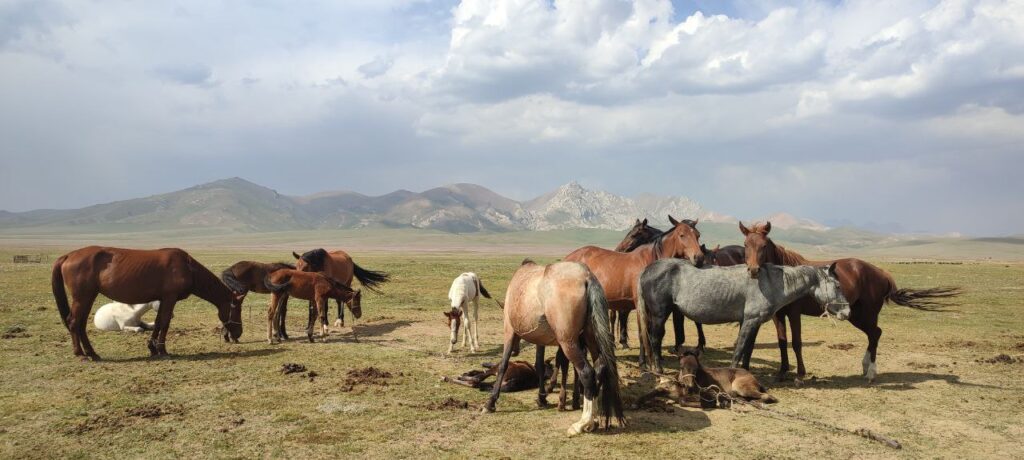
The Kyrgyz government has made an exception to its current ban on livestock exports, allowing horses to be exported by air under specific conditions.

According to an official decree, the temporary export restrictions do not apply to horses transported via aircraft. Other permitted exceptions include the transit of livestock through Kyrgyz territory, the export of animals for participation in international competitions, and the gifting of horses to foreign dignitaries and international organizations.

The exclusive right to export horses abroad has been granted to the state-owned enterprise Kyrgyz Agroholding.

Customs and border control authorities have been ordered to step up oversight to prevent illegal animal exports.

The Cabinet of Ministers initially imposed a six-month ban on the export of cattle, horses, sheep, and goats in response to rising meat prices in the domestic market. Authorities cited the widening price gap between Kyrgyzstan and neighboring countries as a key factor, with significantly higher meat prices abroad prompting farmers to sell livestock across borders.

Tajikistan’s Tigrovaya Balka Nature Reserve Under Threat

The International Union for Conservation of Nature (IUCN) has raised serious concerns about the condition of Tajikistan’s Tigrovaya Balka Nature Reserve, a UNESCO World Heritage site. The IUCN has classified the state of this rare ecosystem as “alarming,” citing deteriorating hydrological conditions and mounting risks to regional biodiversity.

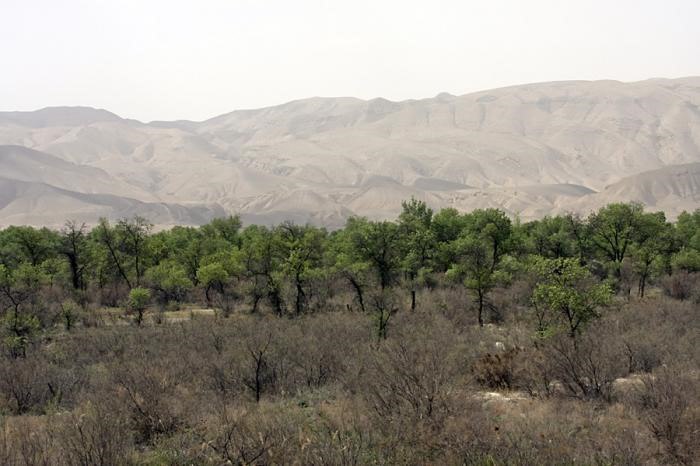
Located at the confluence of the Vakhsh and Panj rivers in southern Tajikistan, Tigrovaya Balka is home to Central Asia’s only remaining natural Tugai forest, a unique riparian ecosystem that depends on periodic flooding for its survival.

The IUCN’s World Heritage Outlook uses four categories to assess sites: “good,” “good with some concerns,” “alarming,” and “critical.” In its latest report, the organization identifies water regulation on the Vakhsh River as the primary threat to the reserve. The construction of reservoirs and increased water extraction for agriculture have disrupted the seasonal floods that historically sustained the forest.

Prior to the 1960s, before large-scale hydropower development began, spring floods replenished groundwater, restored ecosystems, and prevented soil erosion. Today, experts say, the Tugai forest relies almost entirely on surface runoff and drainage water, insufficient to maintain its ecological balance.

The IUCN report notes that approximately one-third of the Vakhsh River’s flow is diverted for irrigation, while about 20% of the remaining water consists of chemically polluted wastewater. This contamination is degrading water quality across the reserve and contributing to the decline of rare aquatic species.

“Pollution damages the aquatic ecosystem, and many species cannot withstand environmental changes,” the report states.

The IUCN emphasizes that much of the available data is observational and requires further scientific validation. It recommends a comprehensive hydrological study that considers the effects of climate change to more accurately assess the threats facing the reserve and to develop effective conservation measures.

Established on November 4, 1938, the Tigrovaya Balka Nature Reserve spans 49,700 hectares across the Dusti, Jaihun, and Kubodyon districts in the Khatlon region. Renowned for its natural beauty, it remains one of the Vakhsh Valley’s key ecological and tourist sites.

The name “Tigrovaya Balka” (Russian for “Tiger Valley” or Beshaï Palangon in Tajik) commemorates the now-extinct Turanian tiger, which once roamed these lands. The last confirmed sighting of the species in the area dates back to the 1950s.

Petropavl – A City of Two Tales

No one seems to like the name Petropavl.

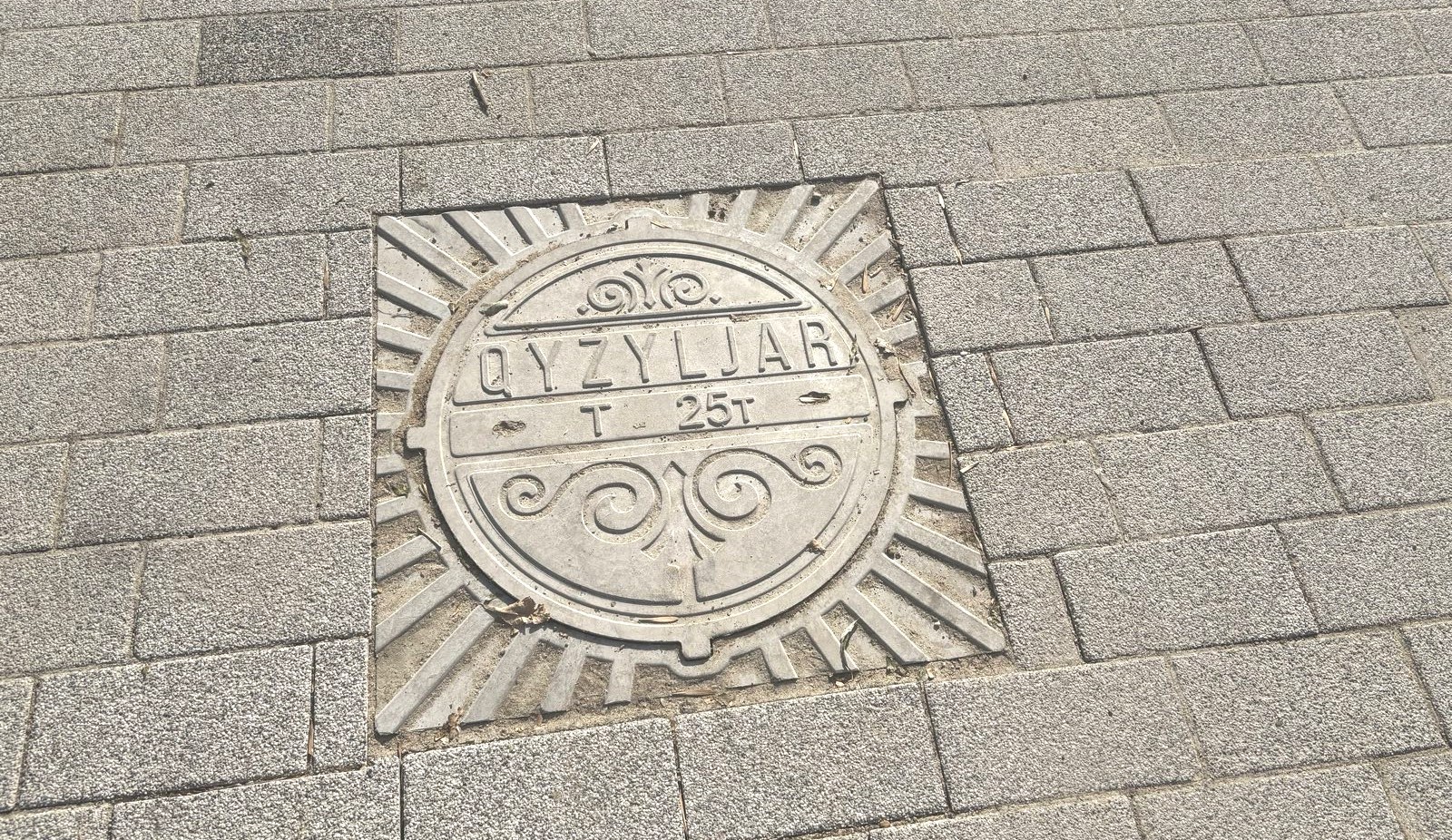
The city, situated in northern Kazakhstan in a peninsula of territory that juts into Russian Siberia, has long lived between two worlds. From monuments to manhole covers, there have long been conflicting stories about who belongs here.

In the Russian telling, the city was founded as a fortress on “empty steppe” in 1752 by Tsarist troops, named for Saints Peter and Paul – in Russian, Petropavlovsk. For over a century, it remained a frontier post that guarded the empire’s edge before the push into Central Asia in the mid-nineteenth century. Yet for Kazakhs, this place was never empty: long before the Cossacks came, nomadic Kazakhs from the Middle Zhuz grazed their herds here along the Ishim River, calling the place Qyzyljar – “the red ridge”.
Manhole covers imprinted with Qyzyljar; image: TCA, Joe Luc Barnes

Since independence, Kazakhstan has restored the names of thousands of cities, towns, and villages across the country in order to give the land a more Kazakh stamp. But Qyzyljar has not returned. Instead, the authorities’ immediate solution has been to Kazakh-ify the Russian name, leaving us with Petropavl.

It’s a fudge that satisfies no one, and the official name is rarely heard on the city streets. In this overwhelmingly Russian-speaking city, most continue to call it “Petropavlovsk,” or even “Piter,” echoing Saint Petersburg’s nickname.

Ethnic Russians

Ethnic Russians now make up just under half the population of the North Kazakhstan region. In individual cities such as Petropavl, the proportion is far higher, although official information is hard to come by. The boundaries of Kazakhstan’s provinces, or oblasts, were gerrymandered in 1997 to soften perceptions of Russian dominance, but a mere walk around the city makes it clear that about two-thirds of the population is not Kazakh.

These numbers and the region’s proximity to Russia have long made it a focus of uneasy attention. When Moscow annexed Crimea in 2014, President Vladimir Putin remarked that Kazakhstan had “never had statehood” before Nursultan Nazarbayev, and Dmitri Medvedev called it an “artificial state” in 2022 (although he subsequently claimed to have been hacked).

Other Russian lawmakers have called northern Kazakhstan “a gift from Russia,” while nationalist commentators as far back as Solzhenitsyn have called for Northern Kazakhstan to be “reunited” with Russia.

Dr. Petr Oskolkov, affiliated researcher at the Begin-Sadat Center for Strategic Studies, was part of a team that undertook research on the ethnic Russian population in Kazakhstan in 2020-21, and believes that these fears are overblown.

“Initially, there was a lack of public trust in the prospects of Kazakhstani statehood, especially among Russian-speakers. Nowadays, these doubts are absent,” he told The Times of Central Asia. “Moreover, the overall level of the identification with Kazakhstan, and the quality of life, have both grown significantly since the 1990s, so the idea [of separatism] has lost its main appeal.”
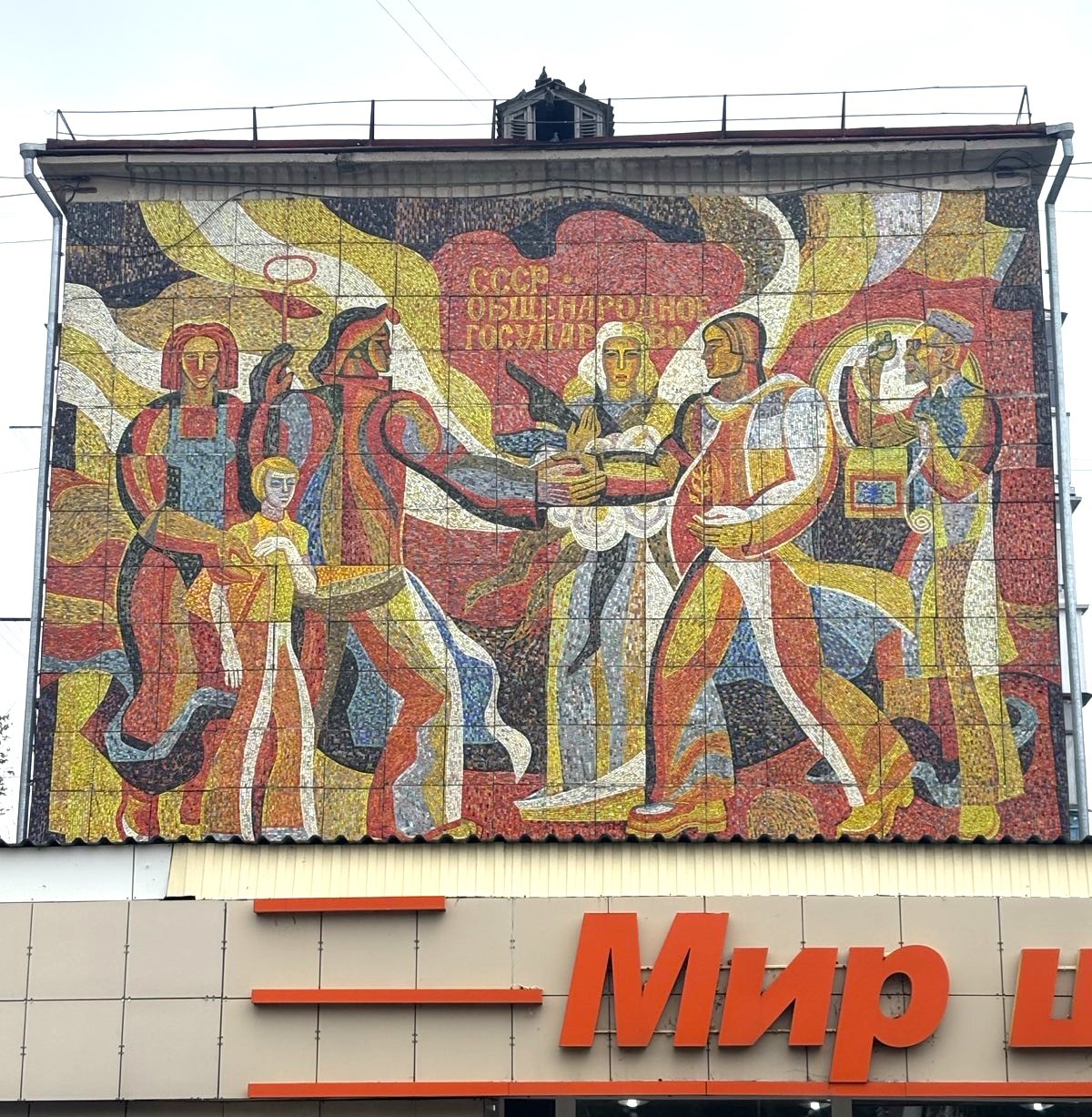
Soviet mosaic; image: TCA, Joe Luc Barnes

Nevertheless, doom-mongers in Astana worry that Petropavlovsk and other cities with large Russian populations could still become a font of potential instability, a kind of Kazakh Donbas. Indeed, in the wake of the Crimea annexation, Kazakh lawmakers expanded the definition of separatism in an attempt to head off such threats before they gained any momentum. Article 170 of Kazakhstan’s Criminal Code, which used to punish violent threats to Kazakhstan’s territorial integrity, has, for the past decade, criminalized peaceful calls to join Russia, including videos made online.

This law was most notably employed in March 2023, when several dozen people calling themselves the “People’s Council of the Workers of Petropavlovsk” declared independence, claiming they “did not recognize the collapse of the USSR” and considered Kazakhstan an “oligarchic corporation” rather than a state. Three leaders of the group were sentenced to between 7-9 years in prison.

The Kazakh Perspective

That is not to say there are no Kazakhs in the city.

Overlooking the Ishim River stands the Ablai Khan Museum, a reconstruction of the eighteenth-century residence of the last Kazakh ruler to unite the country’s three zhuz.

Aigul, a student guide, moves through rooms lined with embroidered carpets and painted maps. “We are very proud of Ablai Khan,” she told The Times of Central Asia. “He was a Batyr (warrior), but also a poet.”

From a loudspeaker overheard comes soft folk music, Elim Ai (Our Country), lamenting the defeats of the Kazakhs at the hands of the Dzungars in the 1700s. “Every Kazakh knows this,” said Aigul. “It reminds us that we survived.”

The museum’s existence is a pointed reminder that Kazakhs have been here long before the Peter and Paul Fortress was built.

The Piter & Paul restaurant gives a nod to the city’s heritage; image: TCA, Joe Luc Barnes

The Russian Perspective

For some Kazakh nationalists, a long-term psychological goal has been to “restore” the city’s Kazakh name, Qyzyljar. It received the most momentum in 2010, when a member of Kazakhstan’s parliament, Zharasbay Suleimenov, made an official request to the Prime Minister to rename the city.

The news caused the usually apathetic locals to rapidly organize against the idea. The symbol of their protest was a yellow ribbon; these appeared on fences and lampposts, coats and bags – a spontaneous protest against what many saw as erasure. The campaign succeeded, and Petropavl has remained – for now.

But the name Qyzyljar has been kept alive by other means. It became the name of the football team in 2009, and has also been bestowed on the city’s most prominent hotel, the public water company, and one of Kazakhstan’s most popular vodka brands.
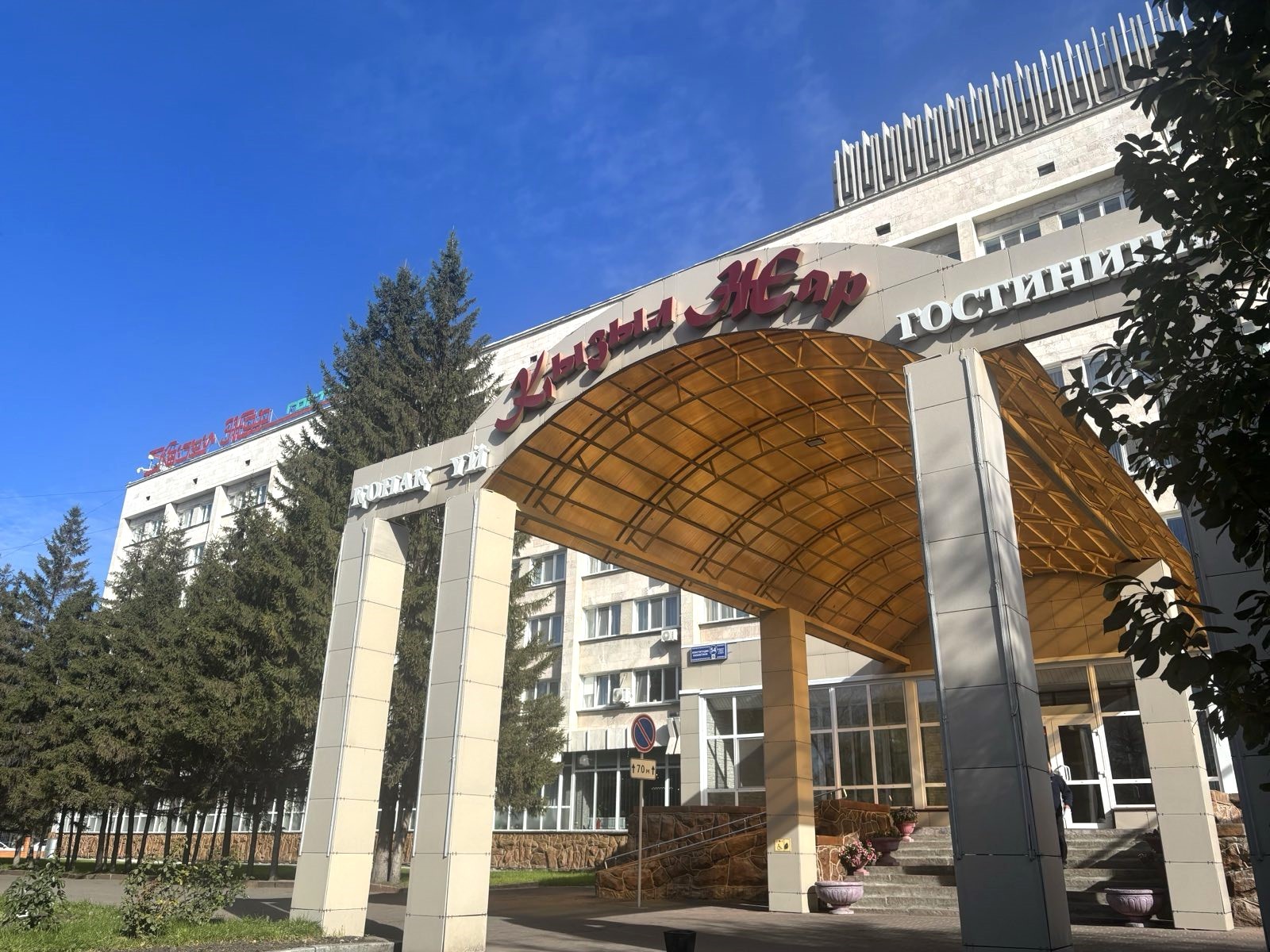
The Qyzylijar Hotel; image: TCA, Joe Luc Barnes

An editor at the city’s flagship newspaper, Petropavlovsk News, told The Times of Central Asia that articles surrounding the city’s name are always bound to generate the greatest number of hits. She points to a recent story where new manhole covers emerged on the city’s newly restored Constitution Street bearing both the names Qyzyljar and Petropavl.

Comments on the video give an idea of the depth of feeling on the issue:

“This is how it starts!” said one user.

“There is nothing in my memory apart from Petropavlovsk, and my memory is good!” said another.

A third put it more provocatively: “Qyzyljar – where’s that?”

Autumn on Constitution Street; image: TCA, Joe Luc Barnes

Exodus

But while each of these cases receives column inches, a far bigger concern is the number of people leaving the region.

“There are so few opportunities here,” Kamila, a master’s student at the University of Toronto, who has returned to visit her family, told TCA. Kamila is ethnically Kazakh, but believes people are leaving the city regardless of ethnicity. “Almost all my classmates have moved, most to Astana or Omsk, but also to Almaty, or abroad. Whether you’re Russian or Kazakh doesn’t really matter. Most of us just want a future.”

Omsk, in particular, just three hours’ drive away, is a draw for both students and workers. This has only increased since the onset of war in Ukraine. With many young Russians mobilized to the front and a simultaneous crackdown on migrant laborers, ethnic Russians from Kazakhstan have found themselves in high demand.

Kazakhstan’s government has long recognized the issue and launched various resettlement programs, giving financial incentives to people from south Kazakhstan to move north. But progress is slow. Many southerners balk at the harsh winters and lack of opportunities in the country’s north. Indeed, last year, one politician called the whole scheme a failure. Northern Kazakhstan’s population is expected to fall by 600,000 by 2050.
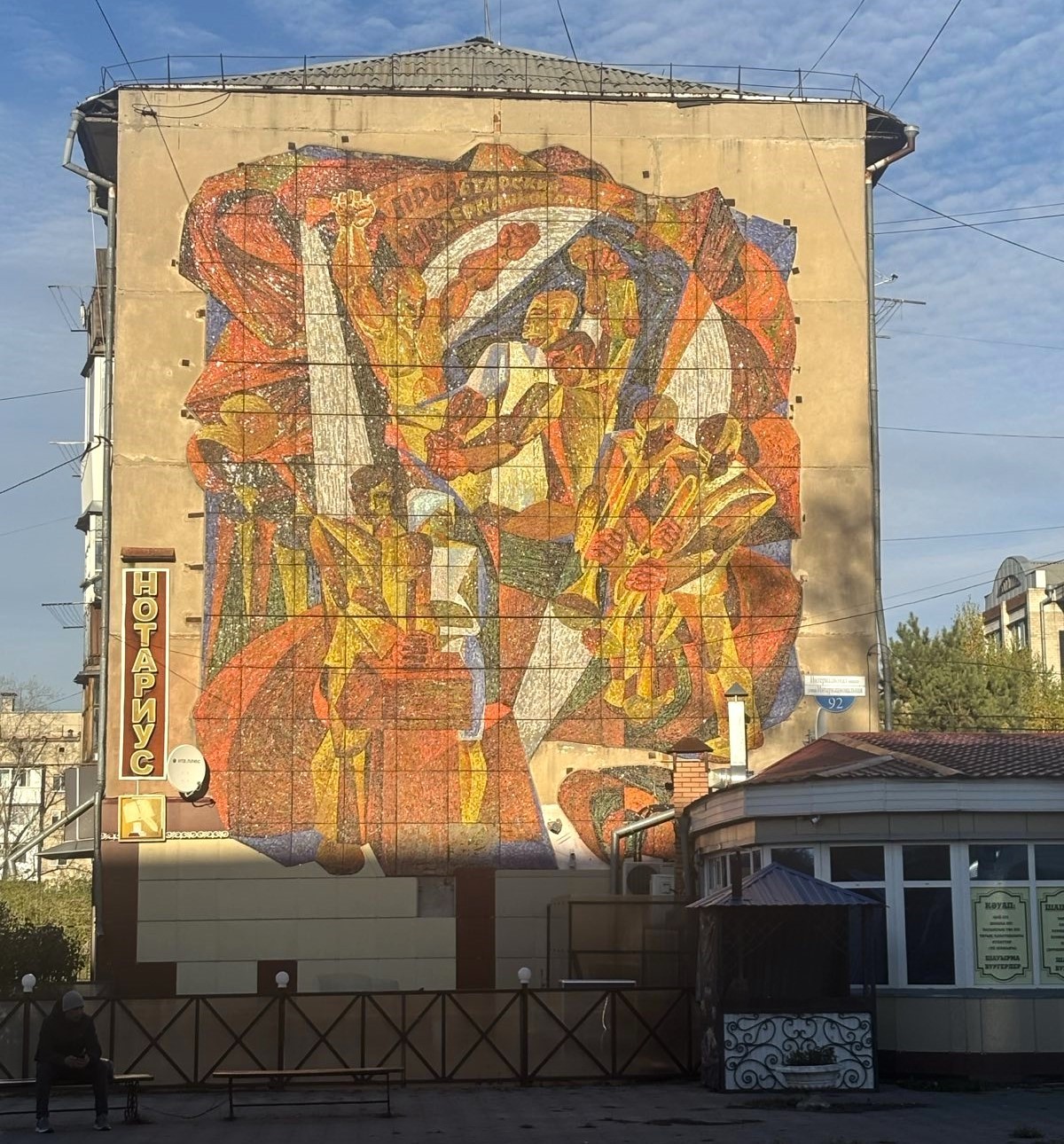
Soviet mosaic; image: TCA, Joe Luc Barnes

A Success Story

Nevertheless, some people have stayed.

Dmitriy Lapitsky is the founder of one of the city’s most renowned success stories: Lapitsky Bakehouse. Like many born and raised here, he moved to Omsk for his education but then decided to return to Petropavl to try his luck in business.

“We already had a bakery,” he told The Times of Central Asia. “But then we decided to collaborate with a local coffee shop, and the chain grew from there.”

Lapitsky now has six establishments across the city, and plans to open a café in Astana.

He feels that Petropavl’s geography has “no effect whatsoever” on the business, although he too admits that staffing can often be an issue.

“This is one of the main problems at the moment, not only in our industry but in others as well. Despite high salaries that can even compete with those in Astana, young people are trying to find their place in big cities like Astana and Almaty, or they leave for Russia,” he said.

But Lapitsky is positive about Petropavl’s future.

“Over the past two years, we’ve seen the city begin to transform; many businessmen have begun to improve their businesses and renovate old buildings. We have a cozy little city; we love it and believe in its prosperity,” he said.

“Our city isn’t about hustle and bustle, it’s about life,” said Lapitsky fondly. “We’re in no rush. Our natural surroundings give us the chance to explore lakes, forests, and more with loved ones, rather than just sit within four walls.”

Indeed, the city is remarkably walkable: the Park of the First President is one of the prettiest in the country, particularly in autumn. Meanwhile, Constitution Street, the pedestrianized central avenue, stretches over a mile through the city center, with low, red-brick houses dotted along its sides.

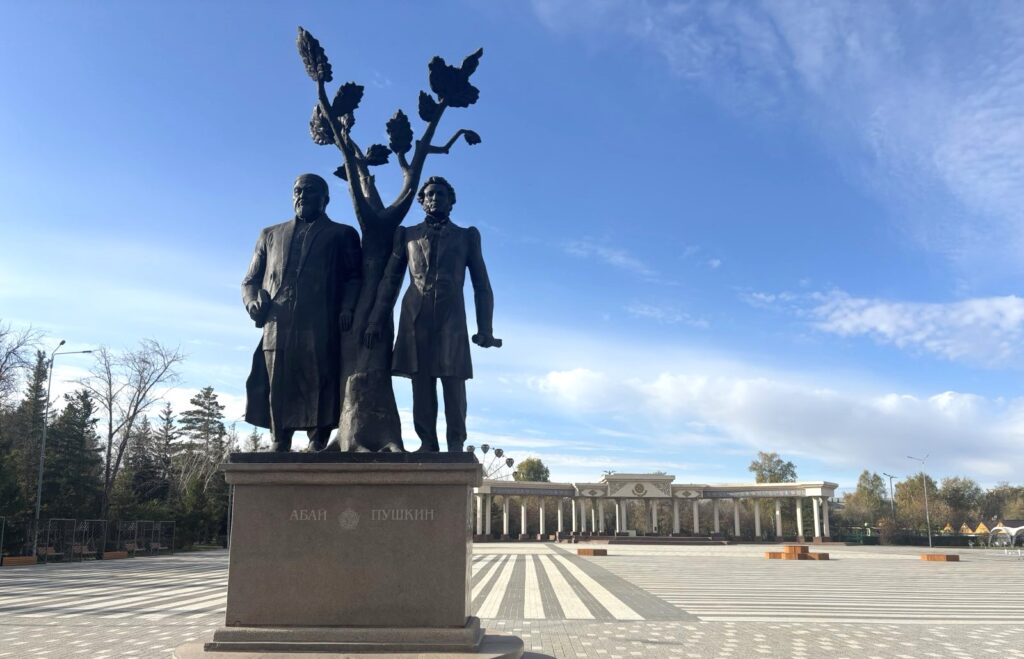
Standing along this road, opposite the Hotel Qyzyljar, is the Pushkin–Abai monument, where the two poets, one Russian, one Kazakh, stand shoulder to shoulder in bronze.

A symbol of a city that has learned that compromise isn’t always a bad thing.

C5+1 at 10: Washington Seeks Concrete Outcomes With Central Asia

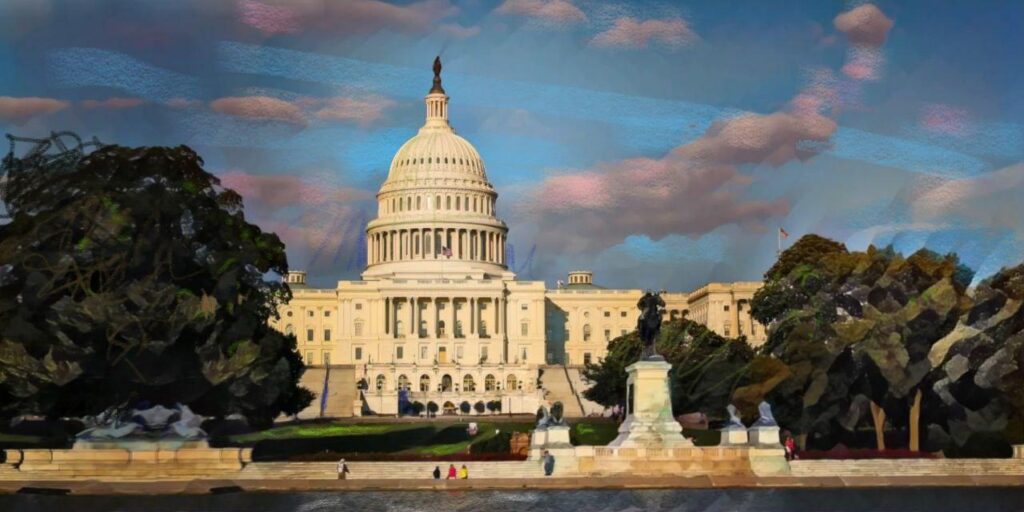
A leaders’ summit between Central Asia and the United States is scheduled for 6 November in Washington, D.C. Kazakhstan’s presidency has said the meeting will take place on that date, and President Kassym-Jomart Tokayev has confirmed his attendance. Others have confirmed as well. The meeting would bring the heads of state of Kazakhstan, the Kyrgyz Republic, Tajikistan, Turkmenistan, and Uzbekistan to Washington for only the second leaders’ level C5+1 meeting, after the first took place on the margins of the UN General Assembly in September 2023. The timing is notable as 2025 marks the C5+1’s tenth year.

Since 2015, the C5+1 format, linking the five Central Asian states with the United States, has steadily become Washington’s primary channel for strategic diplomacy in the region. With Russia constrained by the war in Ukraine and China expanding Belt and Road finance and logistics, the U.S. is building a durable presence through programmatic work, published procedures, and predictable commitments.

Public calls in the United States to mark the tenth year with a Washington meeting have focused on concrete results. Stakeholders such as U.S. and Central Asian ministries, regulators, banks, carriers, and investors now expect clear schedules for practical work on corridor performance, compliance guidance under evolving sanctions, critical minerals cooperation, grid reliability, aviation access, and investment risk-sharing. The success of the summit depends on more than words that have characterized prior summits. One metric of success could be the consummation of a final joint communiqué including 90-day and 180-day check-backs with a designated lead and co-lead for each item – identified by name, title, and agency – and a requirement to publish brief progress notes.

The summit was preceded by a visit of U.S. officials to the region: on October 25, U.S. Special Representative for South and Central Asia Sergio Gor and Deputy Secretary of State Christopher Landau arrived in Tashkent, met senior officials and U.S. companies, continued to Samarkand, and then to Almaty. The trip was not publicly scheduled; initial confirmation came via embassy Telegram posts. Discussions reportedly covered rare-earth processing and other sensitive cooperation areas, signaling agenda-setting ahead of November 6.

How Washington Can Regularize Intensified C5+1 Coordination

This meeting would normalize leaders’ level C5+1 engagement after the first such gathering in September 2023. That shift matters. Since 2015, the format has moved from occasional ministerials to a steadier dialogue built around defined themes, even when leaders have met on the sidelines of larger events. With Washington now hosting, observers will compare outcomes to the 2023 joint-statement themes – security, economic resilience, sustainable development, climate, and sovereignty – and to readouts that set a precedent for presidential-level participation. In this sense, the Washington summit represents not only a procedural step but a test of whether the United States can institutionalize its Eurasia policy with a more proactive diplomacy. An annual leaders’ cycle, spring ministerials, and quarterly sherpa meetings pre-scheduled through Q4 2026 would signal a commitment to deepen the process.

In Washington, there is bipartisan pressure to show continuity and delivery in this anniversary year. The executive branch needs to translate prior promises into named tasks with fixed dates. Tools exist via the Development Finance Corporation (DFC) for risk-sharing, technical assistance, and joint guidance on export controls and financial-crime compliance; however, these will matter only if agencies name co-chairs, locations, and calendars, and then meet them.

Central Asia Seeks Practical Results

Regional priorities are practical: trade, finance, and security. Governments are seeking to widen their options while avoiding new dependencies and addressing immediate needs. These needs include Middle Corridor customs harmonization and digital documentation, new civil-aviation routes to add capacity, grid reliability to support industry and exports, banking channels that manage sanctions exposure without over-correction, and clear coordination on border management and Afghanistan-adjacent risks. These priorities reflect a broader trend across the region since 2022: a turn toward pragmatic economic sovereignty and diversified partnerships, as Central Asian states hedge between Moscow, Beijing, Brussels, and Washington. Leaders will be judged by whether they instruct technical bodies to deliver time-bound outputs that reduce friction for firms and financiers. Benchmarking corridor procedures against recent diagnostic work underscores why process reforms, not just hard infrastructure, determine throughput.

The likely pillars of the agenda are connectivity and trade corridors, energy and critical minerals, and sanctions compliance and security. Capacity matters for connectivity and trade corridors, but results are often decided by the procedures used. Pilot projects could be launched at named crossings – for example, Ak-Jol/Korday (Kyrgyzstan–Kazakhstan), Zhibek Zholy–G‘ishtkuprik (Kazakhstan–Uzbekistan), and Panjakent–Jartepa (Tajikistan–Uzbekistan) – with responsible agencies named and a schedule for public reporting. Such specificity would distinguish the C5+1 from the region’s more declaratory forums, such as the SCO or CSTO, which often produce communiqués without measurable follow-up.

In aviation, a plan for route development could pair regulators and carriers around specific feasibility studies, such as Almaty–Frankfurt for freighter uplift, and Tashkent–New York for long-haul passenger service. Dates and projects will impress more than general expressions of support. On energy and critical minerals, U.S. support can help where DFC and export-credit tools share midstream and processing risk, where grid-efficiency projects cut technical losses in measured steps, and where uranium and other inputs move under transparent, long-dated contracts. That approach would position Washington as a facilitator of private-sector investment rather than a counterweight to Chinese or Russian state capital, an important distinction in the region’s eyes.

From Sequencing Work to Measurable Outcomes

Leaders can set direction, but ministries must then sequence the work: pre-feasibility and permitting, then finance, then construction. The results of the C5+1 leaders’ summit in 2023 provide a policy base for proceeding in this manner, but they did not pre-commit to numbers. A minerals working group that publishes by the end of Q1 2026 a shortlist of three processing projects with estimated capex ranges and indicative purchase commitments would be a material step. Such visible benchmarks would reassure both investors and skeptical regional publics that the C5+1 is not merely another talking shop.

On sanctions compliance, trade continues to be shaped by secondary-sanctions exposure, export-control observance, and risks assumed by correspondent banks. A useful outcome of the summit would be a standing technical forum co-chaired by U.S. and C5 authorities that shares guidance notes and anonymized cases with banks and exporters. On security, emphasis will likely remain on border management, counter-terrorism cooperation, and information exchange. Any communiqué would do well to schedule a first compliance-forum meeting within 60 days, with a commitment to a quarterly digest of guidance and case studies thereafter. This would help local banks and traders navigate Western compliance regimes without freezing legitimate commerce, a key regional grievance since 2022.

Outcomes from the summit that would matter include: corridor targets or customs-harmonization pilot projects with dates and named border points; a minerals-supply-chain working group with designated U.S. and C5 co-chairs and a first meeting on the calendar; a sanctions-compliance forum that commits to publish guidance and case digests; and an aviation track that pairs regulators with carriers for route-development facilitation. Over-programming beyond interagency capacity must be avoided, but credibility will rest on milestones, clear instruments, and prompt ministerial follow-through. This balance between ambition and deliverability will determine whether Washington’s renewed attention translates into durable influence.

Measurable Progress

Chinese finance in Central Asia moves quickly and at scale; Russian links persist through energy, logistics, and labor migration. The United States adds value where it lowers transaction costs: customs and data interoperability at border crossings, bankable structures for minerals and grid projects, and route development linking Central Asian airports to global hubs.

Progress on corridor governance, minerals chains, and aviation markets over the next 12–24 months will indicate whether this summit strengthens regional agency. A practical indicator is a 10–20% reduction in average clearance times at the named border crossings, and the publication of at least one long-haul aviation feasibility study by mid-2026.

The broader takeaway for Central Asia is incremental but real. A durable leaders’ track that produces verifiable, time-bound outputs would shift standards and procedures toward predictability across trade, energy, finance, and aviation. Such an approach would support cooperation under competitive geoeconomic conditions and increase the region’s ability to turn multi-vector intent into operational autonomy. If Washington follows through, the C5+1 could evolve from a symbolic dialogue into a practical architecture for regional resilience, something neither Moscow nor Beijing currently offers.

If by a year from now two pilot border crossings have institutionalized new procedures and one minerals-processing project has agreed on a term sheet (a non-binding summary of the key commercial and legal terms the parties use to draft final binding contracts), the region will have taken a measurable step toward autonomous operating capacity. For both Washington and Central Asia, that would mark not only policy progress but the emergence of a new standard for results-based regional diplomacy.

Cyprus as a Mirror of Turkish Geopolitics: How Ankara Uses Northern Cyprus to Project Influence in Central Asia

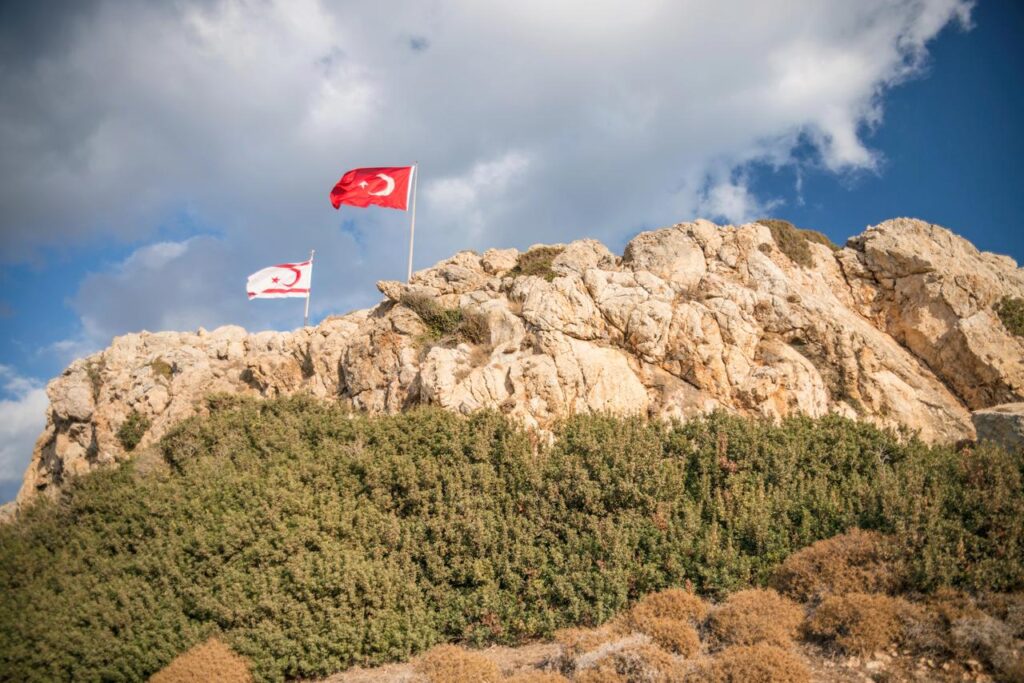
Northern Cyprus has become a microcosm of Turkish foreign policy, a space where Ankara combines military presence, the ideology of “Turkic brotherhood,” and economic leverage. For Turkey, this territory is not merely a long-standing geopolitical dispute but a laboratory for a new diplomatic model centered on the vision of a “great Turkic world.”

As noted by Stratfor, despite the decisive victory of Republican Turkish Party leader Tufan Erhürman in the October 19, 2025, presidential elections in the self-declared Turkish Republic of Northern Cyprus (TRNC), a candidate who supports renewed negotiations with the Republic of Cyprus and advocates for a federal model, Ankara has shown no intention of revising its entrenched two-state doctrine. Analysts suggest Turkey may apply economic pressure and diplomatic isolation, including suspension of subsidies and credit lines, should Erhürman attempt to implement a federal solution.

Concurrently, Turkey is lobbying for the TRNC’s recognition within the Organization of Turkic States (OTS), aiming to set a symbolic precedent: if Turkic-speaking nations will not support each other, who will? For Central Asia, this initiative reflects Ankara’s commitment to unifying the Turkic world under its political leadership, extending far beyond cultural solidarity.

Political Implications for Central Asia

Turkey’s push to incorporate the TRNC into the OTS shifts the organization from a cultural bloc to a geopolitical instrument. Should Northern Cyprus gain observer status, Ankara will likely expect symbolic support from its Turkic partners.

This poses a significant dilemma for Central Asian states. Aligning with Turkey could be perceived by Western actors as a breach of international law, while maintaining neutrality might be viewed as a rejection of Turkic unity. Kazakhstan, Uzbekistan, and Turkmenistan have so far emphasized adherence to international law and sovereignty. At the April 2025 EU-Central Asia summit in Samarkand, these states jointly reaffirmed UN Security Council resolutions from the early 1980s, which declared the TRNC’s independence and all related separatist actions legally invalid.

Kyrgyzstan may face a more delicate challenge due to its deep humanitarian and educational ties with Turkey.

Northern Cyprus thus serves as a litmus test for Turkic integration: how closely can nations align without compromising their political autonomy?

Economic and Energy Dimensions

Cyprus plays a strategic role in Turkey’s energy policy, linking the Caspian region, the Caucasus, and the Eastern Mediterranean. Turkish control over Northern Cyprus bolsters its influence over maritime logistics, offshore gas development, and export corridors.

This holds direct relevance for Central Asia. A stronger Turkish position in the Mediterranean enhances its leverage over energy transit routes from the Caspian to Europe, particularly in relation to the Trans-Caspian pipeline and the Middle Corridor.

Over time, Ankara is expected to use energy infrastructure as a tool for political engagement, promoting an “economy of Turkic solidarity”, offering mutual benefits, but often tied to strategic conditions.

Security and Military Presence

The TRNC functions as a prototype for Turkey’s military protectorate model, a way to retain control while presenting itself as a guarantor of stability. This model is echoed across the Turkic region through Turkey’s expanding military partnerships with Azerbaijan, Kazakhstan, Uzbekistan, and Kyrgyzstan.

Northern Cyprus operates as a “security showroom,” illustrating the perceived benefits of alliance with Turkey. Yet deeper military ties with Ankara may provoke unease in Moscow and Beijing, which view a consolidated Turkic defense bloc as a threat to their regional interests. As such, Turkey is emerging not just as a partner, but as an assertive strategic actor vying for regional leadership.

Ideological and Symbolic Dimensions: The “Turkic Nation”

In Turkish political discourse, Cyprus is framed not simply as a territory, but as a symbol. The refrain “Türkiye never left its friends” encapsulates Ankara’s ideological expansion, casting solidarity as a willingness to support even unrecognized entities.

In Central Asia, this message is conveyed subtly, through cultural programs, religious initiatives, and media outreach. If TRNC recognition within the OTS becomes a reality, it could set a precedent for prioritizing ethnic unity over international norms. This would be particularly problematic for Kazakhstan and other multiethnic societies, potentially undermining foundational principles of their foreign policy. In such a shift, Turkey would position itself less as an economic ally and more as an ideological coordinator.

Forecast: Navigating Between Solidarity and Sovereignty

In the medium term, Turkey is expected to continue advocating for the TRNC’s inclusion in the OTS, using both economic incentives and diplomatic persuasion. Kazakhstan will likely uphold its stance as a mediator and proponent of international law, while Ankara intensifies its influence through humanitarian and cultural engagement across the region.

Should tensions between Turkey and the EU or the US escalate, Central Asia could serve as a strategic rear base for Ankara, further enhancing Turkey’s interest in the region. However, overly assertive pressure from Turkey risks pushing some states closer to China or Russia as counterweights. Turkey will thus need to balance economic and symbolic tools with diplomatic finesse.

Final Assessment

For Ankara, Northern Cyprus represents more than a geopolitical dispute; it is a test case for constructing a new political order based on identity rather than legality. If Turkey succeeds in legitimizing the TRNC within the OTS, it will redefine Turkic integration as a geopolitical enterprise rather than a cultural one.

For Central Asia, this marks a critical juncture. The region must remain engaged in Turkic cooperation without becoming subsumed into a Turkish-led geopolitical project. Kazakhstan, in particular, bears responsibility as a stabilizing force, asserting that genuine unity can only be achieved through mutual respect for sovereignty and adherence to international norms.

Northern Cyprus is not merely a territory, it is a symbol of how far Turkey is prepared to go to assert leadership, and of how resolutely the Turkic nations will defend their own space for independent decision-making.

Tokayev Meets with U.S. Envoys Ahead of C5+1 Summit

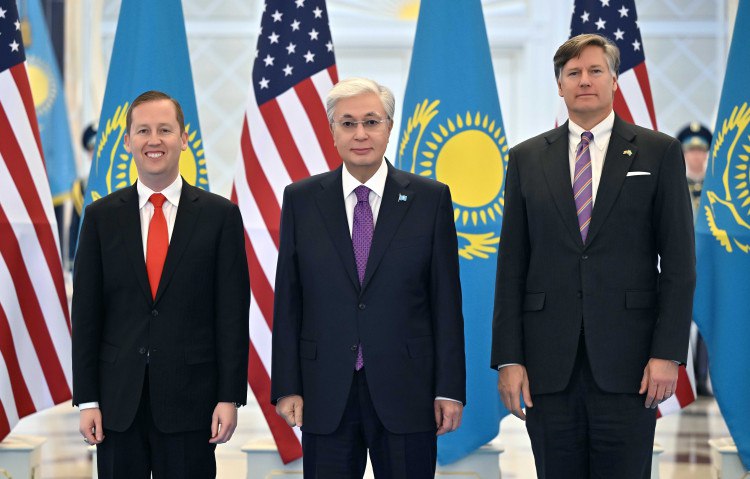
Kazakhstan’s President Kassym-Jomart Tokayev met in Astana with Sergio Gor, U.S. Special Representative for South and Central Asia, and Christopher Landau, U.S. Deputy Secretary of State, to discuss the future of the Kazakh-American expanded strategic partnership and preparations for the upcoming C5+1 summit in Washington.

Tokayev expressed confidence that the summit, scheduled for November 6, would be productive in setting priorities for long-term cooperation. He emphasized Kazakhstan’s commitment to strengthening trade, economic, and investment ties with the United States.

Tokayev also conveyed his appreciation to U.S. President Donald Trump for the invitation to the summit. He voiced Kazakhstan’s support for the domestic and foreign policies pursued by the Trump administration and praised its role in promoting global peace and security.

Sergio Gor delivered Trump’s greetings and reaffirmed the strategic importance of Central Asia in U.S. foreign policy. He noted that the upcoming summit is expected to elevate bilateral cooperation to a new level.

The leaders discussed opportunities for deepening cooperation in energy, critical minerals, digitalization, and the development of transport and logistics infrastructure.

Earlier in their visit, the U.S. delegation traveled to Almaty, where Gor and Landau met with local business leaders and executives from American companies operating in Kazakhstan.

They also toured the Museum of Modern Art, the Shymbulak ski resort, and the Medeu high-altitude ice rink.

“Almaty is Kazakhstan’s largest city and financial capital, located at the foot of the Zailiyskiy Alatau mountains. Just half an hour’s drive from the city is the world-famous Shymbulak ski resort, where we enjoyed warm Kazakh hospitality. I’m starting to feel at home here, surrounded by golden eagles and my new Kazakh friends!” Landau wrote on social media.

The date of the C5+1 summit was first reported in media outlets before being confirmed through official correspondence between Tokayev and Trump. Uzbek media later corroborated the event, citing sources close to President Shavkat Mirziyoyev’s administration, followed by confirmation from Kyrgyz President Sadyr Japarov.