• KGS/USD = 0.01144 0%
  • KZT/USD = 0.00196 -0%
  • TJS/USD = 0.10899 -0%
  • UZS/USD = 0.00008 -0%
  • TMT/USD = 0.28490 0%
  • KGS/USD = 0.01144 0%
  • KZT/USD = 0.00196 -0%
  • TJS/USD = 0.10899 -0%
  • UZS/USD = 0.00008 -0%
  • TMT/USD = 0.28490 0%
  • KGS/USD = 0.01144 0%
  • KZT/USD = 0.00196 -0%
  • TJS/USD = 0.10899 -0%
  • UZS/USD = 0.00008 -0%
  • TMT/USD = 0.28490 0%
  • KGS/USD = 0.01144 0%
  • KZT/USD = 0.00196 -0%
  • TJS/USD = 0.10899 -0%
  • UZS/USD = 0.00008 -0%
  • TMT/USD = 0.28490 0%
  • KGS/USD = 0.01144 0%
  • KZT/USD = 0.00196 -0%
  • TJS/USD = 0.10899 -0%
  • UZS/USD = 0.00008 -0%
  • TMT/USD = 0.28490 0%
  • KGS/USD = 0.01144 0%
  • KZT/USD = 0.00196 -0%
  • TJS/USD = 0.10899 -0%
  • UZS/USD = 0.00008 -0%
  • TMT/USD = 0.28490 0%
  • KGS/USD = 0.01144 0%
  • KZT/USD = 0.00196 -0%
  • TJS/USD = 0.10899 -0%
  • UZS/USD = 0.00008 -0%
  • TMT/USD = 0.28490 0%
  • KGS/USD = 0.01144 0%
  • KZT/USD = 0.00196 -0%
  • TJS/USD = 0.10899 -0%
  • UZS/USD = 0.00008 -0%
  • TMT/USD = 0.28490 0%
08 December 2025

Citizens of Tajikistan and Kyrgyzstan Warned Against Non-Essential Travel to Russia

Citizens of Tajikistan and Kyrgyzstan are warned against traveling to Russia, reportedly due to “additional security measures and enhanced border controls” imposed by the Russian government.

On September 10, the Tajik embassy in Moscow advised Tajiks “to temporarily refrain from traveling to the Russian Federation unless necessary.”

Similar advice was issued by Kyrgyzstan’s Ministry of Foreign Affairs the same advice on September 5, in the statement:  “In connection with the continuation of additional security measures introduced on the territory of Russia and the regime of enhanced control over the passage of foreign citizens across the state border, the Embassy of the Kyrgyz Republic in the Russian Federation recommends that citizens of the Kyrgyz Republic who do not have compelling reasons for entering the Russian Federation temporarily refrain from traveling to its territory until the above measures are lifted.”

Given that remittances sent by Central Asian immigrants are the primary source of financial support for many families, the warning may have serious economic consequences for immigrants working in Russia. For context, this warning is one of many. After the Crocus City Hall terrorist attack, restrictions on the entry of Central Asians into Russia were announced several times.

The issue of immigrants remains controversial in Russia. For example, a Russian diplomat recently proposed a temporary moratorium on Russian citizenship for Central Asians, whilst another deputy suggested that the government impose a ban on immigrants.

Uzbekistan Begins Processing Afghan Crude to Alleviate Energy Shortages

Uzbekistan’s Saneg oil refining company has begun processing Afghan crude oil at its Fergana refinery, to help ease Afghanistan’s energy shortages under Taliban rule. The first shipment of oil was transported by rail from the Hairatan terminal in Afghanistan’s northern Balkh province.

Afghanistan faces a significant energy crisis due to supply issues from Iran and Turkmenistan. The Taliban wants to restart domestic oil production to reduce its dependence on imports. Afghan crude oil, mainly extracted from the Amu Darya basin, is not fully used because Afghanistan needs more facilities to refine it. However, fortunately for Afghanistan, its neighboring countries to the north and west are willing and capable of supplying electricity, gas, and light oil products so that the country can, to some extent, improve its energy security.

The refining agreement represents one of the first cross-border collaborations for Afghan crude oil, despite the historically complex relations between Afghanistan and Uzbekistan.

Other countries, such as Russia and Kazakhstan, are looking at similar opportunities to gain market share and indirectly support the Afghan economy. This shows how the Central Asian countries are changing their strategies while Afghanistan is isolated internationally. For example, at the end of April this year, a delegation from Kazakhstan paid an official visit to Kabul, where a meeting of the Kazakh and Afghan businesses and an exhibition of Kazakh products were held. The visit to Kabul shows Astana’s intention of using trade to improve Kazakhstan’s relations with the new Afghan government.

Saneg’s initiative to process Afghan oil is part of Uzbekistan’s strategy to boost its refining and seize business opportunities in a volatile region. Exporting refined products to Afghanistan could bring extra revenue, and help a struggling neighbor. However, political instability and fragile relations may limit the long-term benefits. Companies from Russia are also interested in similar deals.

Uzbekistan has also signed five agreements on mining projects in Afghanistan. These agreements, worth $1.15 billion, were part of a larger package of 35 agreements and memoranda of understanding signed between the two countries. These agreements increased Uzbekistan’s investment in Afghanistan by more than $2.5 billion.

Kazakhstan Proposes Lowering Age of Criminal Responsibility

Kazakhstan has proposed lowering the age of criminal responsibility

Leading the initiative  at a plenary session, Mazhilis Deputy Magerram Magerramov emphasized, “We, legislators, should probably revise the age of criminal responsibility threshold for some crimes, establishing responsibility not from 14, but from 12 years old, for example, in cases of rape.”

Magerramov drew attention to unsafe conditions in schools, citing cases of violence and murder committed by minors. In his opinion, bullying, and romanticizing  banditry within the school environment create the basis for violence that continues in the army.

The deputy also stressed the lack of a social protection system and called for strengthening educators’ roles in preventing schoolchildren’s destructive behavior. To this end, he recommended a revision of current approaches to the prevention of criminal behavior among teenagers in tandem with increased attention to moral and ethical education.

Magerramov noted that Kazakhstan needs a comprehensive approach by authorized bodies to solving these problems as well as a revision of the current system which allows juvenile offenders to avoid punishment because of their age.

In June 2024, a new law came into force in Kazakhstan, which introduced liability for bullying and cyberbullying of minors. However, the deputy believes that additional measures are needed to combat juvenile violence.

The age of criminal responsibility varies from country to country. In Japan, Ireland, and Morocco, children can be held responsible for crimes from the age of twelve. In India, the minimum age of responsibility is set at 12, with the caveat that for serious offenses such as murder or rape, the court may take into account the child’s conscious actions.

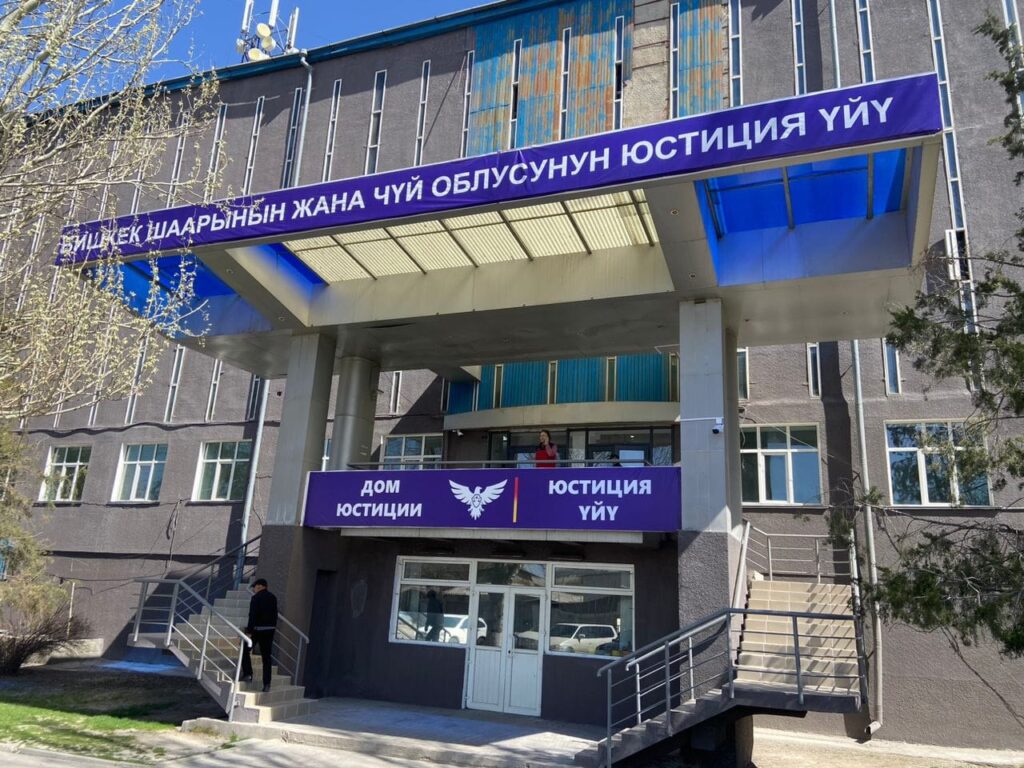
Kyrgyzstan Adds First Three Organizations to List of Foreign Agents

The Kyrgyz Ministry of Justice has posted a list of non-profit organizations that have been given the status of “foreign agent”.

On August 27 the Cabinet of Ministers of Kyrgyzstan adopted a decree “On non-profit organizations”. The new law came into force on September 9, since when any NPO engaged in political activities and receiving funding from abroad must apply for inclusion as a foreign agent.

The first three organizations to declare themselves as “foreign agents” are the Eurasian Club association of entrepreneurs, the business association JIA, and a branch of the environmental organization Fauna and Flora International.

“Applications shall be submitted to the authorized body to maintain the register of NPOs within two months from the date of entry into force of this decree,” the Ministry of Justice explained to The Times of Central Asia. After receiving an application, the ministry has 60 days to verify the information provided.

The law stipulates that foreign agent status can be removed if an organization has not received funds or property from foreign sources in the past 12 calendar months, or if it has not been engaged in political activity in the past 12 months.

Kyrgyzstan’s president Sadyr Japarov has promised the public that the authorities would not prosecute foreign agents and their representatives. “I, as head of state, guarantee that there will be no persecution. We are not a nuclear country. We are not going to fly into space yet. Our state has no secrets to hide from you and your donors,” Japarov said earlier this year.

Adoption of Latin-Based Common Turkic Alphabet

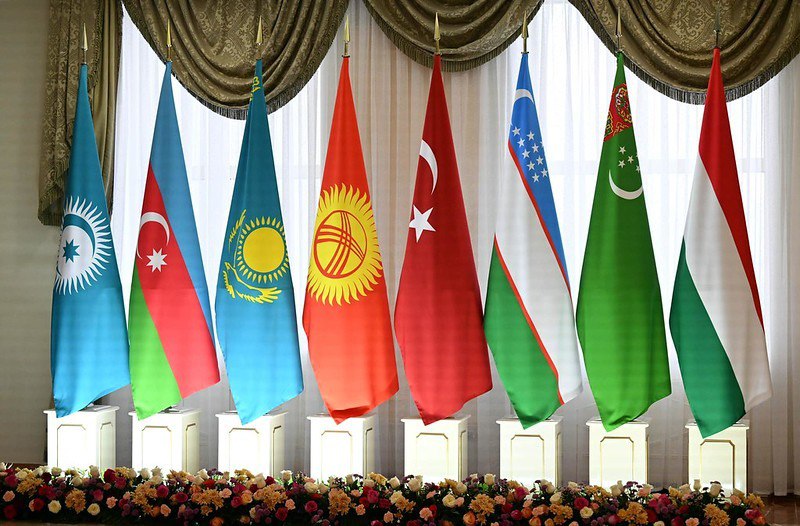
The Turkic Academy has announced that the Turkic World Common Alphabet Commission is to adopt a Latin-based Common Turkic Alphabet consisting of 34 letters.

At a meeting in Baku (Azerbaijan) on September 9-11, the Commission finalized its two-year development of a proposed standard alphabet for Turkic languages in which each letter in represents different phonetic sounds in Turkic languages.

Emphasizing its historic significance, the Turkic Academy stated that the development of the Common Turkic Alphabet, first proposed by scientists in 1991, promotes mutual understanding and cooperation among the Turkic peoples while preserving their linguistic heritage.

Based in Astana, Kazakhstan, the Turkic Academy is an international organization established under the Organization of Turkic States. Founding member states include Azerbaijan, Kazakhstan, Kyrgyzstan, and Türkiye, with Hungary and Uzbekistan joining as observers in 2018 and 2022, respectively.

 The Organization of Turkic States currently comprising Azerbaijan, Kazakhstan, Kyrgyzstan, Turkey, Uzbekistan and Turkmenistan, with Hungary and the Turkish Republic of Northern Cyprus as observers, was founded in 2009 to foster comprehensive cooperation among Turkic-speaking nations.

The alphabet issue in post-Soviet Turkic-speaking countries dates back to 1929, when the Soviet government replaced traditional Arabic-based alphabets used by Muslim minorities in the Soviet Union with Latin-based national alphabets. In 1940, the Latin alphabet was replaced with Cyrillic, used for the Russian language. After the breakup of the Soviet Union in 1991, former Soviet republics of Azerbaijan and Turkmenistan switched to Latin-based alphabets, while Uzbekistan has used both Latin and Cyrillic alphabets since 1992.

In 2017, Kazakhstan’s then-President Nursultan Nazarbayev ordered the government to develop a Latin-based alphabet for the Kazakh language. The switch, initially planned for 2025, was then postponed till as late as 2031.

Citing the complexity of a transition from the Cyrillic to a Latin-based alphabet, in June 2022, Nazarbayev’s successor, President Kassym-Jomart Tokayev stated that linguistic reform should not be rushed.

Kyrgyzstan is the only post-Soviet Turkic-speaking nation committed to the use of the Cyrillic alphabet.

Talk about switching from Cyrillic to Latin in post-Soviet Central Asia has always irritated Moscow, which considered such moves by the former Soviet republics as a means of distancing themselves from Russian influence.