• KGS/USD = 0.01144 0%
  • KZT/USD = 0.00214 0%
  • TJS/USD = 0.10508 0.48%
  • UZS/USD = 0.00008 0%
  • TMT/USD = 0.28490 -0.28%
  • KGS/USD = 0.01144 0%
  • KZT/USD = 0.00214 0%
  • TJS/USD = 0.10508 0.48%
  • UZS/USD = 0.00008 0%
  • TMT/USD = 0.28490 -0.28%
  • KGS/USD = 0.01144 0%
  • KZT/USD = 0.00214 0%
  • TJS/USD = 0.10508 0.48%
  • UZS/USD = 0.00008 0%
  • TMT/USD = 0.28490 -0.28%
  • KGS/USD = 0.01144 0%
  • KZT/USD = 0.00214 0%
  • TJS/USD = 0.10508 0.48%
  • UZS/USD = 0.00008 0%
  • TMT/USD = 0.28490 -0.28%
  • KGS/USD = 0.01144 0%
  • KZT/USD = 0.00214 0%
  • TJS/USD = 0.10508 0.48%
  • UZS/USD = 0.00008 0%
  • TMT/USD = 0.28490 -0.28%
  • KGS/USD = 0.01144 0%
  • KZT/USD = 0.00214 0%
  • TJS/USD = 0.10508 0.48%
  • UZS/USD = 0.00008 0%
  • TMT/USD = 0.28490 -0.28%
  • KGS/USD = 0.01144 0%
  • KZT/USD = 0.00214 0%
  • TJS/USD = 0.10508 0.48%
  • UZS/USD = 0.00008 0%
  • TMT/USD = 0.28490 -0.28%
  • KGS/USD = 0.01144 0%
  • KZT/USD = 0.00214 0%
  • TJS/USD = 0.10508 0.48%
  • UZS/USD = 0.00008 0%
  • TMT/USD = 0.28490 -0.28%

From Security Threat to Economic Partner: Central Asia’s New ‘View’ of Afghanistan

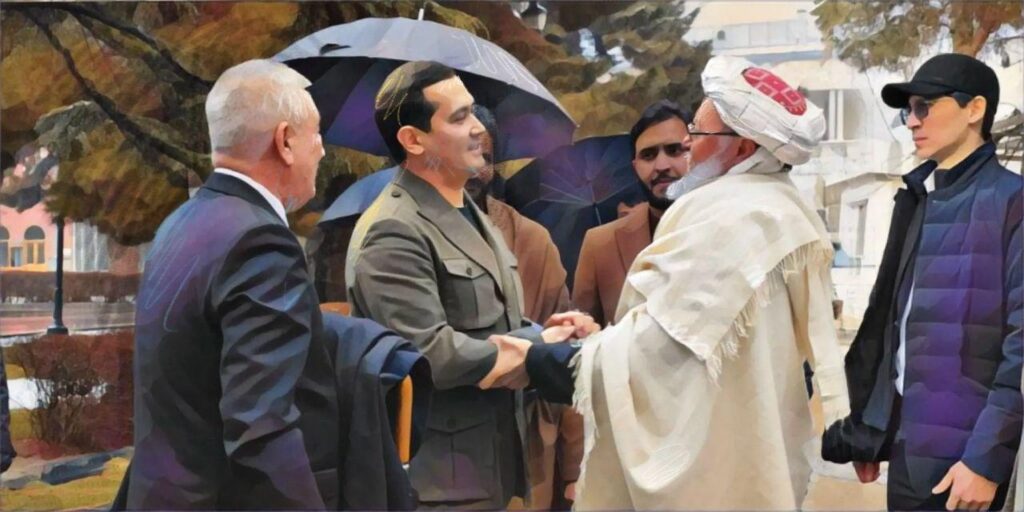
Afghanistan is quickly becoming more important to Central Asia, and the third week of February was filled with meetings that underscored the changing relationship. There was an “extraordinary” meeting of the Regional Contact Group of Special Representatives of Central Asian countries on Afghanistan in the Kazakh capital Astana. Also, a delegation from Uzbekistan’s Syrdarya Province visited Kabul, and separately, Uzbekistan’s Chamber of Commerce organized a business forum in the northern Afghan city of Mazar-i-Sharif.

A Peaceful and Stable Future for Afghanistan

The meeting in Astana brought together the special representatives of Kazakhstan, Kyrgyzstan, Tajikistan, and Uzbekistan for Afghanistan. The group was formed in August 2025. There was no explanation for why the fifth Central Asian country, Turkmenistan, chose not to participate.

The purpose of the Astana meeting was to coordinate a regional approach to Afghanistan.

Comments made by the representatives showed Central Asia’s changing assessment of its southern neighbor.

Kazakhstan’s special representative, Yerkin Tokumov, said, “In the past [Kazakhstan] viewed Afghanistan solely through the lens of security threats… Today,” Tokumov added, “we also see economic opportunities.”

Business is the basis of Central Asia’s relationship with the Taliban authorities. Representatives noted several times that none of the Central Asian states officially recognizes the Taliban government (only Russia officially recognizes that government). But that has not stopped Kazakhstan and Uzbekistan, in particular, from finding a new market for their exports in Afghanistan.

Uzbekistan’s special representative, Ismatulla Ergashev, pointed out that his country’s trade with Afghanistan in 2025 amounted to nearly $1.7 billion. Figures for Kazakh-Afghan trade for all of 2025 have not been released, but during the first eight months of that year, trade totaled some $335.9 million, and in 2024, amounted to $545.2 million. In 2022, Kazakh-Afghan trade reached nearly $1 billion ($987.9 million).

About 90% of trade with Afghanistan is exports from Kazakhstan and Uzbekistan. For example, Kazakhstan is the major supplier of wheat and other grains to Afghanistan, and Uzbekistan is the biggest exporter of electricity to Afghanistan. Kyrgyzstan’s trade with Afghanistan is significantly less, but from March 2024 to March 2025, it came to some $66 million. To put that into perspective, as a bloc, the Central Asian states are now Afghanistan’s leading trade partner, with more volume than Pakistan, India, or China.

Kazakhstan’s representative, Tokumov, highlighted Afghanistan’s strategic value as a transit corridor that could open trade routes between Central Asia and the Indian Ocean. Kyrgyzstan’s representative, Turdakun Sydykov, said the trade, economic, and transport projects the Central Asian countries are implementing or planning are a “key condition for a peaceful and stable future for Afghanistan and the region as a whole.”

The group also discussed humanitarian aid for Afghanistan. All four of these Central Asian states have provided humanitarian aid to their neighbor since the Taliban returned to power in August 2021.

Regional security was also included on the agenda in Astana, but reports offered little information about these discussions.

A few days before the opening of the meeting in Astana, Russian Ambassador to Kyrgyzstan Sergei Vakunov spoke about the airbase in Kant, Kyrgyzstan, used by the Russian-led Collective Security Treaty Organization (CSTO). Vakunov said the base was capable of handling any “security threat to member states along the southern flank.” Vakunov was almost certainly referring to Tajikistan, which is the southern flank of the CSTO and shares a 1,350-kilometer border with Afghanistan.

Since last summer, there have been several deadly clashes along a section of the Tajik-Afghan border, including two incidents that left at least five Chinese workers in the area dead. Tajikistan’s Counter-Narcotics Agency reported in early February that drug interdiction efforts along the border with Afghanistan in 2025 led to the seizure of 2.742 tons of narcotics, more than 50% higher than in 2024.

The other Central Asian countries, including Turkmenistan, have engaged with the Taliban leadership since the first days after the group’s return to power. Tajikistan has taken a slower, cautious path in its relations and remains the only country in Central Asia where the ambassador from the Ashraf Ghani government that preceded the Taliban is still occupying the embassy.

However, the Afghan consulate in the eastern Tajik border town of Khorog is staffed by Taliban representatives. Tajikistan’s embassy in Kabul remains open, and the Tajik ambassador met with Taliban Foreign Minister Amir Khan Muttaqi at the start of February to discuss border security.

The presence of the Tajik representative at the Astana meeting is a further encouraging sign that Tajikistan is joining with its Central Asian neighbors to create a common policy toward Afghanistan.

Business with Uzbekistan

A delegation from Uzbekistan’s Syrdarya Province visited Kabul for a February 16-18 business forum.  Syrdarya Governor Erkinjon Turdimov led the delegation. Deputy advisor to the Uzbek president, also director of the International Institute for Central Asia, Javlon Vahabov, was also there.

The Uzbek delegation met with several top Taliban officials, including Foreign Minister Muttaqi and Minister of Industry and Trade Nuriddin Azizi. Governor Turdimov also met with the governor of Afghanistan’s northern Balkh Province, Muhammad Yusuf Wafa, to discuss trade. Balkh is the only Afghan province that directly borders Uzbekistan.

Wafa is becoming a point man for the Taliban’s relations with Central Asia. The Balkh governor visited Tajikistan in October 2025 and met with Tajik security chief Saymumin Yatimov.

The forum ended with Uzbek and Afghan representatives signing 25 deals worth some $300 million. The agreements covered “construction, food products, agriculture, furniture production, textiles, and pharmaceutical cooperation.”

The provincial capital of Balkh is Mazar-i-Sharif.  Uzbekistan’s Chamber of Commerce brought together more than 150 Afghan businessmen and representatives from more than 50 companies from Uzbekistan for a business forum in Mazar-i-Sharif, also conducted from February 16-18. Preliminary agreements worth potentially more than $200 million were signed.

A Window of Opportunity

The Central Asian states share the goals of increasing trade with Afghanistan and opening up routes through that country that connect them to Pakistani ports on the Arabian Sea. Afghanistan’s northern neighbors are also well aware that security and stability in Afghanistan are important in Central Asia. Since the five Central Asian countries became independent in late 1991, they have been contending with instability and uncertainty along the southern border.

The situation in Afghanistan currently, while far from ideal, is nonetheless the most stable it has been in all the years of independence in Central Asia. Figures for Kazakh-Afghan and Uzbek-Afghan trade demonstrate for all of Central Asia the potential of engaging with Afghanistan.

China–Kyrgyzstan–Uzbekistan Railway: What It Means for Central Asia

The China–Kyrgyzstan–Uzbekistan railway (CKU railway), also known as the Kashgar–Andijan railway line, is more than an infrastructure project. It represents a geopolitical initiative that could significantly shape the future of Central Asia.

In June 2024, Beijing, Bishkek, and Tashkent signed the intergovernmental agreement to move the project forward. The project’s financing—estimated at $4.7 billion—was finalized in December 2025, sparking optimism in all three nations about regional connectivity, trade, and economic growth. Once completed, the railway is expected to become a vital strategic asset in China’s Belt and Road Initiative (BRI).

From China’s perspective, the CKU project is a strategic line that diversifies its trade channels and strengthens overland access to Central Asia and beyond. Construction was ceremonially launched on 27 December 2024 in Kyrgyzstan, with major works progressing through 2025, including key tunnel works. For Uzbekistan, the railway could serve as a key link for commerce and transit. Tashkent aims to integrate the China–Kyrgyzstan–Uzbekistan line with existing international transport networks, including connections through Iran and Turkey. But how important is the project for Kyrgyzstan, through which, according to recent reporting, 304 km of the line will pass?

According to Nurbek Satarov, Presidential Envoy in the Naryn Region, the project is vital for Kyrgyzstan’s most mountainous region, as roughly 90% of the route through the country will run through Naryn. As he told The Times of Central Asia, construction is in full swing, and the railway is expected to be completed between 2028 and 2030, despite the challenging terrain and technical difficulties.

The project includes the construction of 50 bridges and 29 tunnels, underscoring the significant engineering complexities involved. But while regional and national authorities anticipate direct economic benefits from the project, critics argue that Kyrgyzstan may end up serving primarily as a transit country, with limited gains for the local economy. They also question the financial sustainability of the project, noting that it is backed by a long-term loan package of approximately $2.3 billion from Chinese banks. The financing, structured over 35 years and to be repaid by the joint venture company implementing the railway, increases Kyrgyzstan’s exposure to China-linked debt and has raised concerns about future repayment obligations.

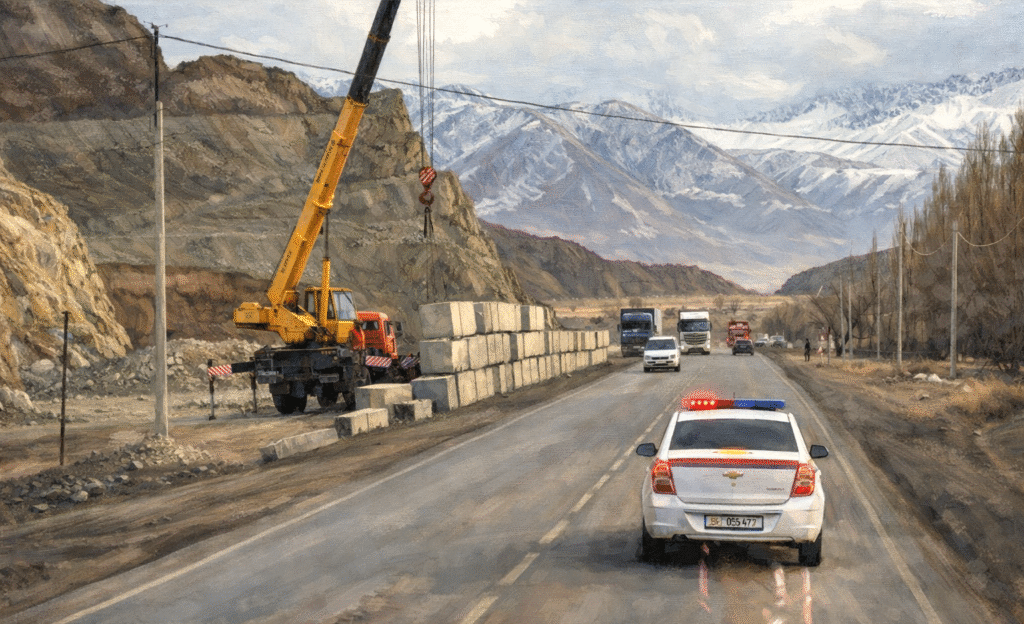
Site visit at the road construction project in the Naryn Oblast; image: TCA, Nikola Mikovic

However, Edil Baisalov, Kyrgyzstan’s Deputy Prime Minister, claims that the CKU will have a positive impact on the country’s economic development.

“This railroad will virtually transform Kyrgyzstan – and not just Kyrgyzstan, but the whole of Central Asia,” he told The Times of Central Asia.

Baisalov believes that the CKU railway, once completed, will be part of a larger transcontinental railroad that will cut transit times by at least seven days compared to the northern routes of the Trans-Siberian Railway and maritime transport.

The CKU line could indeed bypass the usual northern rail routes through Russia and Kazakhstan, taking a significant share of freight from those countries and reducing their transit revenue. Kyrgyzstan, on the other hand, hopes to see direct gains from the project.

“Even under the most pessimistic scenarios, the cargo loads expected to transit this route could generate at least $300 million in annual revenue, benefiting the country significantly,” Baisalov emphasized, pointing out that the CKU railway will help Kyrgyzstan increase exports of its natural resources.

As he explains, the Naryn region is rich in coal, iron, aluminum, and rare earth elements, but these resources remain largely untapped because there is no railway to transport them efficiently.

“Our mineral deposits are world-class. During the Soviet era, Kyrgyzstan’s mineral base was largely ignored in favor of deposits elsewhere. The Soviets focused only on uranium here, which was used for their first nuclear bomb, but otherwise, industrial development was minimal. As a result, Kyrgyzstan remained mostly agrarian, producing meat, wool, cotton, and tobacco. Now, with this railway, the country’s mountainous wealth can finally be accessed,” Baisalov stressed, adding that the CKU project will serve not only to export raw materials but also to support the construction of metallurgical plants, steel mills, aluminum facilities, and other industrial enterprises.

He maintains that Kyrgyzstan’s ample energy capacity positions it well for industrial expansion. Despite the global transition in energy use, he believes demand for iron, aluminum, and other key industrial metals is likely to remain strong. Moreover, in his view, the railway will reshape not only Kyrgyzstan’s trade flows but also the country’s entire economic landscape.

“The railroad will also stimulate manufacturing and logistics. International investors are already building logistics centers and assembly facilities along the line, leveraging the region’s labor force. Several towns will develop along the transcontinental railway, with direct access to markets in Europe, the Middle East, China, and Southeast Asia,” Baisalov concluded.

At present, routes from China to Kyrgyzstan and Uzbekistan rely on transit through Kazakhstan’s rail network, as there is no direct rail link from the People’s Republic to either country. Once completed, the project will, at the very least, enhance regional connectivity. However, the extent to which it delivers financial benefits to Kyrgyzstan will likely depend on transit volumes, tariff policies, and the country’s ability to develop complementary industries along the route.

Kazakhstan’s Reservoirs Prepared for Spring Flooding

Kazakhstan’s authorities have announced that the country’s water management infrastructure is prepared for the spring flood period. According to the Ministry of Water Resources and Irrigation, the total available storage capacity in the country’s large reservoirs exceeds the projected volume of snowmelt inflows, with the highest water levels currently recorded in the eastern regions.

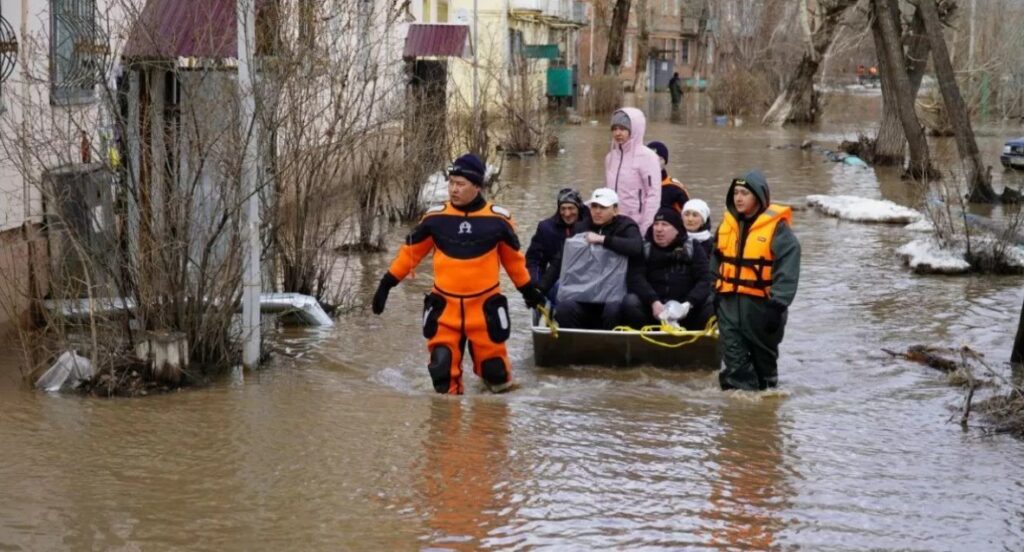
Flood preparedness has remained a priority for the government since 2024, when Kazakhstan experienced its most severe spring flooding in 80 years. The disaster affected dozens of settlements and forced the evacuation of more than 120,000 people, drawing sharp criticism of local authorities. In response, the central government intensified coordination efforts and preventive measures.

As of February, the ministry reported that the total available storage capacity in large reservoirs exceeds 14.3 billion cubic meters. Projected spring inflows are estimated at between 9.1 billion and 13.9 billion cubic meters.

The ministry also announced inspections of hydraulic infrastructure and ongoing repair work at 39 facilities. Major repairs have been completed at the Charske Reservoir in the Abai region, the Akzhar Reservoir in Shymkent, the Sholak Dam in the Aktobe region, and the reconstructed dam in the village of Stepnoye in the Kostanay region.

In addition, riverbed preparation measures are underway. Under the 2025-2027 Roadmap for River Rehabilitation, nearly 167 kilometers of riverbeds in western, central, and northern regions have already been cleaned and deepened. In 2026, similar work is planned across six additional regions, covering approximately 193 kilometers.

Kazakhstan has also strengthened coordination with neighboring countries. In 2025, a joint working group was established with Russia to address flooding and elevated water levels, including along the transboundary Ural River. The final forecast for water levels in the basin is expected in early March.

According to Kazakh officials, the Russian side has stated that water discharges from the Iriklinskoye Reservoir during the flood period will not exceed 200 cubic meters per second. An emergency notification and monitoring system for transboundary water flows along the Irtysh River is also in operation with China, including regular exercises and communication checks.

The Times of Central Asia previously reported that in 2025 Kazakhstan began releasing water from key reservoirs as early as January to increase available storage capacity ahead of the spring flood season.

Uzbekistan and United States to Establish Investment Platform

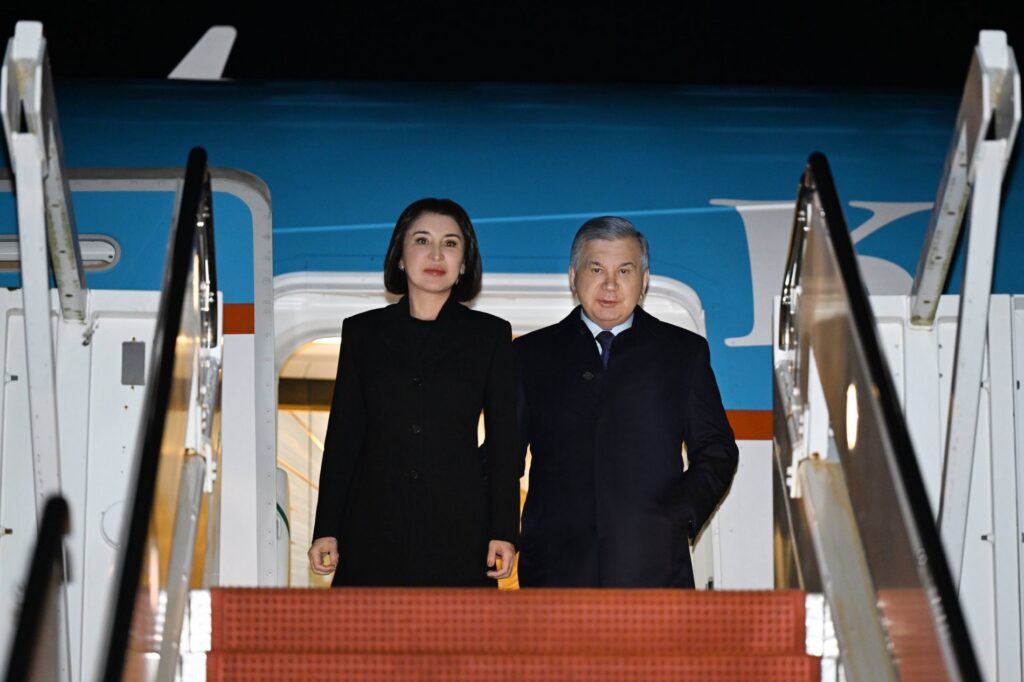
Shavkat Mirziyoyev has arrived in Washington with his spouse on a working visit that includes participation in the first summit of the Board of Peace and a series of business engagements aimed at strengthening bilateral economic ties. According to the presidential press service, the visit is focused on expanding trade, investment, and financial cooperation with U.S. partners.

As part of his program in Washington, Mirziyoyev met with John Jovanovic, President and Chairman of the Export-Import Bank of the United States, and Ben Black, Chief Executive Officer of the U.S. International Development Finance Corporation. The discussions centered on expanding financial support for priority industrial and infrastructure projects in Uzbekistan.

Officials noted that negotiations held last year with U.S. President Donald Trump gave new impetus to trade and investment cooperation. In particular, the two sides reviewed progress in supporting the activities of the bilateral Business Council and advancing plans to launch an Investment Platform intended to promote major projects on a systematic basis.

Cooperation with the Export-Import Bank is expected to include increased financing for large-scale industrial and infrastructure initiatives, as well as assistance with the supply of high-technology equipment. During talks with the Development Finance Corporation, emphasis was placed on strengthening investment mechanisms and facilitating the corporation’s participation in national and regional projects, including the development of Uzbekistan’s financial market and energy sector.

At the conclusion of the meetings, the parties exchanged an Agreement on the Establishment of an Investment Platform between Uzbekistan and the United States in the presence of the Uzbek president.

The current visit builds on steps taken last November, when Uzbekistan announced the creation of the Uzbekistan-U.S. Business and Investment Council. The body was formalized by presidential decree following Mirziyoyev’s official visit to Washington within the C5+1 framework. The council is jointly chaired by senior representatives of both countries and is designed to serve as an institutional mechanism for deepening commercial cooperation.

During his Washington meetings, Mirziyoyev also invited the American side to participate in the upcoming Tashkent International Investment Forum, underscoring continued efforts to attract U.S. business engagement in Uzbekistan’s economic reforms.

Uzbekistan Strengthens Protection of Argali Sheep and Other Rare Species

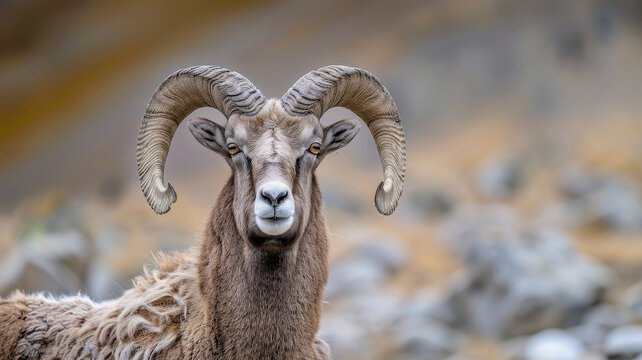
Uzbekistan is intensifying conservation efforts in its protected areas, with new data indicating a stable population of its endangered wild sheep, the Kyzylkum argali, in the Nurata State Nature Reserve.

According to the National Committee for Ecology and Climate Change, the reserve is currently home to approximately 1,700-1,800 argali, also known as Severtsov’s wild sheep. Monitoring data collected in recent years show that the population has remained stable, highlighting the effectiveness of ongoing conservation and protection measures.

The Kyzylkum argali is classified as an endangered species. It is listed in the national Red Book, included in the International Union for Conservation of Nature Red List of Threatened Species, and protected under Appendix II of the Convention on International Trade in Endangered Species of Wild Fauna and Flora, which regulates international trade in vulnerable species. As a result, systematic monitoring of the population remains a priority for environmental authorities.

Established in 1973, the Nurata State Nature Reserve is located in the Farish district of the Jizzakh region and plays a key role in preserving biodiversity in the Nurata mountain range. A total of 247 animal species have been recorded in the reserve, 31 of which are included in Uzbekistan’s Red Book. Specialists note that the stable argali population is closely linked to broader ecosystem protection measures, strengthened anti-poaching enforcement, and continuous scientific monitoring.

Further progress is expected under the national development strategy “Uzbekistan – 2030,” which prioritizes environmental security, expansion of specially protected natural areas, and long-term conservation of rare plant and animal species.

Officials state that protection measures for Red Book species will continue to be reinforced, with the aim of sustaining positive trends observed in Uzbekistan’s reserves, including the Nurata reserve, over the long term.

The stable argali population in Nurata is increasingly cited by environmental authorities as an example of how consistent policy implementation and institutional oversight can contribute to preserving the country’s natural heritage.

Gurbanguly Berdymuhamedov’s Unannounced Visit to Florida Draws Attention

From February 16 to 18, Gurbanguly Berdymuhamedov, Turkmenistan’s former president and current Chairman of the Halk Maslahaty, Turkmenistan’s highest representative body, visited the U.S. state of Florida.

Turkmen state media did not disclose details of the visit’s program, limiting coverage to a brief report on the trip.

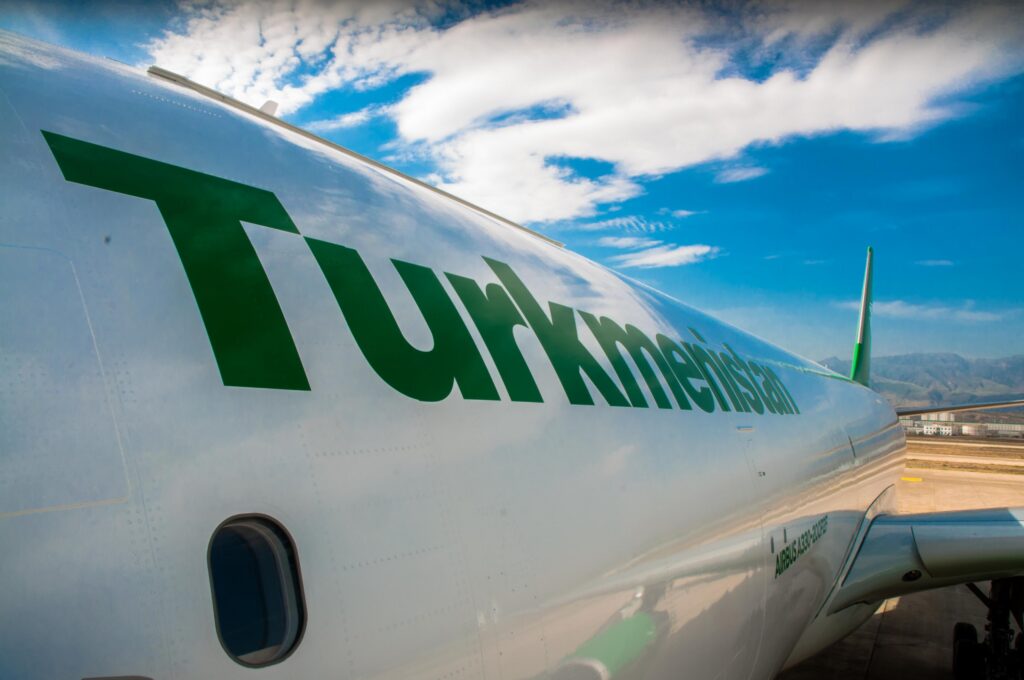
Berdymuhamedov arrived at Fort Lauderdale-Hollywood International Airport aboard a government Boeing 777 (tail number EZ-A780). Local journalists and aviation observers reported possible damage to the aircraft’s horizontal stabilizer. The green-and-white liveried airliner remained parked at the airport for several days.

Aaron Rosen, president of the World Affairs Council of Miami, noted that the visit coincided with renewed U.S. interest in Central Asia. According to Rosen, the region is strategically significant due to its energy resources, geopolitical location, and security considerations. He also referred to recent statements by Turkmenistan’s Foreign Ministry emphasizing the importance of dialogue with Washington to develop constructive relations.

U.S. media reported that Berdymuhamedov’s trip overlapped with President Donald Trump’s weekend stay at his Mar-a-Lago residence, located approximately a 45-minute drive from Fort Lauderdale-Hollywood International Airport.

Local 10 News footage showed heightened security measures and a VIP passenger boarding the Boeing 777 prior to departure. The aircraft left Florida several days later. Separately, a government Boeing 737 (tail number EZ-A700) arrived from Ashgabat, refueling in Glasgow before continuing to Florida.

After a brief stop in Florida, the Boeing 737 returned to Turkmenistan, making an additional refueling stop in Munich.

Turkmen authorities have not officially disclosed the purpose of Berdymuhamedov’s visit.  Turkmenistan’s current president is Serdar Berdymuhamedov, Gurbanguly Berdymuhamedov’s son.